How to Save a King?
(A dramatised Battle Report, with reposed pictures)
Winter 2403-4, North-East of Aversa
It was a crisply cold day when the Sartosan fleet’s army arrived before the Luccinans’ fortified camp, in the rolling hills where the westernmost reaches of Sussurio Forest peter out. Admiral Volker’s entire strength was not present, for he had left Captain Ansselm and his large crew back in Luccini to guard the fleet and the captured king. On seeing the enemy’s camp and their less than impressive force with his own eyes, he was satisfied that his decision to split his army had been sound.
The admiral personally commanded his own crew, their number diminished by the short but bloody fighting of weeks before when Luccini was taken. By his side was his personal standard, the same design as his ship’s ensign – bleached bones crossed behind a skull atop a cutlass. The fleet’s most powerful sorcerer, Adus Arcabar, accompanied him, using his staff more as a badge of office and occasional walking stick than a focus for sorcerous energies. Still, with a battle about to be joined, no doubt magic would soon begin flowing through it.
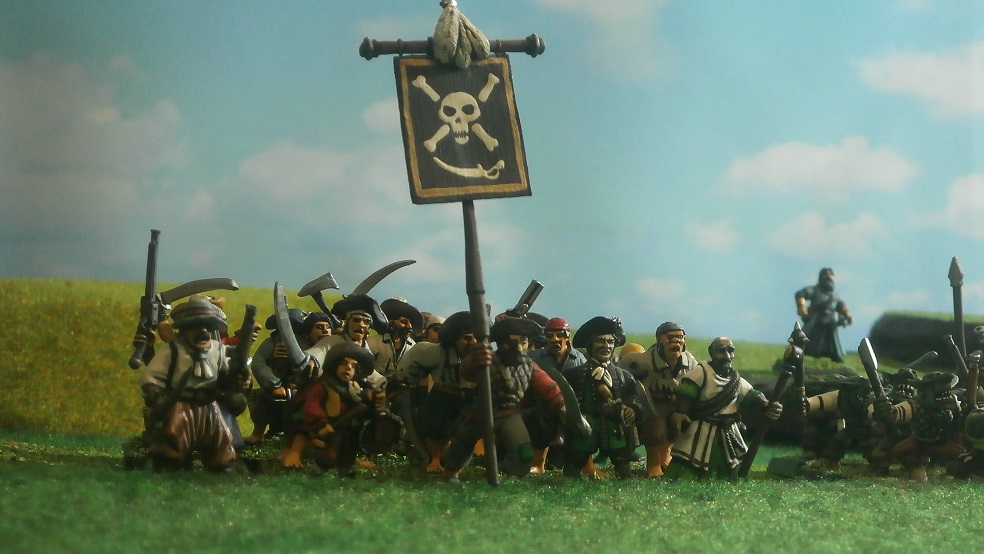
Arcabar’s able apprentice, Esorin Vedus, had sprinted away from his master’s side a few moments before to clamber up a nearby mound, all the better to observe the enemy camp.
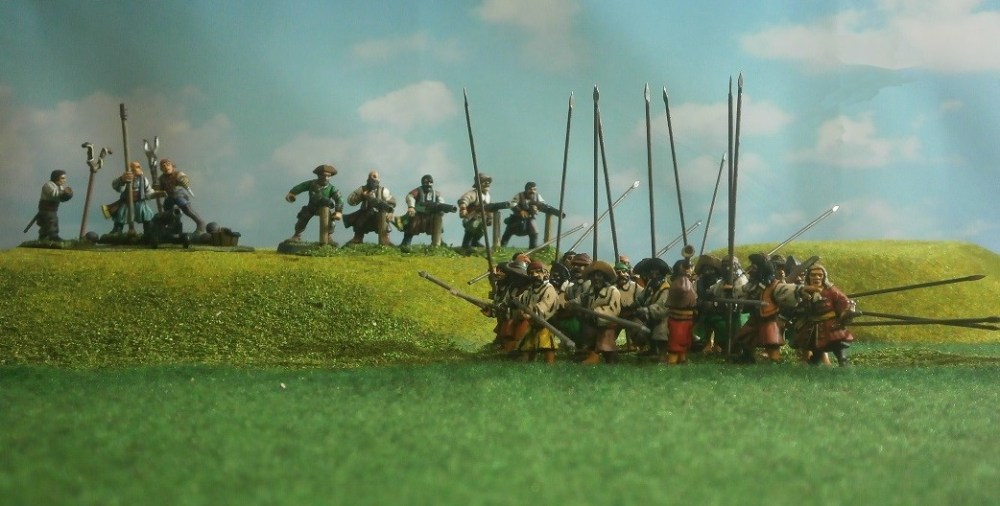
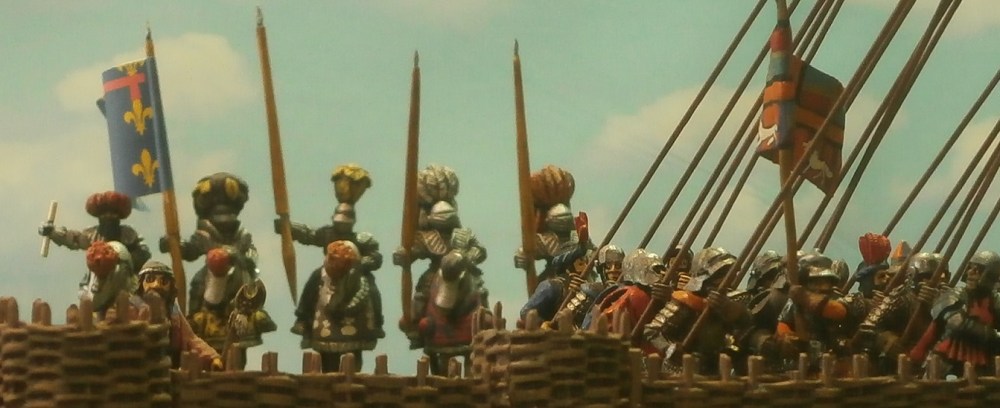
Upon the admiral’s right was the newly formed body of pikemen, who were being subjected to a veritable torrent of corrective orders and criticisms from their Marienburger sergeant. Having once served in the city-state’s army, the sergeant was well-aware how badly they compared to a trained regiment of Tilean militiamen, never mind the professional condottiere regiment that the scouts had reported spotting in the enemy army. At least he could hope the Sartosan pirates’ firepower would make up for the discrepancy in skill at arms, and indeed behind the pikemen, set upon raised ground so that they could shoot over the main battle line, was one of the army’s brace of guns and one of its two companies of swivel gunners.
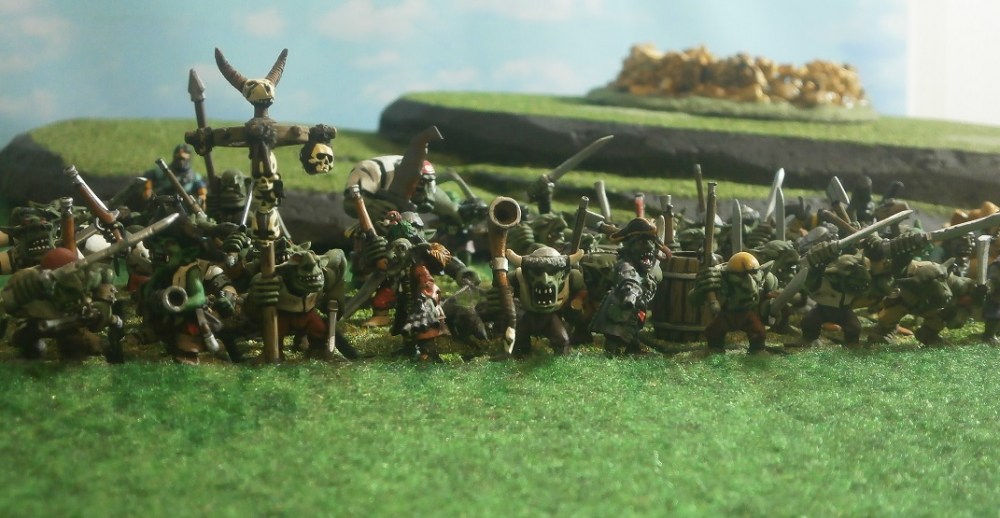
To the admiral’s immediate left was Bagnarm Farq’s goblin crew. Fifty in number, they vastly outnumbered Volker’s little company. Farq himself was at the fore, dressed in the long, braided coat he had won in a game of bones and the gold trimmed, cocked hat he took from the very same gamester after the duel they fought when the fellow accused Farq of cheating. Considerably more noise came from the goblins than from the pikemen, for while only the one irritable sergeant could be heard among the men, almost every goblin was keen to whoop, yell and ululate in a peculiarly inharmonious manner, a confusion made all the more discordant by the occasional blast of their musician’s horn and the peppered cracks as pistols were excitably discharged into the sky.
Two bodies of deck gunners formed the other elements of the battle-line. Captain Jamaar Garique’s crew had moved up in front of the second gun, which like its counterpart had been placed atop slightly higher ground. Garique’s pirates mostly wielded long handguns, apart from the captain’s one-legged mate Jambalo who cradled his many-barreled muskatoon.
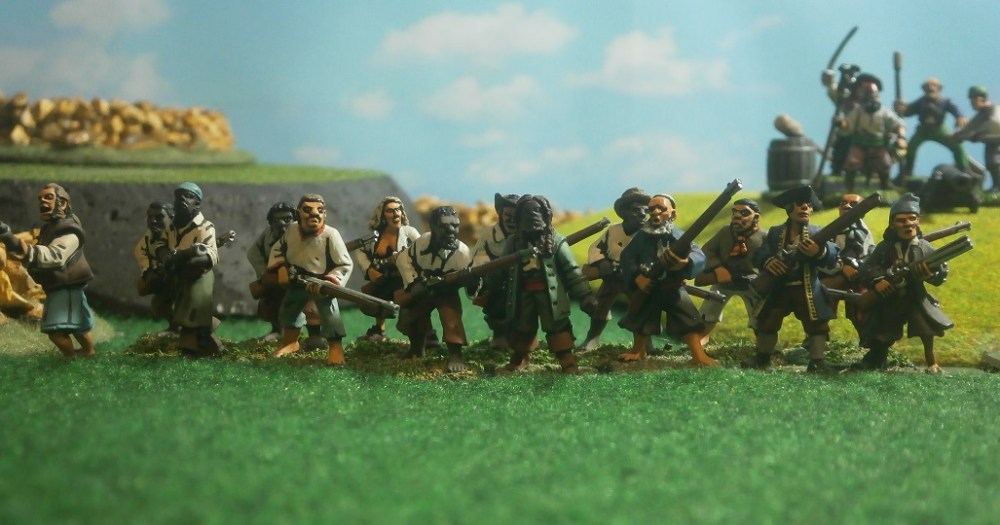
The rest of Admiral Volker’s crew were out on the far-left flank of the line, armed with blunderbusses. Their master was the black-bearded dwarf Hurmaes, who made a point of not being bothered by the fact that only the two goblins in the company were shorter than him. One of the men was so tall he was known as Long Jack, being nearly a bald-head taller than all others in the company, but only because the great orc Draja, despite being more than twice as heavy, was bent almost double, so that his head seemed to grow out of his chest rather than his shoulders.
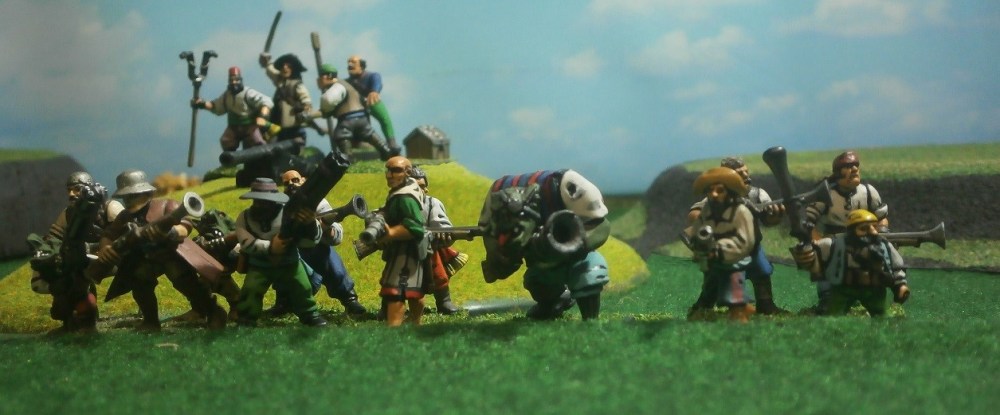
Draja lugged a mighty blunderbuss bigger than a ship’s espingole – a wide-muzzled, swivel gun that would have to be mounted on stanchions if a man were to attempt to fire it. He called it ‘Mine’. Once, when asked why he called it that, he had simply said, “Because it is.” Over the years, Draja had suffered several, self-inflicted injuries as a consequence of his general clumsiness – he lost an eye to the flash of an over-charged pan and obliterated his foot entirely when he squeezed the trigger at just the wrong moment. Even so, his love for it remained true and the bloodthirsty excitement he got from discharging it had diminished not one jot. Luckily, he was not known for nimbleness and his companions nearly always had sufficient time to get out of his way when he hefted it to give fire. Several of those who had hesitated, or just failed to notice him bringing the piece to bear, were no longer part of the company. When the rest of his crew told tales of what ‘Mine’ had done over the years, Draja usually just sat grunting, “Hur, hur, hur!” whilst affectionately patting the gun by his side.

The second little company of swivel gunners had found a sheep pen to fortify themselves in, and now waited, with lit match cords, for the larger pieces to fire as that was the sign to loose their own first volley of heavy lead-shot.

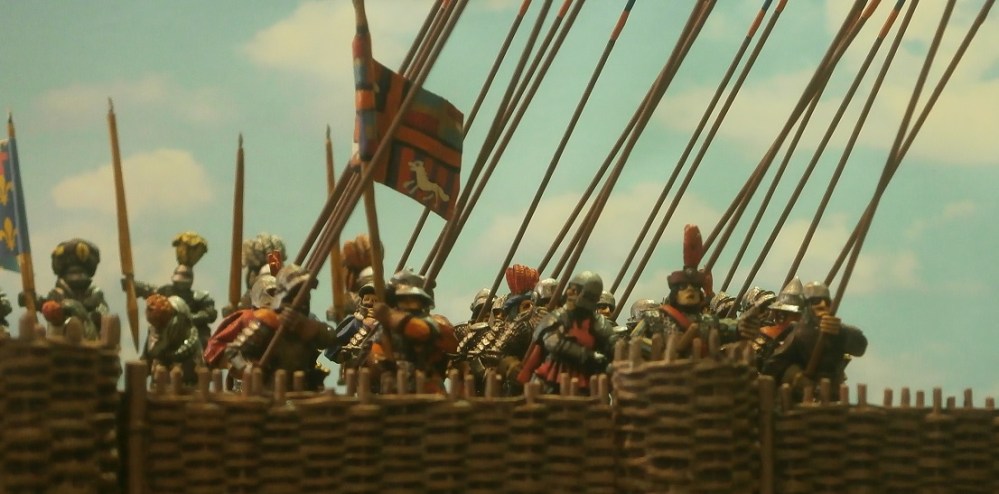
The remnant army of Luccini was drawn up behind its earthwork defences. They had but one piece of artillery, ensconced in a semi-circle of earth filled gabions, by which their small regiment of professional pike stood.
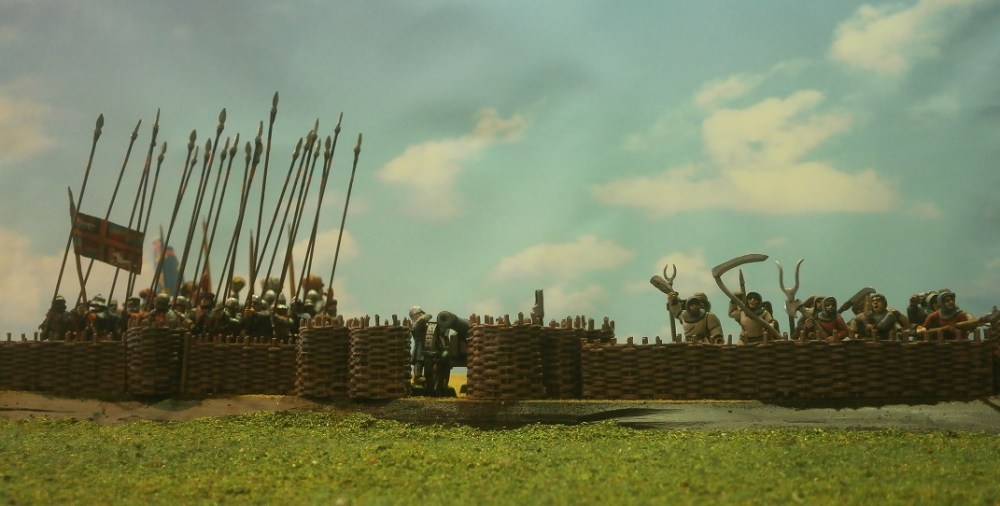
Although the pikemen had not fought in years, they had marched many a mile for many a month until finally camping here in the hills. They had been present at the Battle of the Valley of Death, but had done little more there than spectate as the guns big and small had blasted the enemy sufficiently to convince even the undead that to stay would be madness. Here, however, it seemed inevitable that they would engage the foe, unless, as some of them had darkly muttered, the Sartosans’ guns proved as effective as their own had in the necropolis valley.
Upon the other side of the piece was one half of the peasant militia that had been formed from those who had escaped the city and the surrounding realm when the Sartosans landed to begin their depredations. They had arrived at the camp for want of anywhere else to go, and General Marsilio had made it clear that if they were to stay then this time they must be prepared to fight. He could not arm them, however, for he no longer had access to the city’s magazine, and so while some had weapons of war such as spears and fighting axes, and one or two had swords, just as many again were armed with nothing more than pitchforks, scythes, cudgels or knives.
The other half of the peasant militia (they had been divided on the general’s orders so that they might better man the defences) were on the far right of the camp’s front, with the condottiere crossbowmen between them and the pike regiment.

The wizard Duke Ercole Perrotto, uncle to the captured King Ferronso, watched from the defences in between the pike and the crossbow …
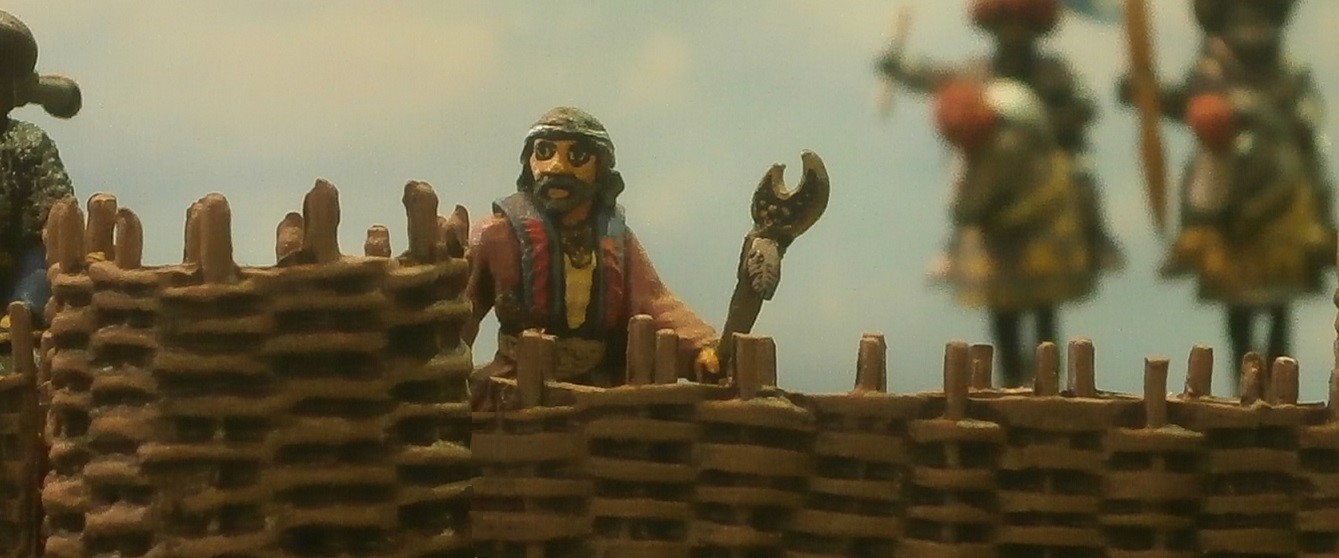
… whilst behind him was General Marsilio and the few remaining royal bodyguard who had pledged to fight to the last as a penance for the fact that they had allowed the king to be taken by the pirates.
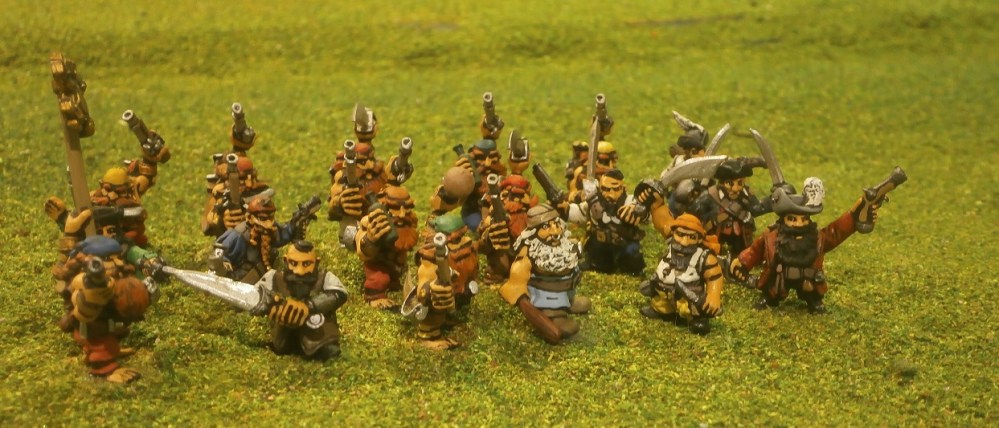
Captain Girhur Brewaxe and his dwarf sea dogs had struck out to the left as the Sartosan army made its approach, so that they could now advance upon the camp’s flank.
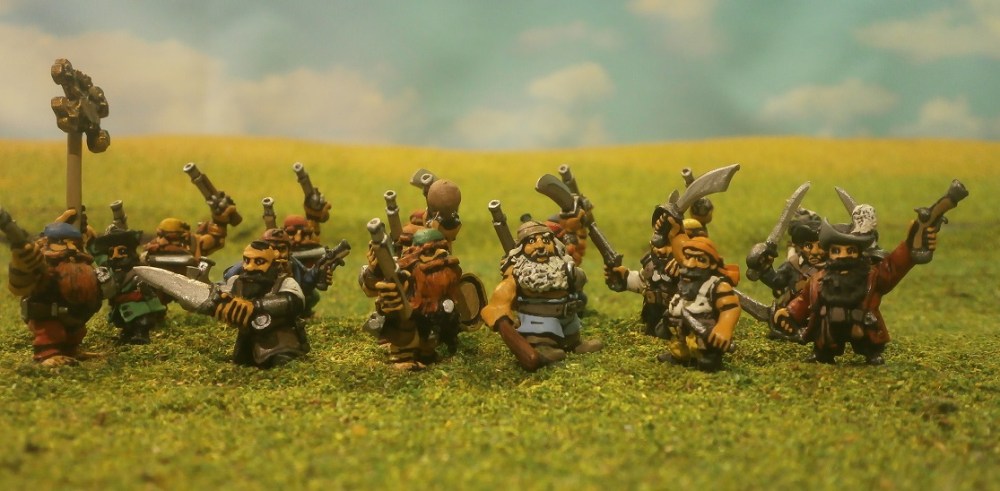
Girhur carried a club carved with a magical rune that added an unnatural strength to its blows, more than compensating for the fact that his lack of a left hand meant he could only wield it one-handed. His compass was also magical, stolen from an Arabyan corsair, and possessed the mystical power to guide its user in many more ways than a needle of iron fed with lodestone could ever do. Indeed, it was the compass that had allowed him and his dogs to move so close to the enemy so quickly, despite having had to travel a wide arc to get there.
Behind the palisade, the wizard duke moved over to stand with the crossbowmen and watch the enemy deploying with a heavy heart. Only luck, he thought, could grant him victory today, for nothing else was in their favour.
He did not feel lucky.
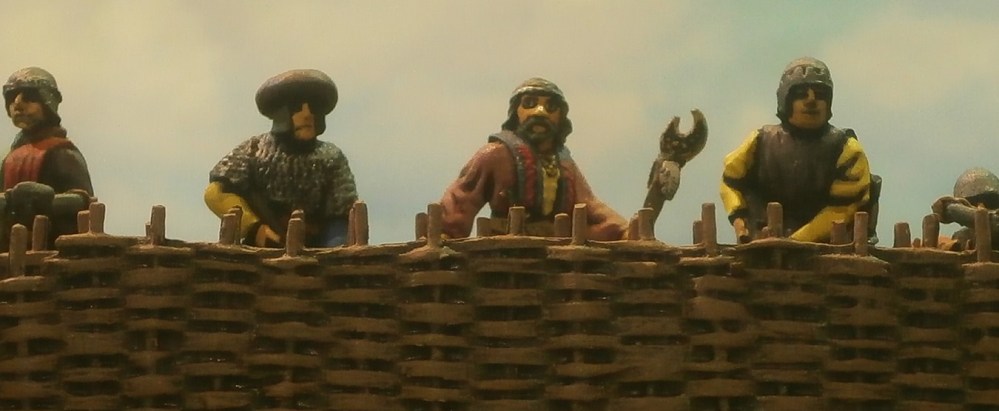
Yet there was nothing else he could have done. His nephew, the king, was the pirates’ prisoner, and the city was theirs too. He could neither retake the city nor leave, for he lacked the strength to do the former and was too honourable to do the latter. Nor could he rescue the king by other means – the enemy had magicians of their own, and capable ones at that. They would no doubt sense whatever spells he conjured to assist a party of rescuers, and then both they and a large army of pirates would be roused to put a stop to any attempt made. All he had was the remote hope that, despite the wars against both vampires and ogres, someone would send some sort of force to assist them. Perhaps the Portomaggioran ruler Lord Alessio might do so, for he had personally attended the king’s crowning, and even seemed to like Duke Ercole’s nephew. Yet even that was made unlikely due to fact that Lord Alessio was currently marching north to face the vampires, many hundreds of leagues distant – first the news had to reach him and then whatever relief he dispatched would have to travel all the way to Luccini.
Duke Ercole’s thoughts were interrupted by a sudden crunch and violent motion along the earthworks to his left. He turned to see a rising cloud of dirt and debris, in the midst of which a man staggered screaming, his shirt bloodied, accompanied by the booming sound of the enemy’s guns. It seemed the enemy’s iron-shot had traveled quicker than the noise of their firing! He tried to recall what had been there moment’s before, then as the debris tumbled down, he saw it was their own gun, or, more accurately, what remained of it, for one of its wheels had been torn off and the rest of the crew had been felled by the strike. Both he and the crossbowmen were momentarily stunned into inaction, even as the sound of the enemy’s other guns rattled out and splinters of the wattle fencing holding their walls of rubble together span through the air.

They had lost their gun before it had even fired one shot!
The sound of gunfire ended abruptly, and after a moment’s silence, a cheer went up from the enemy and their entire line began to advance. The duke then gasped as he sensed a coiling burst of magical energy sizzling in his vicinity. He had been too distracted to sense it a moment earlier, and now had insufficient time to counter it. He heard screaming and turned to see the last surviving mounted nobility of the king’s bodyguard slide off their mounts to crash heavily onto the ground.

General Marsilio and the standard bearer’s own horses were considerably perturbed by this turn of events and as they bucked their riders allowed the reaction to turn into a canter towards the gate on the flank of the camp’s defences. The general had spied the advancing dwarfs.
Duke Ercole returned his attention to the enemy. As the men around him hefted their crossbows to loose a volley at the pirates with Admiral Volker …

… he conjured a curse to fall upon the same body. Moments later it was Volker’s turn to be surprised, for in a matter of seconds his already diminished crew had been thoroughly decimated yet again!

As Girhur and his dogs now drew close to the defences …
… the peasant militia had noticed their movement, as well as that of their own general. The leader, an old wheelwright (no less than master of the city’s guild of wheelwrights), pointed and announced that if the general was going to charge to dwarfs, then they would too!
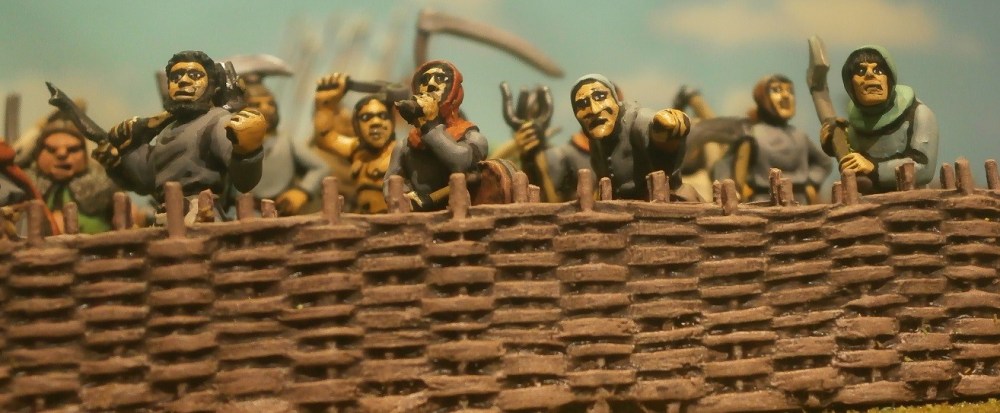
As the general and his lone companion rode their barded horses through the gate, the peasants clambered over the fence and began hurtling towards Captain Girhur and his dwarfs.
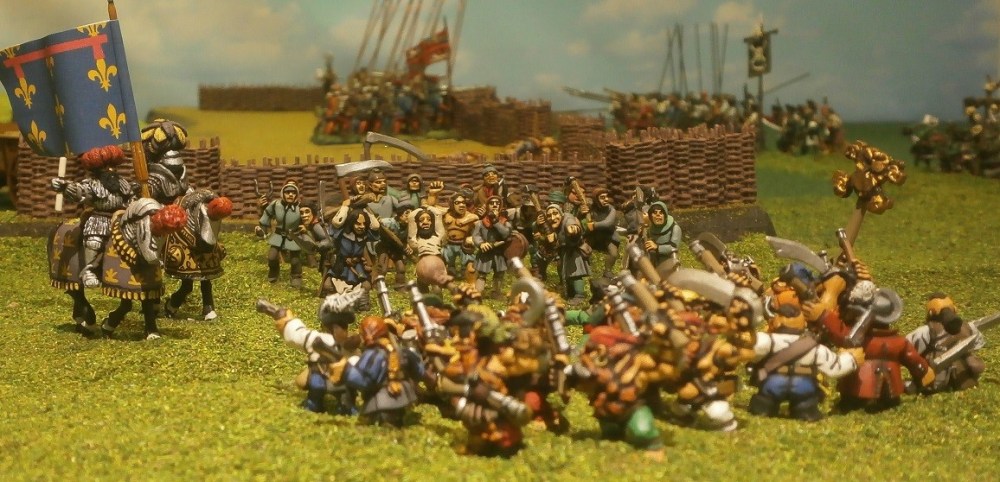
The dwarfs fired their pistols with practised skill against the two riders, but their shot was insufficiently powerful to pierce the steel armour encasing men and horses.

As bullets pinged off its metal carapace, General Marsilio’s horse picked up speed and began thundering directly towards Girhur, whose eyes widened as he realized the force of the blow he was about to receive!

The horse battered into the dwarf to send him reeling and the general struck a deep blow with his sword, cutting Girhur’s face, then drew the blade back to thrust it right through the dwarf’s throat. It took the rest of the dwarfs a moment to realize their captain was dead, for they were occupied with the easy slaughter of the peasants, whose charge had been considerably less damaging than the general’s. Once they knew, a fury gripped them. Fury, however, did not make their legs longer, so when the surviving peasants turned to flee, as did the general now that the impetus of his charge was spent, the dwarfs could not catch him!

The condottiere pike now steadied themselves as the enemy drew close. Some in the rear ranks witnessed General Marsilio’s flight, and a muttering spread through the regiment concerning whether or not they too should run. Why die for a cause when it is not only almost certainly lost, but is not even your own? They fought for pay, not for the honour of Luccini. They saw to their left that their Sartosan counterparts had now engaged the peasants at the fence line …
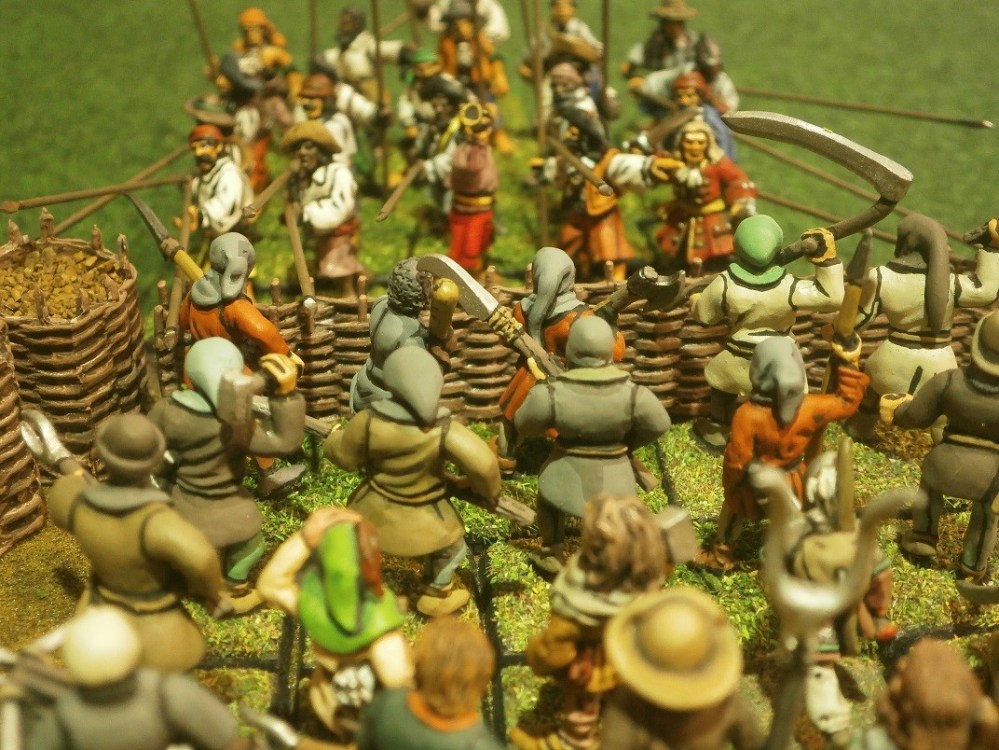
… and it was immediately apparent that the enemy pike would feel little real resistance. To their right they saw that round-shot had smashed a substantial gap in the defences, killing several of the crossbowmen and a few of the peasants who had moved from the camp to stand near them.
Captain Bagnar Farq’s goblins were marching right up to that gap …
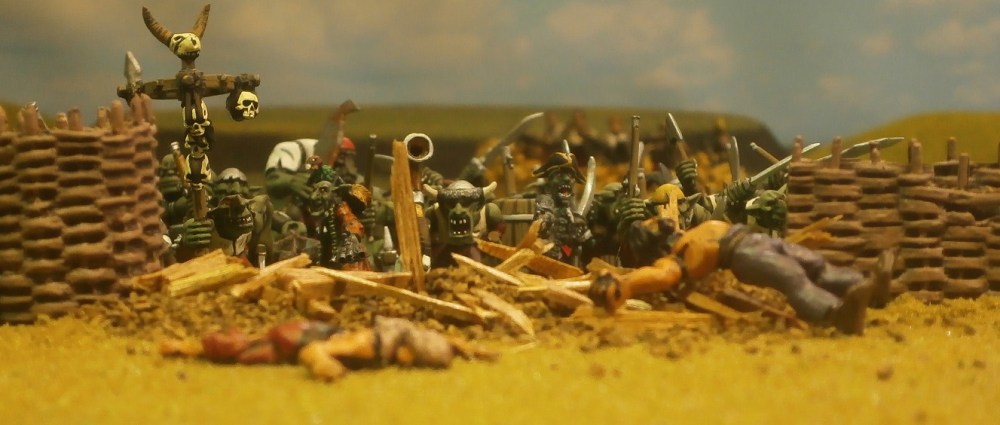
… while the last of the crossbowmen and even Duke Ercole were now running away. The duke, not exactly spritely for his age, was not quick. Looking through the gap, the smartly dressed goblin captain could see the enemy wizard clearly and raised his cutlass as a sign that his crew should halt.
“Watch dis, lads!” the goblin captain shouted, stepping forwards from the body to take aim.

Pointing right at the wizard, with the confidence of knowing his magical bullets never missed …

… he pulled the trigger …

… and watched with glee as the bullet did indeed strike the wizard. The evil grin was soon wiped from his face, however, when he saw that the wizard had not been killed and was still running.
“Bugger!” he shouted as he fumbled to find his powder flask to prepare for the next shot.
(Game Note: Auto hit, Strength 5 magical pistol, against a wizard already reduced to one wound due to enemy magic and shooting. The player rolled a 1 to wound!)
As the peasants broke on one side of them and the goblins now rushed past their captain (still fiddling with his pistol) to pour through the gap upon the other side …
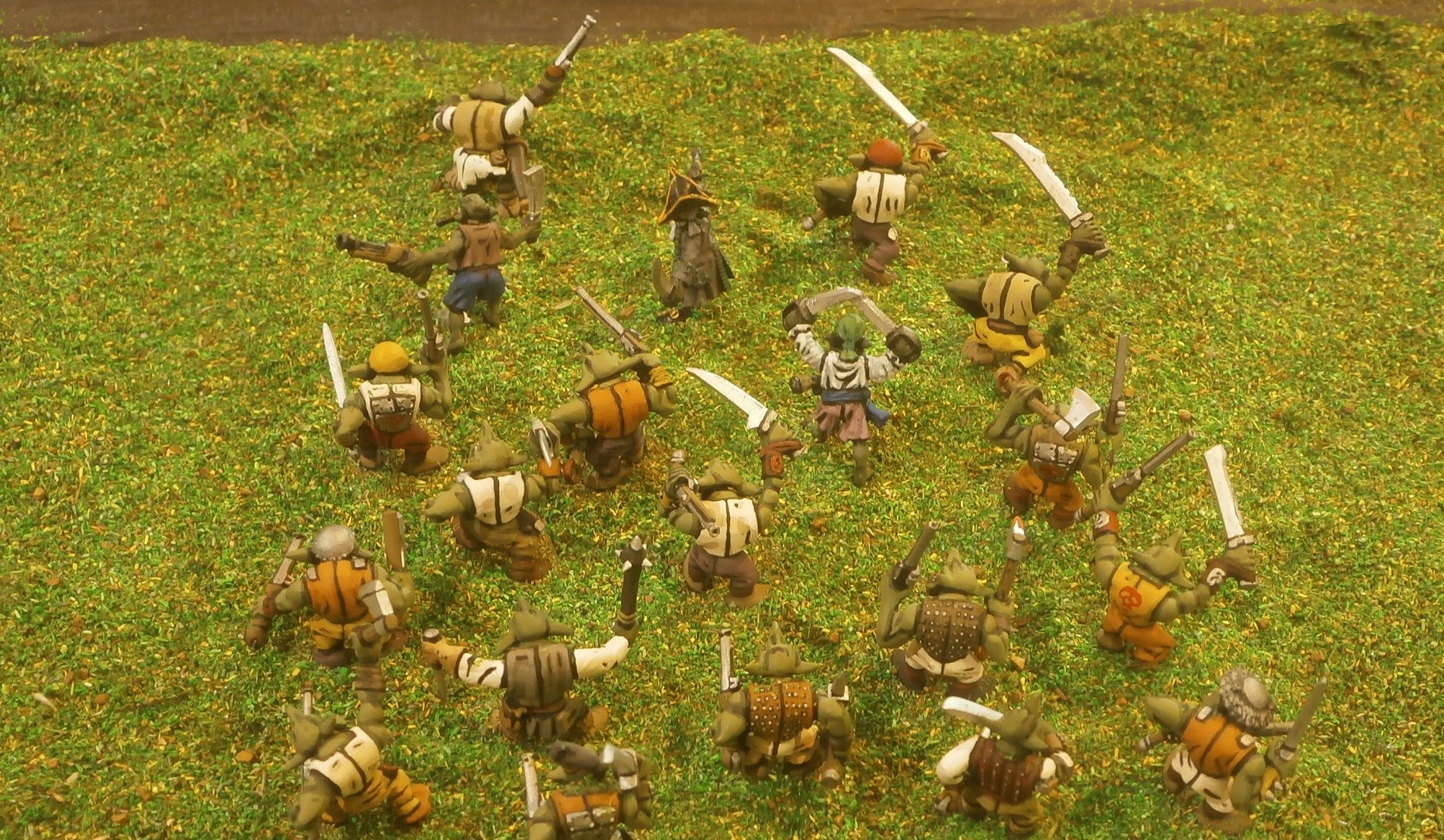
… the Luccinan pikemen dropped their eighteen foot burdens and joined in the general flight.
No-one was going to rescue King Ferronso today!
……………………………………………………..
New Friends and no Rest for the Wicked
A Street, Somewhere in Tilea, Winter, IC 2403-4

Baldassarr had known the meeting would not be pleasant. He had never heard anything good about the uomini ratto, only that they were foul, lice-ridden creatures, invariably harbouring murderous intent. Yet despite the fear and disgust he knew he would most likely experience, he was sufficiently desperate to seek their assistance, for it was indeed murder he had in mind.
Why they had chosen to help him, he did not know. His accomplice in crime, Naldo, had arranged the meeting, promising him that he could trust them. They had apparently assisted Naldo with his own problem, being that of a rival cutpurse who had moved in on his domain. When Baldassar questioned their motive, Naldo had simply answered,
“The enemy of their enemy is their friend.”
“I can’t see why the rats bear some grievance against your rival, or the Scarria gang,” said Baldassar.
His friend laughed as if the reason was obvious: “Everyone hates the Scarria!”
Right now, having laid eyes on the creature for the first time, Baldassarr was having second thoughts concerning his choice of new friends.
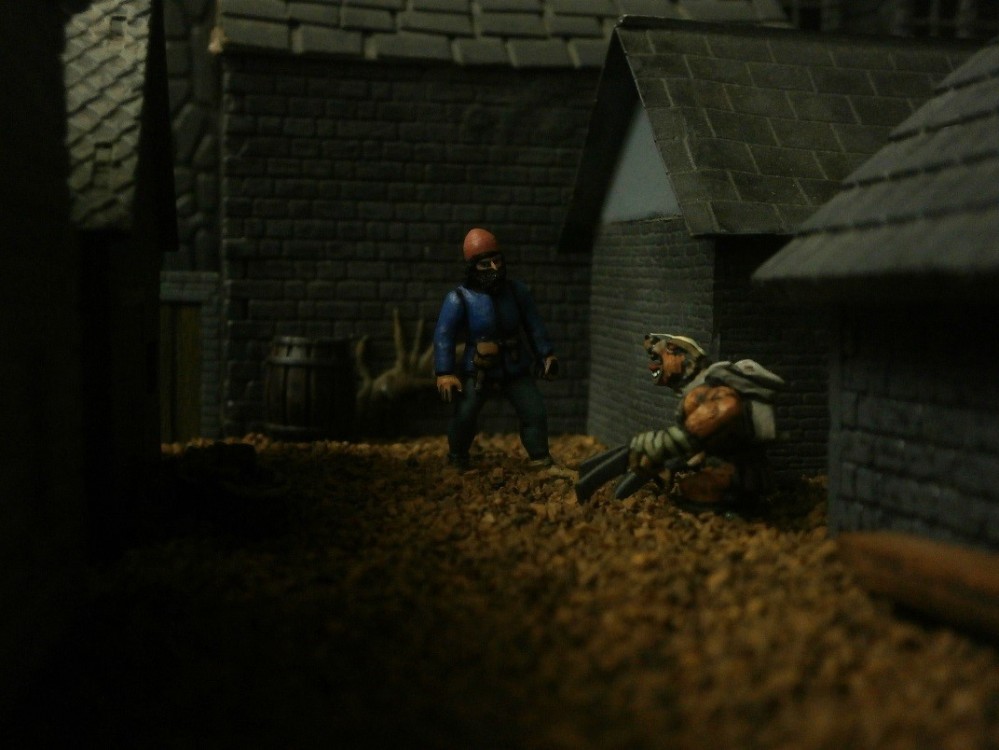
At first glance, the creature seemed to be half his size, but when he considered its squatting, hunched posture, he realised it was most likely at least as heavy as him, if not heavier. Its face was almost exactly like a rat’s, but its body and limbs much more like a man’s, albeit with a horribly large, fleshy tail sprouting from its back and matted fur covering much of the rest. It was clothed in little more than a ragged over-sized hood and had half a skull clamped oddly over the right-side of its long face. What had drawn Baldassar’s attention immediately, however, were the four heavy blades apparently sprouting from its clawed hands.
He could not help but stare at them, and in so doing saw that they were attached with leather straps and bandages to the back of the creature’s hands, leaving its fingers free to clutch unhindered beneath.
Ominously, like a change of lighting during a dramatic scene in a stage play, at that very moment the clouds parted to allow the fully waxed chaos moon’s light to bathe the alley with its eerie glow.

When the creature spoke he almost jumped with shock, not because of the strangeness of hearing a giant rat speak, or even the lilting timbre of its gravelly voice, but because any interruption of his nervous gaze upon the blades would have had the same effect.
“Balda-Baldasssssar?” said the creature, its coarse tongue fluttering to hiss every sibilant component of its words. “Friend-accomplice of Naldo, yesss?”
“I am,” he said, unsure whether he should ask for the creature’s name. Doing so felt preposterous, as if asking a dog its name.

“You are, are you?” came the response as the creature looked him up and down with its red, seemingly pupil-less eyes. “No sharp-ssword? No pissstol? Yes?”
Baldassar felt his throat tighten and stomach knot as he wondered why the creature was asking. Then he remembered Naldo had told him to take nothing but a small knife.
“Only my knife,” he said, tapping the hilt protruding from behind his belt bag and beginning to wonder if he had made more than one bad decision.
“Always knives, yess of course, always those,” said the creature, whilst its own four blades twitched and scraped, perhaps ensure Baldassar kept them in mind.
“Naldo said …” began Baldassar, then faltered.
“I know, I know. Naldo said-spoke this and that. I listen-heard,” said the creature. “You have enemies, yess? Nastiness, yess? You want to cow-rule your corner of the nesst? With our aid-help you can and will. Naldo has his choice-pick of purses – no interference, no trouble-distractions. Now you too, yess, want rid of such?”
Baldassar nodded. “The Scarria Brothers have been taking what is mine. People are paying them not me …”
The creature raised the back of one of its blades to its lips, as if to shush him.
“So ssad. Poor you. You want all the gold, yess?” The creature grinned, revealing its large, horribly sharp teeth. “You want me to slice-cut; chop and chop Scarria into rot-corpses?”
Baldassar gulped. “You … you could just scare them,” he suggested.
“No, not enough. Never enough. I kill-remove, yess? Then they are gone for good.”
“That would work too.”
“Yess. Best for all. You will be happy-glad, and I will feel ssatisfied in a job well done.”
“What about payment?” asked Baldassar. “What do you want from me in return?”
“Do not worry-concern yourself,” said the creature. “Naldo knows. You become my good friend, and when I need-require, you return the favour, yess?”
Baldassar frowned. “You want me to assassinate someone?”
The creature gave out a sound, part cackle, part giggle, yet wholly horrible to hear.
“No, no. I can kill, always and anytime; easy and quick. You help, yess? You find, you open, you lure, you reassure. I am happy-willing to do the rest. Sso, no blood-mess for you.”
“Who do you want to kill?” asked Baldassar, immediately regretting his question.
“Later, my friend. Put ssuch from your mind. These are choice-things for me to worry about. Yess?”
Baldassar found himself nodding.
“Now,” continued the creature, “you tell me where and you tell me when, then all your desire-dreams come true.”
…………………………………………………………….
How to Fortify Against Death Itself?
Winter, IC 2403-4
South of the river Tarano, near the Bridge of Pontremola
Discussions
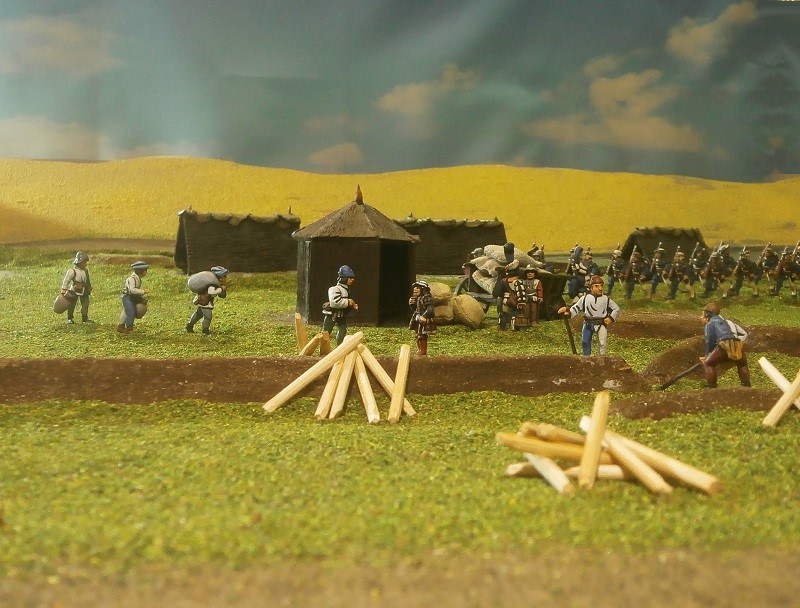
“How are the works coming on?” asked Chimento Gagliardi, Lord Alessio’s chief clerk.
The siege master Guccio de Ieroldis looked up from the little book he had been studying, in which his predecessor had recorded all sorts of useful advice concerning the construction of a fortified camp. He had been so deep in thought he had failed to notice the clerk’s approach.
“Ahh, Master Chimento,” he said. “Well enough, although more labourers would speed the process.”
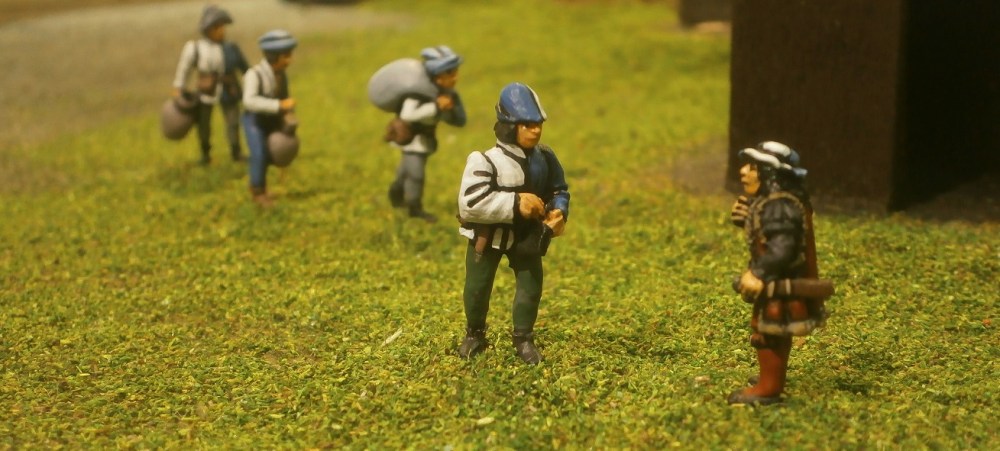
“You already have every available soldier,” said the clerk. “Those not here are busy guarding or scouting, as entirely necessary. Or resting – again, a necessity. Sufficient force must be in perpetual readiness in case of a sudden attack.”
While Guccio was almost wholly liveried as a Portomaggioran soldier, the clerk wore a sleeveless, fur-lined gown, revealing the paned sleeves of his doublet, all dyed in fashionably rich reds and purples. Only his velvet cap was in the quartered blue and white of Portomaggiore – a costuming concession to his employment. He was several inches shorter than Guccio, a fact exaggerated by the siege-master’s tall hat.
“Should we not have placed our earthworks closer to the river?” inquired Guccio, still annoyed that such engineering decisions had been made without his input. “For then the works would be much improved defensively, what with a natural barrier already in place.”
“It was discussed in the council of war, but Lord Black thought it to be a foolish notion.”
Guccio’s brow furrowed. “Why so?”
“He thought it might allow the undead to advance beneath the water and so draw very close to our works before our bullets and bolts could thin their numbers.”

“I hadn’t thought of that,” admitted Guccio.
“Few did,” said the clerk. “Luckily, we have Lord Black.”
“Aye, we do,” agreed Guggio, as his mind raced to consider the matter further. “Did no one in the council point out that should the river continue to flow strongly, as is to be expected in winter, then a good proportion of any undead so immersed would be washed away?”
Outwardly, Master Chimento seemed entirely unperturbed by the notion. Perhaps, thought Guccio, such inscrutability was one of the reasons the man had risen in Lord Alessio’s service?
“If we ensure they cannot pass over the bridge,” the clerk said, “then the enemy may well be forced to cross the river. Perhaps then, as you say, a good number will be washed away. Whatever remnant does emerge upon our side, we can shoot.”
“Which might be easier to do if our works were closer to the river banks,” said Guccio, “for then we might fell them while they floundered on the bank attempting to reform themselves for the attack.” He began to wonder if it was a mistake to press this point. He would not want the clerk presenting his suggestions as criticisms to the general or Lord Black. Still, it was his place to advise on such matters.
“Perhaps,” he continued, “it is no bad thing that these works are made, so that should we then construct more closer to the river, we have these to fall back to if the enemy sally out against us before those second works are ready.”
Chimento simply looked at him, exhibiting only the slightest trace of annoyance. Not even enough to convince Guccio that the very notion was anything more than his own imagining. Nevertheless, he changed the topic.
“I heard the city of Ebino is moated,” he said.
“It has both a deep moat and substantial walls,” said the clerk. “Not an easy prospect for assault. Lord Black saw it for himself. He suspects there is something stirring in the moat.”
“In the water?”
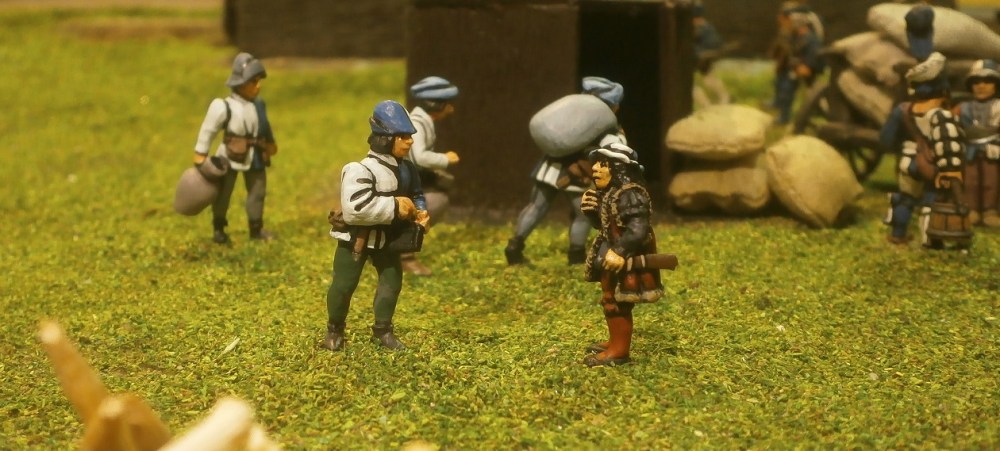
“Yes.” Now there was a faint trace of irritation in the clerk’s answer, as if he suspected some sarcasm contained in Guccio’s question, but it was soon gone. “Master Guccio, I was sent to ask what more needs to be done, and how long exactly until completion?”
“It’ll be three or four days before the towers are finished, provided sufficient and suitable timber can be found, but the earthworks are almost done. There are two stretches yet to be dug to the south, and quite a bit of the palisading needs doing, as you can see, but the stakes are already cut. I’d say the works’ entire periphery will be made defensible sometime the day after tomorrow, the towers two days later. Unless, of course, the general orders a modification or an extension.”
“He might well do so,” said the clerk.
“Is the current scheme not satisfactory?”
“If more armies join us, an expansion to the works would be necessary.”
Guccio could not help himself. “Then I would advise expanding them towards the river,” he said, attempting to sound as pragmatically matter of fact as he could to avoid any hint of sarcasm.
“Noted,” said the clerk, also hiding any sign of frustration. “Whatever work is necessary will be undertaken, at whatever cost. Facing the duchess and her foul legions in battle is not to be undertaken lightly. Several arrmies have come close to victory. only to fail because the enemy escaped. In the Norochia Valley, Lord Alessio commanded a much larger force than this, inflicting a great slaughter upon the enemy, as did our riders to the north, yet nevertheless, too many got away.”
Guccio nodded gravely. “They say that when Arch-lector Calictus fought them at Ebino, despite several hundred being cut down by the first charge, they simply got back to their feet and fought on.”
“‘Such is the nature of the foe,” warned the clerk. “This time we must overwhelm them, prevent their flight, and so ensure they cannot possibly be revived. Not one vampire can be allowed to leave the field, as it could greatly hinder our further advance northwards.”

Guccio said nothing, merely nodding in agreement, while he was now even more perplexed. If the army’s most important goal was to pursue the enemy thoroughly, then why were they building a fortified camp at all? And why was it placed on the far side of a river?
Of course, the answer was obvious, and came quick to mind: fear.
Elsewhere in the Camp
“You reckon this is the last of it then?” said Fede, as he leaned upon his spade.
“I do,” said Berto, still shovelling soil. “We turned a corner this morning. There’s nowhere else to go. As soon as the palisade’s up along the full length, it has to be done.”
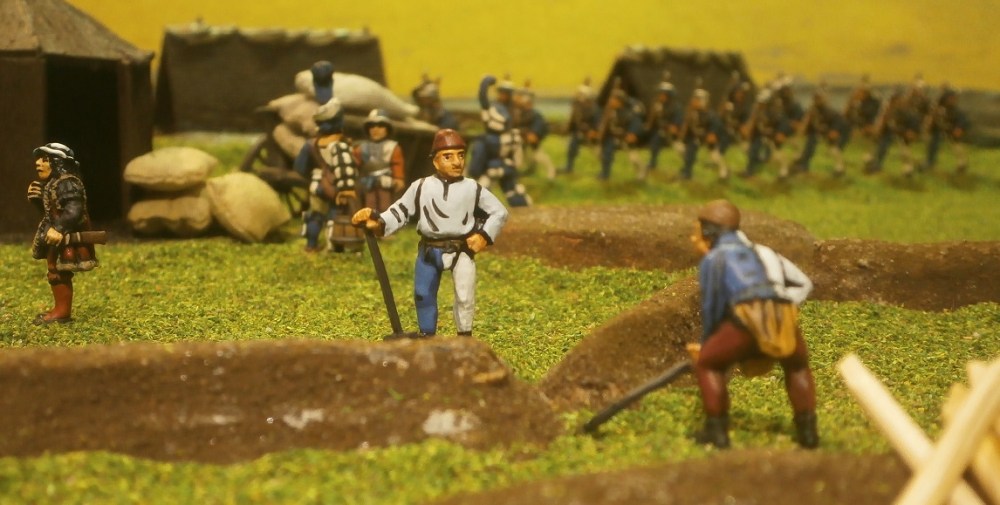
“Good, ‘cos my back’s aching like never before and the blisters on my hands burn something rotten.”
“Better than the alternative,” Berto said.
Fede wiped his furrowed brow. “What?” he asked, bemused. “Better than marching around a bit or sitting by the fire warming our feet?”
Berto laughed. “No, better than going up ladders to face living corpses harbouring deadly intent.”
“Well, true,” admitted Fede. “Except, now we’ve built this, making it obvious we’re not going to attack the city, won’t the enemy bring the fight to us?”
Berto rolled his eyes. “I don’t know! But that’ll still be better than us climbing siege ladders. I’d much rather poke at them from behind our own works than be the one being poked at.”
“I’m not keen either way, especially if I’m worn out from labouring,” complained Fede. He looked around, then asked,
“D’you know where Cola and Bandino are, ‘cos by my reckoning it’s their turn to do some shovelling.”
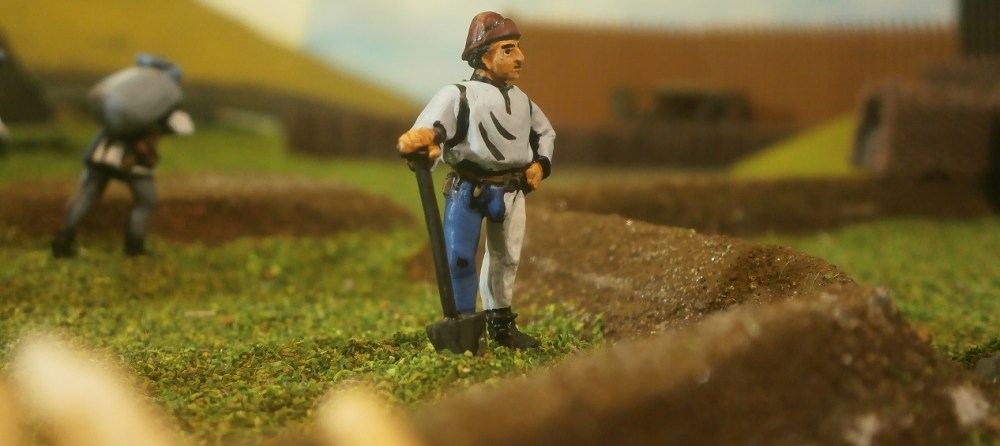
“Cola went off to fetch more stakes, and Bandino’s over there by the wagon”.
“Where?”
Berto stopped work for a moment and pointed behind Fede. “See the boy you laughed at this morning?”
Fede turned his head. “That skinny lad with the painted helm and the ill-fitting plackart?”
“Aye, him.”
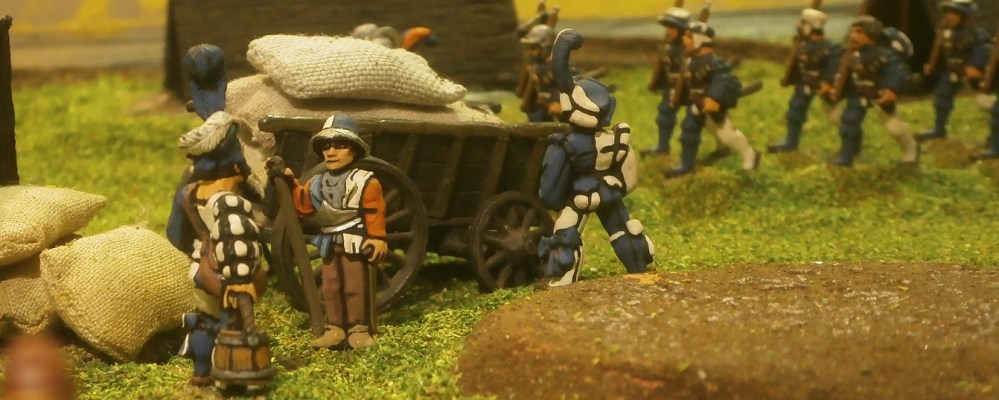
Fede snorted, as he had done when he first laid eyes on the boy. “I seriously doubt anyone in this world is less well equipped to strike fear into the undead foe than that lad.”
“Not gonna argue,” said Berto, recommencing his shovelling. “Anyway, look to the boy’s right.”
“Oh yes, there’s Bandino. What’s he doing?
“Call o’ nature!”
“He’s taking his time about it.”
“Well, it’s like he says, if a job’s worth doing …”

Fede laughed again, then finished the phrase, “It’s worth doing well. I’d agree with him, if he was over here doing the job he’s meant to be doing.”
Berto paused again, this time with a serious look writ upon his face.
“D’you think they will come?” he asked.
“I reckon they will. It’s what they do. They can’t help themselves.”
“When?”
“Hopefully,” said Fede, with a wink, “after we’ve finished these works.”
Next Installment: Part 28

 BigSmallWorlds
One thought on “Tilea Campaign, Part 27”