In Search of Escape
Once mighty, then made small by defeat, he had thrust his way deep into the ground, through ever smaller crevices, down and down, as a means to escape his enemies and yet remain in their world.
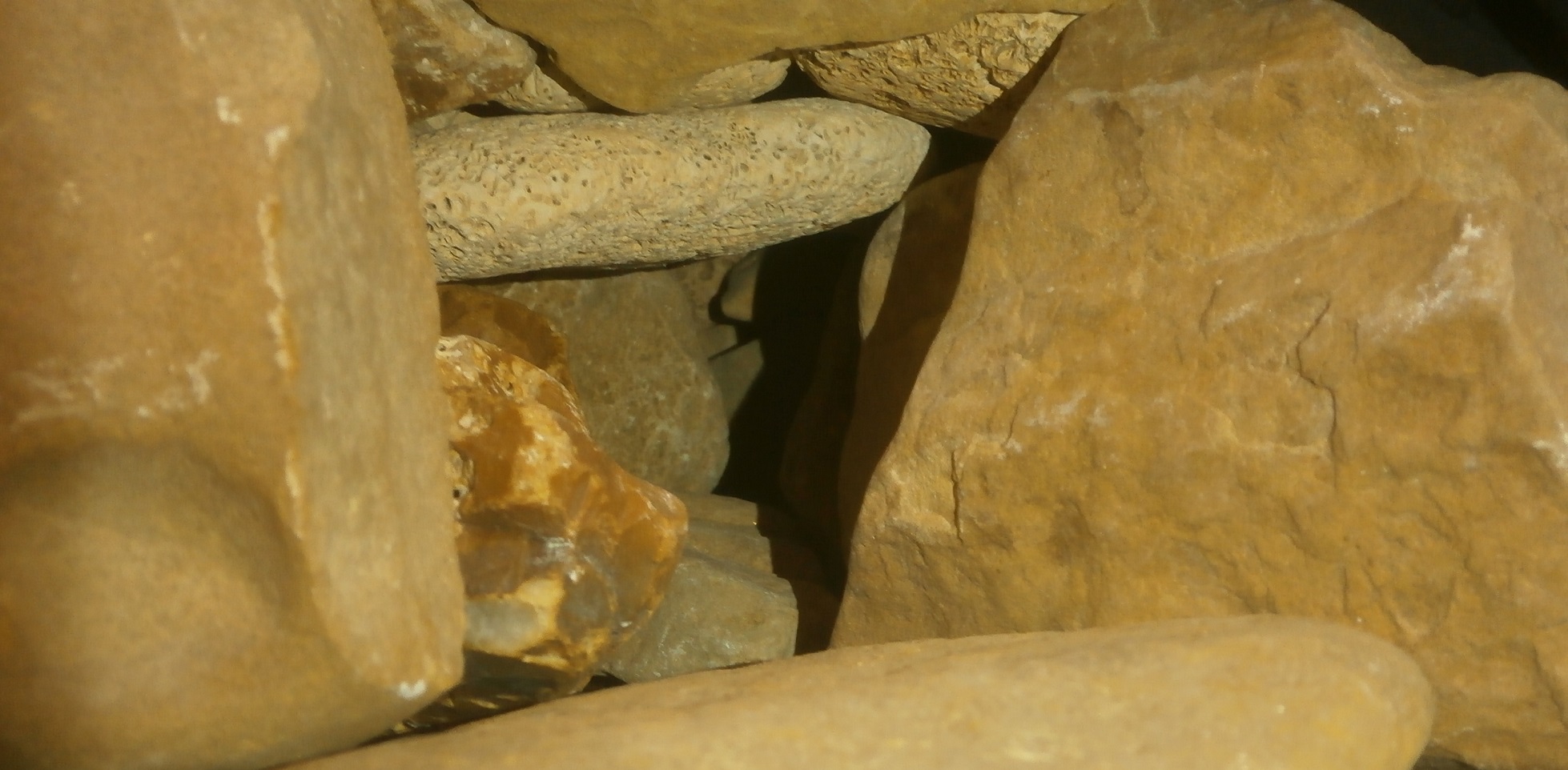
He had not been ready to leave, to return to the swirling miseries and glories of his own plane. He still desired what this world could give him, but he had tried too quickly to take it and been defeated by those he yearned to enslave. So, fleeing from them, and holding tight to his last possession, he dived through dirt, scrabbled through roots and grit, then slithered between sheets of rock …

… until there was no sound or light from above, and only sharp hardness all around. The deeper he went, the smaller he became, and the closer the spaces he squirmed through. The smaller he became, the simpler his thoughts, until his only urge was to find solitude.
When, at last, there was nothing nearby that crawled or wriggled, no roots slowly worming, not even a speck of mould or a drop of water containing the tiniest crumb of life, he stopped, and stayed.

First, he slept, and, fed by that he had brought with him, he grew, although much more slowly than he had shrunk. As he did, his strength returned and that which he had brought grew weaker, until he was made mighty again, while it had become only slightly brighter than the surrounding stone.

When at last he woke, his mind was as quick and cunning as always, so that his first utterance was a curse, for he knew immediately that somewhere in his descending diminishment he had forgotten how this world worked: how pearls were trapped in oysters and nuts were wrapped in shells; how a prisoner in an oubliette could only scratch at the enclosing walls and a sunken galleon was hard-pressed by the weight of the ocean above.
He was stuck.

His mind raced as he sought a solution, filling with a swirling mass of ideas, yet not a one of them helped. He tried every spell he could, but they proved useless as he broiled then froze repeatedly. He pushed, plucked and poked at every part of the rock surrounding him, but nothing budged. He philosophised and debated, taking the parts of both questioner and answerer. He considered returning to his own plane, releasing his grip on this and allowing himself to fall. But knew if he did so, he might never find the means to return to this world and so quench his burning thirst. He stayed awake for a hundred years, then slept two hundred more to see if the mere passage of time might offer an escape. He counted the years, then the months, then the days, then the hours, then every moment. When the numbers became too large, and it was impossible to hold them all, they spilled from his consciousness, taking some of his mind with them.

His senses, for want of anything new to sense, first numbed, then fell away one by one. Hundreds of years passed with only the same rock to see, illuminated by the dim light of that which he had brought with him, until finally he could not bring himself to look at it, and he forgot his eyes altogether. Smell and taste, never changing, were discarded. The silence lasted so long he gave up listening. And without moving he no longer knew there was anything to touch. He was a hair’s breadth from becoming entirely empty. A nobody and nothing.
Yet, despite neither waking nor sleeping, he dreamed. His mind slipped from and him began to wander. In so doing it gifted him a different kind of vision – momentary fragments of removed places and beings. He drank these glimpses greedily, ever more quickly, until they swirled furiously, as if he were a scholar reading a thousand tomes all at once, one word of each in turn. In truth, he may as well have been unconscious, for no sense could be derived from such myriad confusion. Time lost all meaning as once more he himself was lost.
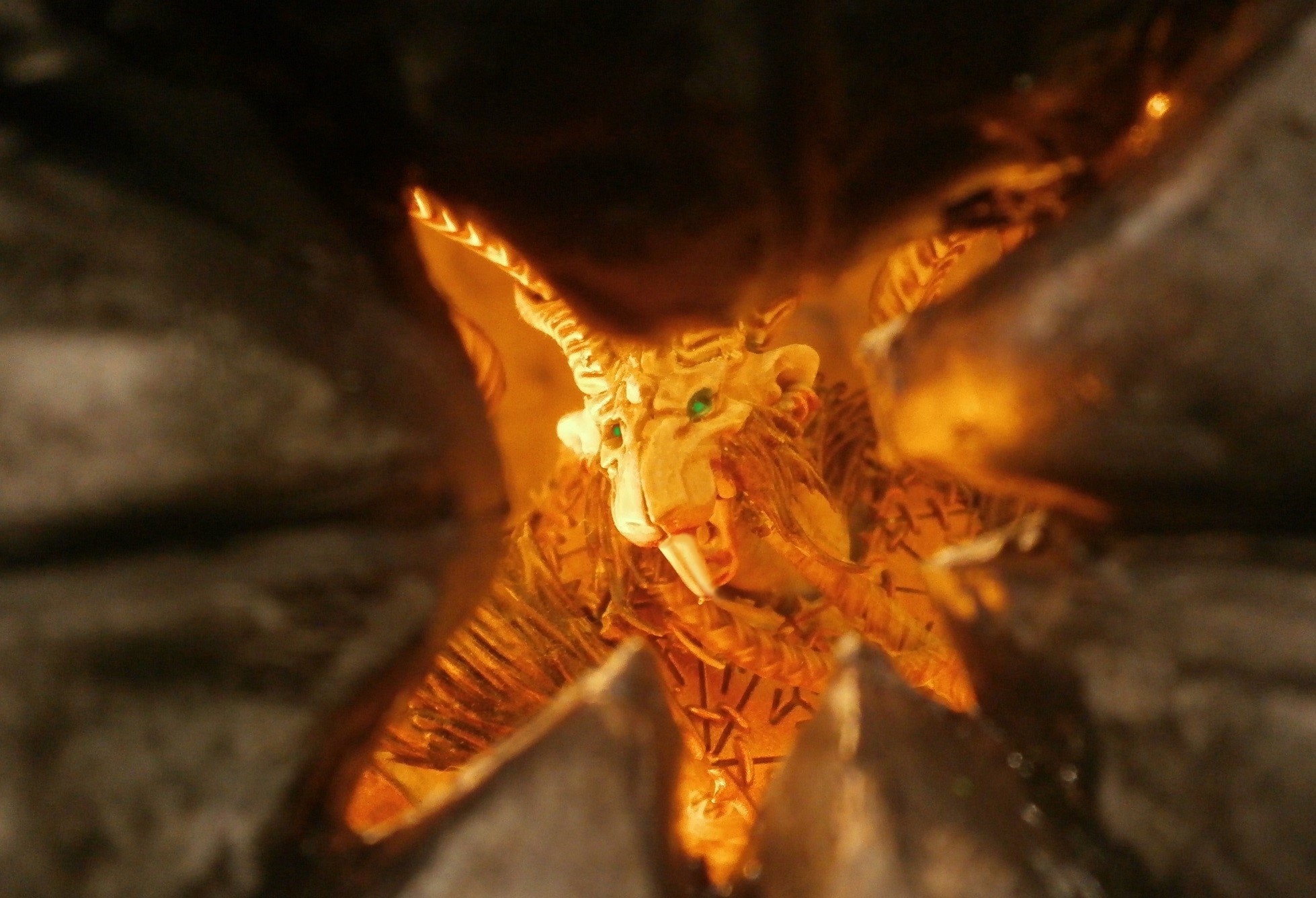
Eventually, by chance, some of the swirling images conjoined. These he held in place, refusing to yield them back to the maelstrom. Time passed, and his collection grew as he found more moments to put together, then more of the same, until they meant something, and made sense. Creatures moved through this place and that, spoke to each other, laboured and fought, played and plotted, and he understood. At last, now that his visions were arrayed orderly, he was once again able to stabilise his mind. It was as if he had found himself after a long sojourn. On doing so, he immediately cursed, because the means of escape was now made obvious by the visions, and it had always been available.
Others must free him.
Allowing the visions to pour through him, he lingered on all those of potential worth, so that he might understand them, and ascertain what exactly they could do to bring about his release. He learned of the world above, that he might be better prepared when he returned to it, and so more able to take it for himself. Incrementally, his visions revealed the best course of action, and in what order things must be done. Unable to reinvigorate the weak, dim lump he had carried with him to his prison, he must obtain another, one replete with power. He recognised what sort of creatures were required, and knew what must be done to make them his instruments. He sought out the likeliest candidates, then folded his visions into their dreams. Not all, but some, relished that which he gifted, and it was these who became his to command; his soon-to-be saviours.

He now sees a city where everyone believes themselves to be a lord or a lady, despite their ragged linens. Rather than gold embroidery, they have only torn, mud-spattered hems. In lieu of lovelock curls, they wear matted, lice-ridden hair, and instead of staffs and canes, they carry brooms and pitchforks. But their pride makes them swagger, their self-importance induces a willingness to wax lyrical concerning their own wisdom.

Somehow this brings to mind an earlier vision – that of a wizard who bore the same name is his teacher, Totto. A foolish fellow who encouraged the peasants’ awkward arrogance. A wizard who sees the world of men upside down, yearning to tip the city over to match that which he imagines, and who refuses to allow the peasants to bow to him, which only makes them more haughty.

Above him, but still beneath world’s surface, he sees clawed warriors marching, and when he remembers who they are and whom they serve he smiles. They are his pawns in this game, for their master fawns over him and will do anything to please him, no matter the cost.

Another vision, of trees and sparkling motes dancing in the sunlight, where courtly elves forget their painfully cultivated manners in arguments over their beloved forest. One green limb has been poisoned, horrifying them, so now they seek friends outside the forest despite fearing their prospective allies’ greedy intentions for timber and land. Brows are furrowed as servants ponder what such unwelcome novelties, within and outwith, could mean.

And here is another elf, who arrives at a stone city (a place where a great masquerade is played daily, a comedy disguised as a tragedy) there to meet with a lord who acts his part on the stage well, emboldened by the applause of his subject audience.

The two greet each other, as if old friends, while both know that they speak the words of a script authored by others.
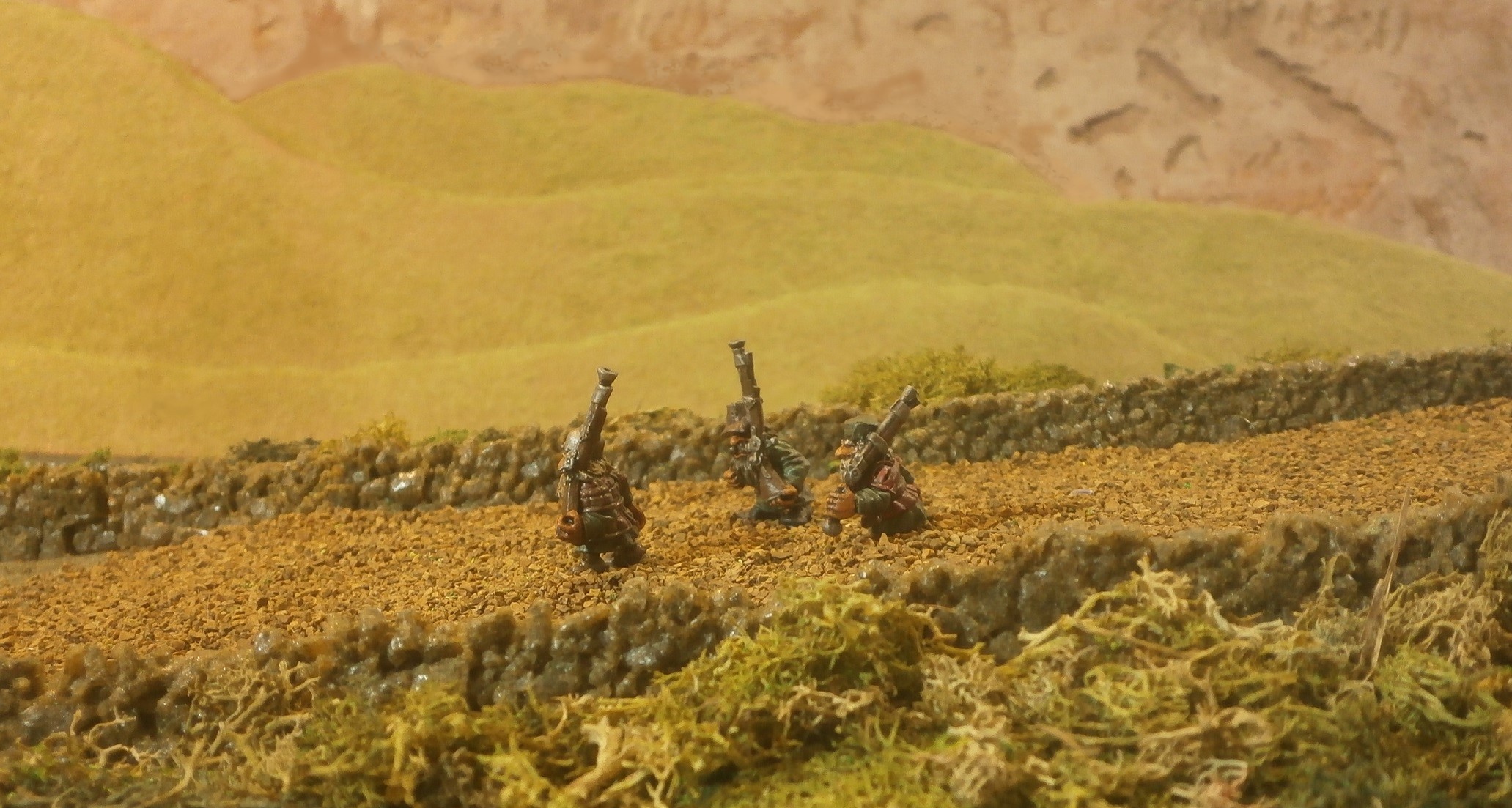
While on a mountain road, dwarfs argue whether men cannot or will not fight. Past failures have become bitter memories, and the mountain of wrongs to be put right grows ever higher. Yet their confidence is stubborn and deep rooted, and their true grudge is only that they have to do everything themselves.

Then again, hidden from the sun, he sees his pawns’ pawns scuttling en-masse, a rushing tide of hateful hunger, whipped into submission and yet ready to claw and bite at anything before them.
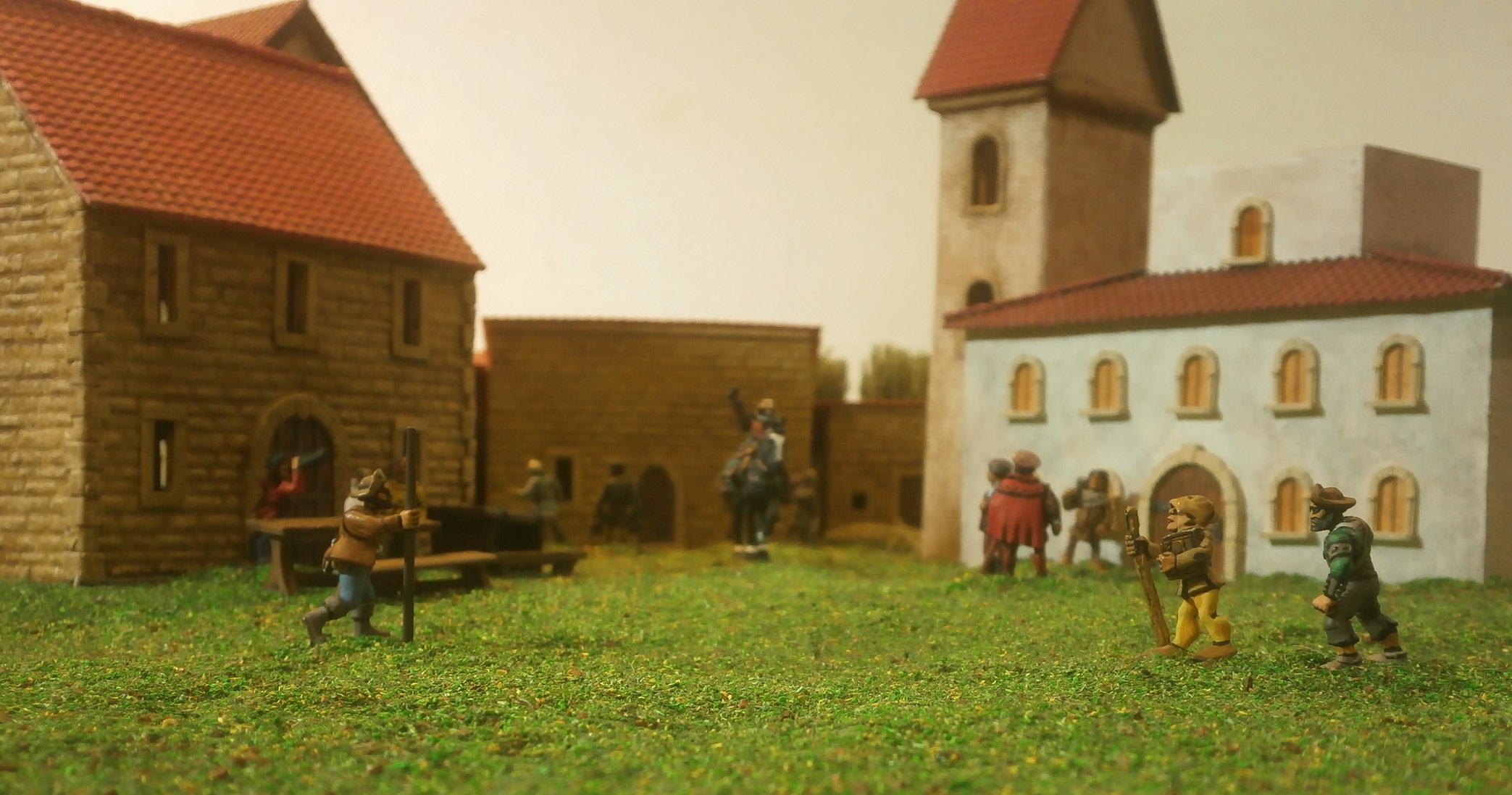
And in a town overlooking the sea, an addled lord vents his fears and loathing, but few will listen anymore, for he brought ruin to both them and himself.

His words are old, hateful scripture which few can bear to hear, for they remember lashings, hangings and the murdering of their loved ones, and a fury that burned painfully bright until suddenly snuffed out with nothing to show for it but exhausted regret, and the echoes of the ravings of a mad man.
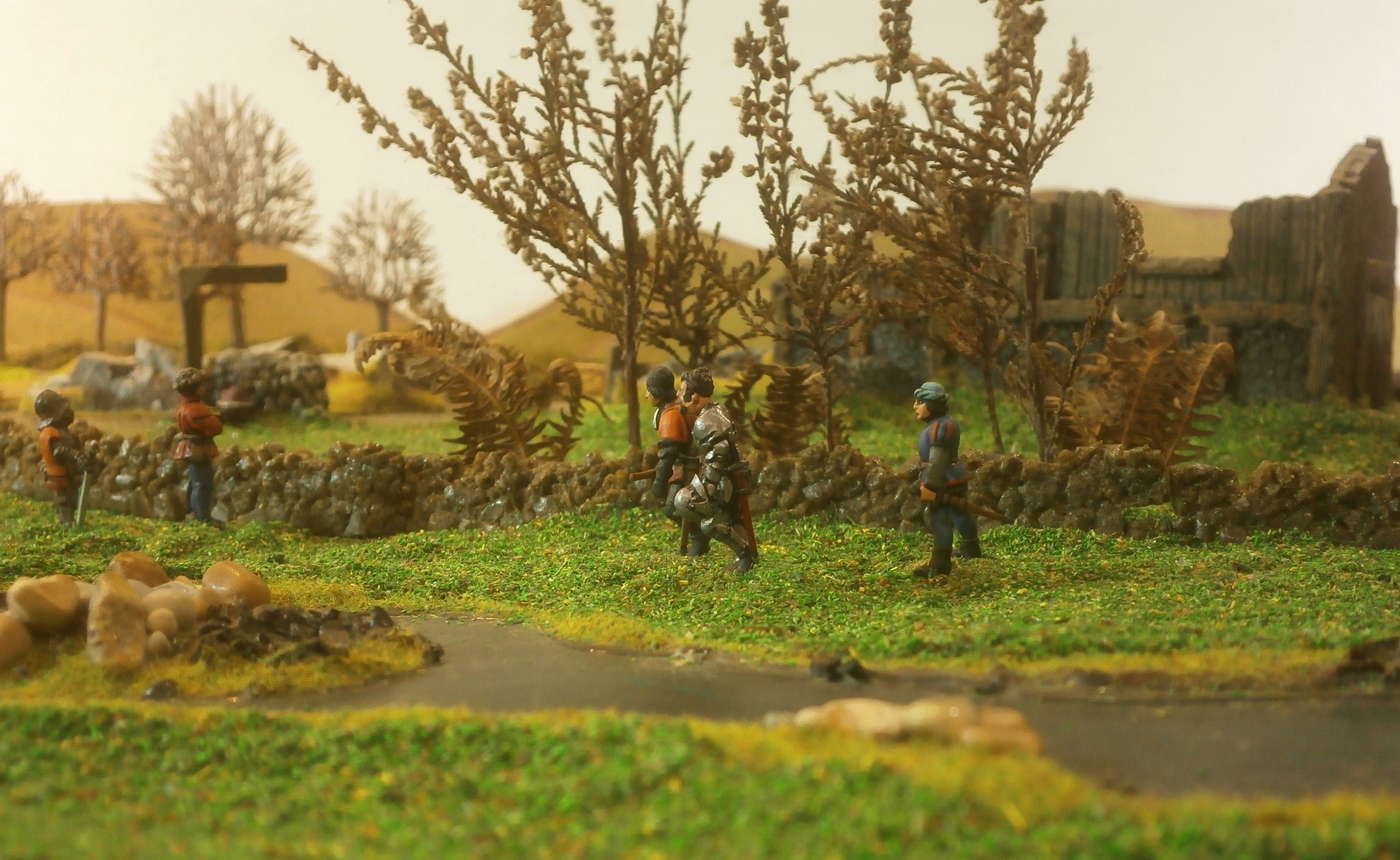
In another realm, by a burnt orchard, men far from home curse silently because someone else stole what they had stolen themselves.

Everything around them had been measured, valued, and recorded in neat ledgers, but an accounting now yields little.
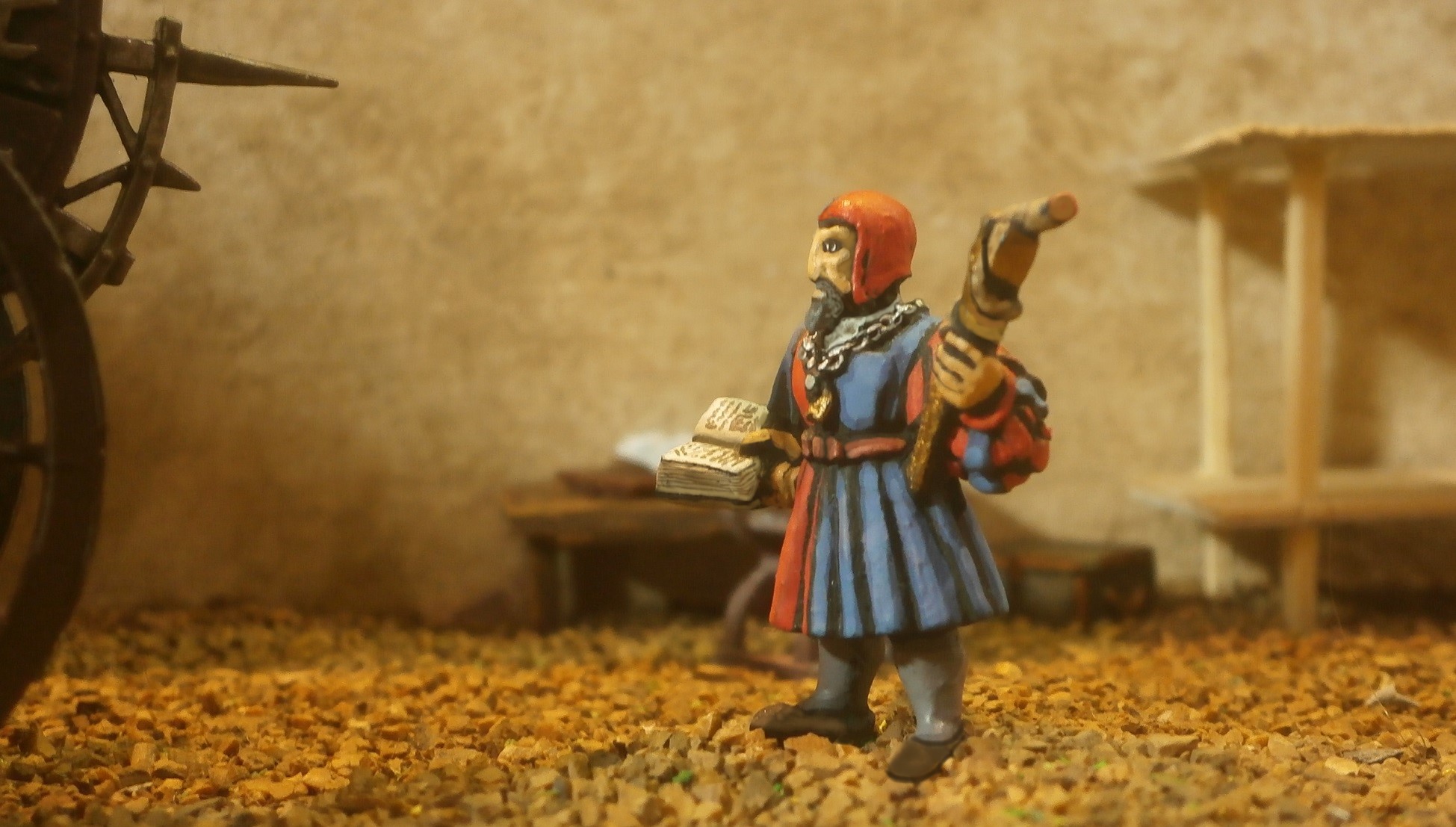
Meanwhile, in a mighty city, a proven genius chuckles at the game that has been played, but then grows serious upon turning his attention back to the contraption he has been studying, as puzzling as it is ugly.

Wheeled and wired, bearing a rotting corpse, its workings are an unfathomable mystery. Can this maestro find out what it was meant to find?
And now another joining – not of visions but of thoughts – for he himself wonders, at that very same moment, can he find what it was meant to find?
Then, at last, he sees those who stand close to what he wants most to see.

A hulking, grey-skinned pirate, upon a stony beach, framed by a bright blue sky. The pirate’s sea-dogs’ muttering chatter is like a chorus for his growling oratory, their eyes reddened by weariness, exacerbated by the taint of the beautiful stone they are arguing over.
He cannot see it, but he knows it is there.

‘Where exactly?’ he ponders.
And will it ever be his?
…
To Rise Above the Machinations and Lies of Weaker Men
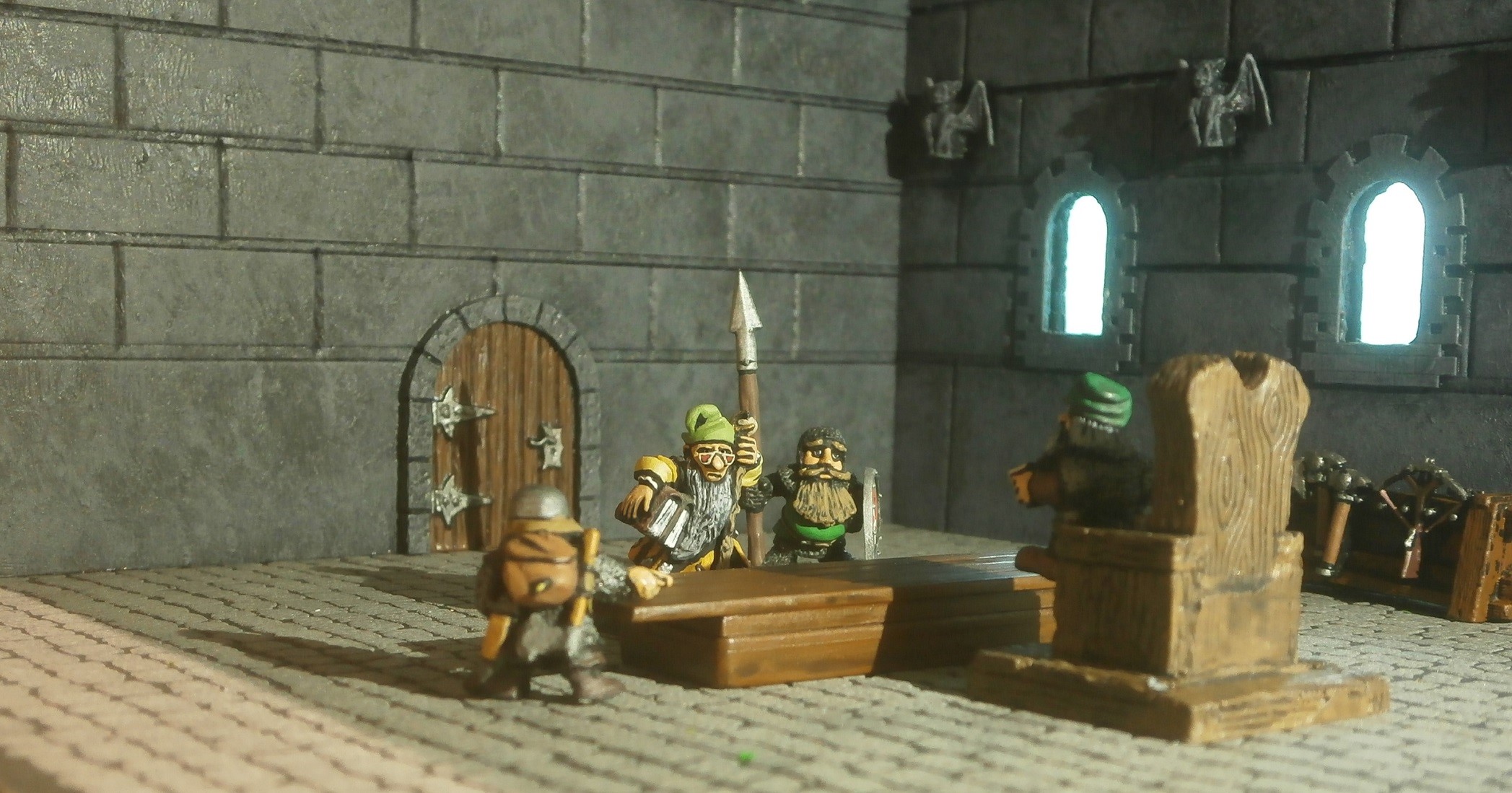
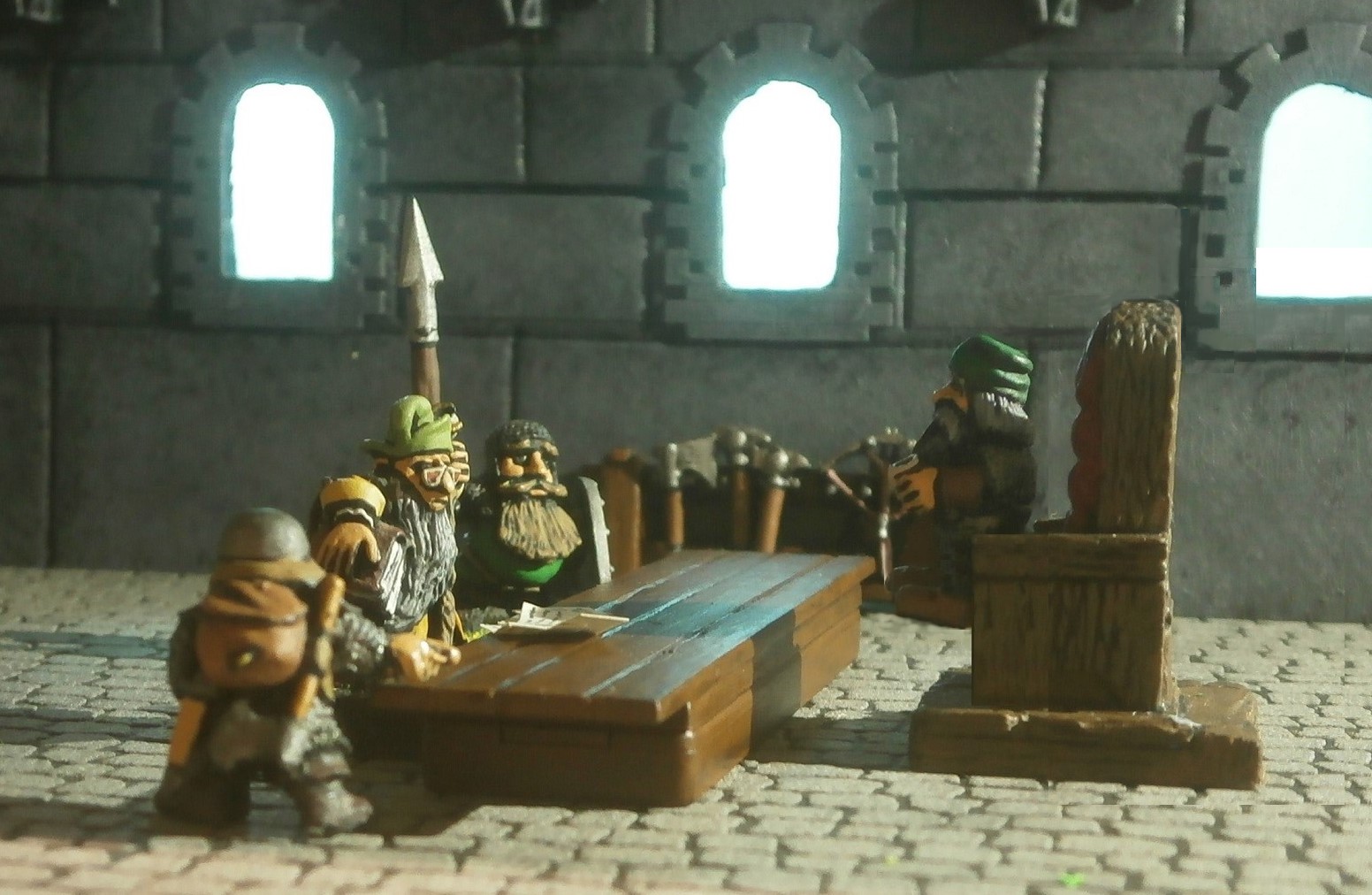
Glammerscale had waited over an hour for his audience with the king, but the delay stirred no annoyance in him, being glad as he was just to be admitted. What small doubts lingered in his mind, concerning whether it was a sign the king did not consider his council worthwhile, were washed away when he was ushered into the royal chamber and the king apologised for his tardiness.
“You have letters, I hear, that you wish to read, master mage. But none addressed to me?” said the king.

“You have been informed correctly, your majesty. It has become the new fashion. The rulers of Tilea don’t just send letters anymore, they publish them, intending that all and anyone might read them, or more usually, I suppose, hear them read.”
“Proclamations, then? But intended for more than their own subjects.”
“Aye, sir, you have it. I believe they are keen to seed the inevitable gossip with their own words, rather than printed speculations, or their enemies’ lies and slanders. No doubt, the accounts still change somewhat with every telling, but the origin of those accounts at least will be whatever they themselves wrote, and the letters provide a corrective reference.”
“All well and good, for them, that their words might be recounted more accurately. But does it really get us any closer the truth? Can we really trust whatever they wrote in the first place? I can think of many a reason for falsehoods even in the letters’ own words. The authors themselves could be lying throughout, or what they write could well be based on lies that they themselves believe?”
“Aye, sir. I admit freely, it is all very chicken and egg.”
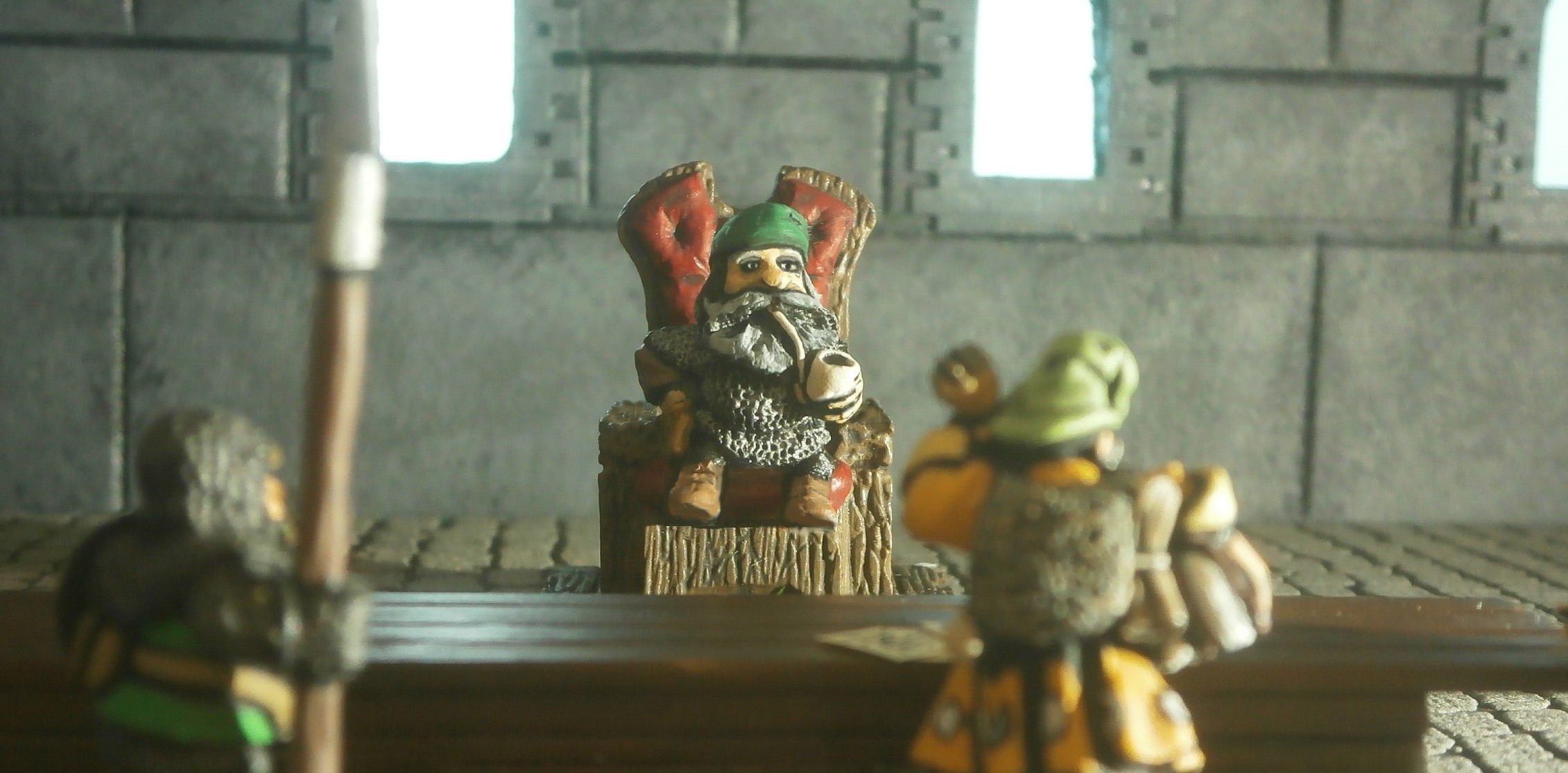
The king raised an eyebrow at this, but said nothing. Glammerscale immediately regretted his riddlesome words and wondered if the king’s silence was due to a unwillingness to admit his ignorance concerning the comment.
“By which, sir,” the wizard quickly added, “I mean, the lie might come either first or later, or both.”
The king smiled. “Lies are but one concern. Before hearsay and gossip do their worst, there is many a slip an author can make. They might be mistaken, deluded, or so angry that their minds are clouded. They might be making promises they have no intention of keeping or threats they have not the means to carry out. So, even when repeated word for word, these letters might still mislead far more than enlighten. Except, of course, the honest words of noble and honourable dwarfs with untarnished reputations to maintain.”
Glammerscale knew the king was jesting with him.
“I concur wholeheartedly, sir. But still, at least we may know what the author wants us to hear, which in itself is revealing, and a species of truth in its own way. What with their names attached, then we also have promises we can hold them too.”
“Which may become nothing more than broken promises we can admonish them for,” said the king. “But, mage, read your letters. I would like to know the noble gossip.”
“As you wish sir,” said Glammerscale, shuffling for the first paper he intended to read.
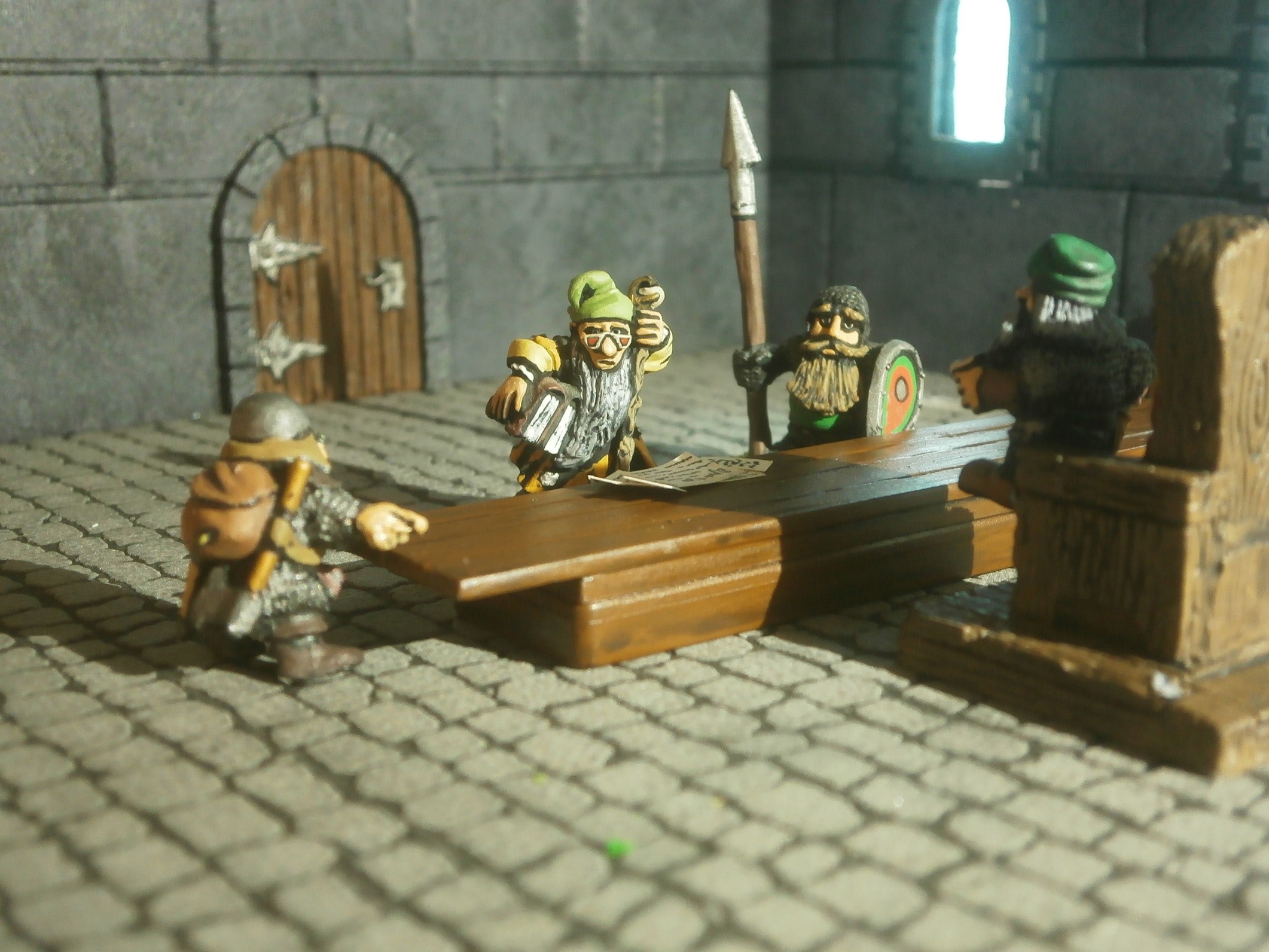
“This is from Lord Silvano Gondi. He sent almost exactly the same letter to umpteen rulers – this being the one printed in Remas. If the printer changed the words, then it would be known, what with so many other versions to compare it too. Besides, a pamphlet such as this most likely sells just as well when true to the original, as when the words have been mangled in some manner.”
The king simply nodded and gestured to the paper. Glammerscale cleared his throat and began to read.
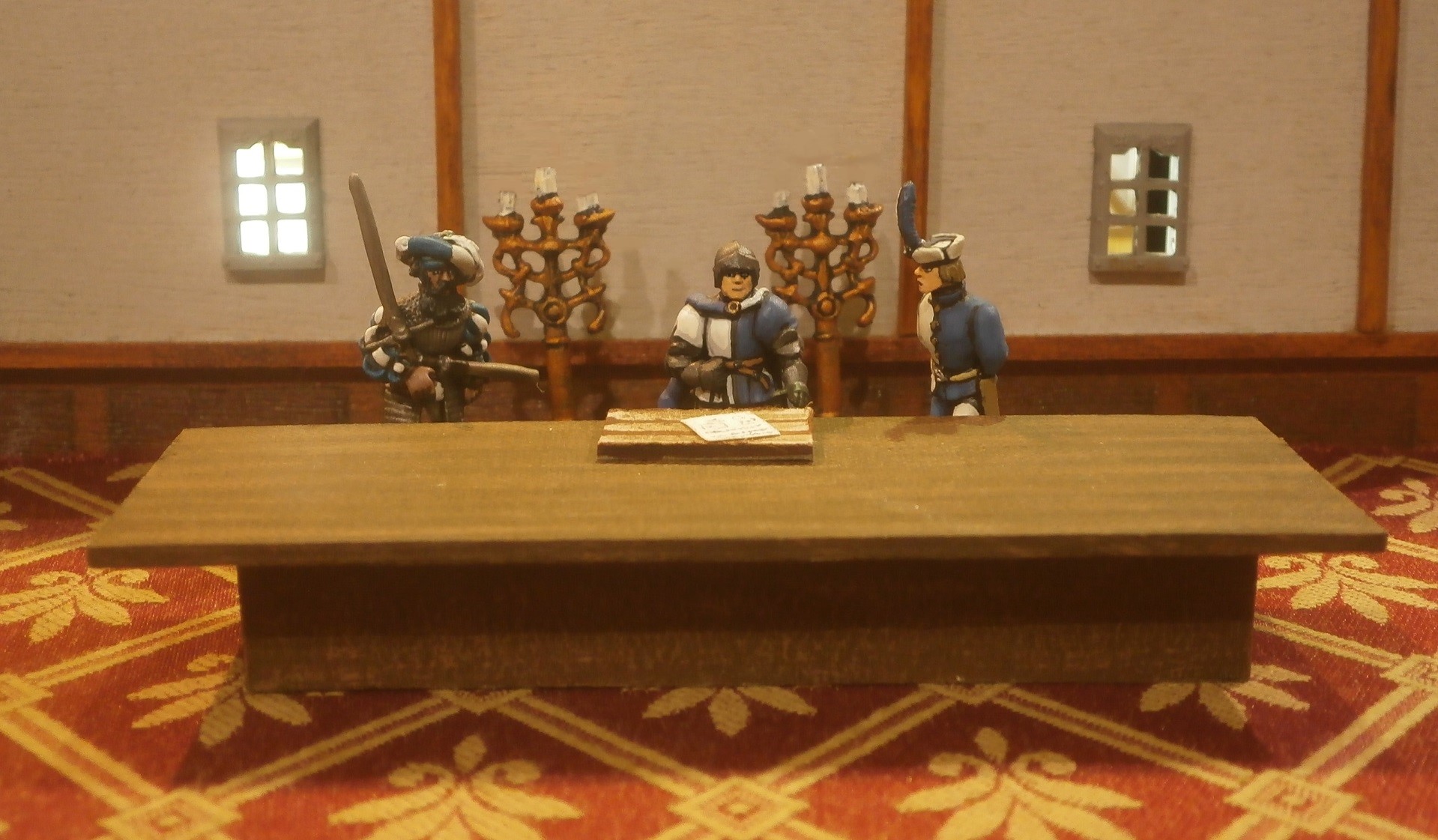
This letter is sent in earnest from Lord Silvano Gondi, regent of the ancient and noble realm of Pavona during the time of Duke Guidobaldo Gondi’s convalescence. It should not be lightly ignored or put aside for future consideration, for it concerns a clear and present danger threatening all the city states of Tilea.
“Ha!” said the king. “That’ll be the ratmen. The lad has his priorities right and wastes no time in preambles. I may like him.”
“He is advanced beyond his years, sir, both in experience of war and in politicking, and has had to learn quickly how to ameliorate the anger from all quarters over his father’s somewhat reckless actions.”
“’Reckless’, you say wizard? And you yourself banished from your own home because of that man’s bigotry? The lad has so far spent his few years of adulthood apologising for his father, attempting to right no end of wrongs, including murders most foul. I think an older man would have long since given up trying.”
“Then, sir, for Tilea’s sake, it is good that he is so young!”
“Read on,” commanded the king.

Every noble ruler, governor, high council and captain in Tilea has no doubt heard of the great and terrible weapon employed by the uomini ratto in their attack upon the realm of Campogrotta, which did not only kill almost all who were on the field of battle, but has since poisoned the land for leagues around, and so tainted the waters of the River Tarano, that the flora and fauna along its banks suffer sickness and death almost unto the sea.
“I hope the lad is not going to make merchants and traders afraid to travel through Campogrotta, for that would make our Iron Road somewhat quiet. Still, something must be done.”
Glammerscale returned to his reading:
The enemy’s leaders are unlikely to be satisfied with their conquests of Ravola and Campogrotta, however. For many centuries they have been known for their particular greed and lust for power, their urge to swarm across the whole world and make themselves the foul masters of all. As for their terror weapon, if they can fashion one such, then they can make more.
“I have no doubt they could do so,” interrupted the king. “Yet in truth their second engine was a falsehood, merely a simulacrum made to appear dangerous. They thought to threaten us all with such trickery.”
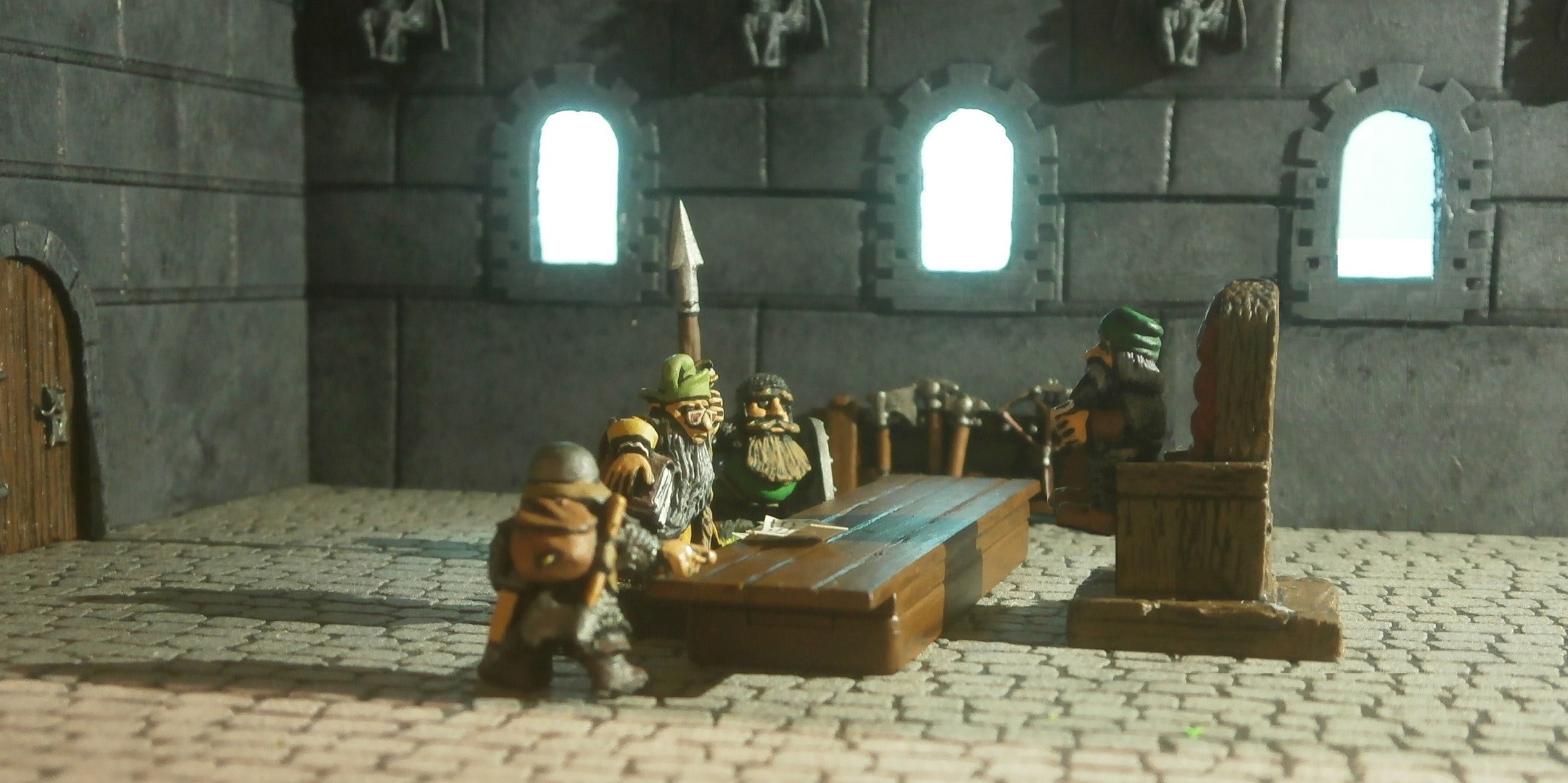
“They did sir, but their threat was made credible by the fact the first engine had indeed been truly destructive. I believe this letter was written in the Winter months, before the Reman victory over the ratmen and their subsequent discovery regarding the true nature of the so-called doom bombard. To my mind, the fact that this was not corrected by the letter’s printer, makes it more likely that these are Silvano’s actual words.”
“Then,” suggested the king, “let us hear what else the lad has to say.”
Glammerscale continued reading.
If they have consumed two realms already, then they likely intend to feast on more, for their hunger knows no bounds, and only waxes with victory. They surely planned to benefit from the turmoil caused by the wars against the vampires and brutes, to strike just as Tilea’s city states have been weakened by years of conflict.
Only last month an uomo ratto spy was discovered in our city of Pavona, and was killed before attempting whatever assassination it had in mind or passing on what intelligence it had gained. I warn all rulers to be wary of such spies. You must know that we are, all of us, being watched, and it does not bode well. The uomini ratto, like their smaller, animal cousins, favour the darkest and most squalid of places, the sewers, cellars and alleys of our cities, navigating the dark shadows around us without our knowing. From there they can listen or creep forth to steal and murder. For over a year now we have known that several many companies of uomini ratto warriors, some of considerable size, have been scouting the Trantine hills & surrounding areas, and that they have once again found a way to travel beneath the ground, perhaps repairing and extending the underpasses of past ages.
The king grunted. “The Pavonans think they have it bad. They should try mining beneath the mountains, where day and night a watch has to be kept upon all sides, at every crevice and passageway, to prevent the ratmen’s incessant incursions. Still, it is all new to them.”
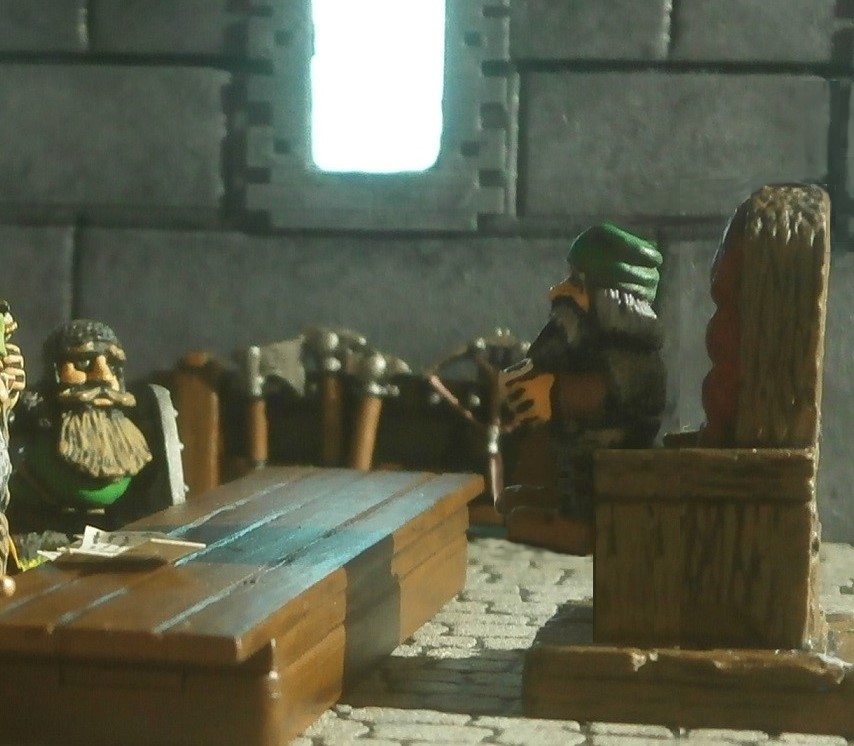
He pointed at the letter, indicating Glammerscale should continue.
Spies, assassins and scouts, combined with assaults, conquests and terror weapons, all together reveal that uomoni ratto are no longer merely plotting and preparing, but have commenced open war. And so it is, that if any state within Tilea wishes to survive this new assault, a grand alliance must surely be agreed. Only a force to rival that with which Lord Alessio of Portomaggiore drove back the undead into the marshes, could possibly defeat and destroy the verminous hordes.
“He is not wrong,” said the king. “They will likely need an army larger than that which Lord Alessio gathered. And he had dwarven regiments from Remas fighting for him, no doubt each worth two regiments of men. But forgive me my interruptions, master mage, please, read the rest.”
Glammerscale was not used to such apologies, certainly not from any noble dwarf. Even when he lived in the society of men, other dwarfs had thought him a strange creature, simply because he had chosen to study magic, and most were generally lax when it came to manners during conversation with him. Here in Karak Borgo he was most often shunned, and only really conversed at any length with other exiles, or those ordered to speak with him.
He continued to read.
I bravely served in the war against the vampires and was injured in the battle to defend Remas and the whole of the south from Boulderguts’ double army of ogres. Yet, I am now fully willing to serve again, and to command every soldier Pavona possesses in the battles to come.
No single city state, alone, can hope to win against this new threat, so I now ask Remas, Verezzo, Portomaggiore, Ridraffa & Alcente, to send all they can to join with me. The grand alliance army so formed, governed by a council of war and the noblest of generals, should then act to defend any and all of those states who contributed a proportionate force to the army, immediately and as required, to discover and destroy every verminous army sent against us.
“I note,” said the king, “he does not include us in his list, nor did he send any such letter to us. Perhaps he bears some hatred of dwarfs, like his father?”
“Or,” said Glammerscale, “he did not presume to write to us because of his father’s past deeds?”
“A shyness, or shame? Possibly?” suggested the king. “But of course, he must know that we are already embroiled in war against the ratmen. While we do what we can in the north, then let him do what he can from the south.”
Glammerscale knew better than to enquire concerning the king’s communications with the elves and the Arrabbiatti. Such diplomacy was a matter for the king and his courtiers, and he did not count himself among the latter yet, although, he was working on the matter.
“Lord Silvano does not exactly say it,” the king continued, “but I would bet he wants command of any alliance army that gathers.”
“Well he might, sir. What with his father’s invalidity, he has had to take his new responsibilities to heart – commanding Pavona as if he were already duke. Certainly, it seems the Pavonans obey him as if he were. It is strange that his father hasn’t formally relinquished power with another public letter, although it may be that we just have not received any copies of such a pronouncement.”
“I know enough about Tilea’s rulers, master mage, to know that Duke Guidobaldo was never the sort to yield his authority. He will cling to power until his last moment.”
“Aye sir, he will,” agreed Glammerscale. “But circumstances have conspired to allow Silvano to seize power nevertheless. I wonder if he can just as successfully seize generalship of any alliance army, formed?”
“That’s doubtful, master mage, for he has powerful enemies. The shadow cast by his father’s dreadful deeds stretches far and wide, and those directly slandered by the duke’s lies and deceptions, of which some are named in that letter, will surely find it hard to trust the son of such a lord.”
Glammerscale flicked through the papers, pulling one out.
“On that note, this here is supposedly from Lord Alessio of Portomaggiore. If it is genuine, then he has no confidence at all in the young general, nor apparently, even a shred of respect. Would you hear it, sir?”
“I will listen to whichever you think I should hear. This is why you have been summoned, master mage.”
Gammerscale bowed, coughed to clear his throat, and spoke.
“It reads as a personal missive to Lord Silvano, but was nevertheless printed for all to read …
From Lord Alessio Falcone to Lord Silvano Gondi (heir to, and regent of, Pavona)
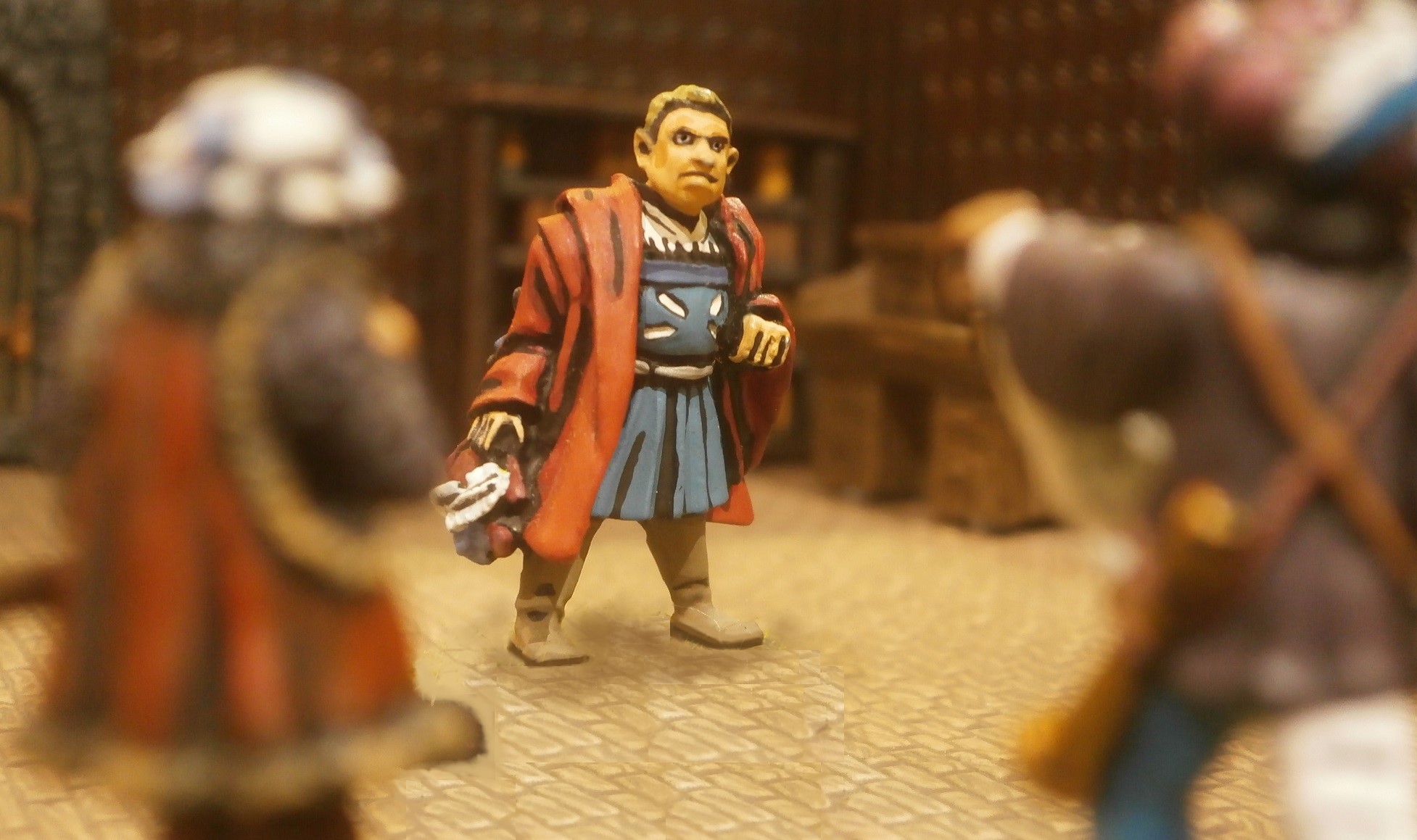
We thank you for your letter, received this last week. As you might imagine, the Sartosan pirates’ cowardly assaults upon our beloved Portomaggiore did greatly offend us, and threatened to reduce my soldiers’ spirits, despite returning victorious from the long war against the vampires, which we saw to completion, burning the entire city of Miragliano, so that every accursed corpse was reduced to ashes and the very ground cleansed of taint to a depth of several feet, in a fire so hot that the waters about the city boiled.
In truth, your letter raised my captains’ spirits, for they considered your father’s insult, that of employing my personal standard in a duplicitous attempt to pin the blame for your own heinous crimes on Portomaggiore, so wrong, that they were happy to hear how you tremble in fear at the threat presented by the verminous hordes, so much, indeed, that you are forced to beg for aid from those you have most foully slandered. Several captains jested that they would rather have sided with the late duchess than with a Pavonan, such is the magnitude of their anger over your father’s monstrous deed.
Yet, I myself am both practical and honourable, able to rise above the machinations and lies of weaker men, and if not to forgive easily, then at least to find a way to prevent the further, unnecessary suffering of the common people. And so, rather than dismiss your proposal of an alliance against the uomini ratto, I am willing to enter into such, provided that either you or your father (presuming he is sufficiently recovered to do so) offer a formal and public apology for your father’s transgressions, as you gave to General Valckenburgh of the army of the VMC and also Barone Iacopo of Verezzo, thereby, to satisfy myself, my captains and my subjects that you acknowledge all the blame arising therefrom. And, furthermore, that you pay a full and suitable monetary recompense for the impugnment of both mine and my captains’ honour.
This offer is made, howsoever doubtful of an honest & reasonable reply, in light of Tilea’s future survival. Lord Alessio Falcone.
The king pondered this a moment, while Glammerscale awaited what he had to say.
“So,” said the king, “Lord Alessio would have Silvano beg yet again for forgiveness, as he has done twice before, as well as pay a fine? His is a penance that never seems to end!”
“I have heard, sir” said Glammerscale, “that Lord Silvano’s most common utterance is that he is not his father.”
“Well, that won’t help the lad with Portomaggiore. I think Lord Alessio hates everyone with the name Gondi. It may well be that Alessio is tired of campaigning, and whether he knows it or not, is using his dislike of Pavonans to excuse his inaction.”
“Or perhaps, sir,” suggested Glammerscale, “he hates the Sartosans more, and would first have revenge on them for their murderous pillaging of his realm before dealing with the Pavonans.”
“He ought to be careful,” said the king, “that he does not allow an urge for revenge to make him blind to present threats. If I were he, I would think to bring about the defeat of the ratmen before I tried to settle old scores. But, that said, he is far to the south, and perhaps there are enough of us to the north to beat the ratmen without his aid. What of the elves of Tettoverde forest? Have they sent letters to the Tilean lords?”
Again, Glammerscale bit his tongue concerning his desire to know of elven letters to the king. If his majesty wanted him to know, he would tell him.
“There may well be elven letters, sir,” answered the wizard, “but if so, not among those read in the squares and temples, nor those published in print.”
The king laughed. “The elves probably fear the mangling of their fancy words by human printers and orators! So, what else do you have to read?”
Glammerscale was already thumbing through the collected papers.
“I cannot read elven letters to you, sir, but here are two from an Estalian vizconde. It appears one was addressed to Lord Alessio and the other to the VMC’s General Valckenburgh, but both published for public consumption. They concern why he has returned to Luccini.”
This to Lord Alessio Falcone, from your old friend Vizconde Gismondo Giacometti.

From childhood I both honoured and respected you, noble lord, and in continuing the same, as well as knowing the fondness you bear for my cousin, King Ferronso, I wish to inform you of my motives and aims concerning my arrival at Luccini. I want only to assist my cousin and his realm in any way I can, to ensure that Luccini prospers, and will no longer be a burden on realms such as your own Portomaggiore, but instead become a benefit to the whole of Tilea: able to defend itself, assist its neighbours, and contribute to the commonweal of the entire peninsula. Furthermore, although I am most keen to help in any and every way I can, I was earnestly invited here by Duke Ercole Perrotto, in his capacity as regent while his nephew the king is incapacitated as a consequence of his tortures at the hands of the Sartosan captains.
Duke Ercole desires that I employ my military experience as well as his and mine own forces, both Solsonan and mercenary, to guard Luccini from further incursions and not only regain control of those settlements critically injured in recent months, but to ensure that they are nursed back to full health. Whether it be Sartosan corsairs or the vile uomini ratto, any who threaten this realm in future will surely soon regret their actions and indeed suffer considerably as a consequence.
I pray that Morr and all the lawful gods guide & protect you, and reward you bountifully for your great service against the vampires.
The king’s brow furrowed.
“Luccinans, Solsonans, mercenaries?” he mused. “That seems a lot for defending a realm against an already sated Sartosan fleet, and surely Luccini is too far south to be troubled ere long by the ratmen? I wonder, does he know the Sartosan’s intentions? Perhaps they are not dispersed? Even so, to raid a realm they have already robbed twice over, that seems unlikely. What of the other letter, master mage?”
Glammerscale had it already to hand, and read immediately,
This to the honourable General Valckenburgh, from Vizconde Gismondo Giacometti, cousin & servant to King Ferronso of Luccini.
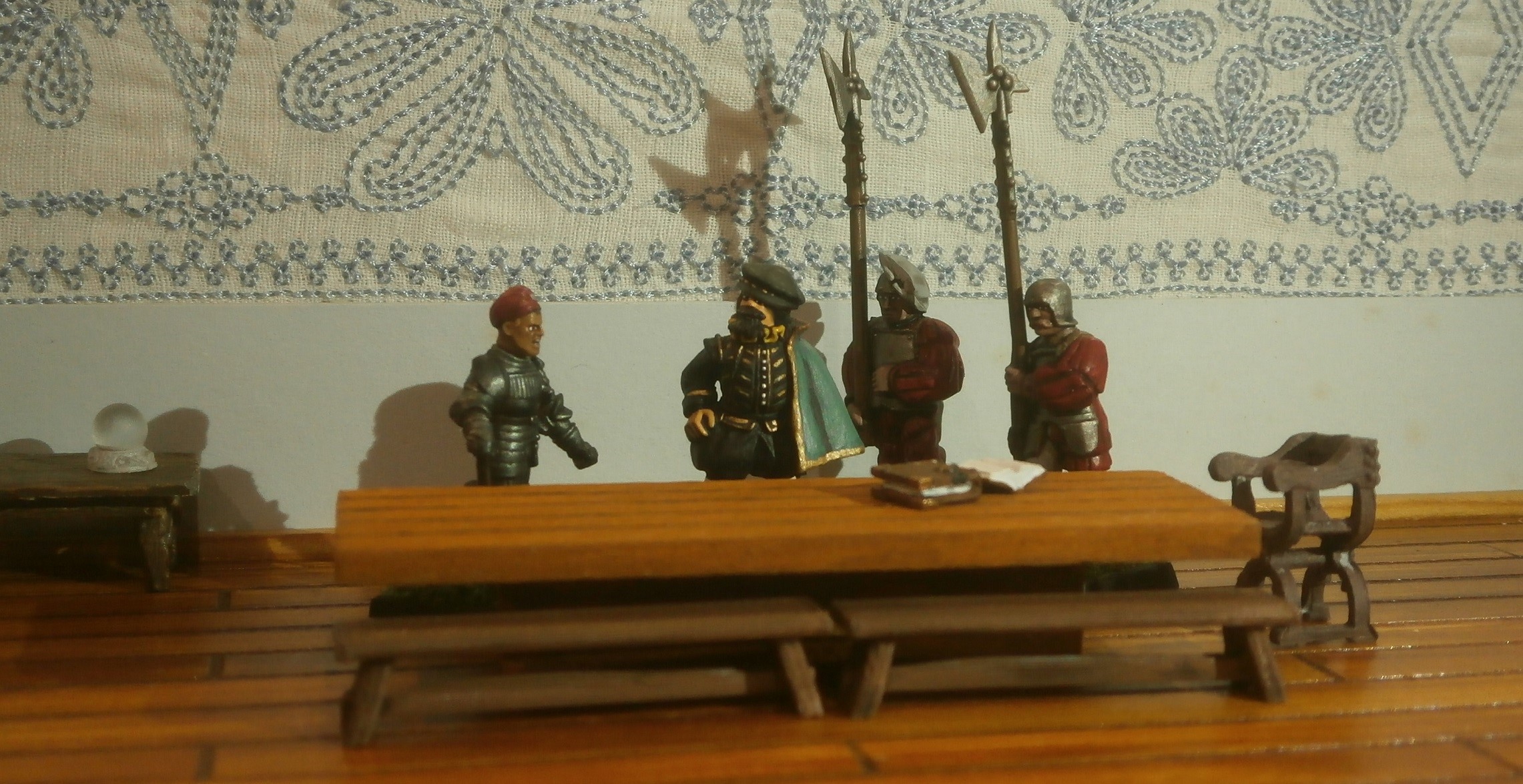
So that you may not be deceived by false rumours and suppositions to believe untruths concerning my purpose in Tilea, I want you to know that my goal is only to aid my royal cousin in the heavy burden of nursing his realm to full recovery after the punishments inflicted upon it by the Sartosan scum who similarly ravaged your own realm of Alcente, and to return to its rule all estates and proprietary rights previously lost. In so doing, Luccini can be made both defensible & strong, as well as healthy & prosperous. The threat of Khurnag’s horde is no more, thanks to the victories of your own army, and the Sartosans have, for now, quit our shores. However, Luccini cannot be allowed to lie wounded and weak for any length of time. It ought never be a burden upon its neighbours, but rather a strong ally against evil and a righter of wrongs.
“‘False rumours and suppositions’ he writes”, said the king. “Either someone is saying bad things about this vizconde, or he believes the VMC general has a grievance against him. Or perhaps, he simply wants to appear harmless. I suppose time will tell which of these is true.”
Glammerscale nodded in agreement, then said, “What else was added to these missives, for the recipients’ eyes only, can only be guessed it, if indeed there were any such additions. But I suspect that despite these public letters, there is likely no lessening of the number of private messages.”
The king chuckled. “Aye, I have no doubt of that, nor that any of them were any more truthful than these you have read.”
“There is one more, sir, which seems of importance. It mentions Campogrotta, though not the Arrabbiati. And it mentions dwarves, and indeed you yourself sir!”
“Oh, does it? Well, you have saved the best ‘til last then! Go on,” commanded the king
“Lord Silvano, most likely before receiving the letter I read from Lord Alessio, seems to have redoubled his efforts to bring to fruition his grand alliance army. As well as letters sent elsewhere, including some continued exchanges with Pavona’s erstwhile enemy Verezzo, he has penned a further, public missive, which is as follows …
This to the noble rulers of the three greatest city states in the south and the west of Tilea, His Holiness Bernado Ugolini of Remas, Lord Alessio of Portomaggiore and General Valckenburgh of the Army of the VMC … here he lists all the other rulers in the south … from Lord Silvano Gondi, ad interim regent to the ancient realm of Pavona.
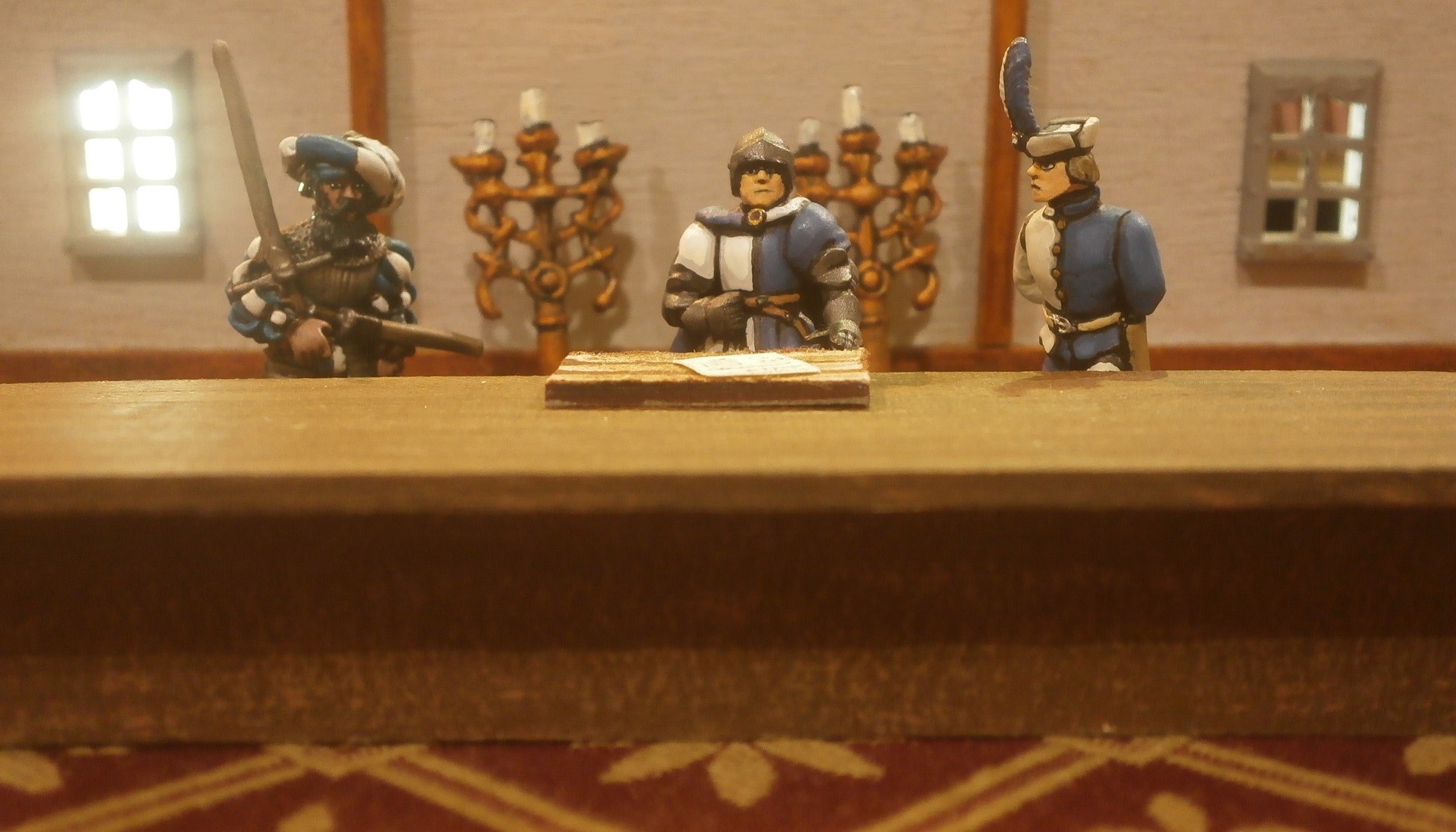
None in Tilea can fail to know the threat presented by the uomini ratto, resurgent as they are in the wake of several destructive tides, and having smelled the blood of Tilea’s wounds they no doubt seek to strike while the city states are reeling from the blows received.
It is not in my nature to seek refuge in such a time, to lie abed in my chamber, nor shelter behind the city walls, nor only to pray that the gods might inspire other commanders to take up the sword of battle. It is widely known how I have fought many a conflict, despite my relative youth, against the foulest of foes, in the defence of mine own and several other realms, even unto being grievously injured in the defence of the holy city of Remas. Despite such trials, immediately upon recovery I rode in earnest to assist in the defence Campogrotta against the ratmen, only to be forced to return by the news of the assassination attempt which so wounded my father.
I have never yet broken a vow to fight any enemy and I intend never to do so, thus I shall return to the fight against the verminous hordes. The Remans under his Holiness Bernado faced the ratmen in battle only a month ago, and General Lord Alessio led an alliance force far to the north to victory, fighting against the foulest of foes in battle after battle. It is too much to ask either of these great leaders to shoulder the burden yet again, especially after all the suffering of their own realms, and so I offer myself as captain-general of a new grand alliance force …
“Ha!” blurted the king. “There it is. The arrogance of youth! I said as much. Go on. Go on.”
… I offer myself as captain-general of a new grand alliance force to push northwards and secure the realm against any and all verminous resurgences, to nip their growth in the bud before they can muster sufficient strength to threaten the heartlands of Tilea, and to ensure that the defeat of their army by the Remans is truly the beginning of the end of their incursions.
Thus it is, that I beg of you, in service of the people of Tilea and all the lawful gods, to send what force you can to gather at Trantio, a city I know well, having once ruled as protector, being perfectly situated to act as a bastion from which either to launch the assault or break an attacking force.
And as a sign that this is a new age for Pavona, under the guiding hand of an enlightened prince, as proof of Pavona’s transformation and renaissance, I have decreed that dwarves will once more be welcome in our city: to dwell, to trade, to prosper, as full and respected citizens.
“Oh, so you’ll be returning home again, master mage?” said the king with a grin.
“Well, sir, I was not planning to … err …”
“I am but teasing you, Glammerscale. Worry not and read on. I would hear what he has to say about me.”
This is done also in thanks to the dwarven king Jaldeog, who cleansed the northeast of the brute ogres, using both his own warriors as well as mercenary armies, seeking not conquests, but only to bring peace and prosperity for the city states there and elsewhere.
“He speaks very kindly, this young lord. And yet somehow, still, I feel my fondness for him slipping, for I sense a game being played here.”
“I think, sir, that among the ruling men of Tilea, there is ever and always a game being played.”
Then, he continued the letter:
I pray that Myrmidia might guide us in battle, that Mercopio might help feed and arm us and that holy Morr might ensure restful sleep and a heavenly welcome for those who die bravely in this great cause. And I pray to all the lawful gods that once the uomini ratto are driven from every corner of this great peninsula, then at last, well deservedly, Tilea might commence a glorious era of peace and prosperity.
“Well,” said the king, “if what you have read comes to fruition, I find myself uneasy that instead of Lord Alessio, who has achieved so much for Tilea, and at such cost to his own realm, the city realms might put their armies under the command of one so young, who bears a name so tarnished by his own father that it is generally hated.”
…
Contracts and Alliances
An Excerpt from Bonacorso Fidelibus’s Work: The Many Wars of the Early 25th Century
During the spring of 2405, the army of the VMC licked its wounds, dwelling in Alcente while the company’s newly won realm continued its slow recovery. Half the army had returned from the far north, having faced the vampires, while the other half had struggled in the war against the Sartosan pirates. The VMC trading company primarily sought profit, not bloody victories in war, and with Alcente and the surrounding lands being their source of such wealth, it was no surprise that they looked primarily to revive that realm, to repair and restore all that has been ravaged.
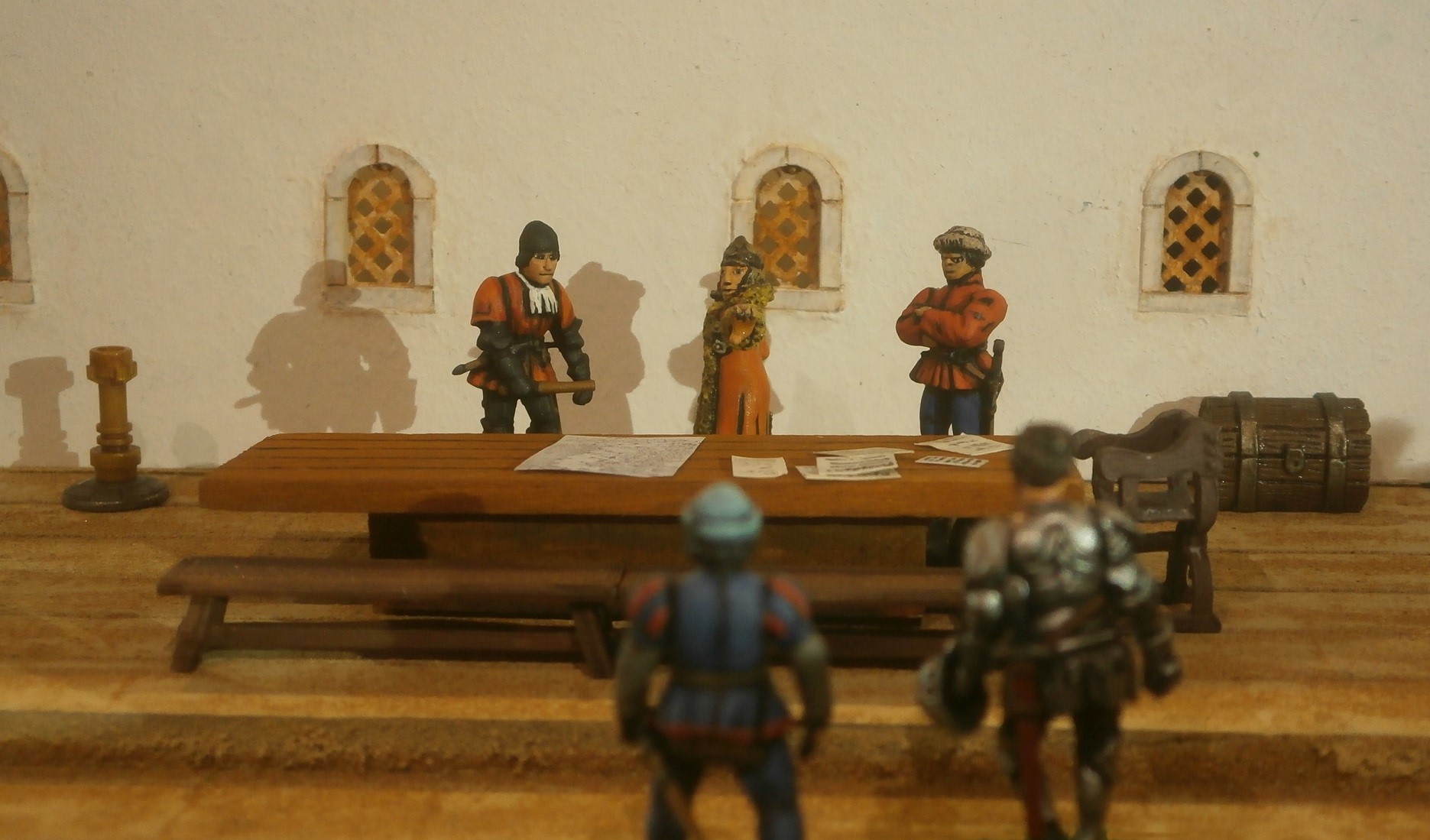
Several many letters were received from the troubled realms in the north, but few expected the VMC to engage actively in wider affairs after the recent tribulations. It was commonly said that General Valckenburgh spent his days composing excuses to be sent to his paymasters regarding the diminished returns yielded by Alcente and all the realms under his command, and that his only recourse was to promise even greater profits in the years to come.
Meanwhile, only weeks after the second departure of the Sartosan pirates from Luccini, Vizconde Gismondo Giacometti arrived with the remainder of his army – the first parts having landed a few weeks before.
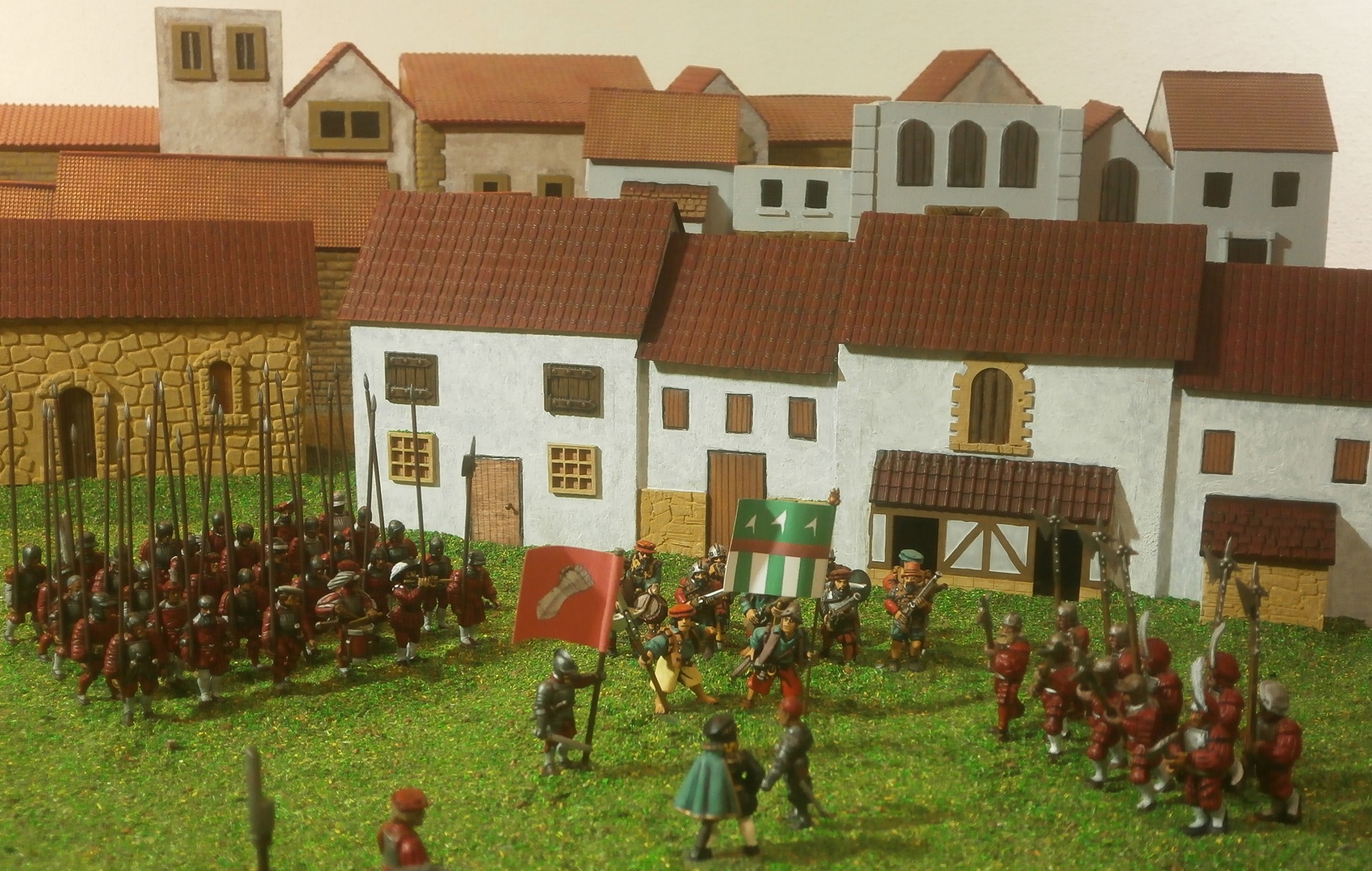
His presence immediately reassured the people, for it was widely known that King Ferronso had retreated into self-imposed isolation, entrusting his council, guided by his aged uncle, to deal with all worldly affairs. His cousin’s arrival only encouraged the young king’s further withdrawal, for now there was yet another surrogate to help shoulder the burden of public duties and general governance. As the vizconde brought both soldiers and money to the kingdom (from his thriving Estalian realm of Solsona) the people felt this more than compensated for their king’s delinquency. Gismondo also brought vitality to the realm, both in himself and his officers, a quality entirely lacking in the cloistered king.
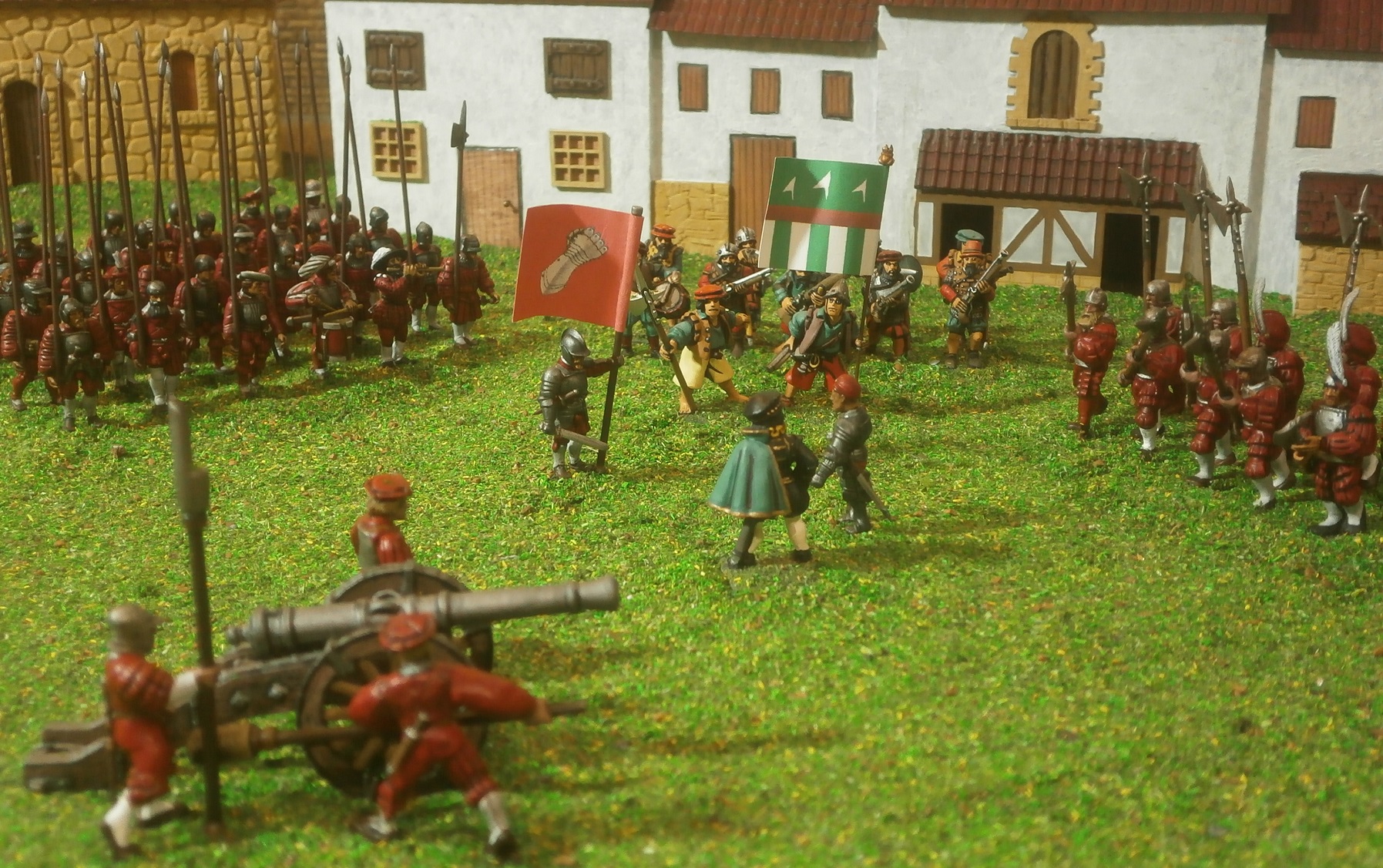
Previously, most Luccinans had expressed love for the king’s uncle, Duke Ercole, for he had obtained the gold needed to ransom the king and had not ceased his attempts to thwart the Sartosans. But the pirates had so ruinously plundered the orchard of Luccini, that great stretch of green valleys known as Aversa, as well as the fishing villages and vineyards of Turno, that the people’s hunger waxed while their bodies wasted. Their love for Ercole faltered, as many began to lay the blame for their troubles on the elderly duke’s deficiencies – his dithering and disastrous military defeats. As the Duke Ercole had borrowed the ransom money from Lord Alessio Falcone of Portomaggiore, it was commonly, and not unreasonably, presumed that the necessary repayments would be raised through heavy taxation, at a time when the realm needed salutiferous care and attention, not further depredations.
Yet, the healing powers of spring gifted the kingdom sundry signs of recovery, while the vizconde’s presence was a new and happy circumstance. Lord Gismondo busied himself with a multitude of tasks, the most obvious of which was the commanding of his soldiers and ensuring that their presence was evident throughout the realm, making it clear to Luccini’s enemies that the realm was now strongly guarded. He had brought with him two contingents, the first being his own mercenary company, the Compagnia del Guanto, commonly known as ‘The Guantlets’ …

… as well as a large company of Solsonans raised in his newly acquired Estalian possession.

The first were mostly northerners, from the great Empire beyond the mountains, liveried in red, with occasional white flourishes, while the second were little more than militia, sporting particoloured green and red, colours quite common in Estalia.
He and Duke Ercole negotiated a contract with the last surviving part of the Compagnia del Sole, a not insignificant force of men at arms, both horse and foot, as well as artillery, lodged in Urbimo since their departure from Campogrotta.
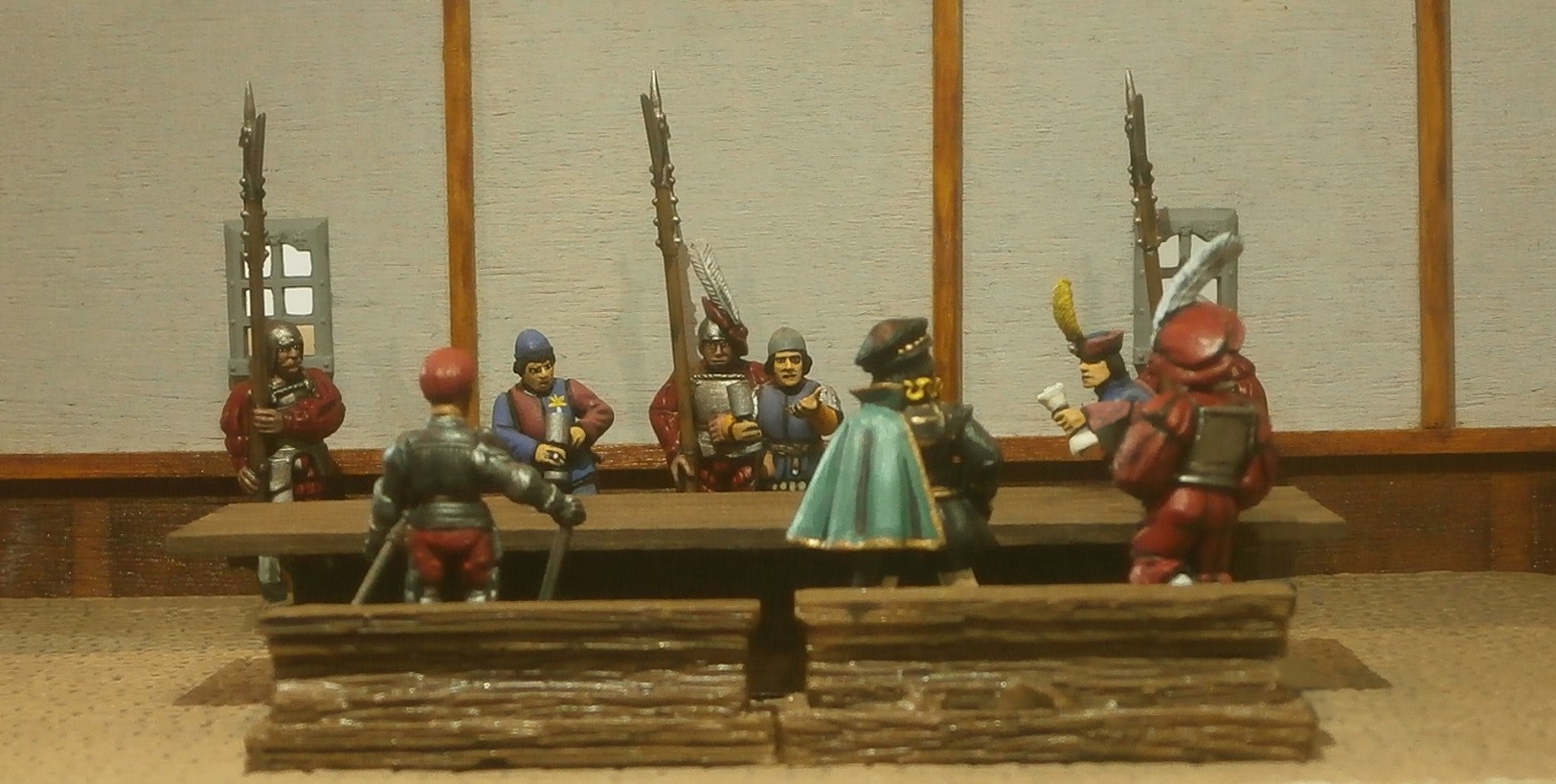
Despite some grumbling about even more mouths to feed, the hiring seems to have been mostly accepted as a further means to strengthen Luccini. A rumour soon circulated, however, that the vizconde was personally paying for the Compagnia from his own coffers, so that they could take over guardianship of the realm, allowing him and his army to return to his own, rich realm in Estalia. Those who pondered this possibility could not decide if this would be a good or bad thing, and were forced to await the Compagnia’s arrival, hoping they might prove just as reassuring a presence as the vizconde’s army.
Lord Gismondo also entered into correspondence with Lord Alessio Falcone of Portomaggiore, and was pleased to have read in the council and even in the temples (so that all subjects could hear it) a reply he received from Lord Alessio, which went thus …
This to Vizconde Gismondo Giacometti, from Lord Alessio Falcone
I am happy to learn that you have at last returned home to the royal city of Luccini. I share fond memories of times past in that great city and remember well your youthful enthusiasm and vigour. Knowing also of your military experience and successes in the intervening years, means I gladly anticipate future joint ventures with you, your own soldiers and the army of Luccini.
Omnes deos legitimos. A sursum et deorsum. Audi verba gratiae et laudis
(All the legitimate gods, from above and below, hear words of thanks and praise)
This pleased the Luccinans, for surely such a good friend to Vizconde Gismondo would be unlikely to inflict further suffering on the realm by extracting cruel loan repayments. A few dared to hope that, given the Portomaggoran ruler’s particular words, the vizconde, a renowned condottiere, might be about to enter into Lord Alessio’s service, and in so doing, could negotiate forgiveness of Luccini’s debt as part of his contract. The fact that Gismondo was bringing the remnant Compagnia del Sole to bolster Luccini’s own limited forces lent credence to this notion, for it would allow Gismondo’s army to serve such a contract. Of course, this was all wishful thinking, for common folk rarely know the nobility’s true intentions, and the wisest amongst them know to await actual events before claiming any knowledge of the rulers’ affairs.
Lord Gismondo’s correspondent, Lord Alessio Falcone of Portomaggiore, had busied himself with his own realm’s affairs, doing what he could to heal the grievous wounds inflicted by the Sartosans’ rampage through his heartlands.
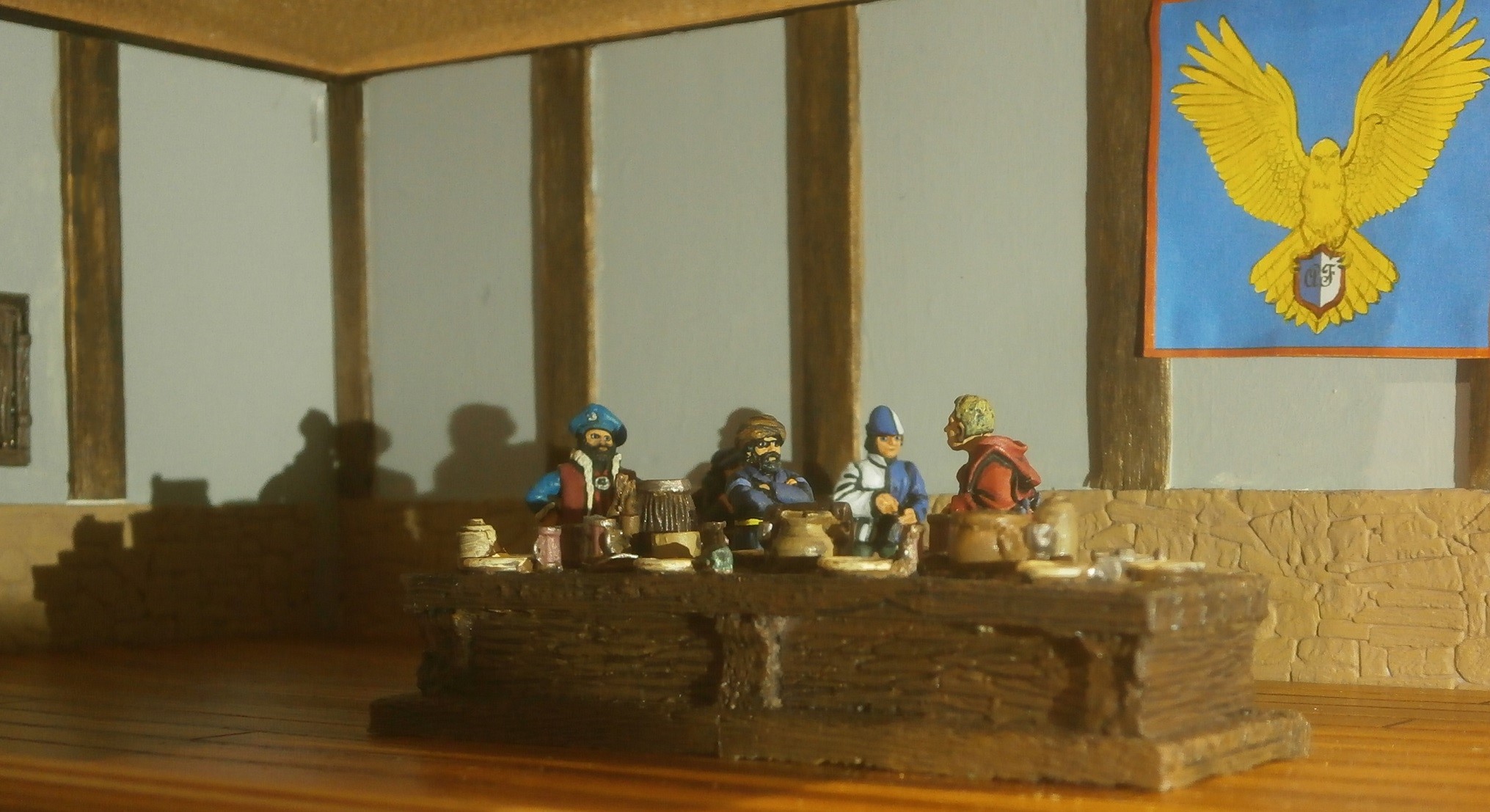
He also corresponded with Lord Silvano Gondi of Pavona, although there was nothing amicable about those letters, for Alessio had harboured a hatred for the Gondi family since their horrendous libelling of his good name. That hatred was surely exacerbated by the misery of his own realm, and the difficulty of his own affairs. His army remained most probably the mightiest in the whole of Tilea, nevertheless his subjects reeled from all they had suffered during the army’s absence in the north, and now, daily, Lord Alessio saw their pain.
A little to the north of Portomaggiore, the last Sartosans to remain on mainland Tilea, the brute Captain Kroll and his crew, busied themselves in the barren Carattello Hills, presumably searching for something – perhaps mutinous crewmen, or hidden treasure?
Then, halfway through the season, after burying some of their own close to the shore, they finally embarked upon ship, whither bound none could say.
In Pavona, while his incapacitated father remained confined to his chambers, Lord Silvano seemed unperturbed by Lord Alessio’s mocking rebuffs to all attempts to restore friendly relations between the two ancient realms, instead busying himself with the forging of a new alliance, intended to thwart the uomini ratto’s devices. None were surprised by this, for the young lord had for many years served at the forefront of the wars against the undead and the ogres, on occasion barely escaping the field of battle with his life, on others falling wounded, even close unto death, yet not once had he faltered in his desires to serve the common good both vigorously and constantly.
While the Visconte Carjaval led a Pavonan force to secure Astiano (once more), Lord Silvano received word from the Morrite arch-lector, Bernado Ugolini, that Remas was sending a small army to Trantio just as Silvano had asked, there to join with the Pavonans and whosoever else assembled, then to seek out the verminous foe, intent on destroying them wheresoever they were found. As Lord Silvano marched at the head of his own army …
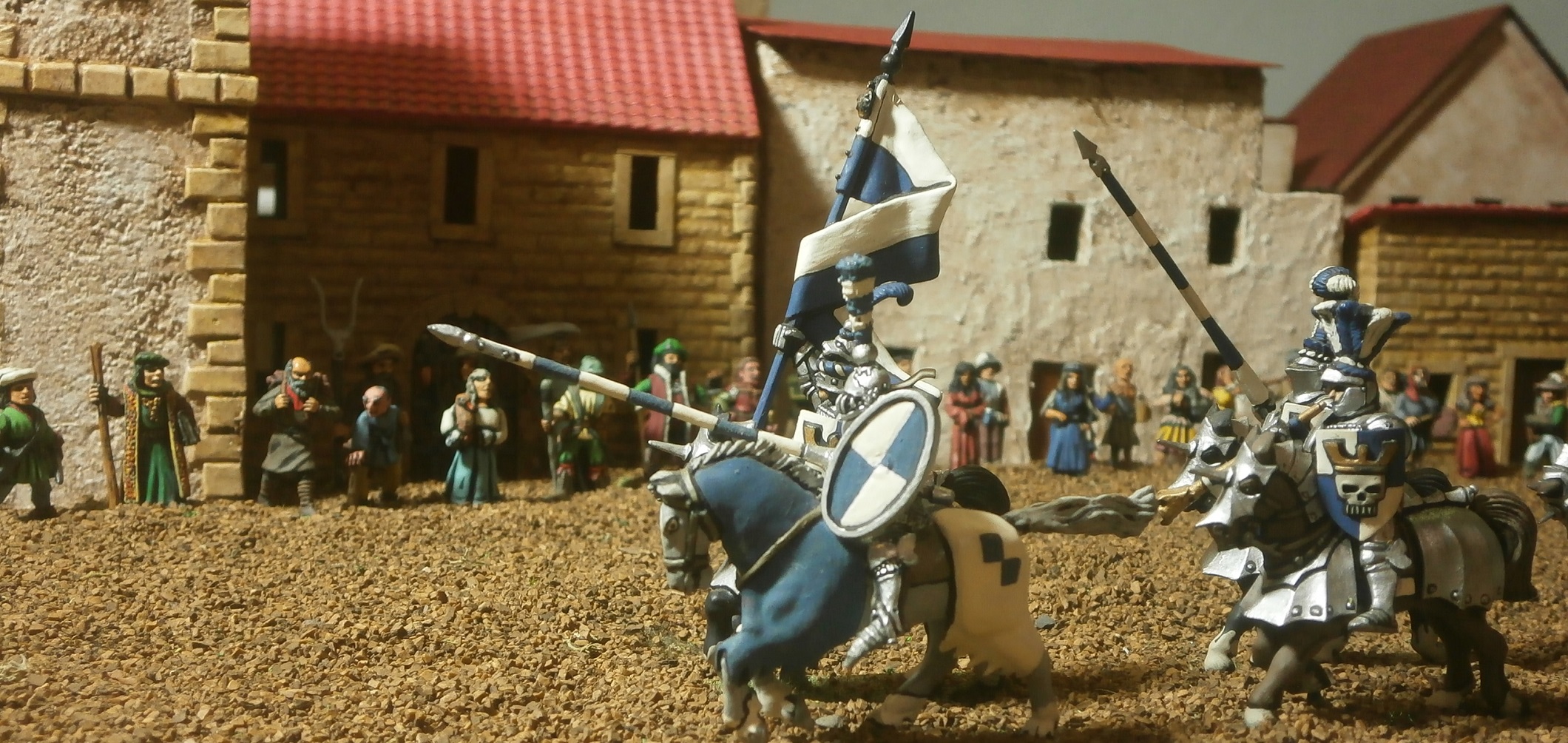
… the Visconte Carjaval joining him enroute to Trantio – he learned that close behind there was a small force of Verezzan halflings, led by Captain Muzio Vanni. Perhaps Lord Silvano dared to hope that this was proof that relations between the two realms had finally, after all his efforts, been repaired? Previously, despite his own meeting with Barone Iacopo Brunetti, in which he both apologised for his father’s mistakes and asserted his own worthiness, his advisers had been unconvinced that anything like true friendliness could be re-established.
Just before he departed Pavona, Lord Silvano was met by an ambassador, one Lord Uluar Greenstone of the forest realm of Tettoverde.
After royally entertaining the elf, Silvano let it be known that an alliance had been forged between elves and men to ensure cooperation against the ratmen. Of course, none but the elven emissary, Silvano and his closest lieutenants knew the terms agreed, but the young lord made a great show of his martial departure to Trantio, all the better to reassure his new friend that he was in earnest in his desire to face the foe.
People suppose that the young lord had an easy rapport with the elf, for he was served in the past by a most loyal company of elven guards, the Sharlian Riders. Indeed, the only detail concerning the discussions promulgated from the palazzio, was that Silvano was keen to reform the riders.
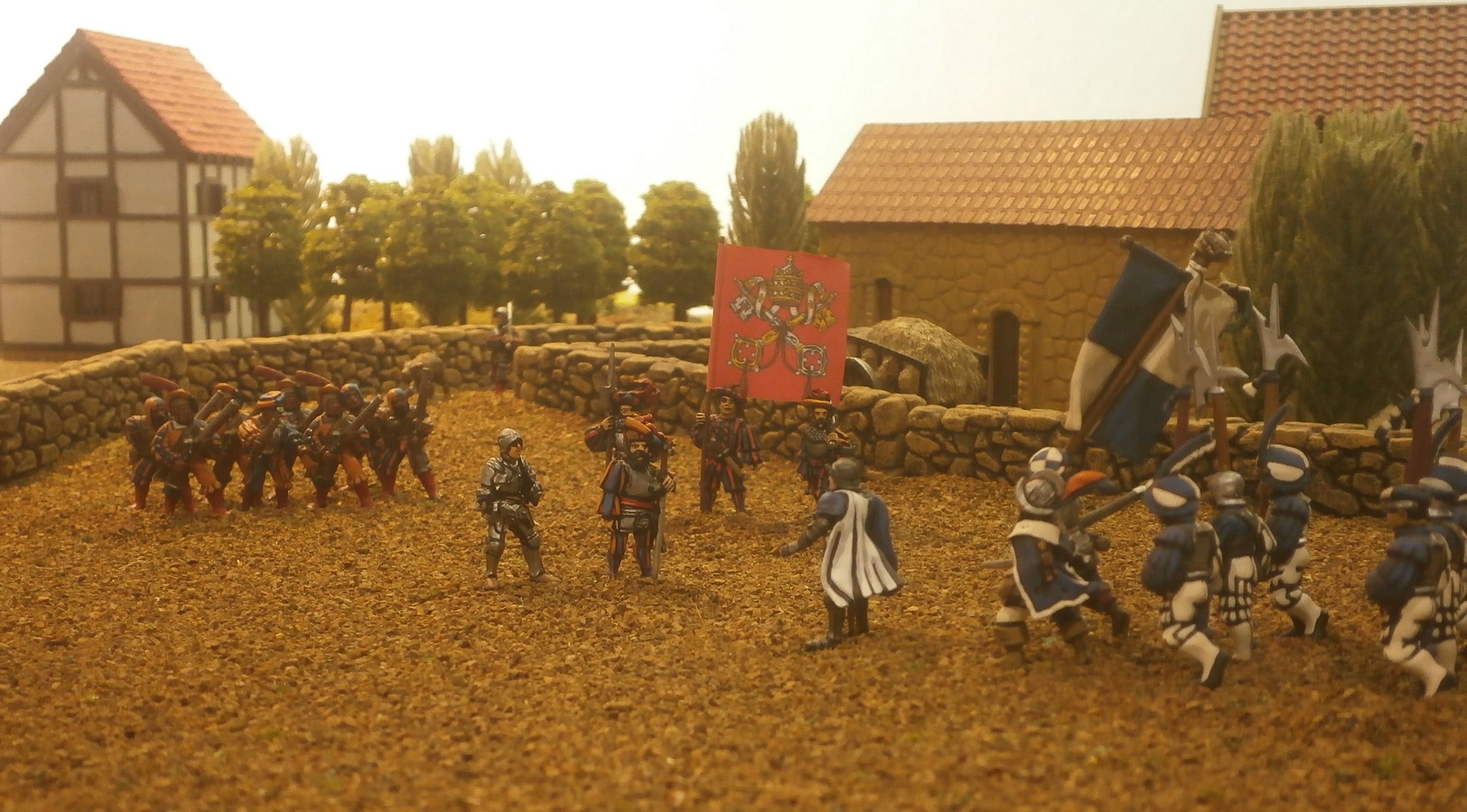
Upon arriving at Trantio, the Pavonans were surprised to be greeted not only by the Reman arch-lector’s military commander, one Captain Sirus Ricci, but also by Ricci’s new friend, Galeotti de Medizi, cousin to the dead tyrant Prince Girenzo, and pretender to the throne of Trantio.
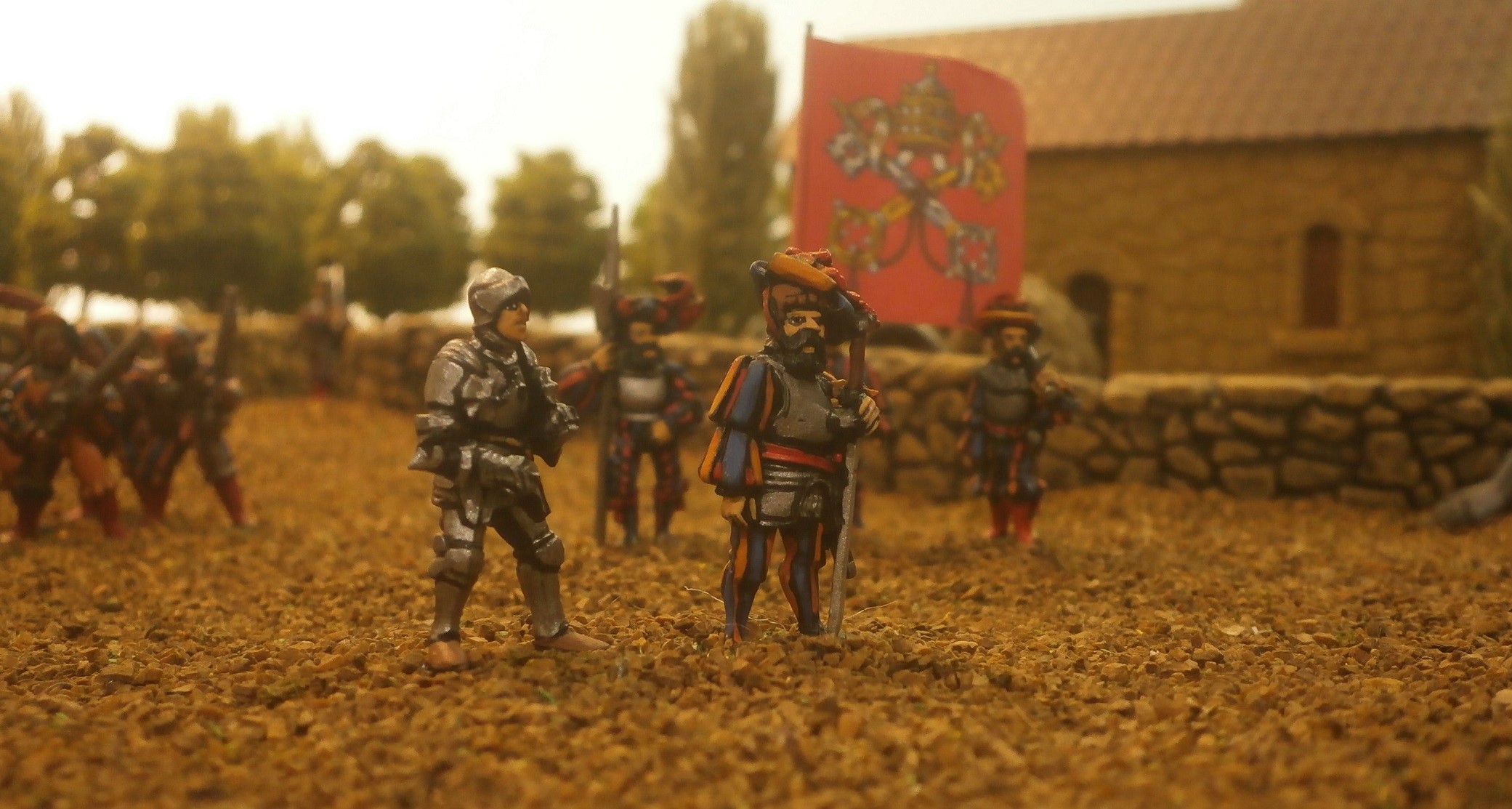
Considering Lord Silvano had ruled Trantio as governor after the Prince Girenzo de Medizi has been killed by Silvano’s own brother during the Pavonan capture of the city, it now seemed likely this new alliance army would disintegrate before it had even properly formed. Yet the young lord made no fuss nor complaint, and instead happily greeted both captains as comrades-in-arms. Nor did he seem nonplussed when the Verezzans arrived, yet another past enemy! (He did, however, send a letter to Lord Iacopo regarding his disappointment at the meagre strength of the Verezzan contribution). Nevertheless, suspicions lingered, and many supposed the outward amicability among the gathered captains was feigned, and that the true, currently concealed animosity would surely emerge during the alliance’s first army council meeting.
The Verezzans had previously made it known, in a strongly worded missive sent to Lord Silvano before leaving their realm, that the alliance army’s captain-general should be appointed in the traditional manner, according to the proportionate strength of each commanders’ contribution to the whole, rather than, as they believed the Pavonan lord wished, command being given to the originator of the scheme – being Silvano himself. When it was discovered Silvano’s force was, in fact, larger than that of any other individual commander, the army council became troubled.

Lord Silvano then surprised the gathered captains by quickly agreeing to the proposal that the captain-general should instead be appointed according to a combination of age, experience and the seniority of the realm he represented. Thus, the Reman Captain Ricci was elected commander-in-chief. Lord Silvano asked only in return that the council write a joint letter of complaint to the various rulers who had yet to send a force to join the alliance, first and foremost to Lord Alessio Falcone of Portomaggiore (who had the most to offer). This was done and the council set to deciding matters strategic.
Not only did the previously elusive elves of Tettoverde send an emissary to the realm of Pavona, they also dispatched a significant force of warriors to the realm of Campogrotta (presumably circumnavigating the poisoned land made by the ratmen’s terror weapon).

The dwarfs of Karak Borgo had let it be known that despite asking the sylvan elves to assist in the fight against the uomini ratto, the forest folk had rebuffed their suggestions, being more interested in jealously guarding the trees’ timber and the fauna’s fur from any who might wish to make good use of them. (In ages past, the dwarfs had obtained both from the forested valleys of Gasharmak where Tettoverde met the lower slopes of the mountains, the quality of which was praised in their historical tomes.) And yet the lie was revealed when this elven force, led by no less than High Lord Veluthil Sarenmire himself, arrived at Tarano Keep, the fortress guardian of the road and river west of Campogrotta.
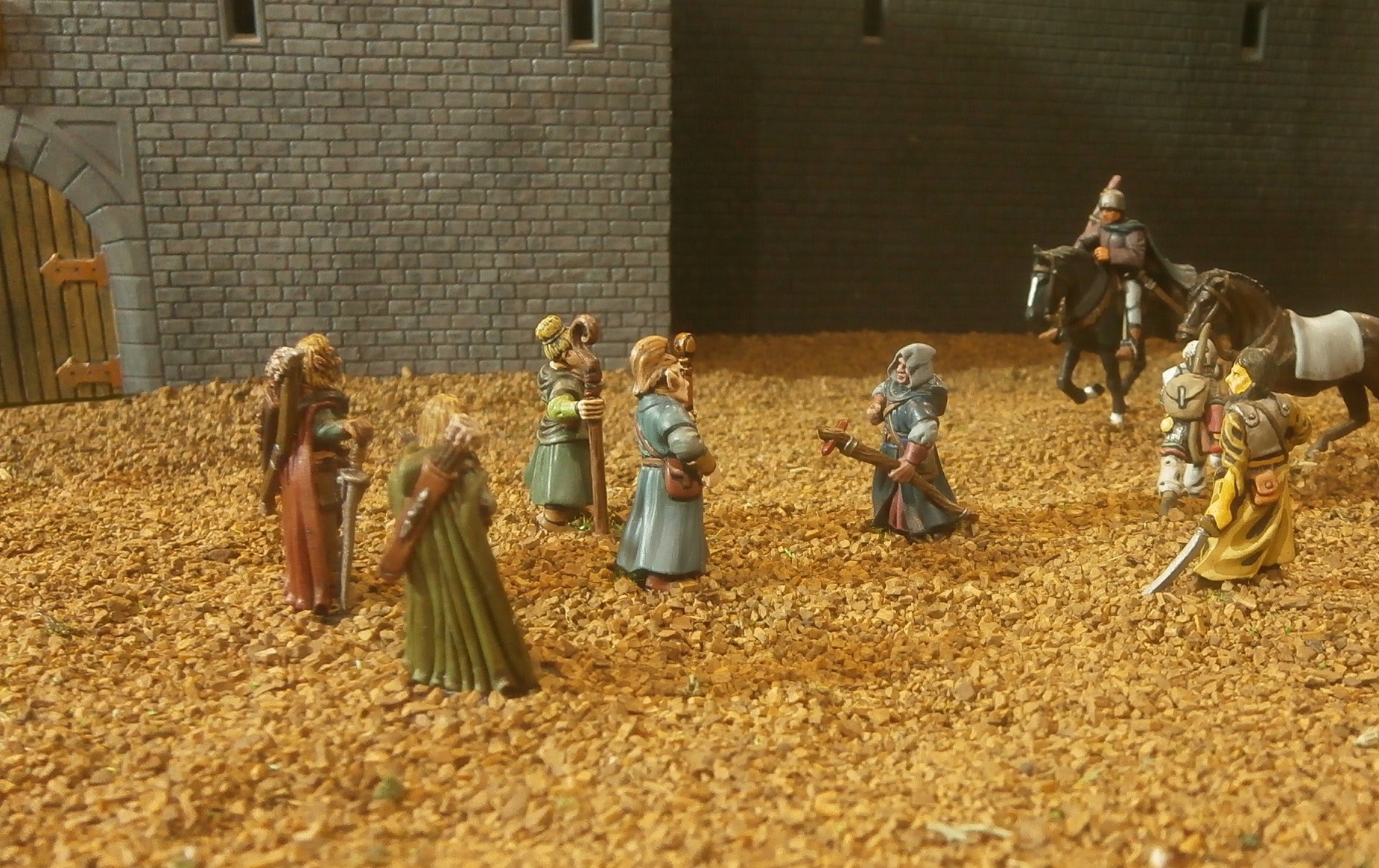
There, the elven lord, himself a wizard of great power, met with the wizard Lord Totto of the Arrabiatti, self-proclaimed protector of Campogrotta. Totto professed no authority over the newly formed Republic Commune, only that he served the realm like a governor to a royal child; as a guide and guard, rather than a ruler.
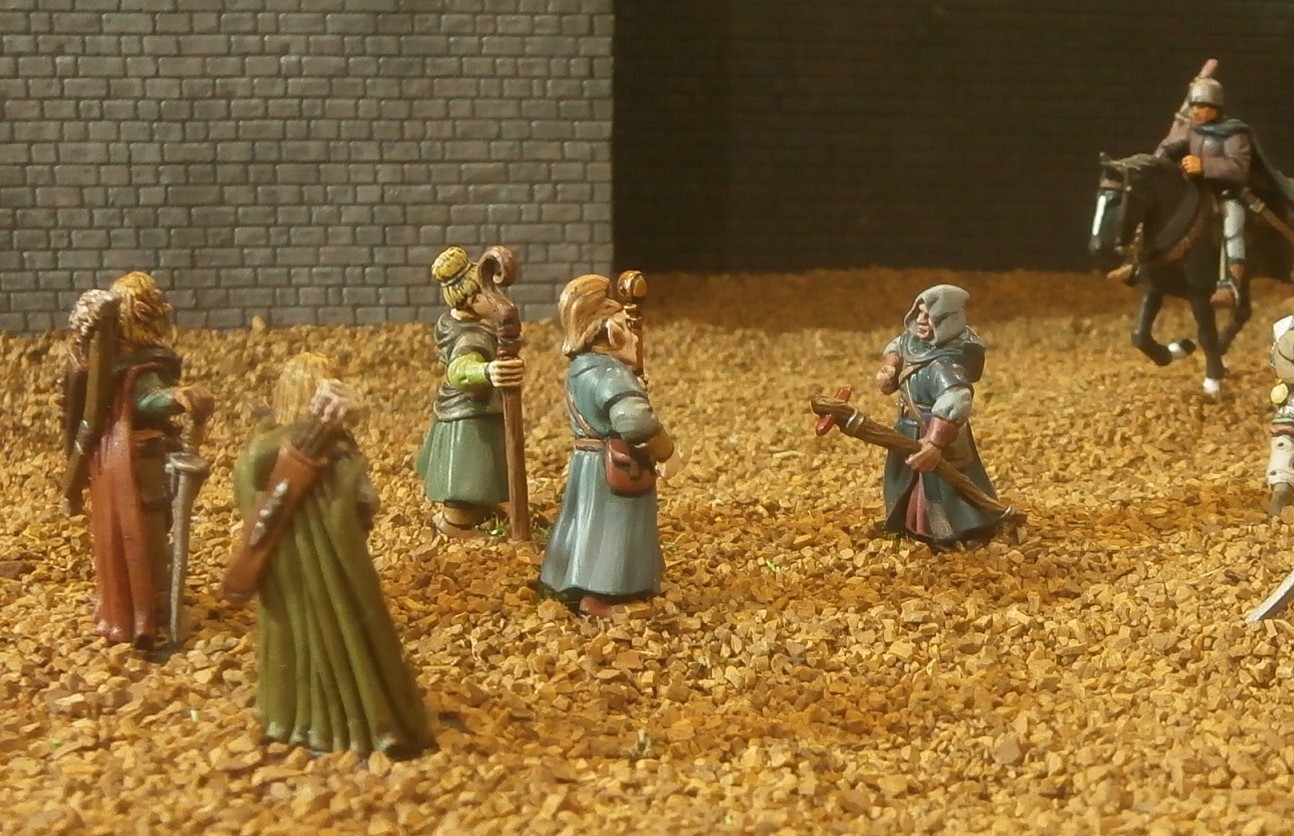
Discussions were had between the two wizards, until an understanding was reached, after which both parties departed the keep, the elves heading west upon the road …
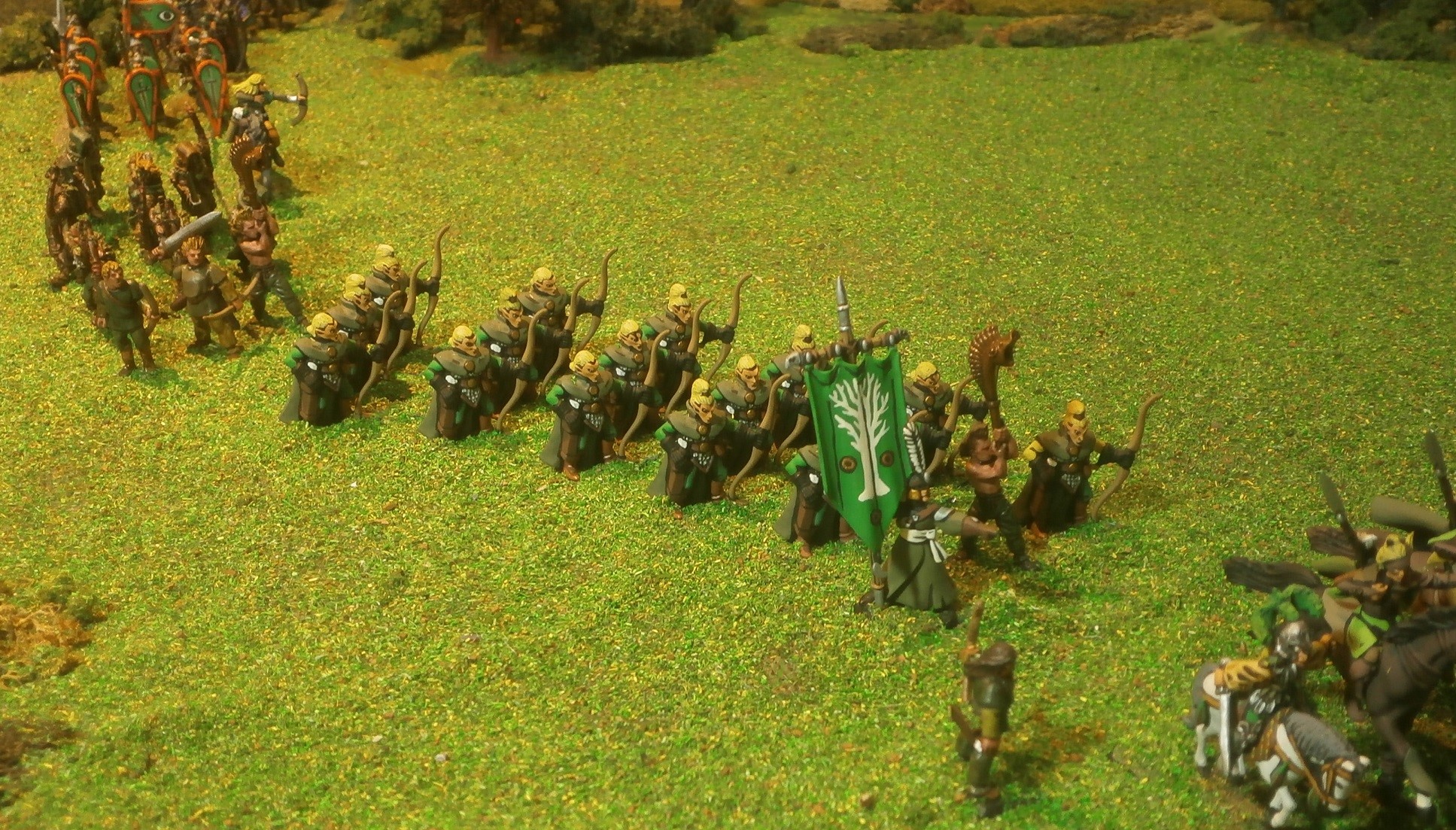
… while the Arrabiatti rode to the watchtower of Lugo …

… there to speak with the dwarf Lord Narhak (presumably to ask what the dwarfs could offer for the war against the rats).

Thus it seemed that the alliance army gathered at Trantio had friends in the north, if the enemy of their enemy could be assumed to be so.
After the demise at Remas of Seer Lord Urlak, a new, verminous power has arisen in the far north. Another rat-lord, commonly known as Cralk, has mustered an army, and begun to march across northern Tilea, east to west. The ratmen slave-masters in Ravola yielded to his command quickly, likely because they knew they could not resist such a power, but Cralk did not linger there, instead marching towards the smoking husk of Miragliano. No man could tell you why he headed there, other than to suggest flippantly that rats thrived best among ruins, and that their larger cousins were no different. Doubtless, there was evil cunning to Cralk’s manoeuvrings, some grand scheme, most likely unfathomable to men, who could not hope to understand the labyrinthine politics of the uomini ratto.

 BigSmallWorlds
Is everyone searching for the One Thing to fool them all and in the darkness blind them? No good can come of this I’m told, but it’s hard to put the genie back in the bottle.
Well done, Padre! I look forward to this next chapter, with it’s sleeping demons and quests for balefire.
LikeLiked by 1 person
The background for this story has been there almost since the very start of the campaign! Apparently, I am a very patient man.
LikeLiked by 1 person