Recompense
The Town of Scozzese, south of the city of Pavona. Summer, IC 2405.

The people of Scozzese did not know what to make of events. The town had had a renaissance of sorts, growing more healthy and prosperous since Lord Silvano had assumed the powers of regent upon his father, the duke’s, infirmity. Indeed, the whole realm of Pavona was recovering from its time of troubles, and the people once more felt safe. So much so, that the young lord had marched north with the army to join the alliance force intent on defeating the wicked uomini ratto, long before their claws reached his realm. Before he left, he had retaken Astiano, garrisoning the town with Pavonan soldiers to ensure its own recovery, thus bolstering Pavona’s defences to the west. And, by way of his heartfelt apology for crimes past, it had been widely reported that he had famously healed the rift between Verezzo and Pavona, so that the south no longer presented a threat.
Yet now, the army of Verezzo was at their doorstep, manoeuvring aggressively, clearly in the process of blockading the town.
So it was that two leading members of the town’s signoria, Barone Plutarco Recchia and Rainaldo Gambale, found themselves, accompanied by the town militia’s Portastandardo and a handful of guards, making their way somewhat nervously to parley with the unexpected visitors.
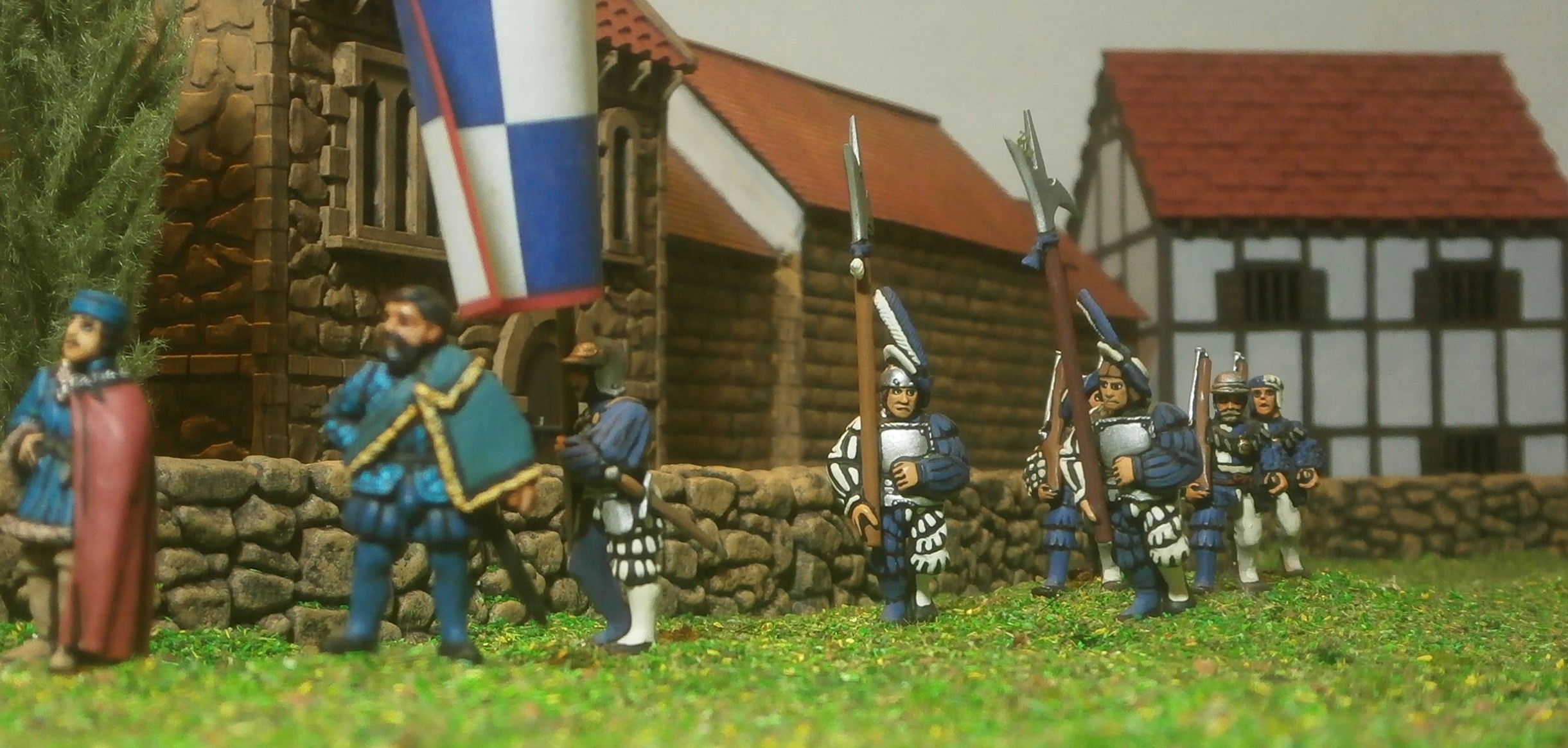
One of two halberdiers walking behind the standard, Umile Giuliani, had been wearing a worried look upon his face (not unlike many in the town).

“I don’t get it,” he said quietly, so that only his friend Petronio would hear. “I thought everything was settled between Pavona and Verezzo.”
“I doubt,” said Petronio, “that anyone thought the old animosity was gone for good, especially considering the way Lord Lucca died. But yes, Umi, it did look like a new leaf had been turned over. Lord Silvano himself must have thought so, for why else would he march away with the army? He wouldn’t have done that if he thought the Verezzans were still a threat.”
“Wouldn’t he?” asked Umile, glancing nervously about, to make sure those in front and behind were not listening. “He spent the last two years haring off to distant wars with ne’er a care for what was happening in Pavona.”

“Maybe so, but that was when his father was well. He returned quick enough when the duke was wounded. And stayed until the realm seemed to be on the mend again.”
“Well,” said Umile, “things have taken a turn for the worse now.”
“It does appear so,” said Petronio. “You know, Umi, I think Lord Silvano was played.”
“Huh?”
“I mean, all that talking, the letters and meetings, the demands for trials and apologies – I think the Verezzans were spinning out time.”
“So they could grow their army?” said Umile, realising what his friend was suggesting.
“Yes,” agreed Petronio. Glancing ahead, he added, “And I think we’re about find out for certain.”
“Aye, but even if that’s what they were up to,” said Umile, “they gave us time as well, to repair our army and nurse the realm to health. What would they really gain if our army also grew in strength?”
“Our army isn’t here, though, is it?” explained Petronio. “Nor at the city, from where it could strike at them now. They didn’t just buy time to build their army by talking long enough, they used those same words to convince Lord Silvano to drop his guard.”
Umile pondered this. “But they’ve sent some of their own soldiers to join the alliance army in Trantio, alongside Lord Silvano? Is that not the act of allies?”
“It would appear to be, aye,” answered Petronio. “But it could also be further proof of their cunning. Another deception; another way to lure us into a false sense of security. They probably, and rightly, knew that merely accepting an apology would not be enough to convince us that they were true friends once more. If their soldiers were serving beside ours however, facing terrible foes together, then that would make them look like friends.”
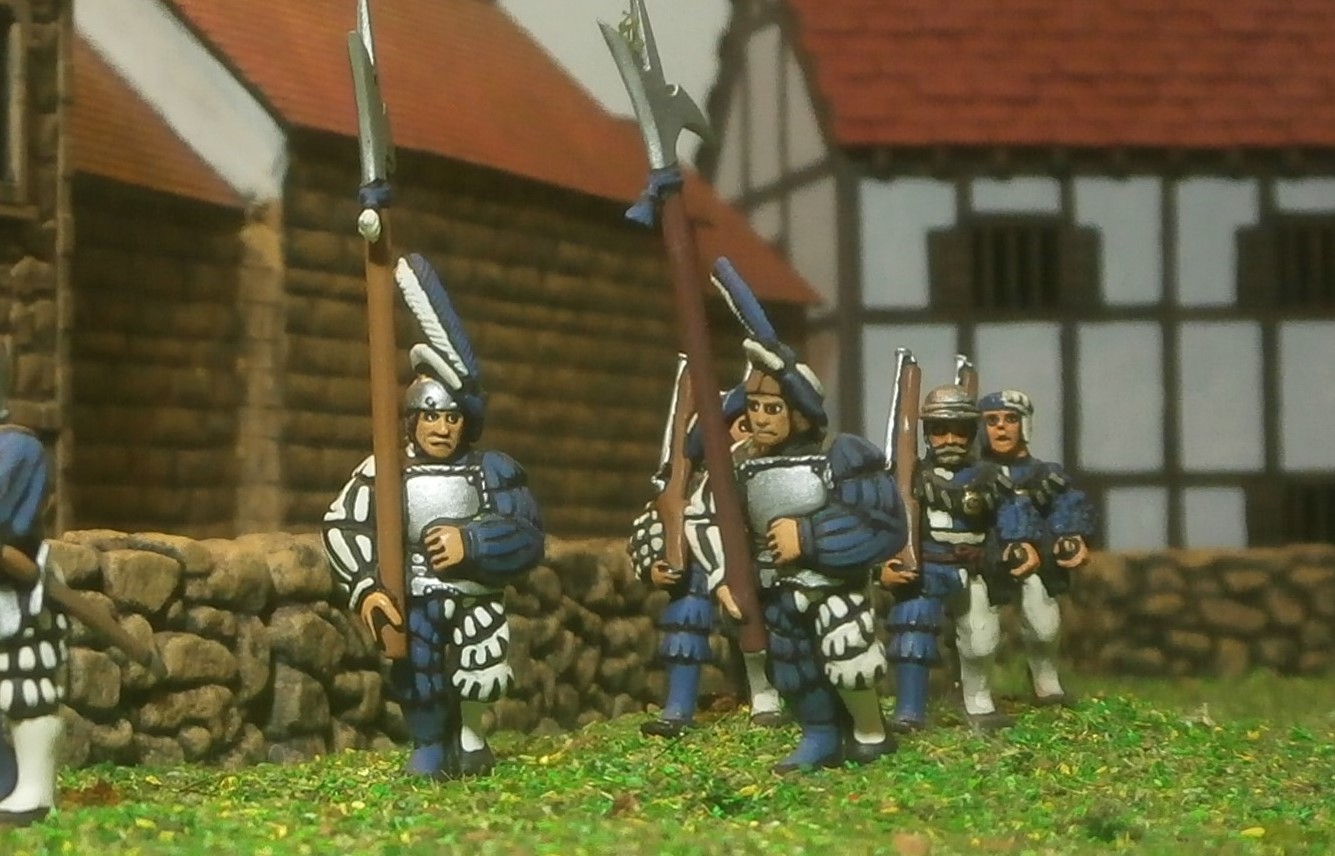
The two fell silent for a moment, as the standard bearer ahead had slowed his pace somewhat and the gap narrowed between them. When the pace picked again, Umile spoke,
“You know, I always thought it odd that an apology was all that was needed to recompense for the killing of their beloved lord.”
“Oh, they asked for more than an apology,” said Petronio.
“They did?”
“I heard they sent a letter a month ago demanding we pay in gold as compensation for all that was looted from Spomanti.”
“Ha,” laughed Umile, still nervously quiet. “I knew an apology wouldn’t be enough. Did we pay, then? Or just promise to do so?”
“Neither. The duke’s council answered that what with Silvano being away, there being a war on, and with rats threatening the whole of Tilea, we should leave discussing such matters until the proper time. At least, that’s what I heard.”
“Sounds about right,” said Umile. Then he asked, “Remember those goblins that came two years ago?”
“I’m hardly likely to forget. I was in the company that went out to speak to them. I can remember the smell.”
“Well, we bribed them to leave us be, and they did.” continued Umile. “D’you think that’ll work with the Verezzans?”
“Possibly? But maybe what they really want is bloody revenge, and any gold they plunder is just an added boon.”
“It’s never-ending war,” said Umile. “Just one thing after …” His voice trailed off as they caught sight of the Verezzan army. “Morr protect us!” he exclaimed.
“Now and hereafter,” added Petronio, by habit.
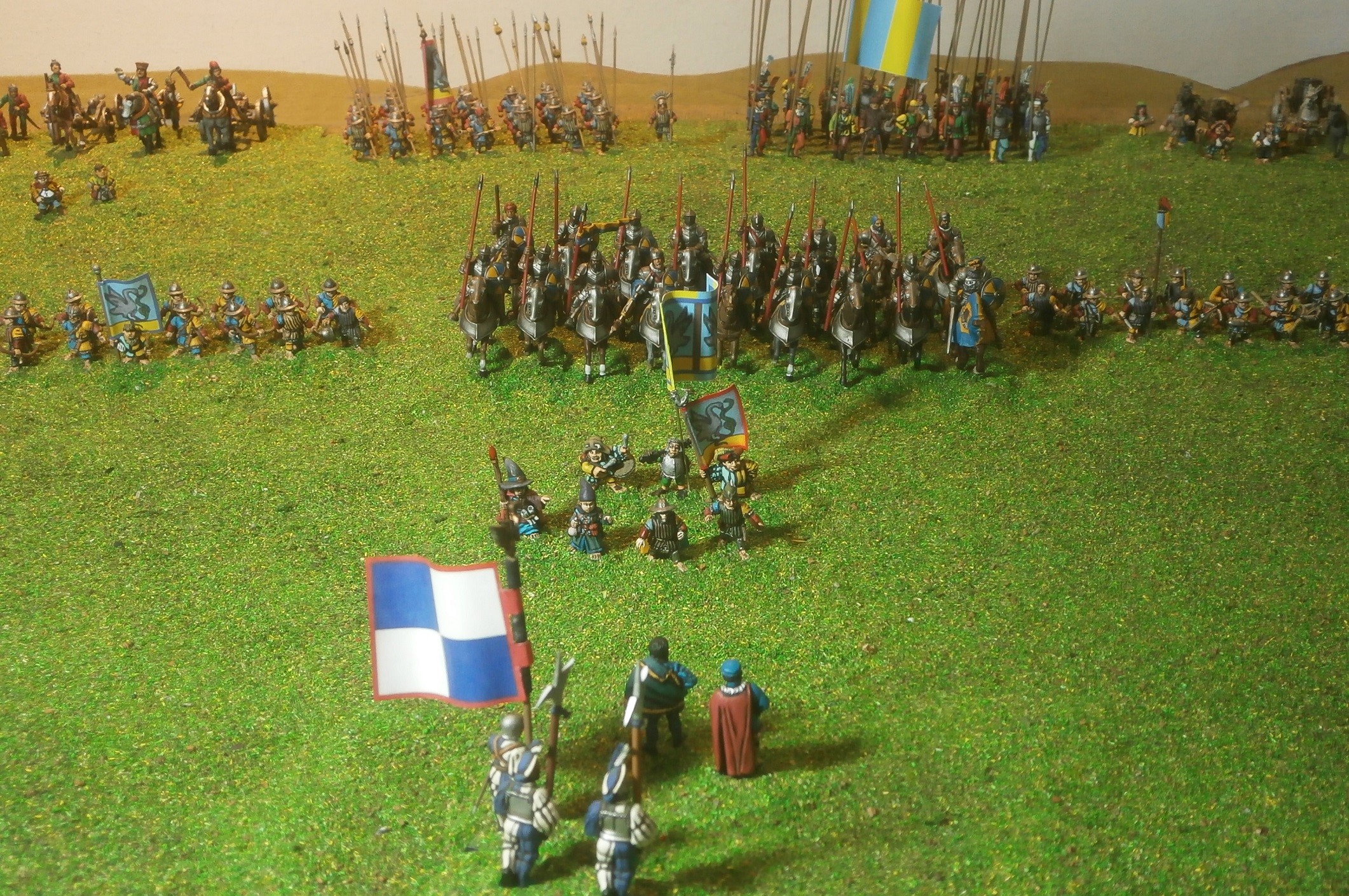
Either the nobles’ stride was unfaltering, or they hid it well, but the barone and Signore Rainaldo walked straight up to the knot of officers, halflings all, standing before their army, then halted several yards away – just close enough to speak.
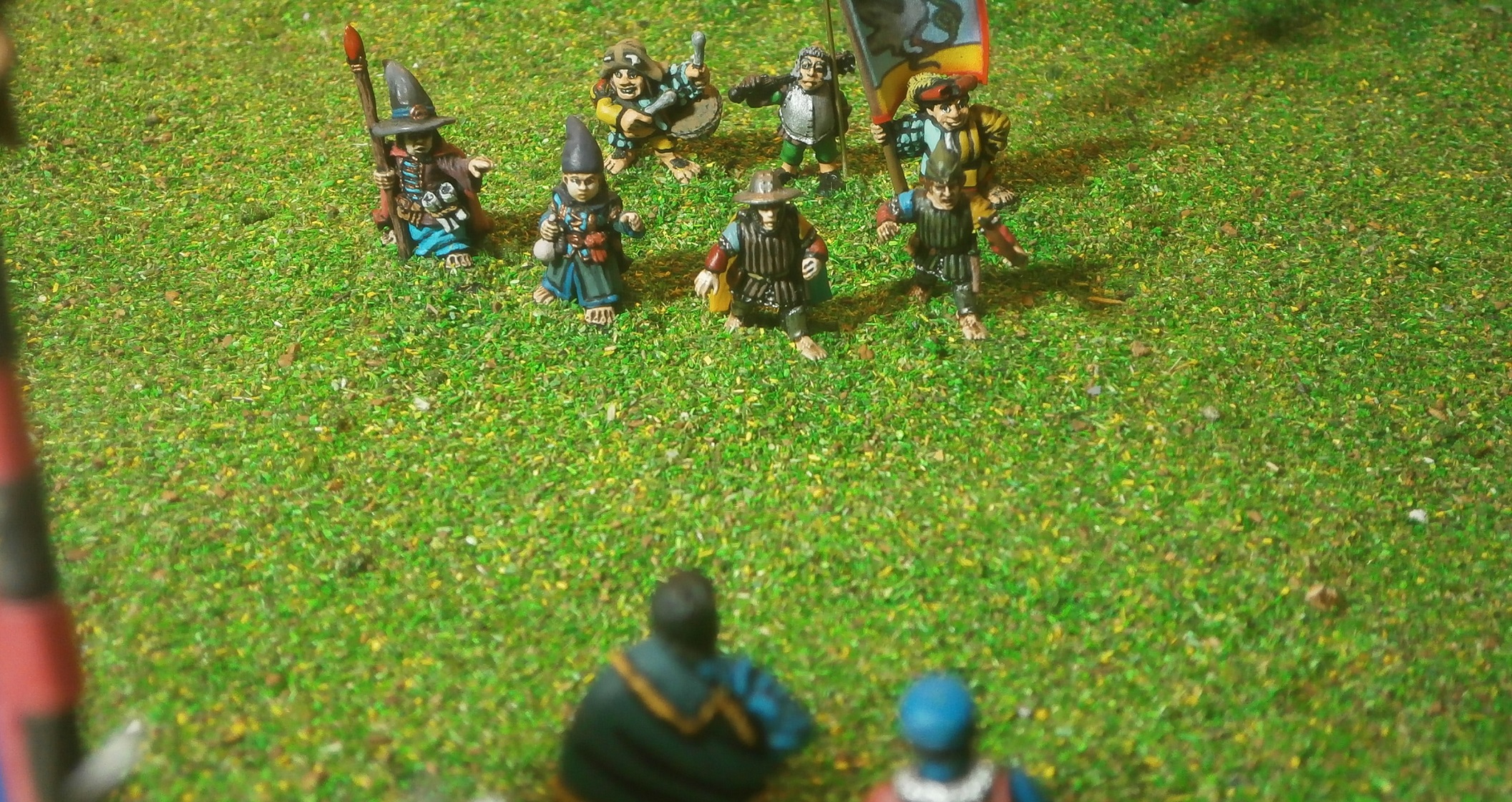
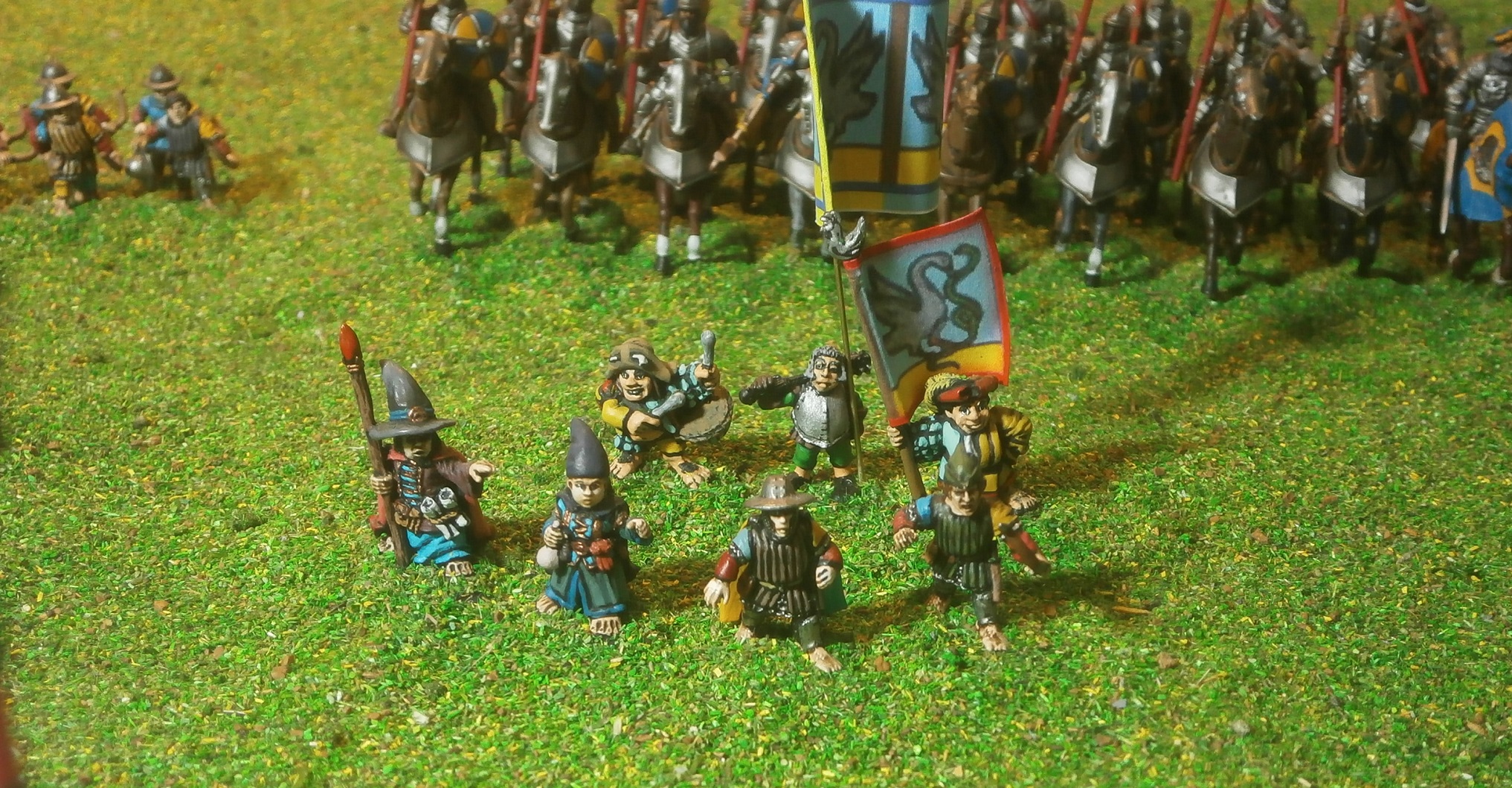
The foremost fellow was surely the Barone Iacopo, cloaked and confident as he was. Immediately next to him had to be the bane of Pavona, the brigand Pettirosso, sporting a huntsman’s cap and clutching a bow. Two little wizards stood upon Iacopo’s other side, while behind were a musician and two standard bearers, one of whom carried a large club upon his shoulder. Or, perhaps, an ordinary sized club, that merely looked large in contrast to its bearer.
There were plenty of halflings in the army behind them too, but not all, what with a large regiment of mounted men at arms and a massive regiment of pikemen atop the slope behind. The rest, nearly all halflings, seemed almost exclusively armed with bows or crossbows, although one company carried half-pikes, presumably for want of strength to wield the full weapon.
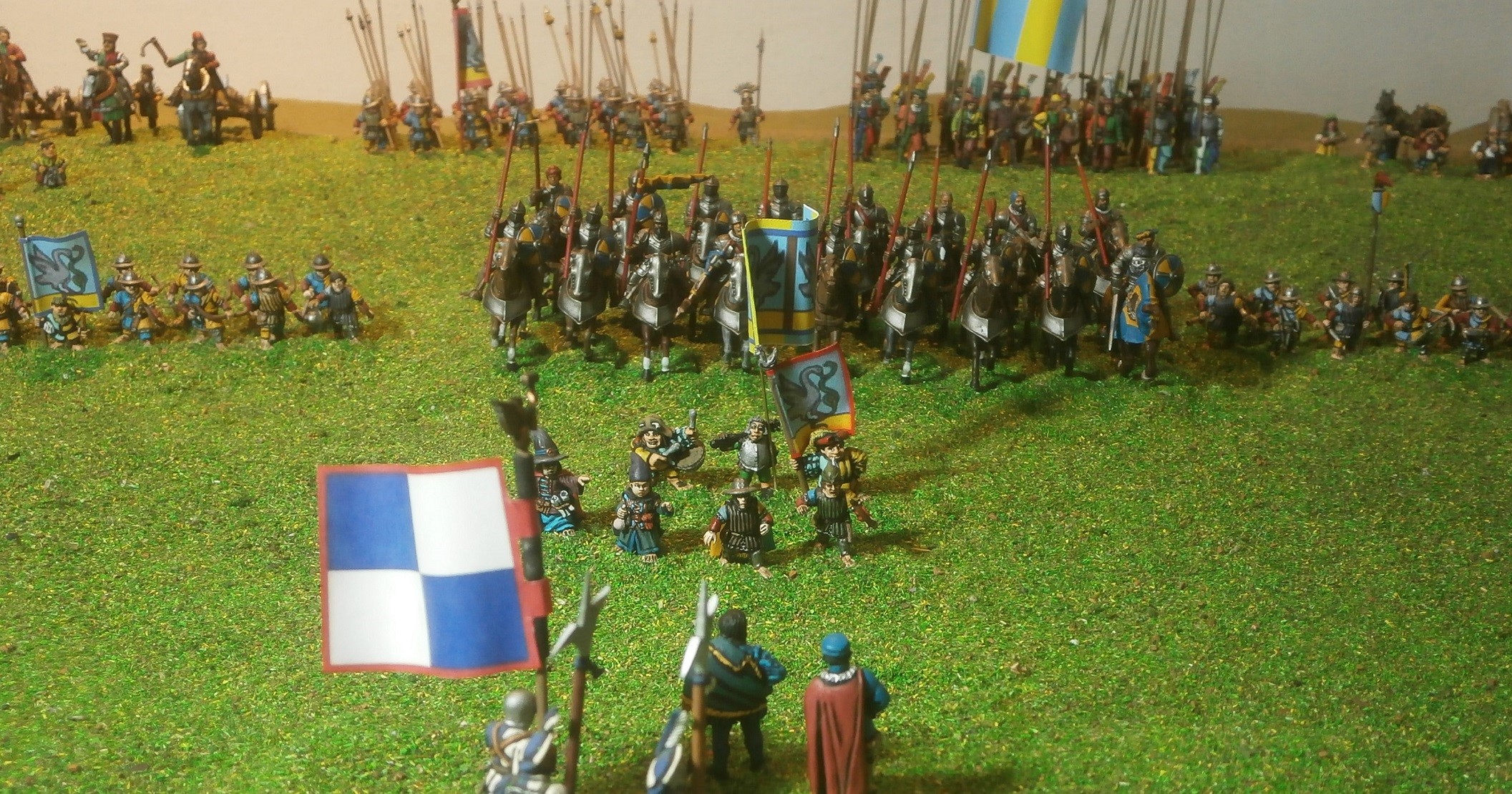
As the nobles and officers engaged in apparently polite greetings and introductions, Umile cast his eyes over each body in the army, starting with the nearest and most threatening – the mounted knights.

Like the rest of the army, they were liveried in the same blue and yellow as their guidon, with touches of vermillion – in their case in the form of panache-feathers, silken scarves and their lances. Most rode armoured mounts, while all were themselves in polished steel from head to toe, bar one of two who had removed their helmets.
Umile had seen the mounted nobility of Pavona, riding with the duke or his son, and a glorious sight they had been. But they had never been as numerous as these Verezzans. He cursed himself for falling for the tales that Verezzo was populated by halflings and peasants, with only a handful of foppish lords to govern them. He should have known that such claims were tainted by prejudice and unlikely to bear resemblance to the true state of affairs.
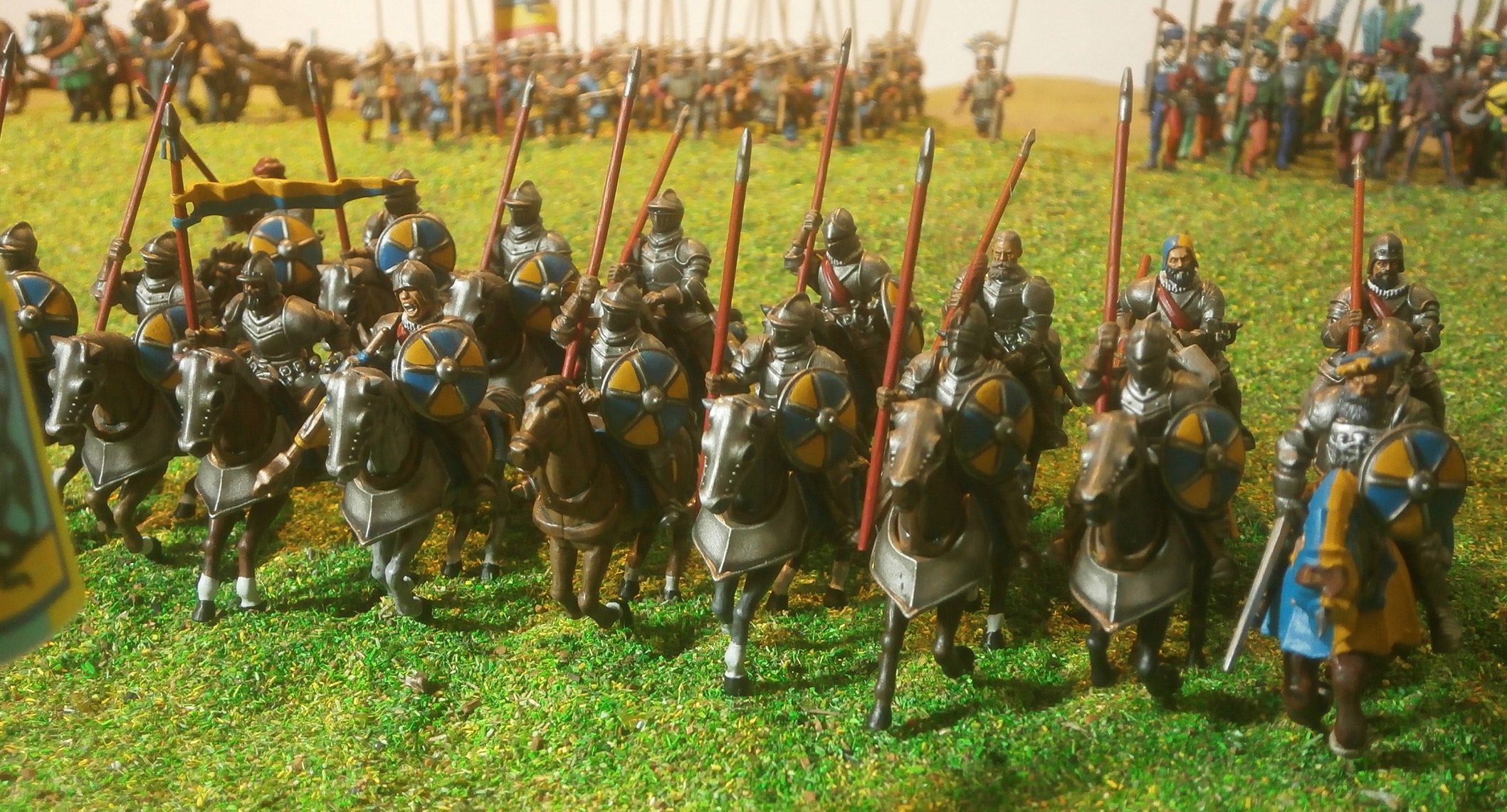
Their commander, his own horse in lacquered armour, a velvet hat upon his broad bearded head, looked as noble as Duke Guidobaldo in his heyday. Umile wondered if the man was related to the murdered Lord Lucca, and at that moment seemed to spy hatred writ upon the man’s face.

The pike regiments, like big brother and little brother …
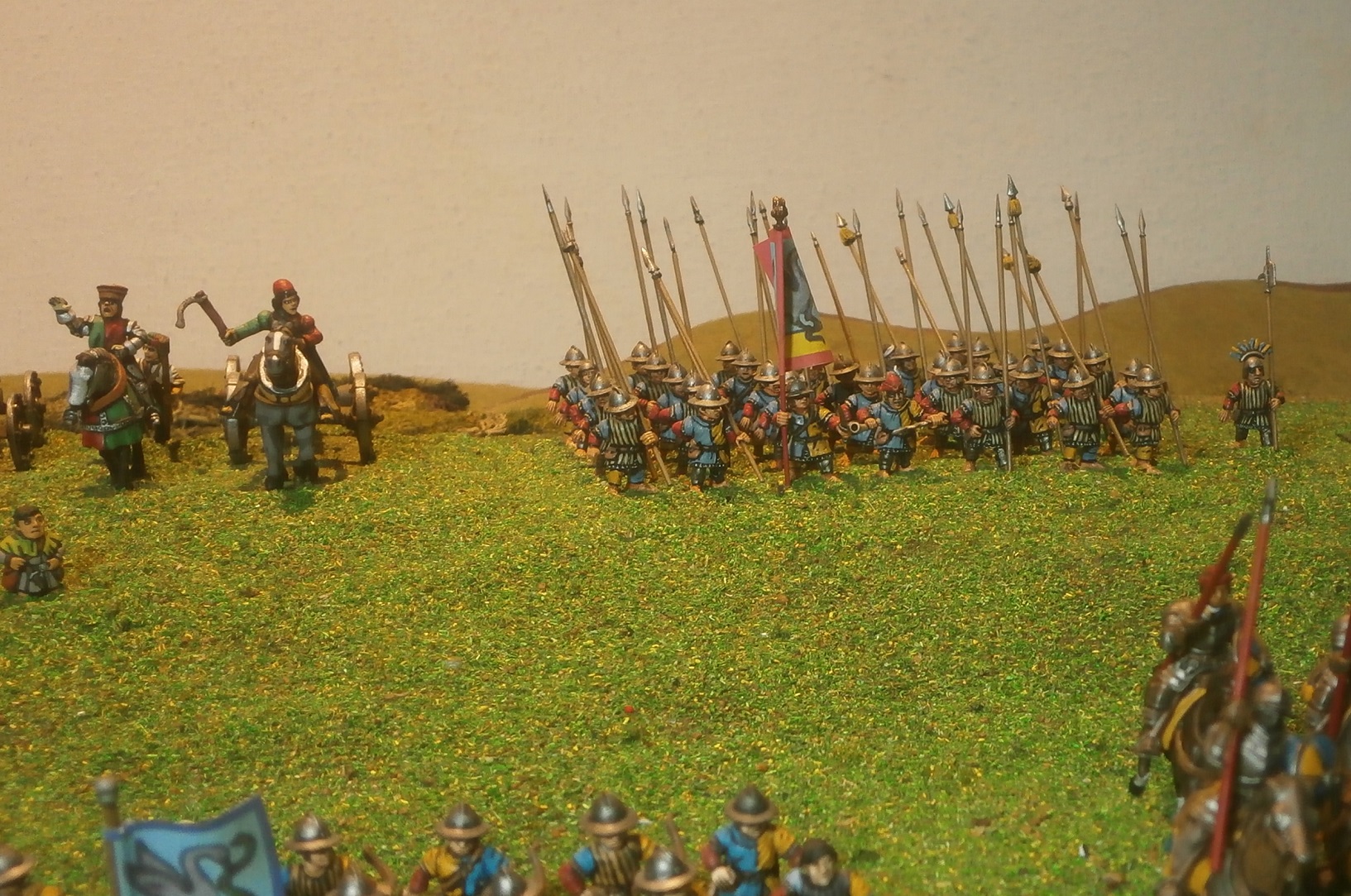
… behind and above the horsemen, proved that Verezzo had no shortage of footsoldiers to call upon, although the men themselves, despite carrying a large Verezzan standard, were likely to be mercenaries, as they were garbed in particoloured cloth of every hue.
The halfling companies on the wings were both archers, one carrying bows …

…the other crossbows …
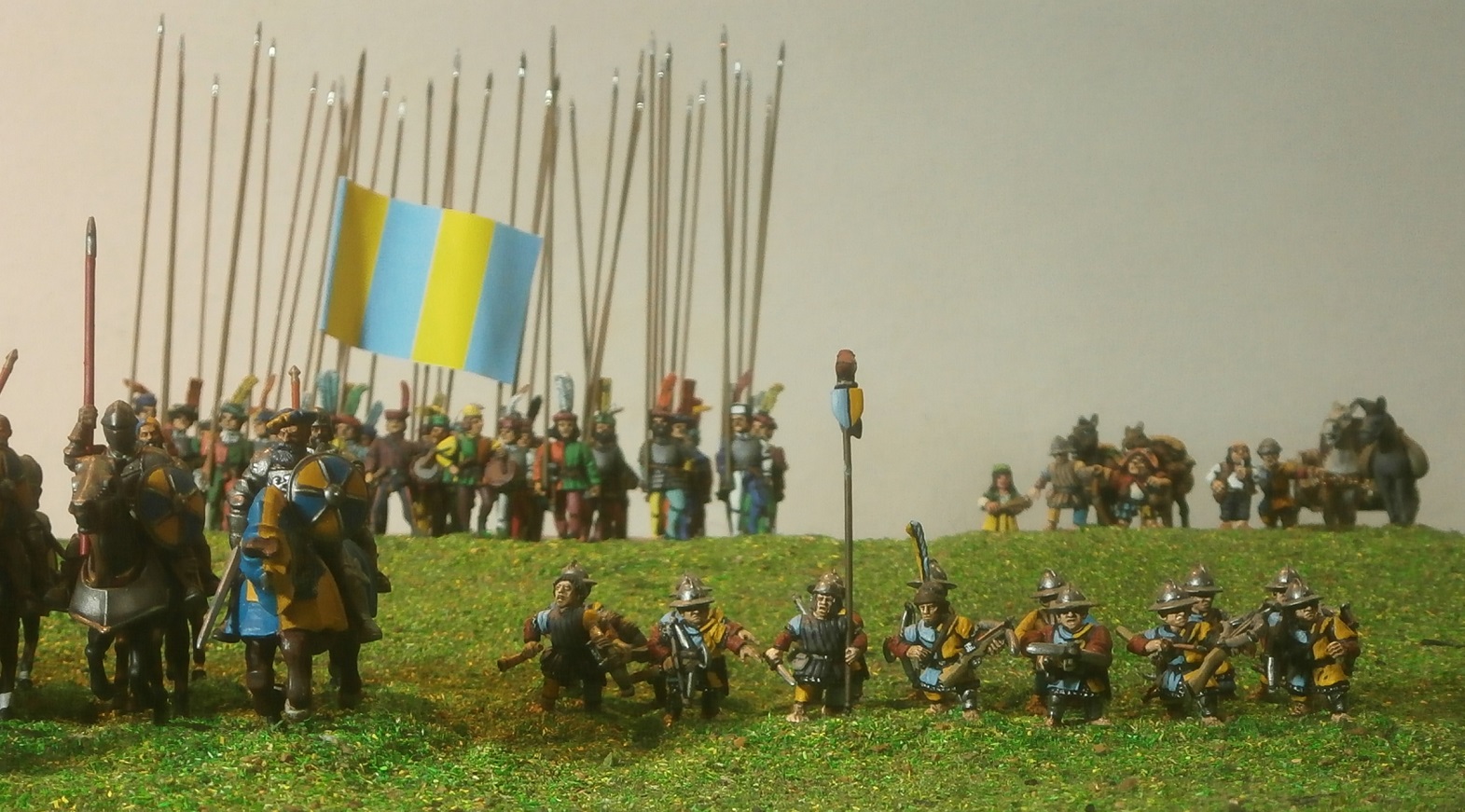
– the former being the size of ordinary bows for men, the latter being the kind of light crossbows that mounted men might carry, presumably as the halflings would struggle to span anything larger.
Despite these deficiencies, Umile knew that the halflings had a reputation for mastery in archery, being true toxophilites, that is, great shots. What their arrows and quarrels lacked in punching power, they made up for in accuracy. What difference did it make if an arrow into an eye failed to pierce all the way through the skull? Just a few inches was sufficient to pierce the brain and kill!
The Verezzans had brought machines of war too. Umile had heard that Captain Pandolfo’s famous light guns served Barone Iacopo, and now he knew the rumours were true.

Looking up at them, beside the halfling pikes, he saw they sported their own green and red livery. He presumed that the armoured fellow in their midst was Pandolfo himself.
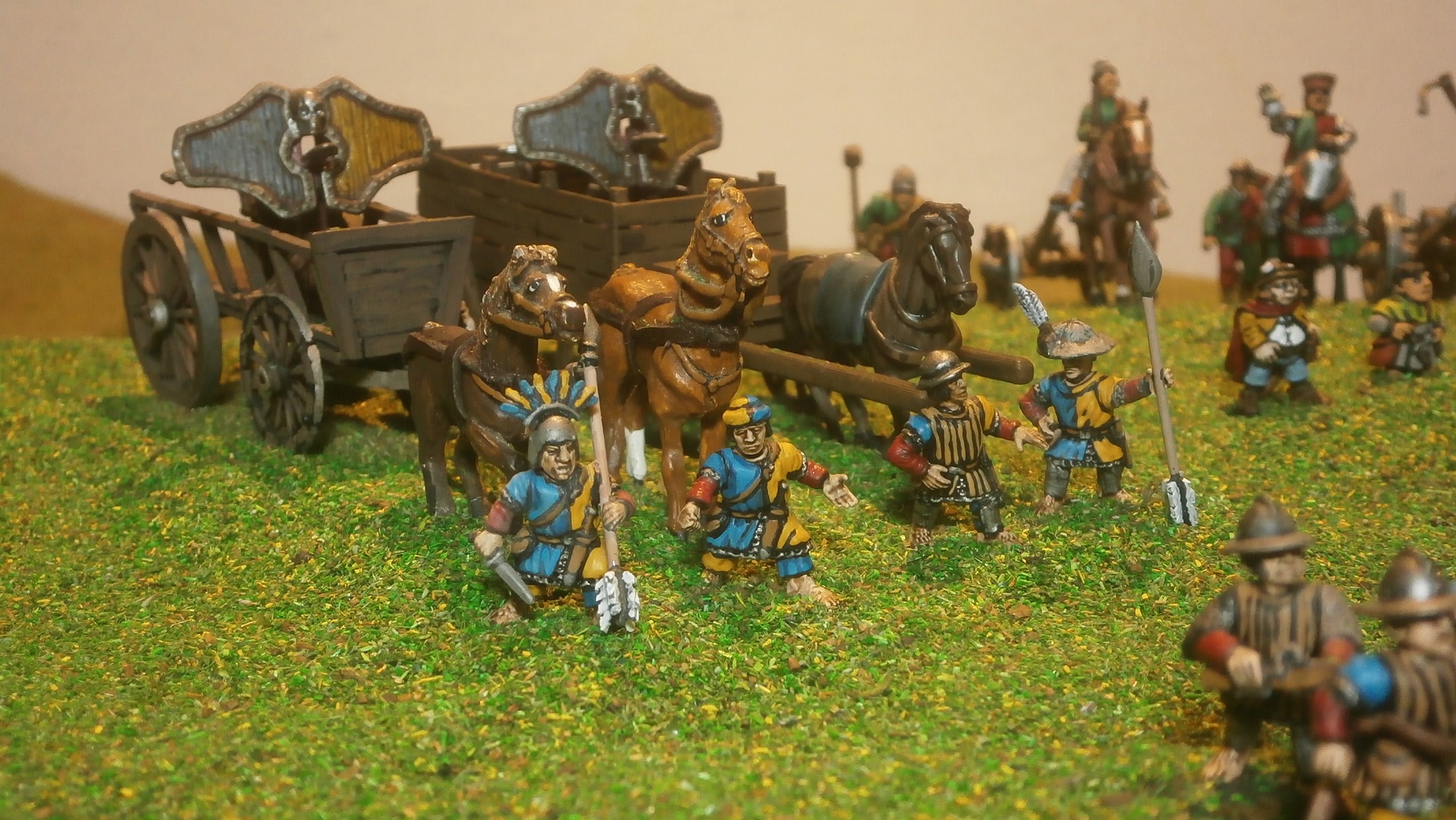
They had also brought some more archaic engines of war, being bolt throwers, which they hauled in large wagons. The accompanying master-engineers bore long, fletched bolts like staffs of office.

Snapping out of awe-full reverie, Umile turned his attention to what the gentlemen and lords were saying, suddenly noticing that Petronio was already transfixed by the conversation. No wonder the fellow is a font of all rumours, he thought. He must listen to everything that is said around him as he goes about his duties as a guard.
The Pettirosso was speaking, his voice somehow both shrill and imposing at one and the same time.
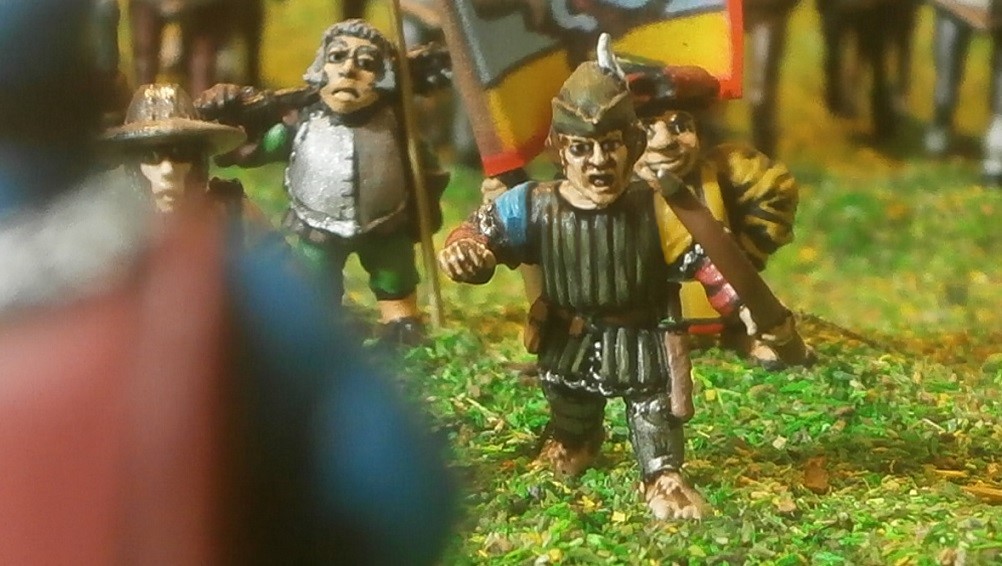
“I saw it with mine own eyes. Cut down in battle for nothing more than defending his own people from vile plunderers. I care not for the lies spoken afterwards, nor for the attempted trickeries and obfuscations. It was murder and theft, most plain, and I have dedicated myself to vengeance ever since.”

Petronio glanced at Umile. Everyone knew how far the Pettirosso had taken his vengeance, for the duke’s court had declared that it was he who had attempted to assassinate Duke Guidobaldo, and with a poisoned arrow no less. Here the fellow seemed to be bragging about it!
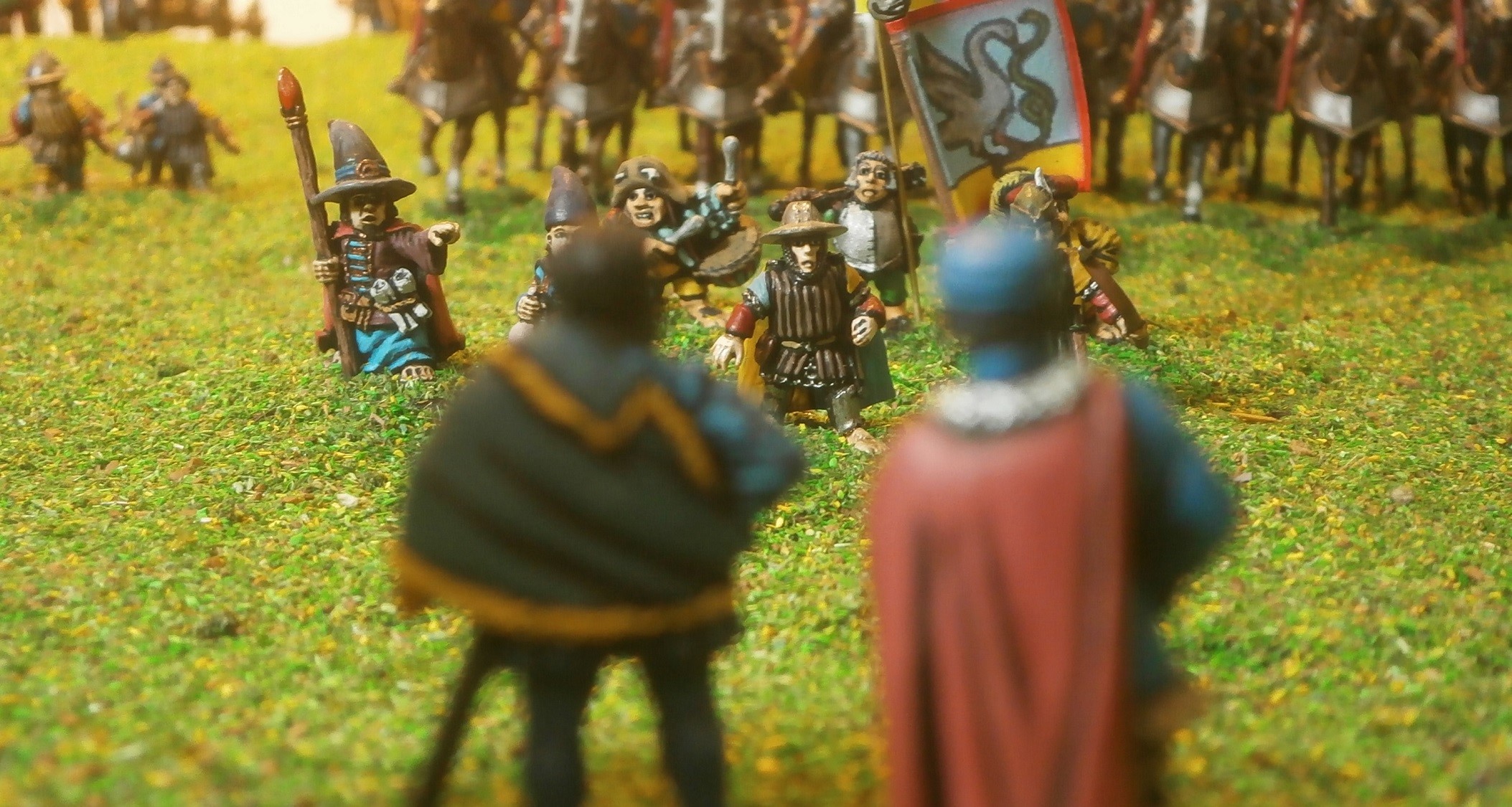
“What was done to my Lord Lucca,” said Barone Iacopo, “was as unforgivable as it was foul.”
And yet, thought Umile, apologies were made and apparently accepted.

“I cannot speak for the duke, or his son who rules, for now, in his stead,” said Barone Recchia, apparently unwilling to chat about Duke Guidobaldo’s past actions. “But I can pass on all you say, and we are permitted certain powers here in our own town.”
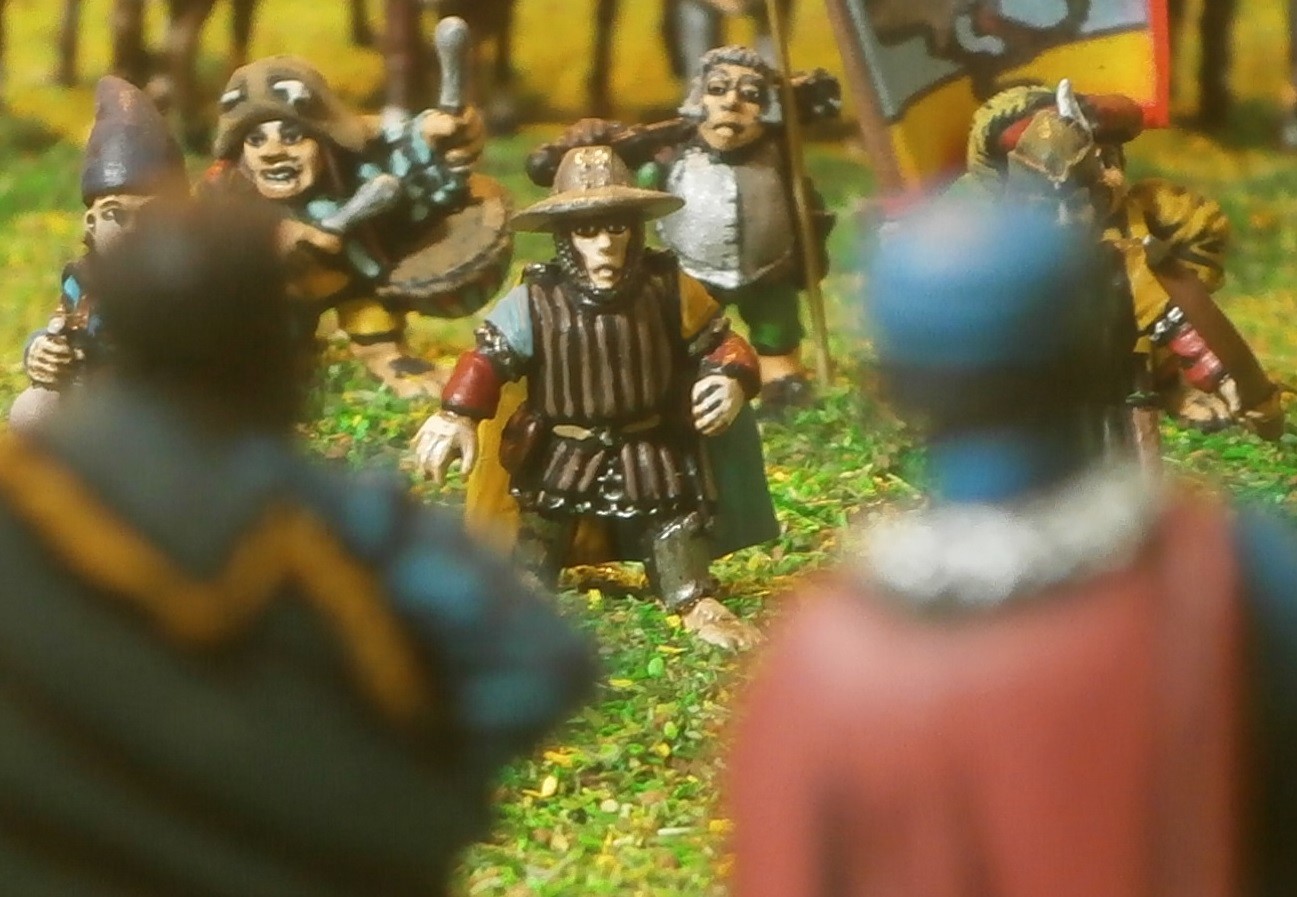
“Then listen carefully,” ordered the Verezzan barone. “Your lord may have begged forgiveness for Lord Lucca’s murder, and we may well have been persuaded to believe his excuses, but there is still the matter of compensation for that which was looted at the same time. I think it only fair that gold and silver should be paid to the exact value of that which was taken.”
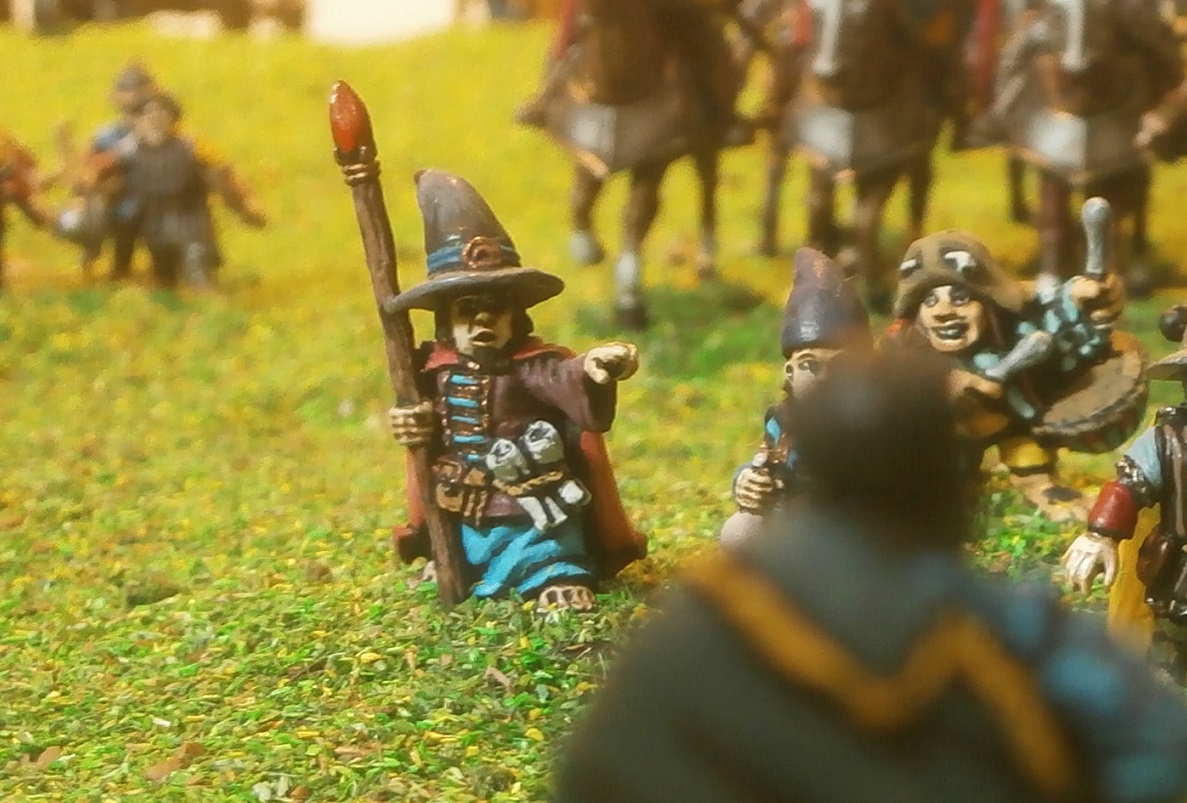
“By rights,” interrupted one of the wizards behind the barone. “Pavona should pay more, a further penalty as punishment for the many crimes committed that day, the worst being the murder of our enlightened lord.”
Barone Iacopo showed no surprise at the wizard’s outburst, and Umile wondered if such rudeness were to be expected of those who were mad enough to dabble in magic.

“Yet I make no such demand,” said the barone with a smile. “Only that coin to the value of all goods and monies looted be paid to us, accurate to a silver grossi. We have drawn up accounts for your perusal.”
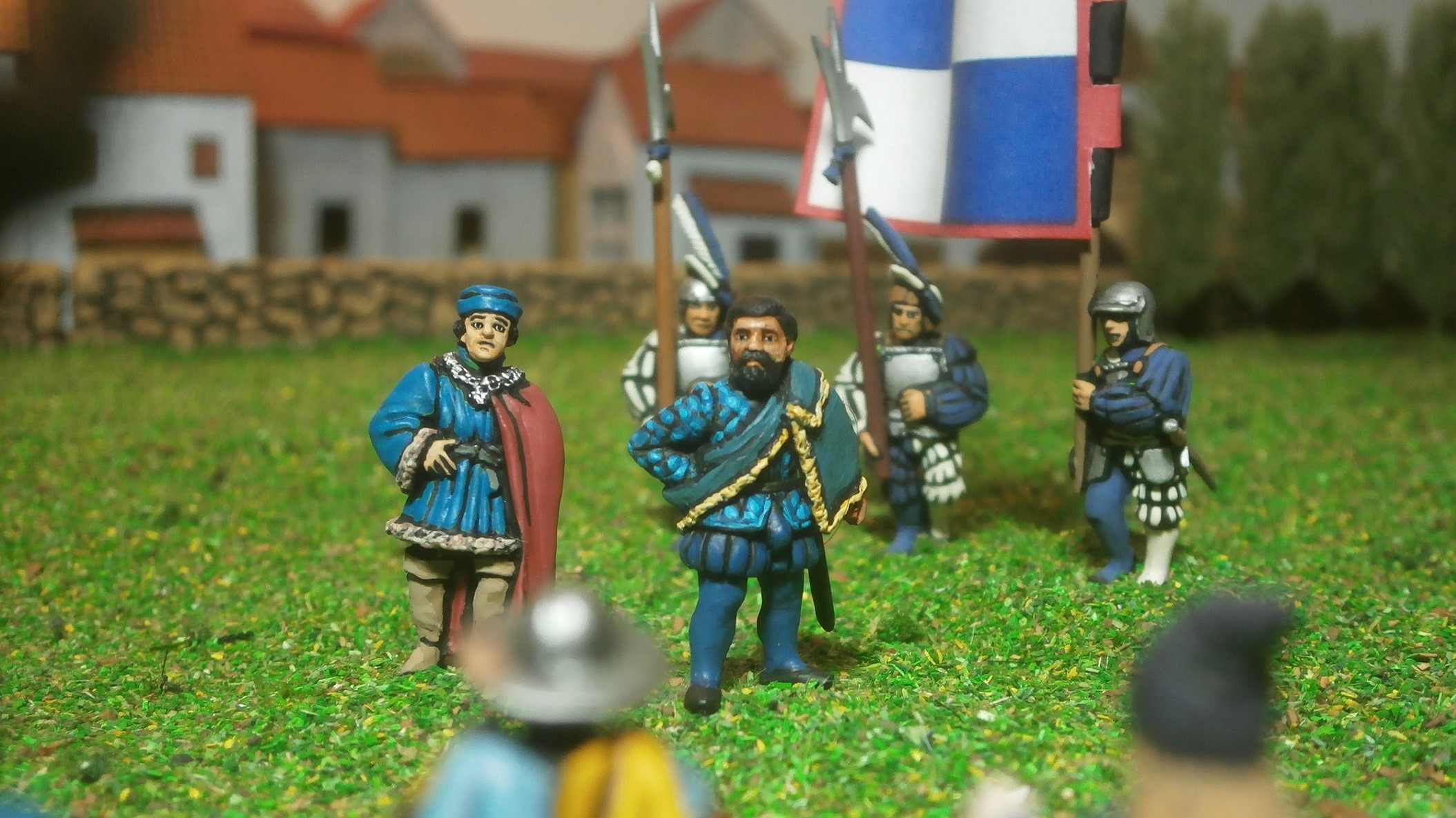
“Such a thing,” stuttered Barone Recchia, “is beyond my ability to command.”
“We do not have the means, nor the authority …” added Signore Rainaldo, apparently unable to finish his thought.
“Then you had better find them, and quick, for if we are not paid the full amount within six days, then we intend to take it from you, by force, in a manner exactly akin to your own soldiers’ behaviour in Spomanti.”
“A tooth for a tooth,” added the brigand chief. “Entirely fair, and proportionate.”
The Pavonan nobles were lost for words, but the halfling wizard seemed happy to fill the silence.
“In every way a balancing of both accounts and deeds.”
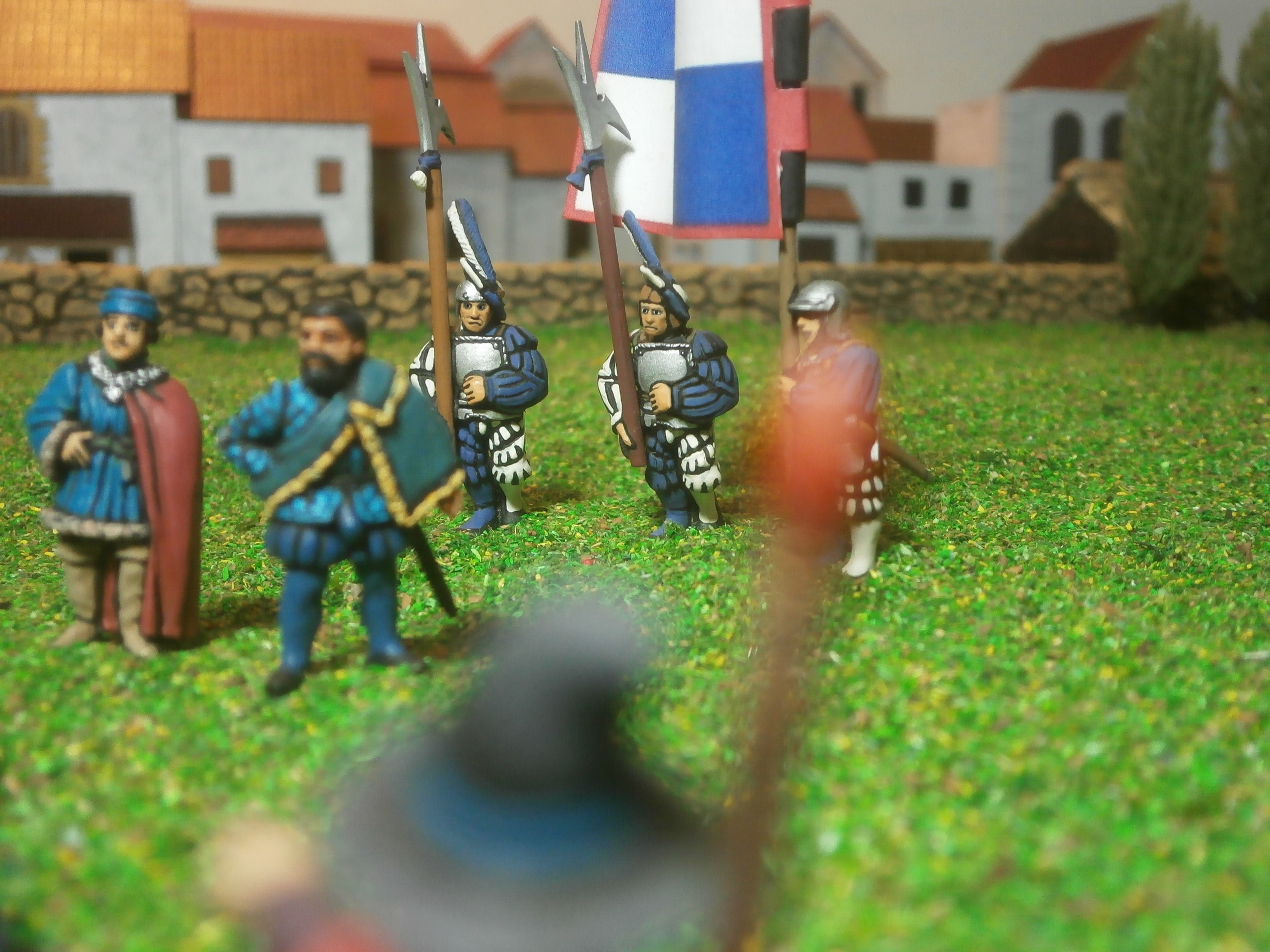
Umile sensed their full meaning, for there had already been a balancing beyond that which they were demanding here – the attempt to assassinate Duke Guidobaldo, to atone for the death of Lord Lucca. The brigand chief should have said ‘a life for a life’, if he were being wholly honest.
Suddenly, it occurred to Umile – Duke Guidobaldo was not dead. Grievously wounded, yes, and incapacitated, but not dead. If the Verezzans meant everything they said, then even the payment of this monetary fine would not fully settle the account, and the hostilities could very well continue until the duke was dead.
“Six days!” exclaimed Signore Rainaldo. “Surely, you cannot expect us to comply so soon? It is insufficient notice. We need more time.”
“Notice has been given, by way of a letter, delivered to the city weeks ago,” said Barone Iacopo. “Pavona has had time. And now you have time to send word to the city, and for the monies to be delivered here.”
Yet nowhere near enough time, thought Umile, for Lord Silvano to return from Trantio with the army. Petronio was right: Lord Silvano and Pavona had been played.
“Let us hope,” added the Pettirosso, gravely, “that the council in Pavona love Scozzese enough to pay promptly. For if not, then there will be no Scozzese to love.”
…
Many Enemies, Much Honour!
Luccini. Summer, IC 2405
“We’re but a reserve for this army, you know?” said Baccio, as the two of them rode in the summer sunlight towards the outskirts of Luccini. “That’s how far the Compagnia has sunk. We are more, perhaps, than a rearguard, more than one brigade among many, but no more than a reserve.”
“You don’t know that, Baccio,” answered Ottaviano. “The vizconde might put us in the main battle, front and centre.”

“Aye, he might. But I’m talking about the numbers. The compagnia once fielded an entire army.”
“Two armies,” corrected Ottaviano, “if you count both those in Estalia and Tilea as the Compagnia.”
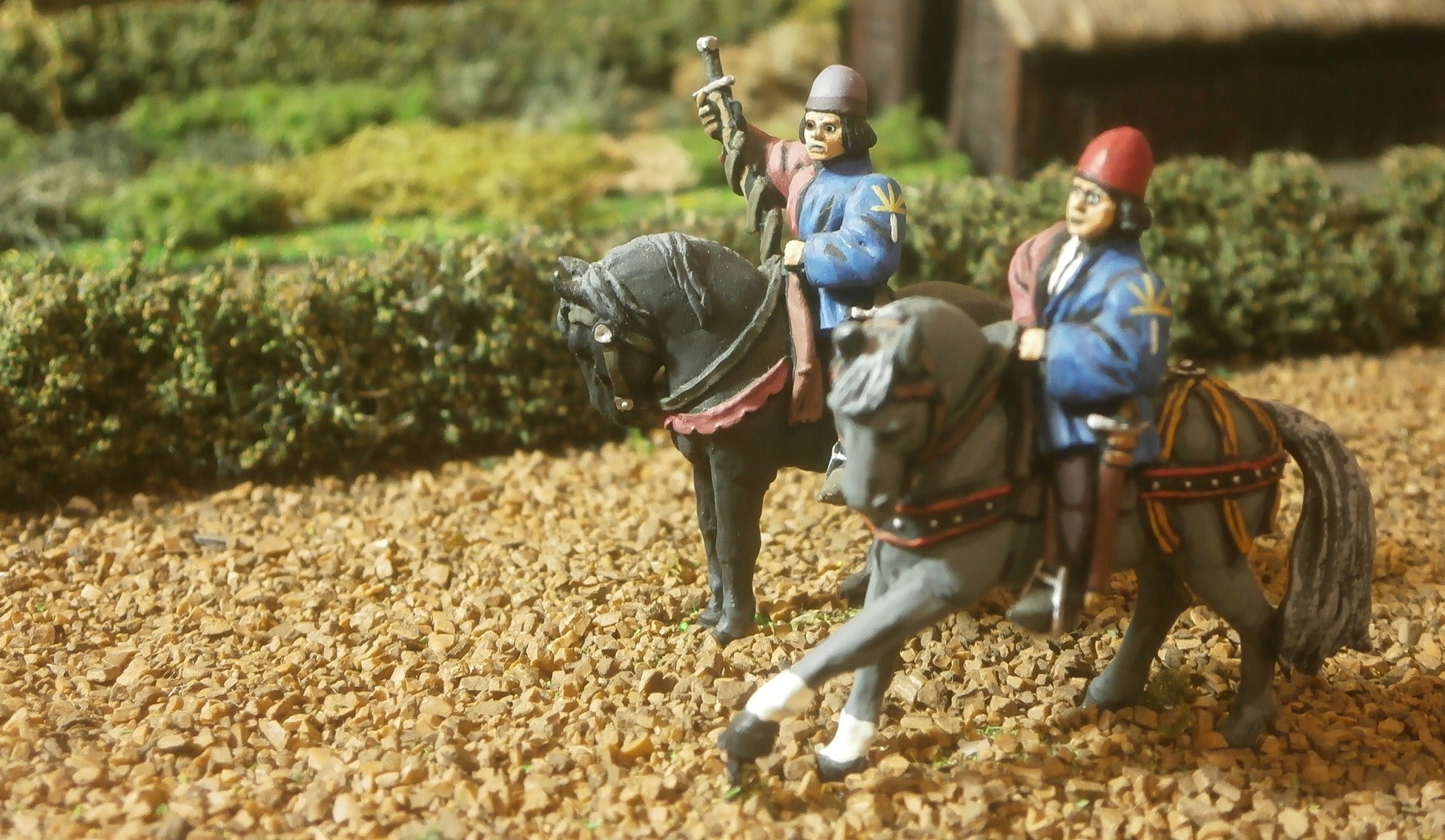
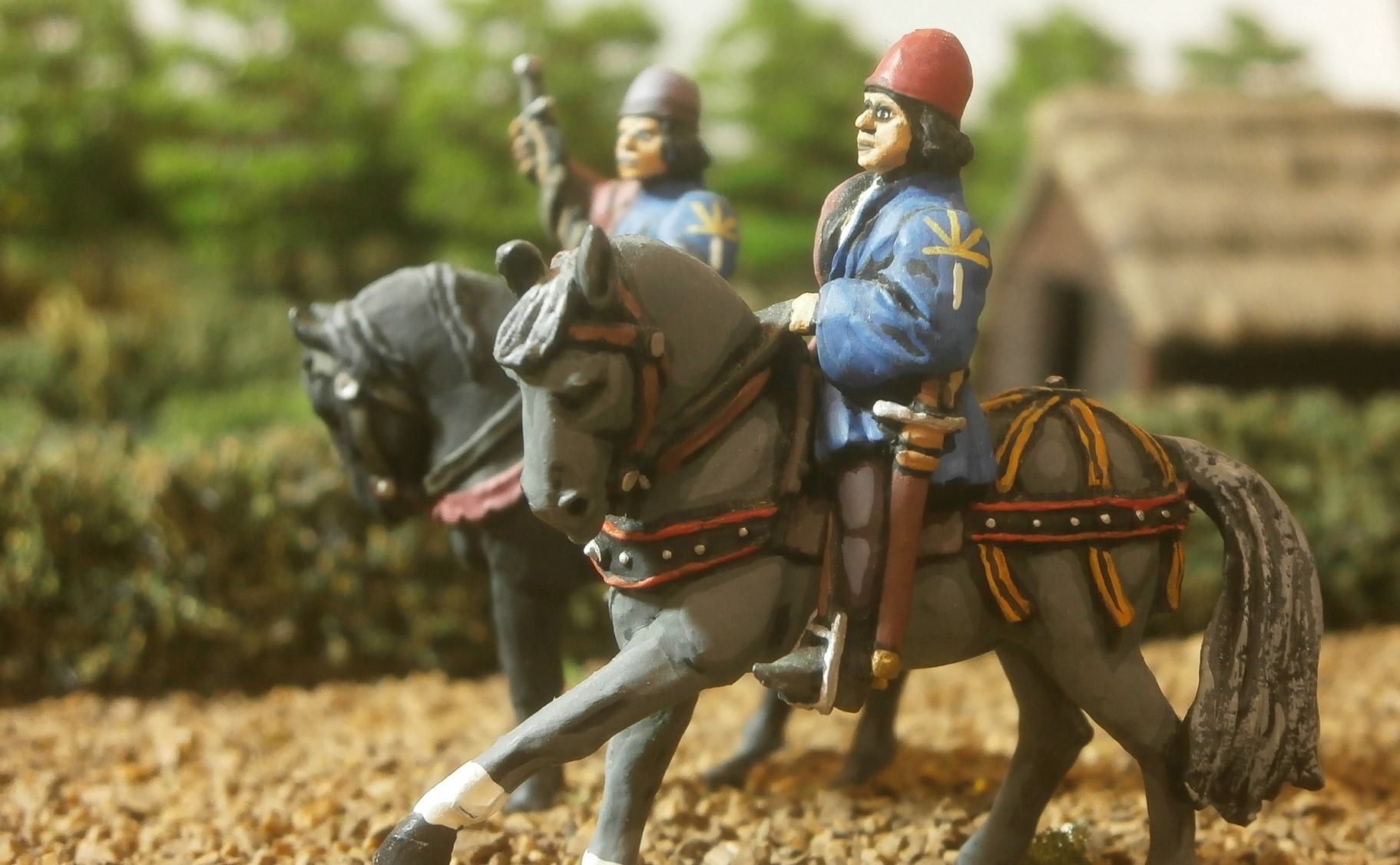
The chancellors rode a pair of the last few light horses the Compagnia del Sole owned, the rest having died at or after the ratmen bombard’s explosion south of Campogrotta. Both sported the Compagnia del Sole’s Myrmidian emblem, a half sun atop a white baton of command, upon the left shoulders of their surcoats.
“I reckon this army could be bigger than both those compagnia’s conjoined,” said Baccio. “When I said Visconde Giacometti would have a surfeit of soldiers, I didn’t realise just how right I would be.”

“I wonder why so many?” asked Ottaviano. “No-one goes to all this expense without good reason.”
Baccio pondered a while. “Well, everyone says it is to defend Luccini, so that – as I have heard it officially announced twice now: ‘The realm might never again suffer at the cruel hands of such as the Sartosans’. You yourself said that the vizconde might be out for revenge against Volker’s pirates.”

“Well, if he is, he ought to be more careful about which ship captains he hires,” said Ottaviano, somewhat cryptically.
“Why so?”
“I heard that a ship from Volker’s fleet, a carrack carrying a regiment of Gauntlets, was spied among the last convoy, flying Solsonan colours. It didn’t dock at the quays, but instead ferried its passengers ashore in boats.”
“I wouldn’t leap to conclusions just because it anchored off shore,” suggested Baccio. “There were likely so many ships that I doubt they could all be accommodated. Two of the ships that brought us used boats to disembark. Sounds like idle gossip to me, Otto.”
“Ah, but it was a sailor who said it, and he knew the ship, having served on it before it was taken by the Sartosans. He reckoned it had been cut down a little, perhaps for the chase, but he swore he knew its lines and what was left of its figurehead.”
After a few moments silence, Ottaviano said, “Baccio, I know you’re conjuring up an explanation.”
Baccio laughed. “You know me well, then. I don’t like to jump to conclusions based on mere suspicions. Perhaps it was recaptured, now that the Sartosans have dispersed? And then – waste not, want not – it was put to use.”
“Perhaps,” admitted Ottaviano. “But you’re assuming the Sartosan fleet has dispersed.”
Baccio grinned. “Guilty as charged,” he laughed.
“Talking of ‘waste not’,” said Ottaviano, “an army this massive army cannot be intended purely for defensive purposes. There are too many hungry mouths to feed, and way too many professionals expecting to be paid in gold. A force this big must be meant for a plundering war. Half this strength could beat the Sartosans in the field. What we have here, my friend, is a marching army if ever I saw one.”
Baccio. “Oh, that it is, Otto, without doubt. And maybe a long march too.”

The road had brought them to the Solsonan’s main camp, which they now rode by. The Estalian soldiers, being the vizconde’s subjects and tenants who dwelt in his newly attained province, were busy drilling. As recently pressed men, they were still learning the mechanical art of war.

There were some gentlemen to command them, as well as old soldiers as sergeants, and even some volunteers, being men of a more martial temperament, with some skill in swordsmanship.
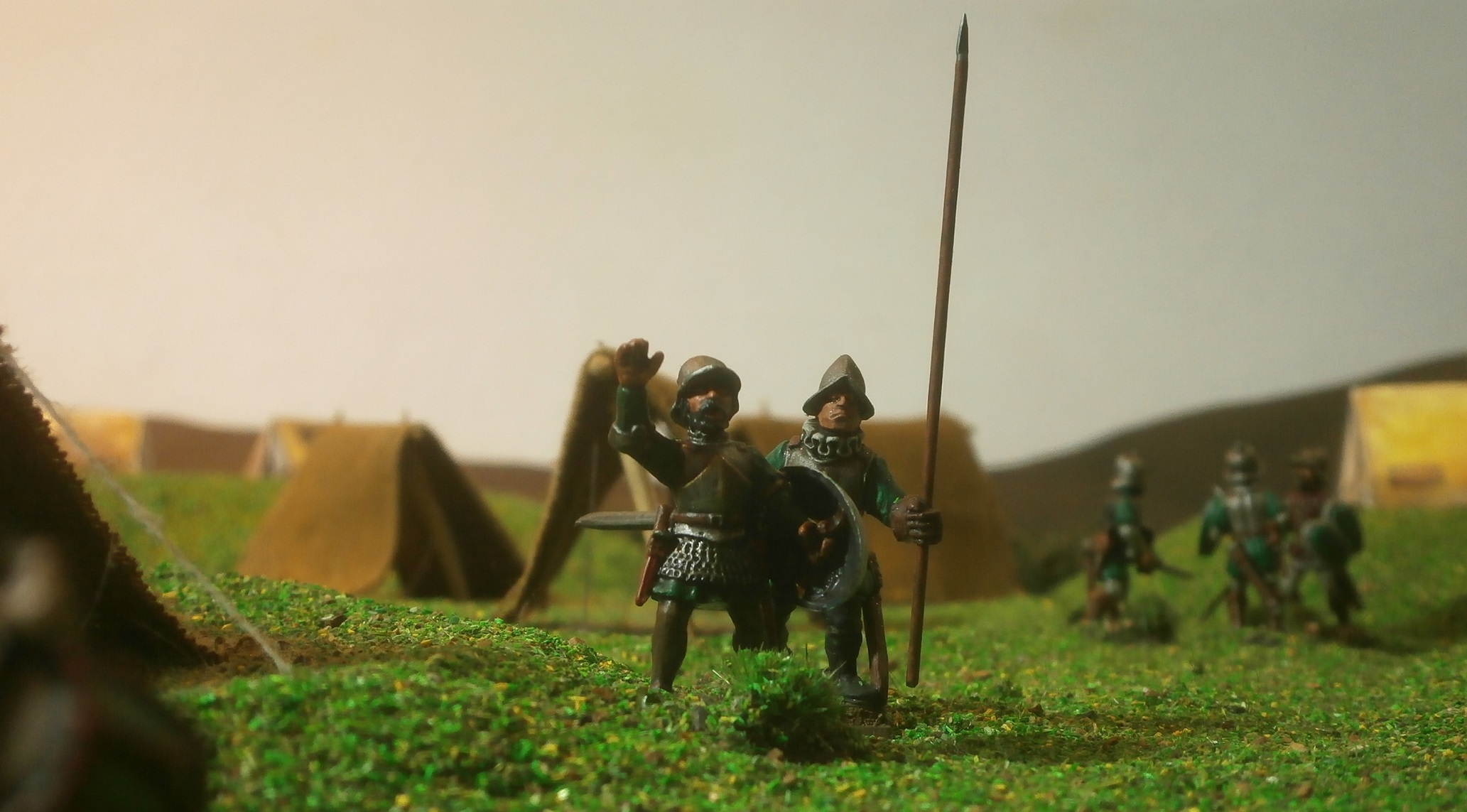
Yet both the chancellors had heard the rumours of grumbling among these Estalians, from the usual disgruntlement about being pressed for service overseas, to a more insidious expression of loyalty to the old senors. Many of these men, even the veterans, once served the rebellious lords that Giacometti defeated in war. When granted the lands and title of vizconde, Giacometti obviously did not want to waste their talents. And although he must have weeded out the most contrary and spiteful amongst them, perhaps the quieter sort who remained were still enough to stir in a dash of disobedience?
Handgunners marched in columns …

… deploying to practice their loading and firing, although mostly just going through the motions under the watchful eyes of their captains, thus conserving the powder stores for more deadly use. Swordsmen dressed their ranks and files …

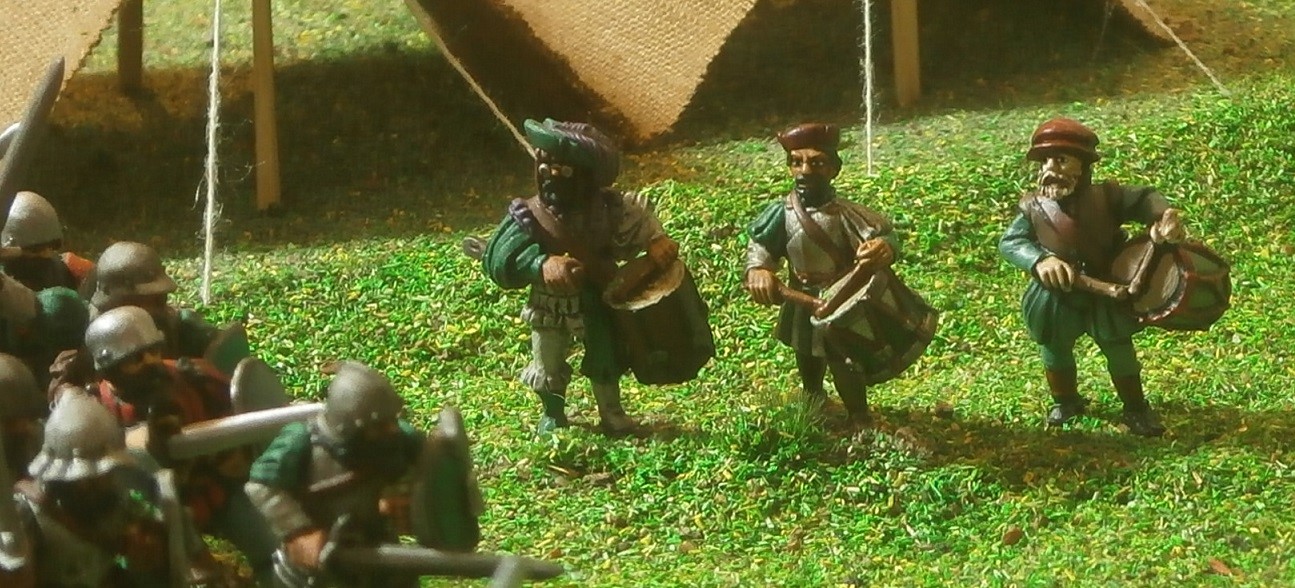
… learning how to wheel, incline and countermarch, while drummers beat up the martial calls the soldiers needed to know.
It occured to Baccio that the rawness of so many of these soldiers might be part of the reason the vizconde had allowed summer to pass by without marching off, although the fact that he was waiting for the Compagnia del Sole to arrive no doubt another reason.

From what Baccio could see, the army seemed ready now, for whatever it was the vizconde had in mind.

“So,” he asked his friend, “where do you think we’re marching to, Otto?”
“I don’t know. It’s possible General Mazallini doesn’t either. He’s merely a lieutenant now, and there was nothing concerning the matter in the contract.”
“Who knows what ambitions the Vizconde has?” asked Baccio. “Perhaps he lusts after the wealth of Portomaggiore or Alcente? Or he’s fallen out with Pavona like so many other Tilean lords?”

Ottaviano chuckled. “Luccini’s just about the only realm in Tilea that has no quarrel with Pavona!”
“Not there then,” admitted Baccio. “He might have plans to lead the war against the ratmen, like Lord Alessio Falcone led the armies against the vampires? He could make himself a hero, remembered through history.”
“No,” said Ottaviano. “If that was the case, he wouldn’t have brought us all the way down from the north. He would have marched up to us. I reckon this army is meant for Luccini’s defence. Consider: How better to prove Luccini is no longer a victim, no longer prey for mighty foes, than to have it become a predator, launching attacks of its own?”
They were approaching the gate, and saw that some of Grizkurk’s brutes were guarding it.

This surprised Baccio, but when he thought about it, such a task would be a relatively safe way to discover whether such recently hired mercenaries would and could do as they were ordered, in the spirit of those orders, and without causing trouble of any kind.

It certainly seemed the visconde was not too worried about the current Tilean distaste for ogres. The Portomaggioran Lord Alessio Falcone apparently commanded a large company of them, which he obtained from the VMC campaigning in the north when they could no longer find sufficient meat to satisfy the brutes’ vast appetites. But otherwise, ogres were commonly hated just about everywhere in Tilea, what with the memory of Razger Boulderguts’ onslaught through the heart of the peninsula, in which he laid waste to Trantio, Pavona and Ridraffa, even threatening Remas, and all because there was nothing left for him to rob from Campogrotta and Ravola!
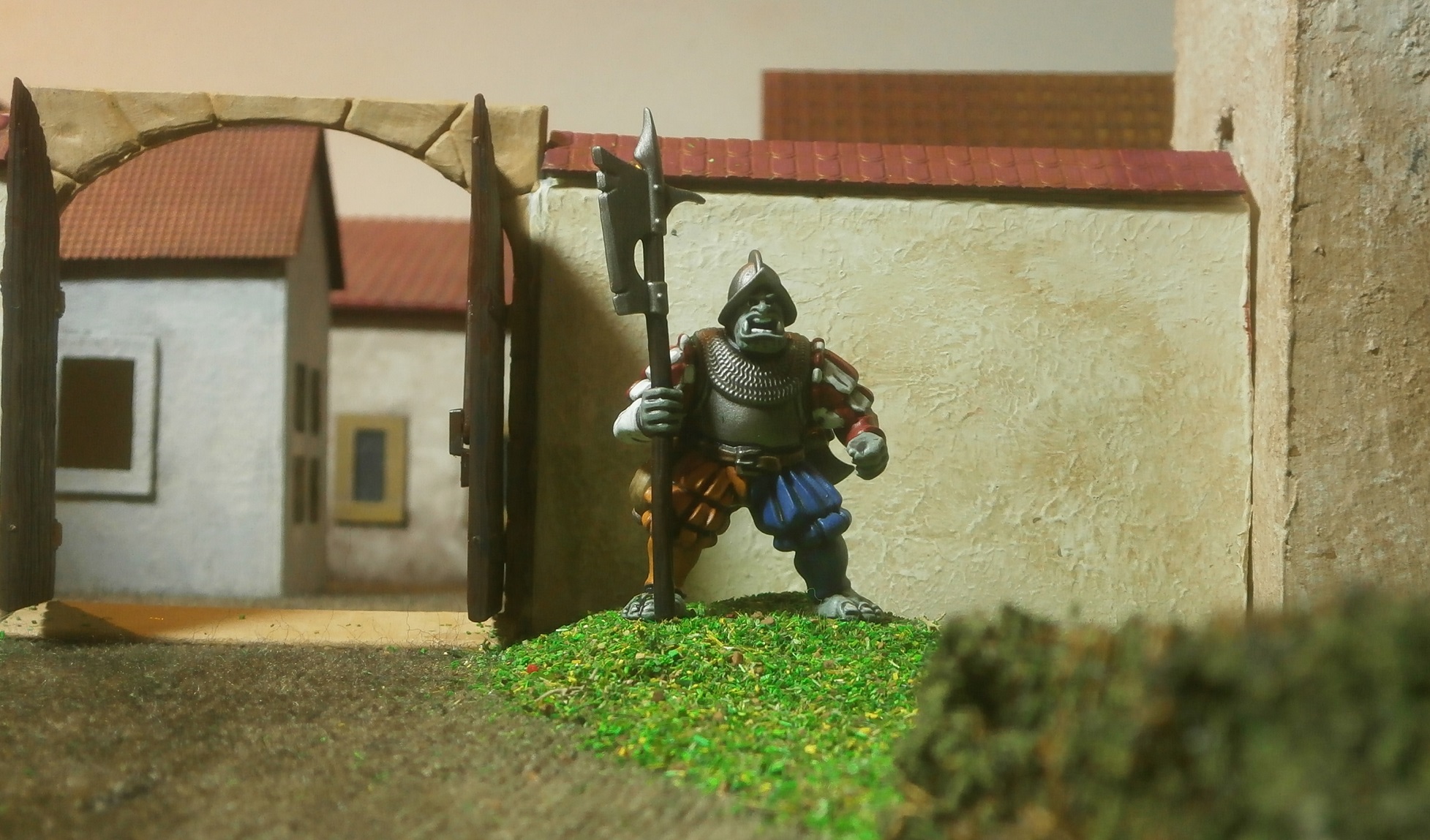
Apart from the fact that a brute named Grizkurk commanded them, Baccio knew little else about these giant dogs of war. Still, he thought, the chances are he would learn plenty more on a campaign with them. The Compagnia had never employed ogres, for none of the commanders had trusted them, although Ottaviano had often said that brutes were no more or less honest than human mercenaries, just a lot hungrier.
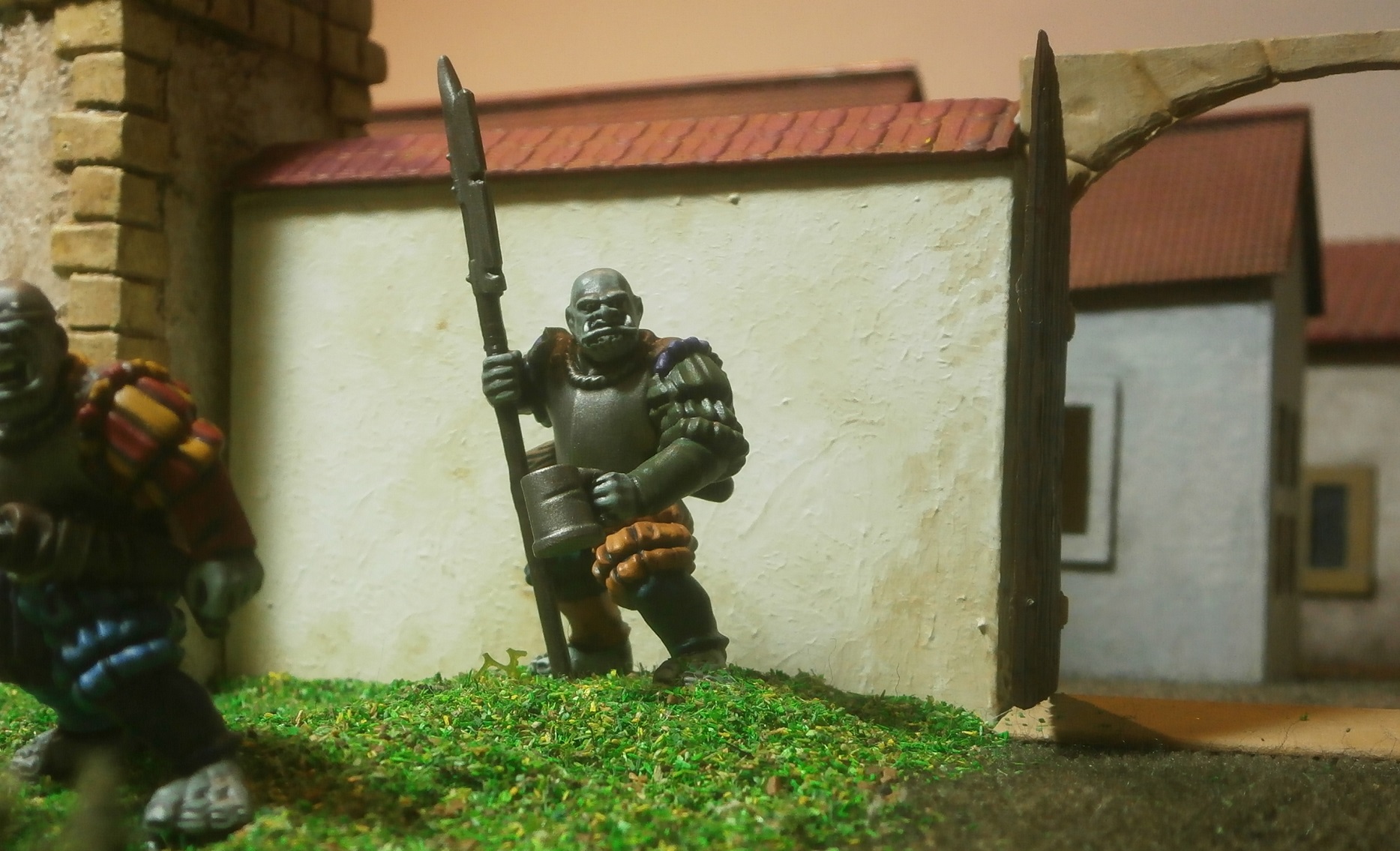
Baccio wondered if one of these gate gaurds was Grizkurk, but despite their flamboyant dress, in the northern style, none of them seemed likely candidates. Two seemed uninterested in the chancellors’ passage, probably because they knew the Compagnia’s emblem, but one leered at him, over a two-pint pot of ale. He doubted any man of the Compagnia, the Solsonans or the Gauntlets would get away with quaffing ale whilst stationed at a gate, but then, two pints would simply wet the corners of an ogres’ stomach, and who would risk the futile trouble that might ensue by suggesting the gaurd should cease his supping?

As they passed by the gate and entered a street beyond, Baccio went back to pondering Ottaviano’s last words.
“Starting a war against either Portomaggiore or the VMC would be madness, surely?” he suggested. “Even if it did prove Luccini’s ability to fight?”
“You yourself, Baccio, once wondered whether the vizconde wanted to govern Capelli again?”

“Well, I wouldn’t say that now,” claimed Baccio. “The visconde has Estalian lands and gold a-plenty. Siezing Capelli would be like leaving a castle to live in a hovel he once played in as a child. Besides, why would he make an enemy of the VMC or the Portomaggiorans, especially after all that poor Luccini has been through of late?”
Ottaviano rolled his eyes. “You mean the same VMC who razed Camponeffro after the Ravernan defenestration, and who retained control of Pavezzano and Monte Castello after ousting the goblin invaders? And the same Portomaggiorans who seized Raverno and now rule it with a mailed fist? Make no mistake, they are both threats, which means Luccini is surrounded by grasping neighbours. It’s not a matter of Luccini making enemies, but rather ensuring it’s dangerous neighbours don’t make themselves into enemies!”

This seemed a persuasive argument, so for a moment Baccio held his tongue, as they turned a corner to enter a square filled with soldiers – the red liveried Compagnia del Guanto, the vizconde’s own mercenary company, which he had commanded for several years before being ennobled.

General Vizconde Gismondo Giacometti stood before his men, with several officers by his side. He sported a short cloak of Solsonan green, but every other soldier present was clad almost wholly in red. More than half were northerners, from the great Empire beyond the mountains, but after their fighting in Estalia, their ranks had been repaired with Solsonan volunteers who fancied a mercenary’s life, and who therefore probably suited soldiering much better than the pressed men drilling outside the walls.

The company’s standard, unsurprisingly an armoured gauntlet, argent on a gules field, fluttered before a company of pikemen and another of halberdiers, with a small company of handgunners on the left. Another company, carrying greatswords, was marching into the square to take position on the right.

The chancellors halted, and both wordlessly understood that they should wait until the vizconde had seen what he wanted to see, or done what he wanted to do.
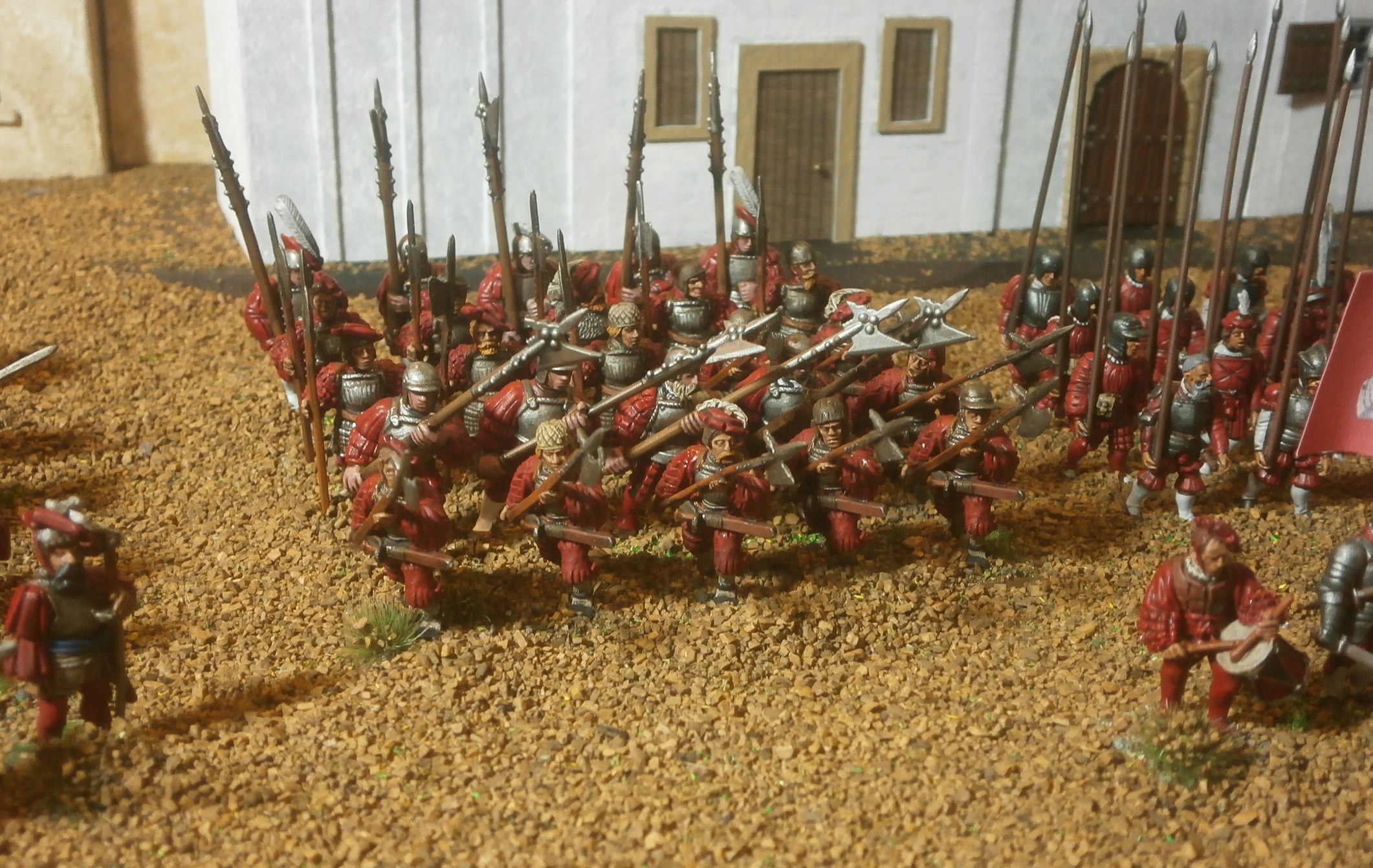
As the zweihänder company halted, someone cried out,
“Was sagen wir?”
Which elicited a cry from every soldier there, an eruption of martial voices reverberating around the square.
“Viel Feind, Viel Ehre!”
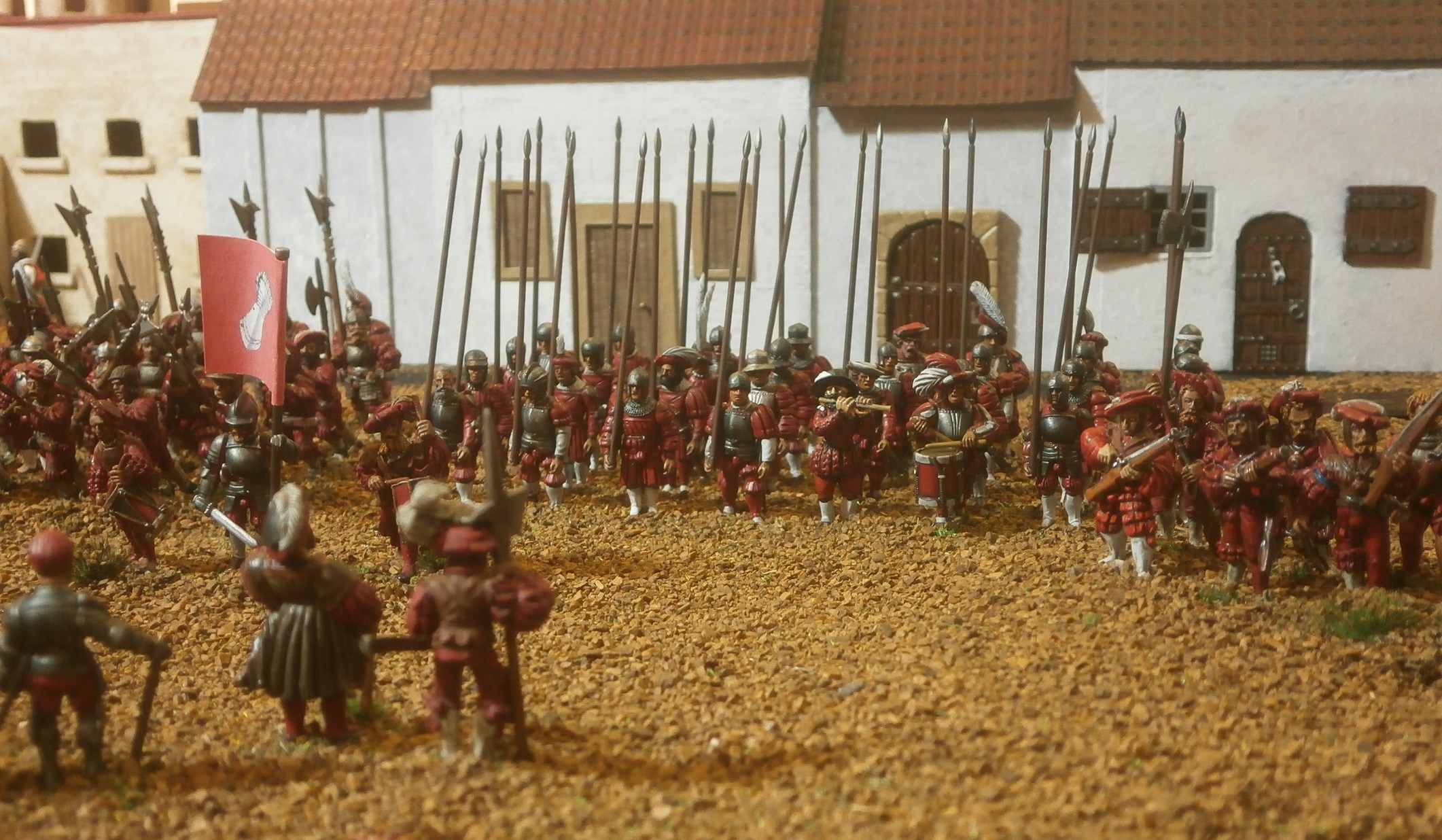
The chancellors’ horses started, surprised by the sudden sound, and both men took a moment to settle them. Turning to his friend, Baccio spoke quietly,
“I hope we’re not going to war against everyone!”
Ottaviano smiled. “Don’t worry,” he said. “They’ve been shouting that for years.”
“You were saying,” said Baccio, “that this army is intended for conquest, if only to ensure Luccini’s future safety? You mean like proving you can stand up to bullies, so that they seek their cruel sport elsewhere?”
“Aye, exactly that. And, maybe, robbing the bullies at the same time?”
Baccio grinned.
“Well,” he said, “the vizconde has gathered enough robbers to steal a whole mountain of gold.”
…
The End of Summer 2405: What Plans Lie in Ruins?
Another Excerpt from Bonacorso Fidelibus’s Work: The Many Wars of the Early 25th Century
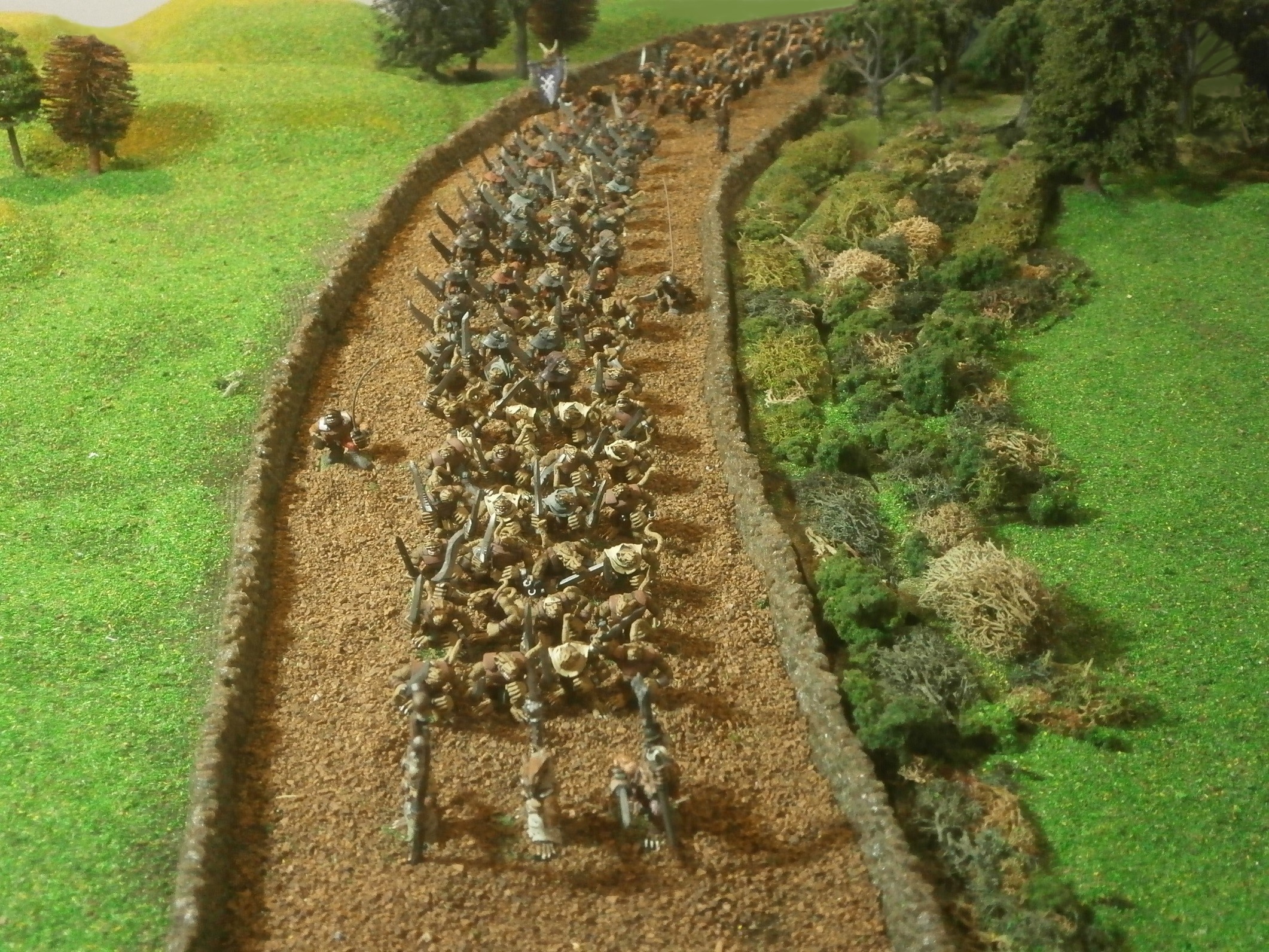
In the far north, the massive ratmen army that had travelled in Spring by way of the road from Ravola to Miragliano, was followed several months later by a force consisting of Tettoverde elves and Karak Borgo dwarfs. The former carried beautifully carved long-bows and elegant swords, some marching in close step, while other, wilder souls strode more lissomly.

The latter hefted heavy, iron handguns of cunning design as well as short, broad-bladed swords and fighting axes.

This unusual alliance was guided by a company of Arrabiatti riders, the Audaci Arciari, making it perhaps one of the strangest alliances forged in Tilea for centuries. Sylvan elves, mountain dwarfs and brigand-outlaws!

As the summer came to an end, the pursuers drew close to the city of Miragliano and made camp. There they wrestled with the decision they now had to make.
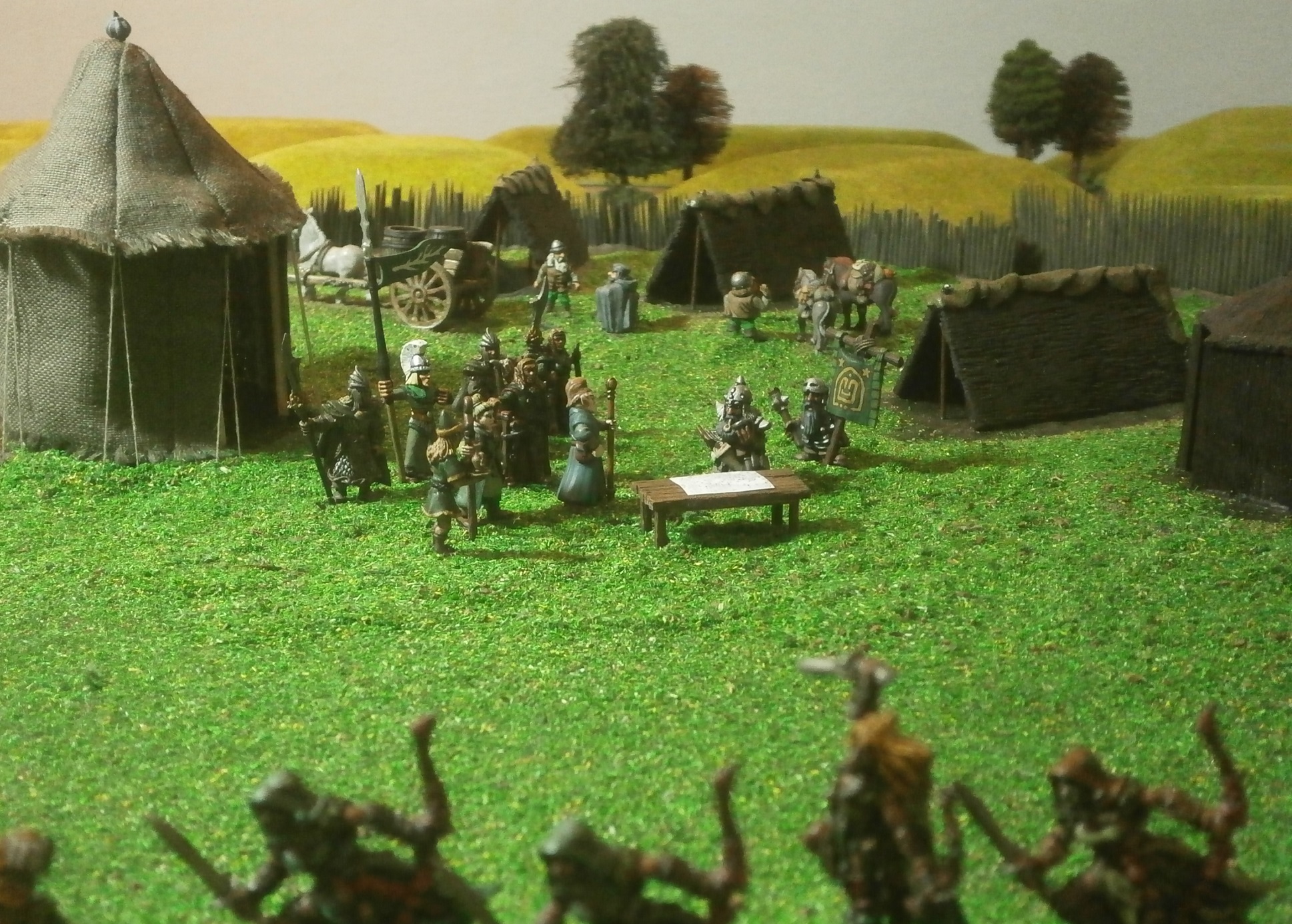
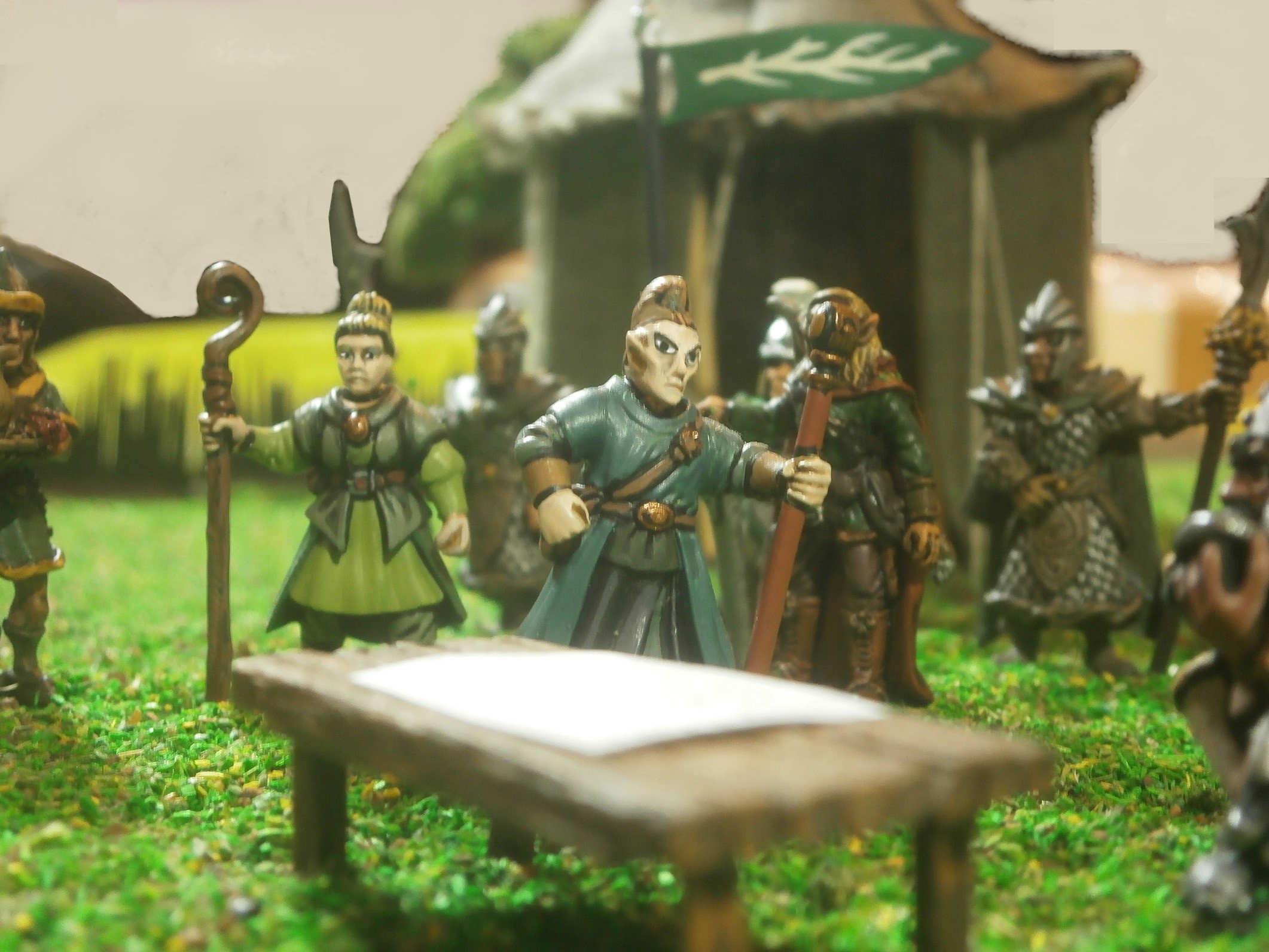
Should they, could they, take on the enemy, considering the disparity in numbers and the difficulties presented by the boggy terrain? The commanders were as chalk and cheese, and yet worked in harmony in their efforts to find a way to not only get to grips with the foe but do so in a way which might be both victorious and have a real effect on the ratmen’s future goals. Lord Veluthil of the forest elves proved to be a veritable cornucupia of ideas, yet there were such a complexity of ifs and buts to his stratagems, that all seemed to falter in the planning.
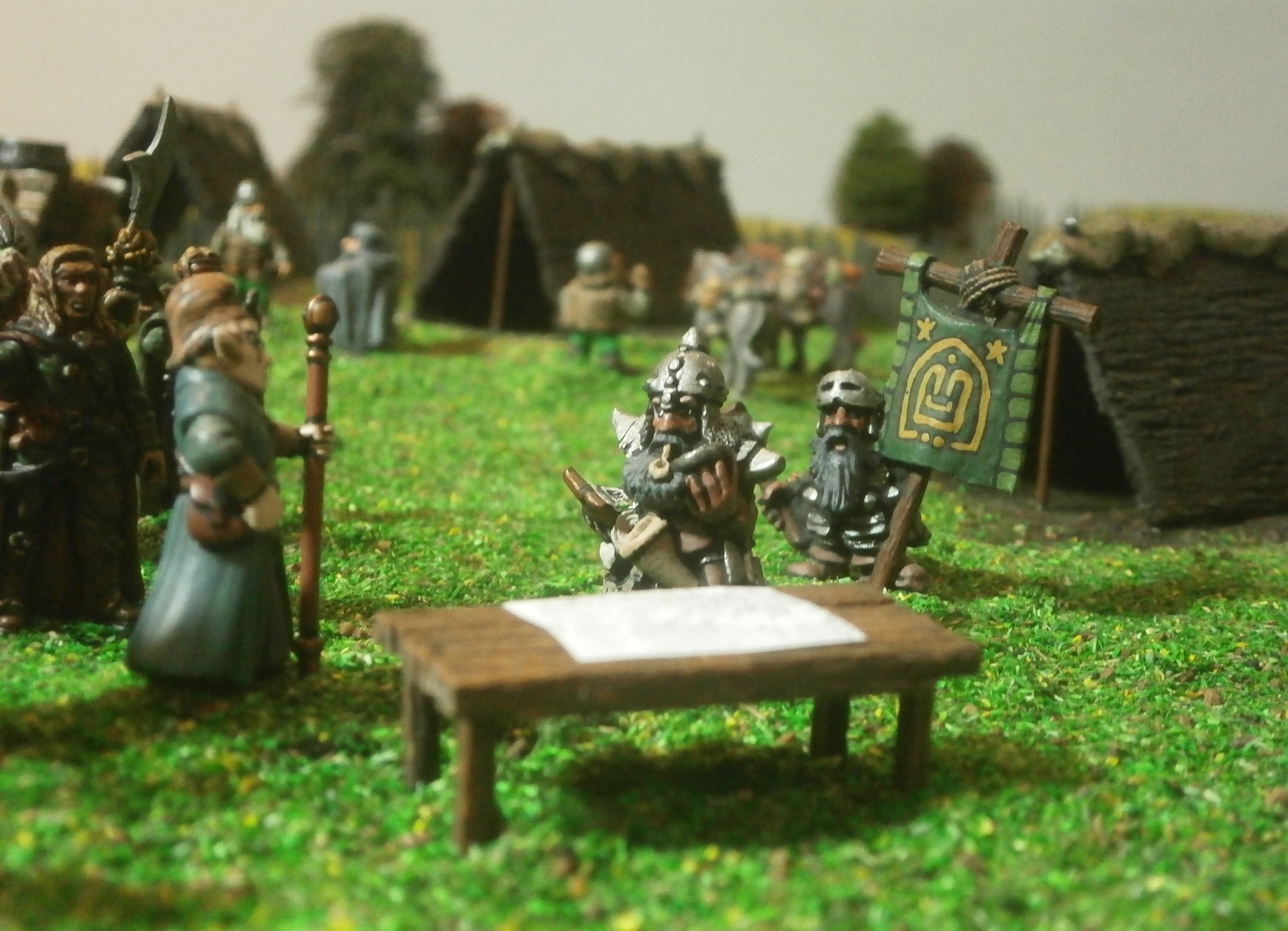
Thane Narhak of the mountain dwarfs listened to every proposal, dismissing none either hastily or fully, himself speaking only when his ideas were fully considered, and, to the surprise of his own officers, not once giving the impression of the slightest hint of impatience or exasperation.
Among their several discussions they debated what possible reason the ratmen had for occupying the burnt-out ruins of Miragliano, finally agreeing that whatever it was had lured the rats across the entire northern reaches of Tilea, travelling openly upon the world’s surface rather than in their secret underpasses, it must surely have been of some considerable importance.
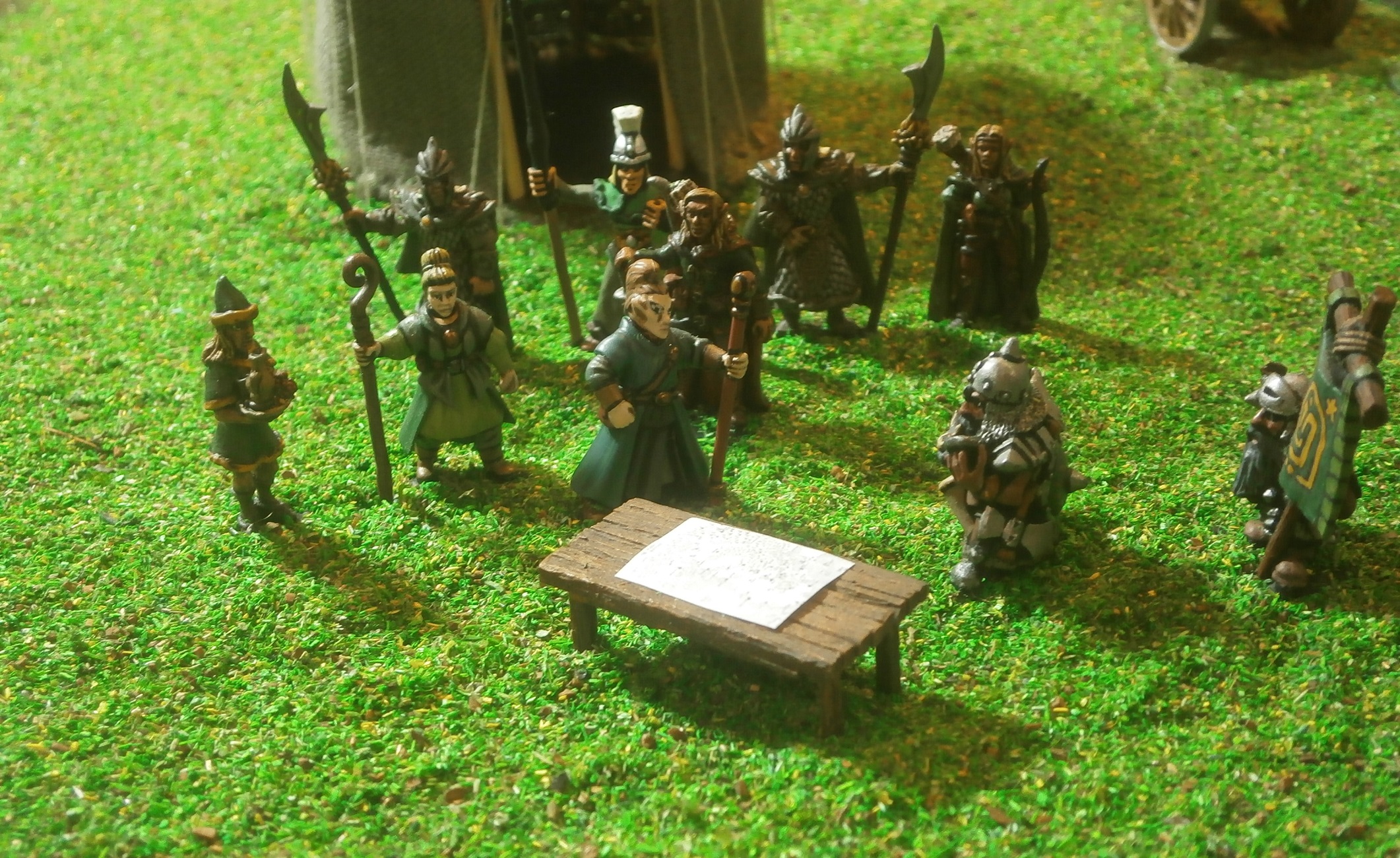
While the army pondered its next move, the dwarf’s flying machine and the elven warhawk riders spied upon the city from above …
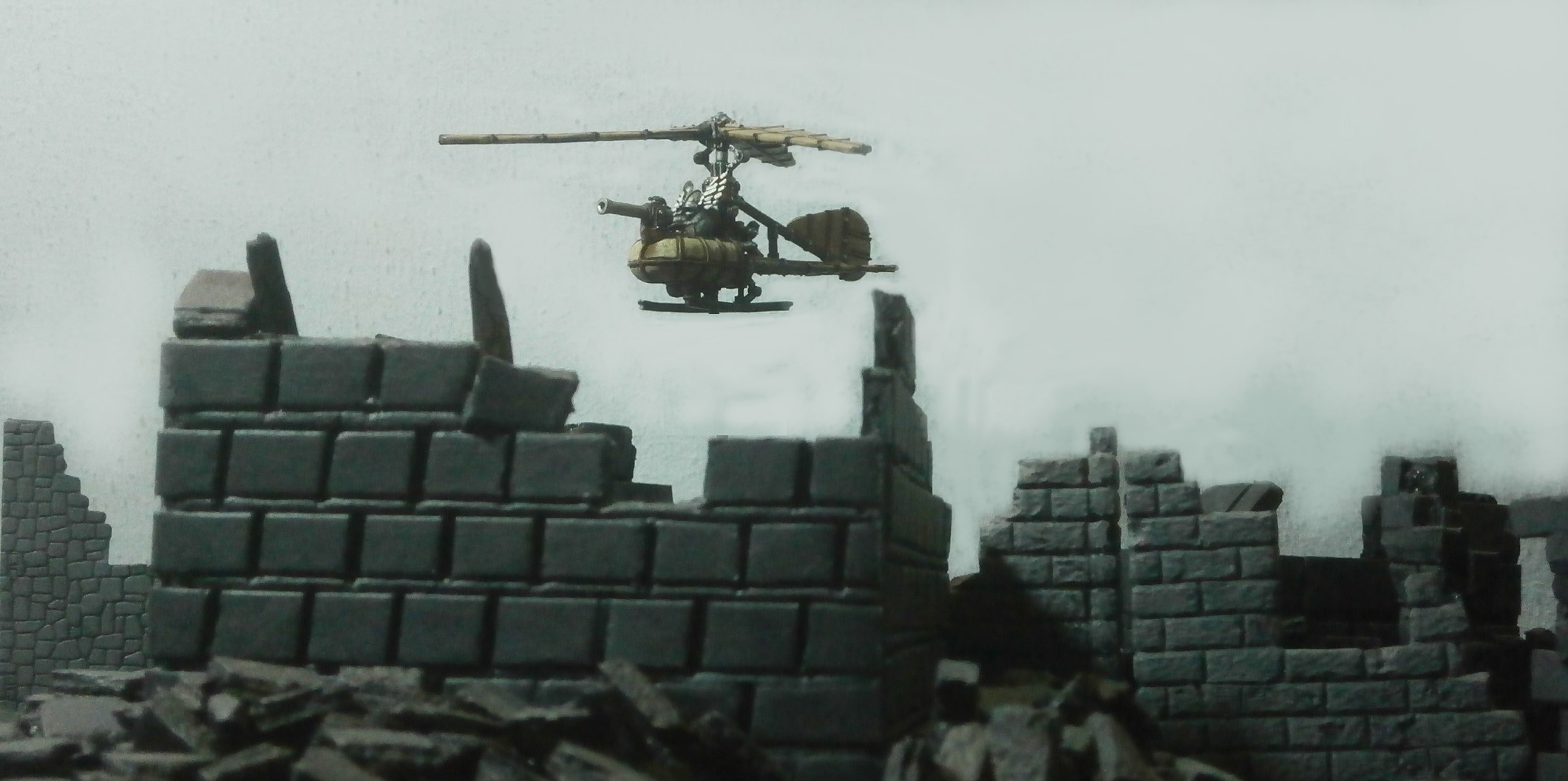
…hoping to discover the enemy’s intentions, especially if they intended to sally out to attack the alliance force nervously camped close by.

Within the ruined city of cracked stone, where barely a shiver of unscorched timber had survived the great incendium sparked by Lord Alessio of Portomaggiore, the ratmen squatted in makeshift huts and hovels, as even more of their own kind, as well as enslaved men, arrived from the north to further swell their numbers.
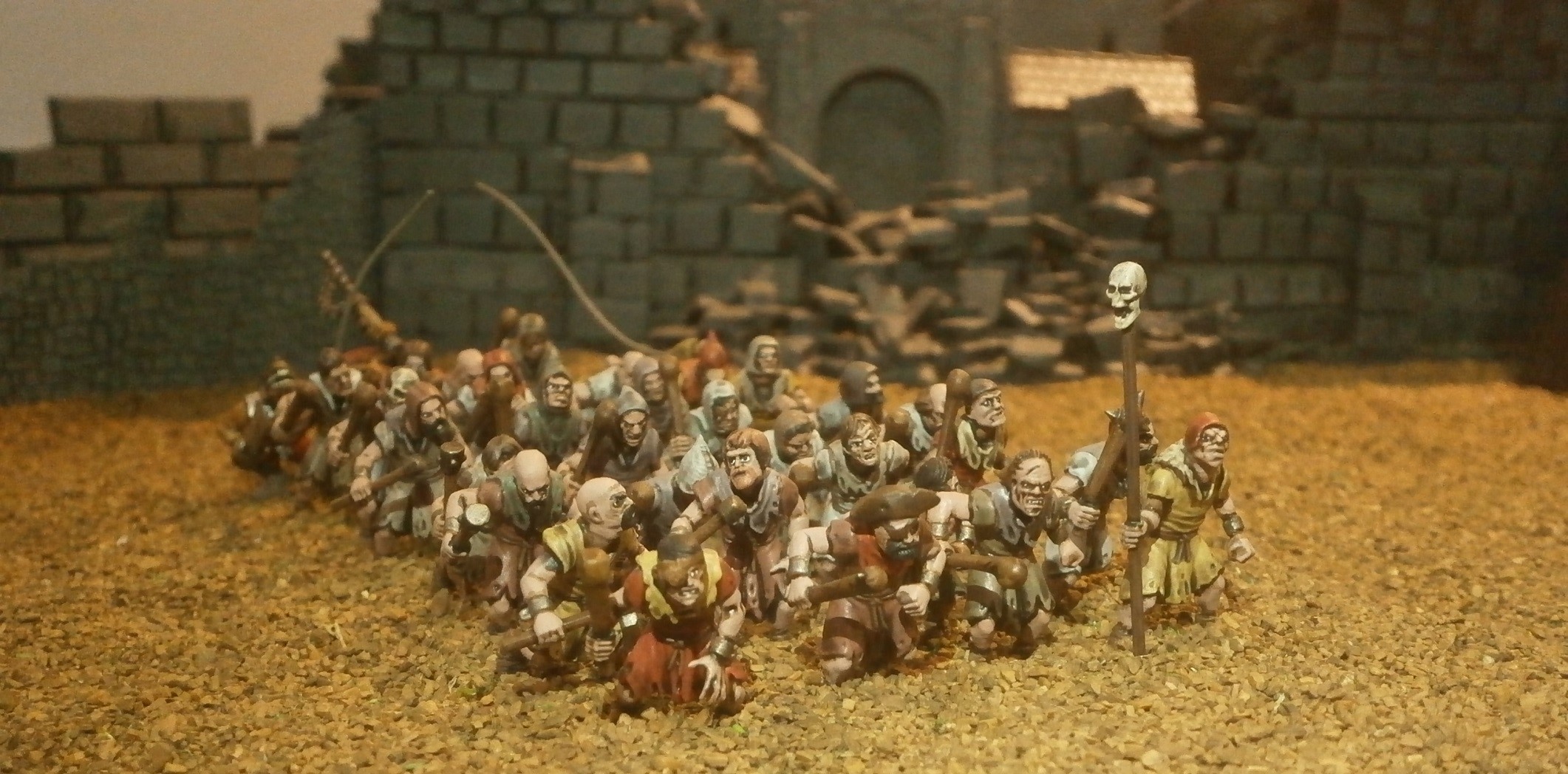
The poor men-slaves had been taken mainly from the realms of Ravola and Campogrotta, since when they had suffered such miserable imprisonment and uncountable cruelties, that only the hardiest survived.

Worse still, they had been fed meat and drink laced with the tiniest pinches of powdered sky-stone, a poison which had twisted and bent their bodies, imbuing them with a tortured kind of strength and endurance. Each bore a manacle at his wrist, through which a chain was run when they camped or slept, so that none could escape. Otherwise, when on the march the chain was removed, and their ratmen overseers employed long whips to lash them into obedience …

… driving them this way and that. When it was at last required, those same whips would send them into a crazed, fighting frenzy.
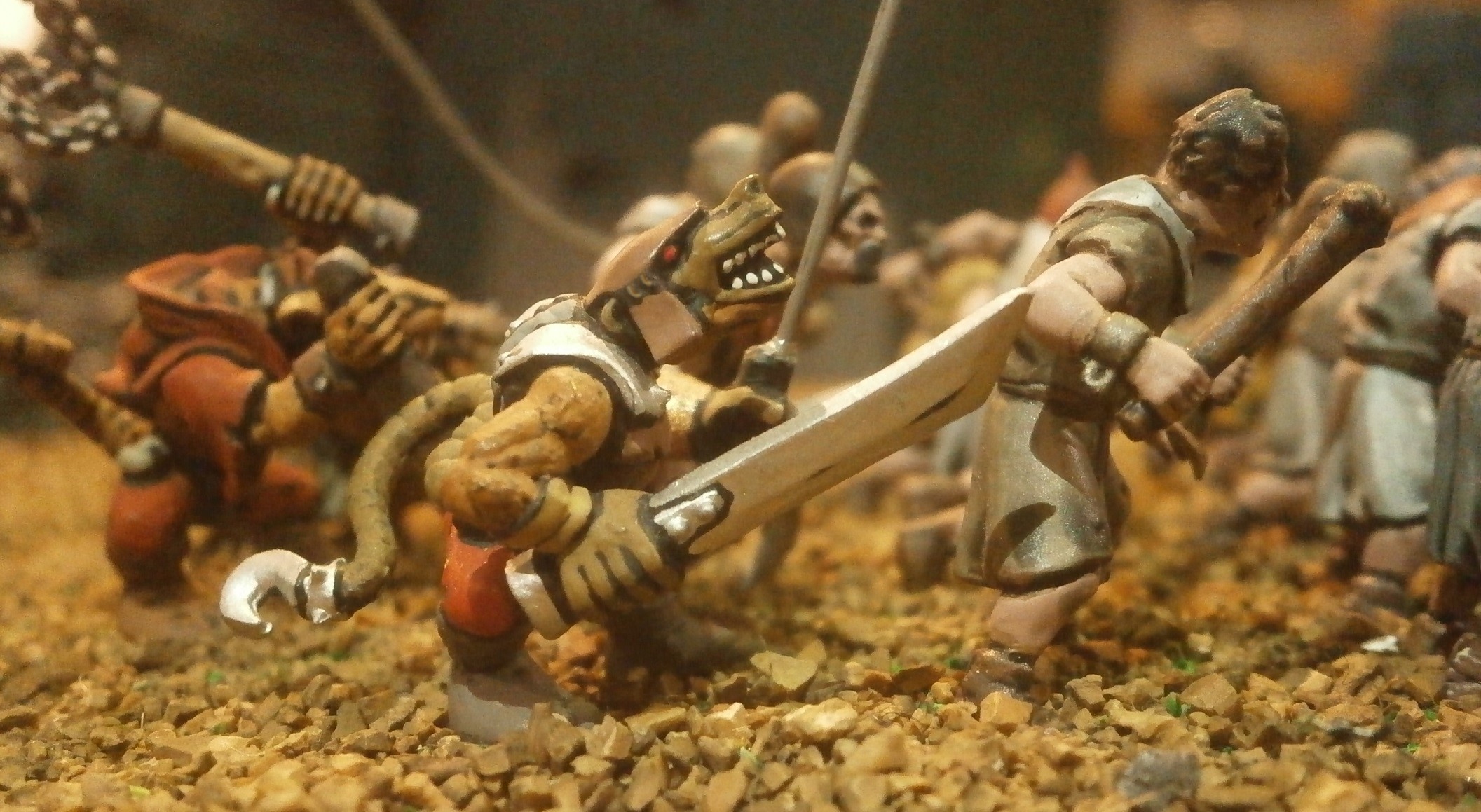
Unlike ratmen slaves, they were armed almost wholly with clubs, as their masters did not trust them with blades, although one or two clubs bore iron barbs, and many more had an iron band at the extremity, to add a little more punch to their blows in battle.
All new arrivals were inspected by Lord Cralk, herded before him like cattle might be exhibited to a prospective buyer at a market.

Accompanied by several of his purple clad bodyguard, Lord Cralk took considerable pleasure in deciding which slaves were satisfactory, and which were inadequate for his needs. The fate of the latter was a release, of a rather final kind!
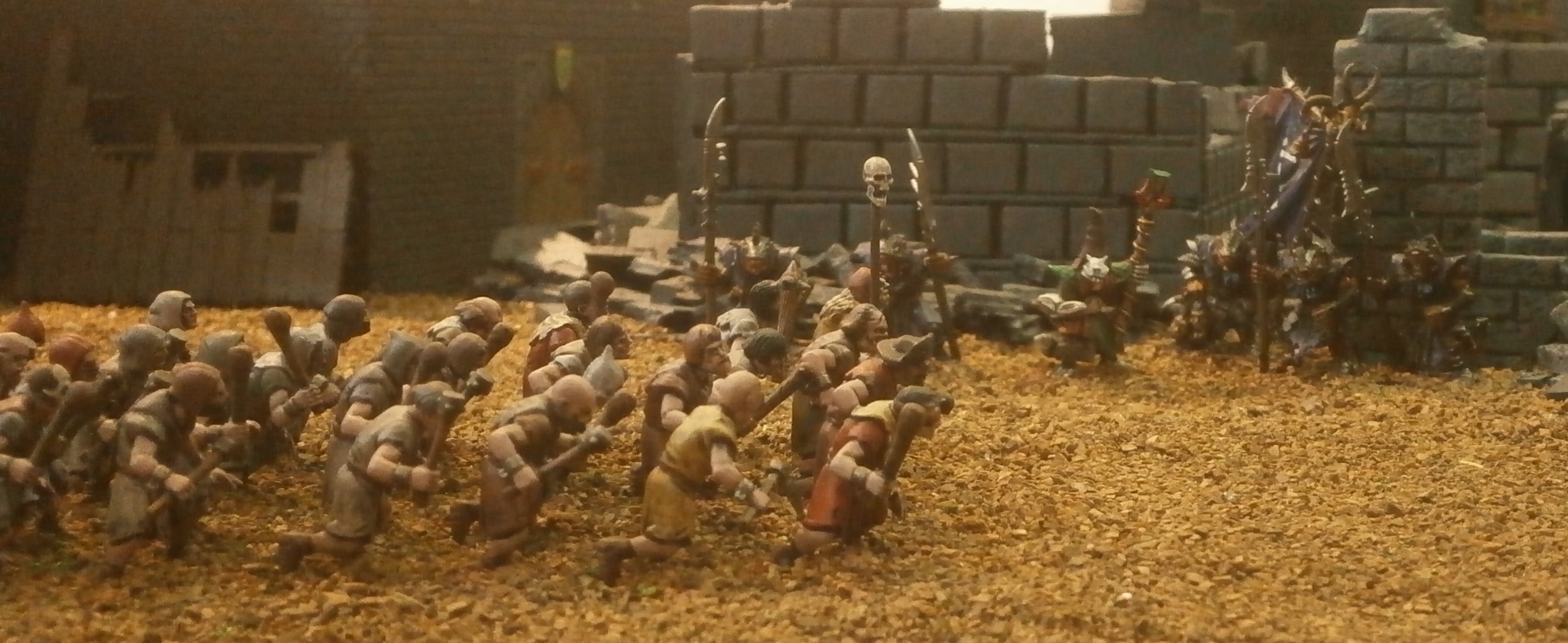
Unlike his immediate predecessor in Tilea, Lord Urlak, Cralk believed that numbers were of more worth in battle than engines of war; that a horde could more certainly gain victory than a battery of Clan Skryre’s constructions, that slaves had great use in battle, even manthing slaves, if employed correctly and in sufficient numbers. And there was the added bonus that should they perish, he still had his clanrat and bodyguard regiments to ensure his safety, even if necessarily retreating.

It seemed Cralk was keen to account for every slave, to ensure that he had been given exactly what he had paid for, for he clutched a book containing columns of numbers, as if he were more clerk than Grey Seer. Perhaps he could not bring himself to trust an underling to perform such an accounting? More likely, he simply enjoyed the act of reckoning up precisely the power at his disposal!

Several sea-vessels also arrived at Miragliano, the largest of which, indeed the only real ship, was towed by boats into the bay, as its crew had all, bar one, perished from some virulent disease. Cralk was apparently expecting the ship, for he immediately ordered his servants to board it. The only survivor, a buccaneering brute, feverishly ranting and raving, and quite unaware of what was happening, was bound in fetters and shackles, to be dragged into the city.

But more important to Cralk was a iron-bound chest found upon the deck. This was lifted onto a litter and carried through the ruined streets to him. The contents were a mystery to the bearers, and even to their overseer.

What lay within, however, was clearly of great significance to the Grey Seer Cralk Bittermaul, for when it was brought to him …

… he inspected it gleefully, then ordered his best warriors to guard it day and night. The nature of its contents remained a mystery, but, considering the wicked nature of the ratmen, it could not possibly bode well for Tilea.

 BigSmallWorlds