Luccini. Summer, IC 2405
“We’re but a wing to this army, you know?” said Baccio, as the two of them rode in the summer sunlight towards the outskirts of Luccini. “That’s how far the Compagnia has sunk. We are more, perhaps, than a rearguard, more than one brigade among many, but no more than a wing.”
“You don’t know,” answered Ottaviano. “The vizconde might put us in the main battle, front and centre.”

“Aye, he might. But I’m talking numbers. The compagnia once fielded an entire army.”
“Two armies, Baccio,” said Ottaviano, “if you count both those in Estalia and Tilea as the Compagnia.”
The chancellors rode a pair of the last few horses the Compagnia del Sole owned, the rest having died at or after the ratmen bombard’s explosion south of Campogrotta. Both sported the Compagnia del Sole’s Myrmidian emblem, a half sun atop a white baton of command, upon the left shoulders of their surcoats.
“I reckon this army could be bigger than both those compagnia’s conjoined,” said Baccio. “I said Visconde Giacometti would have a surfeit of soldiers, and it turns out I was right.”

“To what purpose, though?” asked Ottaviano. “Why so many? No-one goes to all this expense without good reason.”
Baccio pondered a while. “Everyone says it is to defend Luccini, so that – as I have heard it announced twice now – the realm might never again suffer at the cruel hands of such as the Sartosans. You yourself said that the vizconde might be out for revenge against the Sartosans.”

“Well, if he is, he ought to be more careful about which ship captains he hires,” said Ottaviano, somewhat cryptically.
“Why so?”
“I heard that a ship from Volker’s fleet, a carrack carrying some of the Gauntlets, was spied among the last convoy, flying Solsonan colours. It didn’t dock at the quays, but ferried its passengers ashore in boats.”
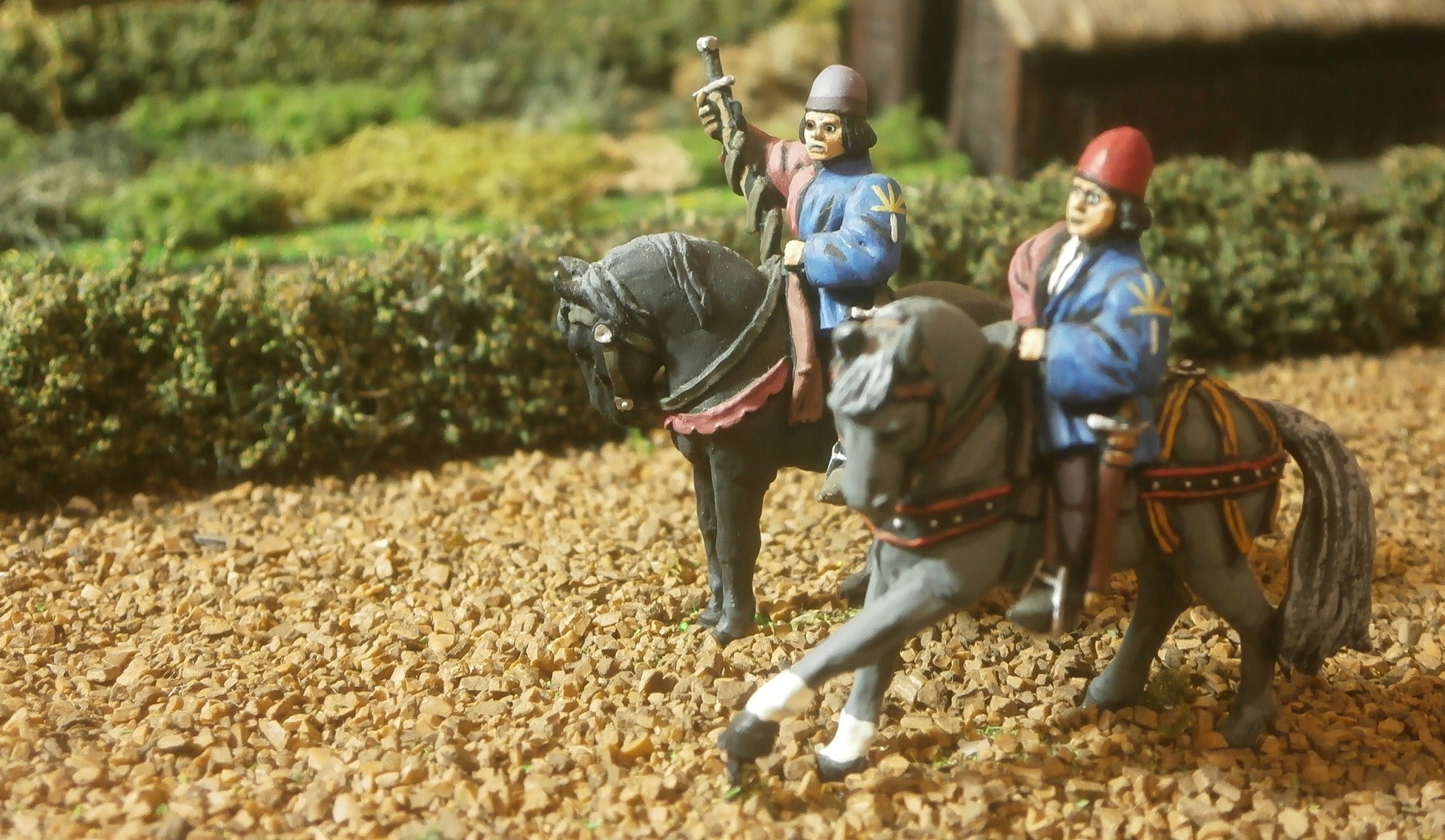
“I wouldn’t leap to conclusions just because it anchored off shore,” suggested Baccio. “There were likely so many ships that I doubt they could all be accommodated. Two of the ships that brought us used boats to disembark. Sounds like idle gossip to me, Ottaviano.”
“Ah, but it was a sailor who said it, and he knew the ship, having served on it before it was taken by the Sartosans. He reckoned it had been cut down a little, perhaps for the chase, but he swore he knew its lines and its figurehead.”
After a few moments silence, Ottaviano said, “Baccio, I know you’re conjuring up an explanation.”
Baccio laughed. “You know me well, then. I don’t like to jump to conclusions based on mere suspicions. Perhaps it was recaptured, now that the Sartosans have dispersed? And then – waste not, want not – it was put to use.”
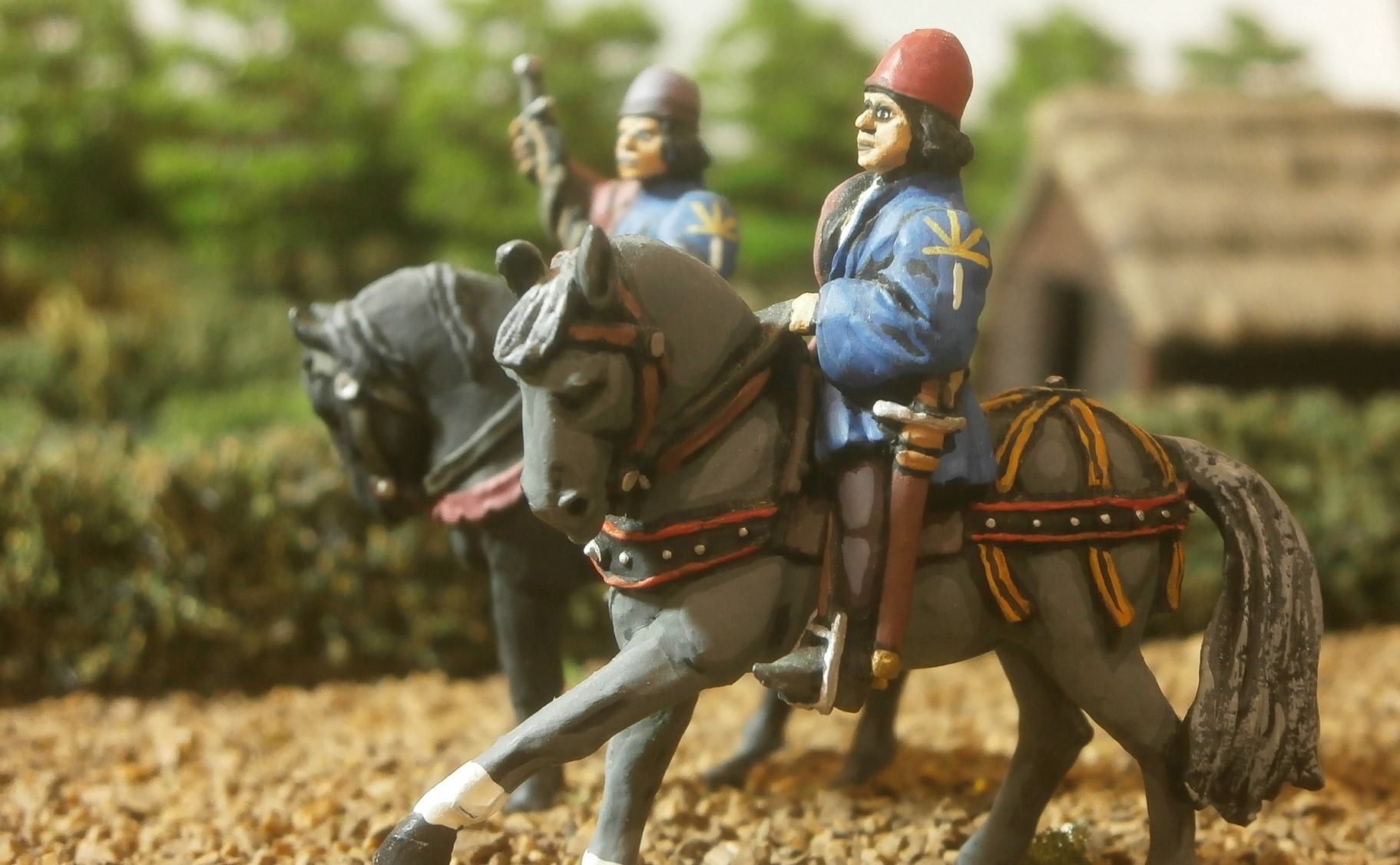
“Perhaps,” admitted Ottaviano. “But you’re assuming the Sartosan fleet has dispersed.”
Baccio grinned. “Guilty as charged,” he laughed.
“Talking of ‘waste not’,” said Ottaviano, “an army this massive army cannot be intended purely for defensive purposes. There are too many hungry mouths to feed, and way too many professionals expecting to be paid in gold. A force this big must be meant for war elsewhere. Half this strength could beat the Sartosans in the field. What we have here, my friend, is a marching army if ever I saw one.”
Baccio. “Oh, that it is, Ottaviano, without doubt. And it’s preparing for a long march too.”

The road had brought them to the Solsonan’s main camp, which they now rode by. The Estalian soldiers, being the vizconde’s subjects and tenants who dwelt in his newly attained province, were busy drilling, for as recently pressed men they were still learning the mechanical art of war.

There were some gentlemen to command them, as well as old soldiers as sergeants, and even some volunteers, being men of a more martial temperament, with some skill in swordsmanship.
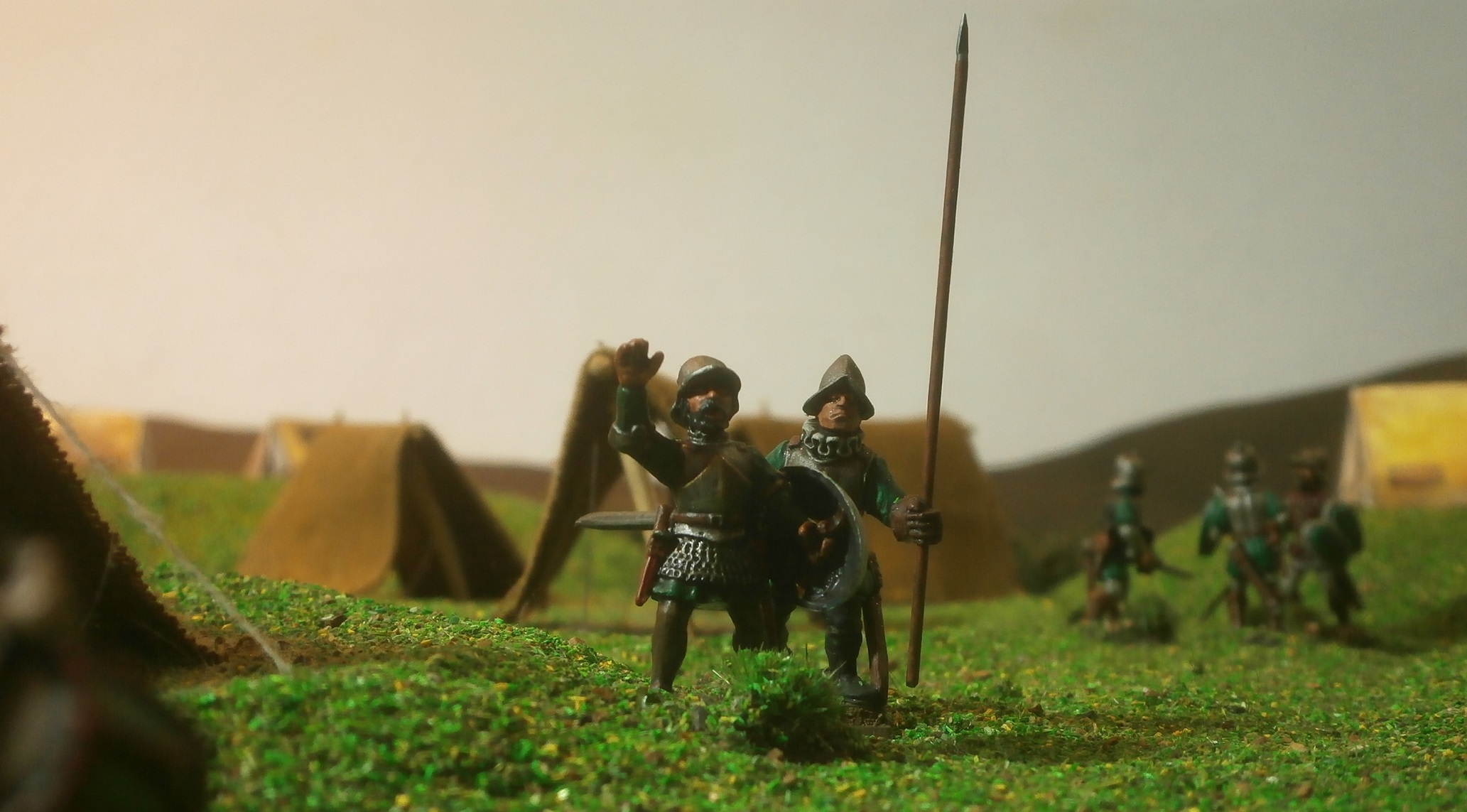
Yet both the chancellors had heard the rumours of grumbling among these Estalians, from the usual disgruntlement about being pressed for service over seas, to a more insidious expression of loyalty to the old senors. Many of these men, even the veterans, had served the rebellious lords that Giacometti defeated in war. When granted the lands and title of vizconde, Giacometti obviously did not want to waste their talents, and although he must have weeded out the most contrary and spiteful amongst them, perhaps the quieter sort who remained were still enough to stir in a dash of disobedience.
Handgunners marched in columns …

… deploying to practice their loading and firing, although mostly just going through the motions under the watchful eyes of their captains, thus conserving the powder stores for more deadly use. Swordsmen dressed their ranks and files …

… learning how to wheel, incline and countermarch, while drummers beat up the martial calls the soldiers needed to know.
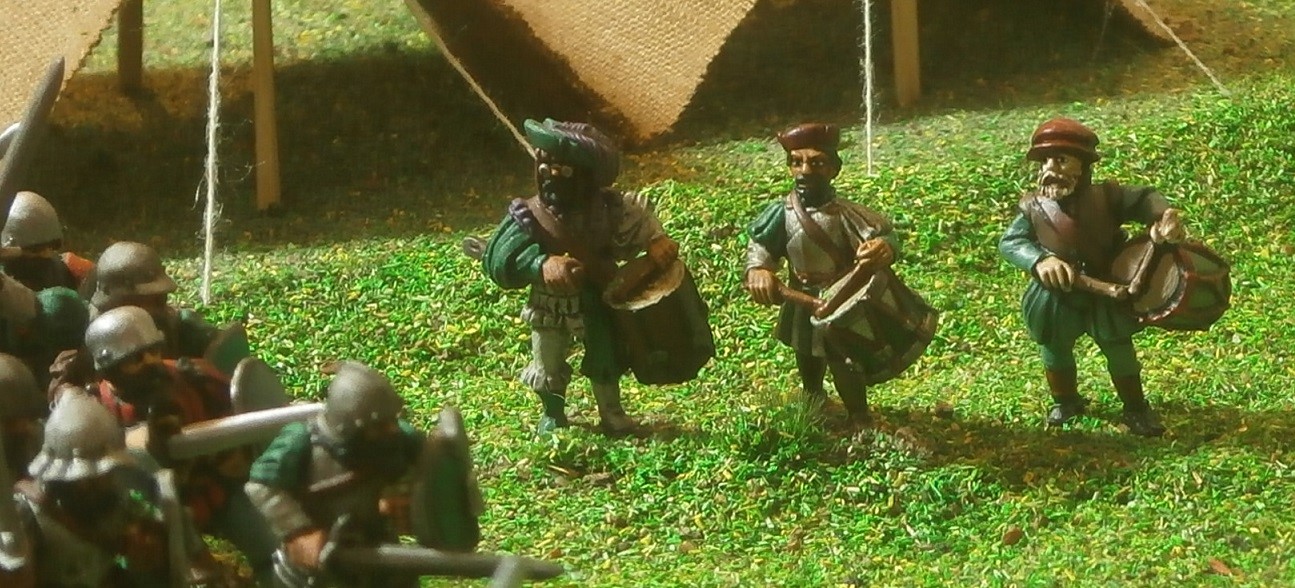
It occured to Baccio that the rawness of so many of these soldiers might be part of the reason the vizconde had allowed summer to pass by, althought the fact that he was waiting for the Compagnia del Sole to arrive must have been enother reason.

From what Baccio could see, he knew that the army was now ready – for whatever the vizconde had in mind.

“So,” he asked his friend, “where do you think we’re marching to?”
“I don’t know. It’s possible General Mazallini doesn’t either. He’s merely a lieutenant now, and there was nothing concerning the matter in the contract.”
“Who knows what ambitions the Vizconde has?” asked Baccio. “Perhaps he lusts after the wealth of Portomaggiore or Alcente? Or he’s fallen out with Pavona like so many other Tilean lords?”

Ottaviano chuckled. “Luccini’s just about the only realm in Tilea that has no quarrel with Pavona!”
“Not there then. He might have plans to lead the war against the ratmen, like Lord Alessio Falcone led the armies against the vampires? He could make himself a hero, remembered through history.”
“No,” said Ottaviano. “If that was the case, he wouldn’t have brought us all the way down from the north. He would have marched up to us. I reckon this army is meant for Luccini’s defence. Consider: how better to prove Luccini is no longer a victim, no longer prey for mighty foes, than to become a predator, launching attacks of its own?”
They were approaching the gate, and saw immediately that some of Grizkurk’s brutes were guarding it.

This surprised Baccio, but when he thought about it, he decided such a task for so recently hired mercenaries would be a relatively safe way to discover whether they could do as they were ordered, in the spirit of those orders, without causing trouble of any kind.

It certainly seemed the visconde was not too worried about the current Tilean distaste for brutes. The Portomaggioran Lord Alessio Falcone apparently commanded a company of them, which he obtained from the VMC in the north when they could no longer find sufficient meat to satisfy their vast appetites. But otherwise, ogres were commonly hated just about everywhere in Tilea, what with the memory of Razger Boulderguts’ onslaught through the heart of the peninsula, in which he laid waste to Trantio, Pavona and Ridraffa, even threatening Remas, and all because there was nothing left for him to rob from Campogrotta and Ravola!
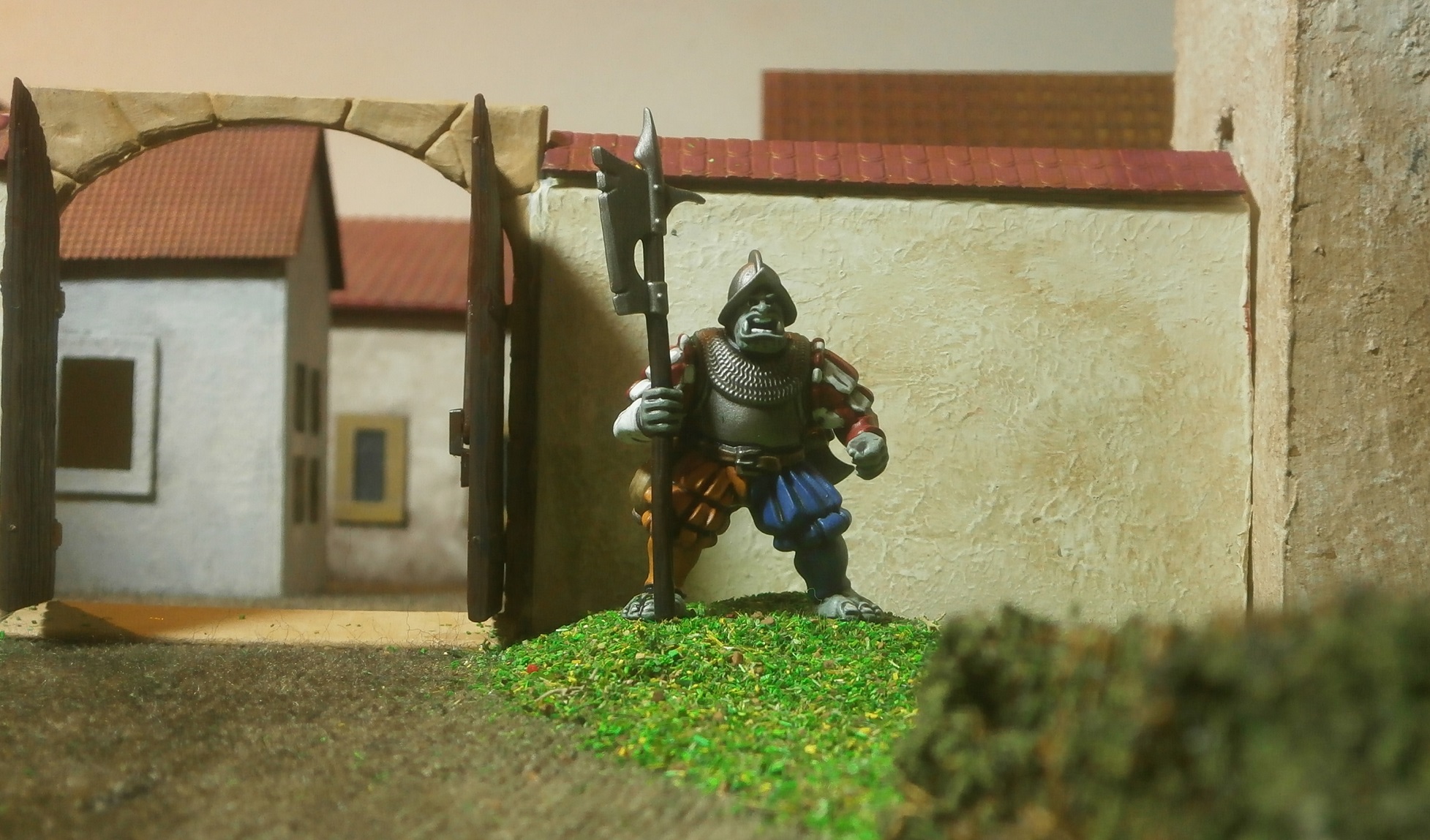
Apart from the fact that a brute named Grizkurk commanded them, Baccio knew little else about these giant dogs of war. Still, he thought, the chances are he would learn plenty more on a campaign with them. The Compagnia had never employed ogres, for none of the commanders had trusted them, although Ottaviano had often said that brutes were no more or less honest than human mercenaries, just a lot hungrier.
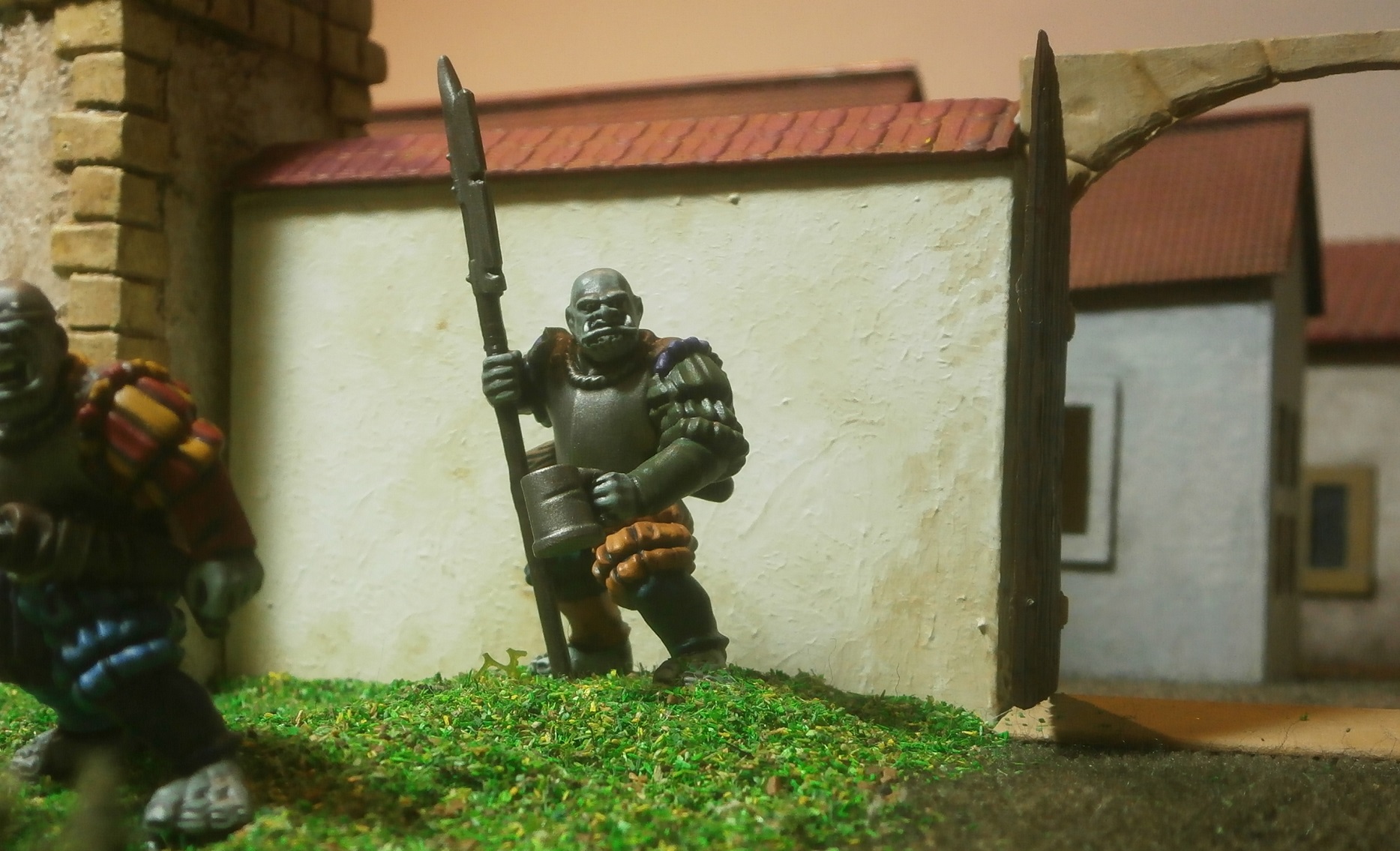
Baccio wondered if one of these gate gaurds was Grizkurk, but despite their flamboyant dress, in the northern style, none of them seemed likely candidates. Two were uninterested in the chancellors’ passage, probably because they knew the Compagnia’s emblem, but one leered at him and Ottaviano, over a two-pint pot of ale. He doubted any man of the Compagnia, the Solsonans or the Gauntlets would get away with quaffing ale whilst stationed at a gate, but then, two pints would simply wet the corners of an ogres’ stomach, and who would risk the futile trouble that might ensue by suggesting the gaurd should cease his supping?

As they passed by the gate and entered a street beyond, Baccio went back to pondering Ottaviano’s last words.
“Starting a war against either Portomaggiore or the VMC is madness, surely?” he suggested. “Even if it proves Luccini’s ability to fight?”
“You yourself, Baccio, once wondered whether the vizconde wanted to govern Capelli again?”

“Well I wouldn’t say it now,” claimed Baccio. “The visconde has lands and gold a-plenty. Siezing Capelli would be like leaving a castle to live in a hovel he once played in as a child. Besides, why would he make an enemy of the VMC or the Portomaggiorans, especially after all that poor Luccini has been through of late?”
Ottaviano rolled his eyes. “You mean the same VMC who razed Camponeffro after the Ravernan defenestration, and who retained control of Pavezzano and Monte Castello after ousting the goblin invaders? And the same Portomaggiorans who seized Raverno and now rule it with a mailed fist? Make no mistake, Luccini is threatened from both the north and the south. IT is surrounded by grasping neighbours. It’s not a matter of Luccini making enemies, but making sure it’s dangerous neighbours don’t make themselves into enemies!”

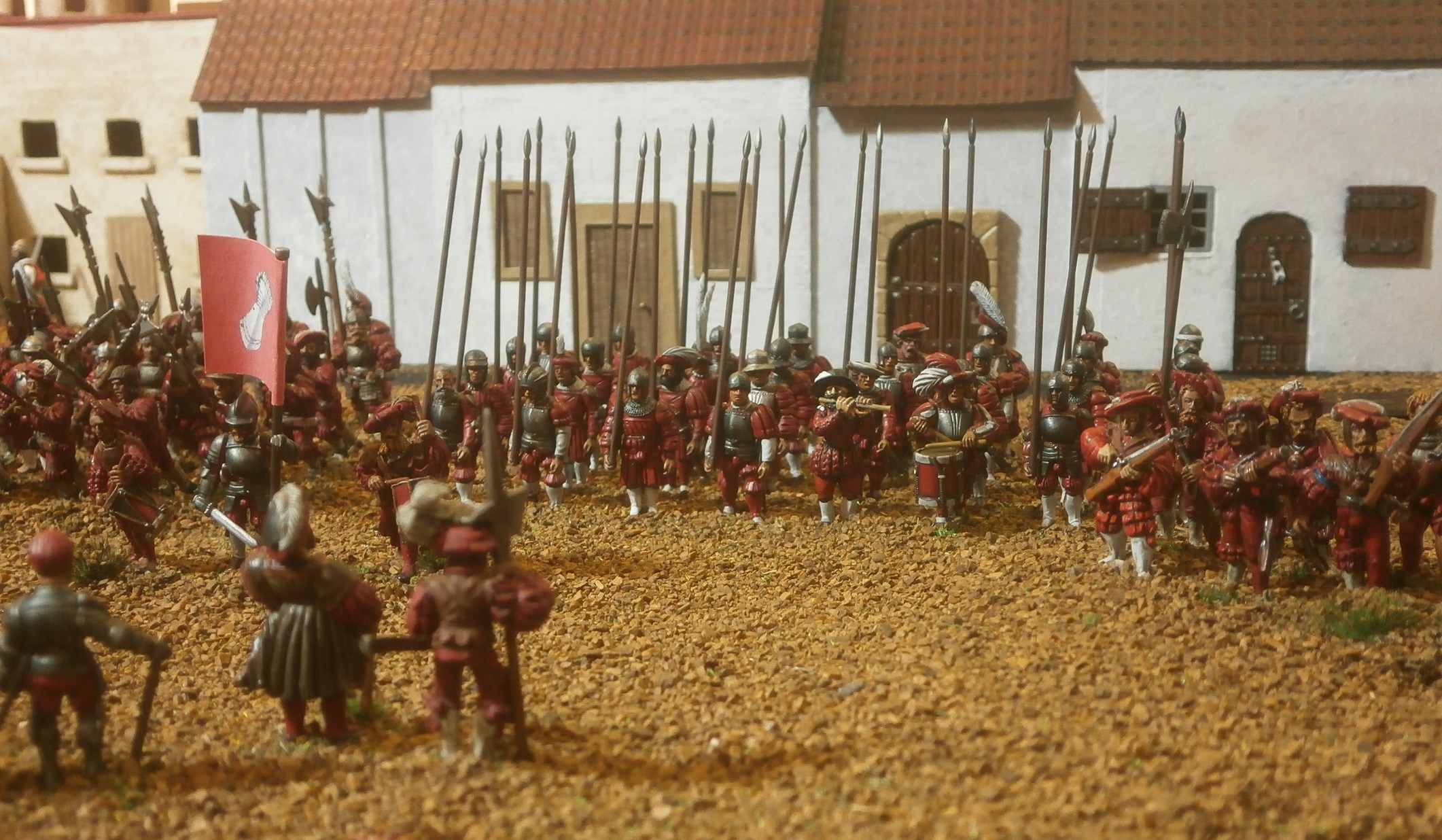
This seemed a persuasive argument to Baccio, for a moment he held his tongue, as they turned a corner to enter a square filled with soldiers – the red liveried Compagnia del Guanto, the vizconde’s own mercenary company, which he had commanded for several years before ennobled.

General Vizconde Gismondo Giacometti stood before his men, with several officers by his side. He sported a short cloak of Solsonan green, but every other soldier present was clad almost wholly in red. More than half were northerners, from the great Empire beyond the mountains, but after their fighting in Estalia, their ranks had been repaired with Solsonan volunteers, who fancied a mercenary soldier’s life, and in truth, probably suited it much better than the Solsonan pressed men drilling outside the walls.

The company’s standard, unsurprisingly an armoured gauntlet, argent on a gules field, fluttered before a company of pikemen and another of halberdiers, with a small company of handgunners on the left and another carrying greatswords was marching into the square to take position on the right.

The chancellors halted, and both wordlessly understood that they should wait until the vizconde had seen what he wanted to see, or done what he wanted to do.
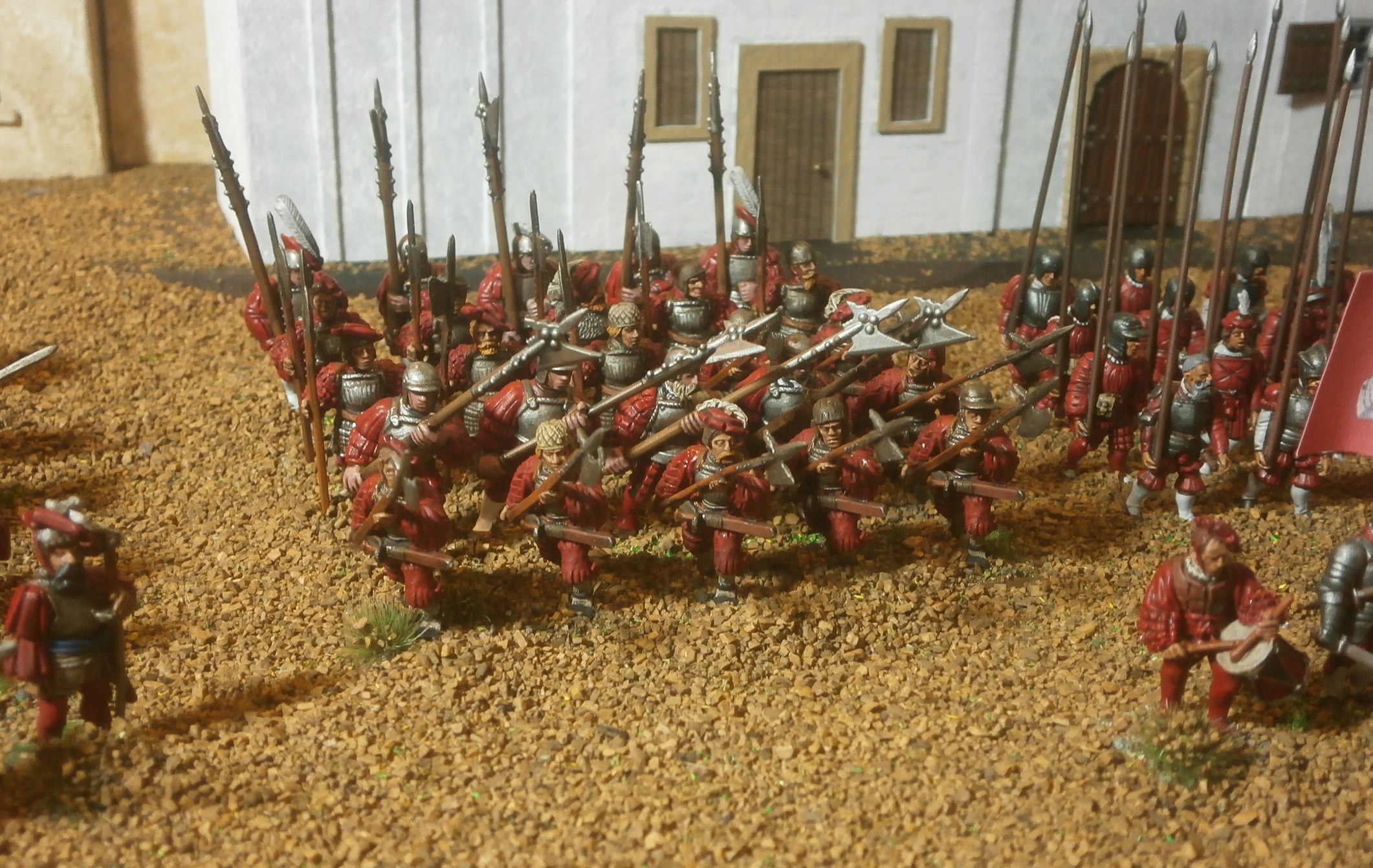
As the zweihänder company halted, someone cried out,
“Was sagen wir?”
Which elicited a cry from every soldier there, an eruption of martial voices reverberating around the square.
“Viel Feind, Viel Ehre!”
The chancellors’ horses started, surprised by the sudden sound, and both men took a moment to settle them. Turning to his friend, Baccio spoke quietly,
“I do hope we’re not going to war against everyone!”
Ottaviano smiled. “Don’t worry,” he said. “They’ve been shouting that for years.”
“You were saying,” said Baccio, “that this army is intended for conquest, if only to ensure Luccini’s future safety? You mean like proving you can stand up to bullies, so that they seek their cruel sport elsewhere?”
“Aye, exactly that. And, maybe, robbing the bullies at the same time?”
Baccio grinned. “Well,” he said, “the vizconde has gathered enough robbers to steal a whole mountain of gold.”

 BigSmallWorlds
Those Wargames Atlantic ogres look sharp!
LikeLike
I really like them. As a roundabout way of controlling my expenditure, I decided that although I wanted them, I would not just order them over the webnetverse immediately, but wait until I could buy them in a shop. Cue over a year of learning they were sold out/not in stock in shop after shop! I got ’em in the end though.
LikeLike