The End of Summer 2405 Continued: Putting Right the Wrongs
A Further Excerpt from Bonacorso Fidelibus’s Work: The Many Wars of the Early 25th Century.
Ravola, soon after the ratmen army’s departure, had been captured by a force of dwarfs and Arrabiatti, the same dwarfs who later joined with the elves to head westwards in pursuit of the same ratmen. As already alluded to, Lord Totto ordered a company of his riders, Gli Audaci Arceri (the Bold Archers) to join that marching force, while he himself remained in Ravola, there to nurse its recovery just as he had done at Campogrotta.
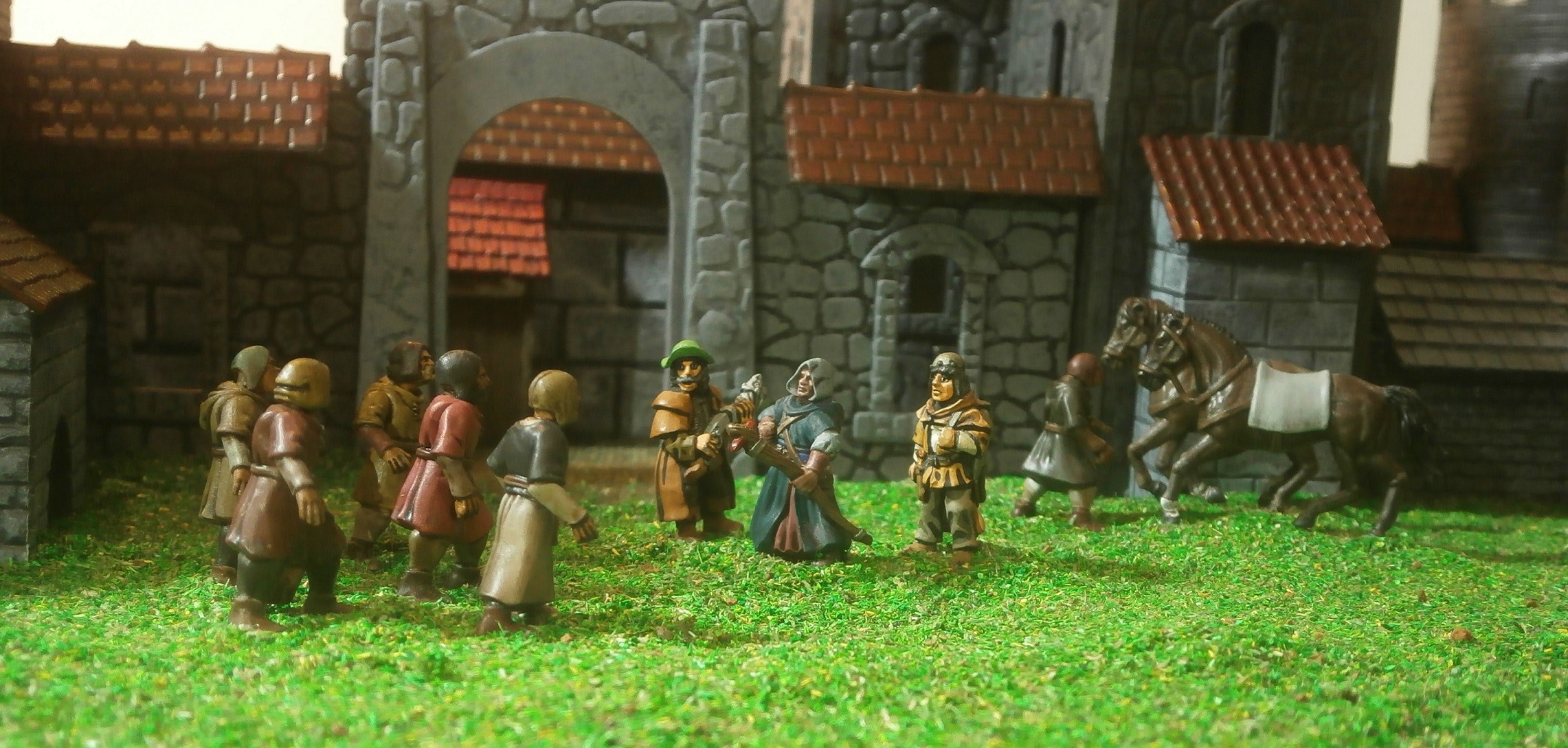
He promised he would send word to the alliance army gathered near Trantio, requesting they quickly move north to assist in the war against the ratmen.
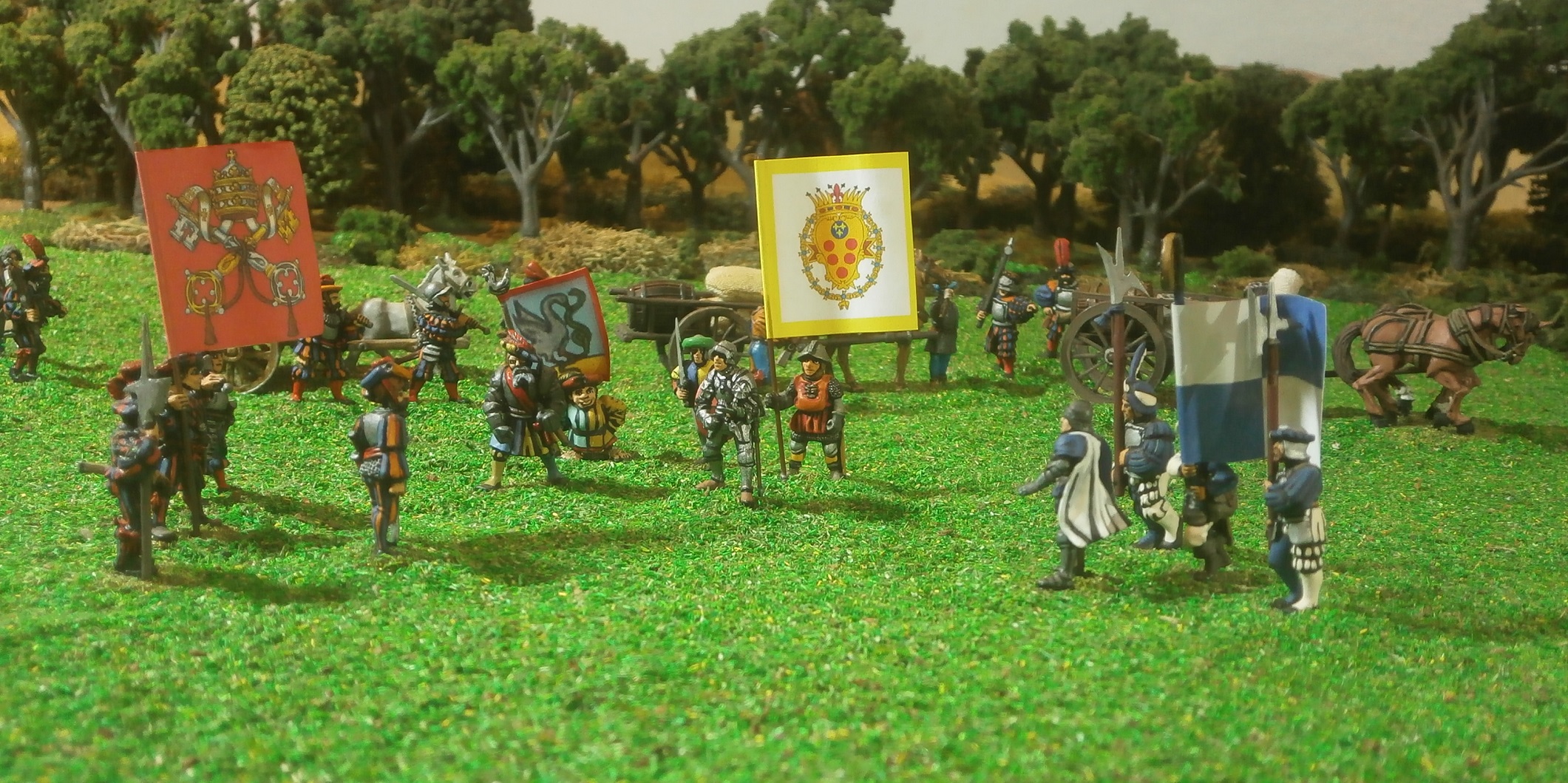
All was not well with the alliance, however. Command had been awarded in spring to the Reman Captain Sirus Ricci, with Lord Silvano of Pavona unexpectedly acceding to the captain’s veteran, martial experience, as well as to Remas’ moral and spiritual authority as the principal city of the Holy Church of Morr.

The Verezzan Captain Muzio Vanni, leading a small force of archers, and the claimant to the throne of Trantio, Galeotti de Medizi …

… possessing only two companies of soldiers yet now flying colours bearing the Medizi family’s princely arms, were both very happy to accept the Reman captain’s command. It had been Barone Iacopo of Verezzo who had demanded all should agree in advance that the alliance army’s commander would be whomsoever brought the largest contingent, rather than assuming the originator of the the idea of alliance (being the young Pavonan lord) would become the captain-general. Yet, it was the Verezzan Captain Muzio Vanni who had been the first to demand that stipulation be rescinded, immediately joined by Galeotti, when they both realised the Pavonan lord had the biggest force. Indeed, Galeotti found it in himself to wax lyrical regarding the qualities of the Reman captain and the pressing need that he should lead the alliance.

Some said that Lord Silvano wore a hint of a wry smile upon his face as he listened to the Trantian’s oration. Others expressed surprise at his calmness, considering the supposed emnity between him and the Trantian noble.
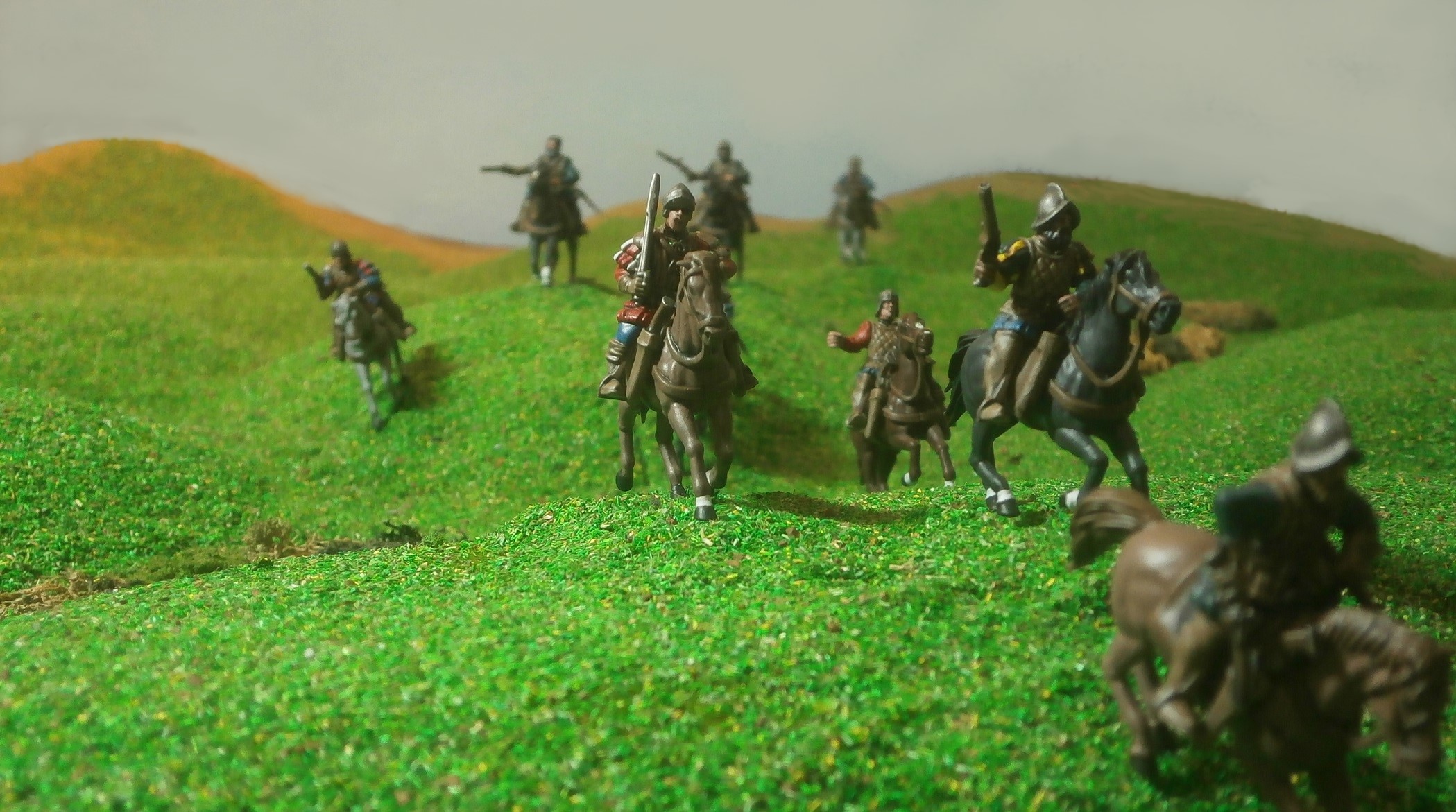
The army moved to Scorcio, from where scouts were dispatched to scour the land to the north, east and west, including Galeotti’s loyal band of pistoliers.
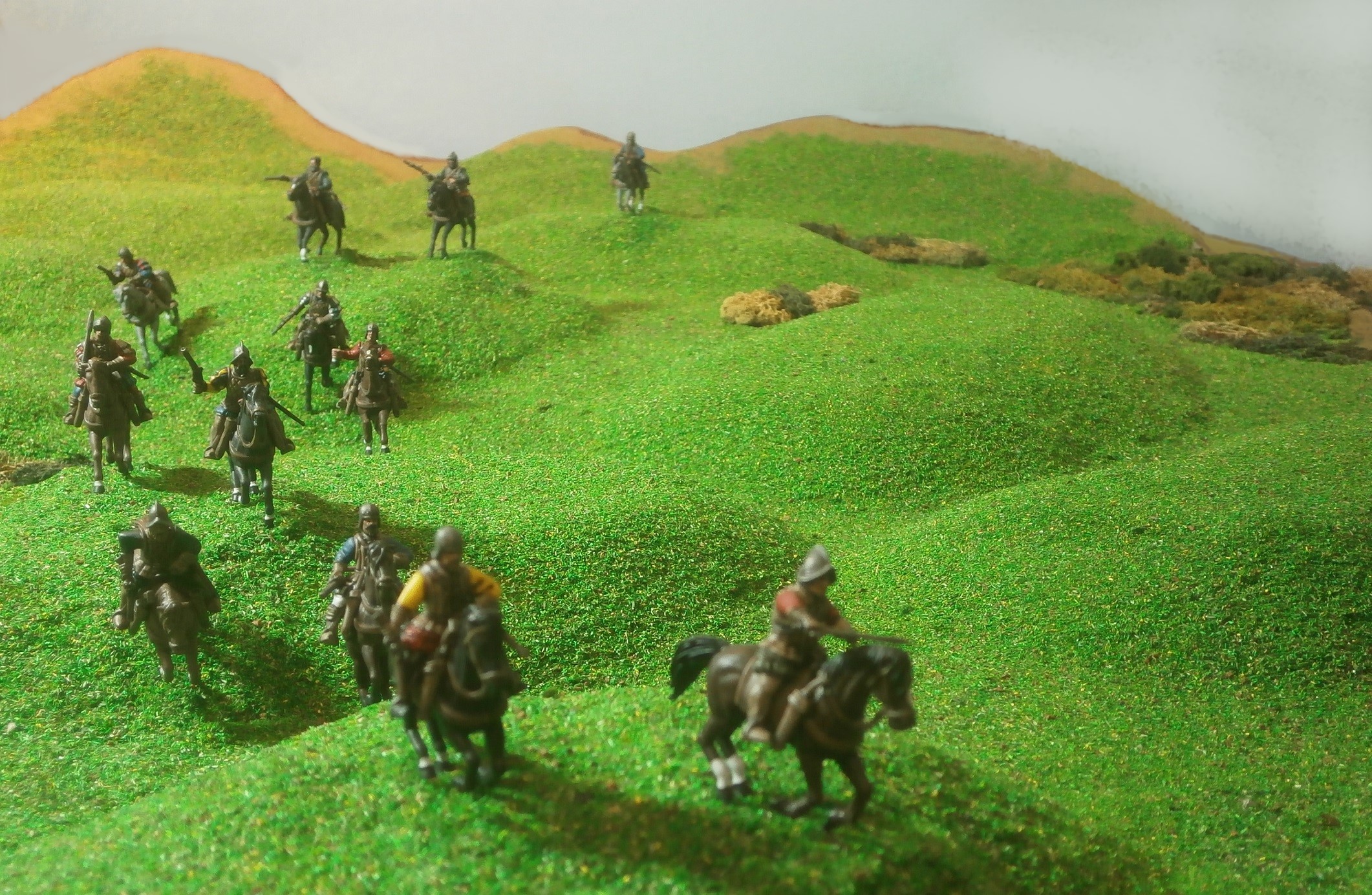
The origins of Galeotti’s little force were disputed, and they themselves were not particularly forthcoming about their past.

Several must surely have been old retainers of Prince Girenzo, or the sons of such, while the rest were likely a mixture of refugee Trantians and mercenaries (including, perhaps, one or two who once served in the Compagnia del Sole).
The main force, meanwhile, located the tunnel mouth discovered a year previously by the Portomaggiorans, which Lord Silvano was very keen to collapse.
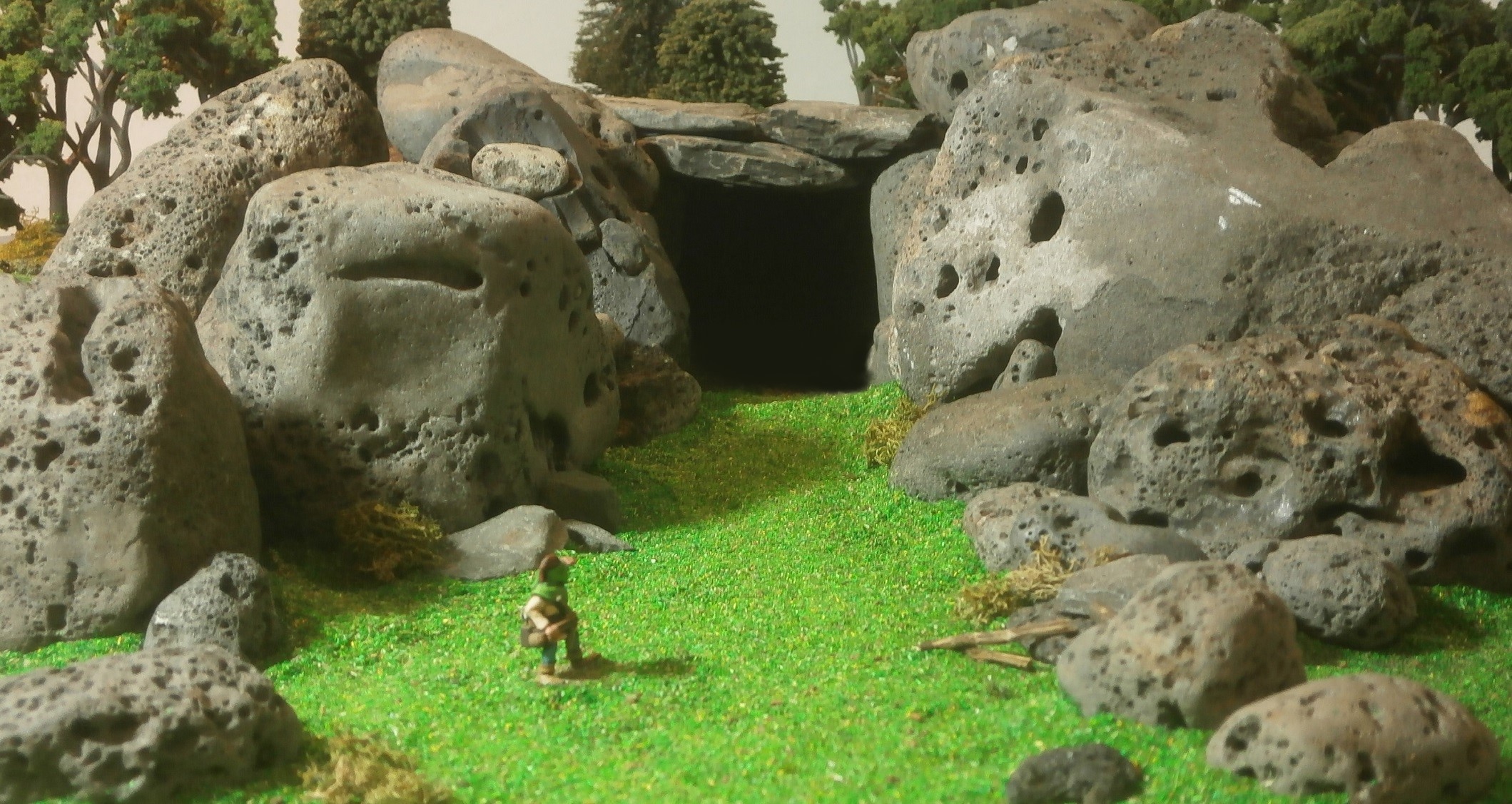
Supervised by Silvano’s own engineer, this was quickly done, using black powder, first deep within the tunnel, and subsequently at the tunnel mouth itself.
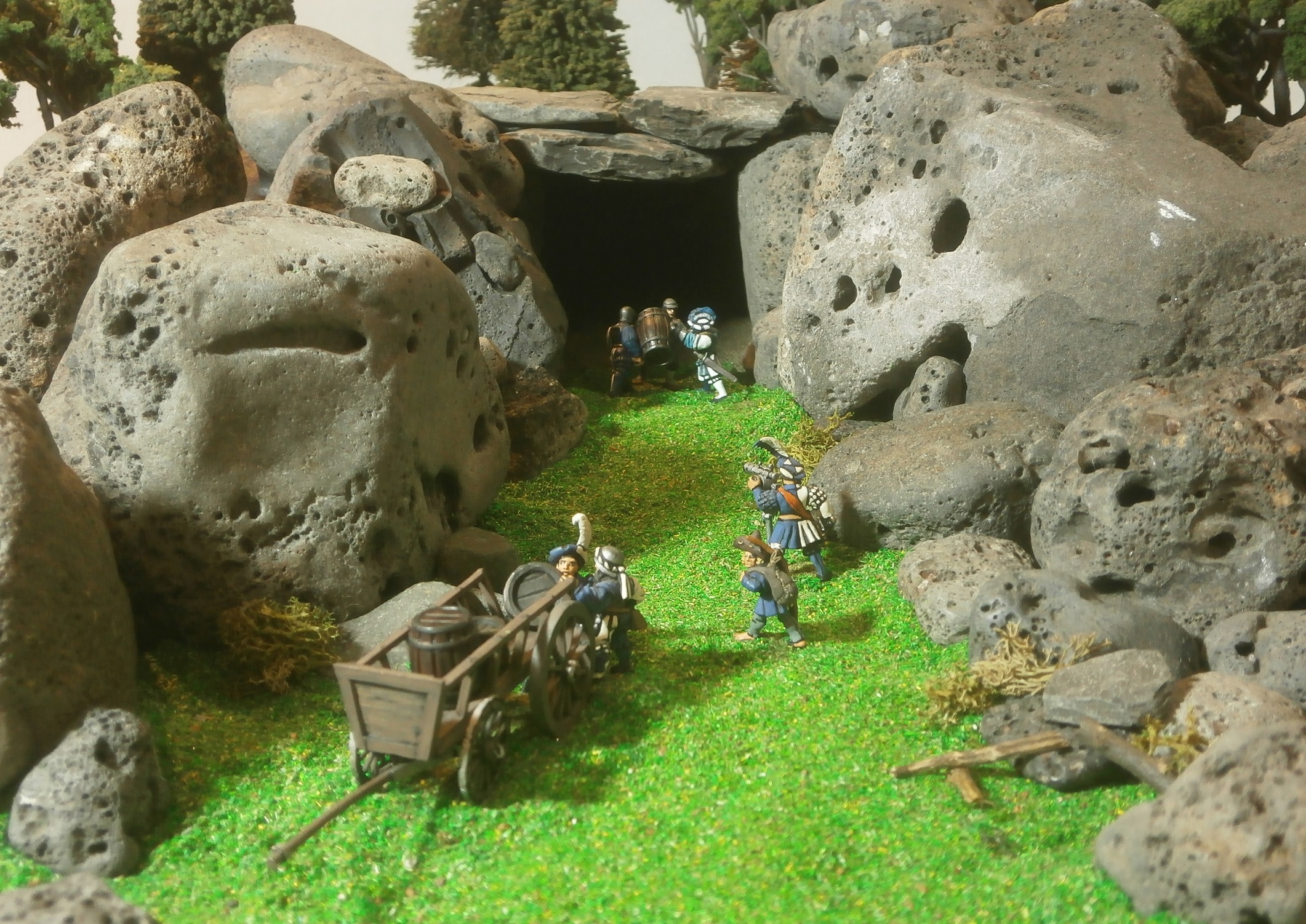
Very few were injured during this operation, although much of the army’s powder supplies were consumed.

Greatly satisfied with this success, the captain-general ordered that the army make its way north to the site of the second tunnel mouth found previously, east of the Viadazan watchtower of Busalla.
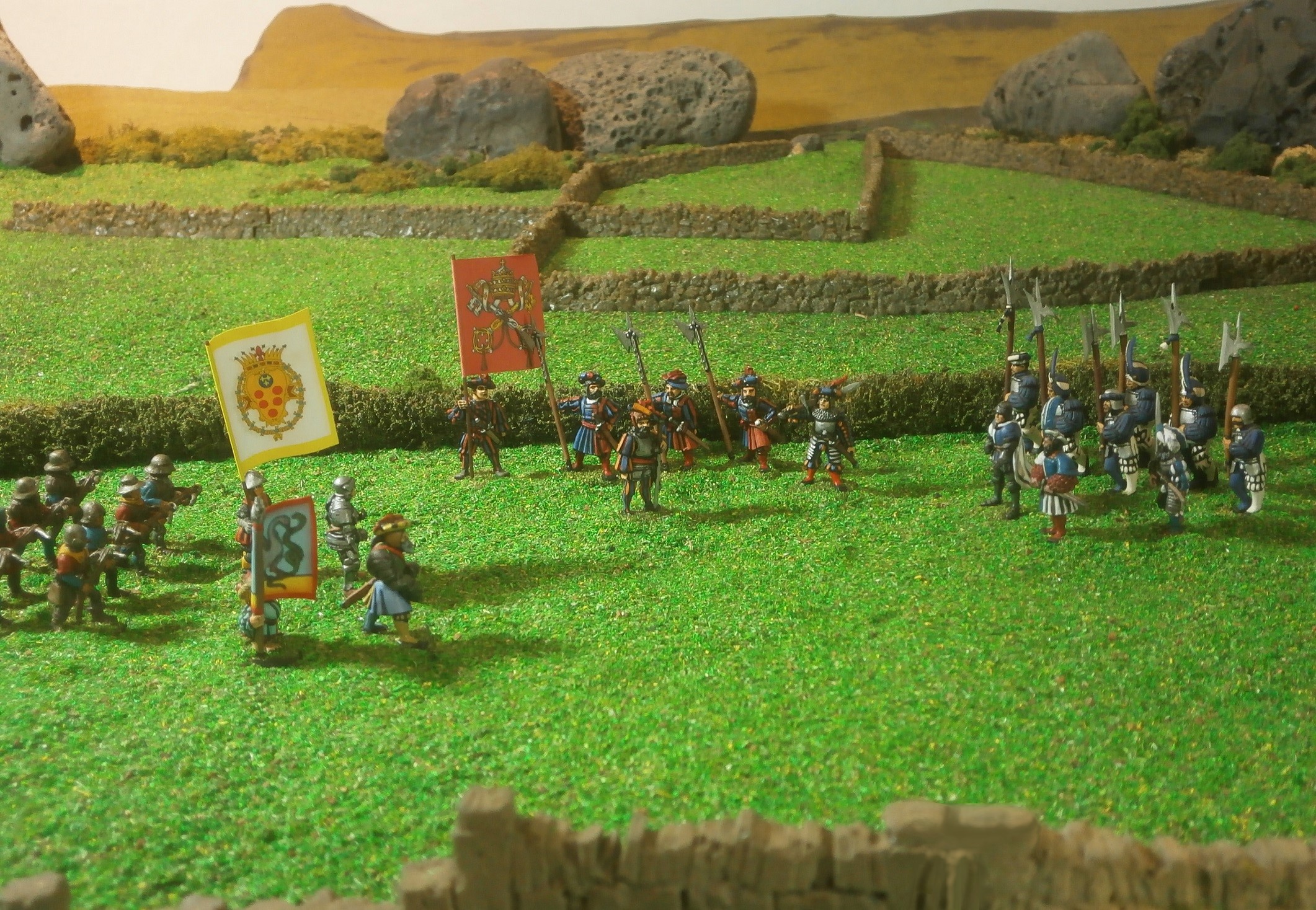
Upon drawing close, however, a disagreement broke out within the council of war, concerning the suspected conspiring of the Pavonan Visconte Carjaval, Lord Silvano’s trusted lieutenant.
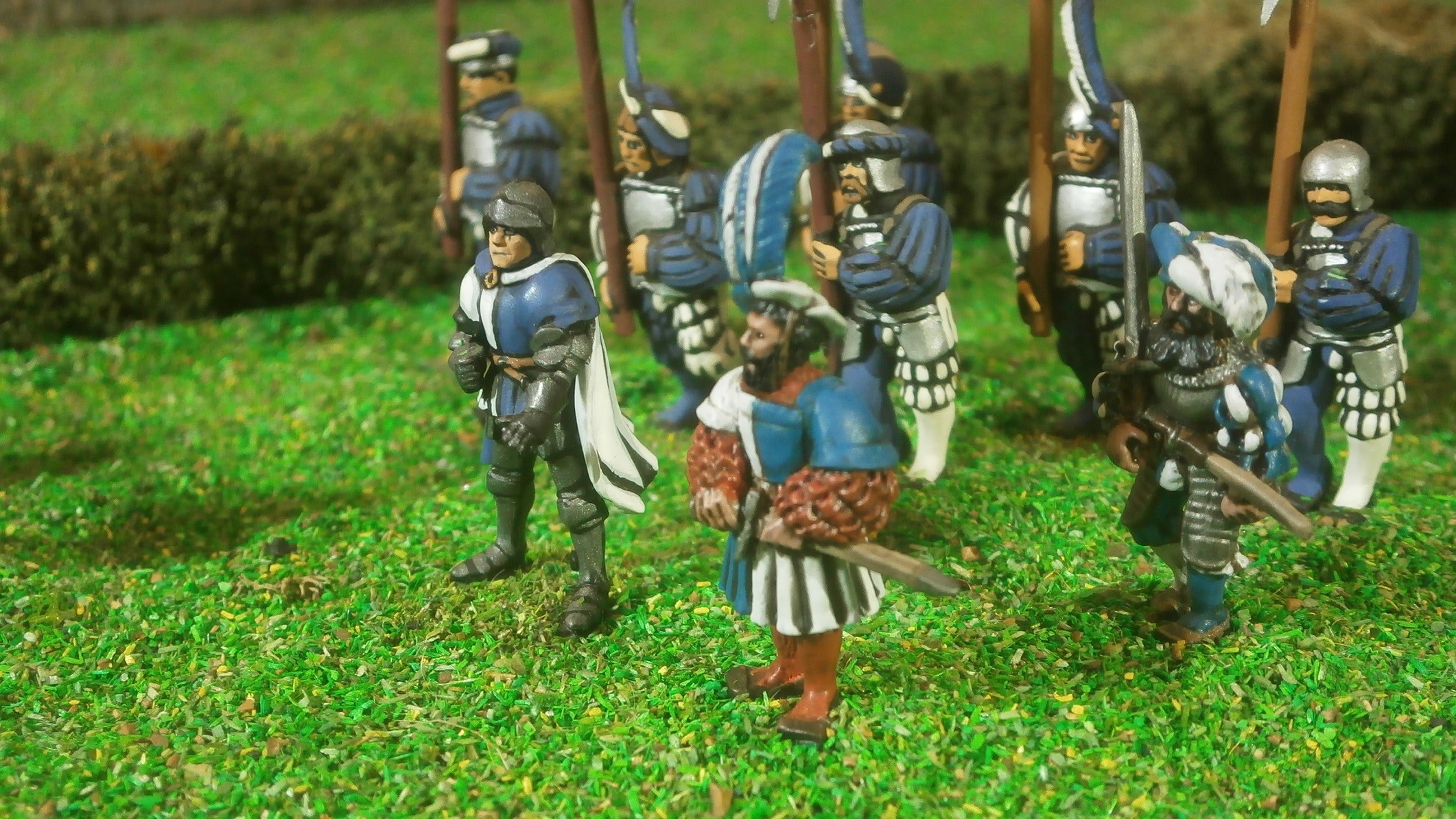
Galeotti di Medizi claimed that the visconte sought to lure him into committing a dishonourable and bloody deed (of an undisclosed nature), and that by such means the Pavonans were attempting to bring about his ruin.

What with Lord Silvano having so recently re-affirmed his authority over the state of Trantio, as ‘Gonfaloniere for Life’ (an office awarded him by his father after the Pavonan conquest of the city), while Galeotti had staked his own claim to the same city state as Prince Girenzo of Trantio’s legitimate heir, then despite the temporary truce on account of the war against the ratmen, friction was perhaps inevitable, and had only been suppressed thus far by the fact that the captain-general had favoured Galeotti, and Lord Silvano, always the pragmatist, seemed unwilling to disrupt the alliance army’s effectiveness in the field.
The Verezzan Captain Vanni unsurprisingly took Galeotti’s side in the argument …

… while Lord Silvano seemed merely annoyed that such wrangling disputes would thwart the army’s efficacy. Captain-General Ricci was forced to deal with the divisions as best he could, striving to prevent open quarrels between the parties concerned.
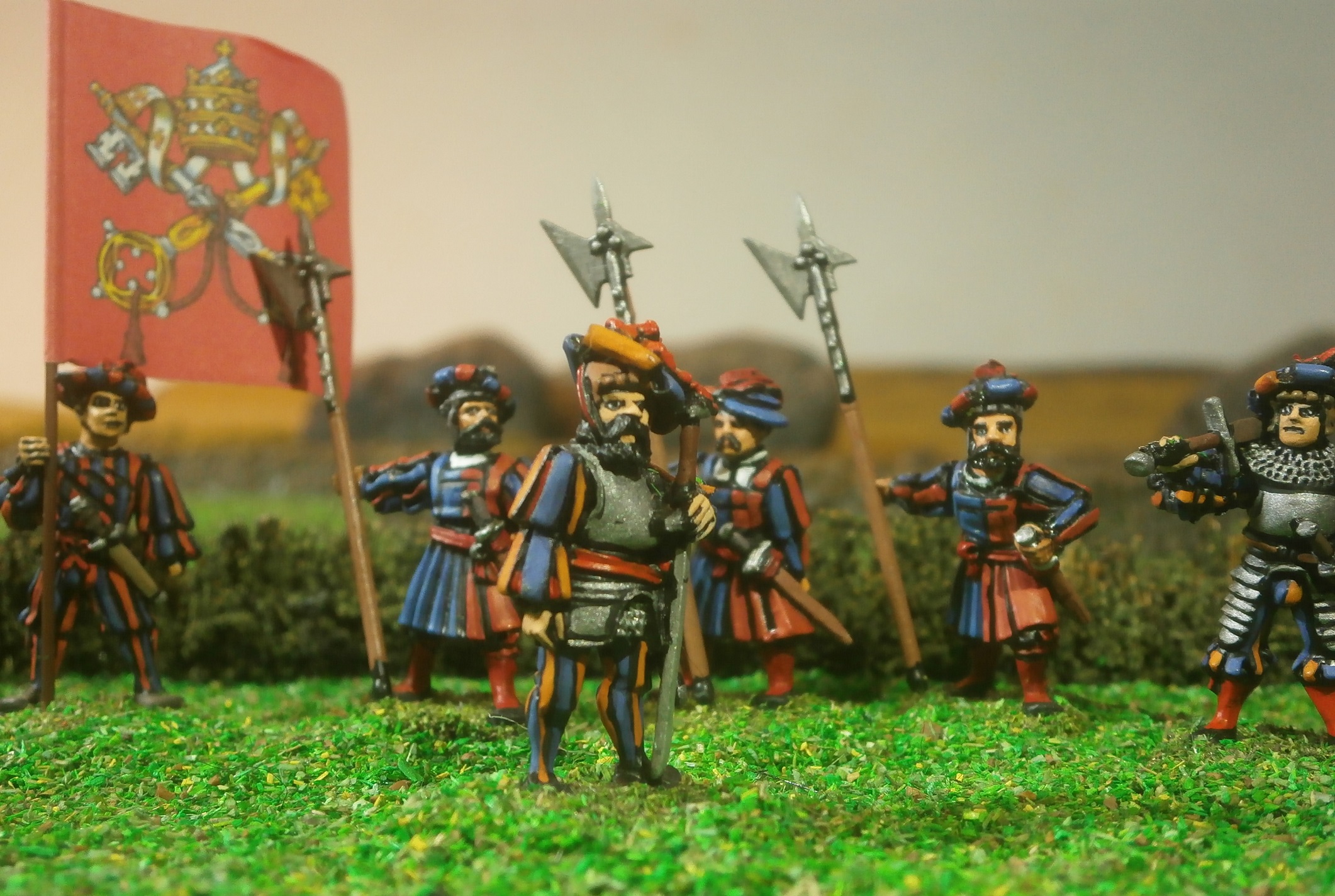
This internal dispute, combined with the need to secure extra powder, meant the commencement of works to collapse the second tunnel mouth was delayed. With Lord Silvano’s cooperation, the captain-general was able to calm the parties somewhat, but before real reconciliation could be achieved, with the matter properly investigated and settled, news came of events in Pavona which would turn the quarrelling into outright war.
…
In the south, Barone Iacopo Brunetti, Regent of Verezzo, Capitano del Popolo, had finally made his move. After several seasons of apparent indecisiveness, with much in the way of words and letters, of debated apologies and non-committal discussions, all while building up the strength of Verezzo’s army, and after sending Captain Vanni and a company of archers to join the alliance army (thus making it appear that he had accepted the need to cooperate with Pavona and put all the past grievances behind him) the barone had, at last, shown his true colours. At the head of an army which greatly outnumbered the soldiery currently garrisoned in the realm of Pavona, he appeared at the town of Scozzese, invested it and issued demands for immediate reparation payments for that which was looted from Spomanti.
The leading members of the town’s signoria did all they could to prevent their town’s ruin, rushing to Pavona city to pass on the demands. Three days later the nobleman Barone Recchia returned, visibly anxious …

… to deliver the following answer to the Verezzan lord, which he had a servant read aloud, as he did not trust his own voice.

“We are entirely unable to gratify your demands, for the only person who could do so is Lord Silvano, regent of our realm, who is (as you well know) presently abroad, serving in the alliance army sworn to defeat the uomini ratto. His father, Duke Guidobaldo, Morr’s most favoured servant, is as close to death as a mortal man can be, which means we cannot approach him for advice or instructions, for he lies delirious and fevered, clinging to life. Despite knowing that Morr will welcome him with love into the heavenly garden, the duke so loves his realm, his people, that he cannot easily yield himself to death.

“By making your threats, by razing Scozzese, by starting a war, you will fatally fragment the alliance army, thereby opening up Tilea to the ratmen’s ravaging cruelties. Lord Silvano will be forced to depart with his army, and return home, here to defend the realm and prevent your further depredations, for the sake of his most noble father and his beloved people. And ruin will thus be brought upon both our realms, as after many hundreds of fighting men die in this needless struggle, we will be unable to defeat the ratmen in the field.
“Know then that by your proposed actions, Verezzo’s name will be tarnished through history, as a realm which chose to destroy Tilea’s best defences, to turn against all the lawful gods, at a time of great and dire emergency.”
To which the halfling barone laughed, and responded,
“It is the name of Pavona that has been forever tarnished, by the foul murder of our beloved Lord Lucca at Spomante. Morr will surely punish Duke Guidobaldo for that crime, but here and now, in this our mortal world, tooth for tooth, justice will be done as we take exactly that which was stolen from us.
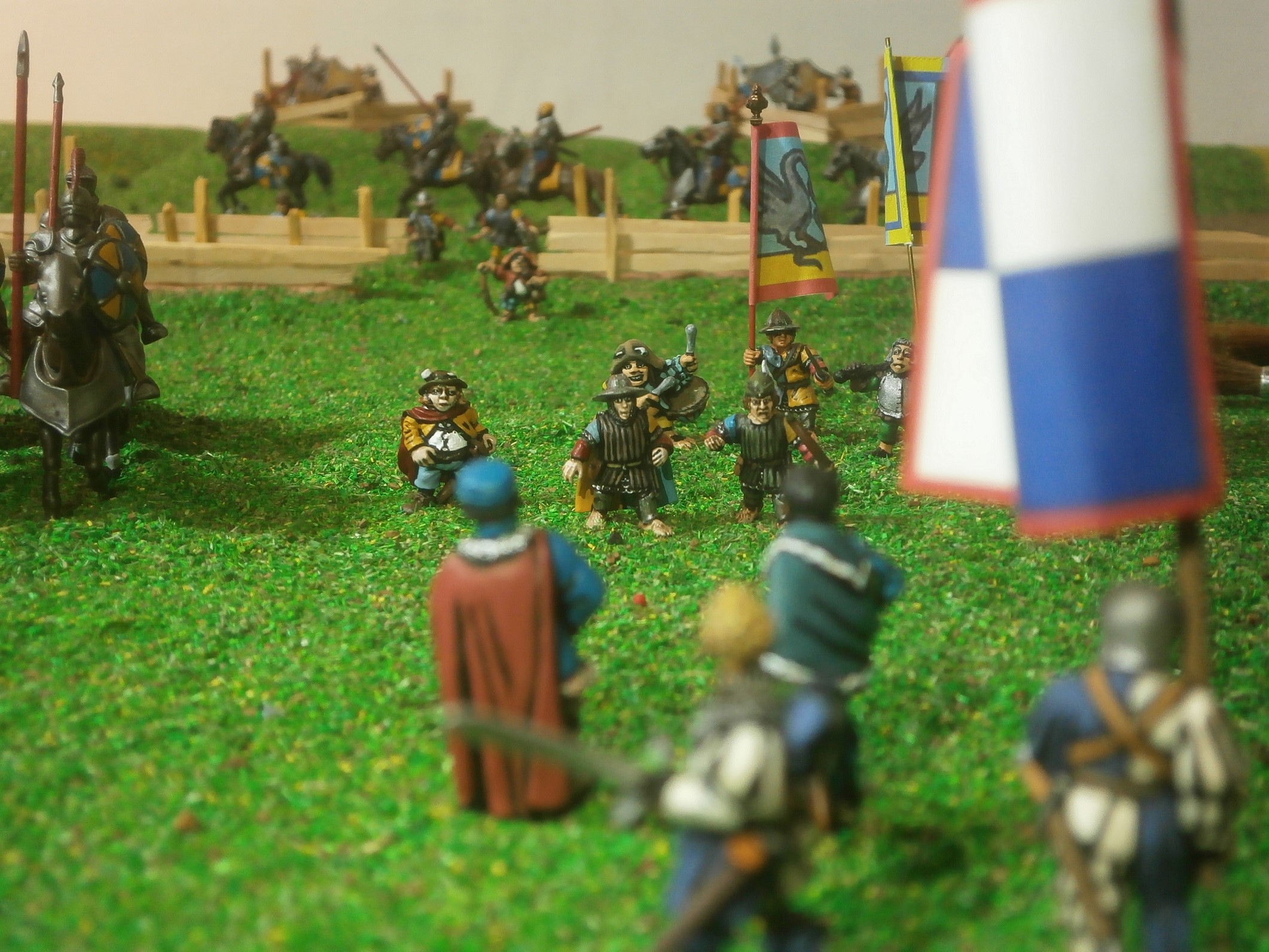
“Only by this worthy and legitimate deed can a balance be restored and the future health and safety of Tilea be assured.”

That very day, the army of Verezzo sacked the town, seizing everything of value until at last Barone Iacopo was satisfied. None in the town were harmed, apart from those few foolish enough to complain or attempt to fight, and but two Verezzan mounted men at arms were fatally injured as they crossed a rushing stream to chase off a band of crossbowmen.
Afterwards, in both Verezzo and Pavona, a few optimistic souls wondered whether this could possibly be the final reckoning, a balancing of the books, that would lead to a real reconciliation between the realms. Most, however, steeled themselves for what they believed was now inevitable – open, bloody and ruinous war.
…

A rather more unexpected war had begun in the far south, for the Luccinan Vizconde Gismondo Giacometti led his large army of mercenaries and Estalians to Capelli. There he drove out the small garrison of VMC soldiers to take possession of the town.
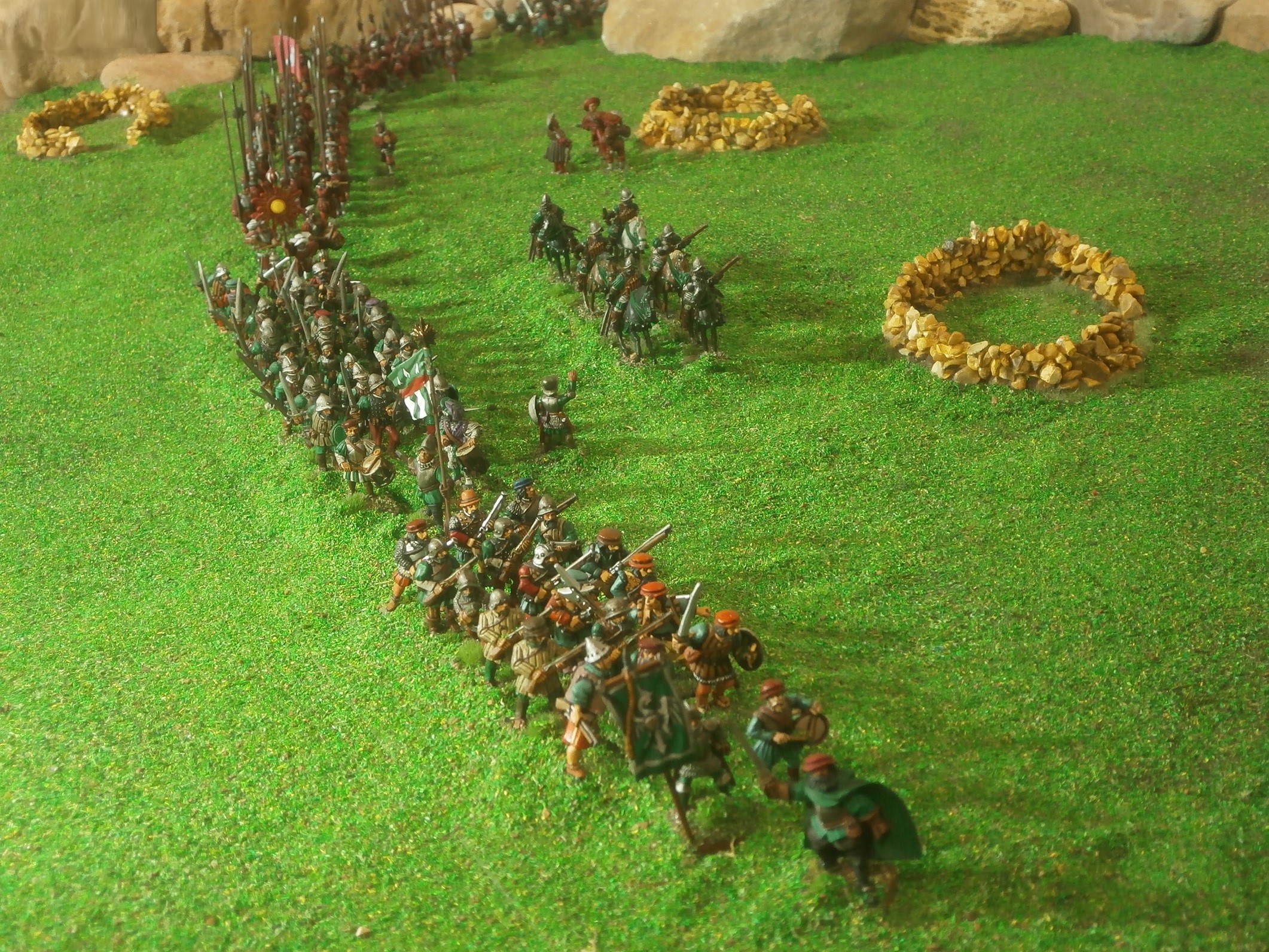
Those wisest in the ways of the world had known that the vizconde was surely planning an aggressive war, simply from the nature of the army he was assembling, but such was secrecy of his planning, that none could have known his intended target.
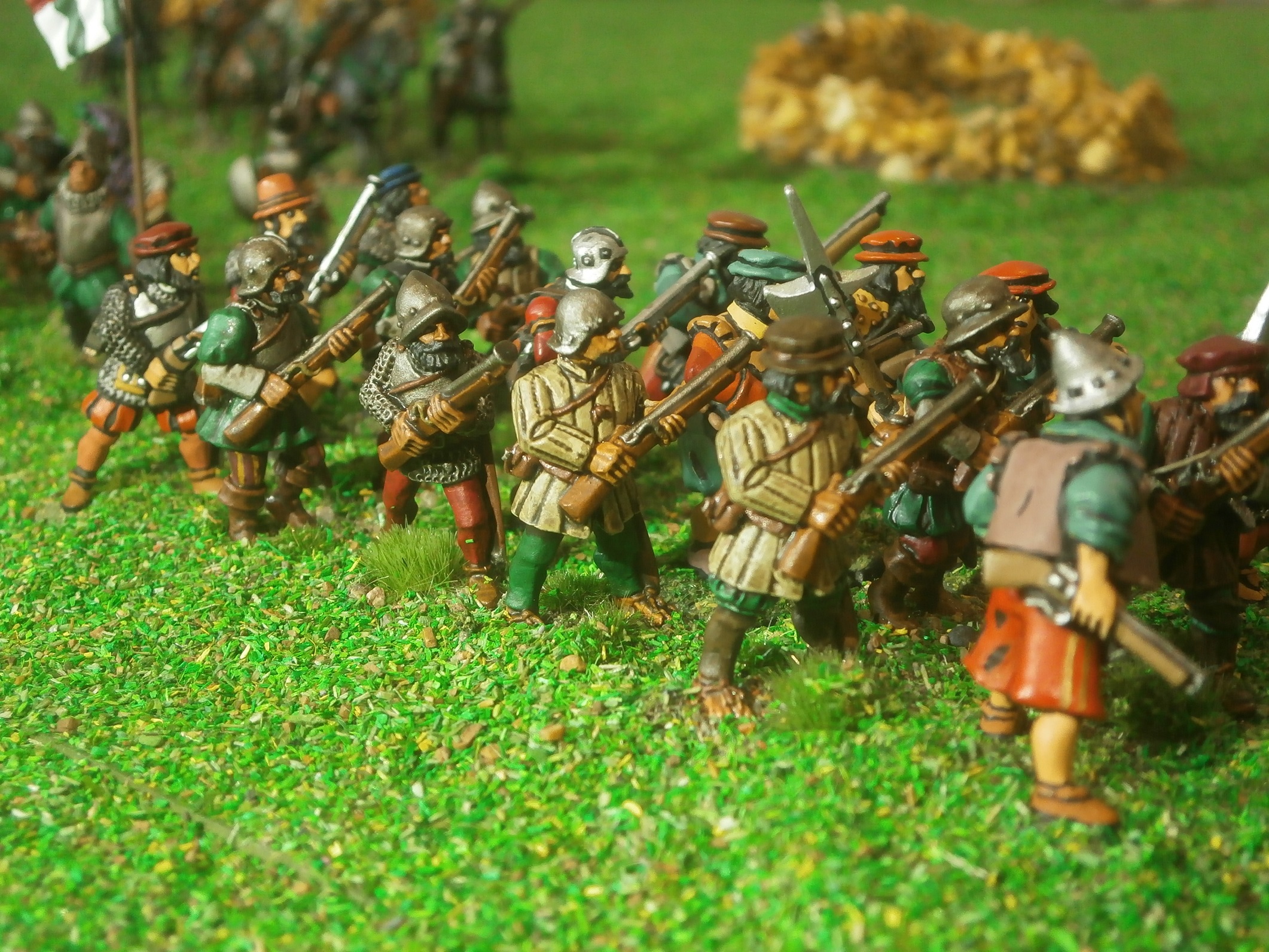
In hindsight, perhaps, considering his own history of once being the Luccinan governor of Capelli, and the general disgruntlement in Tilea regarding the VMC’s possession of Alcente, especially the steady expansion of that territory, one might suppose it should have been obvious.

As for the vizconde’s professed motives, he wasted no time in circulating an open letter to explain his actions, addressed to Captain-General Jan Valckenburgh of the Army of the VMC.

It read thus:
“This from Gismondo, Vizconde Giacometti, noble General of the army of Luccini, to his excellency Captain General Jan Valckenburgh of the army of the VMC in Alcente.
You and your army of mercenaries, employed by nothing more than a gaggle of ultramontane merchants, and thus in legal terms more akin to caravan or warehouse guards than soldiers, if somewhat larger in numbers, have, as you must surely know, outstayed your welcome in Tilea. You were contracted to defend Alcente from Khurnag’s orc incursion, and you fulfilled that promise, for which you were to receive favourable trading terms in perpetuity in Alcente. But then, greedily, you chose to remain, to usurp all power, both political and military, and to seize possession of Capelli, Pavezzano, Monte Castello and Pugno. You claimed that by so doing, your aim was simply to achieve as thorough a victory as possible, so that no goblin forces might remain bordering Alcente, or even any part of southern Tilea, there to threaten further incursions and suffering. Yet, when all was taken, still you did not depart, nor disband your occupying army, instead dispersing it across all that you now held, the better to maintain your tyrannical rule.
The people of Alcente have cried out to me, their pleading made all the more urgent by their suffering at the hands of the Sartosan corsairs – for when you saw fit to dispatch your army northwards to fight against the vampires, Alcente was left undefended. Some claimed your actions were noble and compassionate, for you were assisting in the defence of all those dwelling in the whole of Tilea against the undead, but then the lie was revealed when you chose first to be distracted and thus delayed by an abortive siege of Pavona over nothing more than a matter of honour, then later turned back with more than half your army long before you reached the north. What little force eventually arrived to assist brave Lord Alessio was a meagre addition to his strength, and was entirely bereft of all artillery pieces, which was what he most earnestly desired you to bring. Shamefully, you even took the great bombard gifted to you by none other than his holiness the arch-lector of Morr, specifically intended to aid in the war against the vampires.
And so it is, that during the period of the king’s ill-health, and with his blessing, I have re-taken Capelli, which is and has always been rightfully part of the kingdom of Luccini. In my youth, I myself governed this town, awarded the office by his majesty’s father, King Ferronso II, to follow in my father Prince Valeriano’s footsteps. Then, while I adventured in Estalia, there learning the art of war, the council of Capelli took advantage of the turmoil of King Ferronso II’s death, and the infancy of his son and heir, Ferronso III, to declare independence from Luccini. This treachery was allowed to flourish during the regency of the infant king’s uncle, Duke Ercole, who was understandably ill-prepared for the burden of rule, what with his life having been spent in the deep study of arcane and magical operations, rather than matters political. Yet however long they were allowed to stray, such a rebellion is neither a sound basis nor precedent for rightful governance. And nor was the way in which your merchant army later took possession of the town, as if it were merely another asset to be written in your ledgers, or a pile of plunder to be seized by your army of privateers. Thus, I have restored the lawful and proper state of affairs by reclaiming Capelli for the King of Luccini, so that its people might know their place in the legitimate scheme of authority, from gods to princes to lords, to gentlemen and citizens, to labouring peasants, & so that they bow properly once more both to King Ferronso and all the lawful gods.
This is just the start of putting right the wrongs inflicted by your agents and brigand-soldiers, your schemes and practices, your invasions and occupations. So it is that I demand, as a Tilean born and bred, of royal blood, and for all the native people of Tilea, that you remove your armies from Alcente and the lands thereabout, to return them to the foreign places whence they came, that the true nobility of Alcente might once again wield their full and rightful authority over their estates and properties, unburdened by the dual tyranny of heavy taxation and trade monopolies intended to satisfy the money-grubbing, joint-stock shareholders of the distant city of Marienburg.
Leave, promptly and without further depredations upon the poor people, and I shall do all I can to ensure that your first and only lawful contract, freely offered by the council of Alcente, in which in return for the defeat of Khurnag’s orc and goblin armies you would be granted favourable trading terms with the realm, is honoured in future years and decades, exactly as was stipulated and legally agreed to.
If you think to baulk at satisfying my demand, know that you will find few allies among the Tilean states, if any at all, and that even the native Alcentians you presume to rule over will turn against you. You are strangers, a long way from home, who have become unwelcome visitors in a hostile land. We and the people of Alcente fight for Tilea, for our homes and families, while you suffer for the sake of greedy merchants who care only for goods received and not for your own lives. The gods of this land hear our prayers and love us as their children, while your gods are so far-flung they can barely hear your prayers over the clamour of those who dwell in your own distant lands. If you choose to stay and make war, then not only will your masters fail entirely to profit from your stubborn foolishness, but you and your army will be defeated and ruined.
Now, depart immediately, for your time in Tilea has come to an end.”
…
Back in the city of Luccini itself, the wizardly Duke Ercole had administered his long and carefully prepared magical cure for the young king’s indisposition, and the entire court was pleased to see an obvious change for the better in the king.
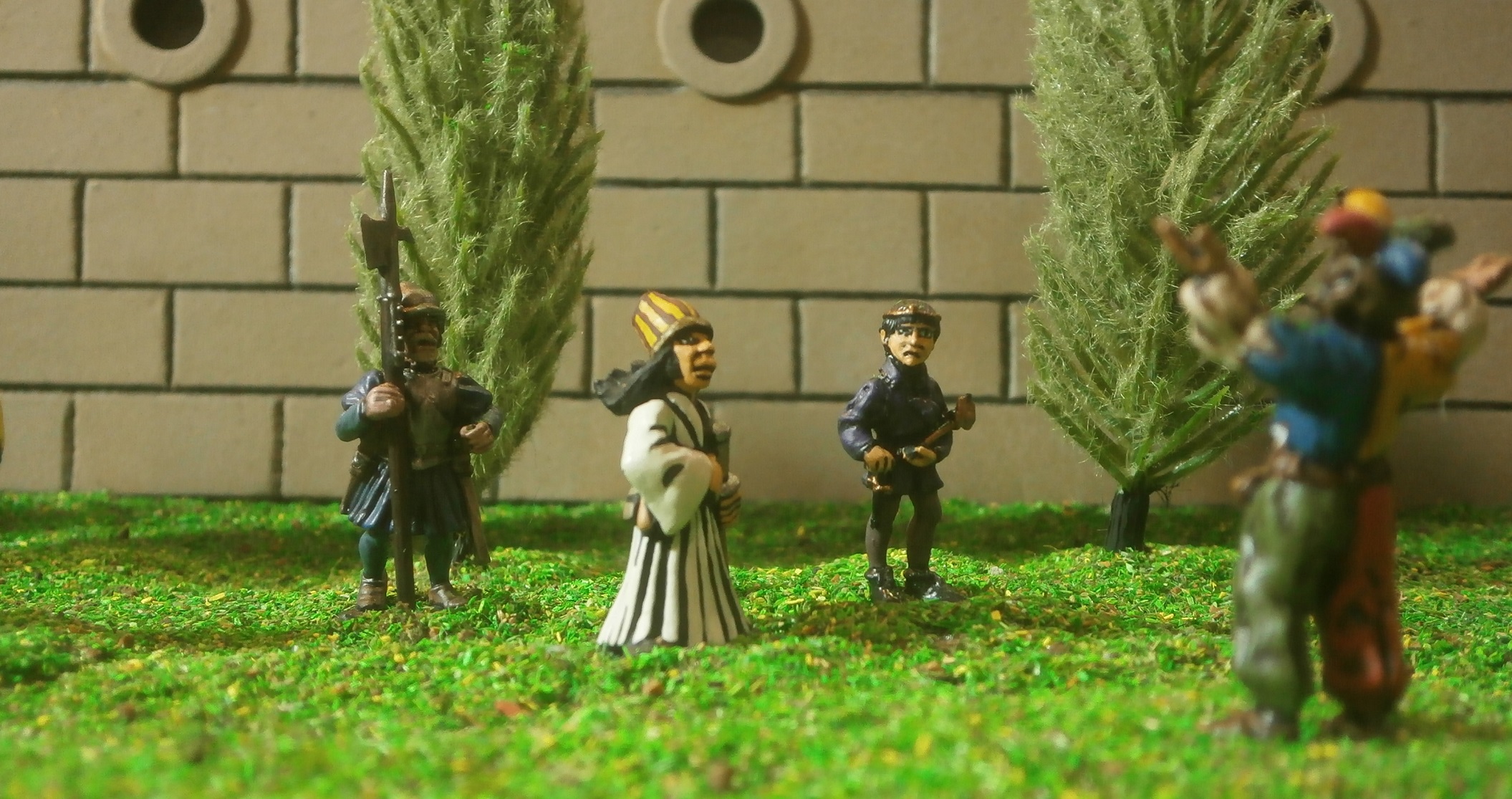
Just as this new hope had begun to blossom, however, one of the king’s trusted servants attempted to assassinate him.
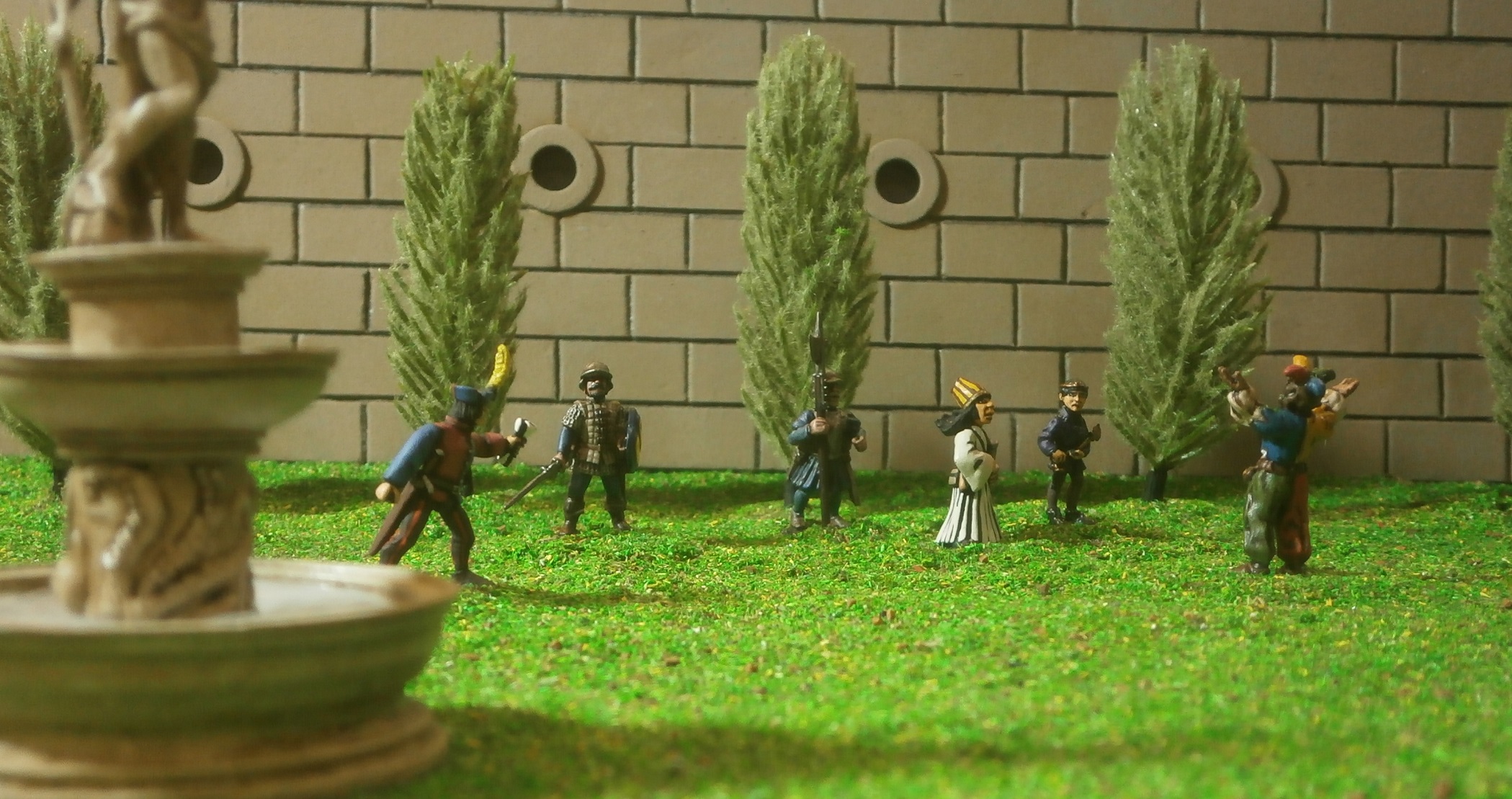
The fellow approached the king as if to hand him something, which the duke was about to allow, until he saw a look of confusion in the king’s face. The servant faltered and could not conceal the flash of guilt he suddenly felt.

That moment’s hesitation was enough for the noble wizard to cry, “Guards!” For he knew they could act more quickly than he could summon up a magical protection.
But before they could subdue the treacherous servant, and thus before he could be interrogated to discover who was really behind this attempted regicide, the prospective assassin cut his own throat using a poisoned blade concealed in his clutch of papers!
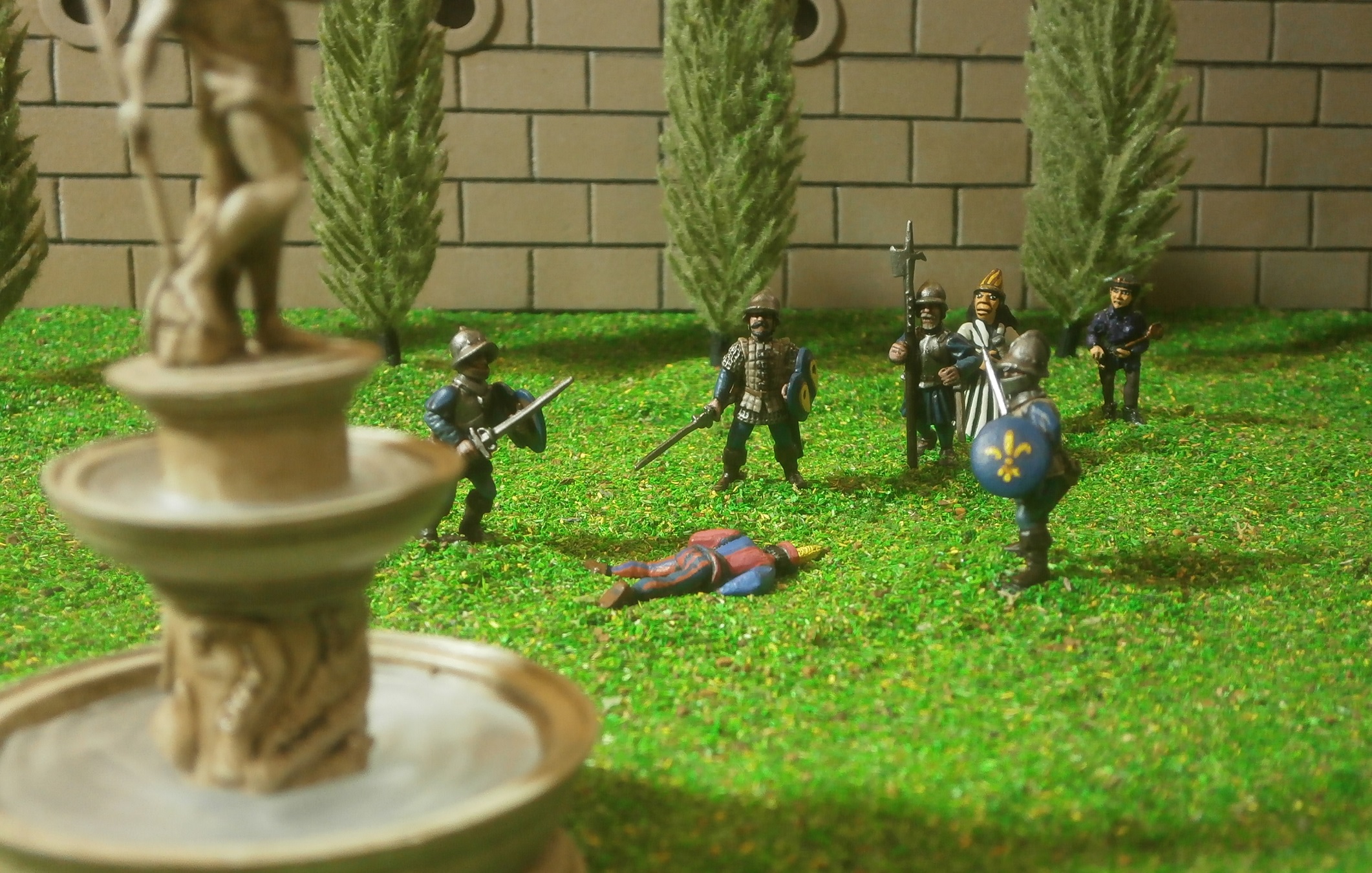
Just when Ercole had dared to hope a new and happy confidence was settling upon the court, what with his nephew, the king, cured and his cousin, Vizconde Gismondo, marching against Luccini’s enemies, instead suspicions abounded. The royal chamberlain (the ‘camerlengo’) Casimiro, Barone Ciccotelli, commenced an inquiry to discover the wicked culprits behind the assassination plot.

Rumours abounded, including that the Sartosans were involved, as for several months there had been mutterings that the pirates’ ships had sailed in consort with the Estalian ships bringing goods and men to Luccini for the vizconde. Gismondo’s factor in Luccini laughed this off as preposterous and malicious gossip, for his master had clearly come to prevent any further harm caused by pirates. Other accounts circulated: the most convincing, perhaps, being the claim that the VMC was behind the assassination attempt, and that their malicious intent was exactly why the vizconde had struck against them so suddenly at Capelli.
…
Plagued by Rats!
A Letter to King Jaldeog of Karak Borgo
(Deployment before the Battle of Bisavera)

This to His Highness King Jaldeog, writ in haste by your servant, Darnaec Whitmail, after consultation with some of those present at the recent fight against the ratmen beside the River Bisavera.
Further to my previous, short missive, concerning the sad news of the death of noble Thane Narhak, which was sent in haste immediately after the fight, and in obedience to your instructions to him, regarding that he provide a detailed description of the enemy and any fight against them, that you might better make plans for war, I have spoken to numerous captains present upon the field of battle, even as we made our way back to the defences we so recently abandoned, so that the fullest and most accurate picture of all that occurred, far beyond that which I myself witnessed, is here presented to you.
Upon Thane Narhak’s orders, mutually agreed with Lord Veluthil, we abandoned our fortified camp guarding the tower and bridge at Soncino, for intelligence had been received that the enemy had moved to the south of us and were intent on crossing the river there by some other means, thus avoiding our defences. Every part of our force was ordered to march, leaving nothing and no-one behind, for this was our opportunity to strike at the enemy’s main strength and hopefully end the threat they currently presented to the whole of Tilea. Thane Narhak revealed to me that the elves were expecting reinforcements – including more foot archers and horse soldiers (the reformed Sharlian riders), as well as whatever part of the alliance force near Viadaza had chosen to venture further north after the dispersal of their newly rancorous component parts – but that High Lord Veluthil was unwilling to wait and risk losing this chance to bring the foe to battle. If we had delayed, then the enemy might have crossed the river in strength and even now would be advancing south bent on destruction.
Our enemies, it seemed, were also keen to bring their full strength to bear, and to do so on favourable ground, so they too abandoned whatever works they had embarked upon and marched north to meet us.
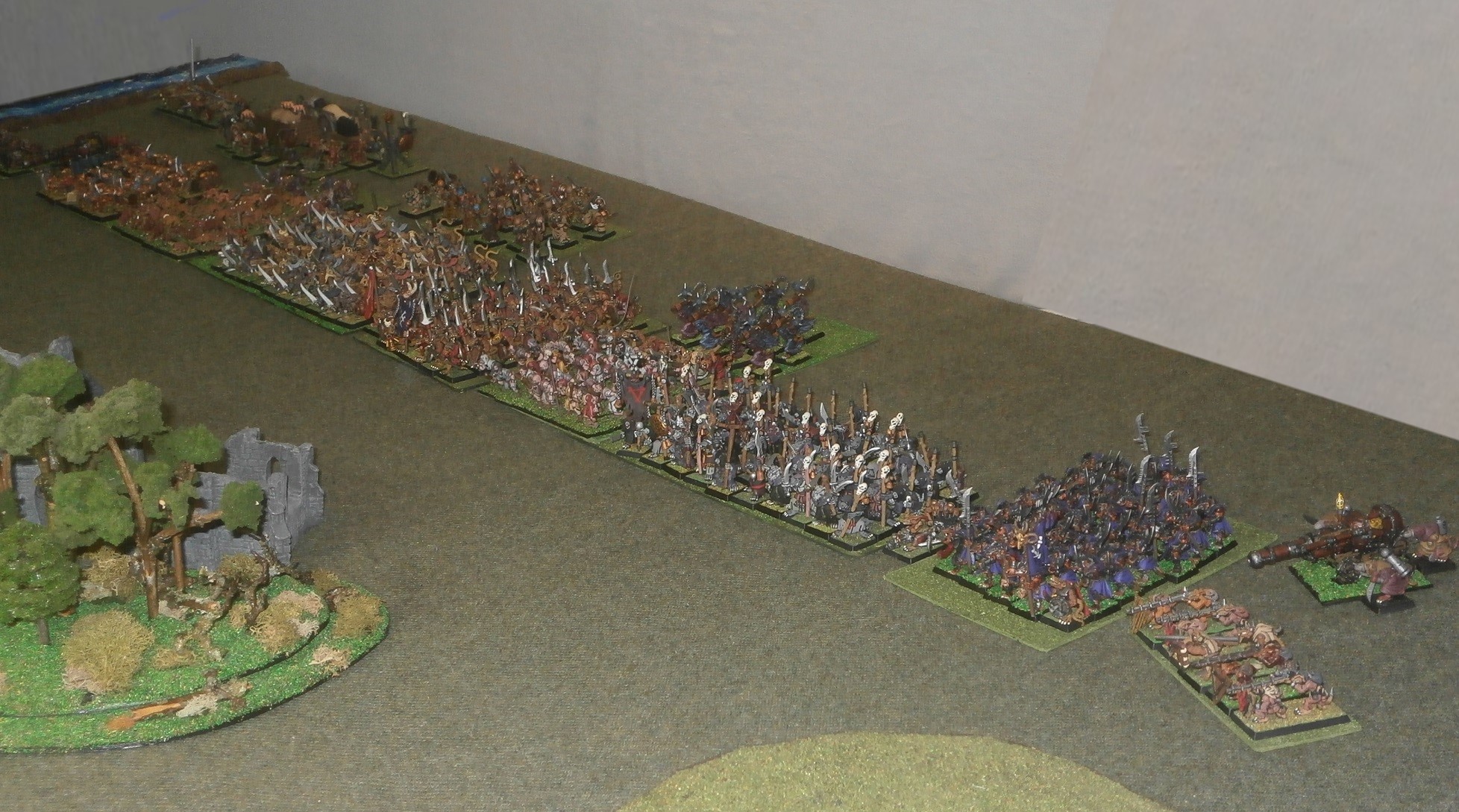
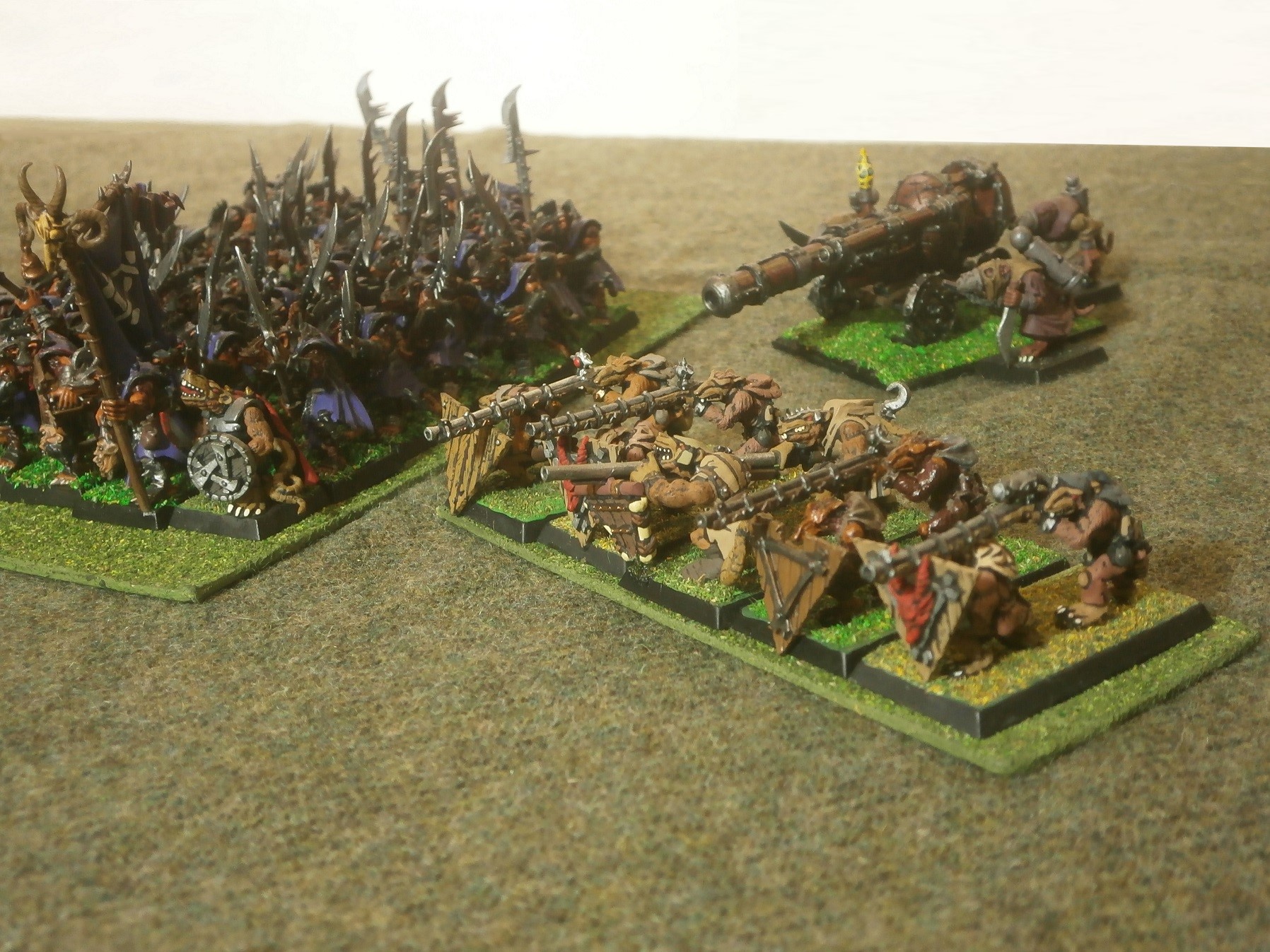
Their host was vast, truly a verminous horde, both in the numbers of regiments as well as in the size of those regiments, so that they stretched before us almost like an unbroken mass, sharing such close proximity with each other that any attempt to outflank any part of them would surely prove unaccomplishable. Their rightmost flank, abutting the river (which, without vessels of some kind, was reported by the Arrabiatti to be entirely impassable from the bridge at Soncino behind us all the way to the sea) was guarded by two companies carrying long-barrelled muskets, indeed so long that each required a second handler, who bore a triangular pavaise upon which the barrel could be rested.
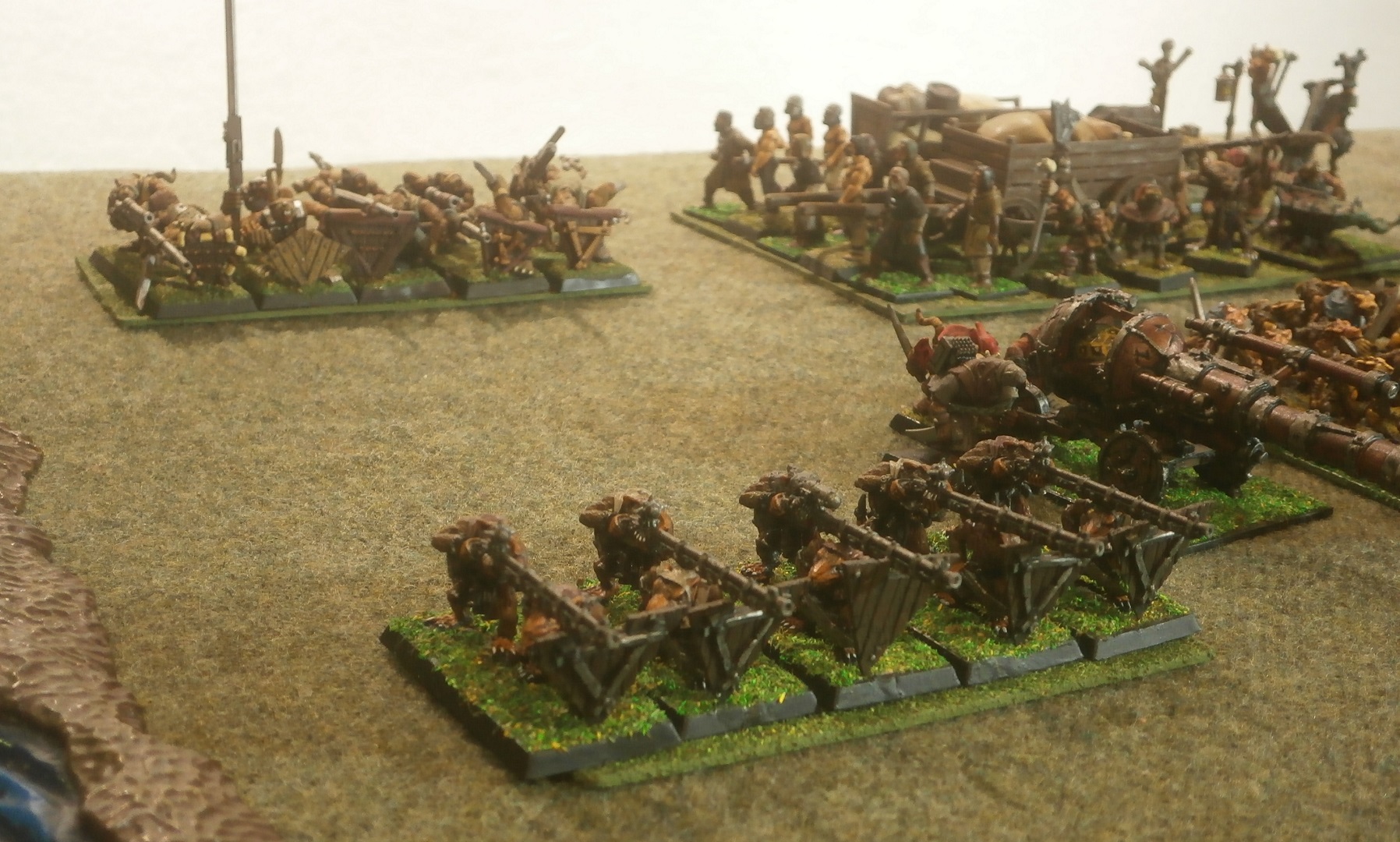
These would prove quite deadly from their first shots.
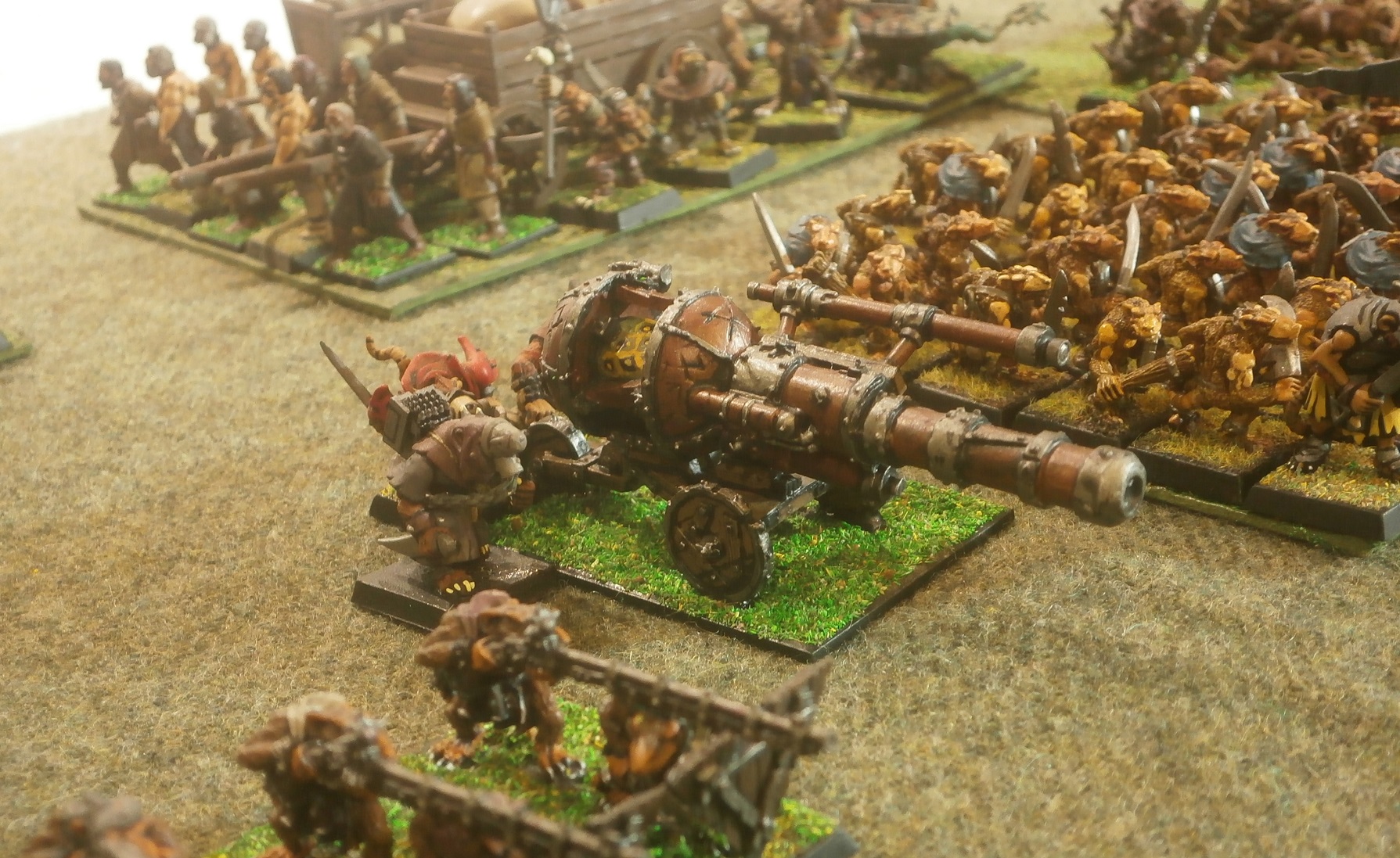
Beside these was a hulking, wheeled artillery piece that spat not round-shot but slivers of lightning-like flame.
Next in line came a large body of ratmen, meagrely armed with only blade and shield, presumably among the least of their warriors. An elven rider told me that they were most likely slave-soldiers, and that there were more such bodies further down the line, for his keen eyes had spied shackles of iron upon their ankles through which chains might be passed to restrain them as necessary. Nevertheless, they were led by a larger captain, heavily armoured in iron plates, whose squealing commands seemed sufficient to keep them in order.

Beside them was a large mass of giant rats, some almost as big as the ratmen themselves, driven on by whip-wielding herders. Despite possessing only animal wits, and armed with nothing more than teeth and claws, these were to prove, due to their sheer number, a deadly foe. Any bolts or arrows shot at them seemed to us a waste, for the harm thereby caused would be barely noticeable, and of what real worth was the dispatch of such base animals? This was to prove a costly misapprehension.

Behind these and the aforementioned slaves, was the enemy’s baggage, in the form of several wagons and carts

Hauling these were prisoners, captured men no doubt beaten into submission and made to act the part of beasts of burden. We did not at first know it, but amongst this motley collection of baggage was a chest, carried upon a pallet by four ratmen, which presumably contained that mysterious cargo which we had heard reports of, delivered to the ruins of Miragliano by the crew of a plague ship. As the battle progressed, the etheric power emanating from this chest was sensed by the elven wizards, even Lord Veluthil himself.

Next in line, almost squarely in the centre of their army, were even more slaves – indeed a teeming mob of them …
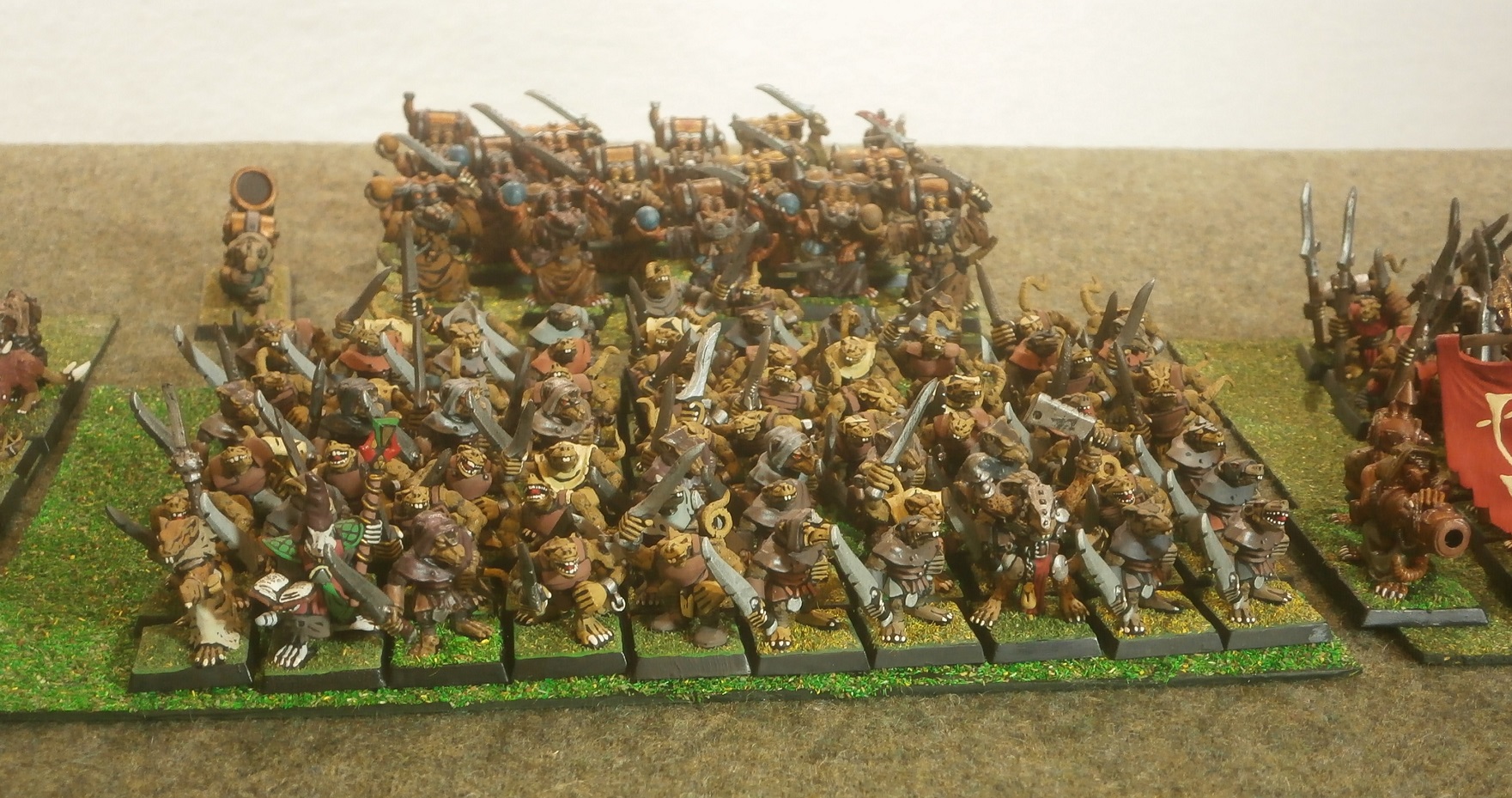
… which appeared at first, to my eyes (for they lay almost directly before me), to be an miserably amorphous mass of ragged ratmen. I later made out two individuals at the fore, quite different from the rest. The first was an armoured warrior, with a hook in place of one hand and in the other, what looked more like a cleaver than a sword. The second wore robes with a tall hood and carried an open book. Several amongst the elves (whose eyes seem keener in both daylight and the dark than myself or any amongst my arbalesters) have assured me this was undoubtedly none other the Grey Seer Cralk himself.

I was not easily convinced of this, for why would the enemy commander join the least of his warriors in line of battle, the very dregs of his army, least able and worst equipped to defend him? Yet even I spied his robes, staff and his grey fur, and it later occurred to me that such as he might even be keen to ensconce himself among the most massive of his regiments, despite the mean nature of its constituent parts, able there to hide better than amongst any of the other mobs – seeking safety in numbers, so to speak. This was to prove a mistake on his part, but sadly, not one that would cost him his life.
Behind this horde, unseen until later in the battle, and then only by a handful of witnesses, was a company of leather-robed skirmishers. Their robes, masks and the copper kettle-like contraptions they bore upon their backs made them appear large, but presumably they were ratmen inside, no different from the rest.

These bore strangely hued grenadoes and serrated blades, and were to spend the battle creeping about in the rear, perhaps ordered there to intercept any who might, like Arconvale’s war-hawks intended, circumvent their battle line to attack from behind.
Besides the massive mob of slaves marched a red-clad regiment of clanrats, bearing heavy, barbed spears, and two banners – presumably one being their own and the other being that of the army, although which was which I could not say.
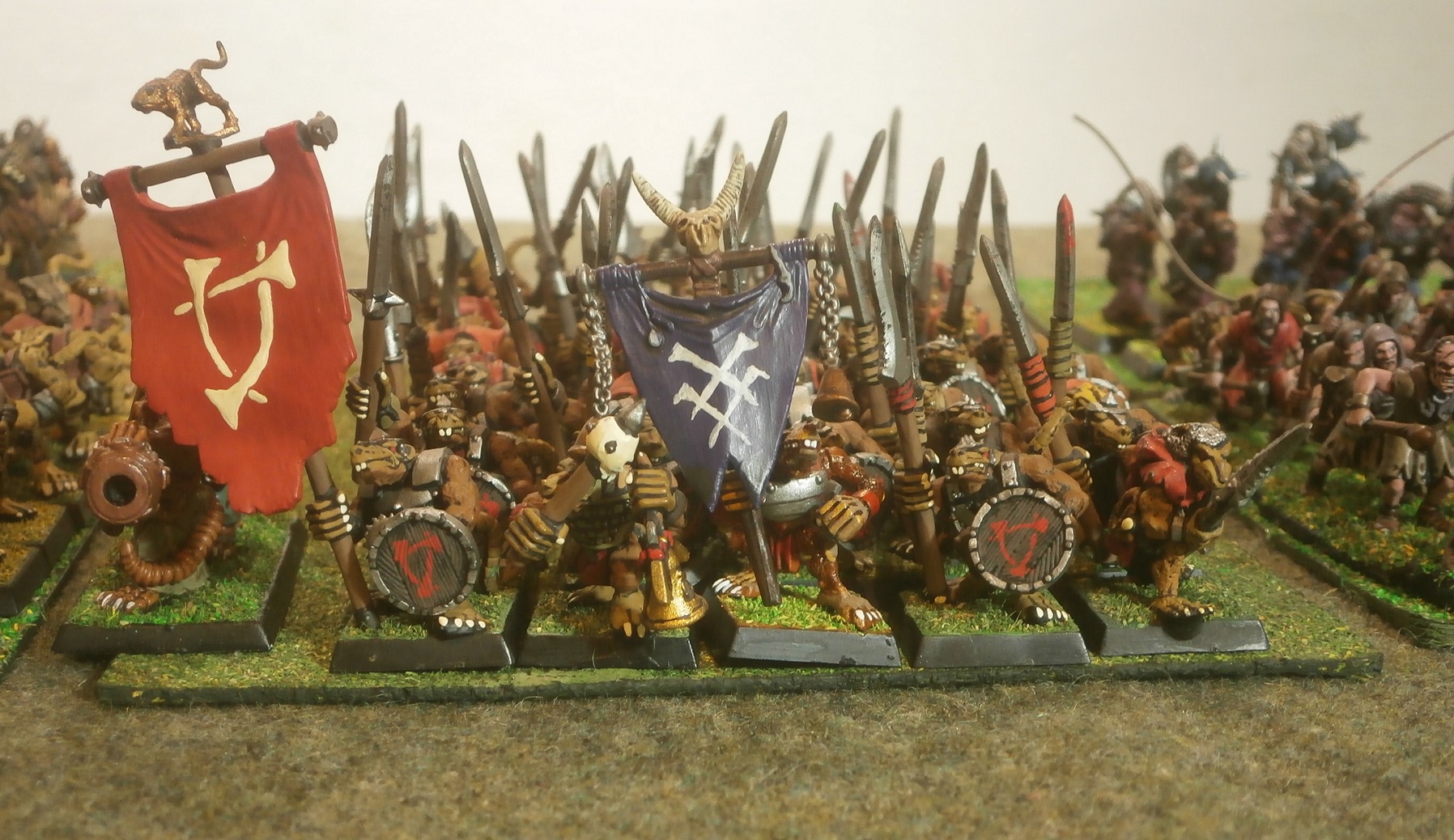
This regiment, dwarfed by the slaves to their right and appearing considerably less dangerous than the ferocious warriors on the far left of their line, were nevertheless to prove themselves horribly capable in battle.
Beyond them came yet another body of slaves, which I never laid eyes upon throughout the battle for they were concealed first by the ruins of a church and later by the trees in the centre of the field. Indeed, few survived who saw them, but I did speak to one poor soul who escaped what was to happen later, and he told me that they were men!
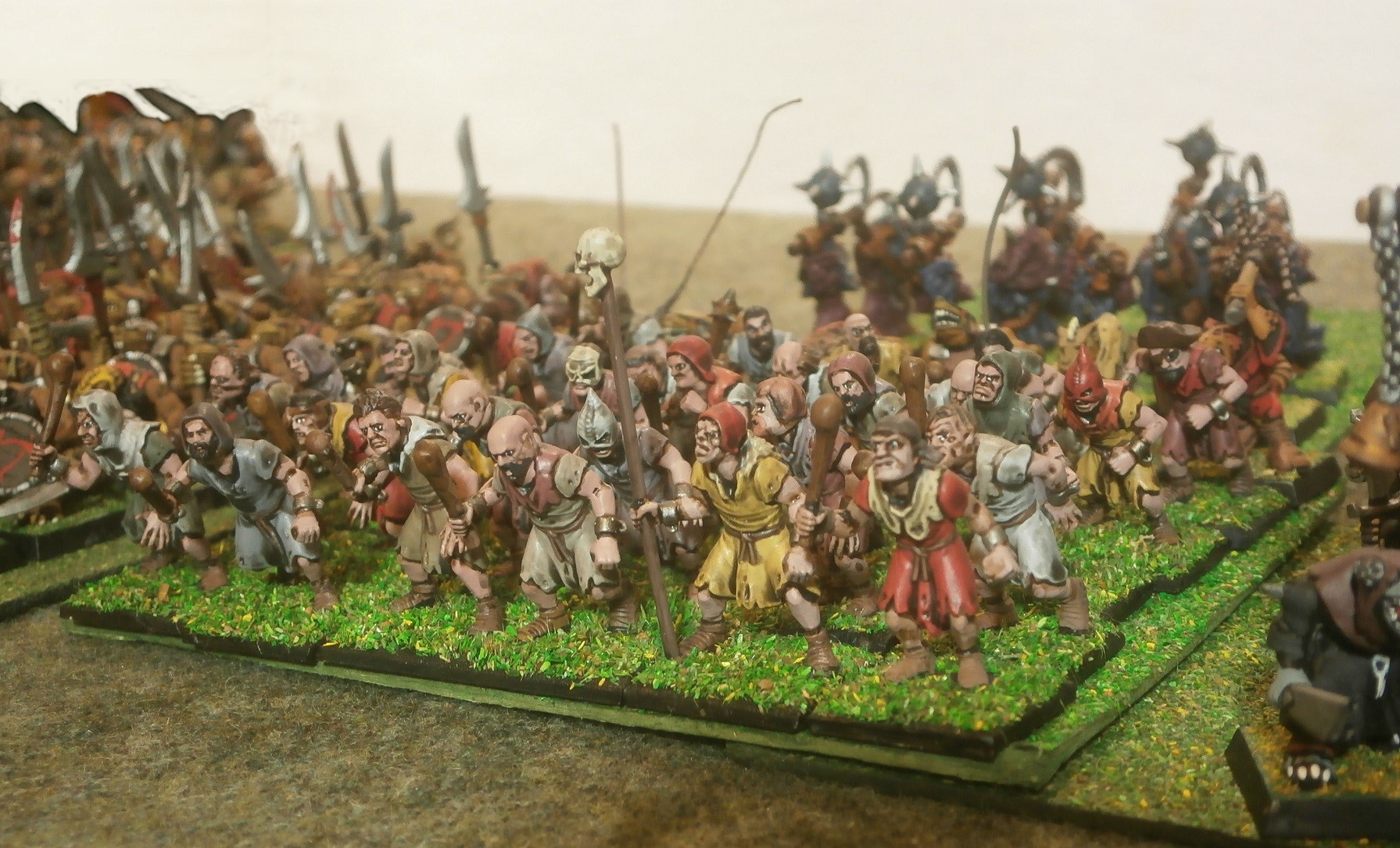
Or, at least, were once men, for he said they were malformed, both in body and mind, being as bent and twisted as they were manic and crazed, driven forwards by the whiplashing of a rank of ratmen at their rear. Bow-legged and clothed in rags, they nevertheless moved with surprising alacrity, as if infected with by a raving delirium. They too bore iron manacles, but at their wrists, and like the ratslaves, any restraining chains had been removed so that they might fight without hindrance.
Behind these came another company of skirmishers, only briefly glimpsed later by a handful of elves and some amongst the Arrabiatti riders. These carried heavy, spiked censers, like flails, from which a thin but foul mist spilled.

These, like the red-regiment, would prove deadly foes later in the battle.
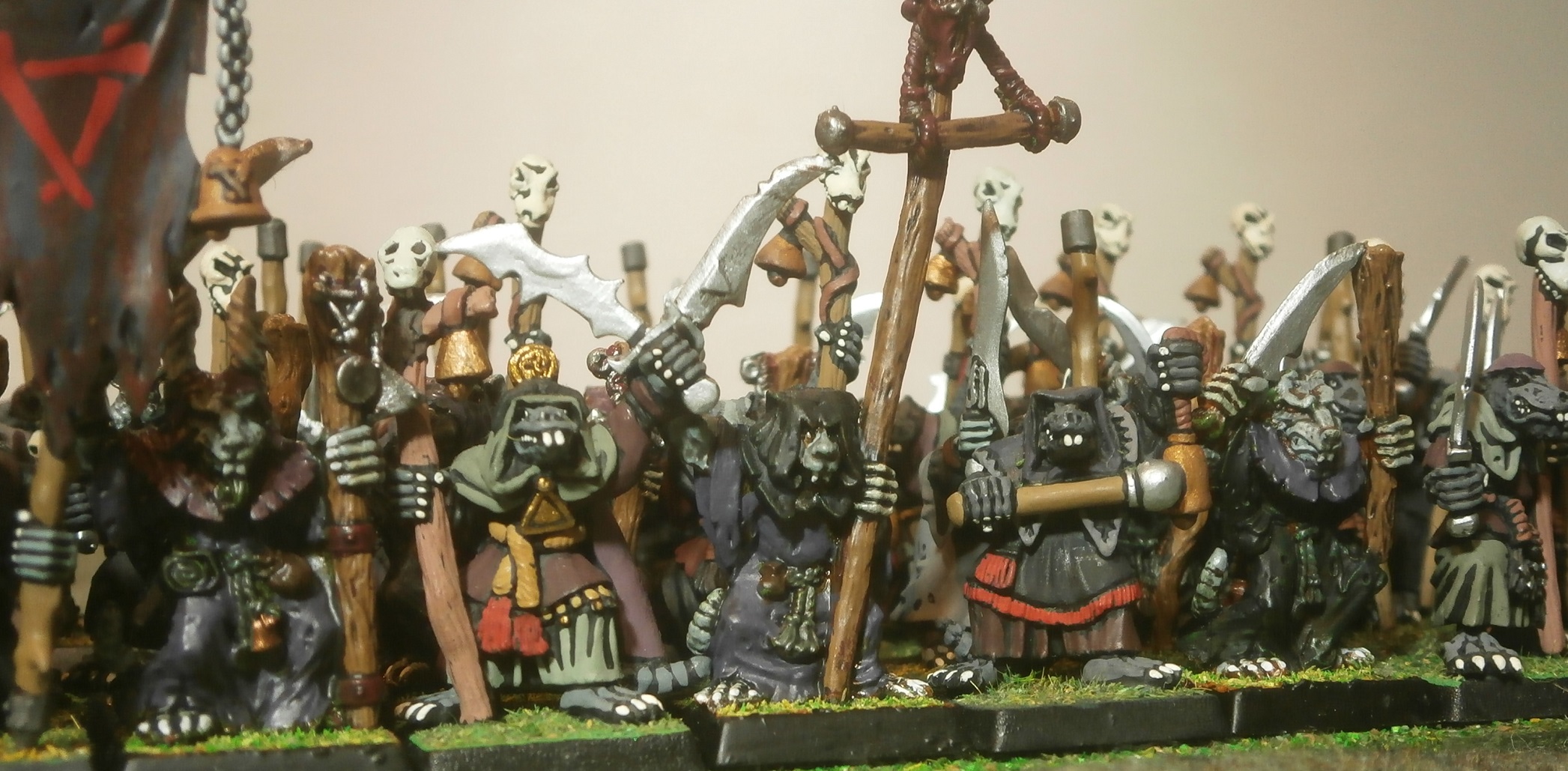
Beside these, advancing towards the open space between the woods and the raised ground to the left of the enemy’s line of battle, came a swarm of black and grey-robed ratmen, armed with both viciously curved blades and iron-bound staffs. The Arrabiatti rider who described them to me said they strode in a peculiarly twitching manner, as if barely restraining themselves.
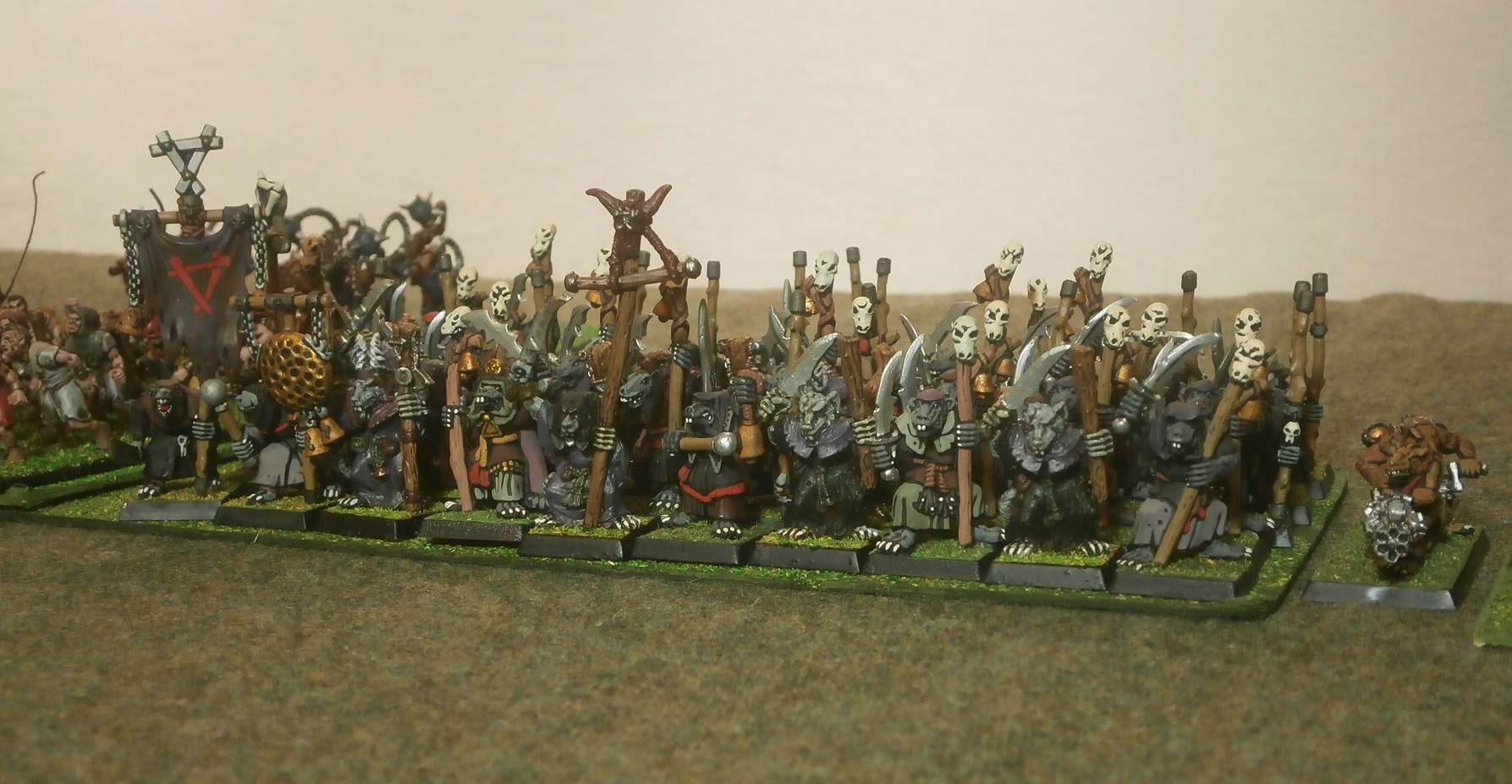
They were fifty strong or more, and their strange motions elicited a cacophony of discordant ringing from the brass bell carried by their musician, as well the many smaller ones decorating their banner and many of their staffs. That sound I myself could hear, although it was only after the battle that I learned of its source.
Beside these, being the last of the regimented bodies in their crowded battle line, came a regiment of brutish ratmen, standing head and shoulders above their kin, swathed in both purple robes and laminations of iron.

Upon their right side, and indeed beside several of the aforementioned regiments, strode a brace of ratmen carrying some form of portable artillery piece, the nature of which I did not discover.
Upon the very far left of their line, beside the steep slope of the hill, and just as on their other flank, came a body of long barreled musket teams and another lightning spewing engine.
Our alliance army attempted to match the enemy’s width of front, but this left very little depth to our line of battle.

Only the wizard Lord Uluar stood to the rear of the line, as if in reserve, with his bodyguard of riders.

Thane Narhak had seemed surprised that Uluar remained with us, what with his role as the elven high lord’s messenger and ambassador, but suggested to me that it was perhaps a sign of Lord Veluthil’s awareness of the dangerous disparity in numbers between our army and that of the foe. It is thus likely that the ambassador was ordered ride behind the line, ready to strike at any foe that broke through or perhaps at the flank of an enemy regiment threatening the destruction of one of our own.
Upon the far right of our line advanced a body of elven scouts – wilder seeming than many of the rest and almost entirely bereft of armour. They were to prove, as indeed was every elf on the field, very competent archers.

Indeed, such was the elves’ skill with their bows, and so nimble they were upon their feet, that had we been fighting a moderately sized enemy they could undoubtedly have felled a good half of the foe before blade struck blade anywhere upon the field. But against this enemy, their arrows, howsoever deadly in their accuracy, seemed simply to disappear into the vast swarm, to no particularly noticeable effect.

Next in line came one of the two bodies of glade guard, advancing a little behind the scouts.

No less skilled in archery than the scouts, this company could loose almost twice as many arrows, yet we would have needed many more such units to win the fight through shooting alone.
The Arrabiatti brigands rode to their left, also armed with bows, although lacking the elves’ skill and having a shorter range.
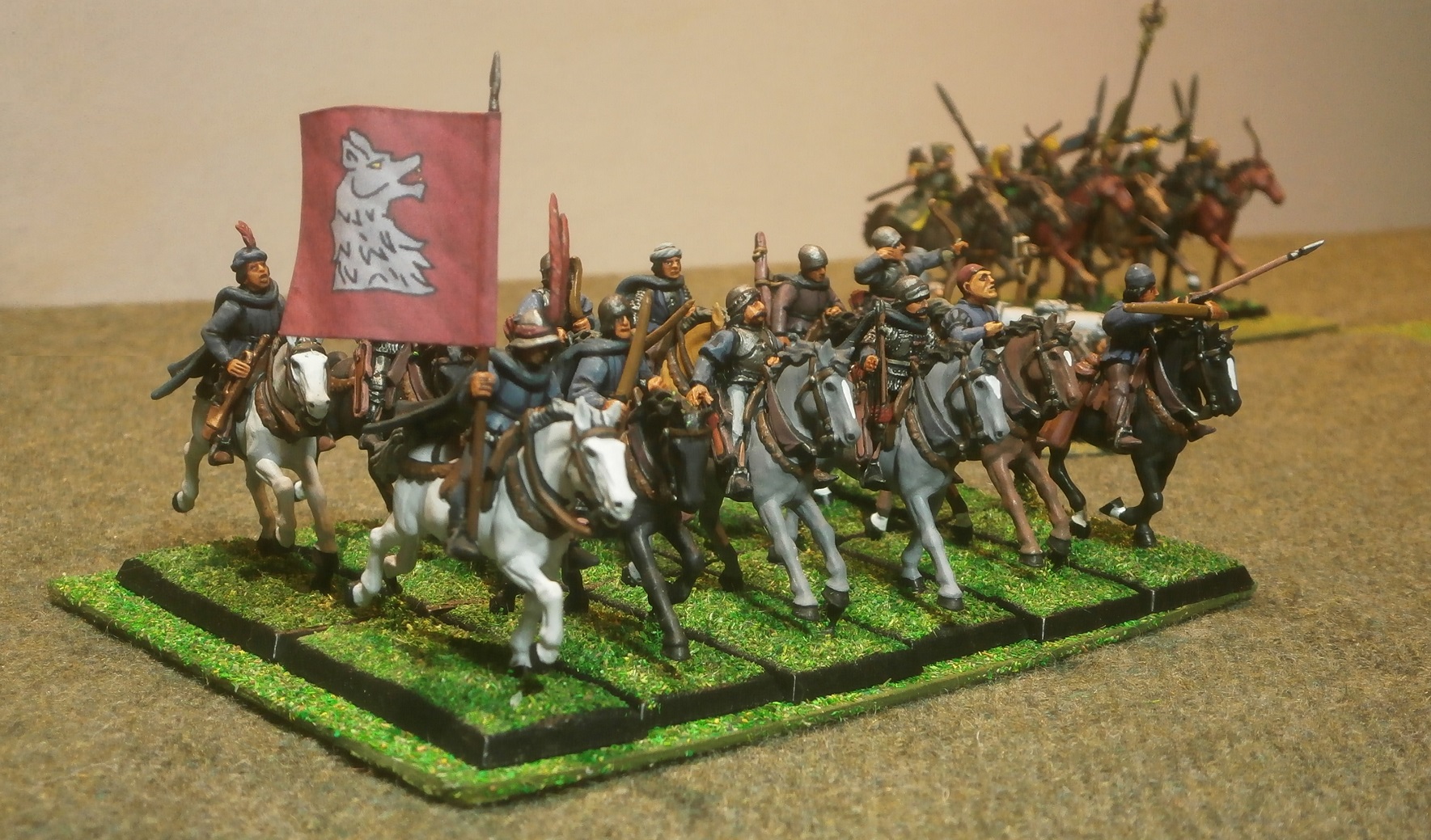
Lord Totto had ordered these to join our alliance force back at Ravola, for they had an unsurpassed knowledge of the lay of the land in the north of Tilea – its paths, rivers and the like – what with the men amongst them hailing from all over the north. That which they had learned before they became outlaws had only improved in the time since, as they sought the secret passages and useful vantage points needed to both surprise their prey and thwart those who sought to capture them.
I thought I would dislike these men, what with their criminal pasts, but I confess freely that I found them good company, and they and their captain, Valfrido Gesualdi, had proven both wise and keen. They were to do very little in this fight, but this was neither cowardice or tardiness on their behalf, but rather because there was little opportunity for them to do ought other than throw themselves at the foe to no gain for our cause, and at great loss to themselves. I pray they will now remain with us, for we may now need their particular knowledge more than ever before.
We ourselves deployed to the Arrabiatti’s left, first our gun …

… then Thane Narhak and the warriors …

… and then my regiment of crossbows.

Thane Narhak seemed calm before the fight, although now I believe he was in truth resigned to his fate, for such as he cannot have failed to understand the reality of our situation as the enemy hove into view. He must surely have known that we could not possibly win this fight, and that if we were to have a chance to retreat in any semblance of order, without great loss to our strength, then he and his warriors would have to make a desperate stand.

If he had bid me stand with him, I would have happily obeyed, but he conveyed no such order, as I believe he fully intended that we should leave, to fall back to our earthworks at the bridge, where our crossbows could prove most effective in defence.
We did not know it as we arrayed for battle, but ahead of us was a company of elves known as the Waywatchers, cunningly concealed by the slightest of scrub and the shallowest depression in the ground. Presumably they had crept there in the crepuscular hour. As the enemy began its advance, however, they got to their feet, appearing as if by magic!
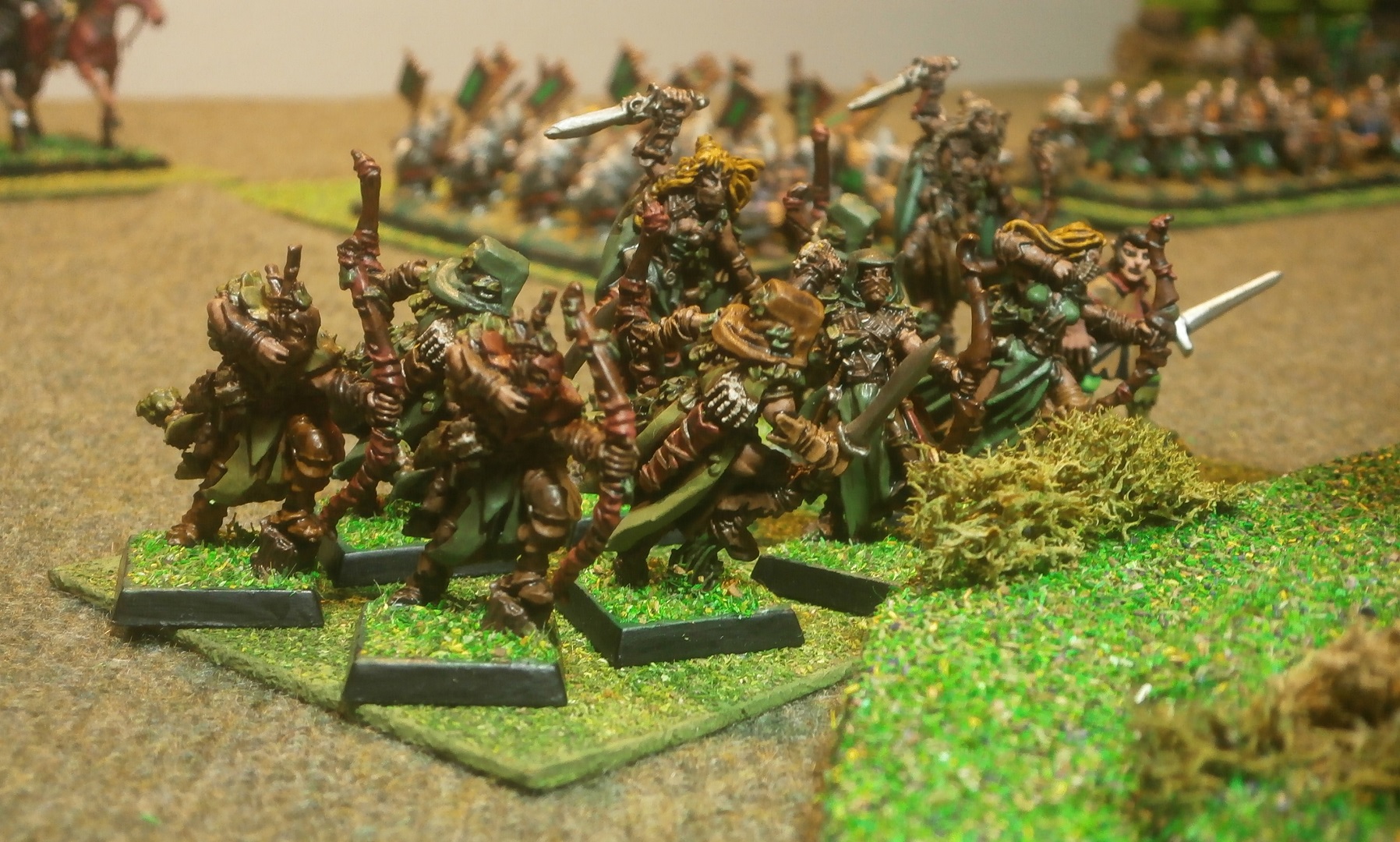
Cioran Brightmoon boldly led them, although as is their wont, they kept the woods between them and the foe, that they might better surprise the enemy with either their shooting or their charge.
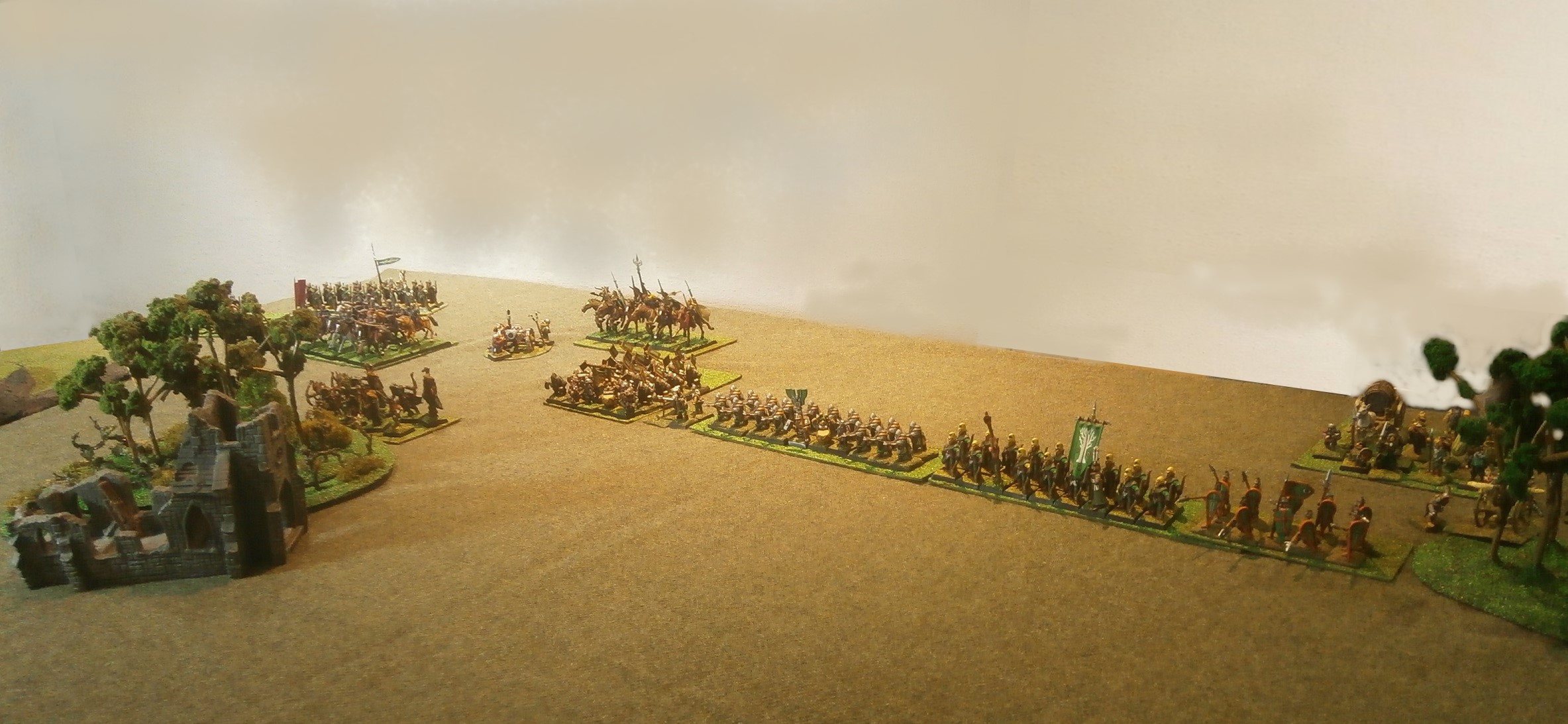
By our left stood the second company of elven archers …
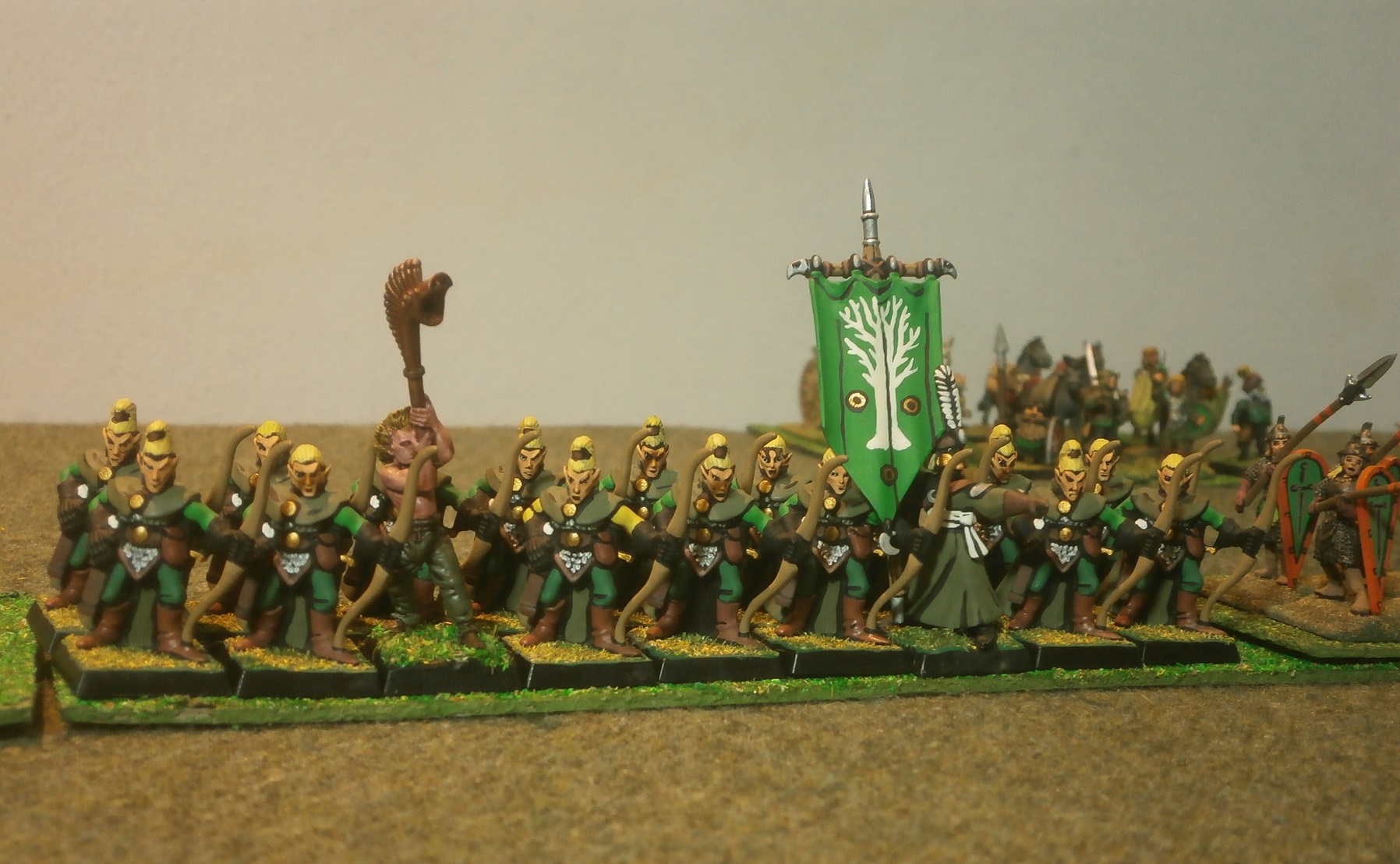
Which I was glad of, for I thought that with their longbows by our side, then surely whatever strayed before us should suffer severely from our conjoined volleys?
Beside them was Lord Veluthil’s small bodyguard company …

… although he himself was elsewhere, ahorse, which I presumed (mistakenly, it turned out) was to allow him to move more quickly to wherever his magic might be needed. This company was sufficiently large to stand watch over their lord’s tent as he slept and to serve his person as he travelled about the camp, but in truth not numerous enough to fight effectively on a field of battle. If they had been thrice as large, then the battle may just have gone differently, for standing beside our brave warriors, the two might have presented a keystone about which our defences could be secured firmly.

The rest of our alliance force was somewhat concealed, standing behind a copse of trees by the river. Something struck me as odd about those trees, which at first I could not put my finger on, but it later occurred to me that upon surveying the ground the previous evening, I had not noticed them. How I could have missed them, or forgot them, is a mystery to me, for with their proximity to the waters, they should have struck me as an important consideration for our intended line of battle.
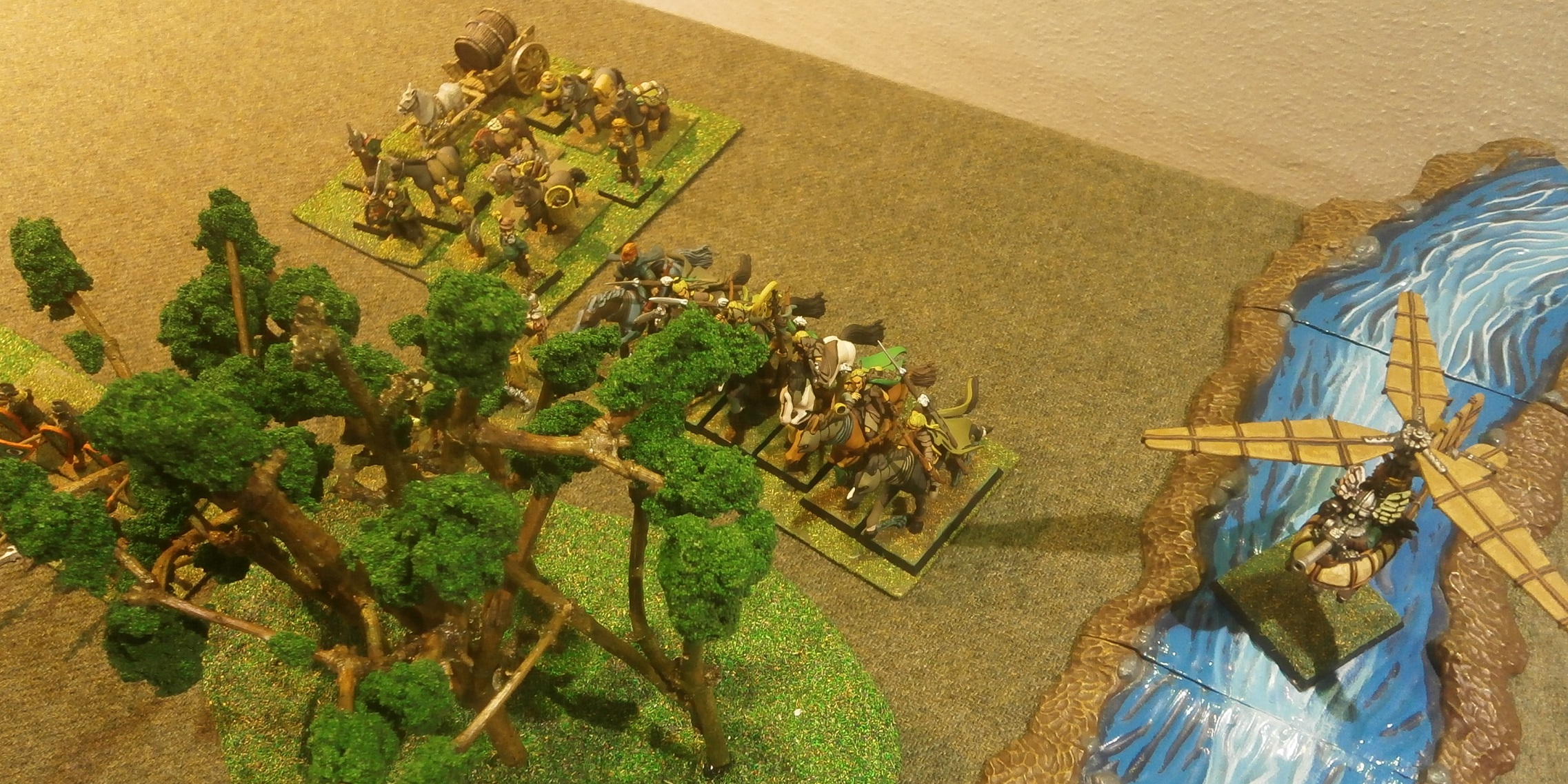
Our baggage lay there, for upon Veluthil’s orders we had left no provisions at the camp, to deny the possibility of their capture by enemy foragers.
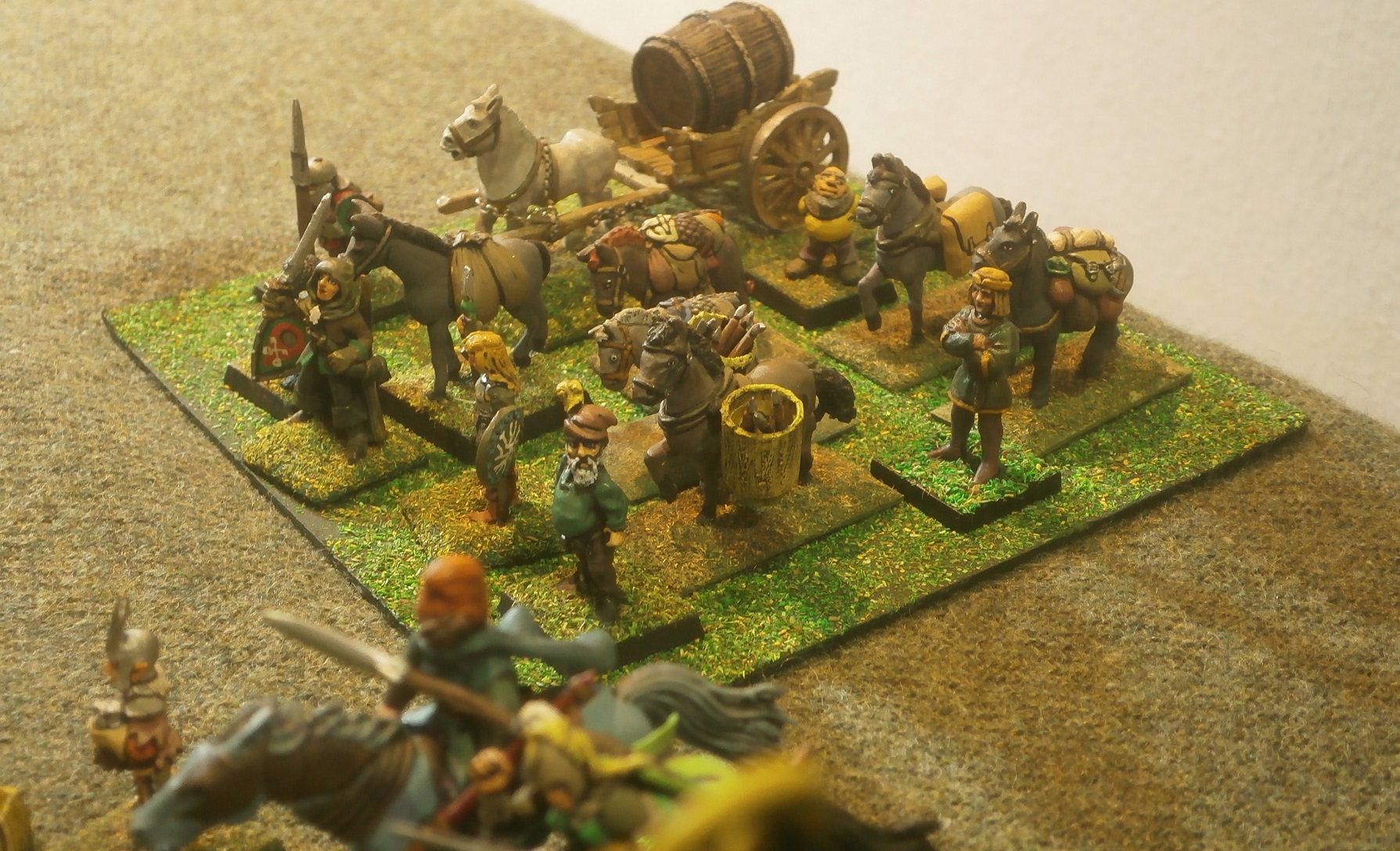
Lord Veluthil perused what part of the field he could see from behind the trees – which was all but those enemy regiments beyond the ruined church and central woods upon their left flank.
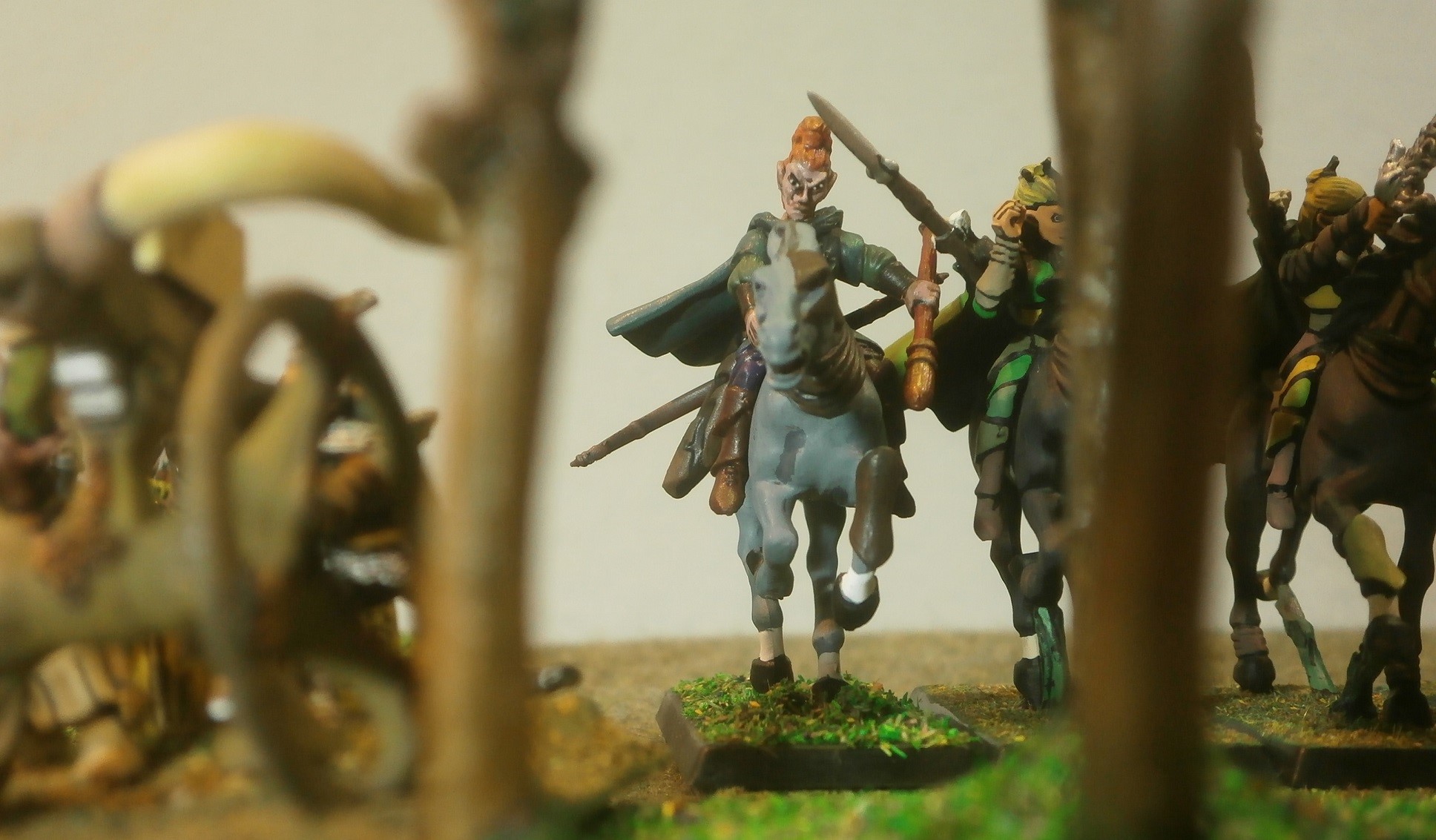
He rode with a company of horse-archers …
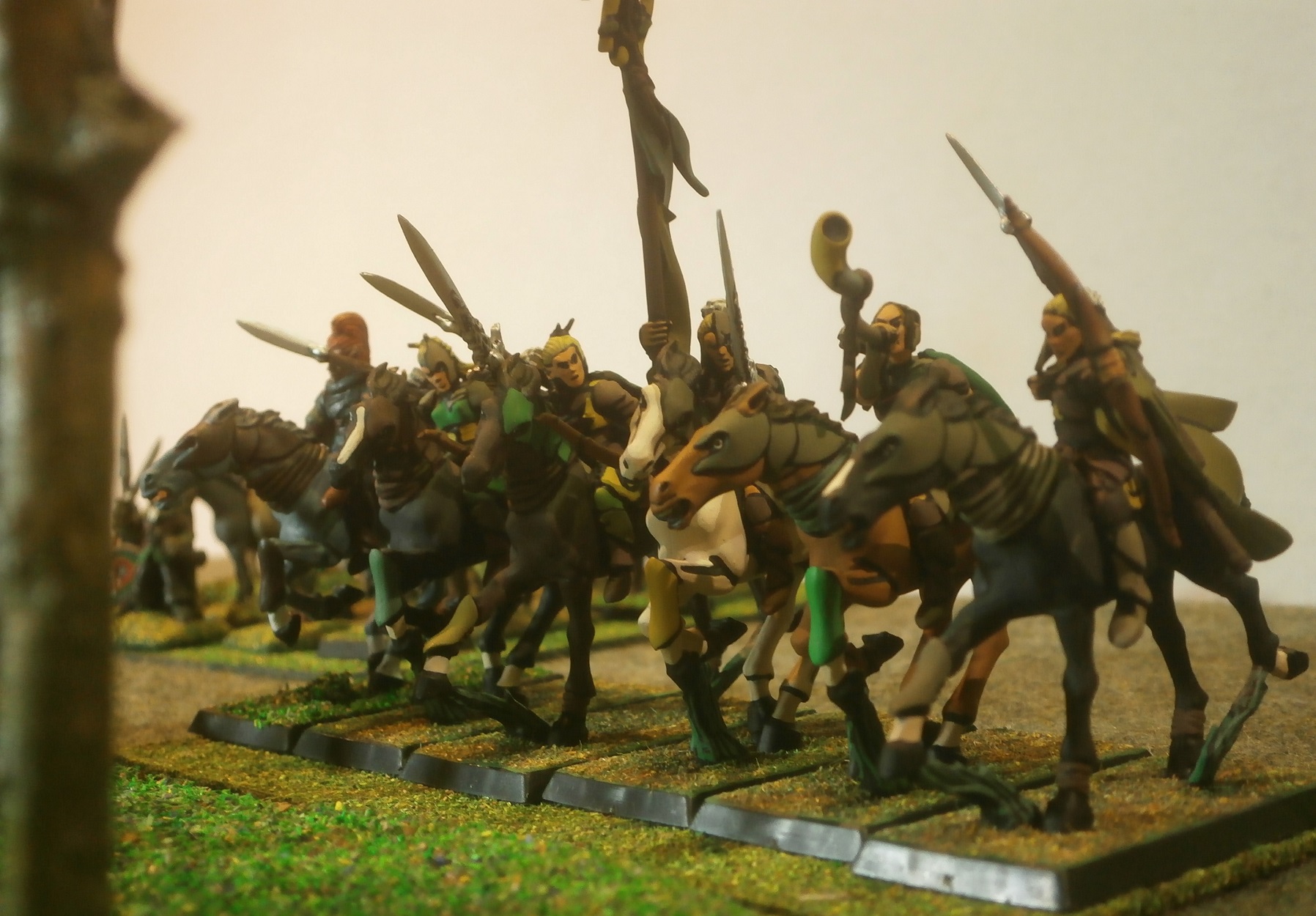
… and so was guarded. His magical prowess was to prove impressive, but of course, as is nearly always the case with such slippery and unreliable energies, insufficient to grant us victory.
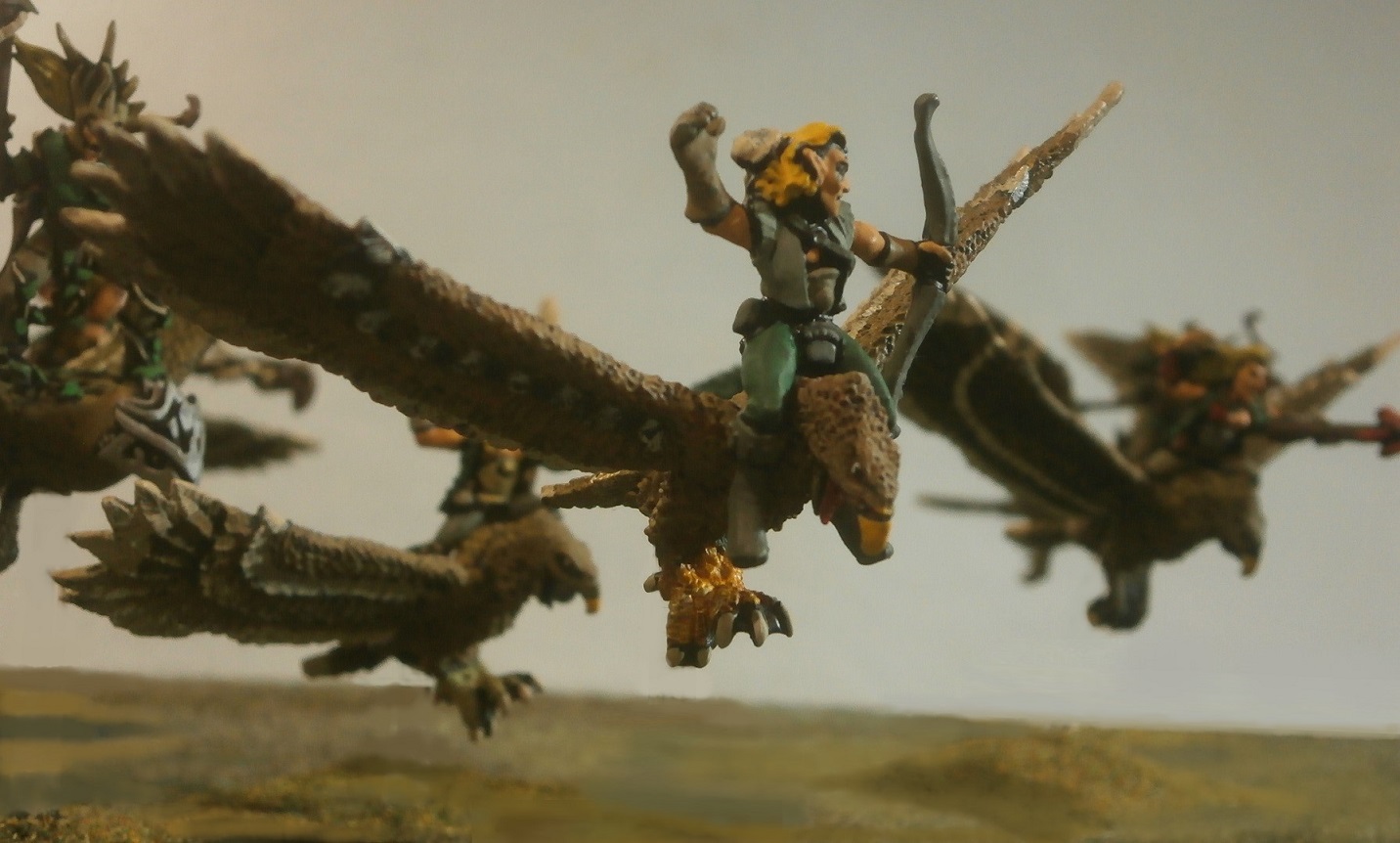
The elven wizard Ascal Arconvale and her war hawks were not to be seen, having been ordered to fly in a wide arc, thus outflanking the foe, in the hope that they might prove a crucial distraction, or better yet, able to deliver a deadly strike at the foe’s rear, just when such was needed. But I could hear brave Thurdral and his steam engine flying out upon our far left …
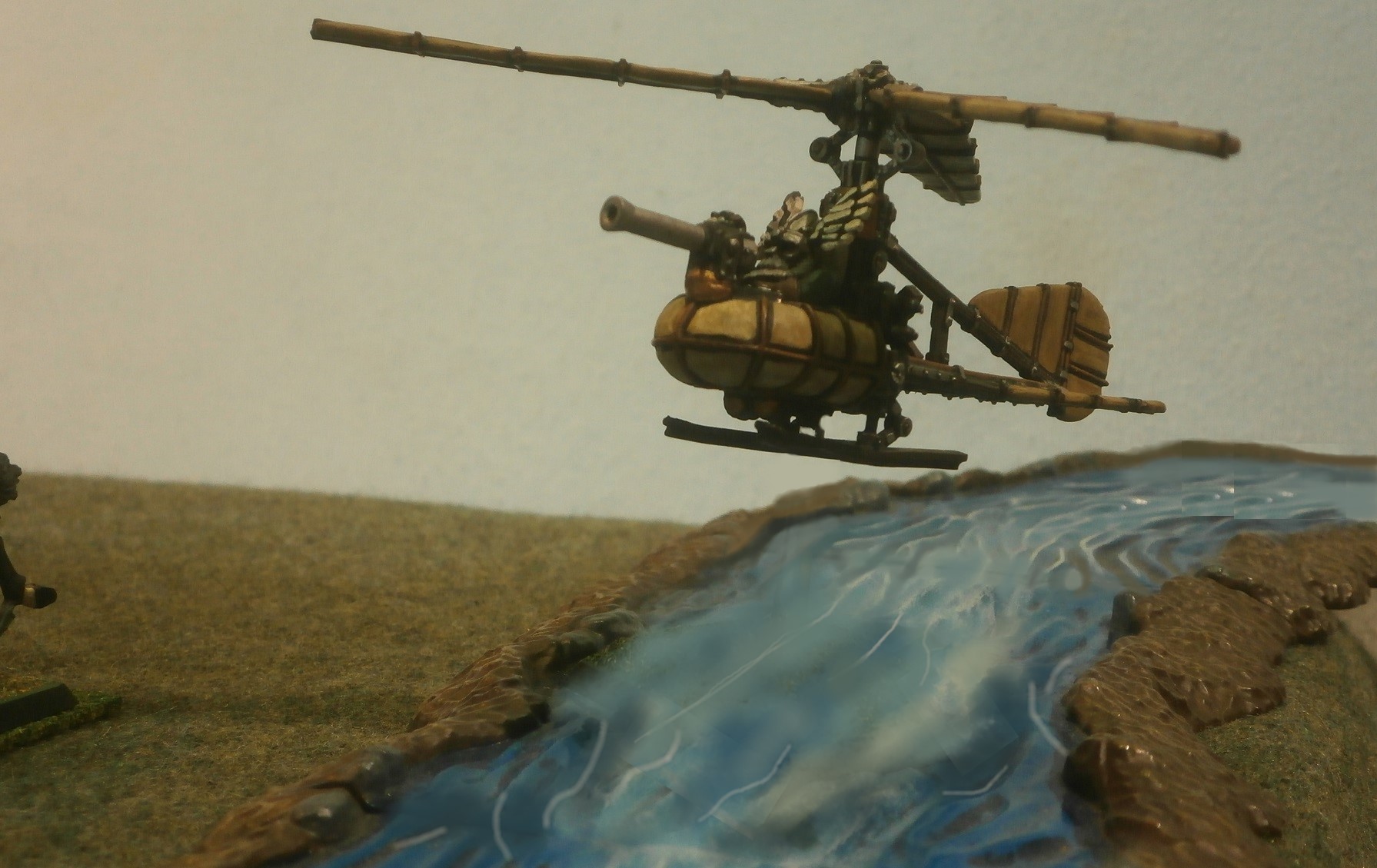
… moving where only he could move, above the river itself.
And so it was, we faced the foe, hoping, at best, to maul them so severely as to thwart their further advance upon Tilea; and, at least, to slow them sufficiently so that our reinforcements might join us. And if the latter was all that we could achieve, then we had to do so with the least loss to our force as possible, for otherwise the reinforcements would not strengthen us further, but merely partially replace our losses, leaving us no better able to face the foe in our next engagement.
…
The Battle of Bisavera (A Battle Report)
A continuation of the letter to King Jaldeog of Karak Borgo, writ by Darnaec Whitmail (after hasty consultation with several of those present at the recent fight against the ratmen beside the River Bisavera).
The enemy wasted no time in beginning their advance – and what with their numbers, why would they hesitate?

Despite their haste, the elven scouts on our far-right flank gained the high ground there, ahead of our battle line, seeking thus to better the opportunities for their archery.

In the centre of the enemy’s line, a great swarm surged onwards, to the sound of cracking whips.

Hundreds of slaves and giant rats moved almost as one, and nimbly, heralding that each was keen to reach us.
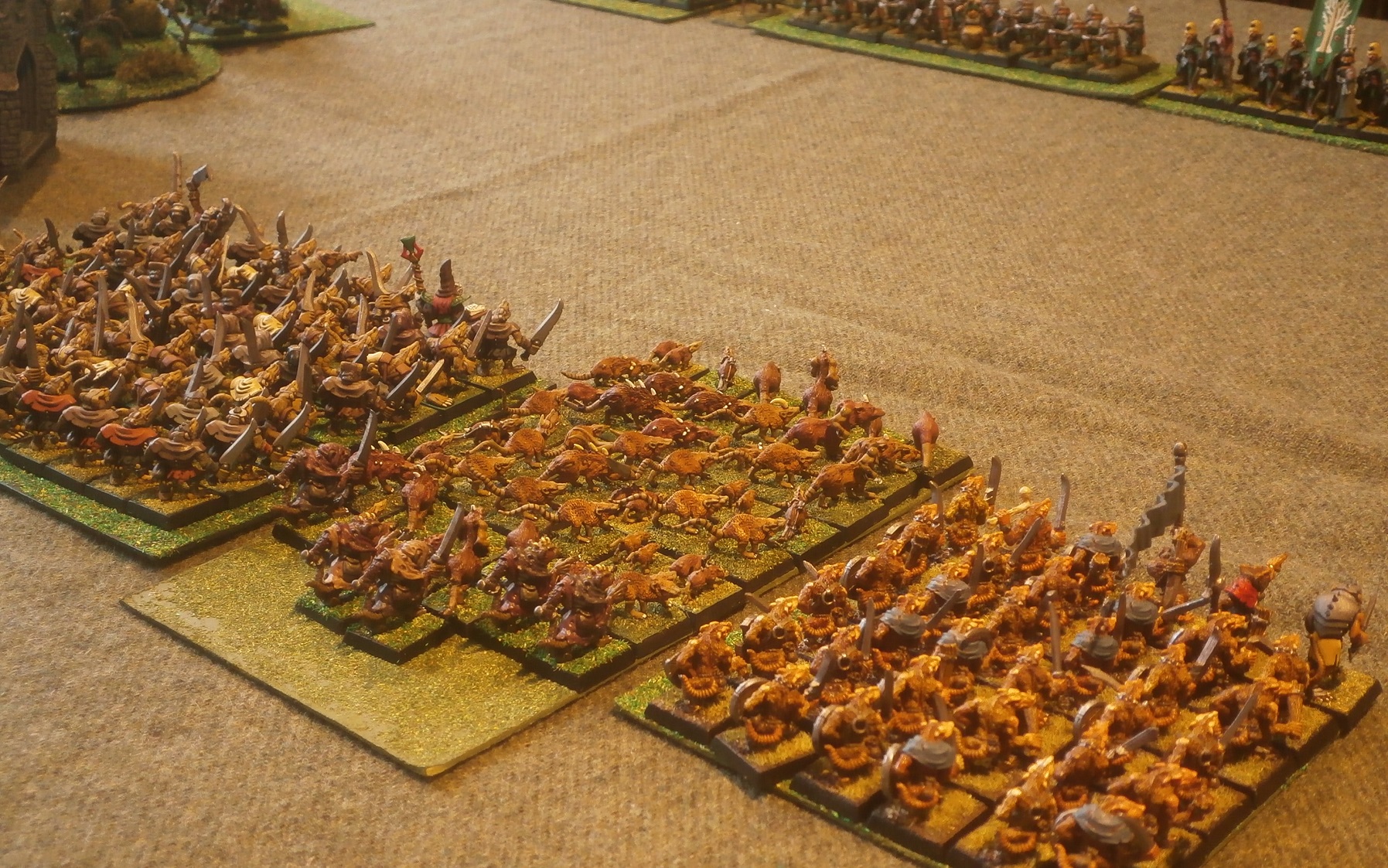
To their left, beyond the ruined church, the enemy’s warriors seemed a little more reluctant to draw so near, despite their considerably more imposing nature.

We did not know it yet, but the regiments on that side were to prove considerably less willing to join in the fight than the rest. Not so the men-slaves being driven up to and through the church ruins, however – though they were initially slowed somewhat by the need to negotiate a way past the crumbled walls.
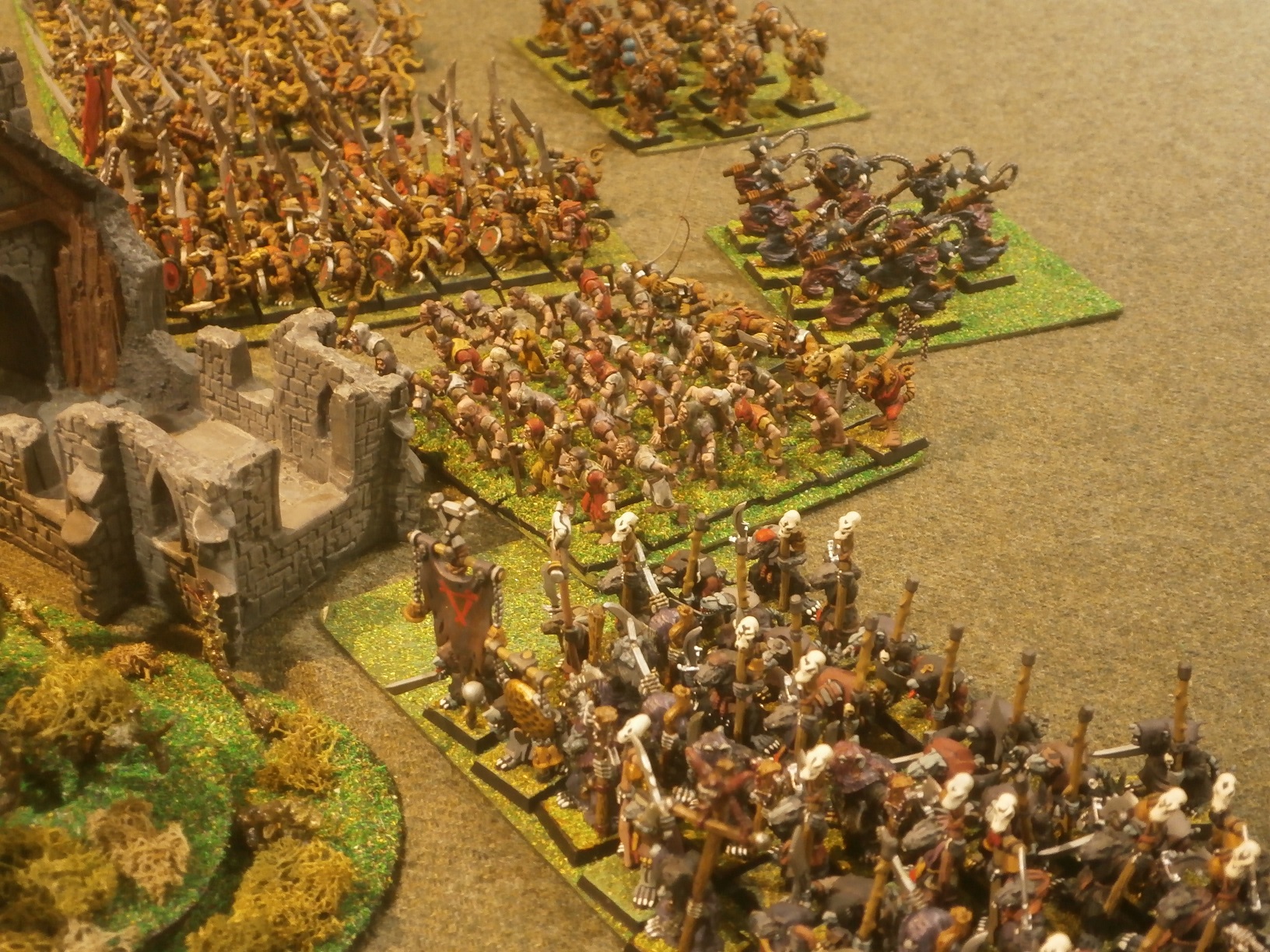
What made their left-most regiments so trepidatious is debatable, for we had little to offer in the way of fighting strength along the entire length of our line, although I did wonder if the foe was hoping to win victory with the loss of only his most dispensable rank and file.
The Seer Lord Cralk had a clear view of almost our entire line. He clutched an arcane staff in one hand and in the other a large, open book …
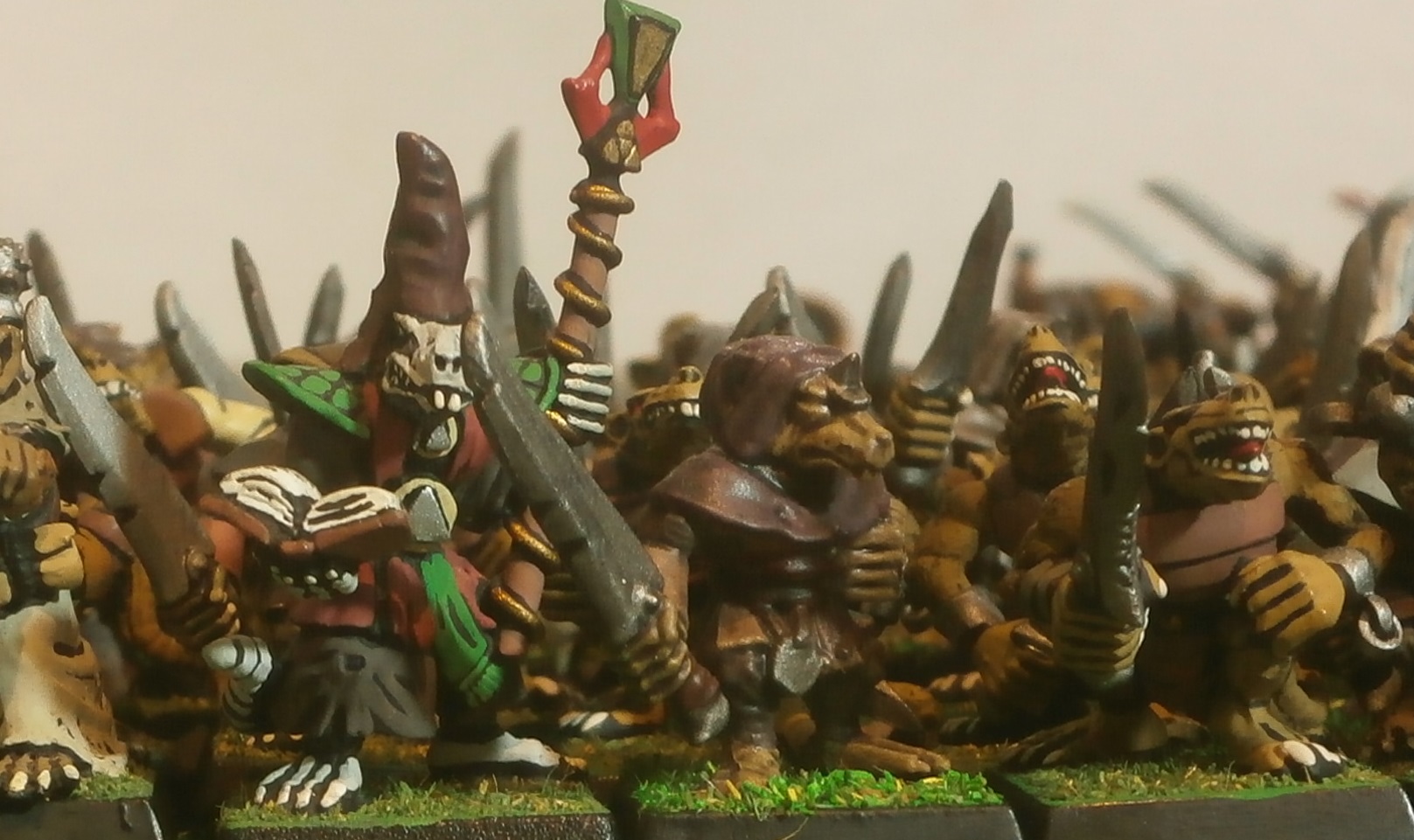
… which I presume he employed to read the words required to conjure magical lightning upon the Glade Guard directly to my company’s left …

… killing five in a most horrible manner. Dissatisfied with this, we could hear him screeching as summoned more magic to spew a fire at the same elves, killing six more.

The elves proved braver than I had expected, for they barely flinched at such losses, and simply stood their ground awaiting the command to loose. I did hear muttering from among the ranks of my own quarrellers, but perchance they, like me, were merely commenting on the elves’ unexpected steadfastness?
The elven scouts on the hill sensed the evil intent of a conjuring priest among the robed ranks of the ratmen monks.

That priest gesticulated strangely as he attempted to curse them, but was foiled by Lord Veluthil, who had promised the other magic users before the battle that he would attempt to dispel the worst of the enemy’s spells. It is, I suppose, possible, that the foe’s o-er cautious advance upon that flank was due to a desire to favour magic and machinery, and thus to cause their harm at a safe distance.

If so, then it was a most foolish inclination, for had they simply marched at full pace as the rest had done, so that their whole line had hit us at once, then the sheer weight of their numbers would have left us no room to manoeuvre and brought certain, quick ruin to our cause. I do wonder now if this Cralk is inexperienced in battle, or has become overcautious because of his previous experiences?

But in magical ability he does not lack, for Lord Veluthil told me that despite the winds of magic having been almost wholly sapped, the grey seer still managed to conjure a warpgale to sweep the length and breadth of the field, thereby hindering all flight, such as that of Thurdral’s flying engine…
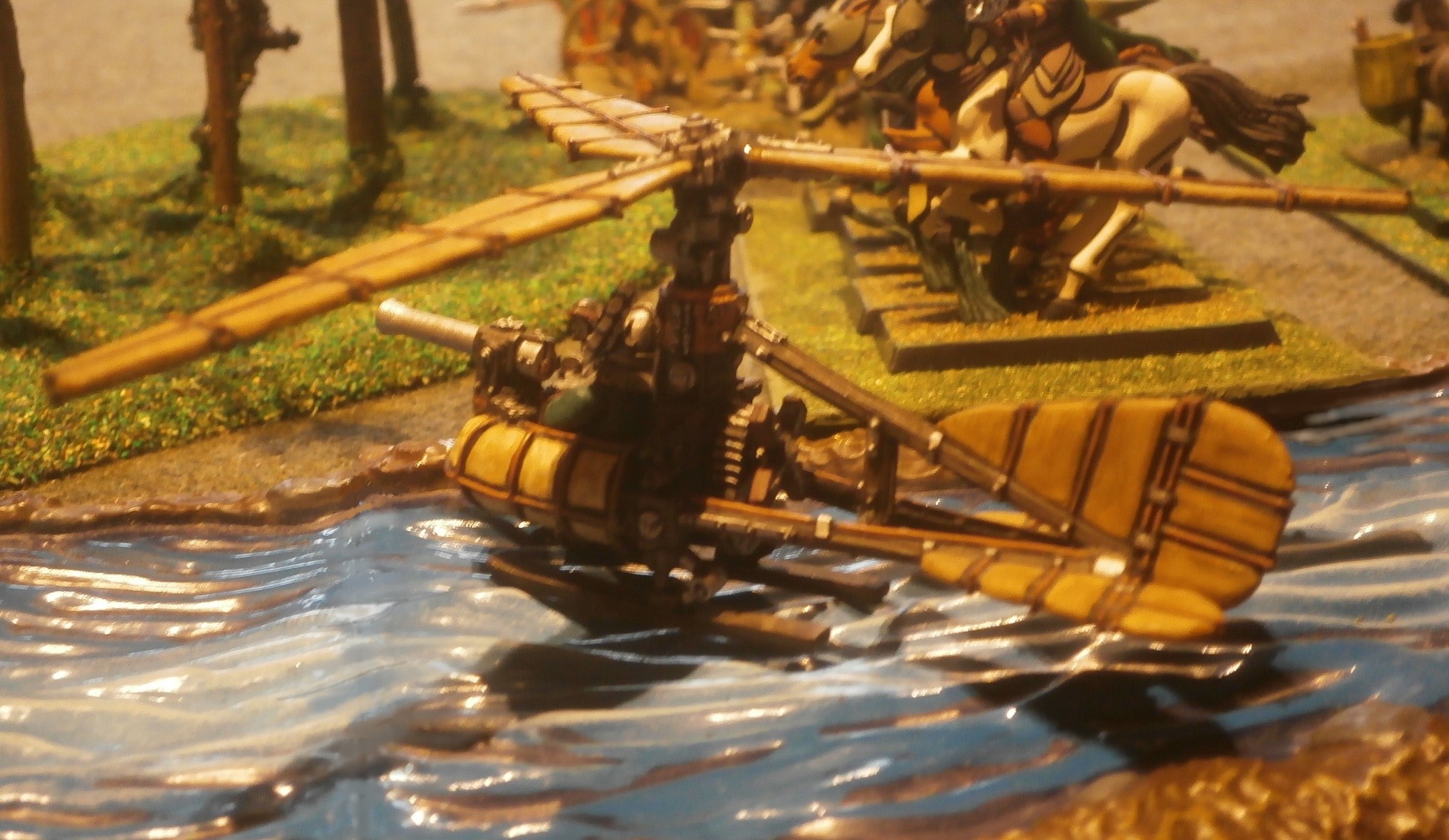
… and even that of our arrows and bolts. As the steam machine struggled to stay above the waters, the enemy’s jezzailers fired upon it. The first shots sent it into a dizzying spin …
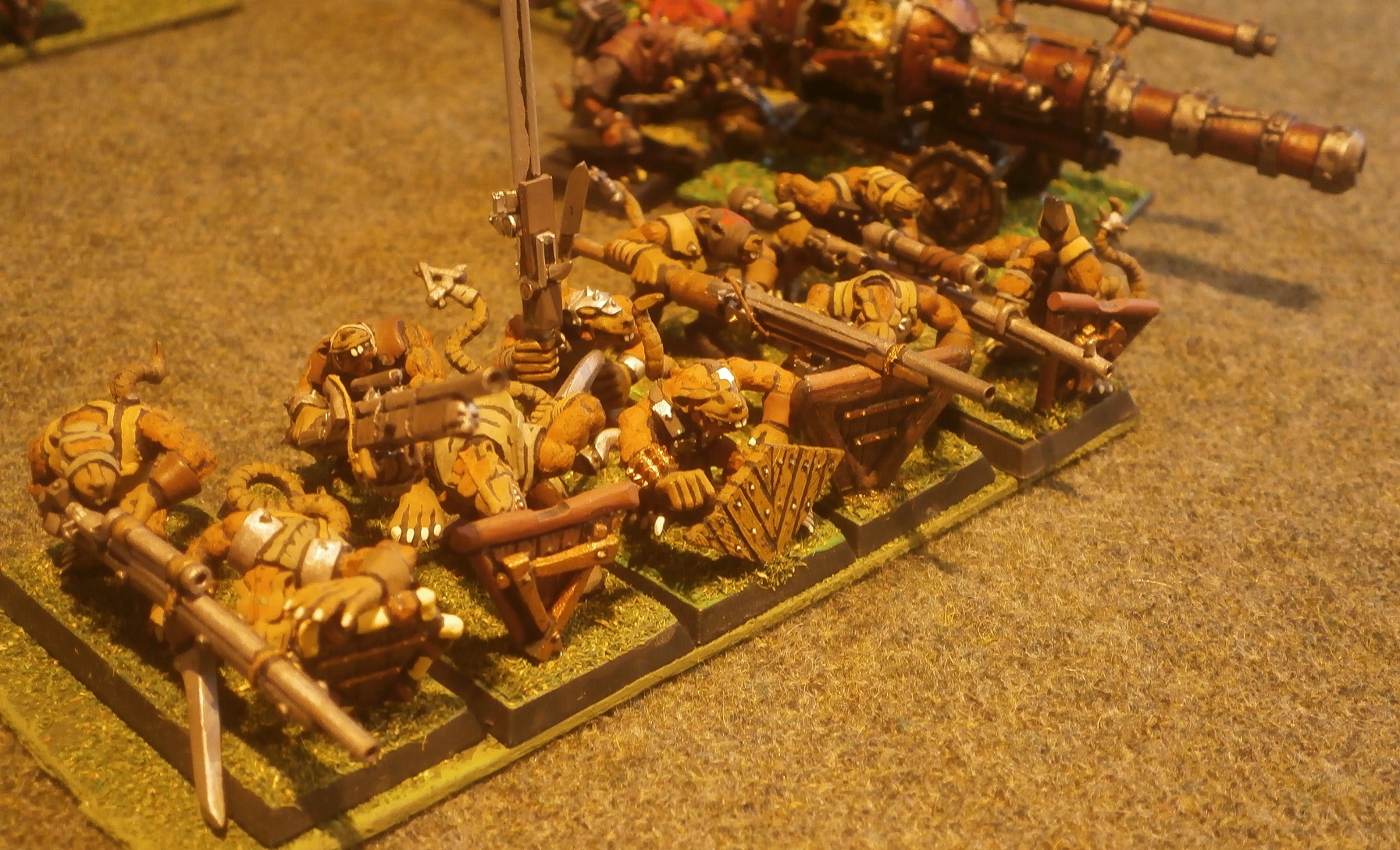
… then the bullets from those at the rear caused it to crash into the waters, there to sink.
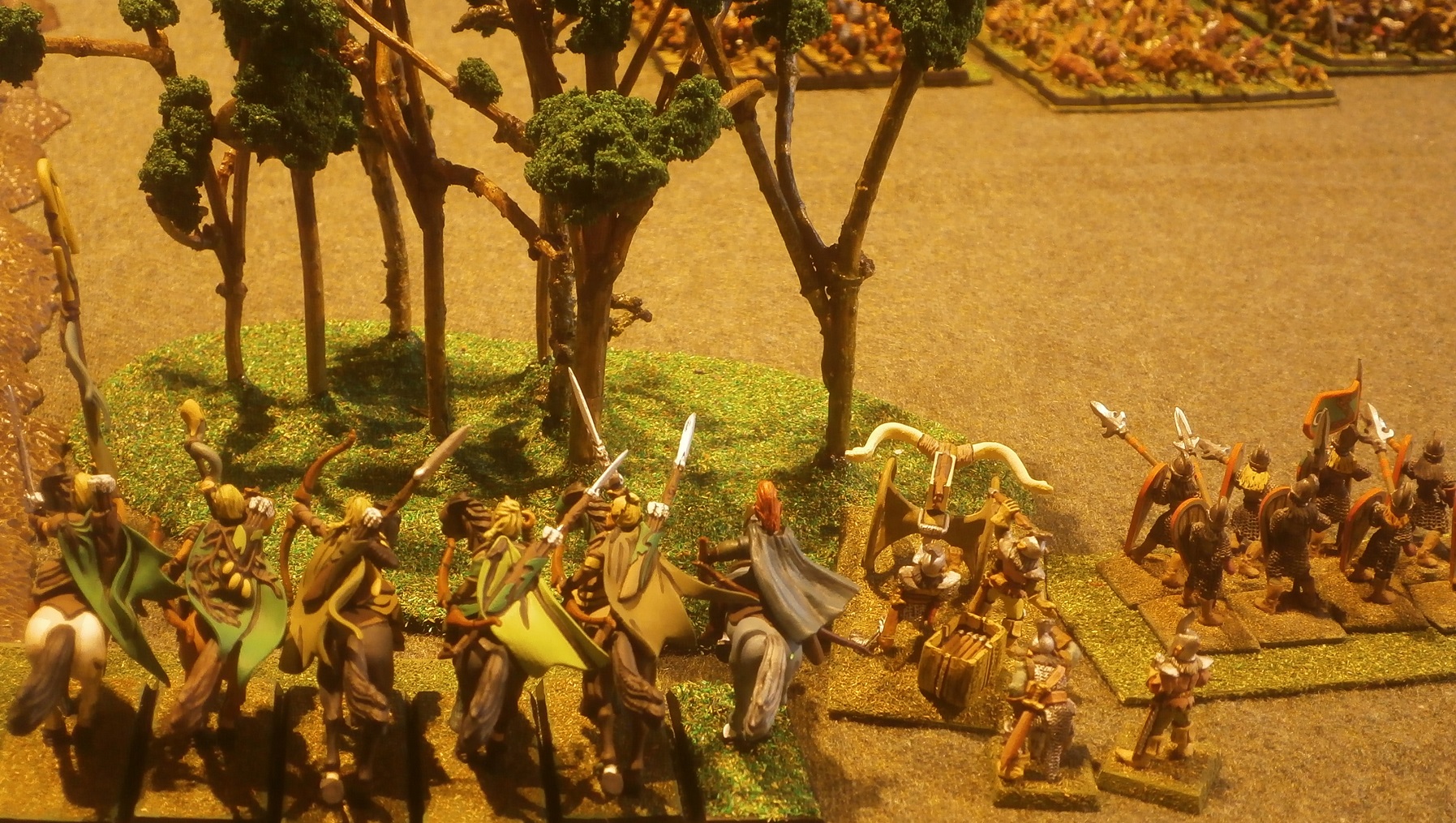
Lord Veluthil watched from behind the trees, and must surely have been dismayed to see the enemy’s advance, to feel the hindering winds of the storm-enchantment and to witness Thurdral’s crash. In truth, every soul in our already weakened line was surely wrestling with a foreboding sense of dread.

Yet despite this, the elven riders upon our far left rode onwards, boldly traversing the trees towards the foe. I confess, I knew not what they thought they might achieve, beyond felling a handful of the enemy before perishing themselves.
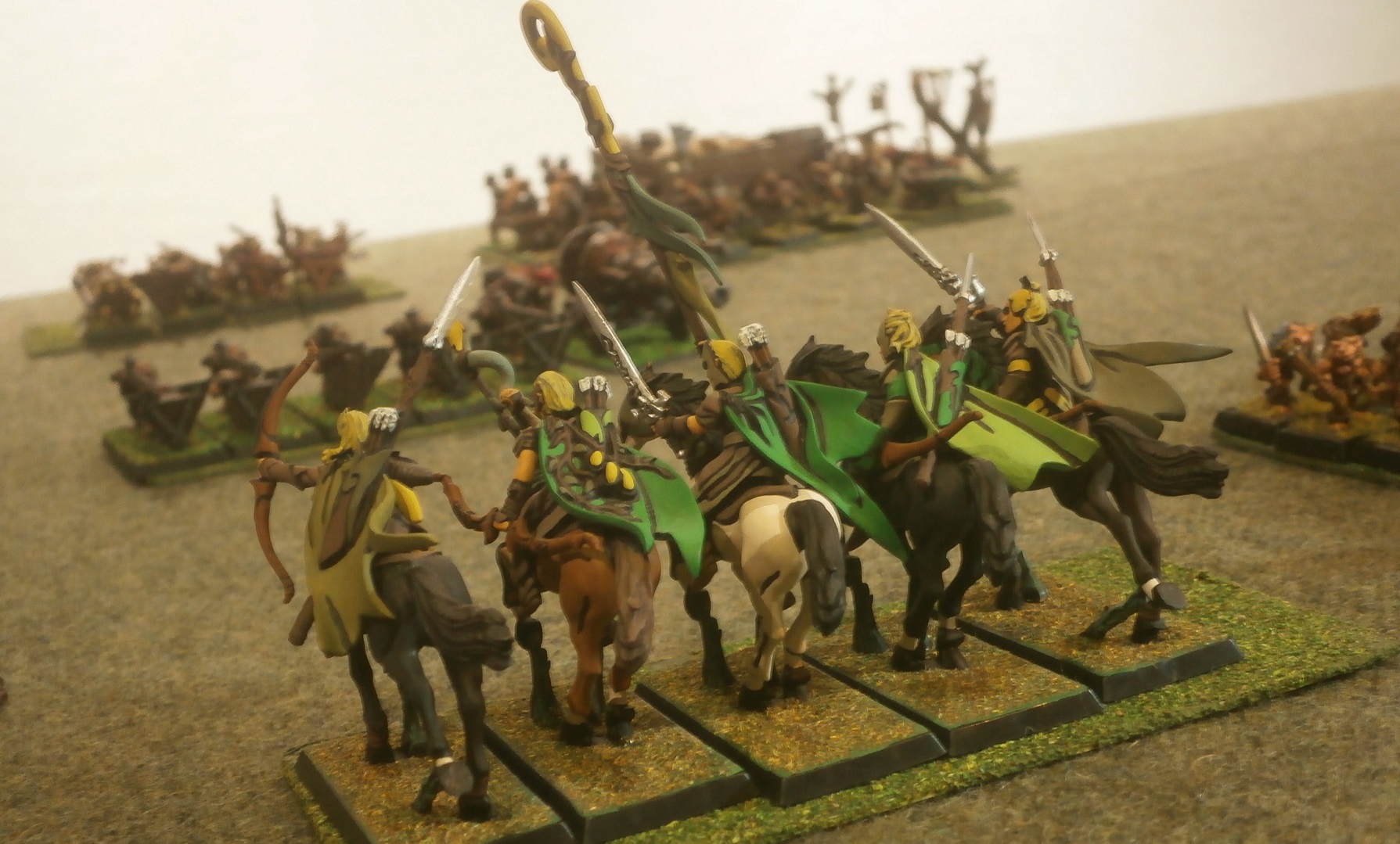
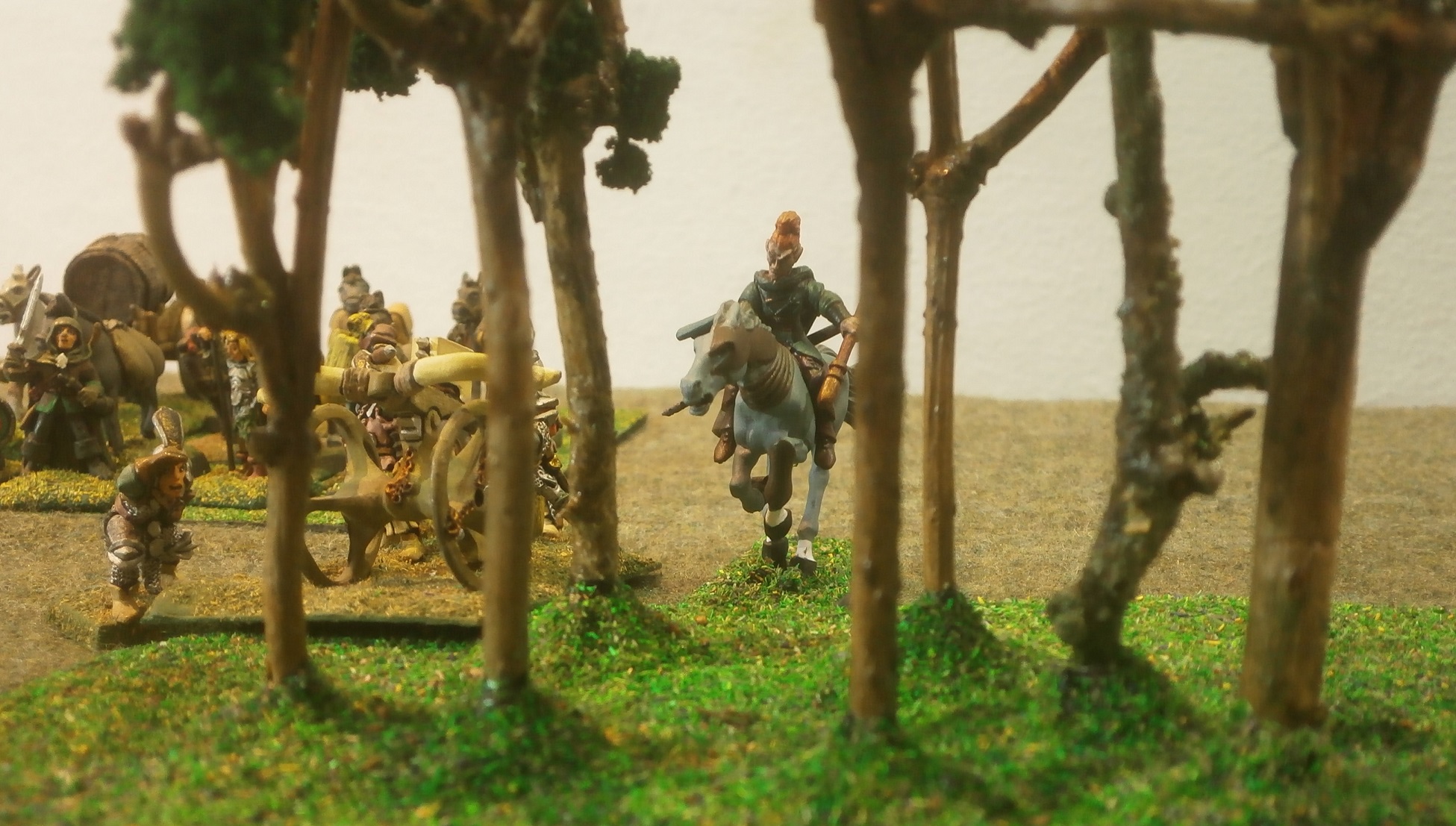
It then occurred to me that the enemy’s baggage was ahead of them, and I did wonder whether the riders intended some particular mischief, what with the presence of that mysterious trove which the magic users had sensed as soon as the enemy came into sight.

But it seemed to me that the riders had insufficient numbers to successfully steal whatever was carried there, and so I assumed instead they were most likely hoping to distract the foe – to draw some of the regiments from their line and so lessen the threat facing the rest of us.
Not willing to allow the courage of elves to outshine that of dwarfs, Thane Narhak now led his warriors forwards, bidding me stay where I was, the better to shoot. Whether he had decided there and then, or earlier, it was plain that he intended to do what he could to slow the enemy, thereby hoping to grant the rest of us enough time to withdraw in sufficiently good order to reach the camp alive. I doubt there was anyone present, neither dwarf, elf nor man, who still believed that marching from our defences had been a good decision. Indeed, I began to wonder if the enemy had lured us away quite deliberately just so that we might find ourselves in exactly this predicament.

As Lord Narhak advanced, the rest of us determined to do what we could to harm the great mob of slave warriors at the enemy’s centre, especially as Cralk himself was with them.

But before we could begin our harms, Lord Veluthil, now alone …
… brought powerful magics to bear upon that same enemy, causing an ethereal convocation of flames to wash over them, killing no less than fifty!

He spoke afterwards of this spell, revealing how the foe had used magics to coil some of the power he had unleashed back against him, stinging him sharply. A pain, he said, he regretted not one jot.
(Game Note: A feedback scroll caused 2 wounds, but one of those was ‘saved’ due to the elven ability to avoid a wound for every successful ‘high magic’ spell cast!)
And yet, the rat-slaves did not flee, which surprised us. So, despite the difficulty presented by the unnatural winds bearing against us, I ordered our bolts loosed against them …
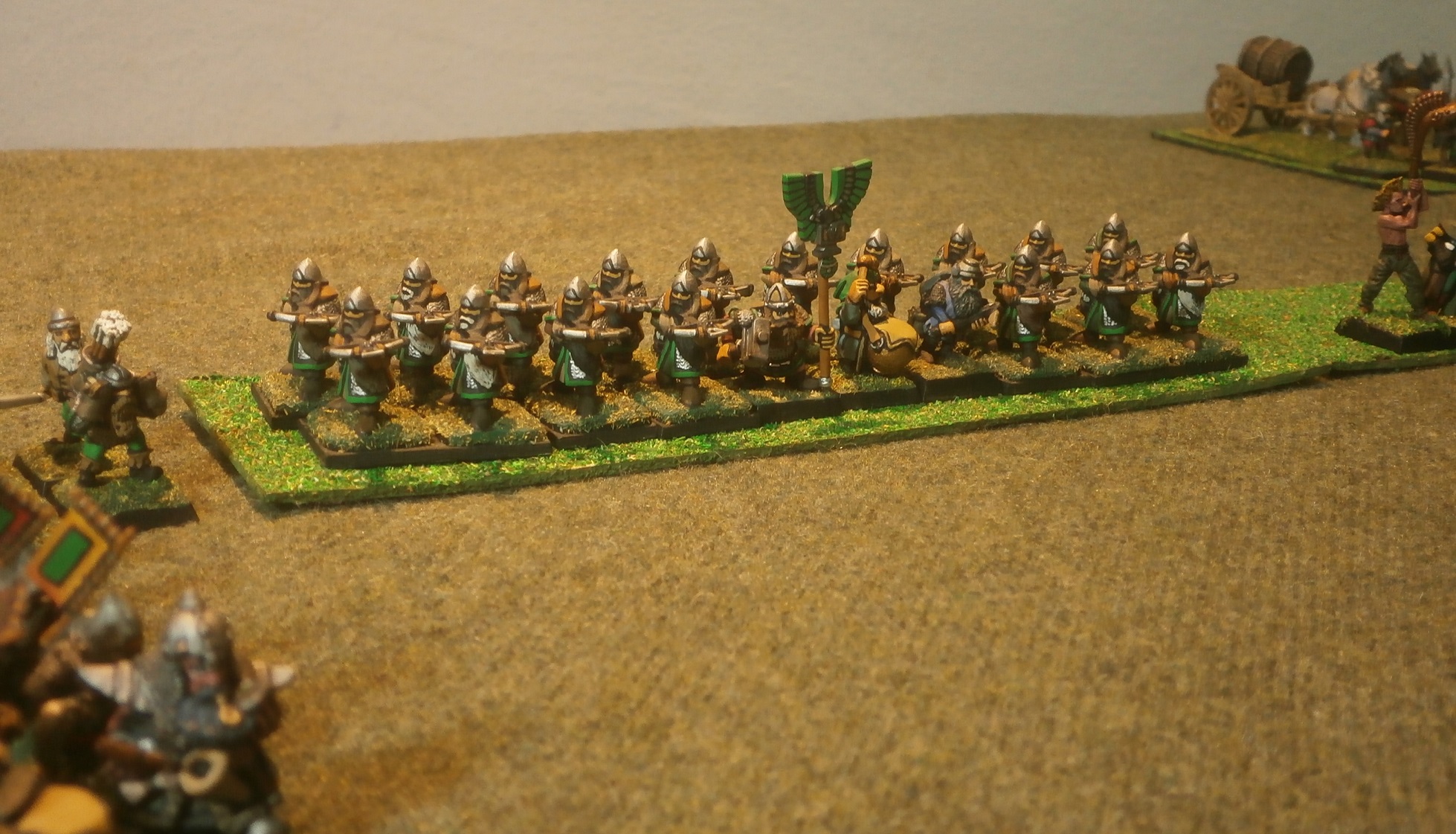
… and so too the elves beside us …
… and the Waywatchers beside the trees …

… killing 11 more! Had the accursed winds not been tugging at every bladed bolt, we would surely have slain all of them.
What few remained reeled in shock. But still, they did not run. Cralk’s hold over them was obdurate. It seemed he had chosen his guard well, for having suffered more than 60 dead, yet still he survived, and those few left alive stood by him!
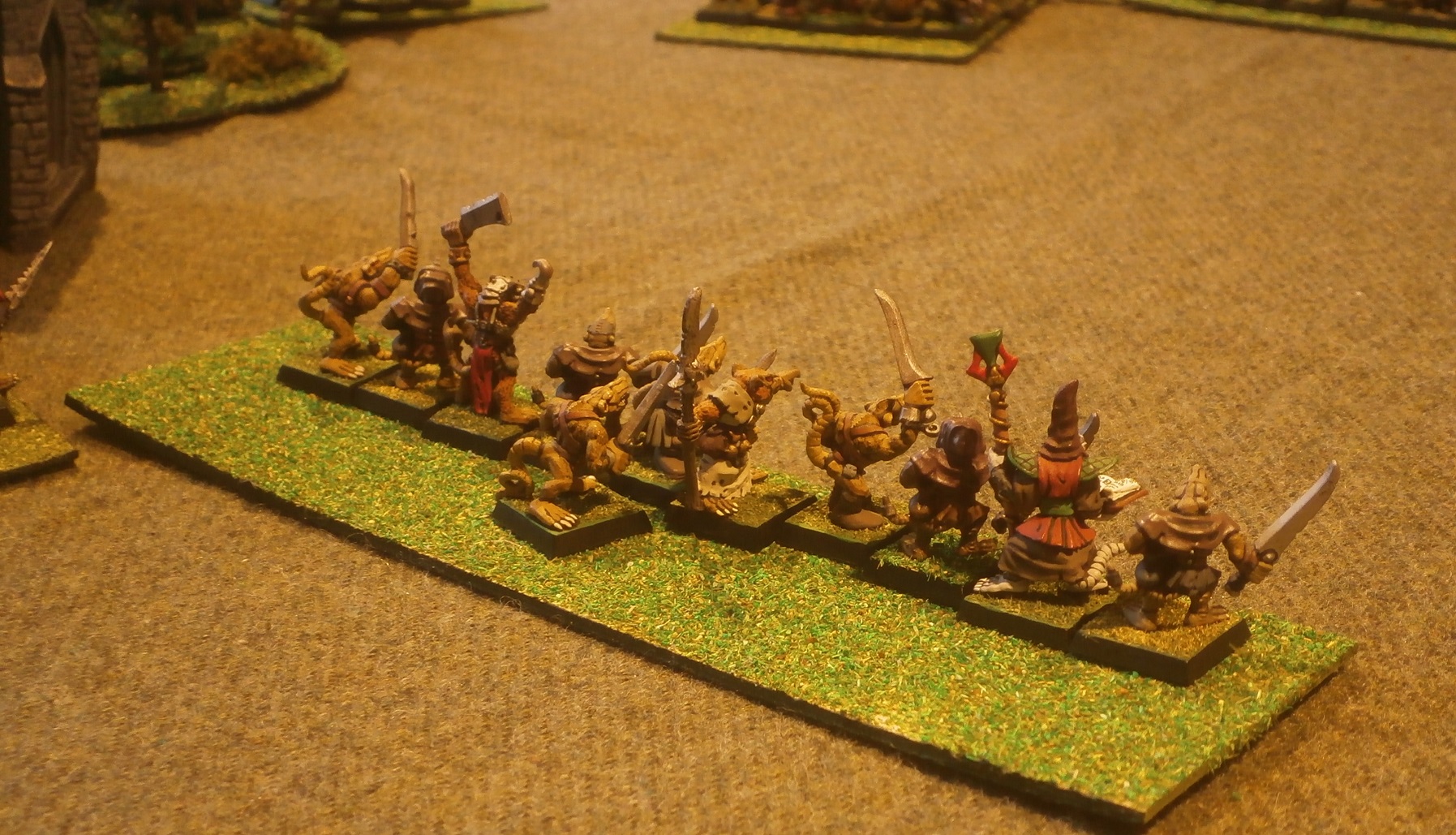
The elven bolt thrower beside Lord Veluthil slew one of the long barrelled Jezzail teams …
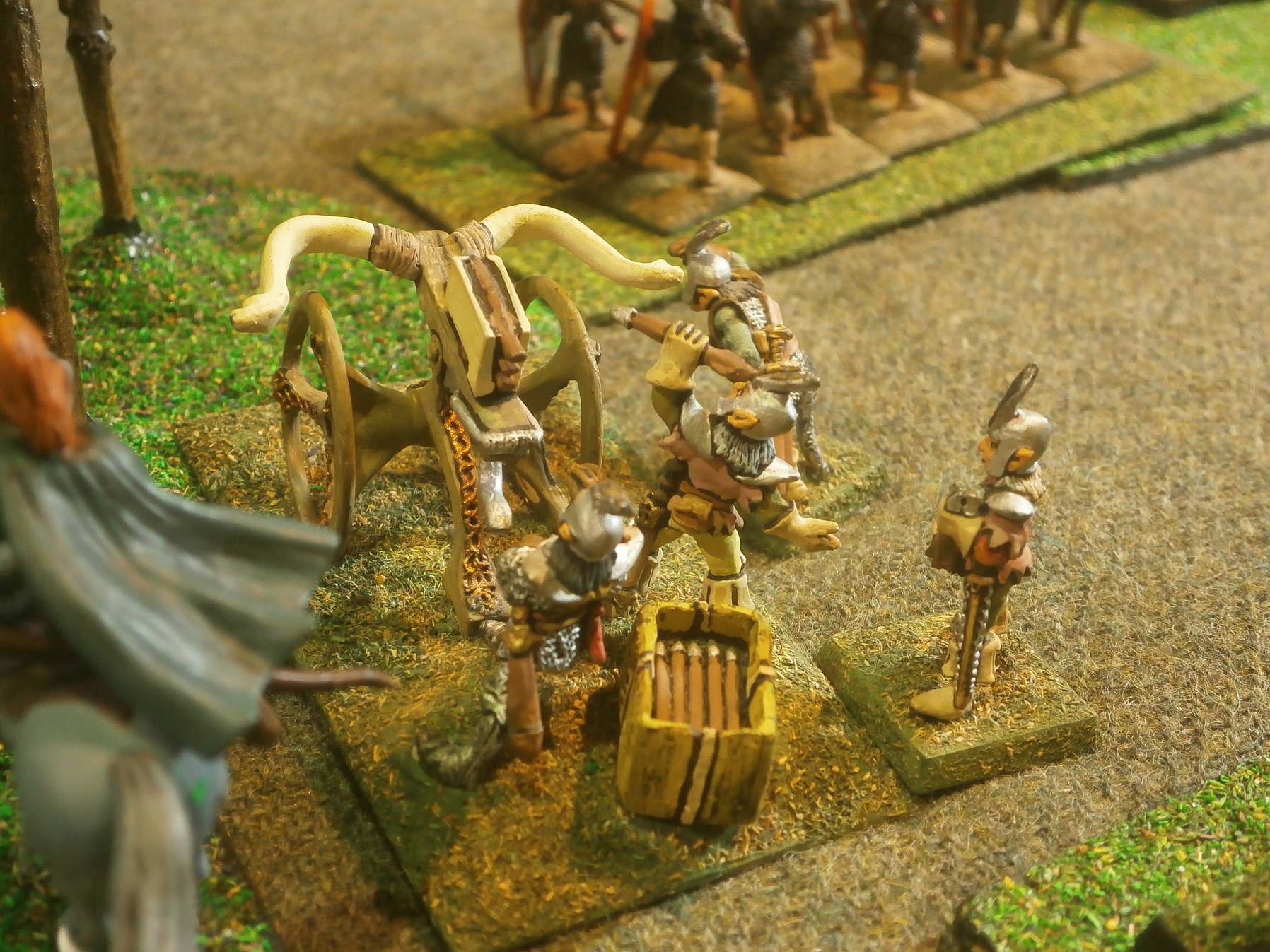
… as did the glade riders, thereby causing the survivors to flee towards their counterparts at the rear.

Our cannon crew spotted the heavily robed, grenade carrying company of ratmen at the rear, and, hoping to hinder them before they could get closer to the riders moving up on the enemy’s right …
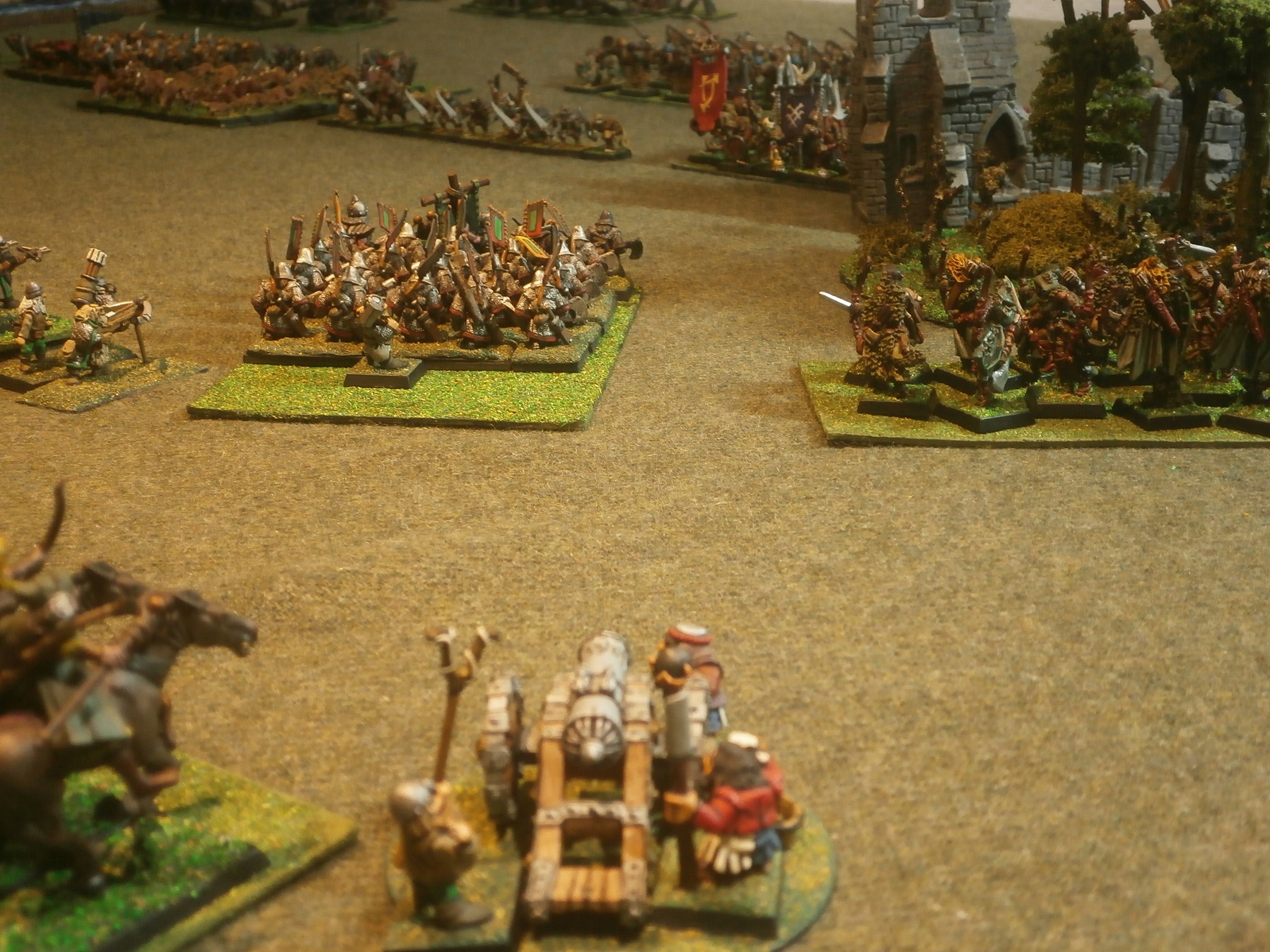
.. sent a roundshot through them, disappointingly killing only one.

Concerned about the advance of the great mob of robed ratmen, the Arrabbiati riders shot at them …

… as did both the elven scouts and glade guard upon that flank, but between them all, their aim thwarted by the preternatural gusts, they took down only five.
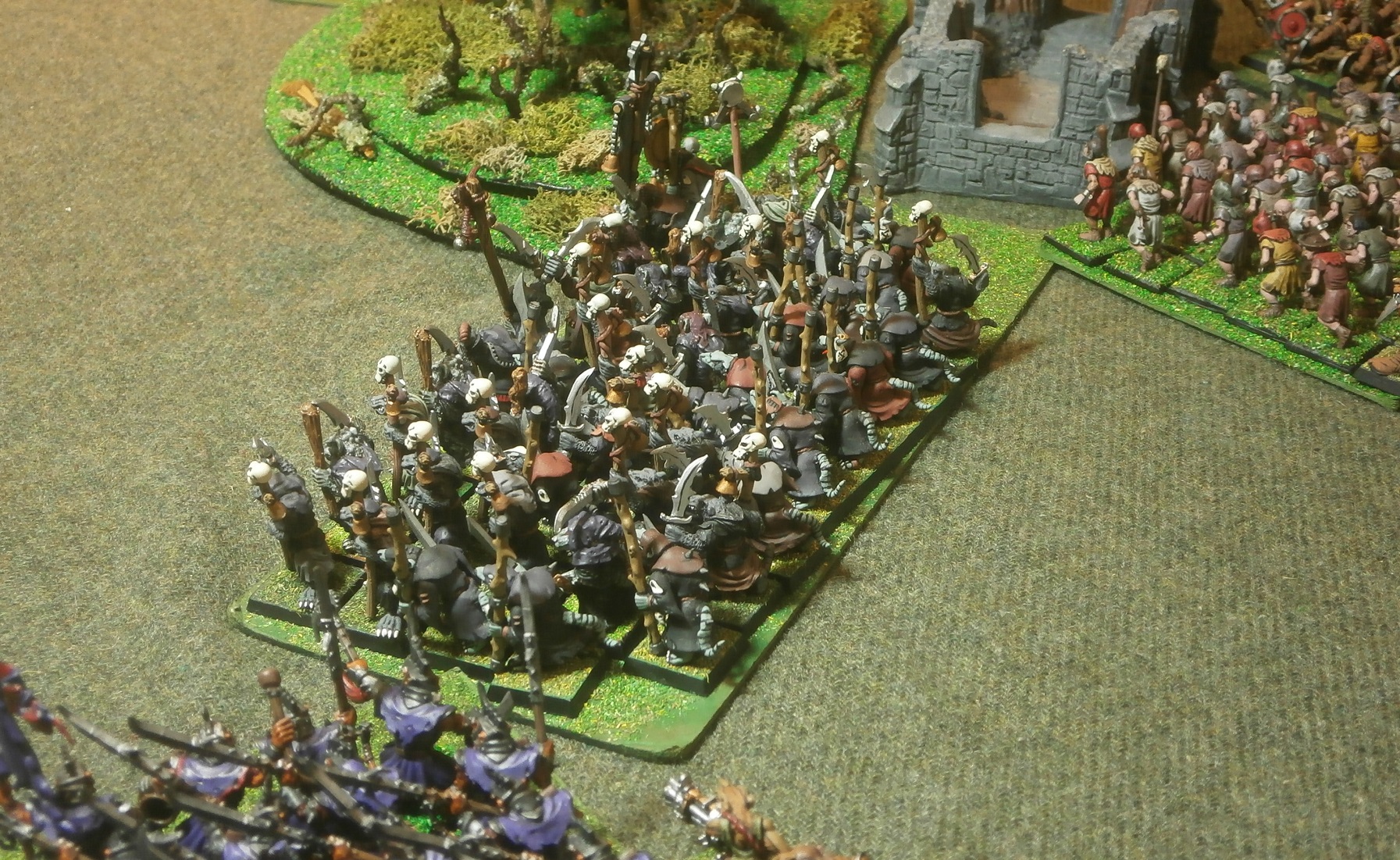
What we had done, all of us, through magic and shooting, was simply not enough. Despite almost entirely obliterating the enemy’s biggest regiment, still the rest came on, in overwhelming numbers, vastly exceeding our own strength.
The robed ratmen now suddenly surged forwards …

… as if to charge the elven scouts, who responded boldly, with more shots.

Their arrows had no noticeable effect, yet the ratmen’s charge faltered, perhaps due to some among them being caught in the roots of the wood their flank was pushing through? I cannot say.
Nothing could stop the giants rats though. The glade guards’ arrows flew wild in the wind, as the great mass of rats smashed into them.
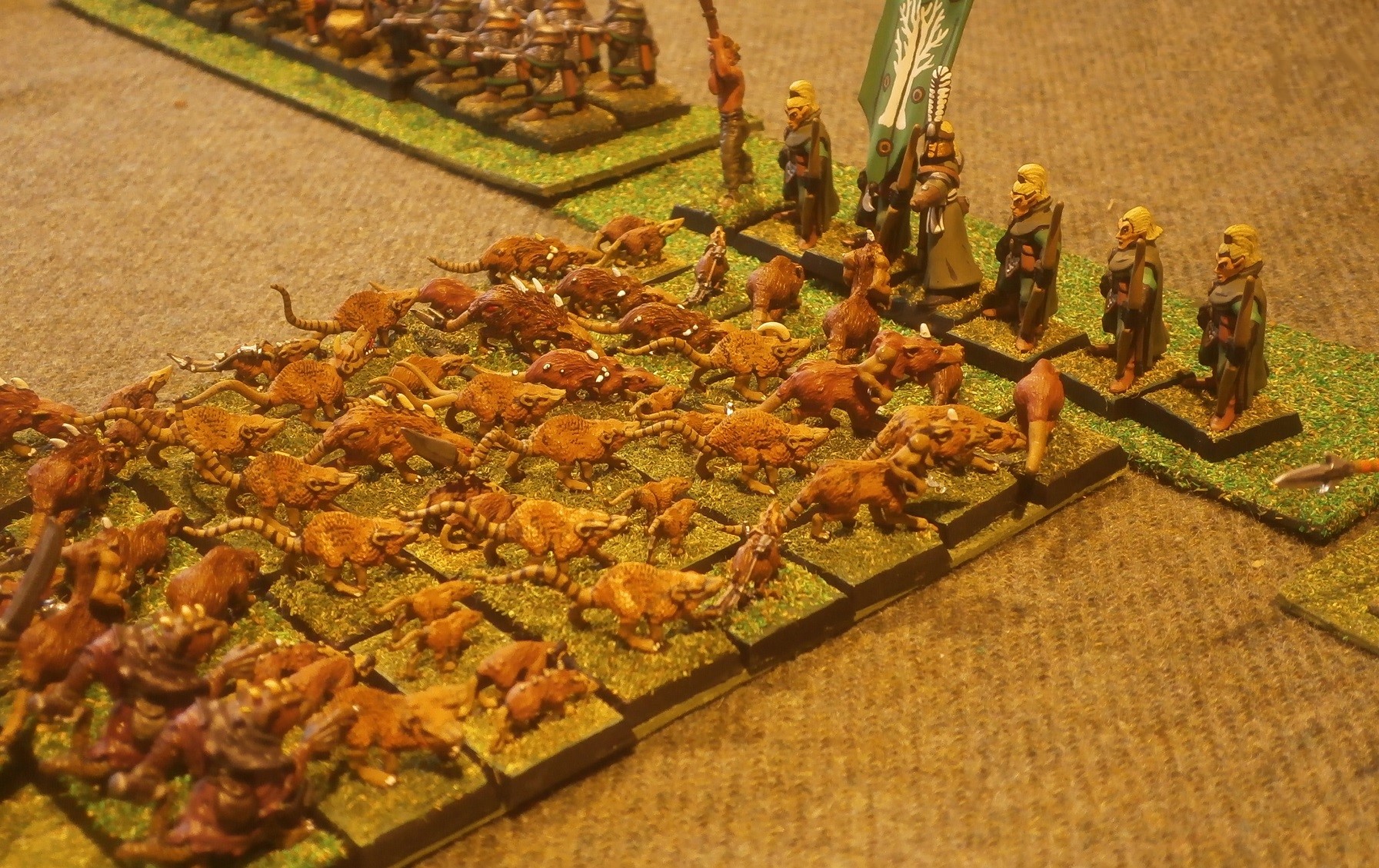
I knew, as no doubt the elves themselves must have done, that they were doomed, for so massive was the disparity in numbers that the elves’ speed and skill with their well-honed blades could not hope to save them.
Beside the ill-fated archers, the Eternal Guard, not presently guarding Lord Veluthil, braced themselves as a mob of slave-soldiers crept towards them.
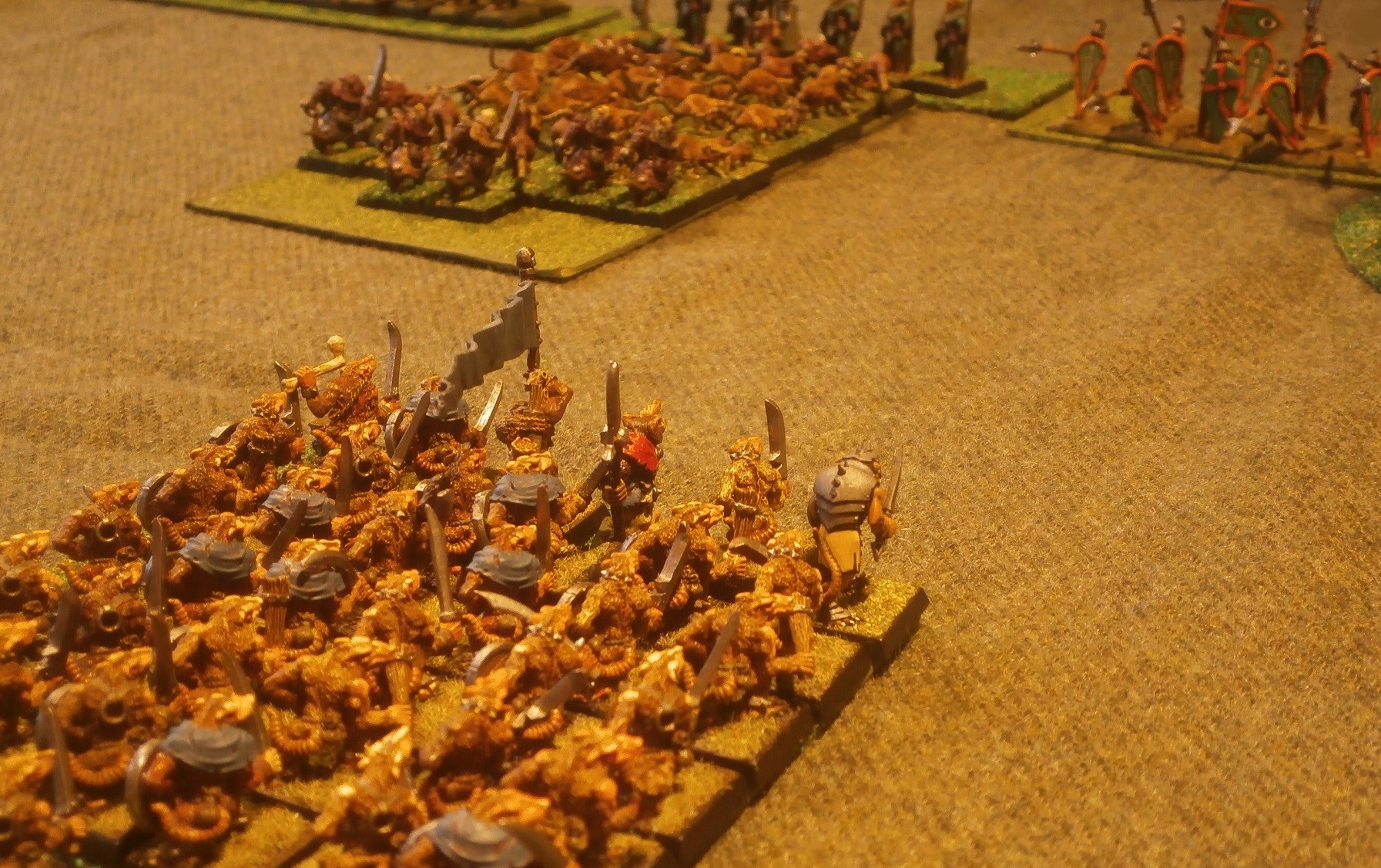
(Game Note: Another failed charge.)
The men slaves were driven through the woods …

… until almost upon the Brightmoon and his Waywatchers.

While the Stormvermin, perhaps the enemy’s most able warriors, and just as large a regiment as several of the slave mobs, marched boldly across the flanking hill towards the elven scouts.

Beside them, one of their strange weapon teams scuttled along the bottom of the slope.

At last, it seemed the enemy were about to take full advantage of their numerical dominance, for such a regiment as this could surely sweep aside any resistance we had to offer, to leave us overwhelmed to the fore and upon both flanks?
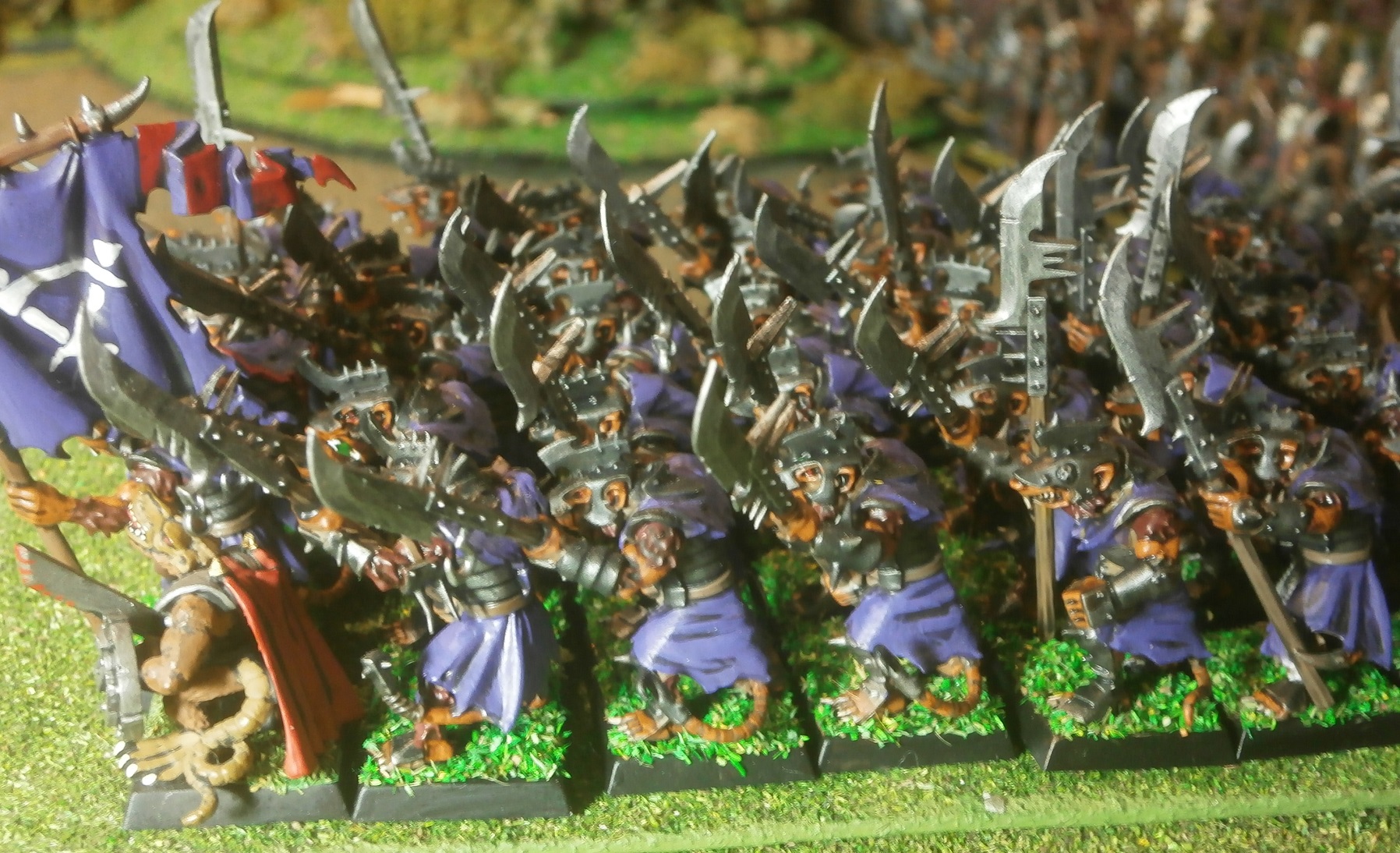
Our march forth was not only a mistake, but one which seemed about to prove fatal. What use was Thane Narhak’s attempted stand in the centre if the enemy was pouring past him upon either side? And what use our bows and crossbows against such numbers, and in such an unnatural gale?
The enemy’s commander …
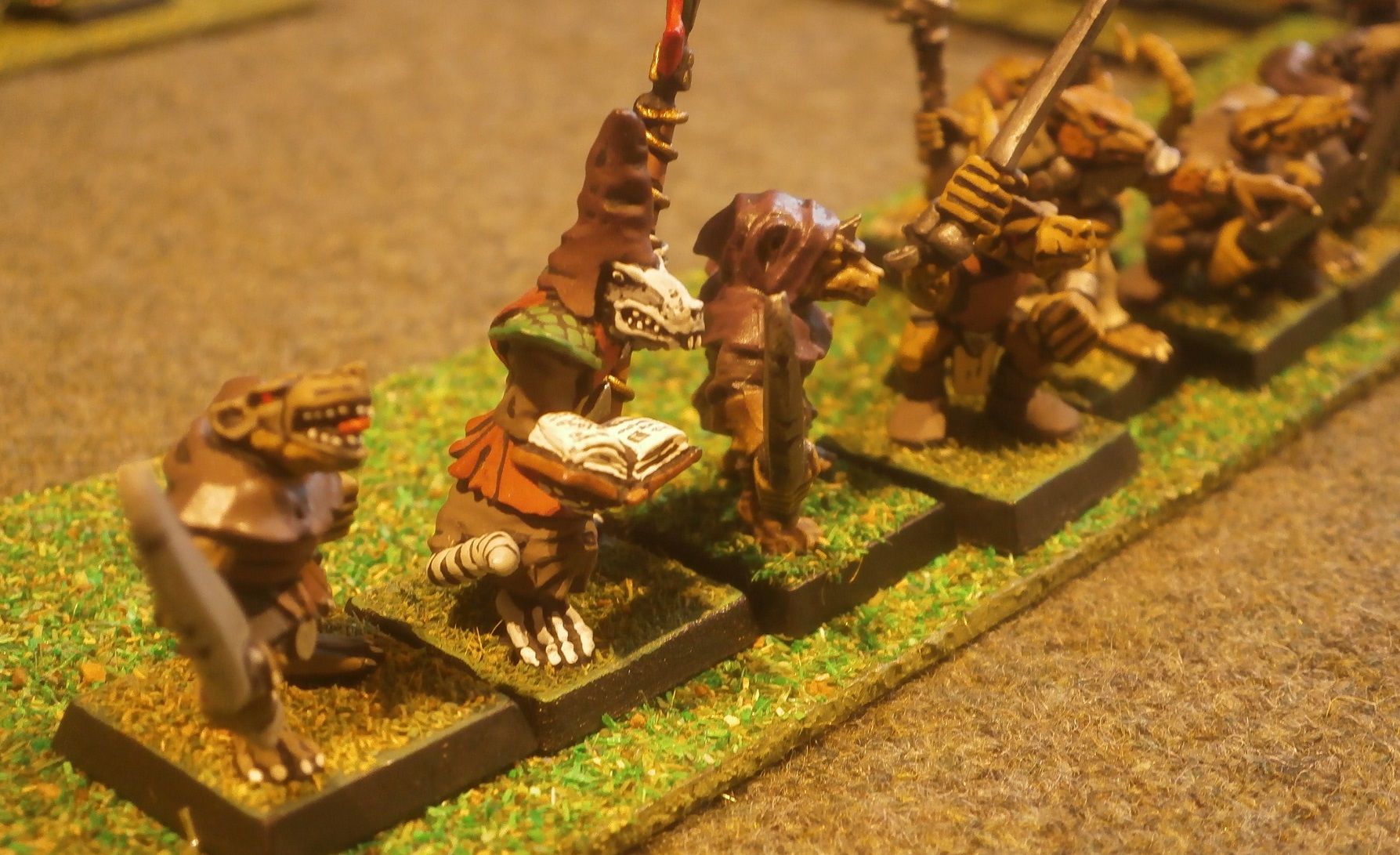
… moved hastily from the last few slaves (who were still suffering from the lingering, deadly effects of the fiery spell upon them), along with another, ferocious looking warrior, to join the armoured column of warriors to the left of him, beside the ruins, no doubt re-seeking safety in numbers (something he could have found wheresoever he chose to run.)

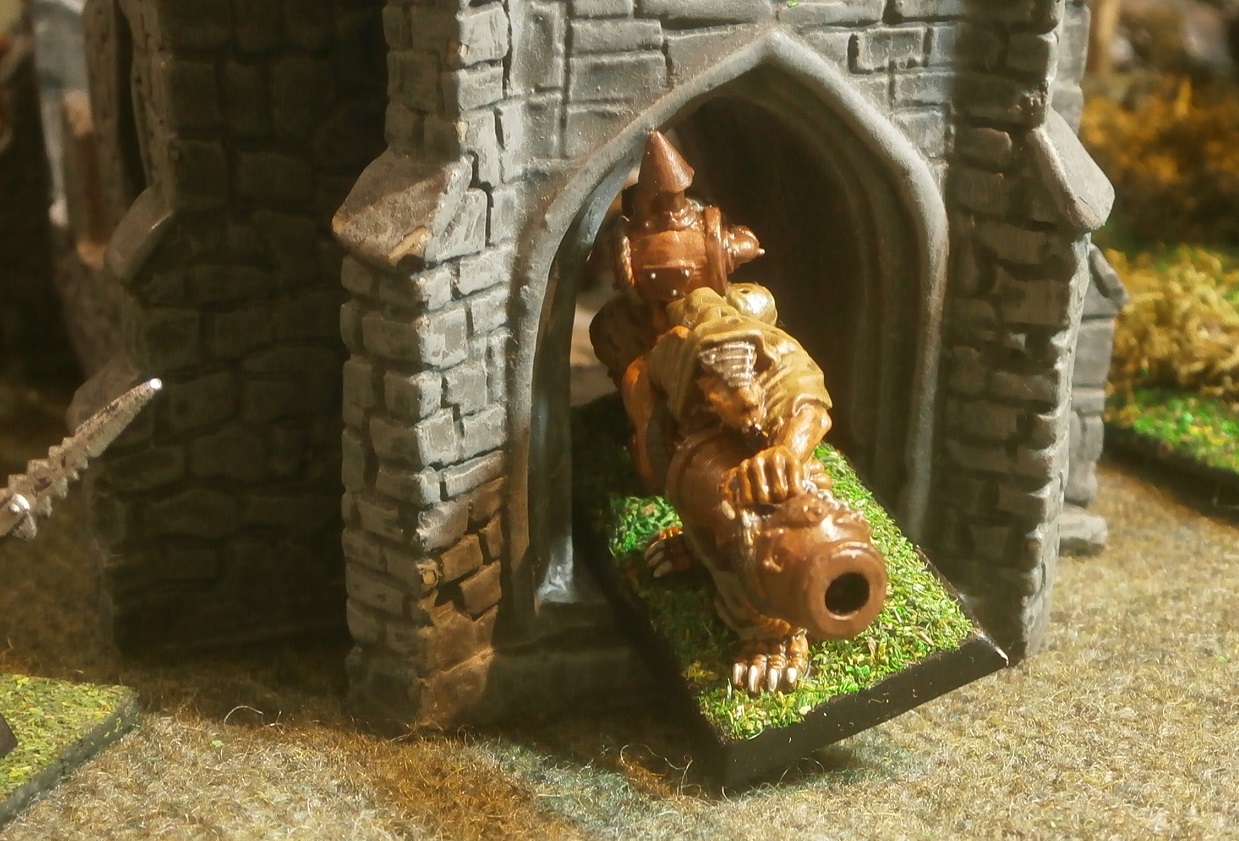
As he did so, another weapon team appeared from the ruins, stumbling forwards with their heavy burden, although yet to unleash whatever foulness their brass-barrelled contraption contained.
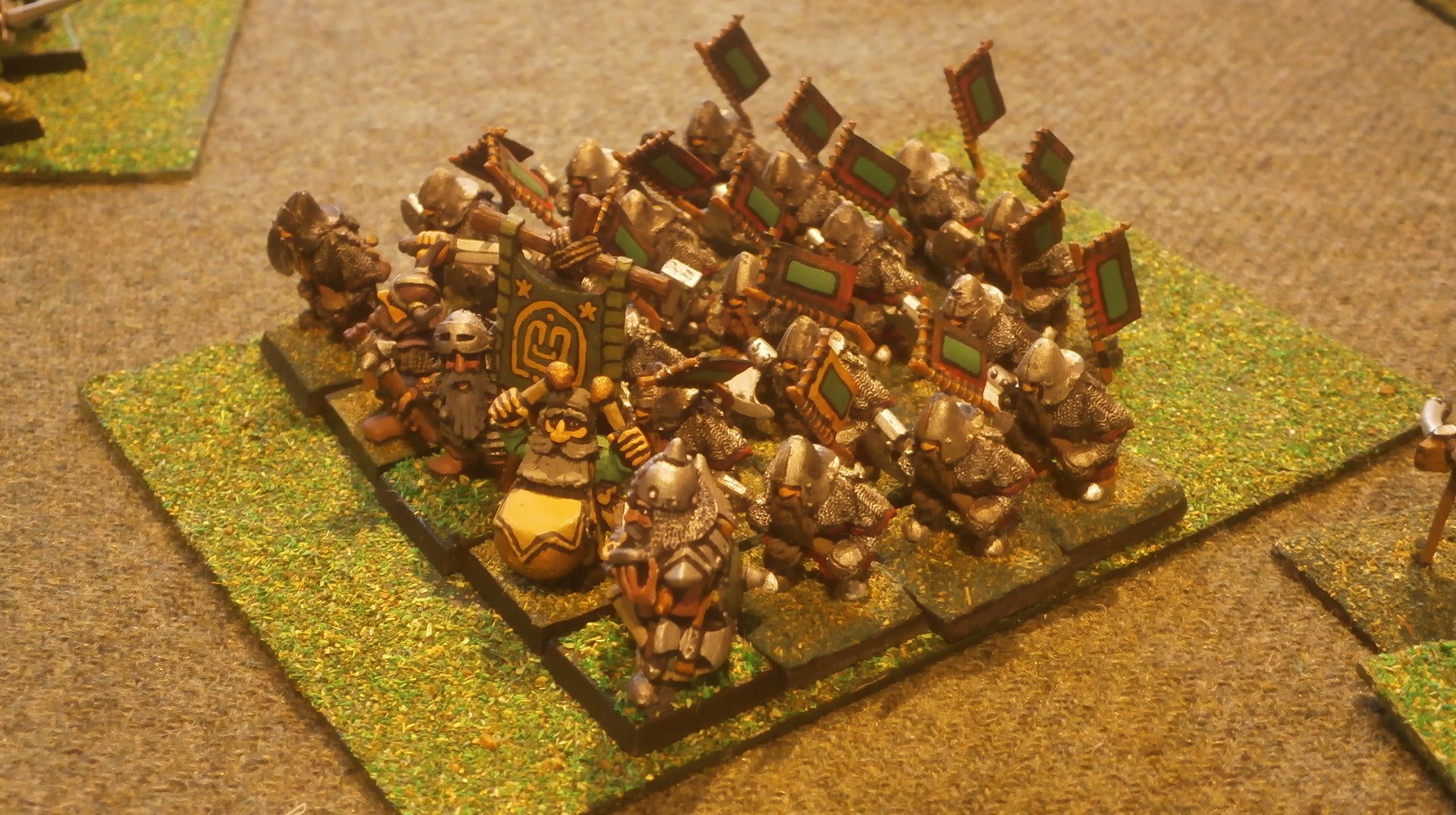
From the front rank his new bodyguard, the grey seer wove his magic, calling forth lightning to strike Thane Narhak’s warriors, killing four
After which, his face (which I could see clearly) bore a cruel grimace …
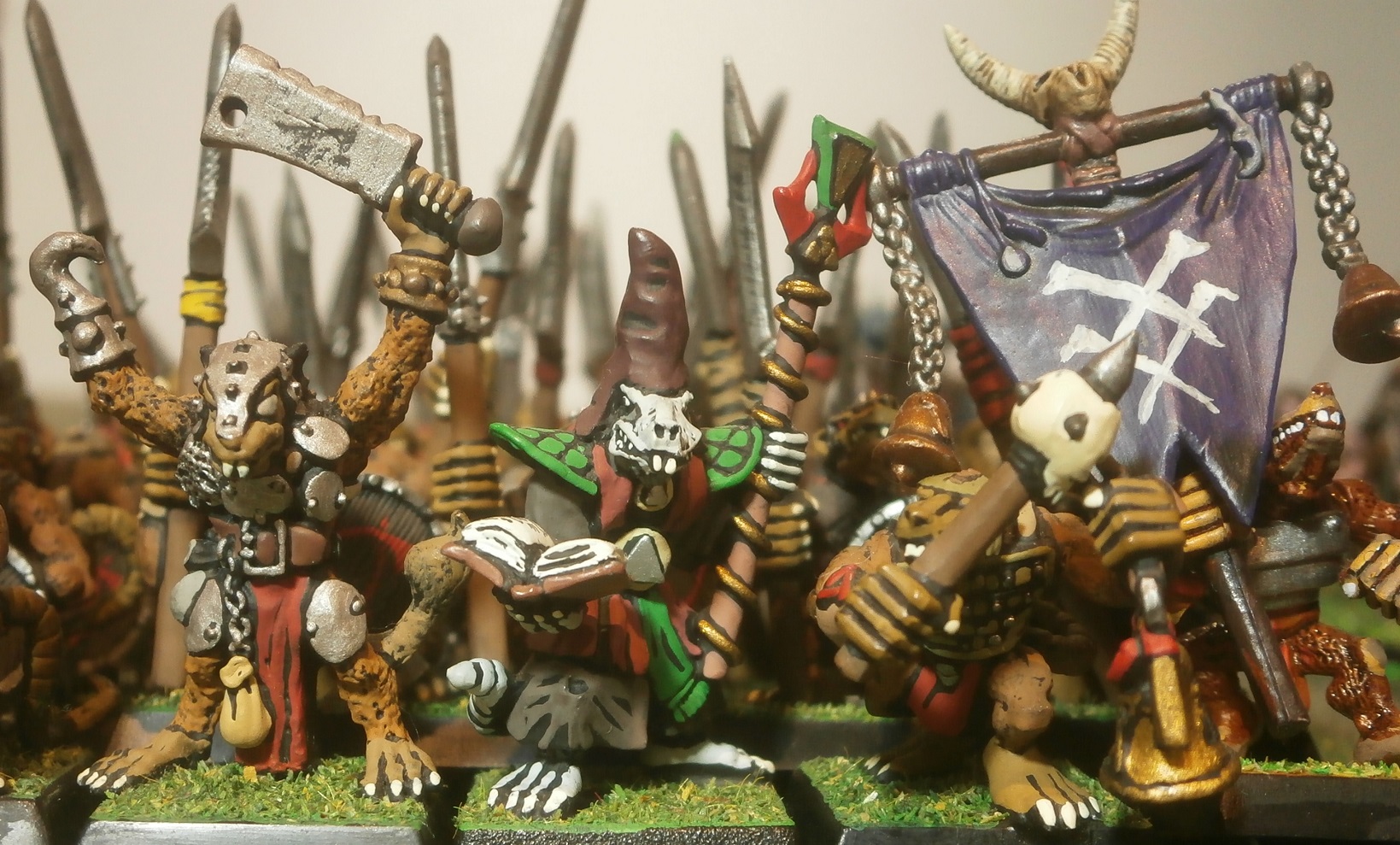
… as he hurled another vicious curse upon Brightmoon’s Waywatchers, killing five.

Perhaps yearning to emulate his master’s cruel successes, the priest among the plague monks also broiled up a magical curse, horribly slaying half a dozen of the elven scouts upon our far flank. But I am assured by the wizard Lord Uluar, that the priest was incapable of controlling that which he had released, for his magic spun back to course through the stormvermin on the hill, killing more than half of them!
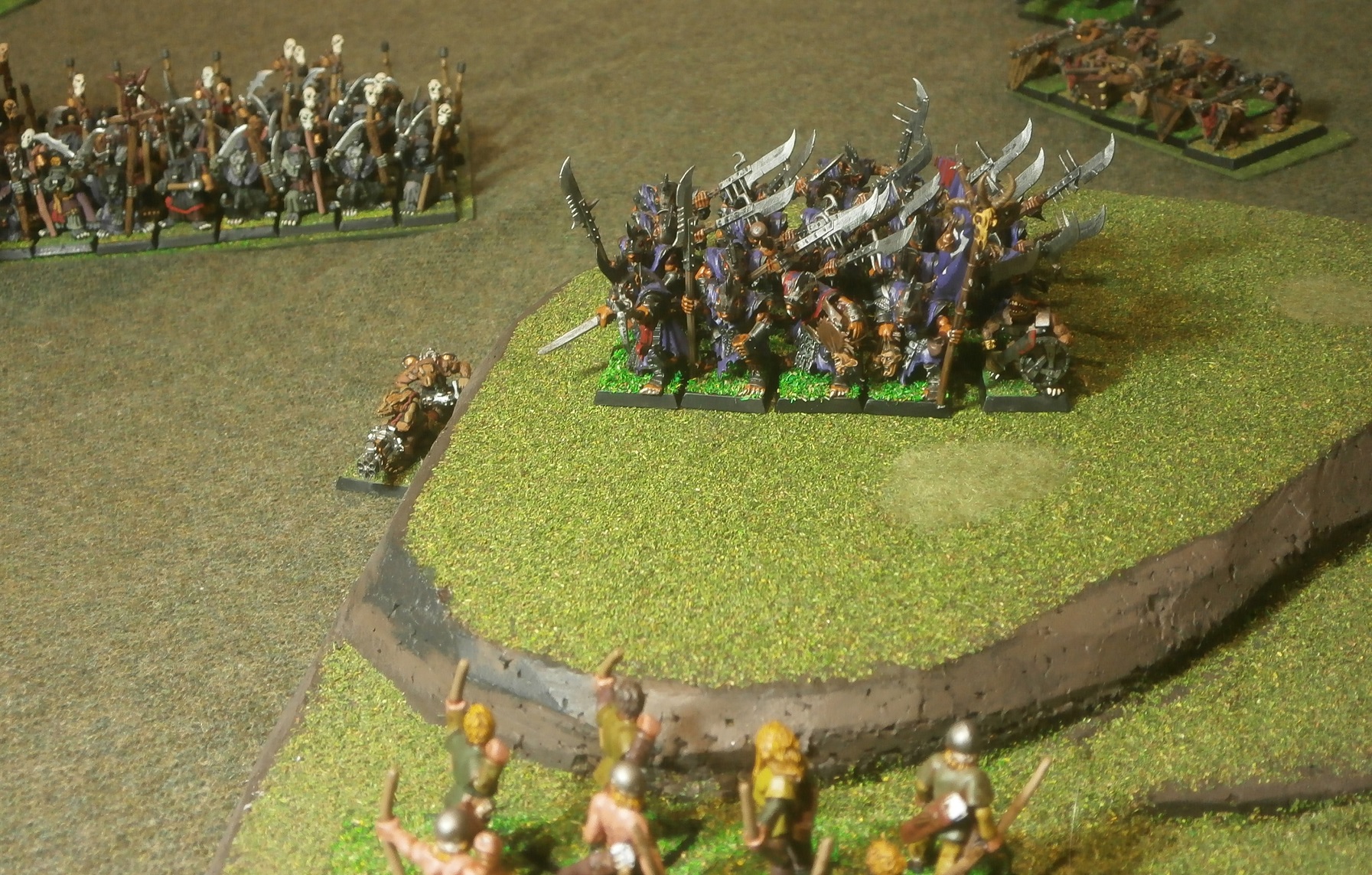
For a moment, they halted, most likely stunned by the sudden, squealing demise of so many …
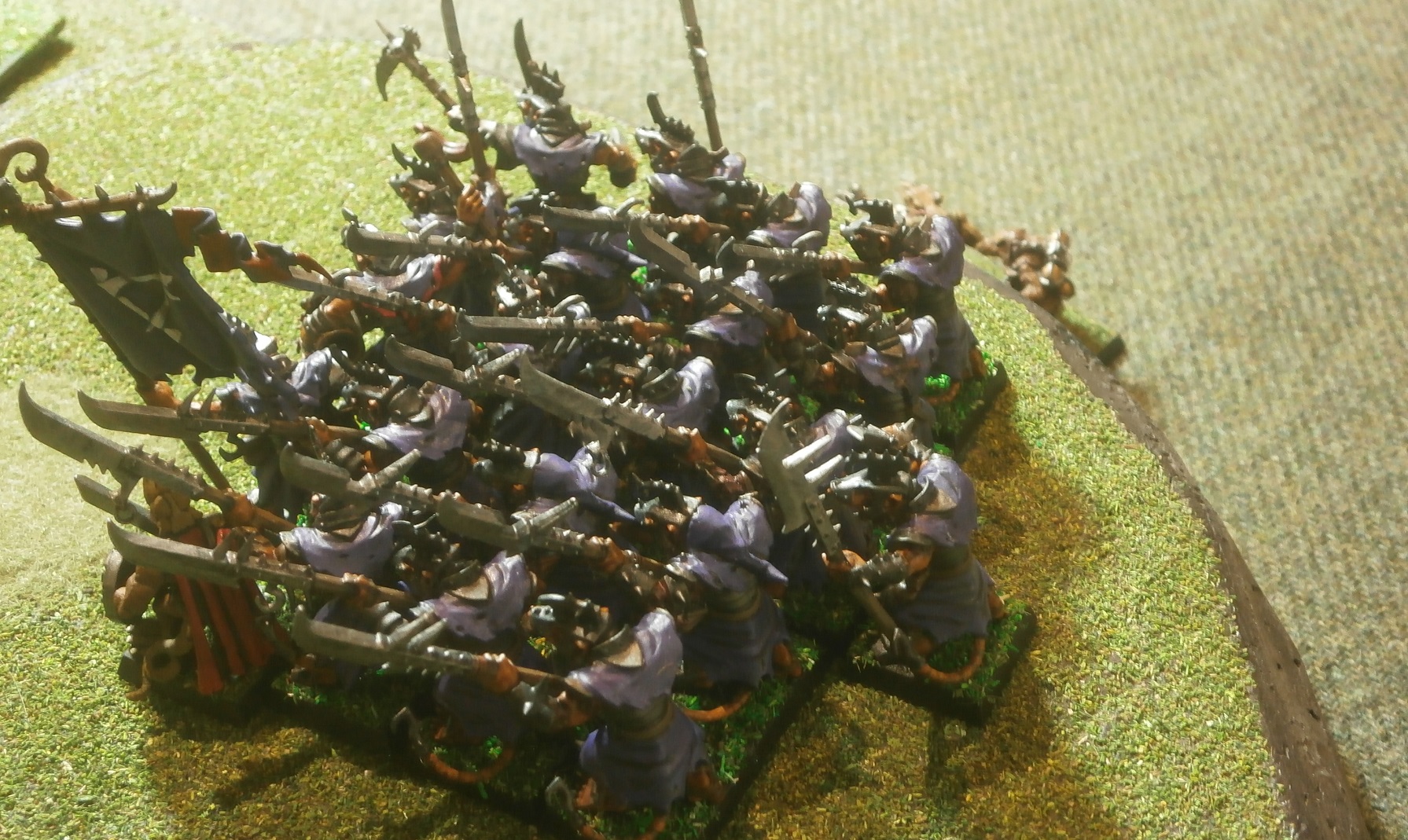
.. and then, much to the relief of the few elven scouts remaining, they turned and fled the way they had come, almost as far as the jezzailers to their rear.

Despite this distraction, the cannon upon that side of their line loosed an arcing bolt of burning blue light which coursed across the entire field to strike the riders on our far left, killing three and prompting the last two to gallop away in fear and dismay.

The engine’s cruel kin upon their right flank …
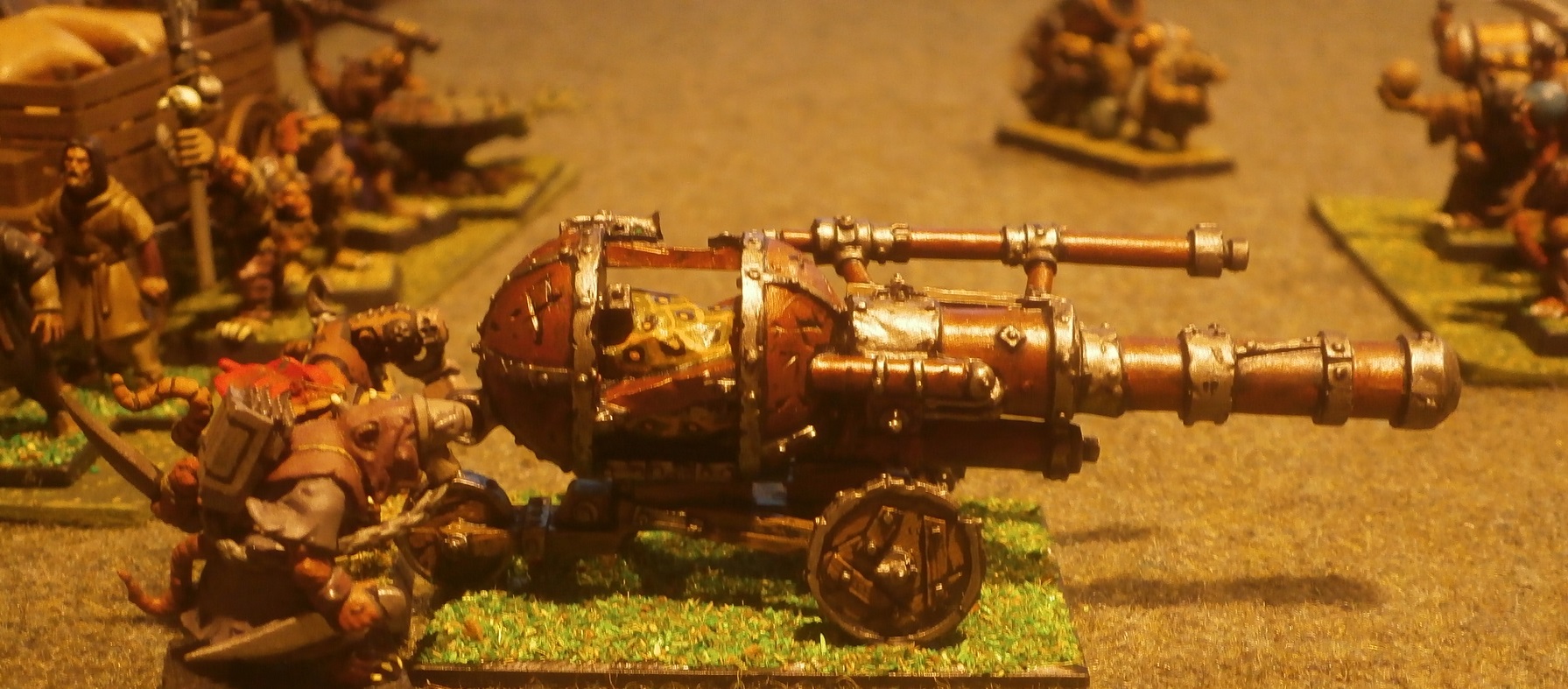
… then sent its own barb of heated light to cut down several of the eternal guard.
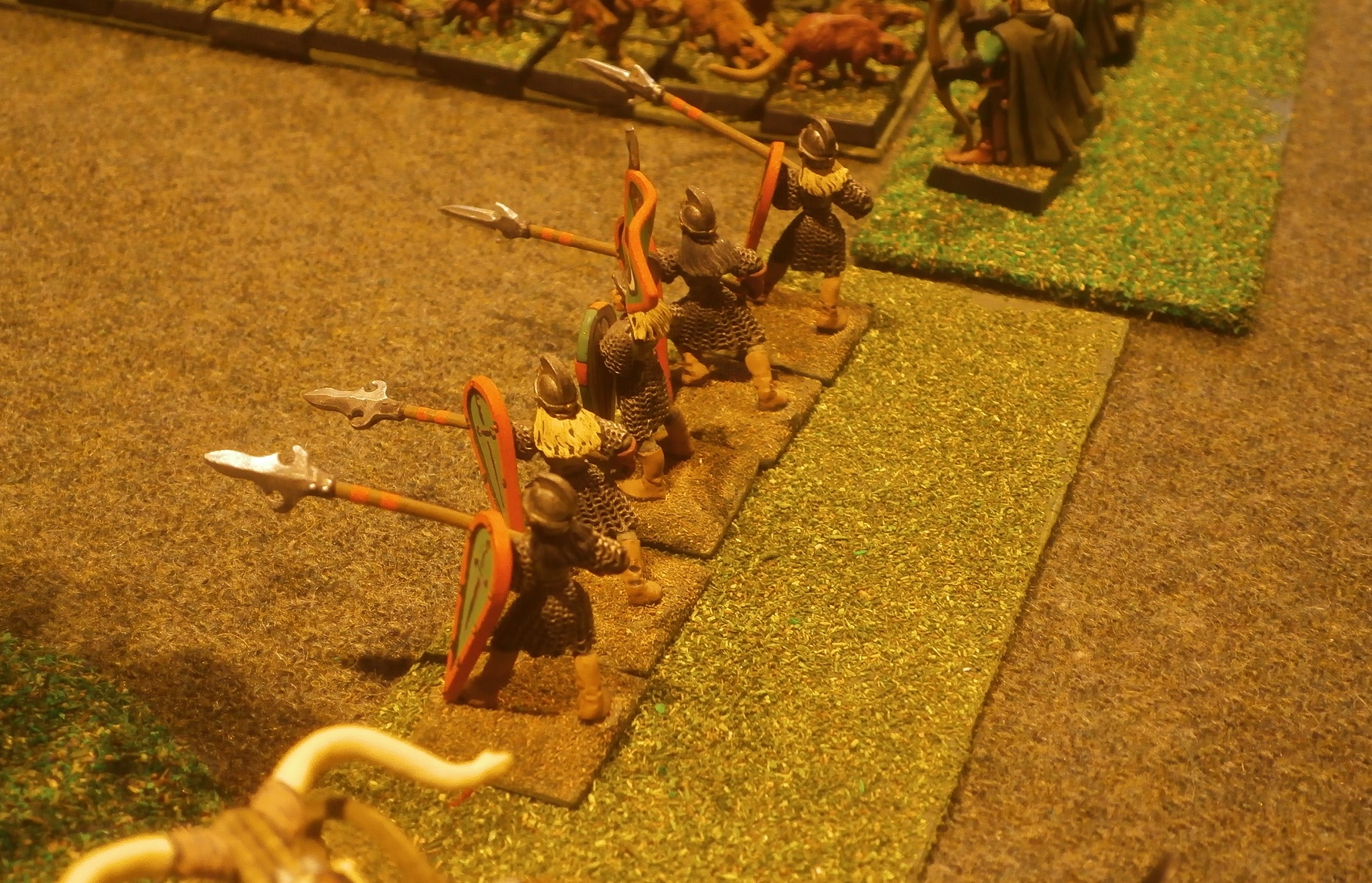
Beside what few guard remained, the elven archers bravely slew as many of the giant rats as their blades would allow …

… but could not hope to prevail, and were washed over like a line of sand before the crash of a sea wave, to be torn apart most horribly by claw and tooth.
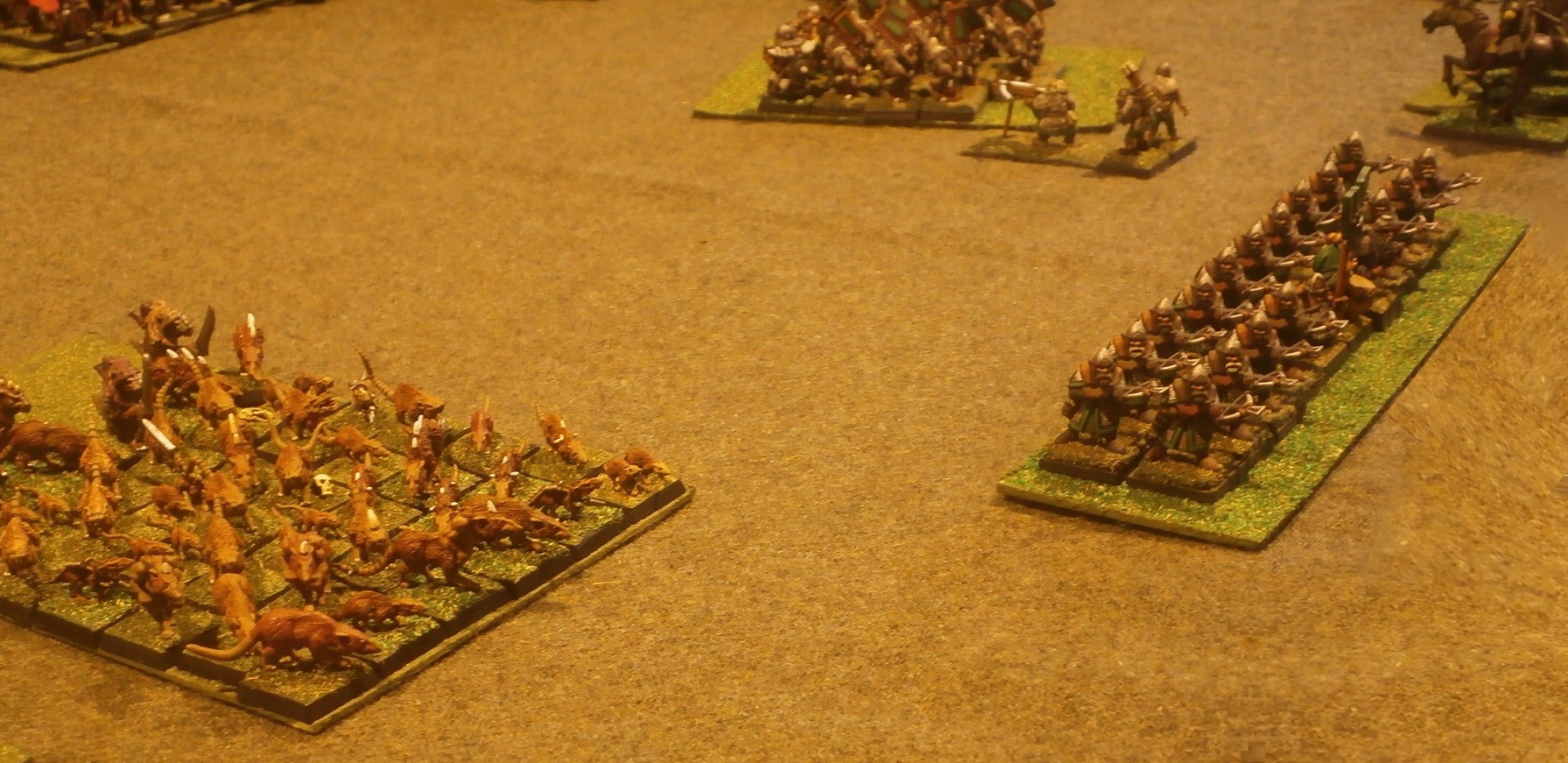
My own quarrelers, considerably dismayed by such a sight, began to lose their order. Deciding that it was best we quit the field as soon as possible, to defend the bridge and thereby gain some chance at least to prevent the further incursion of the foe upon Tilea, just as Thane Narhak had bid me do, I ordered our rapid flight.
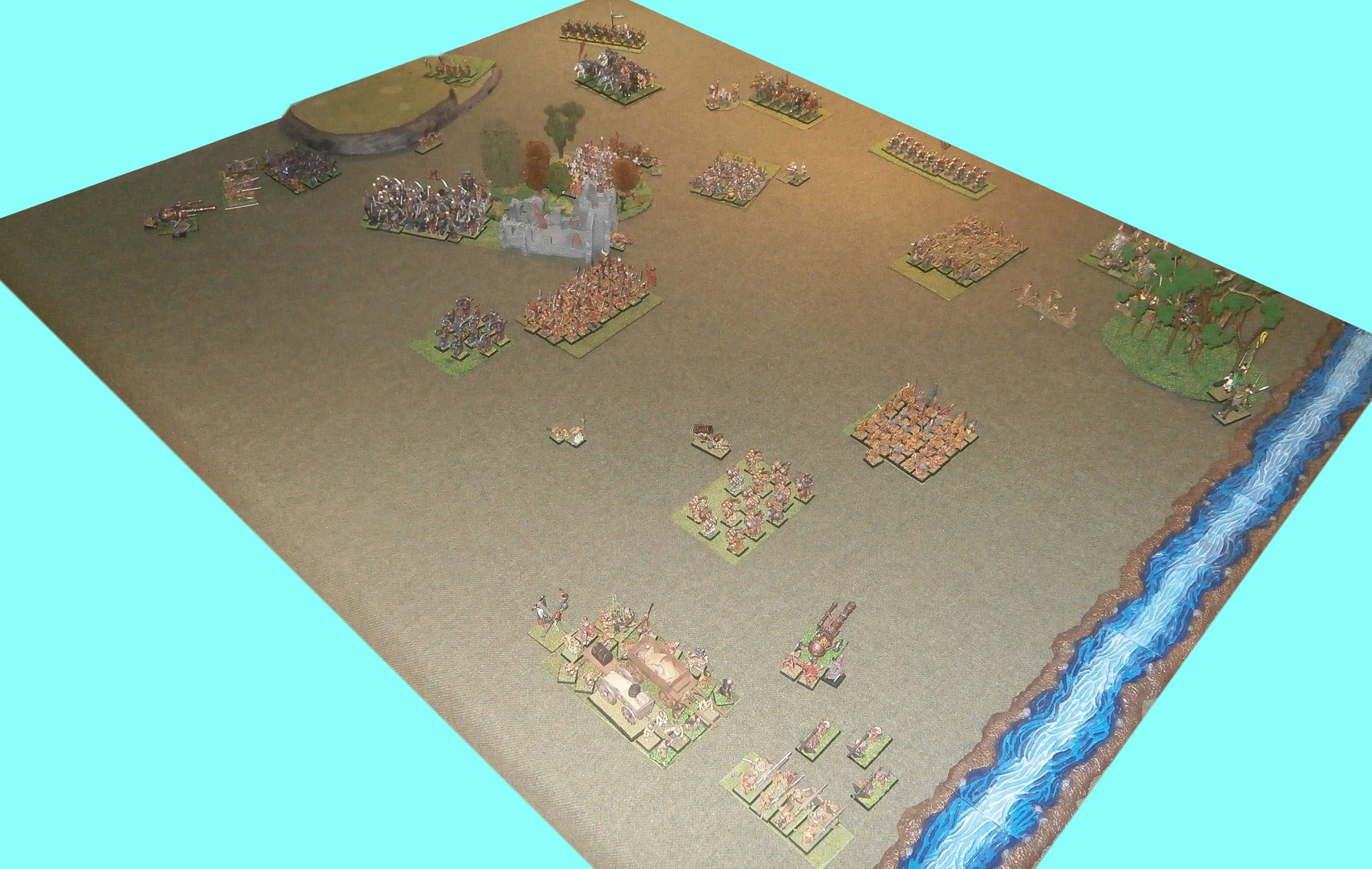
Our left and centre were surely lost, and despite the setbacks the foe had suffered on their right, in truth, the weight of numbers they could still bring to bear meant that all we could now honestly hope for was to extract as many of us alive as possible, that we might at least have our defence-works to allow us a chance of successful resistance.
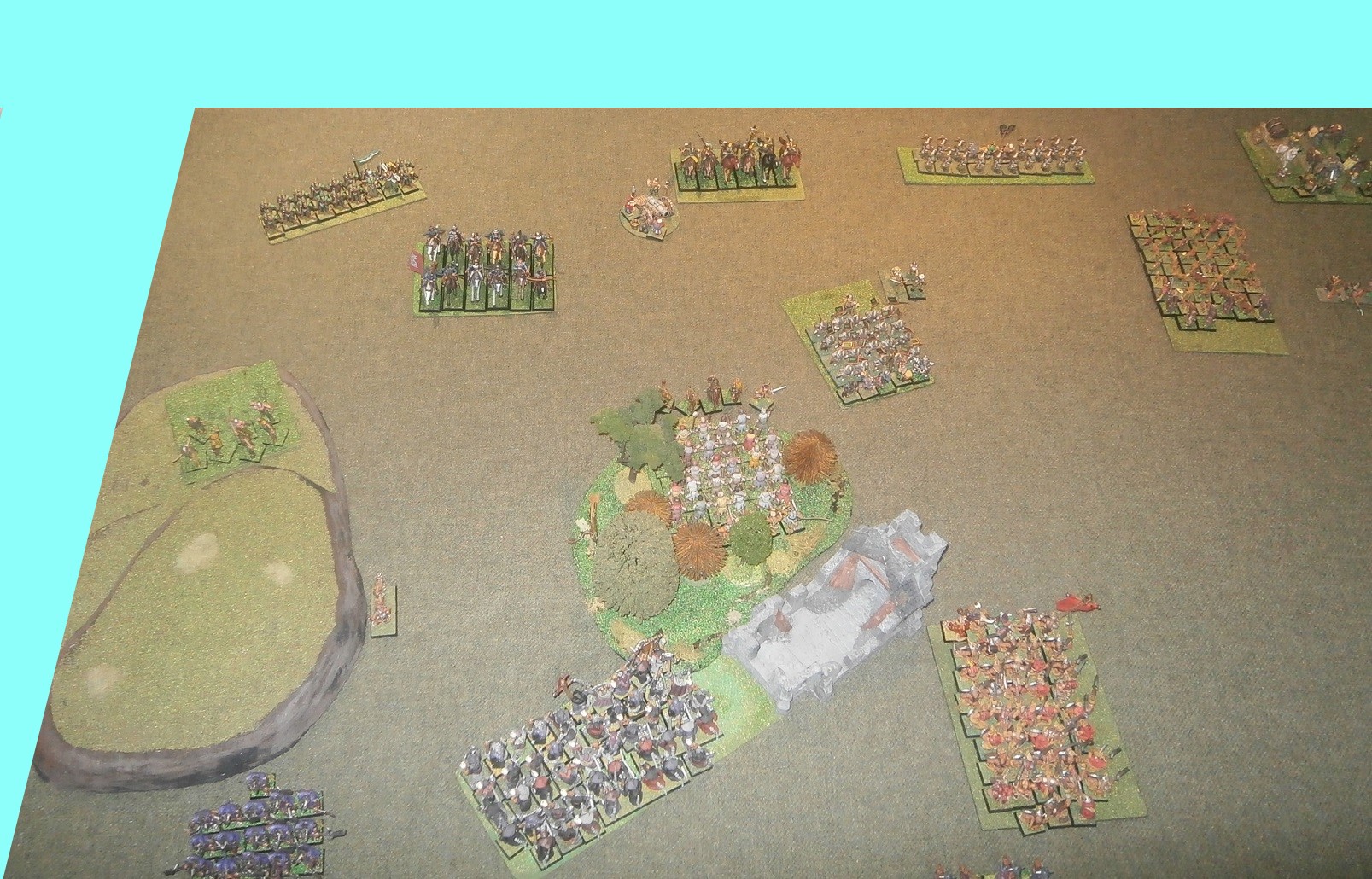
As we made our way from the field, Lord Veluthil lingered still behind the trees and watched, no doubt confident he could safely ride away whenever he chose.

Just as the first blasts of magical winds began to wane, a new storm was whipped up, which Lord Veluthil later told me seemed to be the work of an accursed banner, which swathed the field in even more powerful gusts than before. Veluthil later admitted that he had not expected such mastery of magic from the foe, and told me we should never presume that strength in numbers is their only, real weapon. Almost all in our army carried bows or crossbows, but the aim of each and every one had been spoiled by the magical winds.
Just as the last surviving Waywatchers and the dwarfs charged the men-slaves being herded through the trees …

… Lady Ascal and the warhawks swooped onto the field from behind the enemy’s left-most flank.

From there, had we not already decided that we should retreat, and had they not been forced close to the ground, struggling in the unnatural gale simply to stay mounted, they could have moved to aid anyone of us, but instead were able only to shoot, and that with bad aim, the enemy’s lightning cannon or jezzailers.

As I led my quarrellers away, to the left of us the glade guard, the scouts and the Arrabbiati were also leaving…
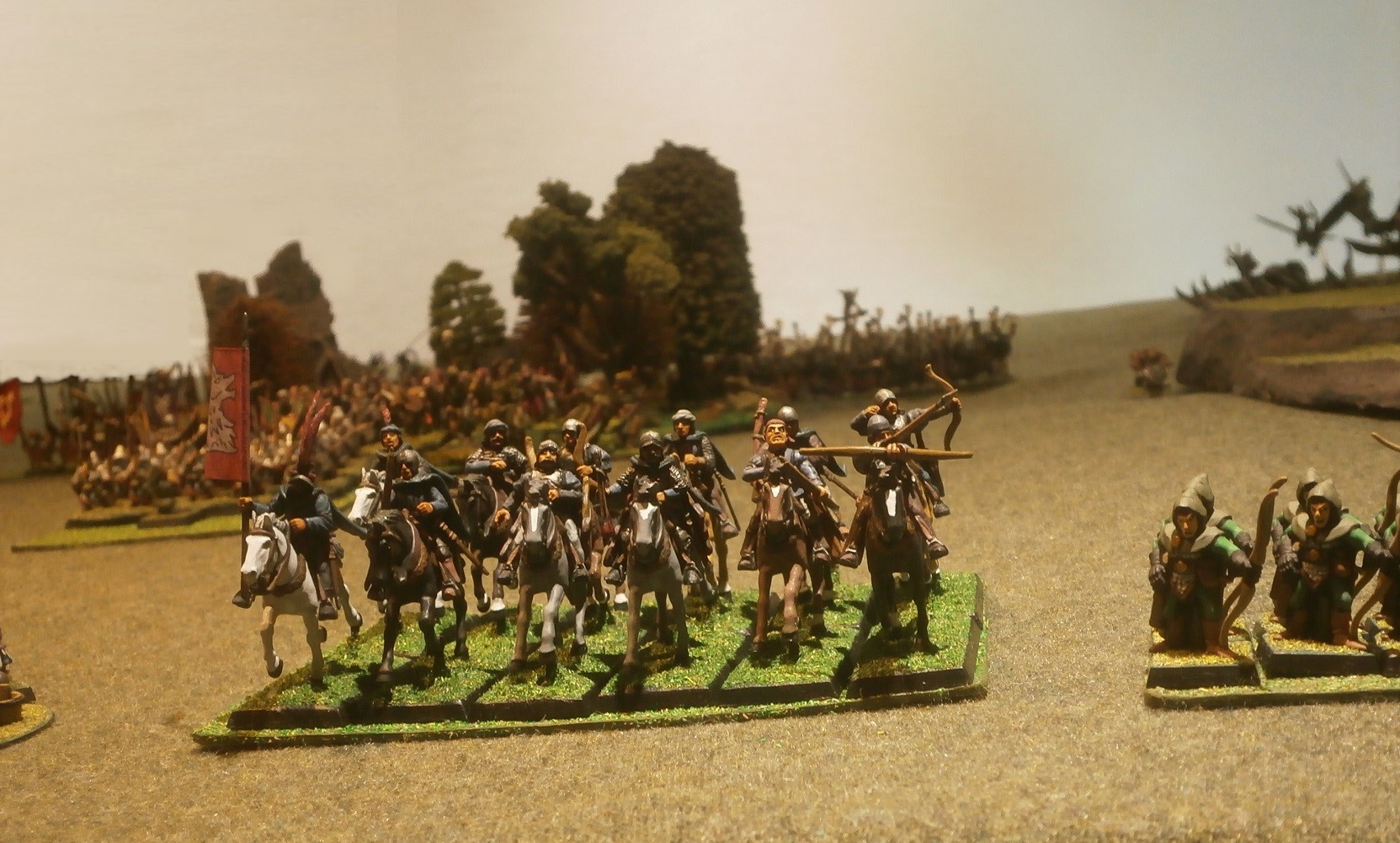
… and to the right of us, the eternal guard, the riders and the baggage train.

Still, Veluthil watched. His bolt thrower was being dragged away as hastily as the crew could manage, as were our cannon and bolt thrower, though its crew were forced to abandon the latter to assist the former. The elven ambassador, Uluar, lingered momentarily with his bodyguard …
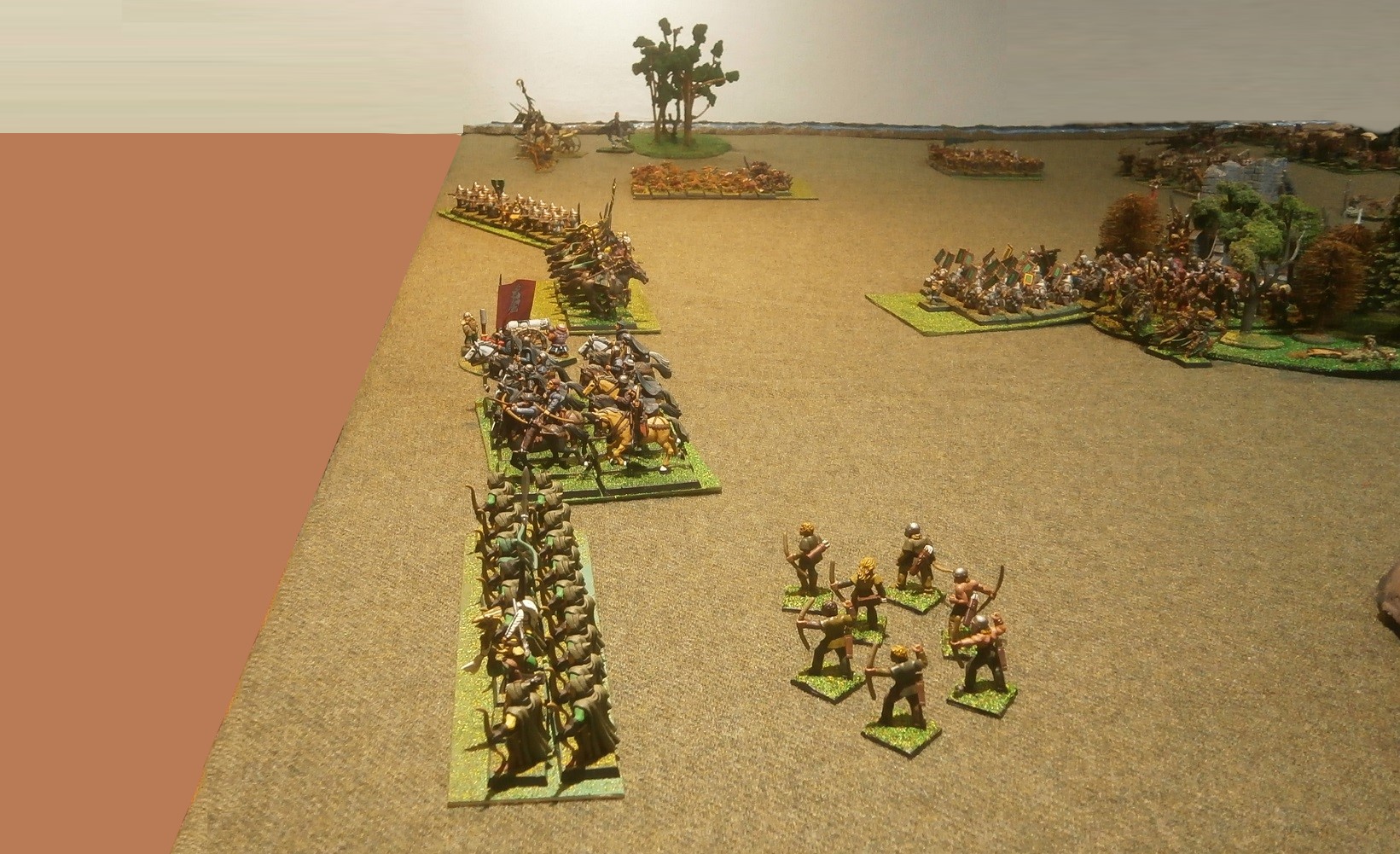
… but then he too turned to lead his riders from the field.

I confess, it occurred to me, momentarily, that the Arrabbiati brigands had done little more than watch a while, and then flee, behaviour which might explain the outlaw brotherhood’s longevity. To watch and wait, to engage only the weak or the surprised, and to flee whenever threatened, would be successful strategies for such as they. But then I admonished myself for such thoughts, for so many of the rest of us had done nothing more than they that day, and what benefit could be gained from throwing themselves and their mounts into the mass of the foe? To thwart this enemy, in this part of Tilea, such men as these would be crucial. We would need to use the very land against the foe.
Lord Veluthil was in no rush to quit the field, especially while Narhak and the Waywatchers were so bravely making their stand.

He attempted several spells, but the winds of magic would not comply to his demands, and indeed he stopped himself when he sensed that Ascal had, in his own words, been harmed by the unruly shards of magic he had unleashed.
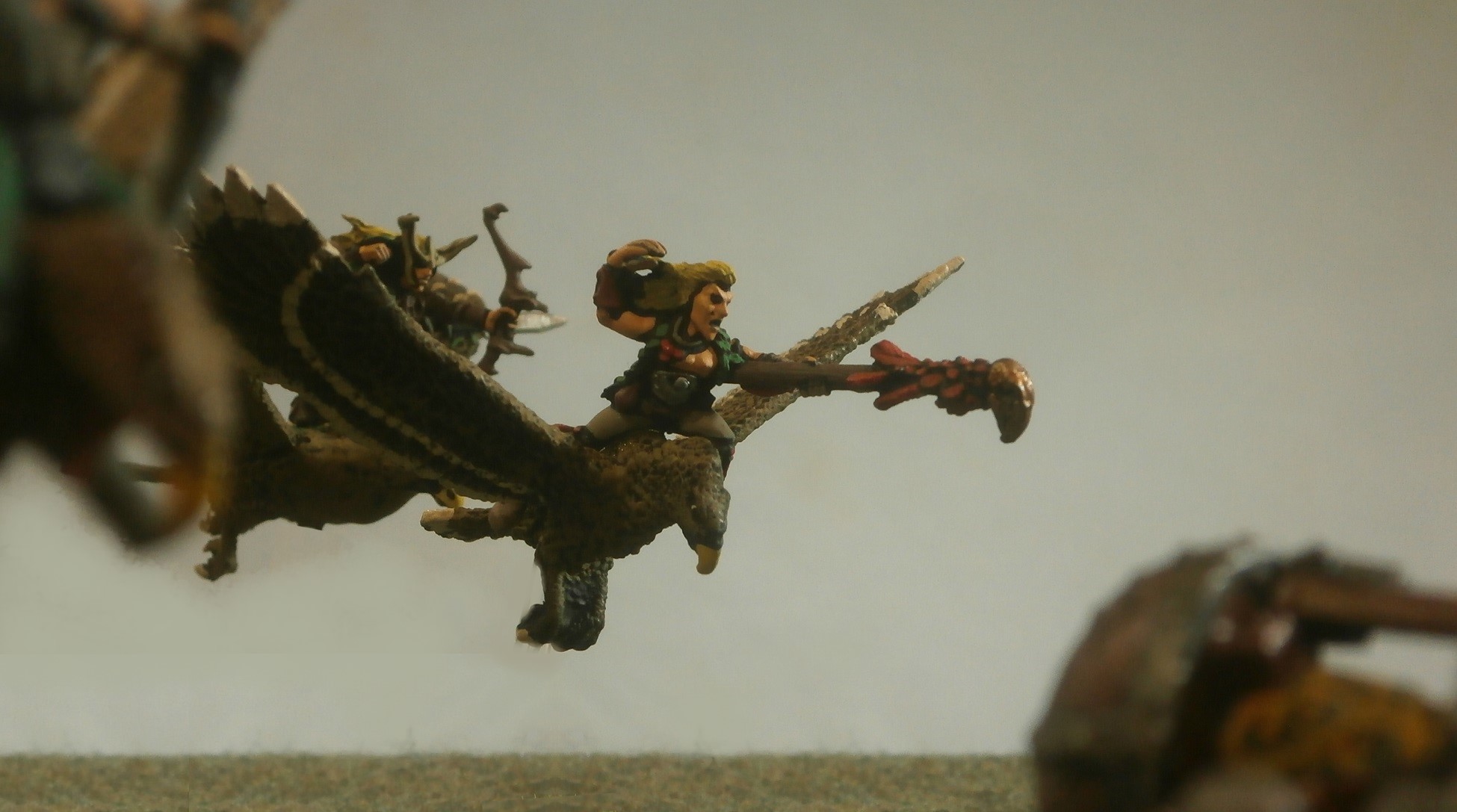
Nevertheless, he had slain several enemies here and there across the field, including more of their grenadiers.
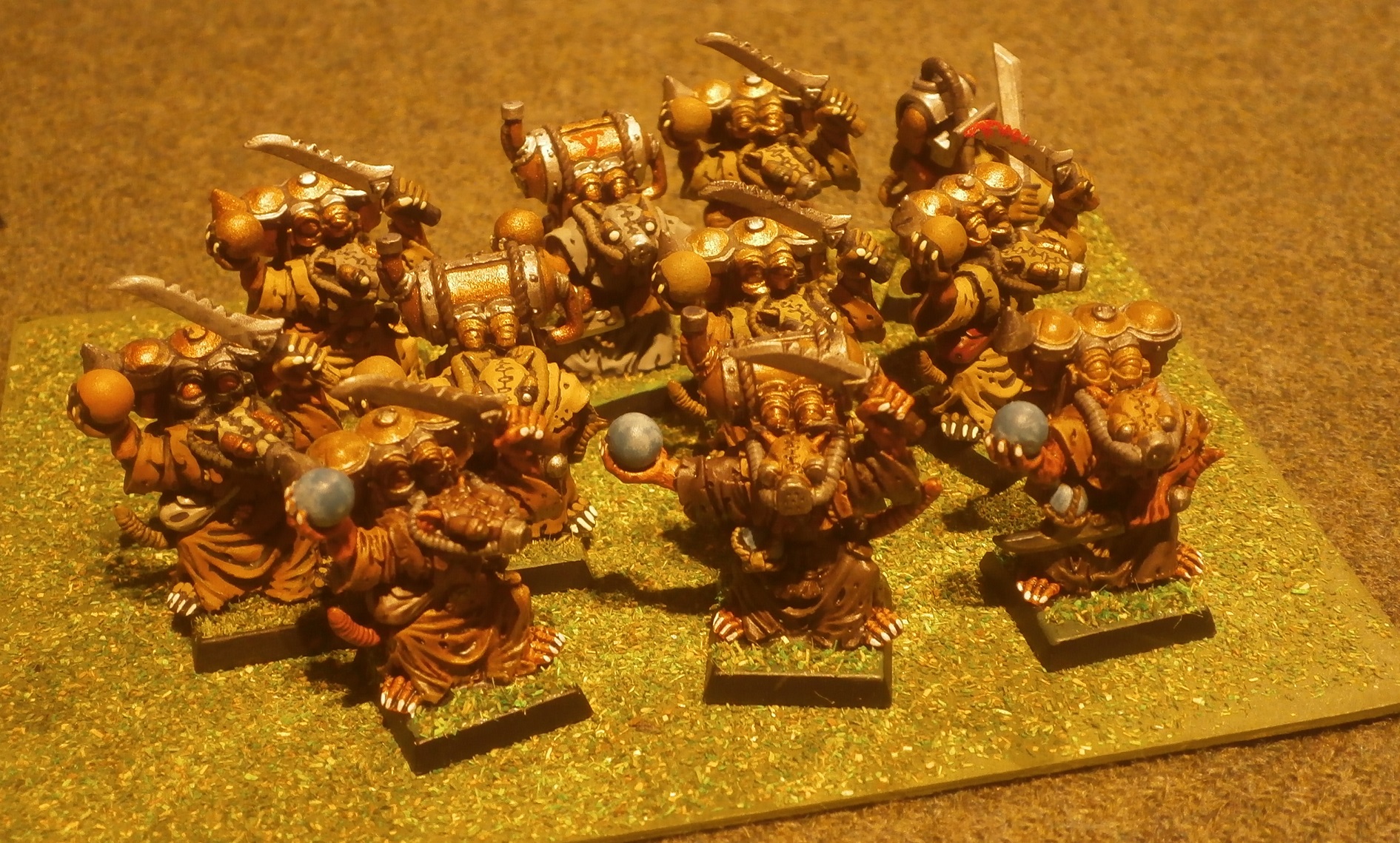
While Narhak pushed his way to the fore …

… and two more of the Waywatchers perished, our brave rearguard cut down many of the foe – enough to break and scatter the rest of them. So viciously crazed was the slaves’ frenzy to escape, that the last of the Waywatchers died, leaving Brightmoon alone, standing beside our warriors.

This momentary victory was to prove Thane Narhak’s last happy moment, for the clanrat warriors had moved up towards his flank …

… and took the opportunity thus presented to charge, doing so just as the flail-wielding ratmen burst through the trees at Narhak and his warriors’ fore.
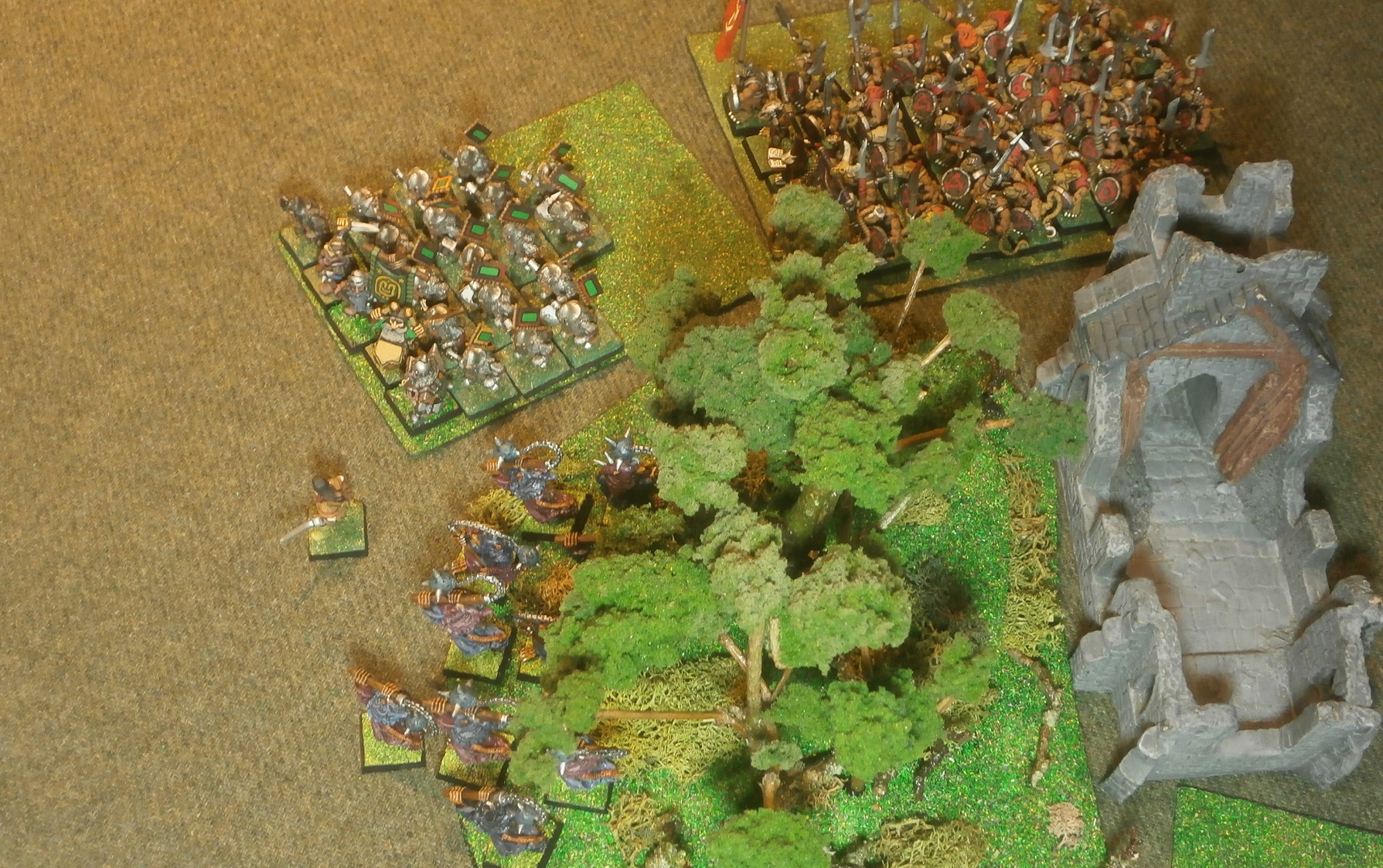
It seems Narhak, who had only half a moment to decide the best course of action, chose to attempt flight, in the hope either of luring the foe away or of later lending assisting us in the defence of the bridge. But neither was to be, for he and all those with him were slain as they stumbled desperately away, leaving only the more nimble Brightmoon fleet enough to step ahead of the foe. Yet even he did not leave the field, for they eventually caught him too.

Ascal reported later how the purple-clad stormvermin continued their flight, despite the fact that our entire army was retreating.

While Cralk’s further conjurations failed …
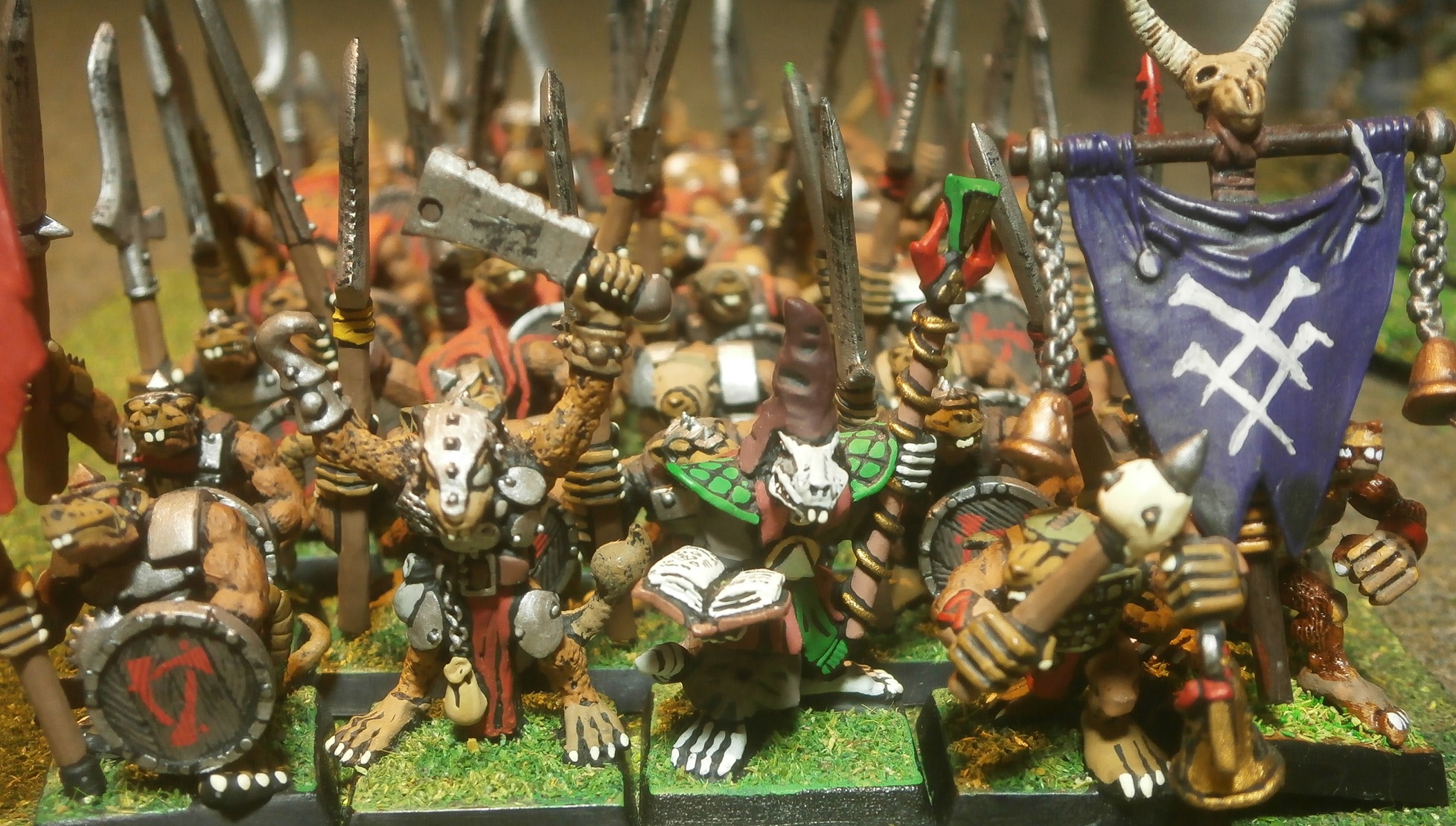
… the priest with the monks attempted to curse the warhawks.
This Ascal was able to dispel, then, when the wind lessened momentarily, she was able to lead her hawks away from the field, flying high to avoid the enemy’s attentions, soon to rejoin the remainder of our army at the defences.
 Dwarf, elf and man – we all moved away in haste, but in good order, only able to do so because of Narhak’s sacrifice in the centre and the enemy’s stalled advance on their left. Finally, after one last glance at the foe, Lord Veluthil turned to join us in retreat.

The elven wizard Ascal later revealed to us that the ratmen’s works at the river to the south were illusory – the mere felling of a few trees, the burning of fires and building of huts. No river craft of any kind seemed to have been begun, neither raft, barge or boat, and certainly no bridge. Once again, the enemy’s cunning was revealed, for they had done just enough to make it seem to our scouts’ eyes that they intended to cross the river, but not enough to tire themselves, nor lose any slaves to the labour, nor waste any resources or supplies of any kind. Enough to make us believe they were attempting to cross, thus drawing us from the bridge and its defensive works to face them, almost fatally, in an open field of battle.
It seems certain now that they will assault us, for much of what they lost in battle was merely scattered or wounded, and thus likely to re-join their ranks and files. Several of their best regiments were almost entirely unscathed, and there have been reports of reinforcements on the way to them. Even now, with not all of us returned to the camp – for the baggage and our gun are still outside, escorted by some riders – they advance. When they do attack, we will surely be at a considerable disadvantage, despite our palisades and storm poles, unless the magic users can conjure a very hell for them, and our own promised reinforcements, from both the south and the east (Remans and elves respectively) can reach us in time.
If we are reinforced by the end of this very day, and if what comes is all that was promised, then I do not doubt that we can hold the bridge. In truth, however, I believe the reinforcements are still too far away to reach us in time, even within weeks, and have advised Lord Veluthil accordingly. He hinted to me that we may be forced to abandon the bridge and our works, and seek the reinforcements ourselves.
I will not write it here, in case this missive is intercepted by the enemy, but it seems to me there is a way still to beat this foe, and soon, with only what we can save and that which we believe to be on its way to us. Lord Narhak’s sacrifice may not have been in vain, the result of foolish impetuosity on our behalf, but may instead have been a crucial part of the delay brought about by our actions – the building of the defences which encouraged the enemy to waste time playing its deceptive game and the fighting of this last battle. A delay which may, at the last, prove far more costly to the foe than to us, but only if we act, and move, quickly.
All this, however, is for Veluthil to decide.
Your servant, Captain Darnaec Whitmail

 BigSmallWorlds