The End of Autumn, 2405
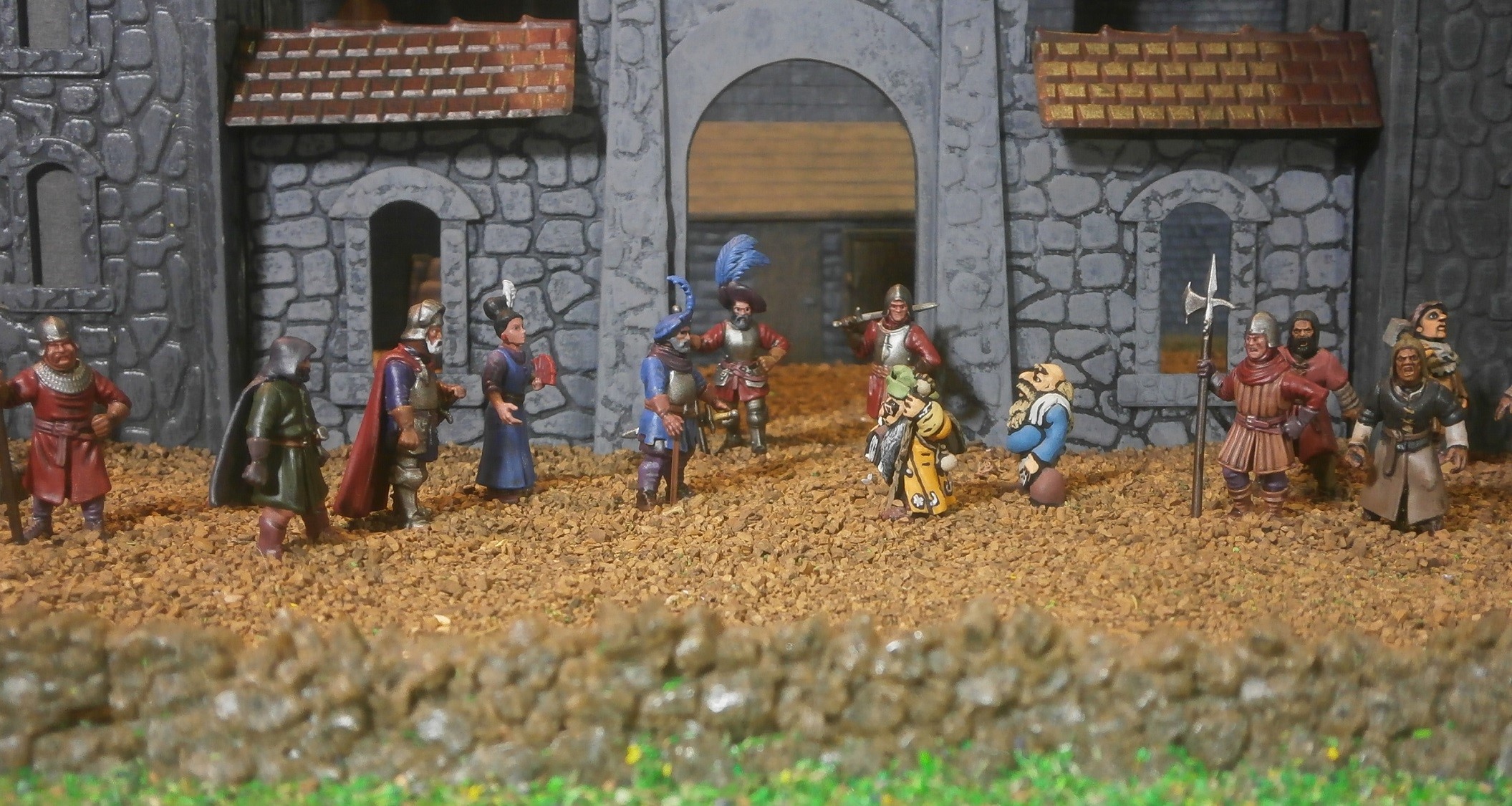
It seemed Glammerscale’s journey had yet to be concluded, for the wizard Lord Totto was not present in Campogrotta. The fact he himself was a wizard, was the very reason he had been chosen by King Jaldeog to undertake this embassy, for the king seemed to presume that as a fellow practitioner of the magical arts, Glammerscale would more easily endear himself to Totto at best, and if not, then at least he would ‘speak the same language’ (as the king himself had put it). That King Jaldeog’s courtly advisers were all keen to see Glammerscale’s back was, he supposed, also a contributory factor in the king’s choice.
Nevertheless, despite Lord Totto’s absence, the dwarven wizard still had business to conclude and offers to make in Campogrotta, as per his instructions. And it was not inappropriate that he should do so, for Lord Totto had made several pronouncements that he was no tyrant, and intended not to rule Ravola and Campogrotta as would a prince his realm, nor a father his family, but rather guide it as a teacher would his student, support it as would a patron his protégé, and protect it as a guard would his charge.
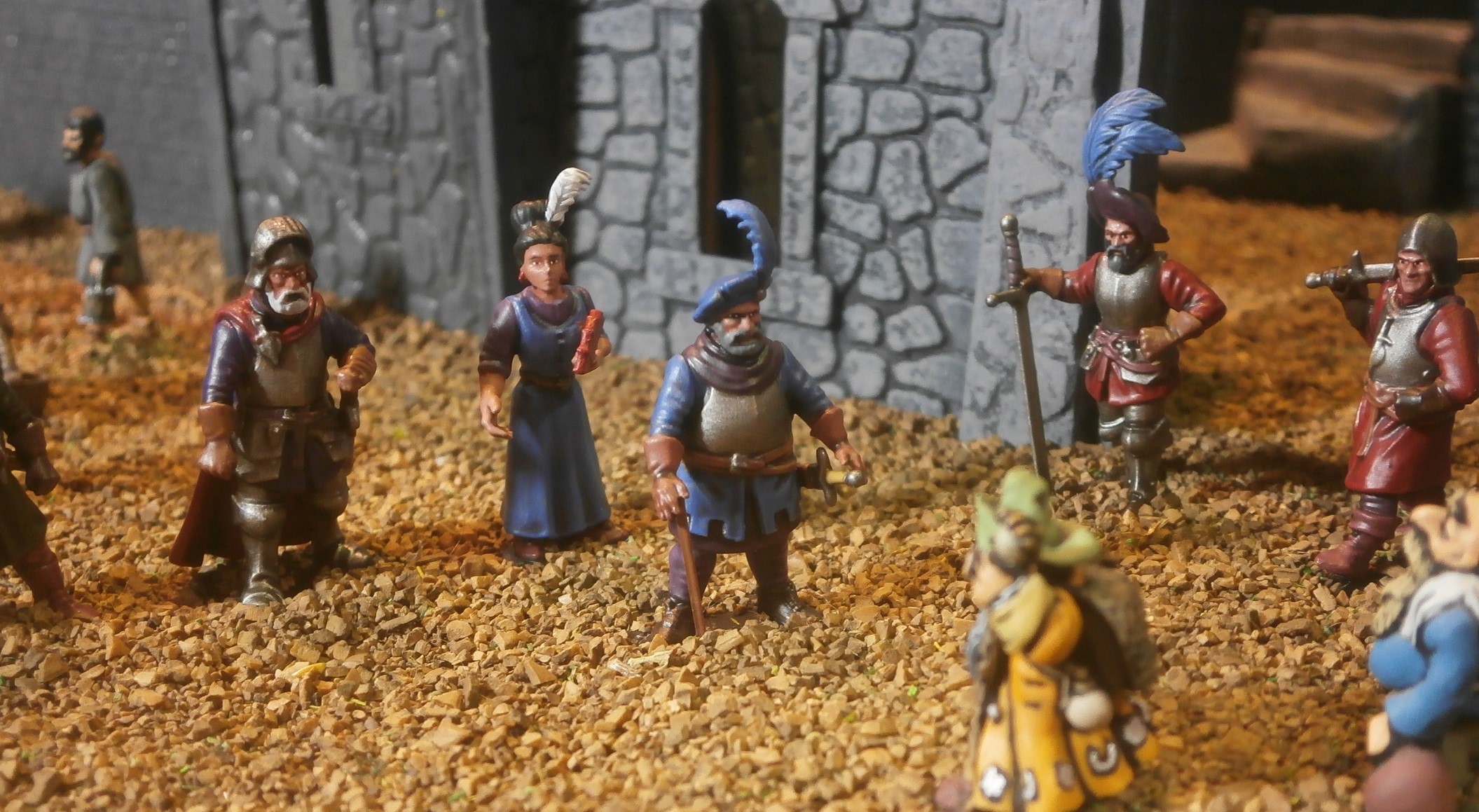
And so, Glammerscale now found himself – after some considerable fussing over the proper reception of such a visitor as he, for this new Republic Commune was so young that few precedents had yet been set for such formal occasions – standing with several council members before the gate of the Palazzo del Principe, awaiting the arrival of a new knightly order, the ‘Cavalieri della Comune’, who were about to swear an oath.
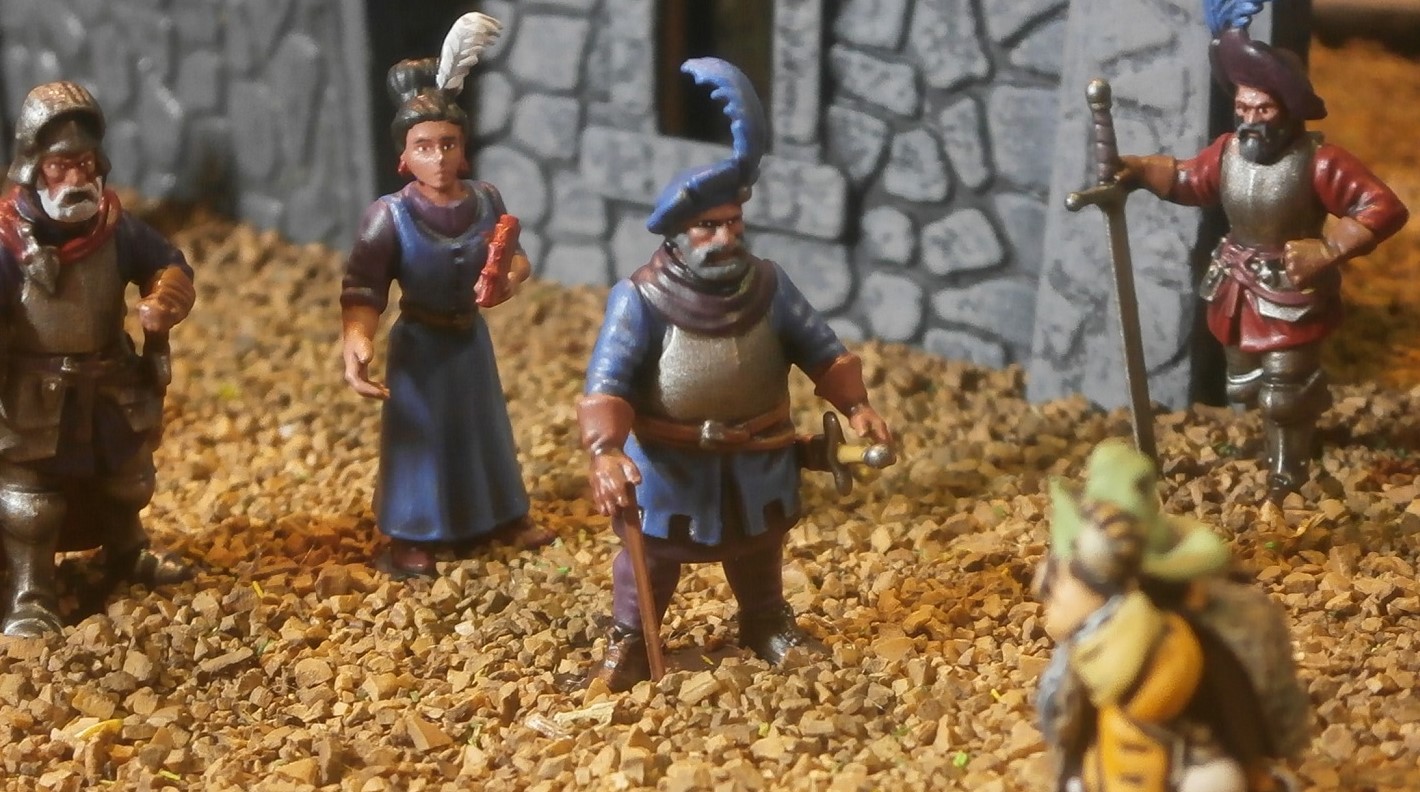
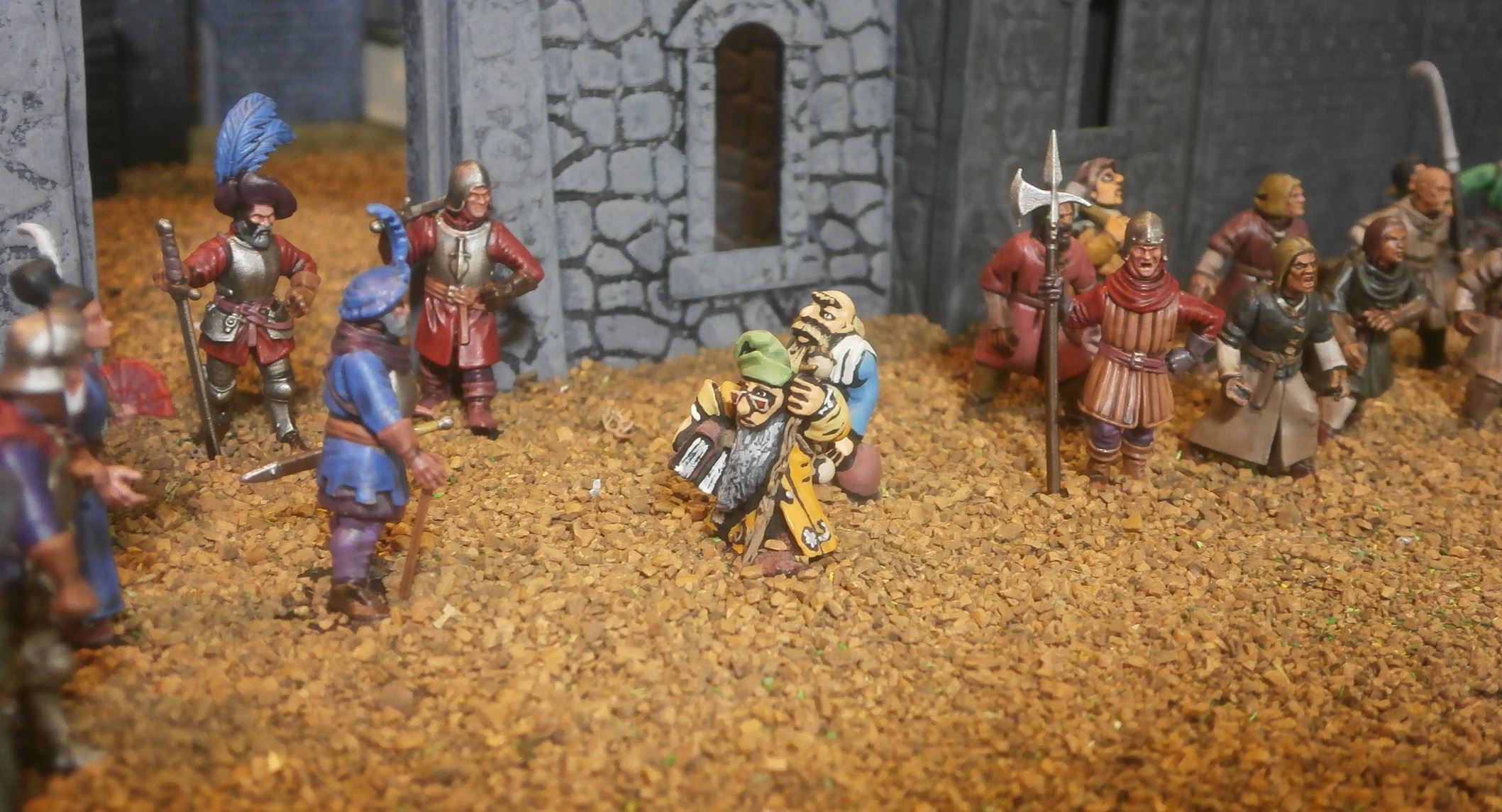
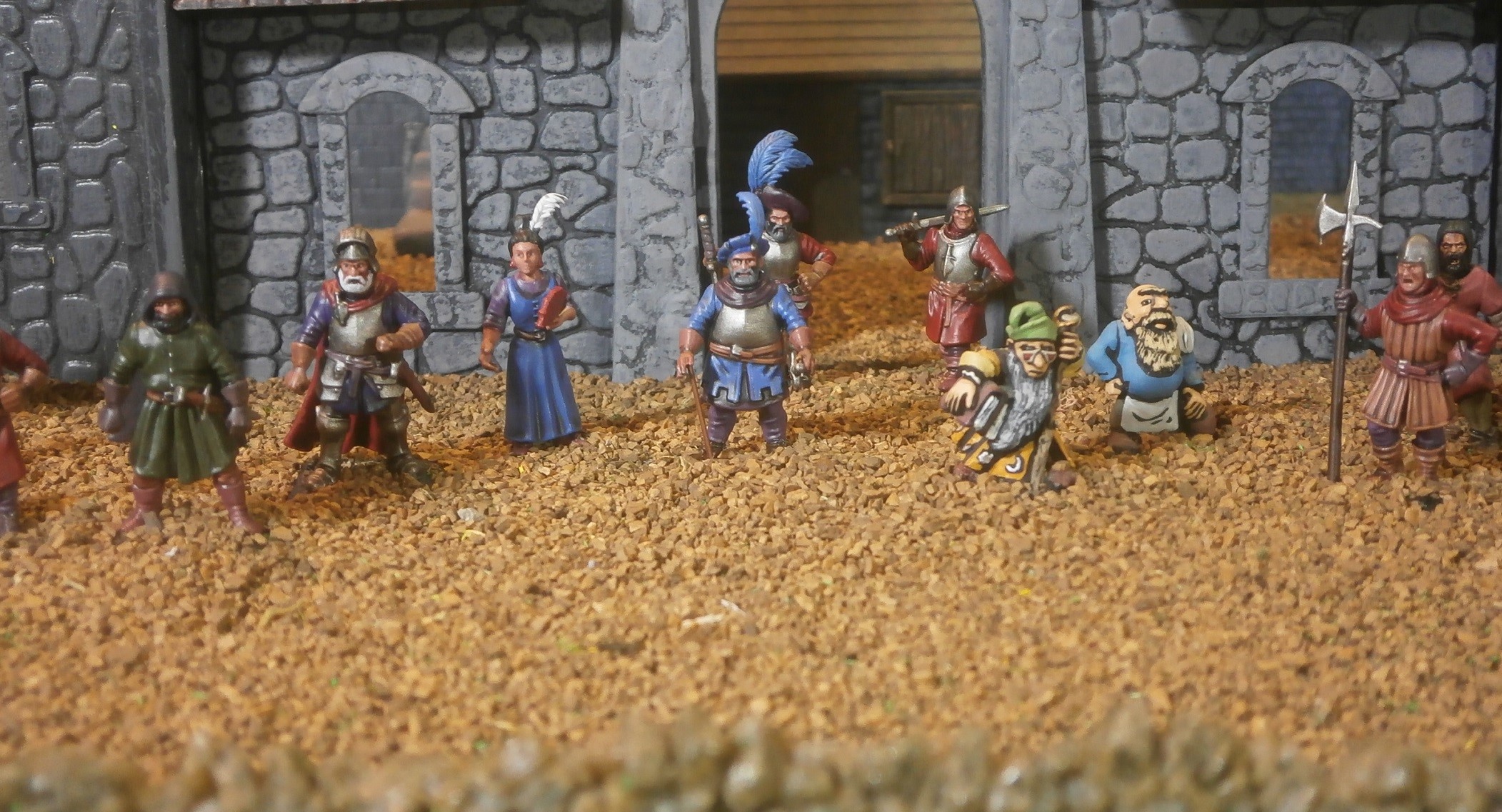
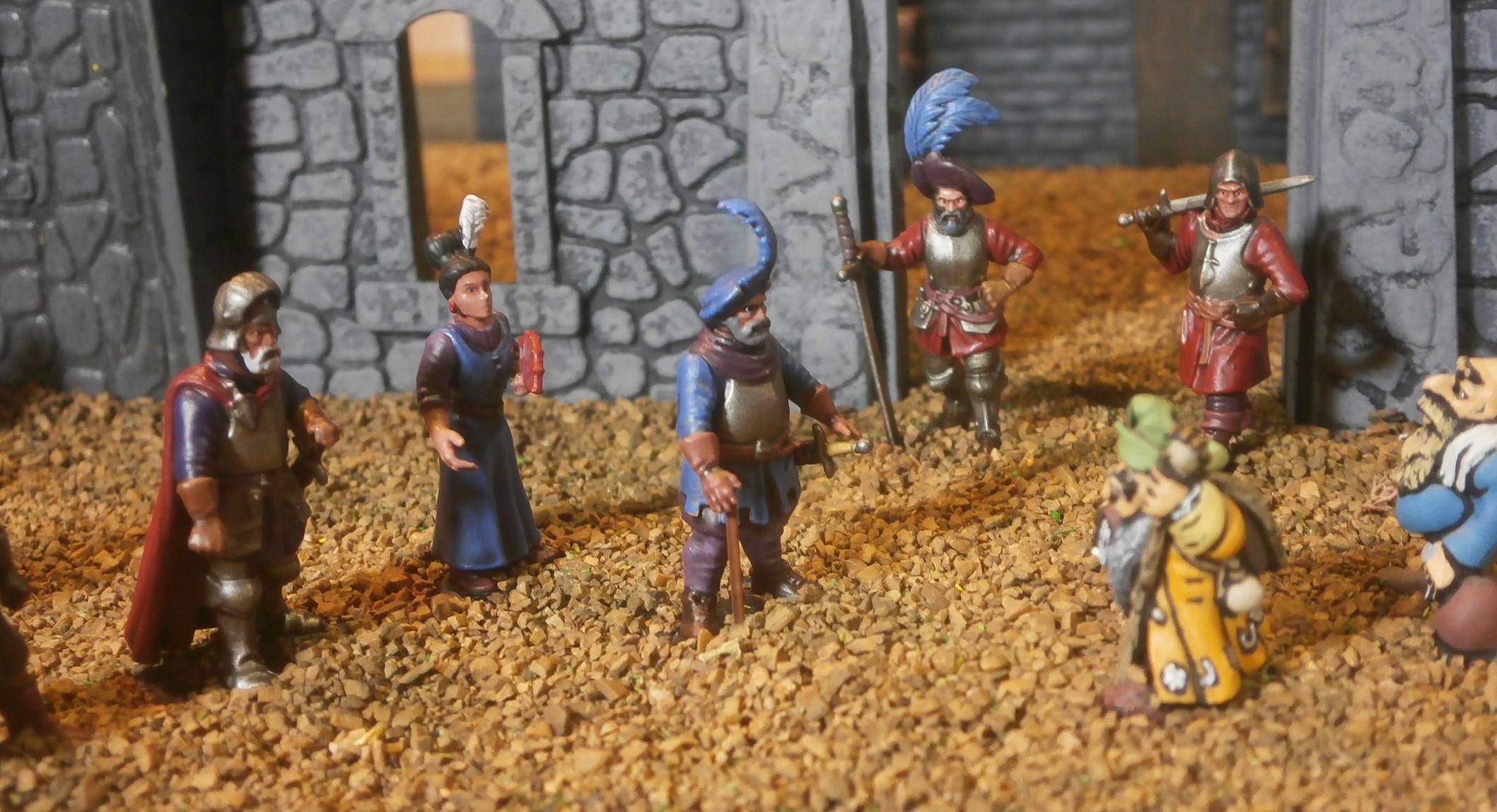
The sindaco (mayor), Girolamo di Albrisis, was a stout, short-bearded fellow, sporting a blue velvet cap and similarly hued panache, as well as a steel breastplate, the latter perhaps a token of his awareness that Campogrotta remained effectively in a state of war (albeit, at present, somewhat quieter compared to the previous five years of ogre and skaven rule, in which one war followed another in quick succession). Glammerscale noted how the mayor leaned heavily upon a cane, concluding that this was no affectation, but rather a necessity. He strongly suspected some infirmity was to blame, perhaps gout or an old injury.
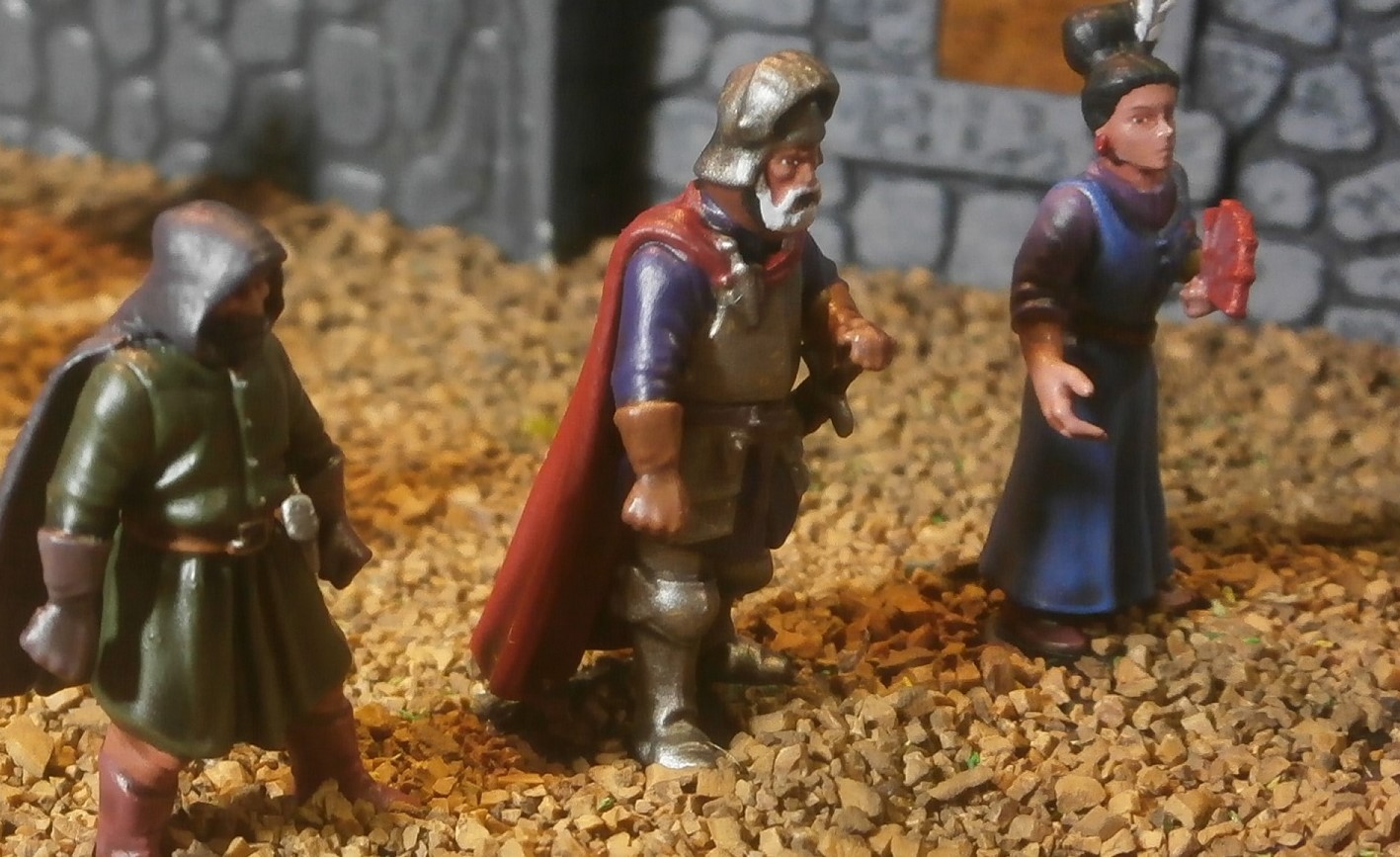
Beside the mayor stood two members of the Giunta Comunale, and a lady who would prove to be Girolamo ’s deputy, his vicesindaco, Lavinia Veneziano.
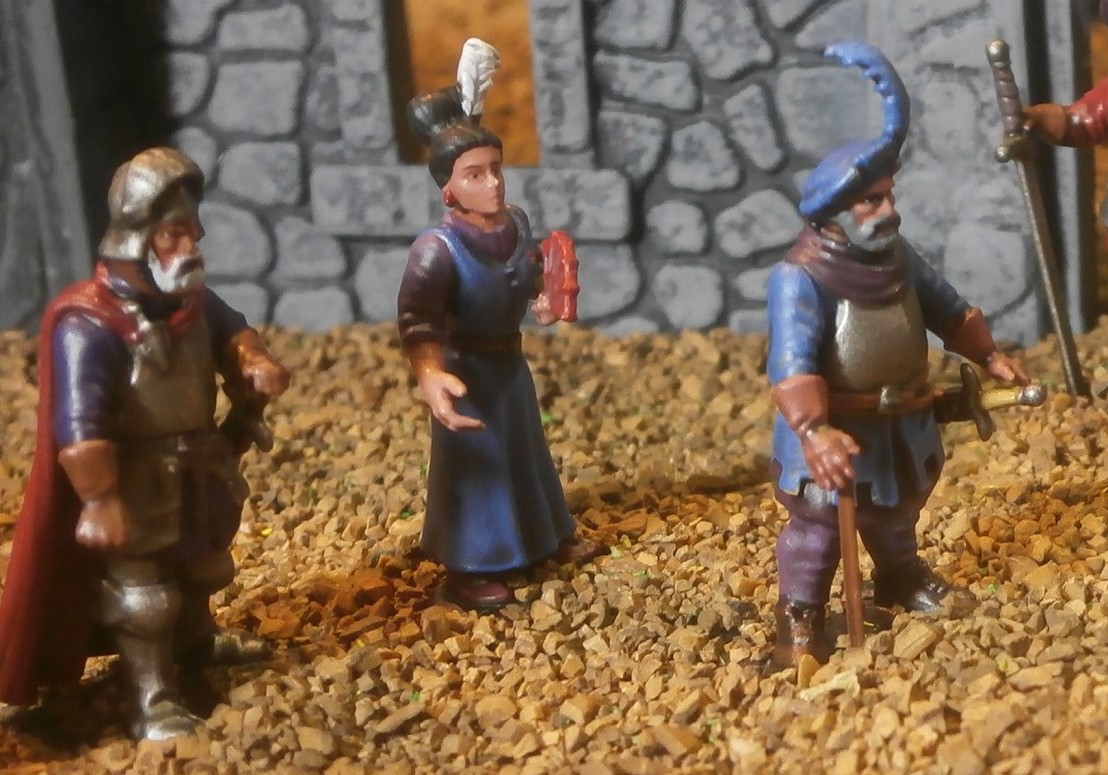
The sight of her fan sparked a flash of memory – Perette, the red-haired fire wizard who had proved to be a friend and a confidant, as well as a formidable magic user in battle.
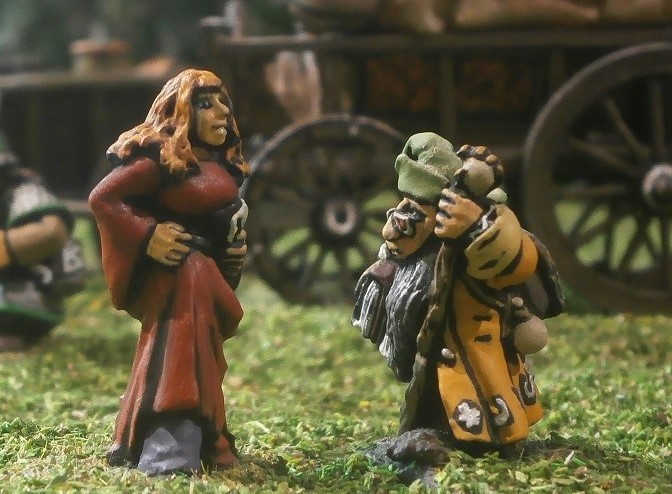
He doubted this lady’s use of a fan was inspired by Perette’s brief visit to the city, however, for Perette had fled Campogrotta almost as soon as arriving, having barely escaped the doom bombard’s poisonous explosion. More likely, it was a fashion imported from Bretonnia. In his mind, he could hear Perette laughing, then commenting,
“Imported from Bretonnia! Just like me, master dwarf!”
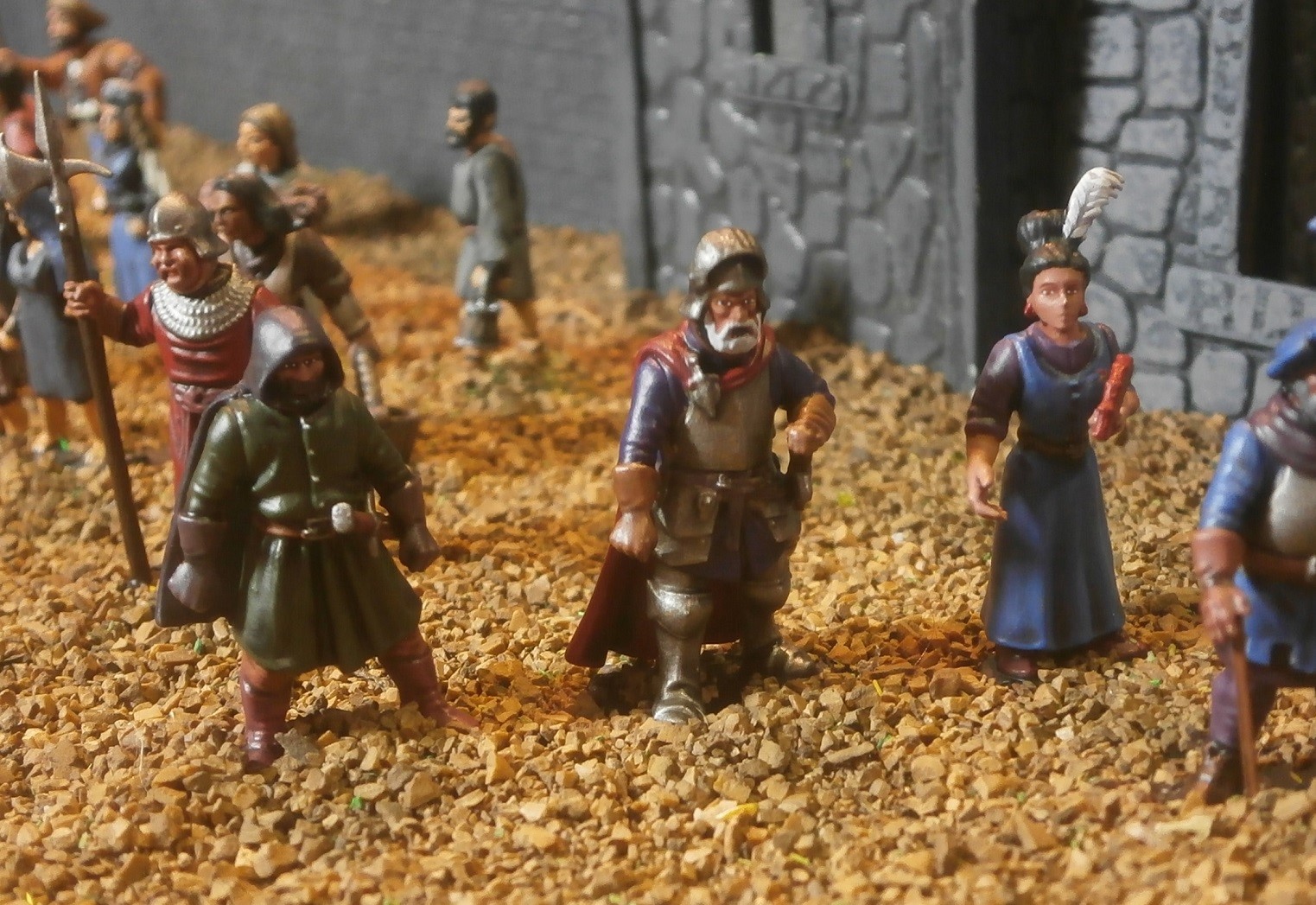
One of the committee members was surely a captain, most likely the watch’s commander, for he sported armour and a long cloak of the same red as the guards. Glammerscale would have to wait for an introduction to know the other man’s particular office, but as the fellow wore a dark, hooded cloak, he did wonder whether he might be one of the Arrabiatti, Lord Totto’s personal army (or as many would say elsewhere in Tilea, his band of robbers and outlaws).
After brief introductions, little more than an exchange of names and offices held, done somewhat awkwardly, as if few present had much experience of such formalities, nor even, it seemed to Glammerscale, had quite fully settled into their own roles, Glammerscale thought to begin with a question.
“Your honour,” he asked, “these newly raised knights we are to witness, are they to be a part of Campogrotta’s new army?”
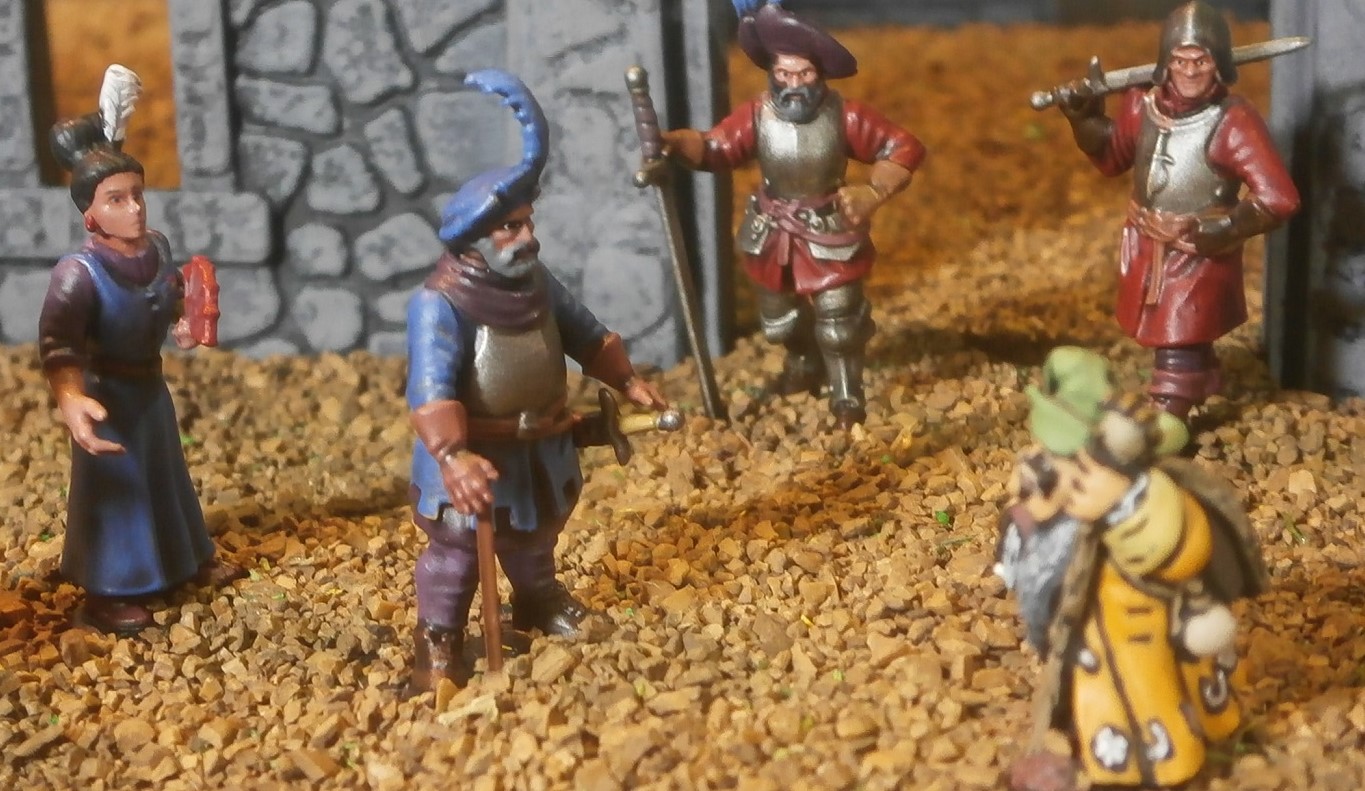
“Oh yes, master dwarf,” said Girolamo. “The start of that army, being under the committee’s command in times of peace, but taking orders directly from our kind protector, Lord Totto, until that peace is achieved. After which, I suppose, Captain Lodovico will command them?”
“That I might,” said the captain modestly. “Although we might have a general instead to command any marching army.”
“Well, good captain, that could also be you, could it not?” said the mayor.
“Cavalieri della commune,” interrupted the hooded man, Scolaio Albani, who had turned out to be a ‘consulente’ to the mayor, and was indeed one of Lord Totto’s trusted men. “Who will serve neither prince nor paymaster, but rather the people.”
“Yes, that is important,” said Girolamo. “They shall never be used to oppress the people but rather bring about peace.”
“Let us hope then,” said Lavinia, the vicesindaco, “that we or our successors never conclude that peace should be attained through oppression.”
The others all glanced at her, although Glammerscale perceived confusion in their faces rather than annoyance. Scolaio however, seemed unperturbed, and merely continued his explanation.
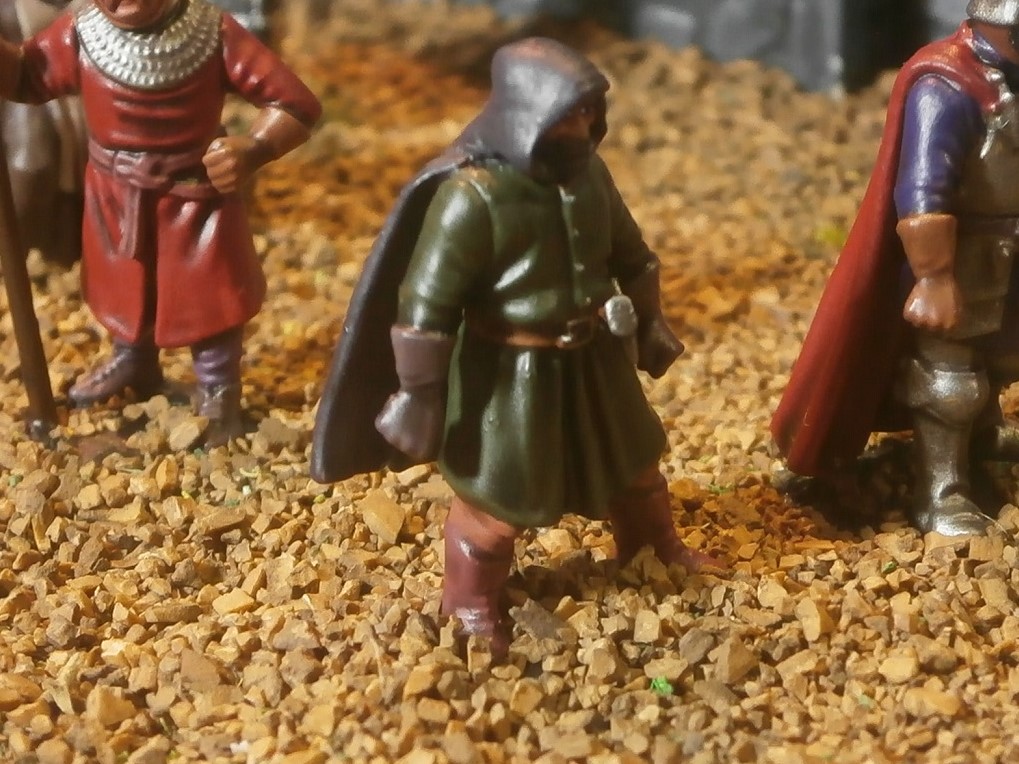
“Neither will they dedicate themselves to any gods, other than to bear witness to their oaths, that they may never break them. They must be honourable, obedient and brave, of course, but not overly proud, nor stubborn nor foolish, as so often princes are.”
“Aye!” said the mayor. “I think a prince might often act solely upon his own whims, despite any number of wise advisers, but we shall heed each other’s counsel always. Shall we not? Yes?”
There was general agreement exhibited in the form of nods and ayes.
“So,” the mayor continued, “any orders given to the cavaliere should be … how shall I say … the result of careful and sensible consideration, and not the fanciful notions of one man.”
He was interrupted by the blaring of a horn, and everyone turned towards the grassy expanse before to palazio.
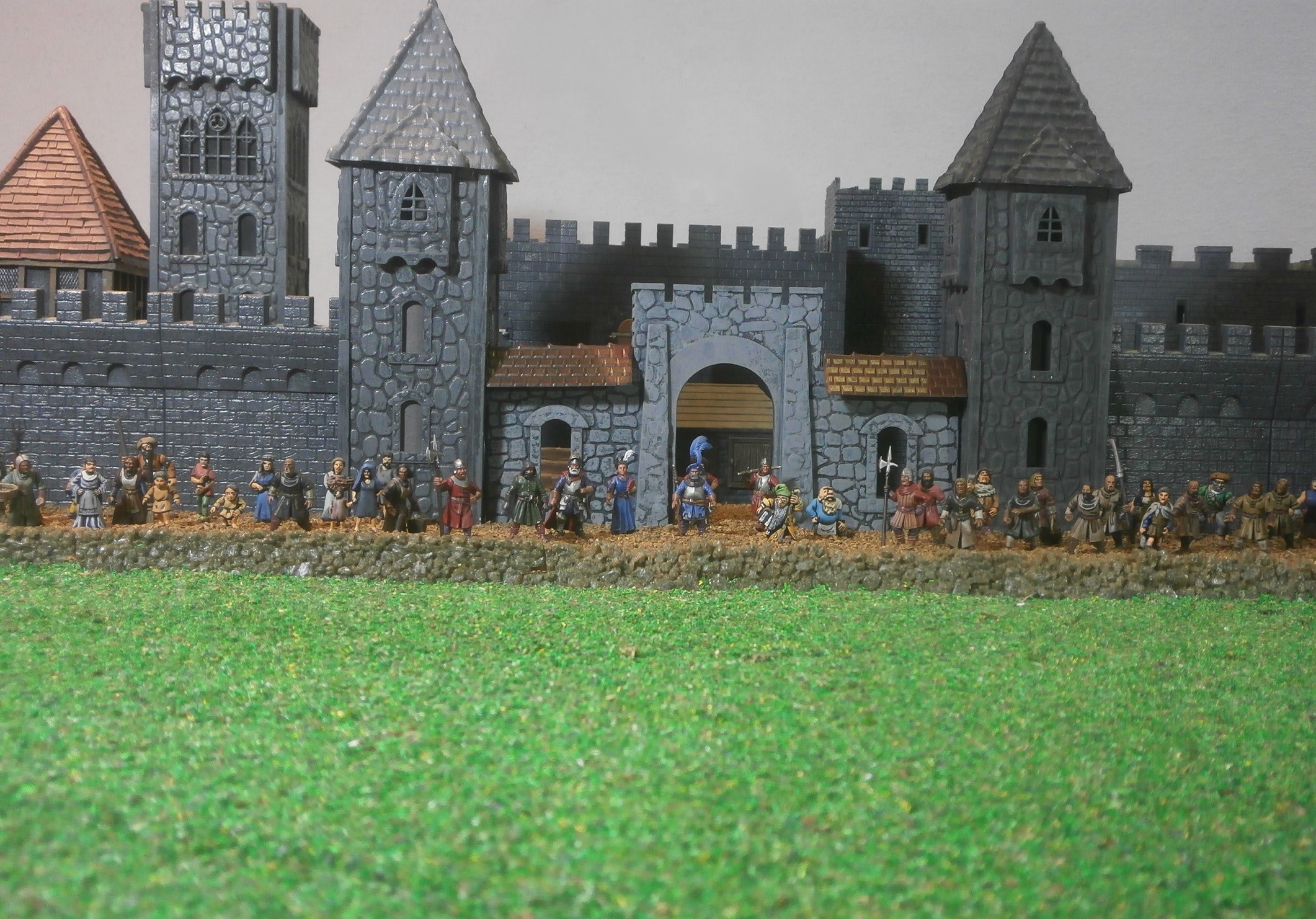
As the mounted men at arms cantered into view, the little crowd gave a cheer.
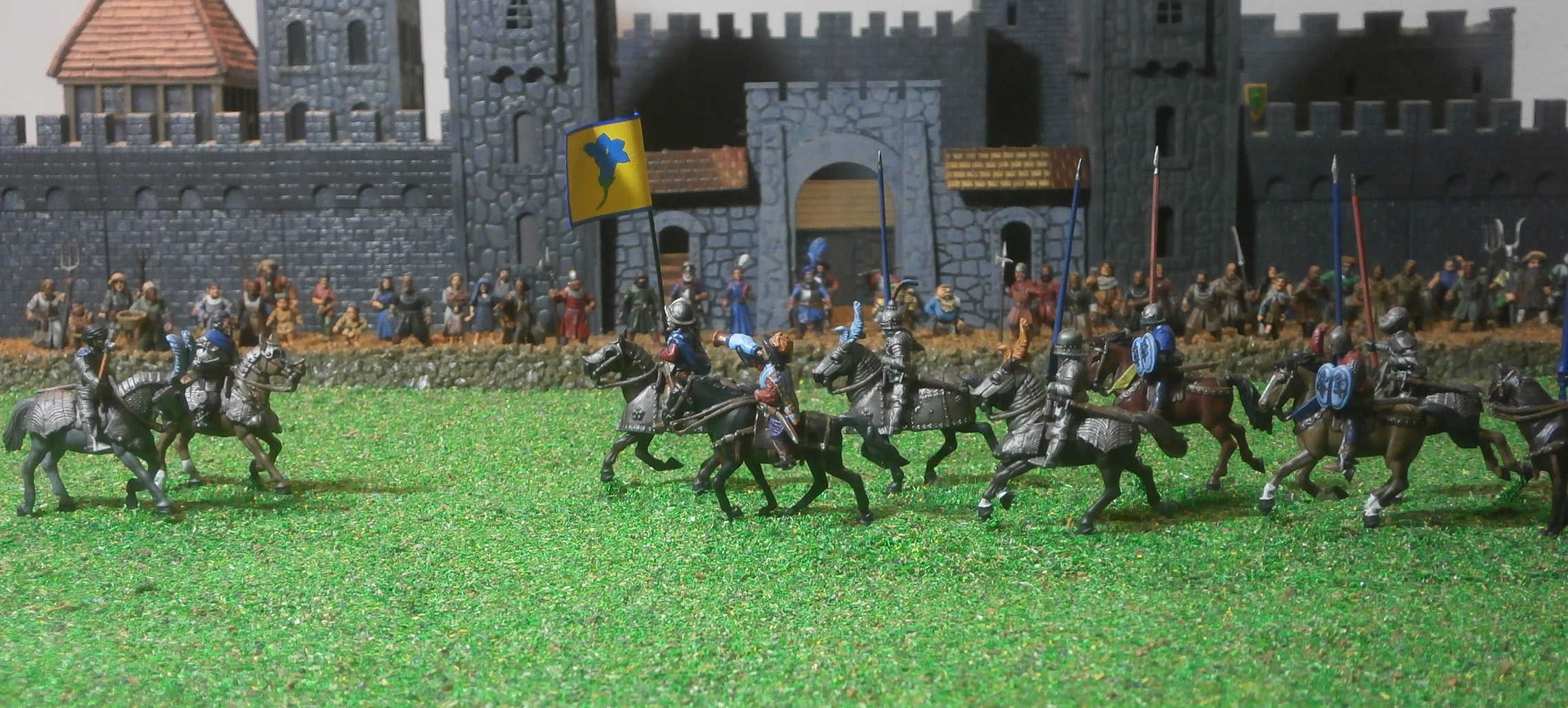
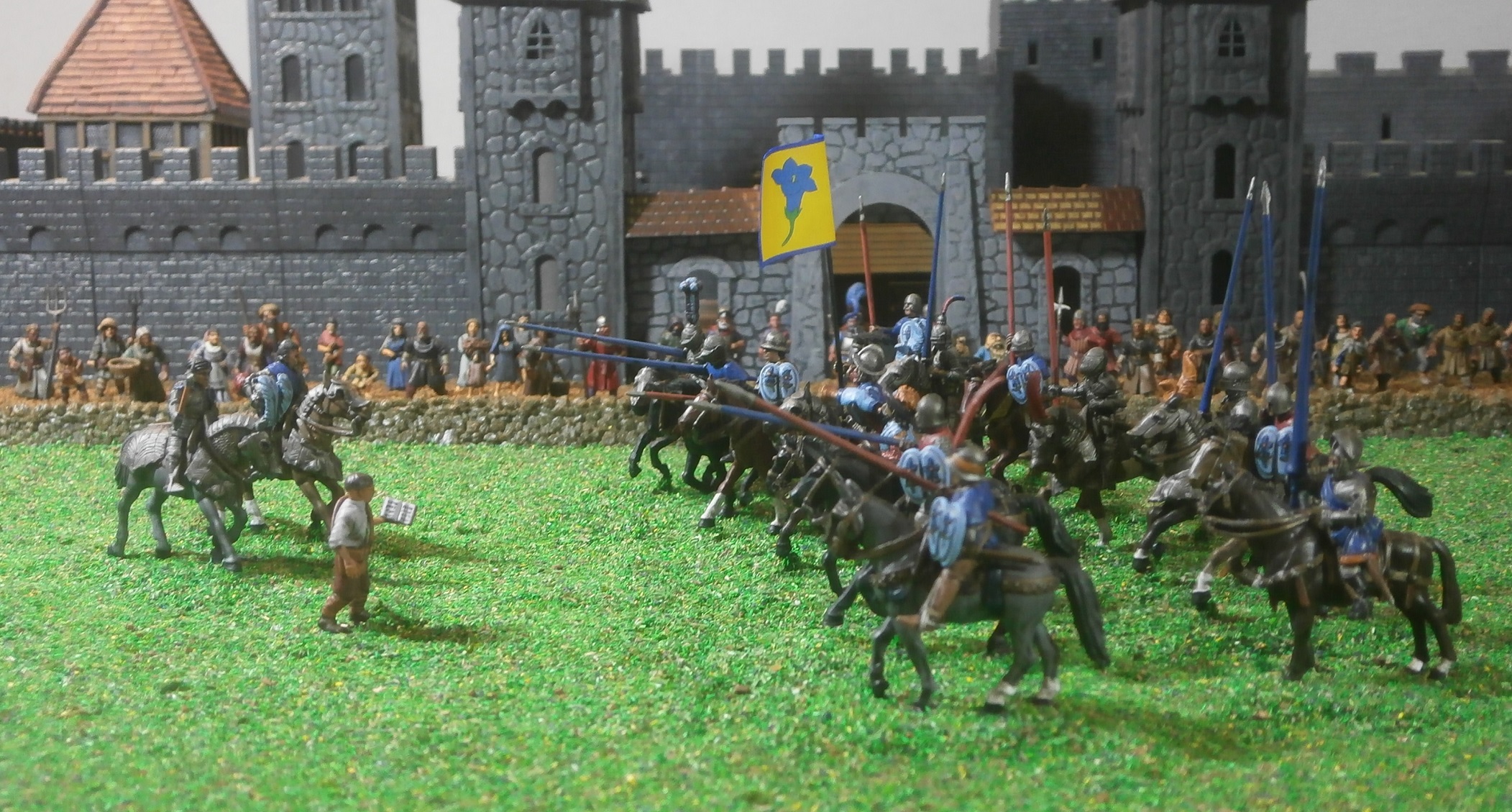
Two, presumably their leaders, came from the opposite side of the field, while the main body, their banner-bearer and the musician with the horn at their fore, came from the other.
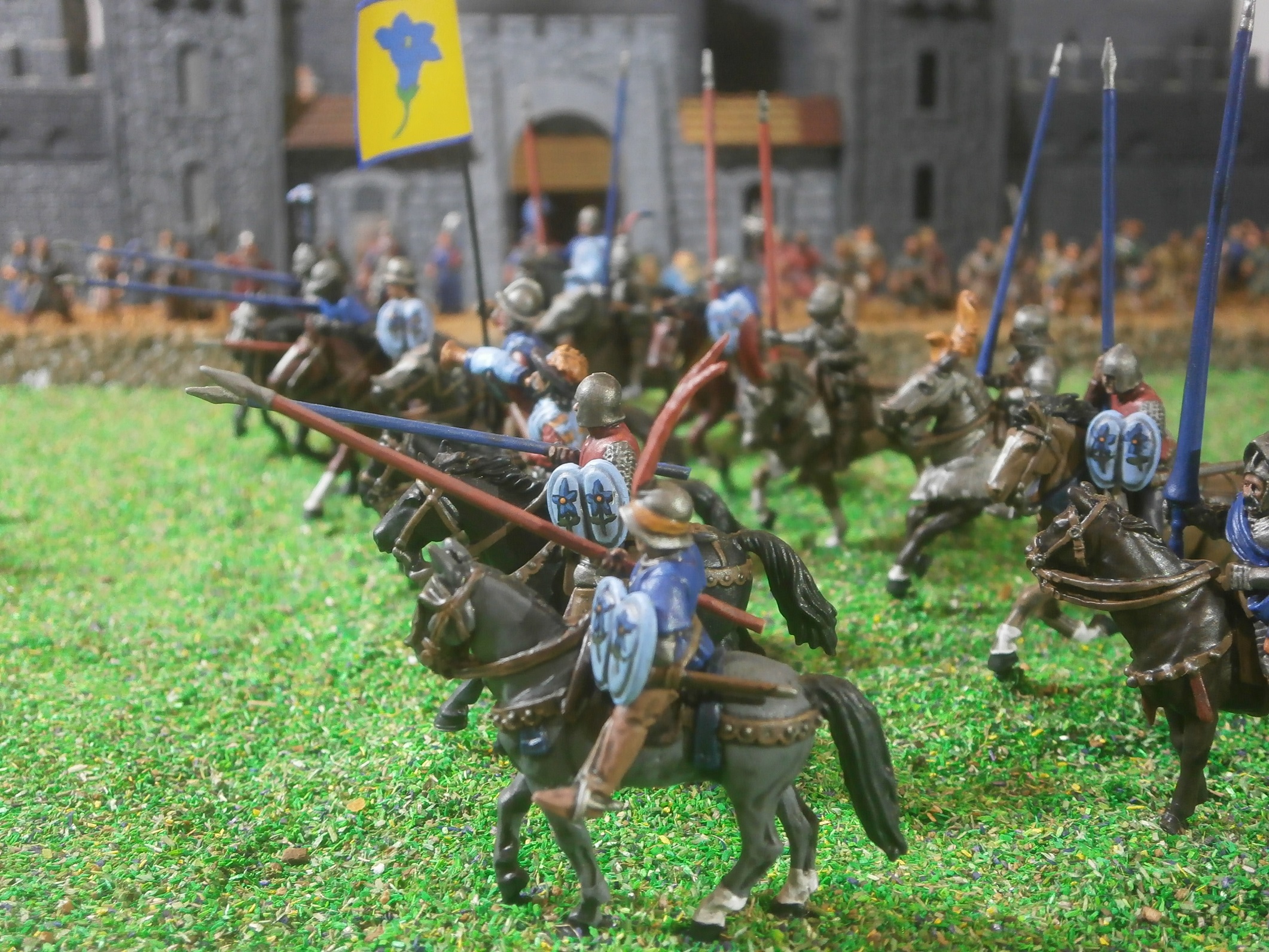
They were well enough armoured, with several horses clad in steel barding, and many, but not all, of the riders carapaced in steel from head to toe. Their standard bore the image of a blue Gentian flower, which Glammerscale learned in an alehouse later was chosen not simply because it was common in this part of the world, but because none among the old noble families had born its image their heraldry.
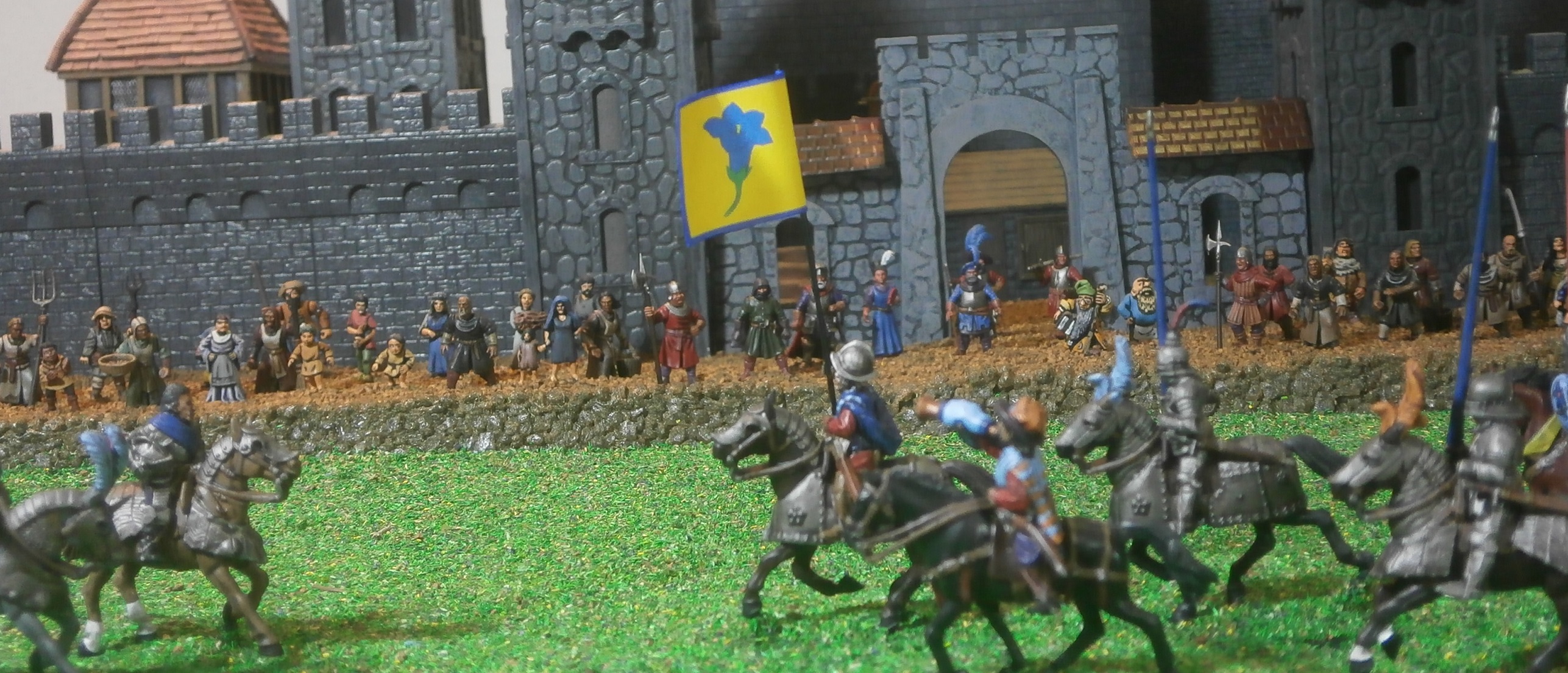
One drinker declared it was a most beautiful flower, which sprung from the dirt in the woodlands where the peasants might gather firewood for their hearths, and had long been used to prettify the humblest of abodes. And so, it was flower of and for the common people, he said, just like the knights.
By the company’s captain rode a black-haired woman, armoured as well as the best armoured among the rest, but without a helm.
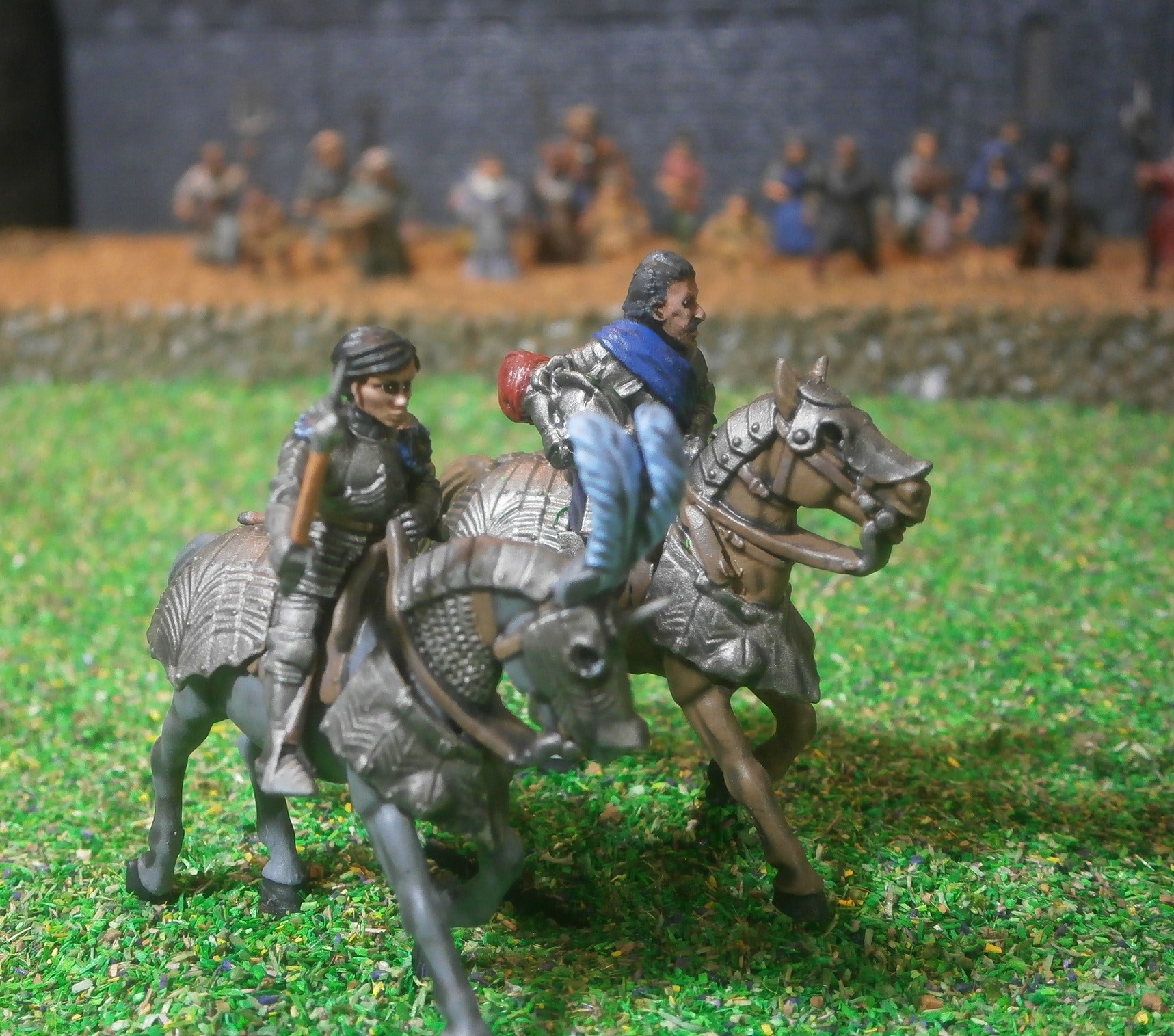
As she came to a halt, the mayor took great pride in telling Glammerscale that she was Marieta, daughter of the famous Ravolan paladin, Sir Gregoire de Vienne, who died in 2401 after challenging the brute tyrant Razger Boulderguts to single combat. How she escaped Ravola and made her way to cousins in Ridraffa, where she further honed her already impressive martial skills, but could not settle. And so she had recently come to her uncle’s house in Campogrotta, becoming the inspiration and chiefest furtherer of the call for a new knightly order. Clad in her family armour and spurred by an overwhelming desire to bring prosperity and joy to Campogrotta and Ravola, she had inspired the best among the youths, sons and nephews of dead knights …
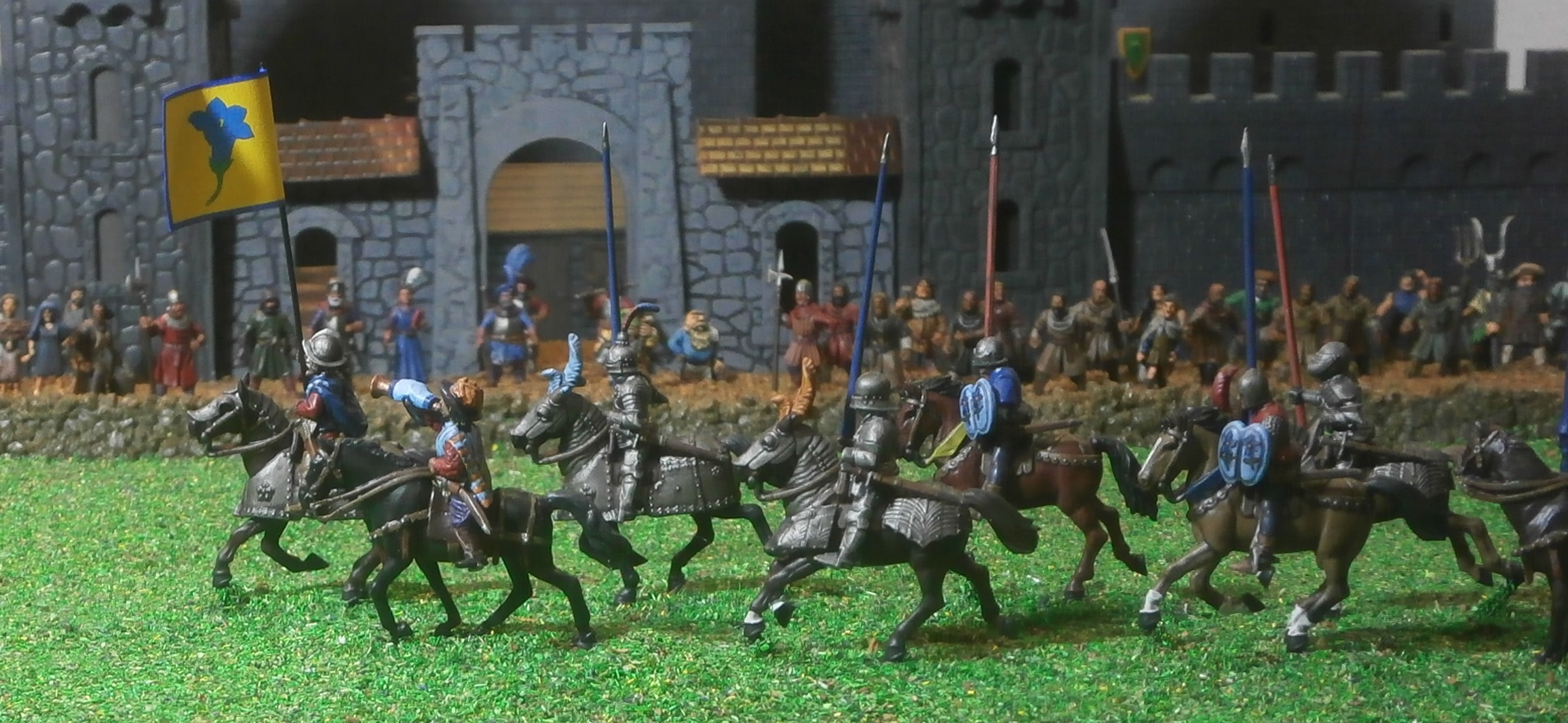
… to do as she had done, seeking out not only old blades and breastplates, but also the old courage and skills of Campogrotta. And her hopeful spirit was so infectious that before long, as well as those youths, some arrabiatti riders who had family in the city volunteered, as did several Compagnia del Sole men at arms who had married Campogrottan maids during the company’s brief rule and so had stayed behind when Mazallini took the rest away, and that even some Brabanzon riders, who had taken too long to recover from the doom-bombard’s poisonous curse to depart with the Fire Wizard Perette, also offered their service.
This last part made Glammerscale smile inwardly, for he wondered if the Brabanzon saw in Marieta something of their beloved Perette.
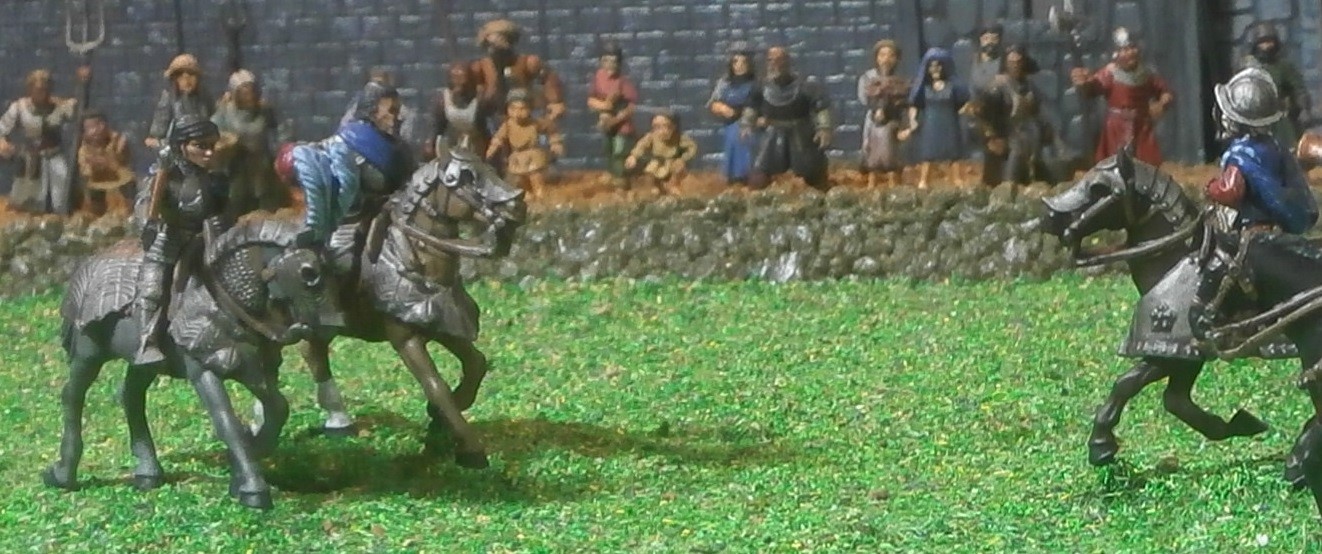
As the last of the riders entered the field, the fellow that Glammerscale presumed was their captain, who was at Marieta’s side, gave a barked command, which elicited a flurry of notes from the horn and then the reforming of the company into a crescent.
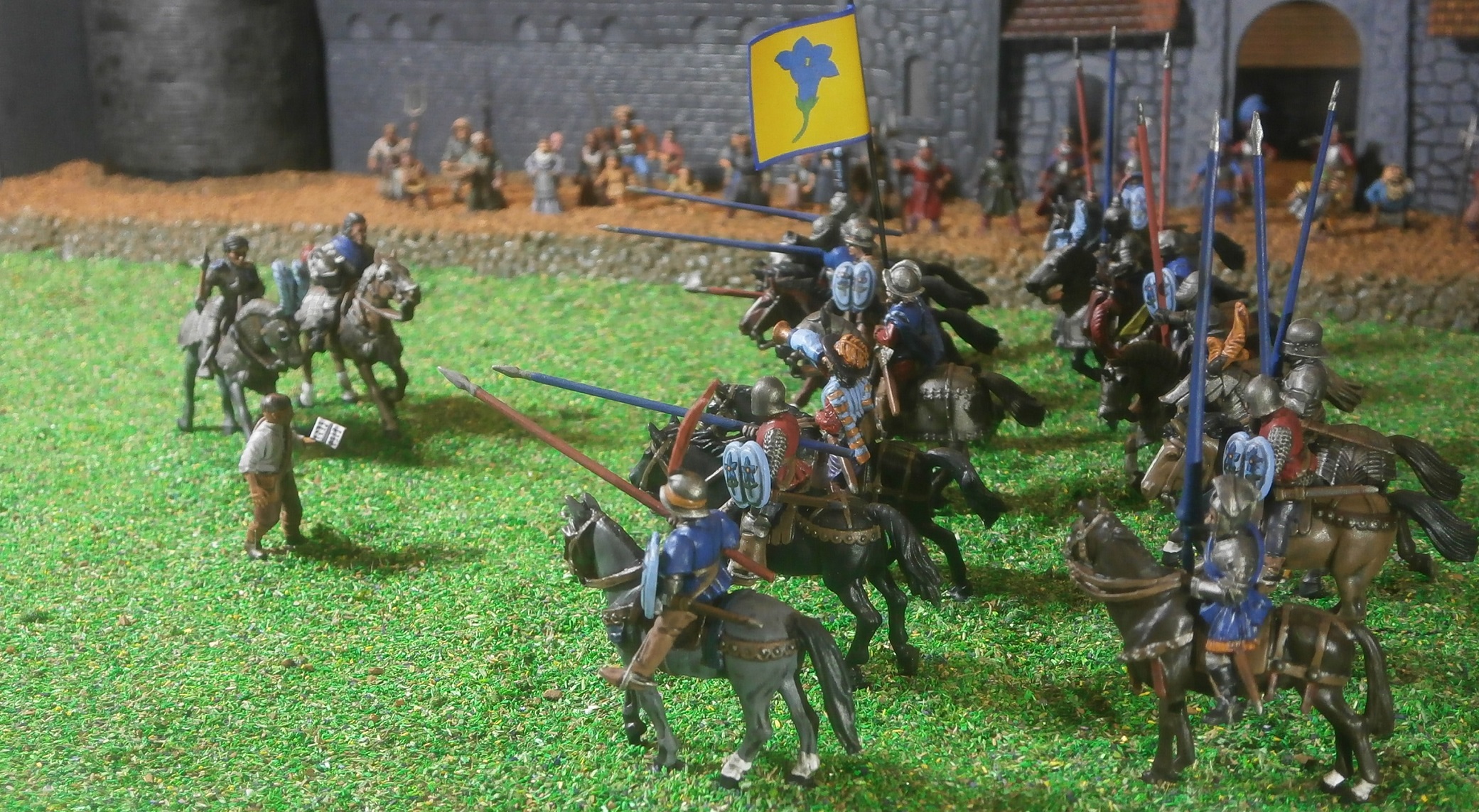
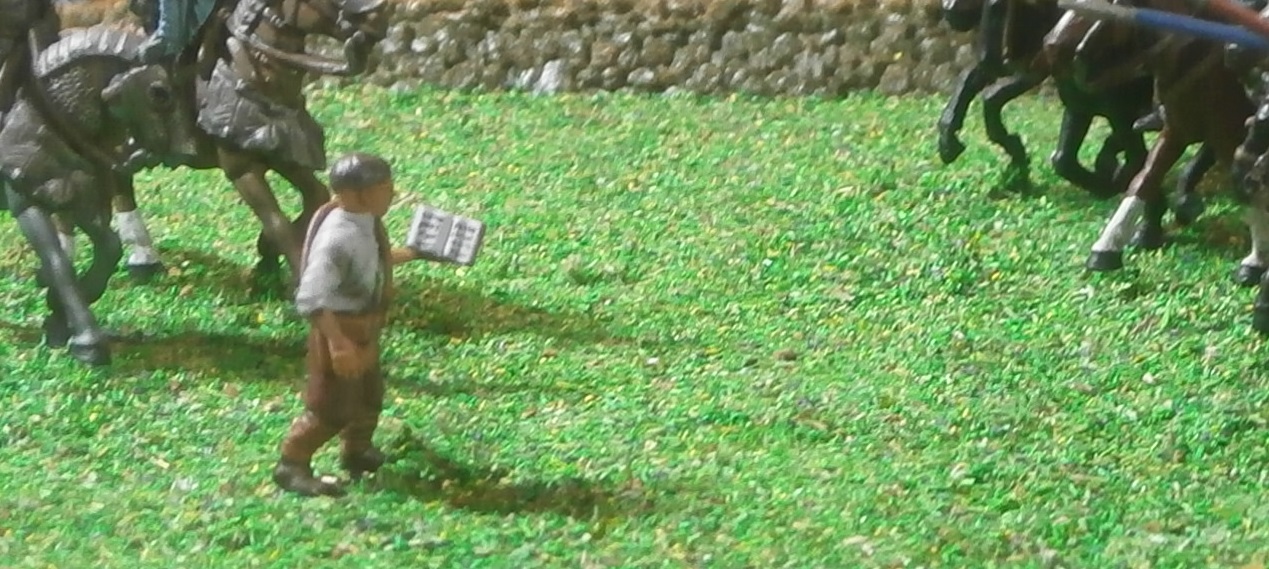
As those at the fore dipped their lances, Glammerscale could just make out a humbly dressed footman upon the far side of the commanders, bearing a book, being a clerk of the council. There was a cough, which turned out to be the clearing of the clerk’s throat, and then the reading began.
Glammerscale could not make out all the words, nor indeed even a quarter of them, although did better at understanding those few phrases that were repeated by the knights in unison as they swore their oath.
There was little in the way of preamble, which appeared merely to be instructions concerning when they themselves must speak the words. There was then mention of loyalty, bravery and obedience, some clauses concerning duty and humility, and the names of several gods were uttered too, including Morr and Myrmidia. Finally, there was the declaration of a motto, which the knights repeated louder than all that came before:
“Tuitio Urbis et Obsequium Pauperum.” (Defence of the City and Obedience to the Poor.)
“A fine company of warriors, indeed, your honour,” declared Glammerscale. “And the best of beginnings to your new army. That you could muster the likes of these, after all that Campogrotta has been through is, frankly, miraculous.”
“Aye, well,” interrupted the captain.
“It was helped by the fact that the city still had the old arms of days gone by, stored here and there in the dusty armouries of the noble’s palaces. Neither ogres nor ratmen had thought to seek such out. The brutes could make no use of such stuff, and the rats don’t ride.”
“Plenty of brave young fellows volunteered,” added the Arrabiatti’s man. “They know we must grow our army, now that we’ve learned we cannot rely on our southern neighbours, the sylvan elves, to stand by us in battle.”
“Nor indeed, to stand by anyone,” said Captain Lodovico. “They have also abandoned dwarves and Remans in battle.”
Glammerscale remembered how angry King Jaldeog had been when he received news of the complete destruction of Thane Narhak’s not insubstantial force, while the elves fled away to safety – his majesty’s curses were both profuse and ingeniously poetic. But he knew not to give even a hint of his king’s fury to the councillors.
“Aye, well,” he said. “You might expect quick agreement on my part, what with the oft’ fractious relations between dwarves and elves over the ages, but I cannot deny that both men and dwarves have proven and present reasons to doubt the elves’ reliability. It would be foolishness to look to them for any further help during these troubled times.”
“Their army slunk across the bridge at Tarano only weeks ago,” said the captain, “to hide themselves away in the trees of the deepest parts of the forest. It may be that we neither see nor hear from them again for many a decade.”
Lavinia laughed. “And even if we did, we know now that they are likely to flee at the first hint of danger.”
“Let us not be too hard upon the elves,” suggested Glammerscale, much to the others’ surprise. (He always had a tendency to seek a conciliatory approach.) “They love their forest home, and I have no doubt that they would die in droves, even happily throwing themselves on an enemy’s pikes, to defend it. One could even say it was men and dwarves who were at fault, for expecting the elves to fight so far from home, even to stay away so long. It is not in their nature. Their love of the trees is stronger than their pride. They know what they cherish, and act accordingly. There is, I could argue, a species of wisdom in that.”
“Aye, I know that one,” said Lavinia. “‘Live to fight another day’. All well and good. But if you want to apply such wisdom, don’t first lie to everyone that you are here to help. Don’t make false promises that you will fight by their side in battle.”
“Then their love of the trees is also stronger than their honesty,” said the hooded consulente.
Lavinia chuckled at this remark, while the mayor seemed to be pondering it.
“Nevertheless,” said Glammerscale, “you have begun to increase your own defences, and these knights are a true testament to the hopeful future of Campogrotta. Which brings me to something my king commanded I was to offer you. King Jaldeog would have you understand that he did all he could to free your city of Razger Boulderguts’ ogres, sending not only his own dwarven warriors, but also Baron Garoy, the Brabanzon and the Compagnia del Sole, at great expense, to drive the brutes away. He freely admits that he had mistakenly thought it for the best that Captain General Mazallini ruled the liberated city as governor, and that he did not foresee the invasion of the ratmen. Yet now he is most pleased to see that you have found your own way, as a Republic Commune, so that you, his closest neighbours, might grow strong and thrive, allowing trade once more to flourish along the Iron Road. He also accepts, as he knows he should always have done, that Campogrottans must rule Campogrotta, and do so howsoever best suits them. And by way of encouragement, in a spirit of helpfulness rather than interference, he has instructed me to offer you the service of a newly raised regiment of dwarven warriors, to be commanded by your own captains, and to remain for as many years as are required to ensure the future safety and prosperity of your city state.”
The group fell quiet a moment, obviously surprised by what Glammerscale had to offer, and perhaps a little uncertain how best to respond, in light of Campogrotta’s recent history. It was the Arrabiatti who finally spoke – not to Glammerscale but to the mayor.
“I think it best, your honour, concerning such a decision as this, that we take Lord Totto’s advice. He is, after all, our protector.”
“Oh yes,” said the mayor. “Indeed. And at the first opportunity, I should think.”
He turned to look at Glammerscale.
“I know you have visited our city before, master dwarf, in more miserable and uncertain times. But I would not have you badly entertained this time. You must join me for dinner, this evening. My wife has a way with mutton that delights every palate, including, I think I can safely vouch, that of a dwarf.”
…
(More to follow concerning events of the end of Autumn.)

 BigSmallWorlds