(Tilean Campaign) The End of Spring, IC2403 – Part 7. Mangled Facts

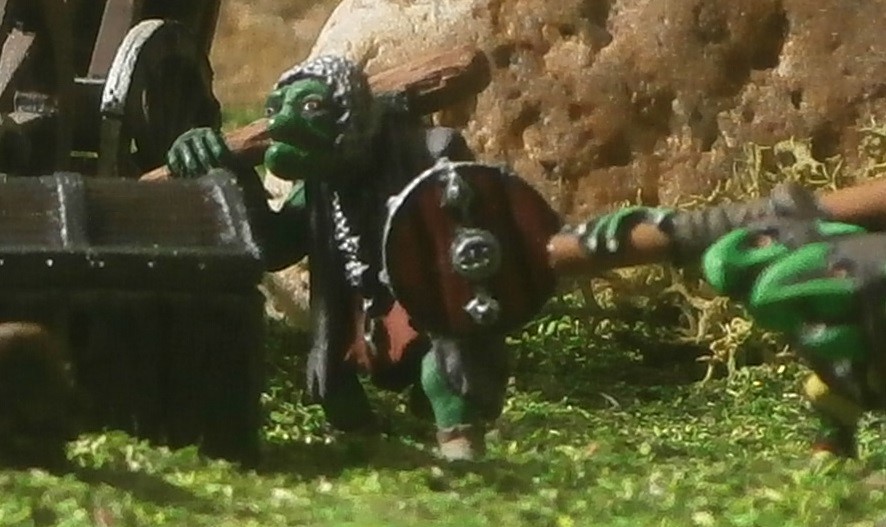
“They didn’t slurp it all then?” said Frokkit, peering into the topless barrel whilst clutching his vicious billhook as a support. His spiked helm threatened to topple in, but he pulled back just before it did.

“No, they didn’t,” said Pooshin. “Didn’t even touch these.” He nodded towards the two on the ground and the one still on the wagon. “Too busy draining them big ‘uns we got from the last place. But they’ll get around to these soon enough, so best not get any ideas.”
Whichever ogre had drunk from the open barrel the previous night hadn’t troubled himself to broach it in the normal manner, instead smashing the head in to leave wooden splinters floating on the unfinished ale inside. Frokkit dipped a finger in, then sucked the sticky beer off, making that particular digit fractionally less grimy than the rest.
“Tasty,” he announced. “You know, I reckon they won’t want this one, not now it’s already opened. An’ if we put it on the cart it’ll just slosh and spill all o’er the place.”
Cornyclipper nodded, an action made all the more noticeable by his heavy nose, and flapping ears.
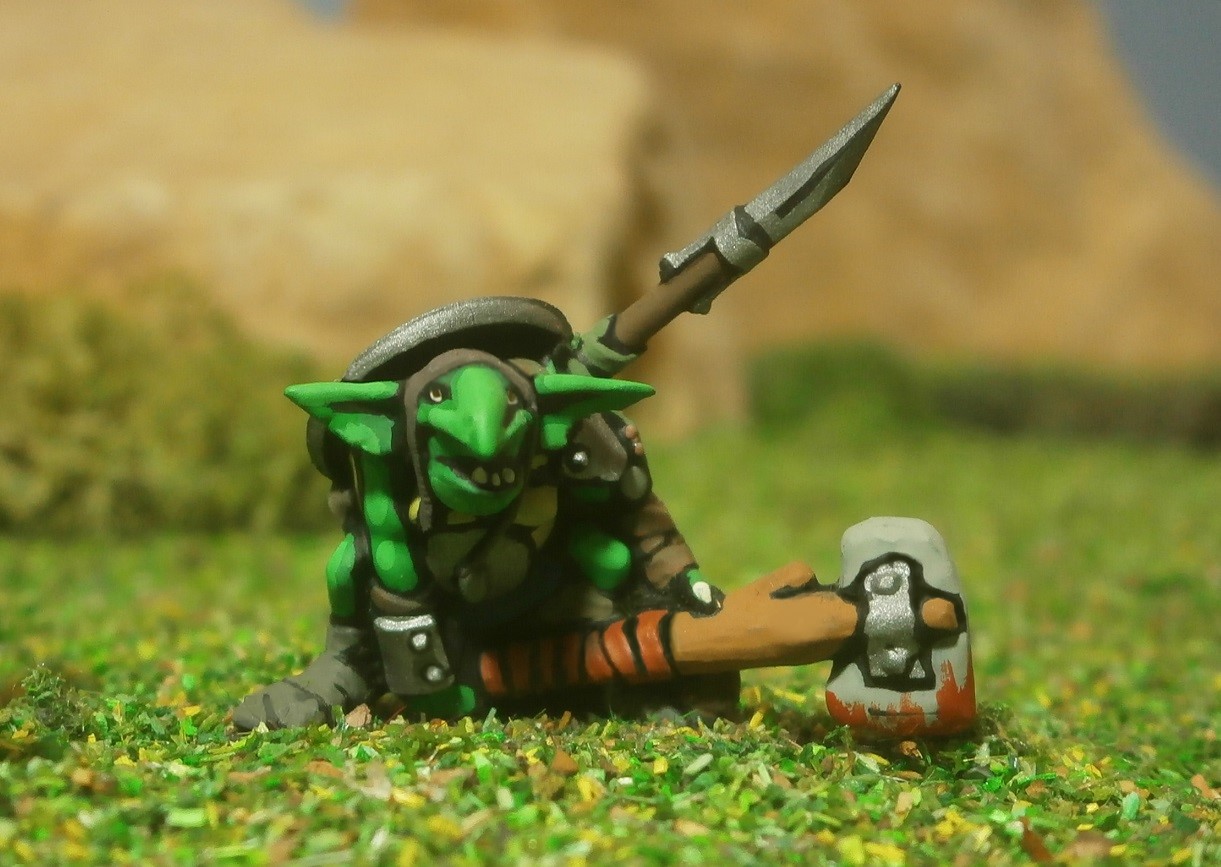
“You gotta point there, Frokkit. Better to drink it up ourselves than let it go to waste.”
“Puddles in our bellies instead o’ puddles on the road,” said his friend Furnip from beneath the huge ogre’s club he carried upon his bent back.
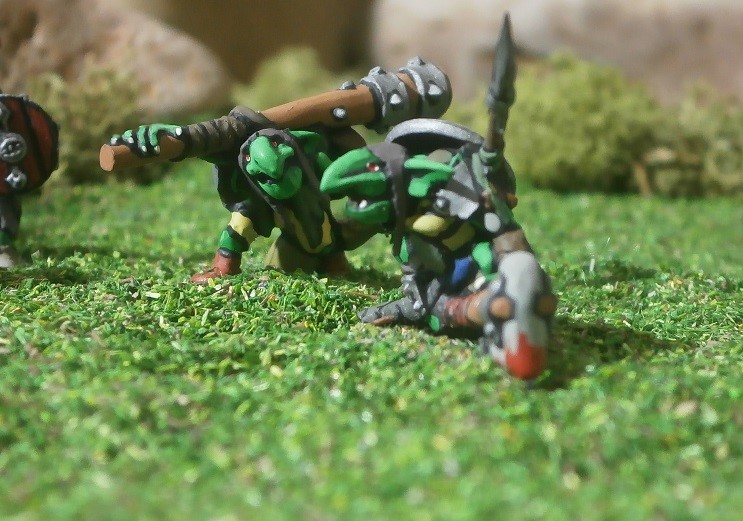
Silence descended as they all pondered the proposition. They knew not to rush into any act of thievery, no matter how petty, without proper consideration. Carelessly light-fingered gobs did not tend to last long in the company of ogres. It was Frokkit who eventually broke the silence.
“No-one’s lookin’,” he said. “They’re already on the move, leaving us gobs to catch up as best we can. They’ve taken the big barrels. These little ‘uns are nought but tipply sips to them.”
“Aye,” said Furnip. “Nipper’s tipples.”
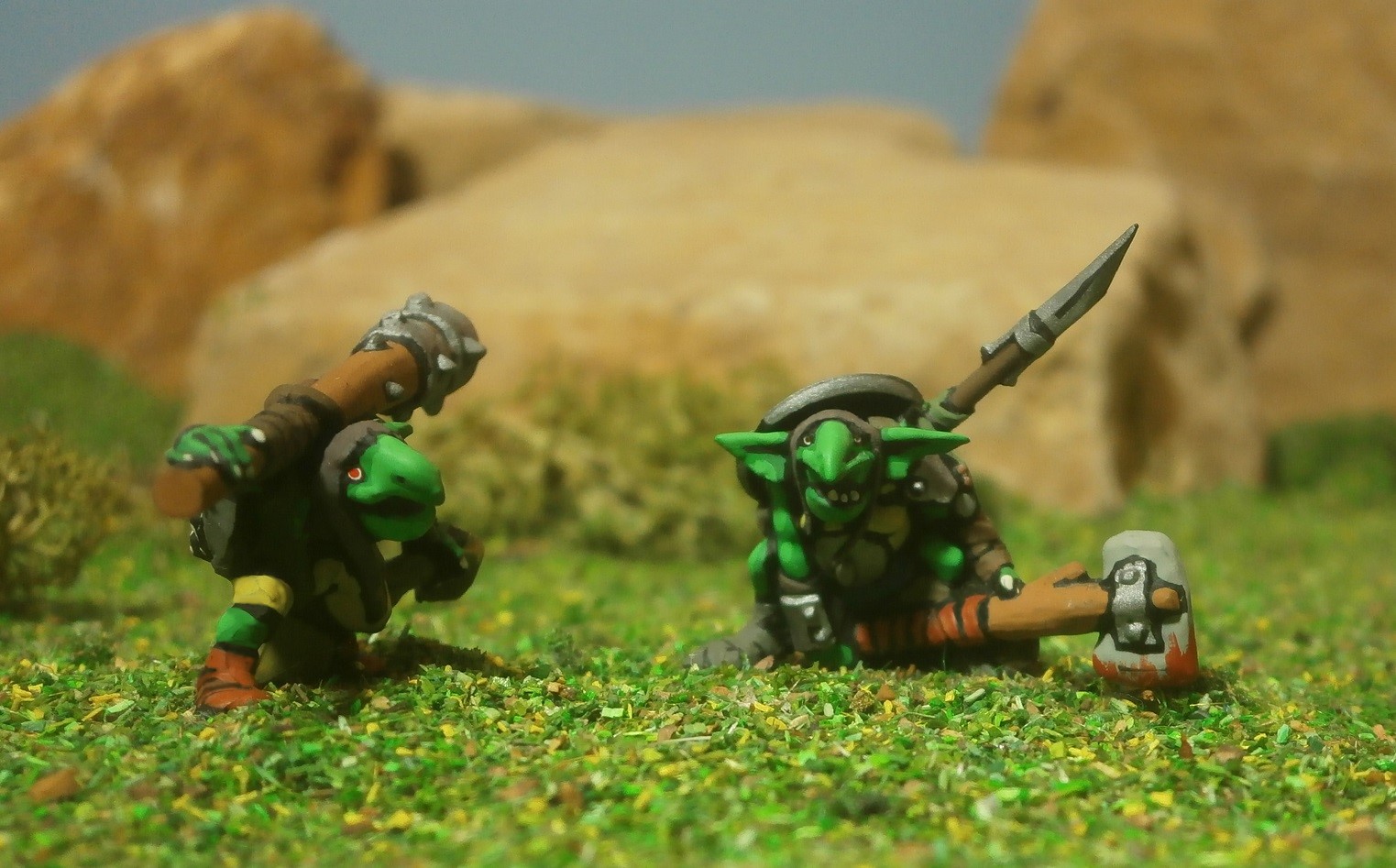
“We deserves our share,” said Cornyclipper. “We done Mangler good service, an’ Razger good service an’ all. The bosses had a right feasty reward last night. ’s only fair we have a drop or two too.”
“Aye,” said Furnip, his red eyes fixed in their peculiarly staring manner, but his voice getting louder. “A drop o’ tootoo.”

“I wish they hadn’t gobbled up the oxen, though,” said Cornyclipper. “Luggin this lump of a wagon ain’t gonna be easy.”
“’Twon’t be as bad if we’ve a little ale inside us,” said Frokkit.
“Reckon so,” agreed Pooshin. “But we’ll drink after we’ve loaded the rest. That way the bosses’ll be even further ahead an’ a lot less likely to ogle us at it. Let’s not rush to load up neither. Best wait a while, just to be extra sure.”
As well as his memorably bulbous chin (which has been punched so often, whether deliberately or not, that he had long since lost all his front teeth) Pooshin had always been known for his cunning. All those present were happy to take his advice, so they all fell silent and stared at the barrel.

Some of them had belonged to Mangler’s band, some to Razger’s army, but now Razger ruled everyone, and although most of the ogres still marched in their old companies under their old banners, the gobs had become all mixed up together. The ogres could not care less whether their goblinoid servants formed companies, or even if they took part in the battles. The gobs, however, had learned the hard way that they needed strength in numbers if they were to avoid their masters’ full cruelties. Not that they ever put up any sort of argument or fighting resistance, rather that they could lose themselves in the crowd making it impossible for the ogres to work out which of them was to blame for what. And in crowds they could usually rely on some other gob to distract an angry ogre whenever they became the focus of attention, hoping their masters’ attention would wane sufficiently that they would go off to do something else. It usually did.
Frokkit, in an attempt to make the waiting a little more bearable, broke the silence.
“D’you see butcher Slabdul lording it up last night?” he said. “You’d think it was him who beat Krav in the duel, not Razger.”
“Maybe he did?” said Pooshin.
“Whatya mean?” scoffed Cornyclipper. “Razger near cleaved Krav’s head clean off his shoulders, just a flappy bit of flesh left to hold it on! I was right up at the front, an’ I saw it plain as pain. Slabdul just stood and watched like me and the rest.”
“Maybe Slabdul put a curse on Krav?” suggested Pooshin.
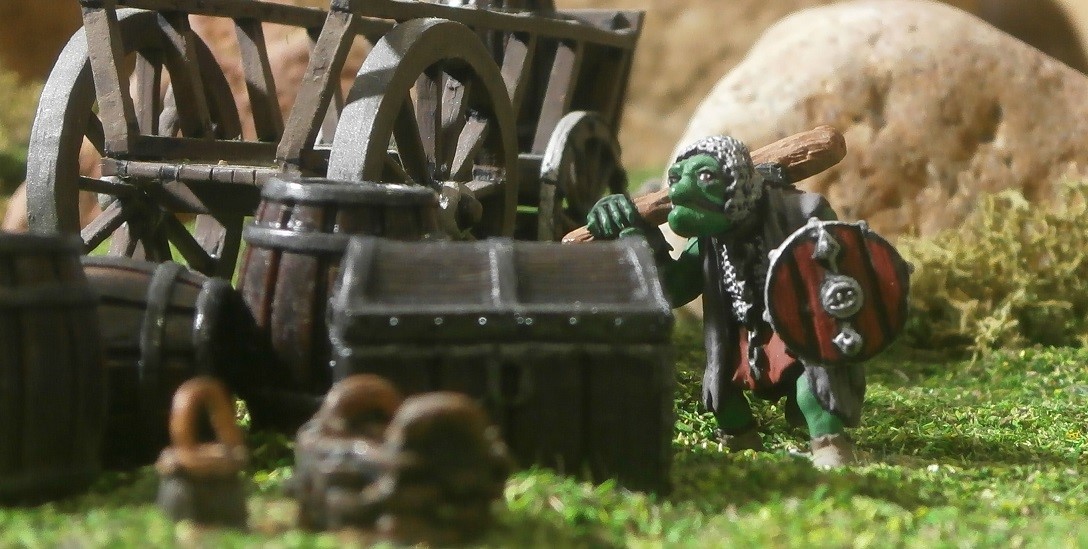
“Nah!” said Cornyclipper. “I’ve seen him conjurating, an’ it’s a right old song and dance I tell ya, cutting up his own flesh an’ all. There was none of that last night. He just watched with a big grin on his face.”
“Puh!” snorted Pooshin. “O‘course he was grinning. He wanted Razger to win, an’ he knew that’s exactly what Razger was gonna do.”
Frokkit shook his head. “Not so sure about that. Krav had a chance. A good half of Mangler’s boys thought he could do it.”
“But did he ‘ave a chance, eh? Did he really?” asked Pooshin. “Maybe Slabdul put a curse on him before the fight? Maybe he slipped some foul nastiness into his meat or drink?”
“Magic grediants and wicked wot nots,” suggested Furnip, looking even more wild eyed than usual.

“You reckon?” said Cornyclipper, his brow furrowed.
“Think about it,” demanded Pooshin. “He got given a big chunky share of the army’s loot after the duel. What was that for?”
“To stop him complaining like Krav did?” said Frokkit.
“No, it was a reward.”
“It was a reward,” said Murdle, who had until now held his tongue. “But not for cursing Krav. And not for poisonin’ him neither. Whether he did one or both them things.”

“What was it for then?” Pooshin inquired. He knew Murdle of old, and had long since realised that Murdle had a grip on the ways of their masters that most gobs failed – often fatally – to attain.
“Think about it,” Murdle explained. “Krav was angry ‘cos when Mangler died Razger made Slabdul his second, not him.”
“Was a bit funny that,” agreed Pooshin.
“Not funny to Krav. He was next in line to Mangler so he should have become second when Mangler died.”
“We know,” said Frokkit in exasperation. “That’s what the fight was about.”

“Aye, the fight,” said Murdle. “But you’ve got things back to front in yer addled ‘ed. The fight was about butcher Slabdul being given command instead of Krav. The reward was already given.”
“No it wasn’t,” argued Pooshin. “Butcher Slabdul got his loot after Krav died.”
“The loot, aye, but he got the command before the fight. That was the reward. The loot was just some crackling fat to make the reward tastier.”
“You’re sayin’ Slabdul was rewarded for summat else?”
“I am saying that, ‘cos I knows it’s true. After the battle on the road, Mangler was mangled bad, but I’ve seen ogres live through a lot worse ‘n that. I’ve seen gobs get better from worse ‘n that.”
“So?”
“It was Butcher Slabdul tended his wounds, see?”
Pooshin scratched at his chin. “He wouldn’t get a reward for being bad at healing. Makes no sense.”
Murdle simply looked at him and waited.
“Hang on …” said Pooshin, as an idea squeezed its way into his thoughts. “You’re sayin’ he got a reward for making sure Mangler died?”
Murdle grinned, revealing his two longest teeth – both on the left .
“Snitch here saw what happened,” he said as he turned to look at the smallest gnoblar present. “Didn’t ya Snitch? No ogres spot you Snitch, do they? Ye’r too small ain’t ya. But there’s bulgin’ eyes in that little head of yours, ain’t there? Tell ‘em, Snitch. Tell ‘em what told me.”

Everyone looked at Snitch. Some were surprised to see him, having altogether failed to notice him until that moment.
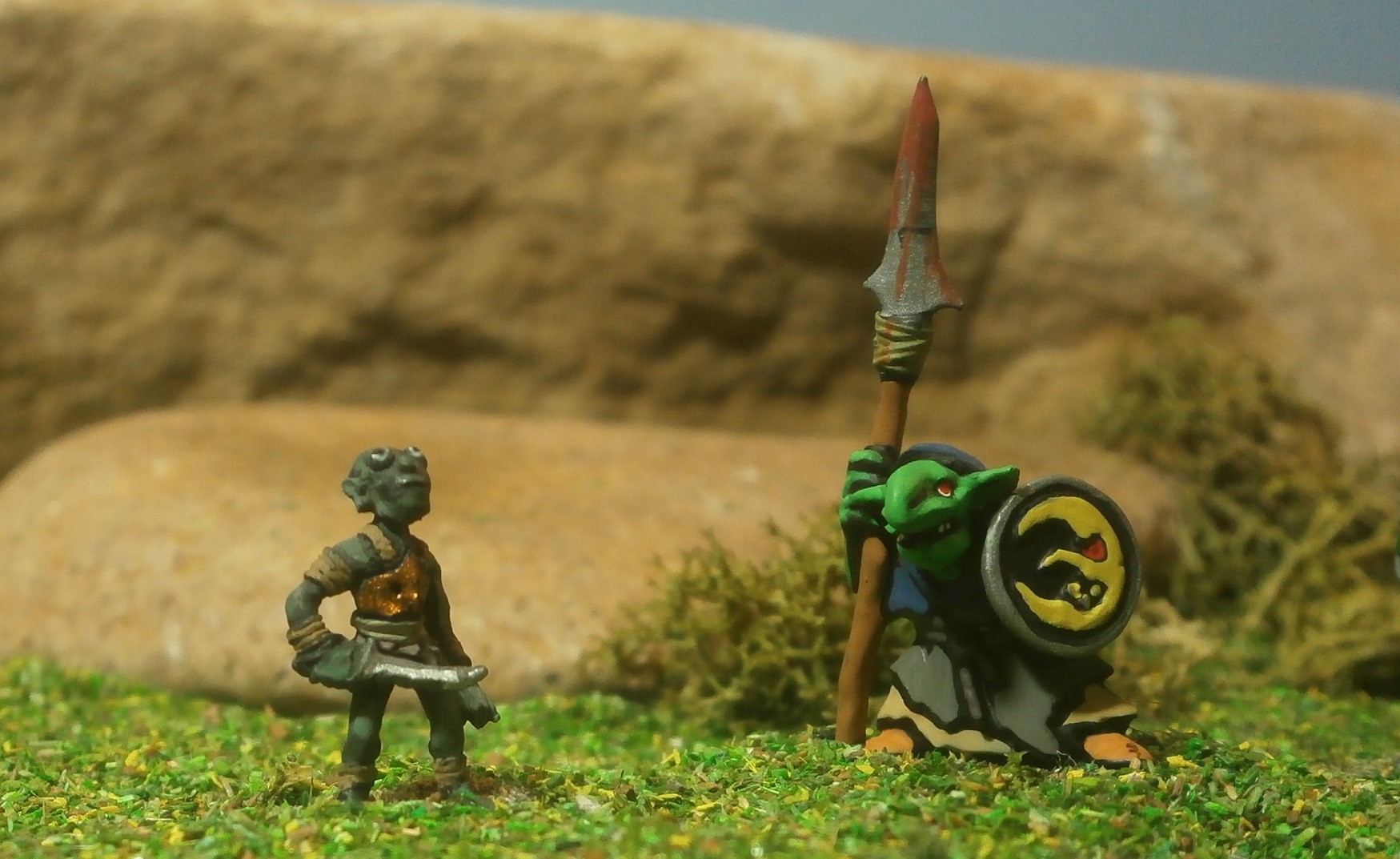
“Old Mangler lay there sick and sore, big black bruises, skin all tore. But the butcher’s needle was a knife, an’ he stuck it in to end a life.” He had always had a sing-song way of talking.
“Sick, sore, skin all tore,” began Furnip. “Needly knifey …”
“Oh, stop yer gabblin’, Furnip!” ordered Pooshin, then fixed his eyes on Murdle. “You’re saying Slabdul killed Mangler?”
“If Mangler had a hundred cuts after the battle,” pronounced Murdle most sombrely, “he had a hundred and one after Slabdul’s attentions.”
Silence fell as they all thought about what they had learned. Until Pooshin piped up.
“Makes no difference to us though, does it?” he said. “Don’t matter to us who’s boss, we still has to do what we’re told, and be snikkety quick about it.”

“You’re not wrong. Best drink up then and get a move on loadin’ the rest” said Frokkit.
He swung his billhook over to stick the steel head into the ground, then thrust both hands into the ale to lift out a big, dribbly scoop.
…………………………………………………………………………….
(Tilean Campaign) The End of Spring, IC2403 – Part 8. Glammerscale and the Brabanzon
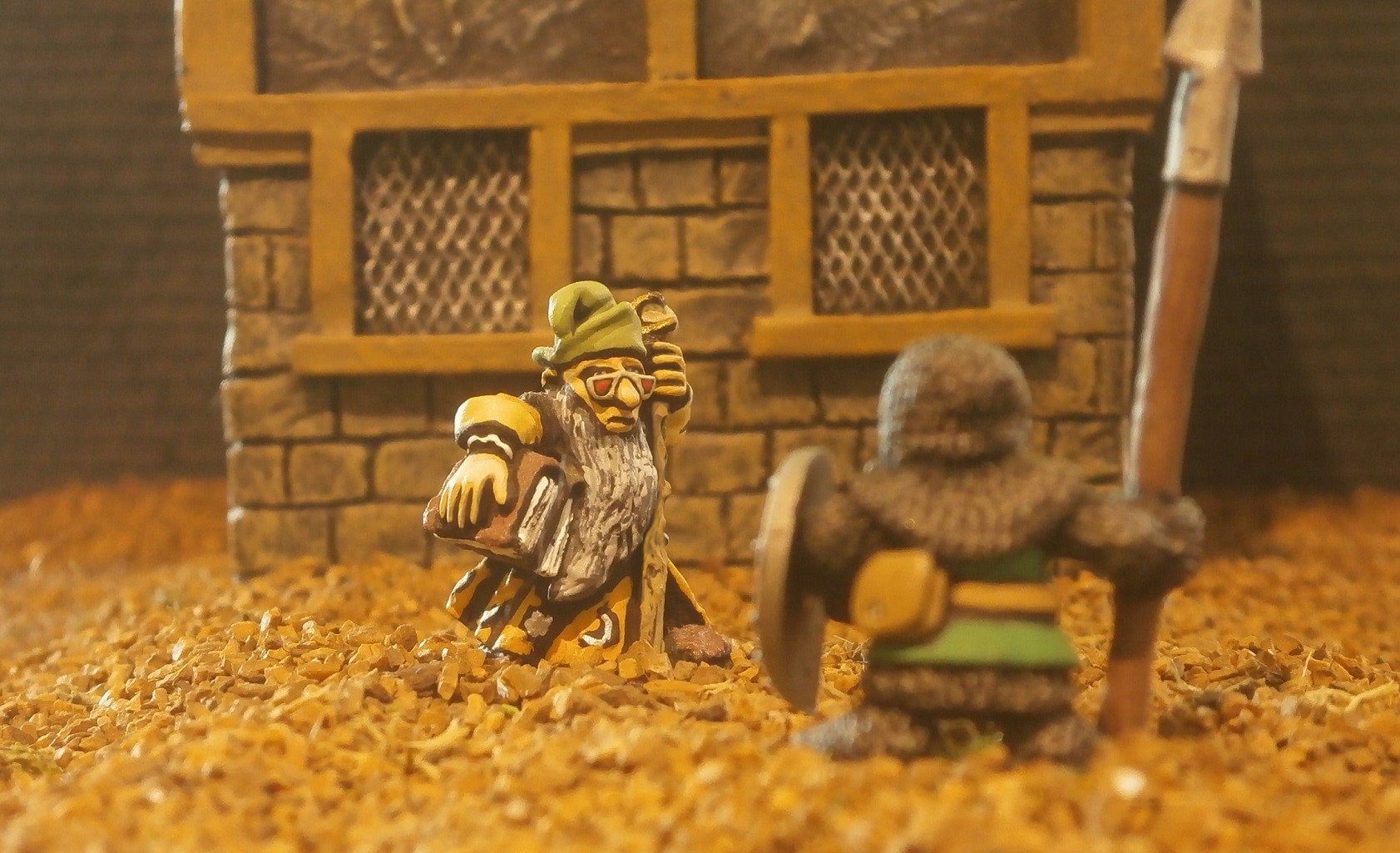
The wizard-dwarf Glammerscale had found his time in Karak Borgo irksome. Rather than complain, however, he had taken to announcing, in as breezy a tone as he could muster: “A change is as good as a break”.

Eventually, one of the mountain realm’s denizens summoned enough momentary curiosity to ask what he meant by this, to which he replied,
“The difficulties here are, at least, different from those I had grown accustomed to.”
His questioner’s interest was, however, as fleeting as it was reluctant, and no further enquiry was forthcoming. Glammerscale allowed himself to enjoy the irony, for exactly such unfriendliness was part and parcel of the difficulties he alluded to.
As a dwarf living among the men of Tilea, he had faced suspicion and awkwardness on a daily basis. Indeed, as an inhabitant of Pavona, such attitudes had escalated into disgust, then outright hostility, until he and all the dwarfs dwelling there had been forced into exile. After that time, he had moved hither and thither across the peninsula, visiting several dwarfs he believed might help, first to Ridraffa, then to Remas, then to Urbimo. In every place there had been the same old, underlying wariness whenever a man encounters a dwarf. And now here, after the long and hazardous journey to the dwarfen realm of Karak Borgo, he found a new suspicion, no less strong.
Just as men were untrusting of dwarfs, dwarfs were untrusting of wizards. He had always known this, but on arrival in Karak Borgo, he had learned just how deep such feelings could run, especially when the wizard in question was also a dwarf! He had known his chosen profession was a rarity amongst his kind, but here it turned out to be entirely unknown. Upon declaring his occupation, he had immediately been met with either with raucous laughter or visible shock – at least until word got around. After that, few agreed to meet him at all!
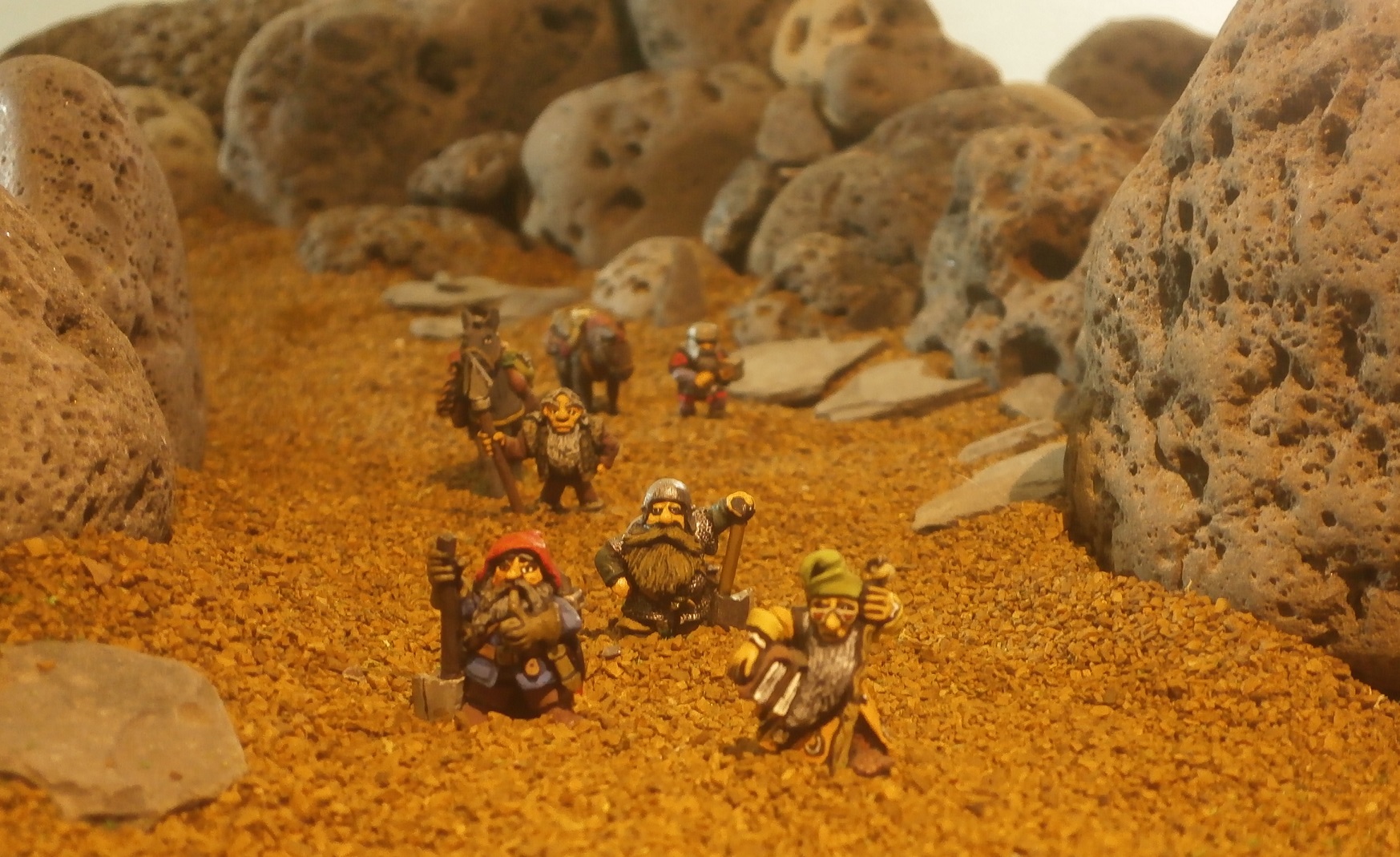
Luckily, he had not travelled alone, but was accompanied by several other Pavonan exiles, including Gallibrag Honourbeard and his servant Norbrug.
They, at least, knew him from old, were accustomed to his company and even counted him as a friend. His cousin Goldshin – a Tilean dwarf with whom the mountain dwellers had done very profitable business – had remained in Ridraffa, yet had sufficient repute in Karak Borgo to ensure Glammerscale had not been refused entry to the realm. That repute, plus the presence of the wealthier exiles like Honourbeard, had gained the exiles an audience with the king and even an invitation to stay. Since then, the exiles had become willingly embroiled in King Jaldeog’s plans to re-open his trade routes into Tilea by defeating the brute army of Campogrotta. Having lived among men, their experience was recognised, their counsels heeded, their presence more obviously welcome. The exiles were playing a long game (something dwarfs have time to do) for once they had contributed in the restoration of Karak Borgo’s fortunes, they hoped for reciprocal assistance in restoring their own.

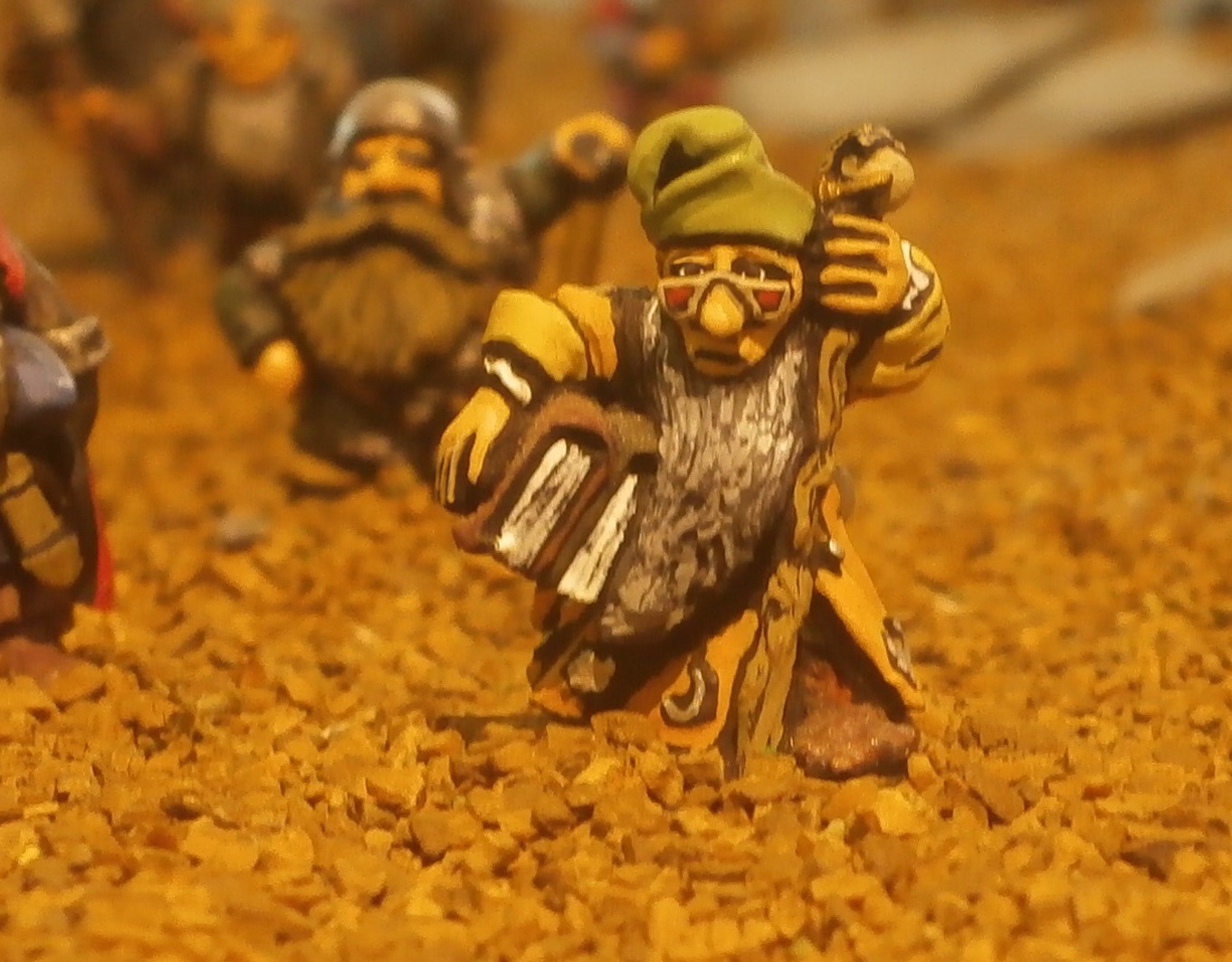
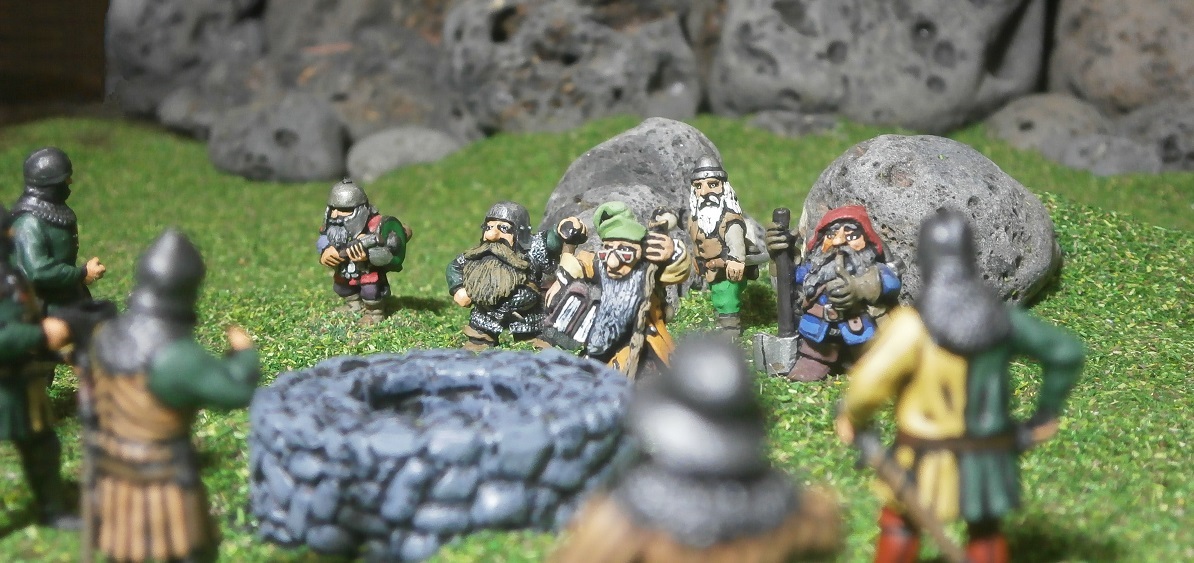
Glammerscale wore his green hat, leather travelling coat and peculiar red-tinged eye-glasses, and clutched his slightly crooked staff.
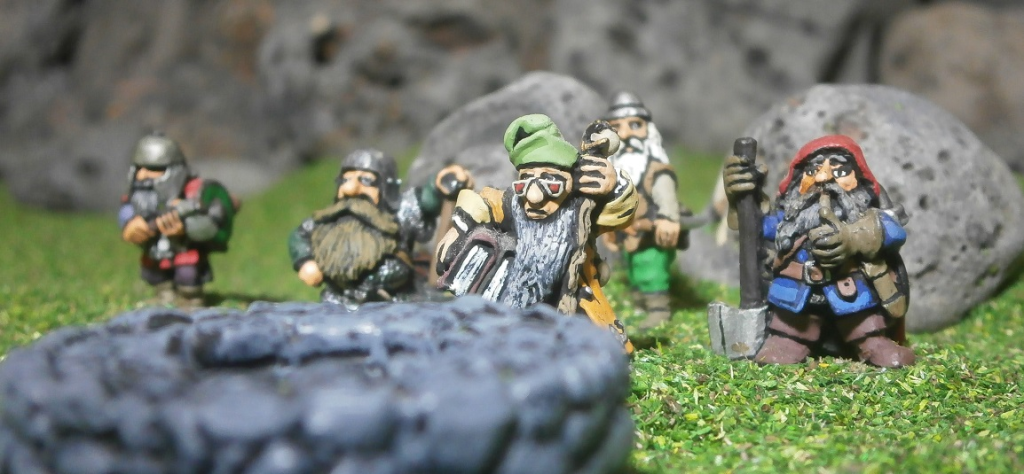
Gallibrag Honourbeard had transformed from his former, urbane self into the very image of a wilderness ranger, with red, hooded cloak, heavy boots and a blue coat belted upon the outside. He leaned on an axe as tall as himself.

Honourbeard’s servant, Norbrug, had also adopted a novel fashion since his days as a clerk in Pavona. Now he considered himself first and foremost his master’s guard, and thus attired himself in chainmail and a helm. His axe was shorter than his master’s, exactly proportionate to their respective heights. Glammerscale, although intrigued to know if his two companions had themselves noticed this fact, had successfully stopped himself pointing it out on several occasions.

They had gone further than simply offering knowledgeable advice, for it was through them and their connections that the Estalian contingent of the Compagnia del Sole had been successively (and speedily) hired. Furthermore, it was their own monies (banked in Bretonnia) that had been used to pay the advance payment to hire the Brabanzon mercenaries accompanying Baron Garoy into Tilea. Which was why Glammerscale, Honourbeard and Norbrug, along with several other exiles, now found themselves discussing contractual details with the northerners upon the track that ran along the western slopes of the Vaults to join Karak Borgo’s Iron Road.
The meeting took place at an abandoned mine shaft – one of the many, diminutive, exploratory kind found throughout these hills, left to crumble if nothing of worth was discovered. The Brabanzon leader, Lodar ‘the Wolf’ de Sevole, had his lieutenants with him, whilst behind them a column of the company’s spearmen filed past at a jog. Lodar’s chancellor, who originally arranged the contract with the baron, later ratified by the dwarfs, had called the band ‘Tard Venus’, which apparently meant they were considered brigands now that some war or other in the north had ended. He claimed they would be overjoyed to become soldiers (‘valets’ was the word he used) again, but one look told Glammerscale they were presently unhappy, which he now realised was most likely why they had called for this little rendezvous.

The mercenaries were liveried in a dull, dark green and a muted yellow, wearing layers of armour of a kind considered a little archaic by Tilean men. To dwarfs, who often wore armour of styles unchanged over centuries, it simply looked human. In truth, what with their faces almost hidden by their coifs, Glammerscale could barely tell the mercenaries apart. After brief introductions, the first to speak was Lodar, and he went straight to the point.
“We have heard you have employed other mercenaries for this venture. This was not made known when our contract was agreed, despite my chancellor’s questions regarding such matters. Who are these others? Under what terms do they serve?”

“Captain Lodar, I fail to see why this could be of any concern to you,” said Glammerscale. “Do you not want to be part of an army that will be victorious in battle? Such an outcome is much more likely if our strength is equal to the task.””
“Ha,” scoffed Lodar. “Victory is good. Spoils are better. We were promised the plunder of Campogrotta.”
“You were promised your fair share of the plunder,” said Glammerscale.
“Which we were led to believe meant sharing with the dwarfen army of Karak Borgo and the baron, not with however many other mercenaries you have also taken into your service.”
Another Brabanzon, clutching a large leather jack from which he had just taken a very hearty swig, interjected,
“Do you take us for fools? Do you think we Brabanzon will allow anyone to treat us with disrespect? To break promises made to us?”
There followed a moment of silence, which Glammerscale deliberately allowed so as not to appear in any way concerned with the mercenaries’ implied threat. The Brabanzon simply watched, neither speaking further nor moving.

Eventually, Glammerscale gestured to Gallibrag’s servant.
“I think perhaps you are under a misapprehension. Master Norbrug here will explain the particulars, that you might better comprehend the due fairness of our transaction.”
“You will have exactly what was agreed, to the letter,” said Norbrug. After decades as a clerk he had studied the contract closely and understood all the details. “You knew full well there were other forces involved in this war, not merely our dwarven warriors and Baron Garoy’s men-at-arms, and you were promised one third of the plunder. Which is what you will receive.”
“How so?” demanded Lodar. “For even if it is only one other mercenary company that makes four parties to the agreement!”
“You are correct,” said Norbrug.
“Three does not go into four!” said Lodar.
“Aah,” said Glammerscale, as if he had just had an insight. “Are you perhaps presuming each party has been contracted under the same terms?”
The cart had now trundled past, its draught horse, a rugged and stout pony, making good speed – enough to keep pace with the jogging spearmen.

Lodar looked askance at the dwarfs, his brow furrowed, then asked,
“Which party has been deprived of its share?”
Glammerscale smiled and looked over the top of his eyeglasses at the Brabanzon leader.
“Consider the parties involved, Captain” he suggested. “I believe that with a further moment’s thought you will deduce which it must be.”
It was the Brabanzon with the leather jack who answered, apparently speaking his thoughts as he put them together.

“The mercenaries, whoever they are, will want their pay and a share of the prize, this goes without saying. You dwarfs love your gold so much that you would never yield an opportunity to amass more of it, especially when you want to recover your already considerable outlay. So … it must be the baron. Yes?”
“You have it!” declared Glammerscale. “I see the ale has not deprived you of one jot of your wits.”
The comment seemed lost on the soldier, and there was another moment’s silence. Such a stumble in the conversation could not stop Glammerscale in his tracks.
“The Baron Garoy,” the wizard explained, “being of such noble blood, deemed it would disparage the stock whence he came to contract for a portion of plunder. He would never stoop so low. He has come to Tilea upon a chivalrous quest, to liberate the realm of Ravola. A hero such as he cares nothing for what happens to the wealth of Campogrotta.”
“Ha,” laughed Lodar. “The baron might proclaim such a thing, but how will he repair Ravola without the gold to pay for it?”

“How indeed?” agreed Glammerscale. “Still, provided he possesses some proficiency in war, then he should serve our purposes perfectly. Whether or not he struggles during the subsequent peace is of little present concern.”
“Puh!” mocked the Brabanzon with the jack. “He rides like a boy at his first joust, and his battle experience comes from playing merelles.”
“Surely you exaggerate, sir, for comic effect” said Glammerscale. “Yet if true, then hopefully his keenness and the men who ride with him will make up for any inexperience.”
Lodar laughed. “Let the baron and his petite noblesse canter where they like when we lay siege to the city. It is we foot-soldiers who will have to dig the works and mount the guard. It is our arrows that will reach the monstrous foe in the towers, and our engines that will topple the parapets. And when the time is ripe, it is we who will climb the ladders and storm the gates. If Garoy joins us then he will be simply one among the many, and worth half that of any one of the rest. I know not whether these other mercenaries you have hired are capable of such things, but I know we are. We expect to be appropriately rewarded afterwards, as you promised.”

“Have no fear regarding that concern,” promised Norbrug. “I myself will ensure your accounts are settled exactly as agreed, and all will be done openly and fairly.”
“I would have it no other way,” added Glammerscale. “For such transparency will ensure no bitterness, no contention amongst those who have fought so bravely. The fighting will be done with, and all will be peace and prosperity, aye?”
…………………………………………………………………………….
(Tilean Campaign) Summer 2403
A Letter from Antonio Mugello
Summer 2403
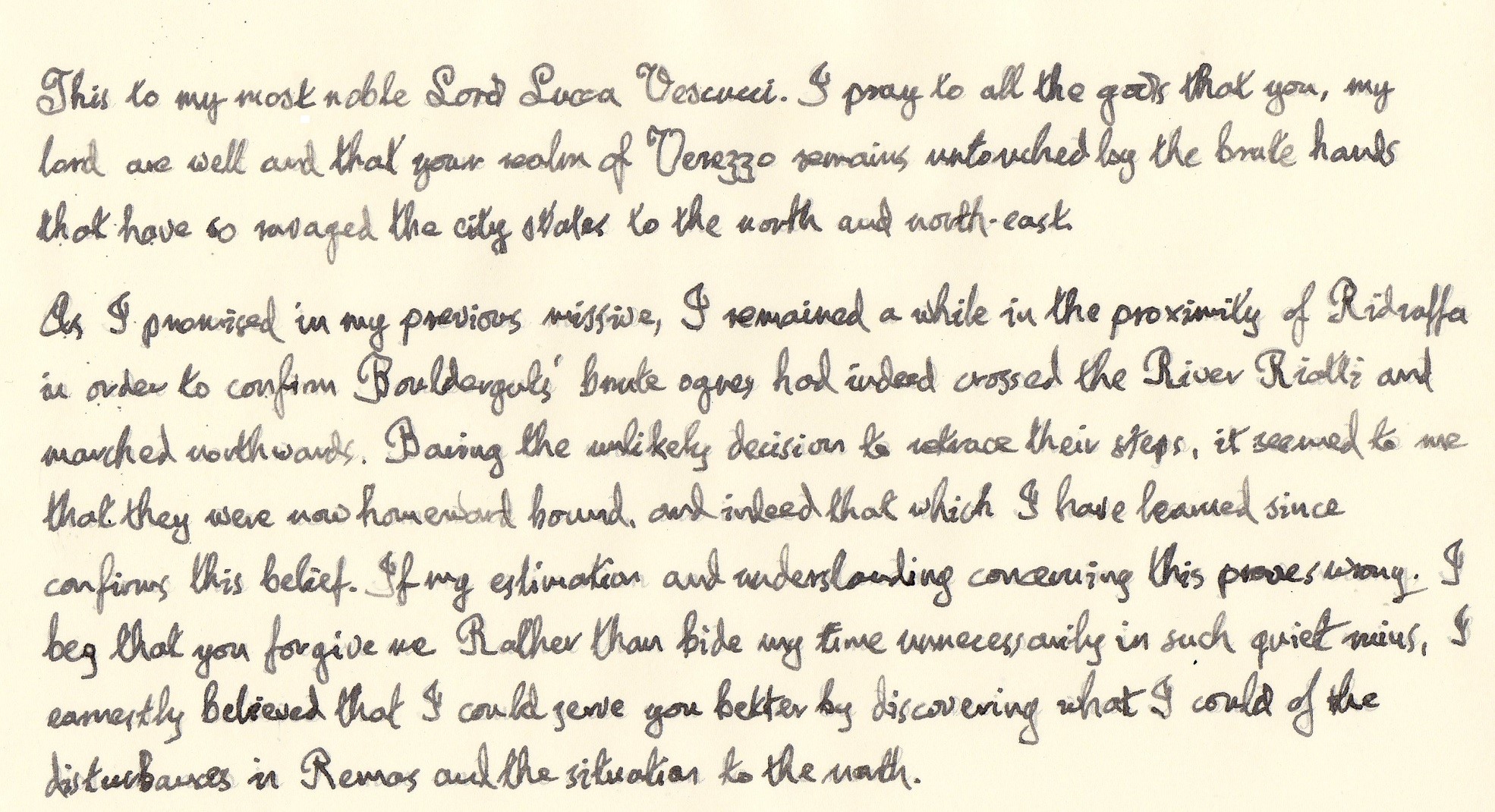
This to my most noble Lord Lucca Vescucci. I pray to all the gods that you, my lord, are well and that your realm of Verezzo remains untouched by the brute hands that have so ravaged the city states to the north and north-east.
As I promised in my previous missive, I remained a while in the proximity of Ridraffa in order to confirm Boulderguts’ brute ogres had indeed crossed the River Riatti and marched northwards. Baring the unlikely decision to retrace their steps, it seemed to me that they were now homeward bound, and indeed that which I have learned since confirms this belief. If my estimation and understanding concerning this prove wrong, I beg that you forgive me. Rather than bide my time unnecessarily in such quiet ruins, I earnestly believed that I could serve you better by discovering what I could of the disturbances in Remas and the situation to the north.
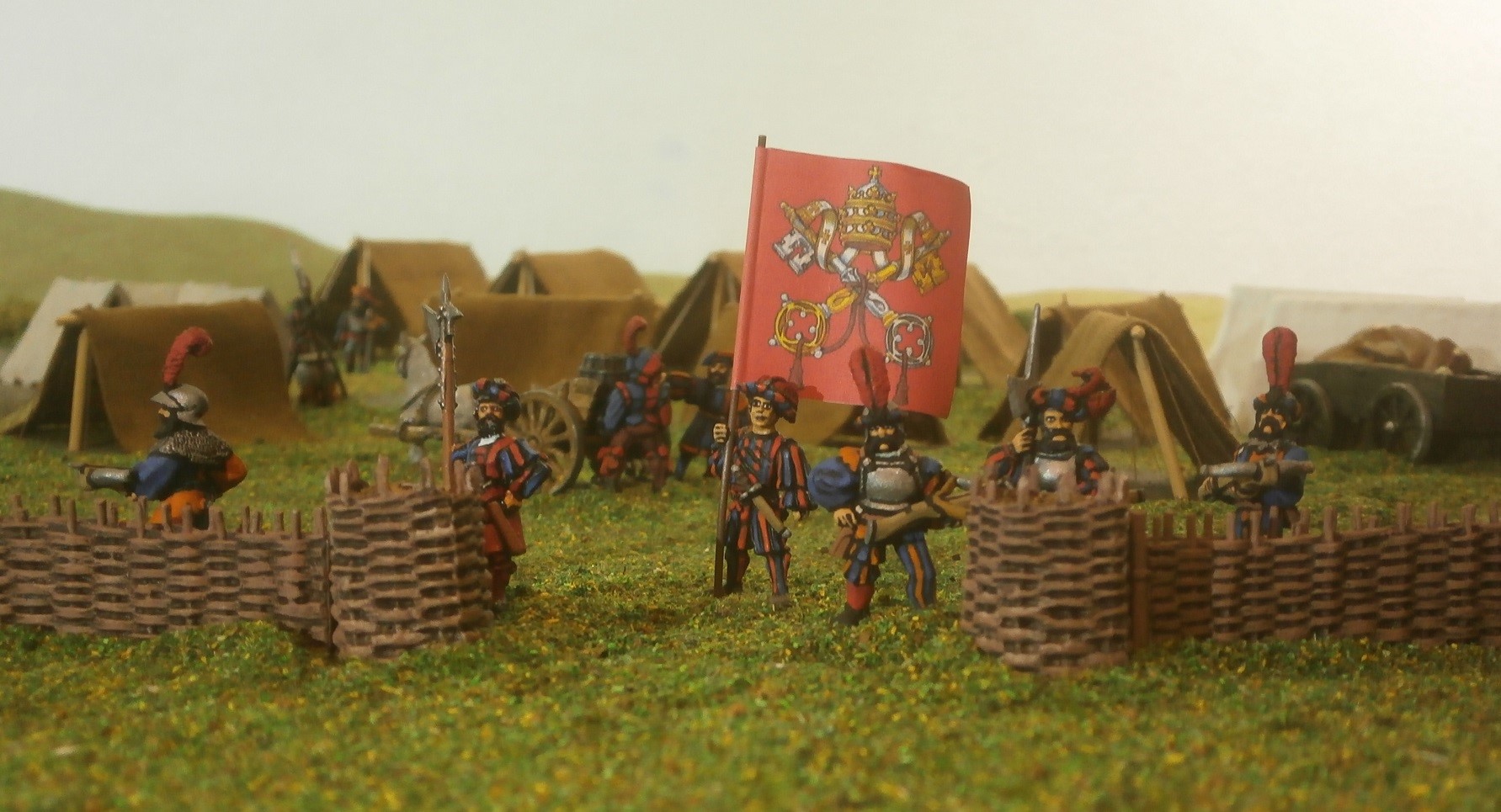
Upon arrival in Remas I found all in turmoil, the realm having become divided. The Reman army was encamped at Frascoti, under the command of the arch-lector Bernado Ugolini …
… while the city itself remained in the hands of Father Carradalio’s fanatical Disciplinati di Morr.

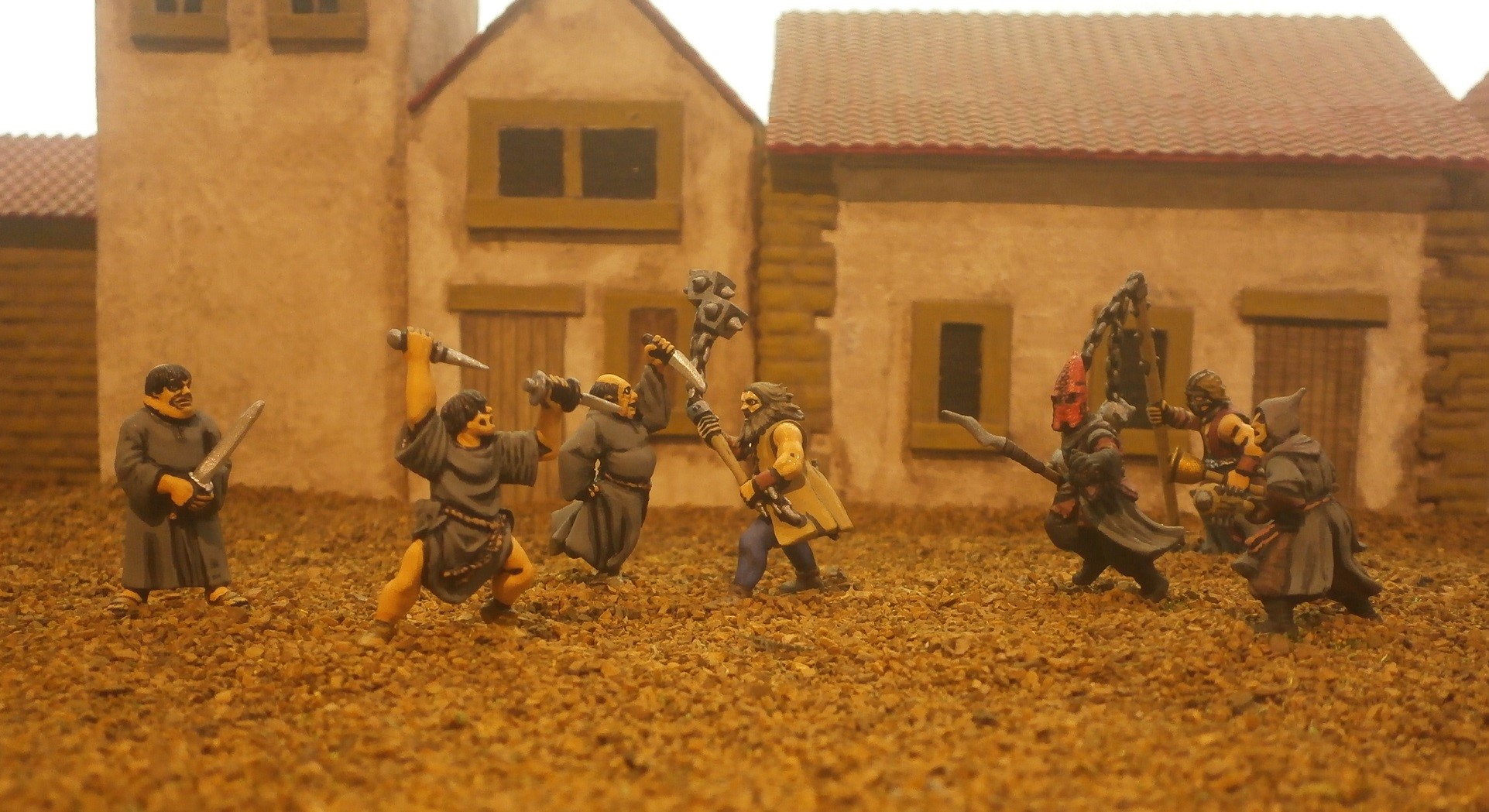
The Pavonan army sat between the two, as Duke Guidobaldo apparently busied himself with attempting to promote peace between the antagonistic factions. Yet neither the high church nor the low, if I might describe them thus, showed any sign of yielding, which sowed great fear amongst the Reman people. Many talked of civil war as if it were not only inevitable but had already begun, and indeed, despite Caradallio’s iron grip on the steets, I saw several outbreaks of violence between his dedicati and the few priests remaining to tend to the citizens’ spiritual needs.
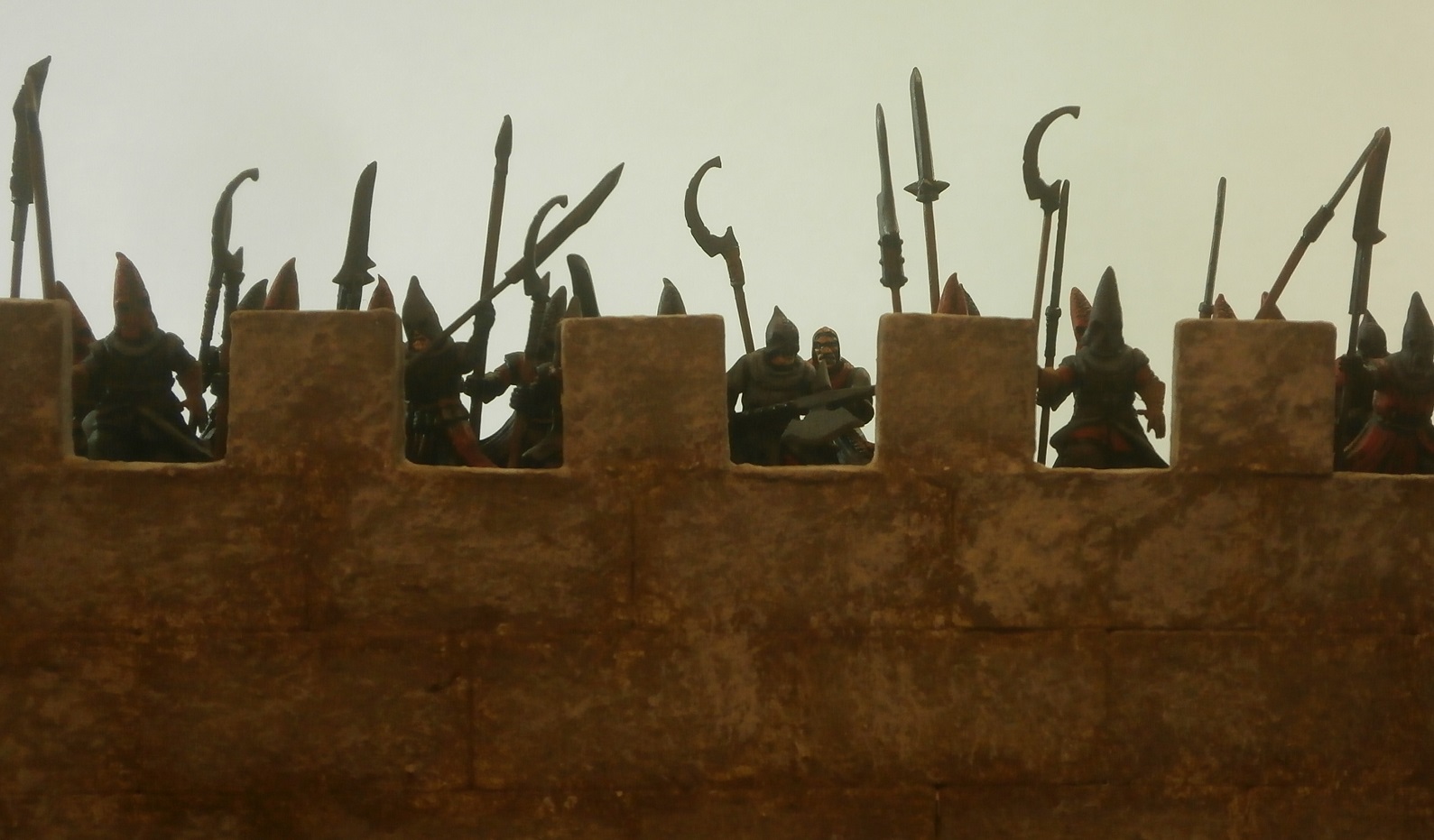
If indeed the Reman army does besiege the city (Remans within and Remans without), then it would likely be a long, drawn out affair. Neither side has the advantage. In Carradalio’s favour, the city walls are strong and the army weakened by its long fight against the undead and the ogres, while the Reman army might gain advantage from the fact that the defenders are religious fanatics, not soldiers, and the army could well be more than adequately supplied by Frascoti to the south.
Such is the madness of Remas, embroiled in a misery entirely of its own making, as all the while its enemies grow stronger.
The ogres may well have begun their homeward journey, battered and bruised by umpteen battles, but they are laden with plunder, grown fat from feeding upon man-flesh, and have left all behind them in ruin.

I fear that now the vampires will follow in Boulderguts’ wake, eyeing the devastated land with their own intent, for what to us appears barren and burned, is as a feast laid out for them; where we see only a wasted realm, they see rich pickings. They need no crops nor cattle, no water nor wine, feeding instead upon rotten remains, turning the very corpses into their servants and soldiers. Who will prevent them from summoning legions out of the crowded graveyards and ancient necropolises?

I chose not to linger in the ever-changing turmoil and instead travelled onwards to the small city of Urbimo, the most northern bastion of the living along the western coast. Remas’ troubles are sad, and I prayed hard for the holy city’s redemption, but it is not Remas that threatens our beloved Verezzo, rather it is the vampires who have fuelled their madness – an enemy made more dangerous by the Remans’ spiralling weakness. Concerning how best to face the nightmare foe, the wider Morrite church is as divided as Remas. Indeed, the church is the very cause of the citizens’ division. Holy Morr’s priests, those best placed to defend Tilea against the vampires, have by their own failings become worse than useless, squabbling murderously among themselves instead of preparing for the oncoming onslaught. How many will survive to stand against the undead?

I wished to learn what I could of the vampiric threat, and where better than a place so close to their hellish domain? In Urbimo I discovered the desperate depths to which men can sink when terrified, for the madness that grips Remas has similarly tainted this neighbouring realm. I had thought the recent bloody coup in Remas, in which the Disciplinati seized the city from within, was bad, but the Urbimans have been driven to take even more terrible measures in pursuit of Morr’s holy protection. For years they had petitioned and begged Remas for military aid, yet none was ever forthcoming. They felt safe only for the few weeks when the Compagnia del Sole was lodged in their city. Once the last of the mercenaries had finally made the crossing from Estalia, however, the soldiers left to fulfil their contract for the dwarfs of Karak Borgo (being to assist in the war against the wizard-lord Nicolo of Campogrotta and his brutes – which may well be why Razger has finally turned back homewards). Since then, the Urbimans’ fear has swelled beyond sanity, for they know that the undead could come at any time. And if that happens, all will surely die, after which an even worse nightmare will unfold as they themselves become the vampires’ rotting, puppet-slaves.
Consequently, they too have cultivated a newly radical, religious fervour, beyond even the flagellating extremes of the Reman Disciplinati. Dedicating themselves body and soul to Morr’s service, they have begun cleansing Urbimo of all they consider corrupted, even those they believe to be merely corruptible. They have turned against every practitioner of the magical arts, including the pettiest of conjurers – hedge wizards, alchemists, wise-women, even tumblers and masters of legerdemain. All such who failed to flee have been put to death. The very day I arrived I witnessed the burning of a maid accused of nothing more than casting a cantrip. She professed it was meant to soothe a sickly babe in her care, but her attempted kindness was twisted by the people’s hysterical fears into a wicked curse.
Thus it was I found myself amongst the gathered crowd by an apple orchard, upon what would otherwise have been a pleasant summer’s afternoon, in an other-time’s peaceful place, watching with horror as the deed was done.
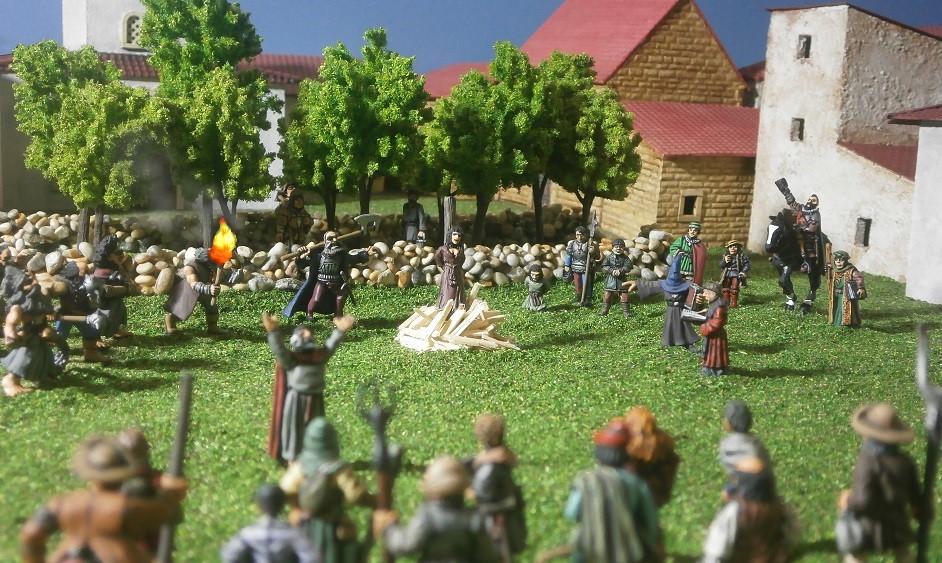
Morrite priests officiated, turning mere suspicions and hasty accusations into indictment, conviction and sentence, while cultists chanted their pain-prayers and jangled their chains. Although neither judge nor jury were present, the Barone Pietro Cybo attended with a handful of retainers, and along with his executioner lent a degree of lawful authority to the proceedings. He was somewhat transformed from the man I had met previously, now clad in armour atop his horse, his expression stern as he waved aloft a Morrite catechism. Beside him his brother Carlo and several gentlemen looked on inscrutably, having perhaps grown accustomed to such horrors?

On all the other occasions I have met with him, twice in Remas and twice before here in Urbimo, the Barone has been a man of scholarly patience and shrewd wit. I know, my lord, that you and he have corresponded concerning matters political and philosophical, for he himself told me so, with evident satisfaction. And yet this time he seemed not even to see me, despite looking directly at me several times. As you ordered me always to write honestly concerning what I witnessed, then I will say that despite his past friendship with you, in truth he seemed no less gripped by frenzy than the wildest of the populace, and although he did not go so far as to lash his own flesh as the dedicants did, his wide-eyes and fixed expression belied a state of mind no less frantic with fear and hate.
The charge was read by a priest-confessor, imbued with such disgust as to make the wench’s action sound like infanticide, and worse, insinuating she had been party to necromantic machinations intended to transform the child into a very devil.

Beside the priest, and throughout his cruel speech, a hooded acolyte pointed at the poor wench, as if to drill the accusations deep into her soul. In Urbimo, any and all magic, and any prayer (unless made directly to Morr Supreme), either spoken or merely admitted to, has become an abhorrence. Every such deed is considered the first step on the slippy slope to damnation, cutting a chink into the bulwark of Morr’s most holy blessing, exposing our mortal souls to the first caresses of undeath.
As the crime was detailed, exhaustively, a Morrite monk interjected with encouragements and lessons for the crowd, raising his hands now and then to call on Morr’s blessing and protection. His words, even his merest glance, elicited a flurry of Morrite gestures from those gathered.
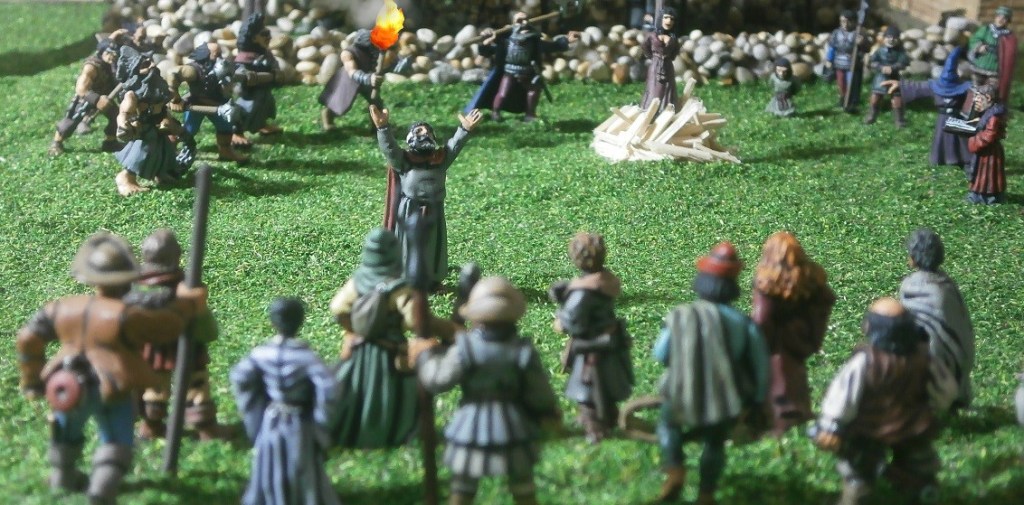
And none amongst the watchers spoke, neither to cry out shame on her or shame on those accusing her. There were no jeers nor any tears. Never before have I seen a crowd behave in such a way at a public execution.
All the while, in between her sobs, the poor wench tied to the post prayed aloud as best she could to Morr, begging his forgiveness and pleading that Urbimo would not suffer because of her error. So great a fear grips this realm that even she did not seek forgiveness, nor plead to be admitted to his garden despite her supposed crime, and instead prayed for Urbimo. The executioner, a giant of a man hefting an axe the like of which I have only before seen carried by ogres, watched her intently, his bearded face twisted into a monstrous grimace, though whether this was because he considered her the most despicable of creatures, or whether he recognised the true horror of her situation, I know not.

Behind her stood two more prisoners, due not to be burned, but to receive the attentions of the executioner’s axe after they had witnessed the maid’s horrible death. I learned later that they had thrice arrived late to work upon the town’s defences, a crime transformed by the people’s heightened fears from mere misdemeanour to detestable felony. They were guarded by a soldier, who alone in the crowd seemed unable to look upon the spectacle. Instead he hung his head to stare at the ground before him, clutching his helm by his side.
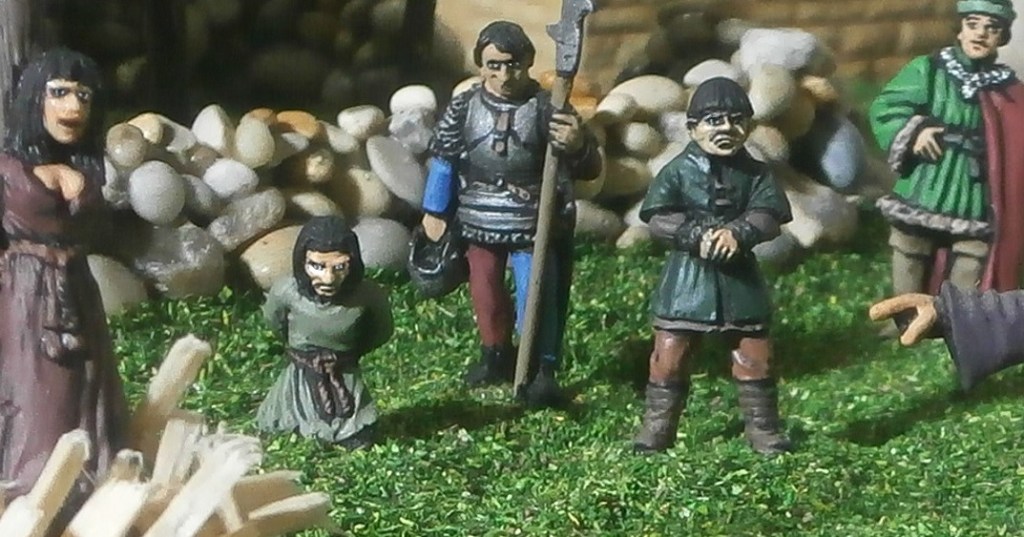
The soldier was liveried in the colours of the Compagnia del Sole, and I have seen handful more such men in Urbimo. It seems not all the Compagnia del Sole went east – perhaps a kindness on the part of their commander so that the city would not be left entirely unprotected?

I write all this, my noble lord, so you may know the truth concerning these realms. It seems to me that Remas cannot be expected to defeat the vampires. The Remans tried once already, to great loss, and their city is now locked in suicidal civil war. And the same self-destruction, the same self-loathing, that so wracks Remas, has spread to Urbimo.
I have heard that armies are gathering in the south to face Razger’s brutes, yet it seems likely he has turned away. Will those same armies be prepared instead to face the vampires, now that Remas is proved wanting?
Is there an alliance between the vampires and brutes? Where will the unliving Duchess Maria strike? Is the Compagnia del Sole, having so unexpectedly marched east, part of some grand plan? I cannot know these things, nor would my guesses be of real value. But I shall strive to find the answers.
I end by asking, most noble lord, that you send instructions concerning what you would have me do, and whither you would send me.
Your loyal and humble servant, Antonio Mugello.
……….
Next Installment: Part 19

 BigSmallWorlds
Oh, splendidly written sir! Your prose is a thing of beauty as much so as your campaigns and photographs. Bravo!
LikeLike