The Last Months of Summer, 2404
An Excerpt from Bonacorso Fidelibus’s Work: The Many Wars of the Early 25th Century
Having tried but failed to rid the marshes surrounding the city of Miragliano of the foul undead …
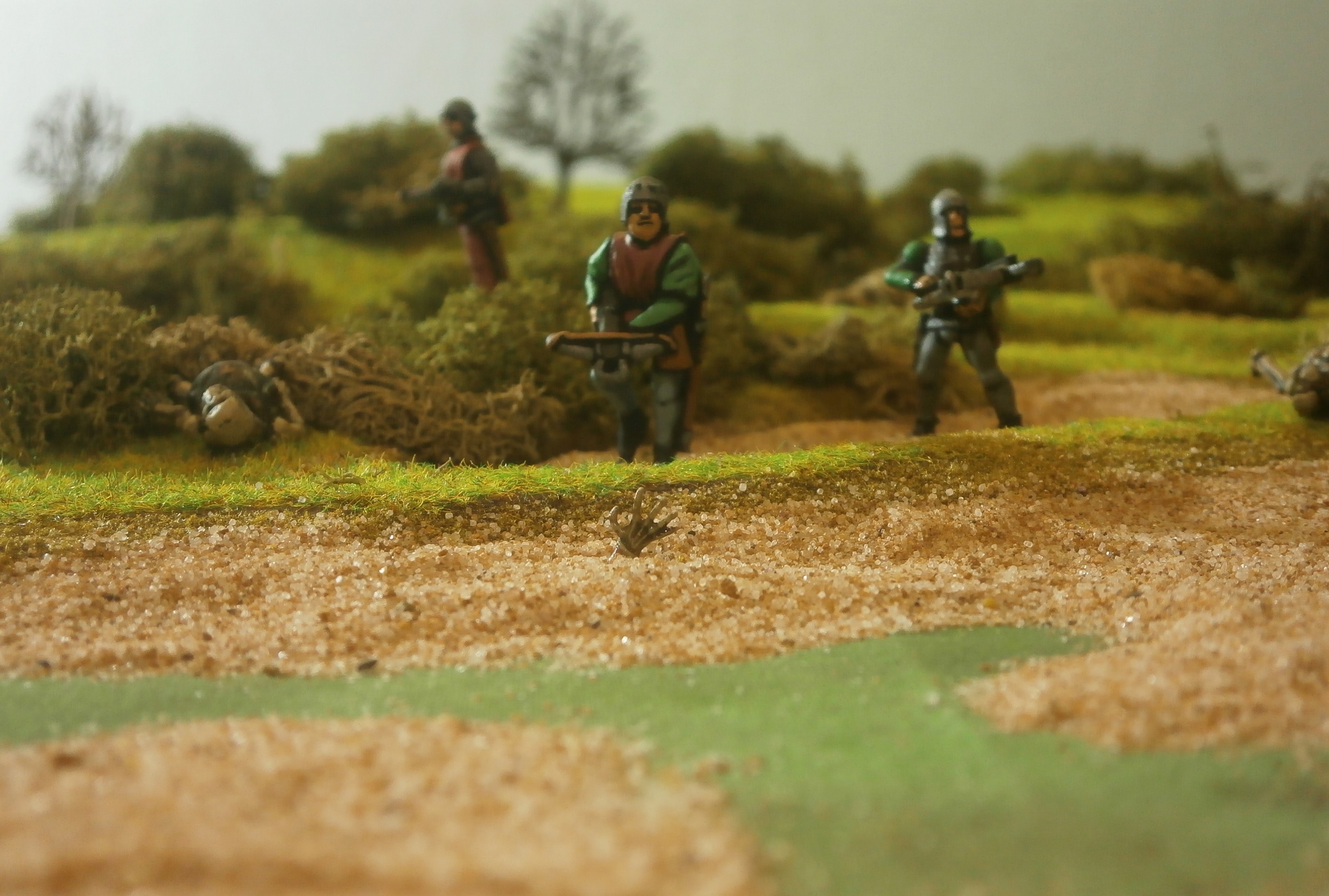
… the grand alliance army, under the command of Captain-General Lord Alessio Falconi of Portomaggiore, had constructed raft-mounted siege towers and a ram.

Meanwhile, fresh water was carried from the vicinity of Soncino to the army’s camp every day …

… hoping thus to stave off the sickness bred by the foul, miasmic vapours. Those who did fall ill were sent the other away to the watchtower, there to breathe untainted air.
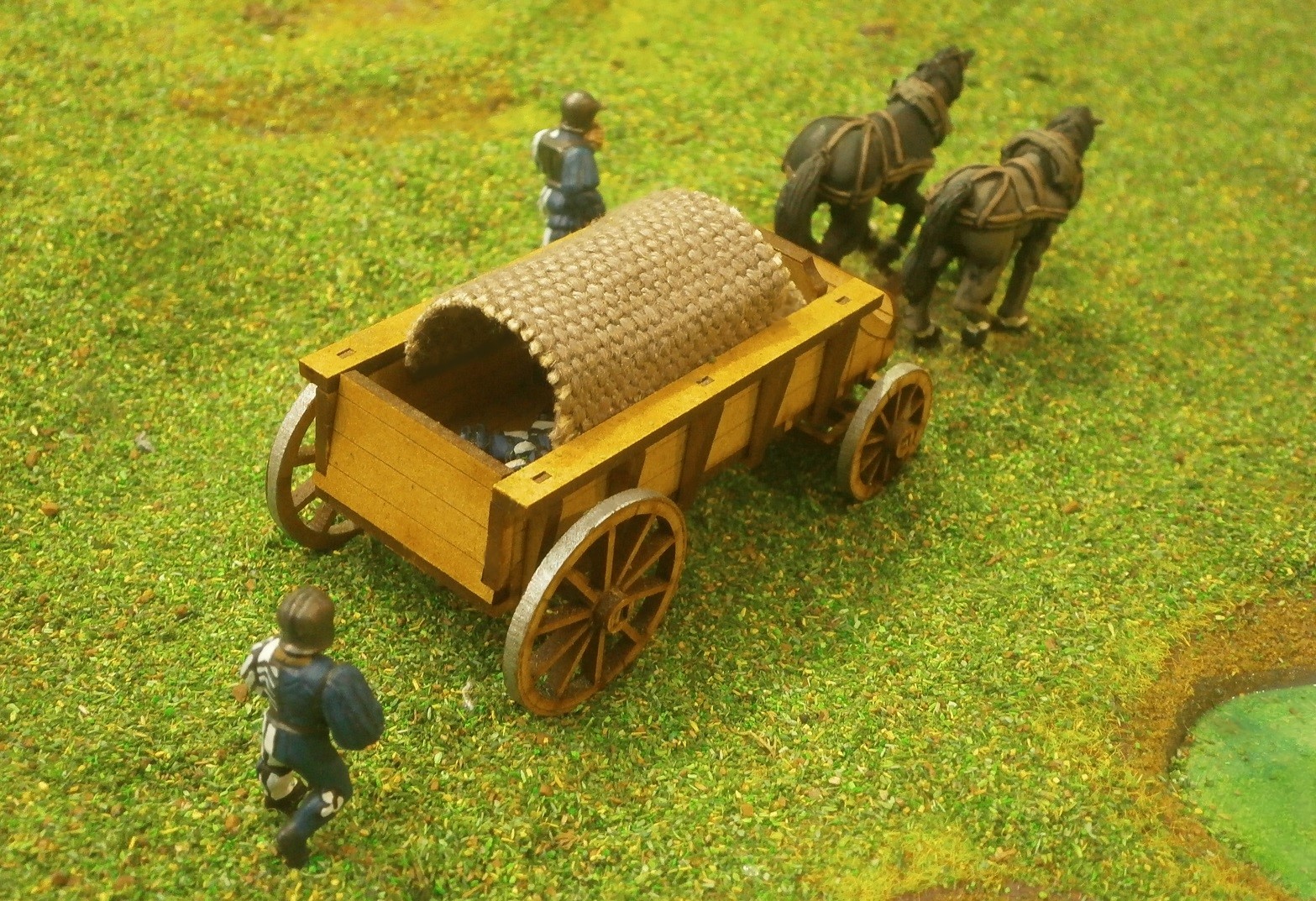
All these sensible measures bought his army just enough time to complete the construction of the rafts, after which Lord Alessio ordered the assault to commence forthwith.

The battle was hard, but not over-costly to the living. Most of the army’s soldiers praised their general for his haste, for they knew full well that had they tarried longer then sickness would surely have killed many more than died in the assault. The enemy’s walls were captured. The city was taken.
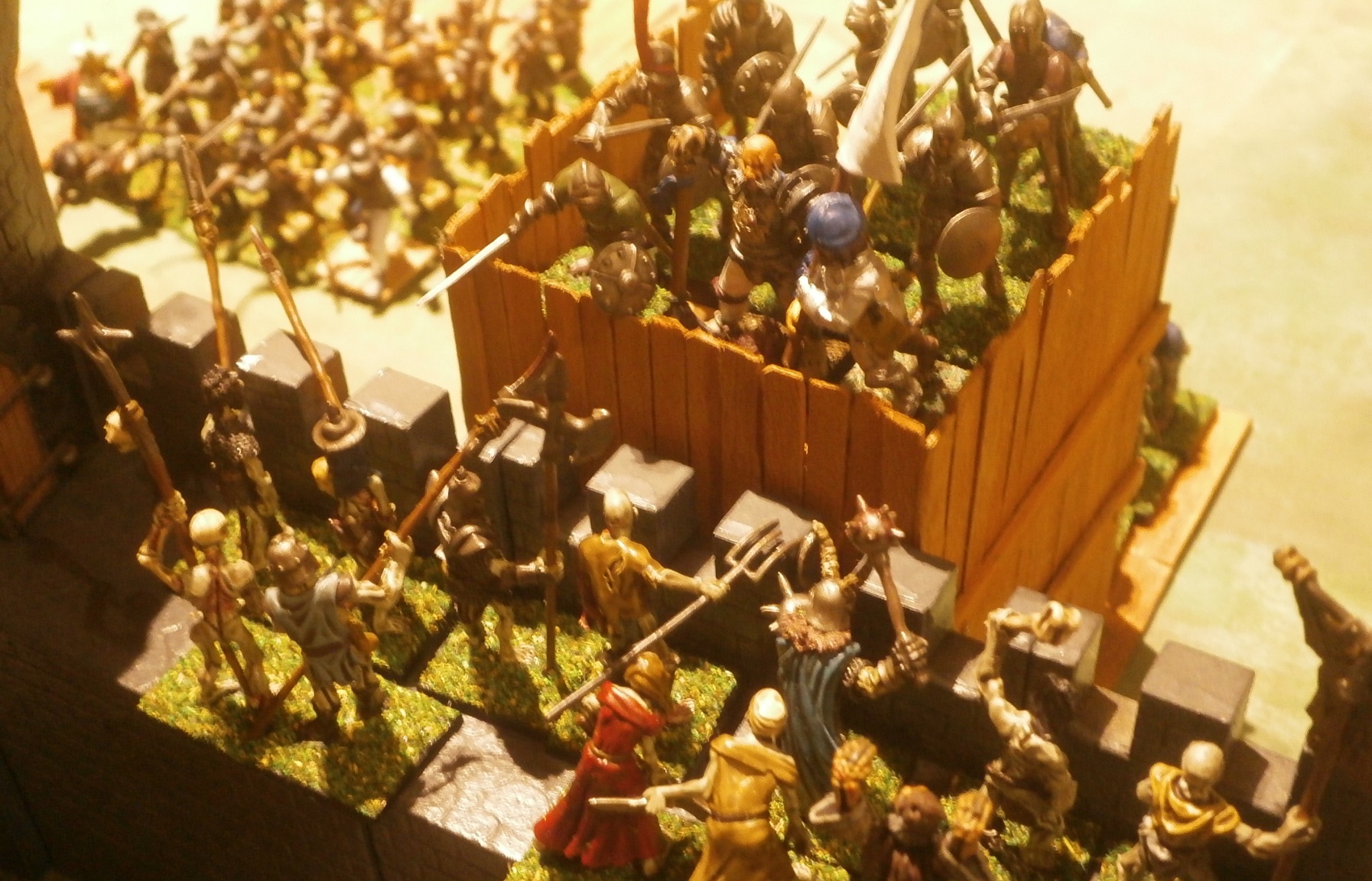
Many hundreds of the undead were slain, and at long last, notwithstanding the vampire priest Biagino’s escape, it seemed the war against the vampires was finally won.
Despite the foul misery of their surroundings, the victorious army was in a celebratory mood, incredulous at their very light losses and glad simply to be alive. The Remans had suffered worst – their commander Lukyan Soldatovya, the priest Bendali and the mercenary dwarfs having all sunk to the bottom of the moat’s foul waters ….
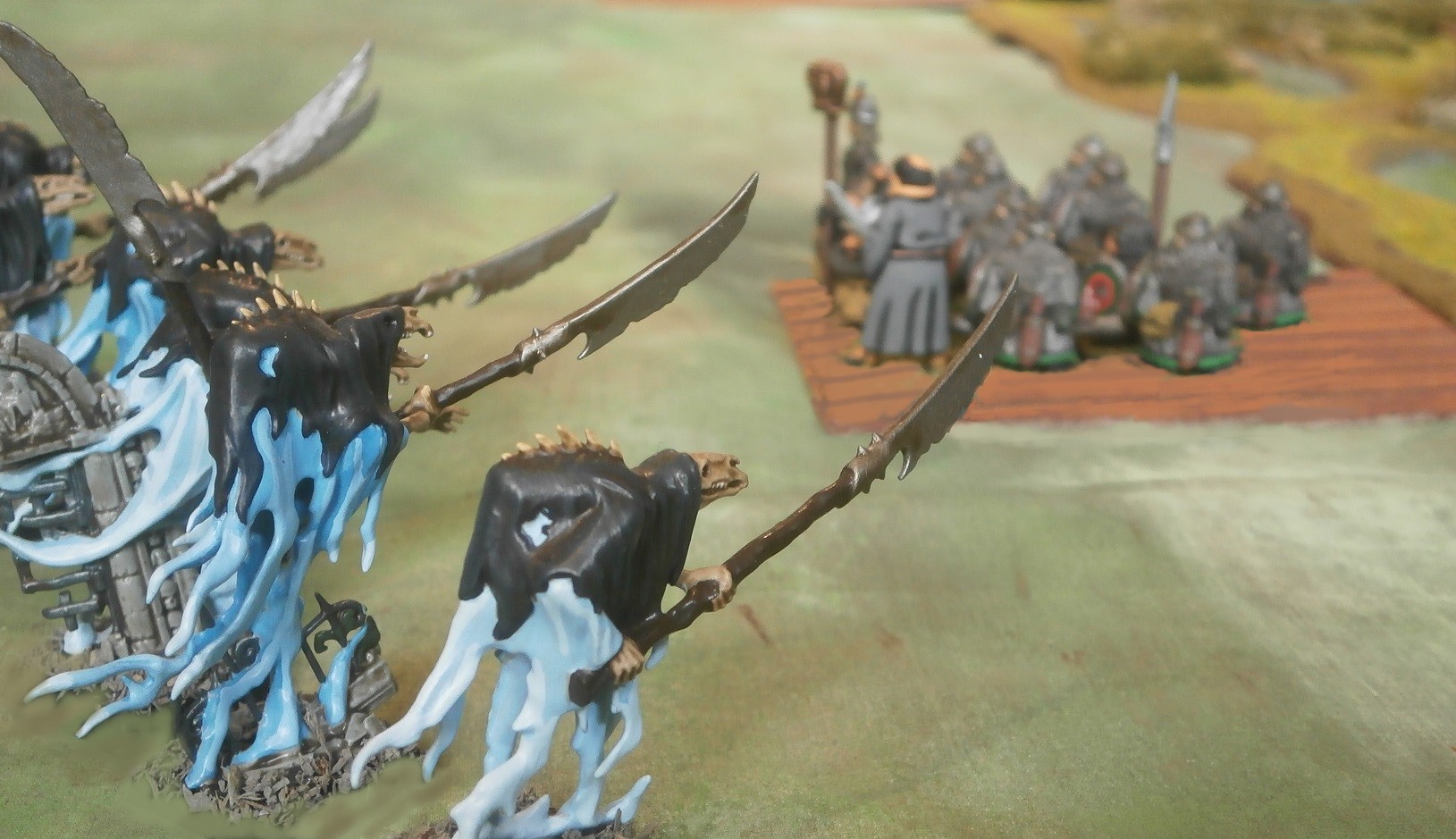
… while the VMC brigade was almost entirely unharmed.
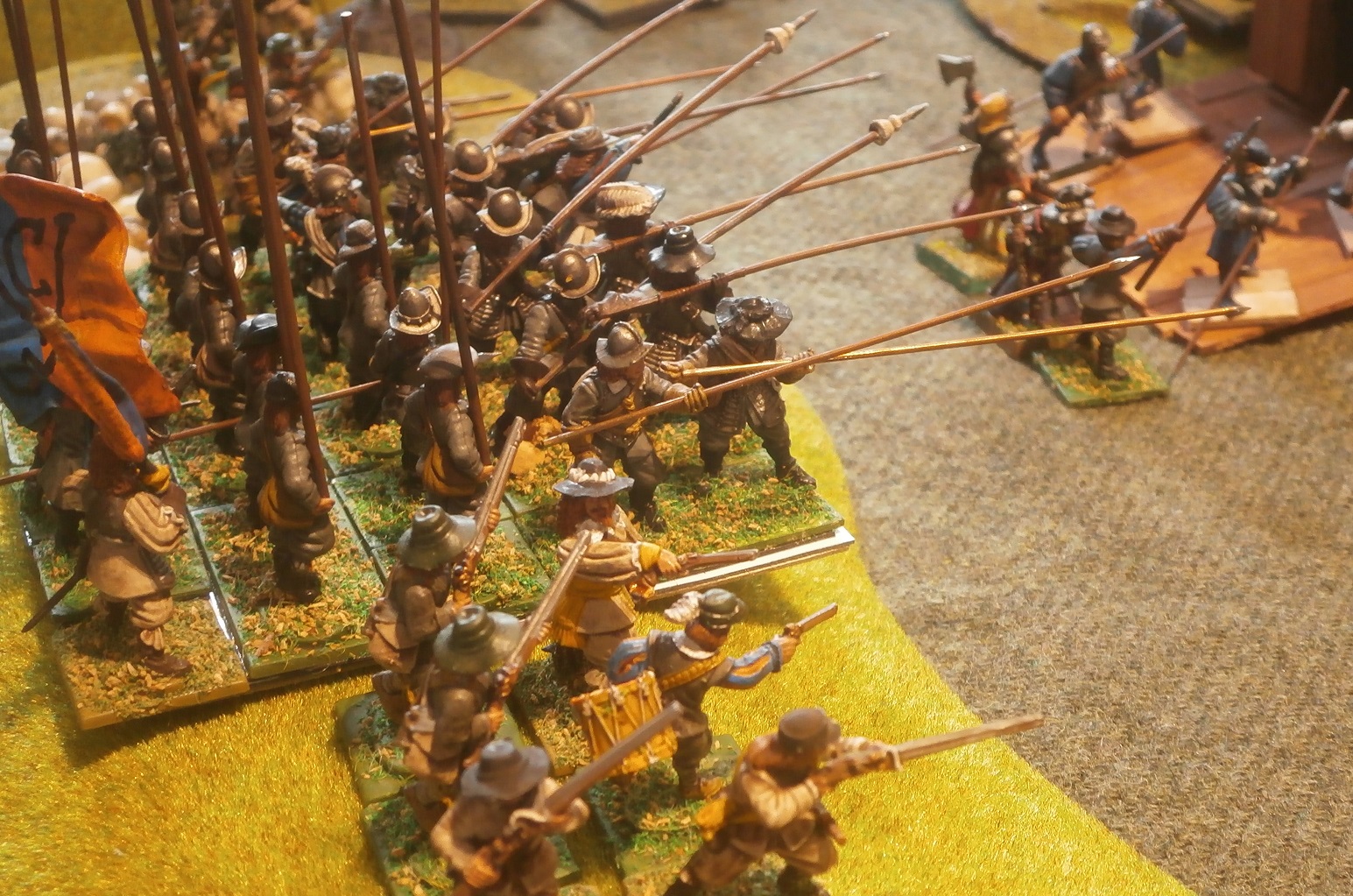
Lord Alessio now intended that his soldiers should live – it seemed the least reward they could expect from their grateful commander – but he could not risk wasting his long campaign and hard-won victory. Staying in, or even close to, the tainted city for any length of time, even a few days, would most likely decimate his army or worse. Sixty years before, when the notorious Reman Arch-Lector Frederigo Ordini’s massive alliance army journeyed into the Blighted Marshes, they died almost to a man. The Remans serving Lord Alessio were most concerned, for the story of the army in the marshes was very familiar to them. Nonetheless, Lord Alessio knew full well he could not leave without thoroughly cleansing the city of corruption.
Command of the surviving Remans had fallen to the captain of the mercenary dwarven crossbows, who was unwilling to tarry even one day more, despite the VMC’s Myrmiddian commander, Luccia La Fanciulla’s attempts at persuasion. (Her pleading was not helped by the fact that her second in command, the wizard Johannes Deeter, was just as keen as the Remans to depart immediately.)

Every drop of water was unsafe, every intake of breath corrupted the soldiers’ mouths with the rank taste of death. The entire city and the noisome waters surrounding it, stank of rotting flesh. Fat, sluggish, swamp-flies infested the whole land, while not a scrap of edible food remained in the city, nor for leagues around.

The army’s supplies had been stretched to the limits and were now almost wholly depleted, as the soldiers’ homelands were so distant that re-supply had long since become a sporadic, insufficient affair. While the army had passed through living lands, it had supplemented its limited stores by foraging from its surroundings. But that had not been the case since it drew close to Miragliano.

Lord Marcus Portelli, the captain-general’s most trusted adviser, declared this accursed realm to be the sort of place in which vile uomini ratto might breed, or goblins would scavenge, or lizard creatures from beyond the seas could dwell, but for men (he waxed poetically to General Valckenburgh) it was:
“A map of misery, a world of woe, a microcosmos of miasmas; with more disease in it than the pest house at plague-time, and with a stink worse than the Mayor of Olessi’s dog-house on mid-summer’s day!”
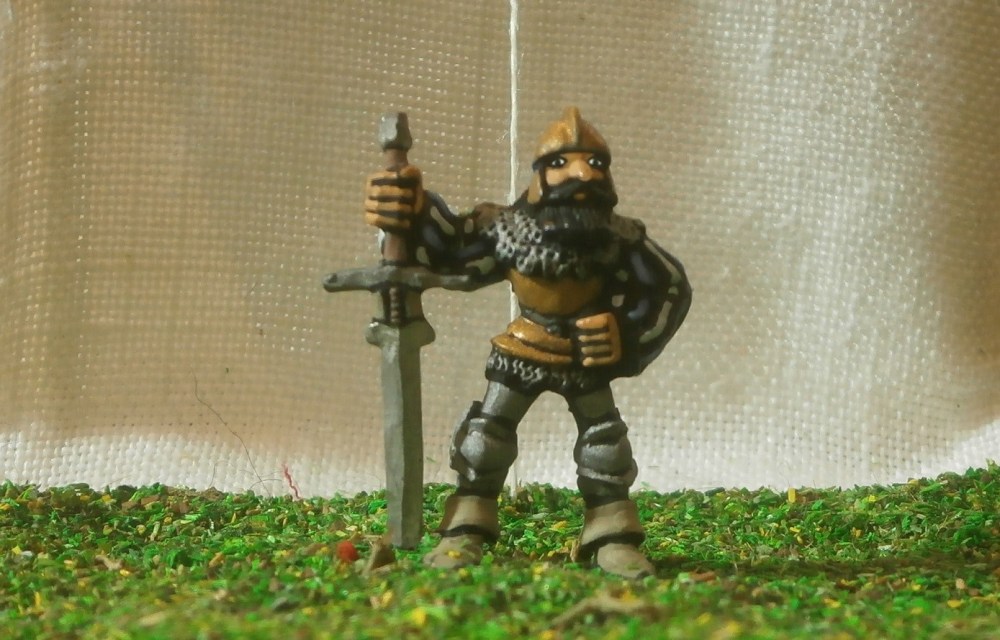
He then suggested that with the wizards’ help, and what flammable supplies still lay within the city (oil, pitch, tar and all such stocks, which he doubted the undead had had any use for), then even such a sodden place might be wholly consumed by fire, leaving only charred and cracked stones.

He also suggested that a new settlement could be built some safe distance to the south or east, to serve as a bastion against any further disturbance in these parts, and as a base from which the slow recovery of the land might be directed. Perhaps from there the work of repairing the dykes and damns might be done, so that gradually, over years, the marsh’s recent expansion would be pushed back.
The captain-general agreed to consider the matter. In the meantime, he ordered the speedy, but thorough, burning of the city, aiming to leave only when it was properly ablaze. Nevertheless, the Remans now marched away – their only Morrite cleric had died in the assault, so there were no magical prayers or blessings they could offer in the cleansing of the city. Nor did they have any black-powder, or any wizard to conjure fire from the etheric winds.
The VMC’s wizards, Johannes Deeter and Serafina Rosa, and the ingenious siege master Captain Guccio, took charge of the preparations, being assigned a third of the army to assist, plus nearly all the remaining powder supplies.
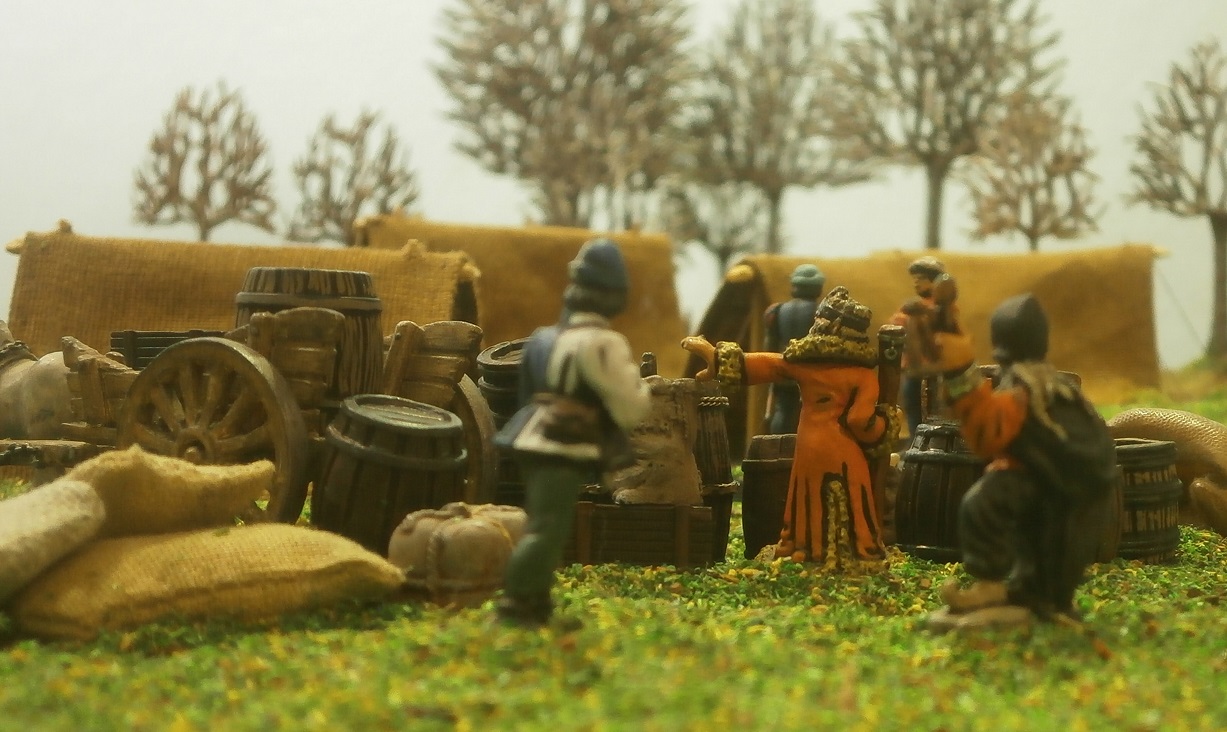
The rest of the army was ordered to speedily search the city for valuable goods, especially gold and silver, as well as locating all the flammable stocks to assist the arsonist contingent.
The resulting conflagration was impressive, as was the amount of plunder – the undead had left most such things as they lay.
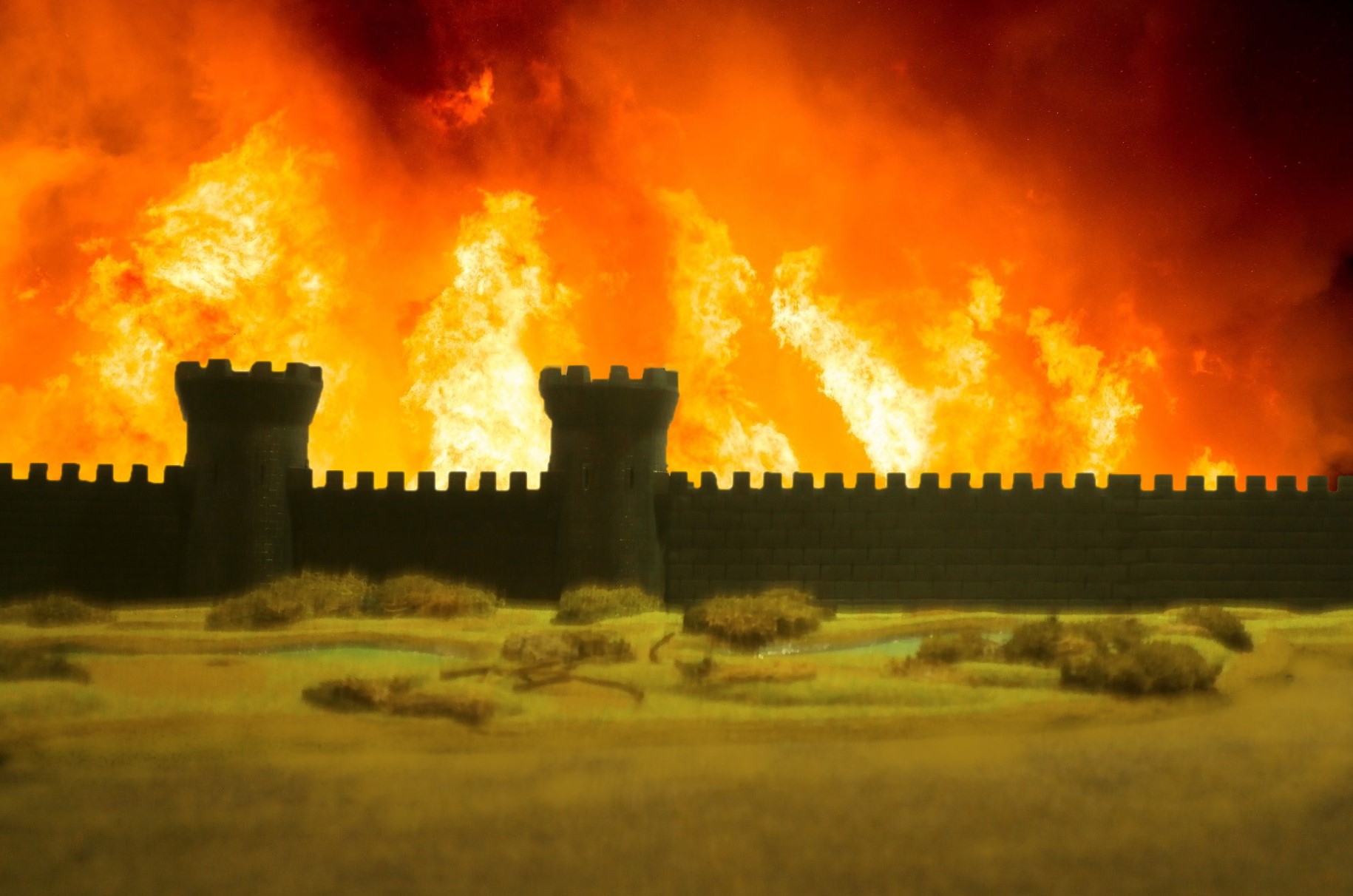
When the army marched away, its officers agreed unanimously that the cleansing had been most effective. But any pride they felt was soon sapped, for lingering just those few extra days proved costly. As they marched east along the road to Ebino, the fever became fatal for many, so that every regiment and company suffered losses.
None knew the whereabouts or condition of the vampire Biagino. But, unlike his mistress the duchess Maria, or her sire Duke Alessandro, he had proved repeatedly timorous, having fled from fight after fight, so that most were satisfied he had most likely become but one more desperate denizen of the Marshes; a foul monster haunting some noisome valley, like a wild, territorial beast.

The people of Urbimo, who had lived in fear for so long, had somewhat mixed feelings. The war was won, but a vampire still (un)lived. Pietro and Carlo Cybo began pressing the Reman arch-lector to establish some sort of permanent watch over the state of Miragliano, sufficient to thwart any resurgence of vampires.
…
In the north-east, General Mazallini of the Compagnia del Sole, the governor of Campogrotta, had lost a great many soldiers when the ratmen’s bombard had exploded – including entire regiments of halberdiers and crossbowmen, and two companies of horsemen. Only a handful of survivors had staggered out of the now deadly ground. After the explosion, the Karak Borgo dwarfs marched up the Iron Road …

… and Perrette and the last of the Brabanzon riders departed northwards.

Those who dwelt in Sermide and Buldio made their way to the walled city, fearful of another attack. There were bitter disputes between the Compagnia del Sole and the citizens, but, perhaps inevitably, what with the injuries already received, the lack of allies to assist, and the proximity of the rat-men with their terrible new weapons, Mazallini soon ordered what was left of his once army-sized company to march away along the road to the west.
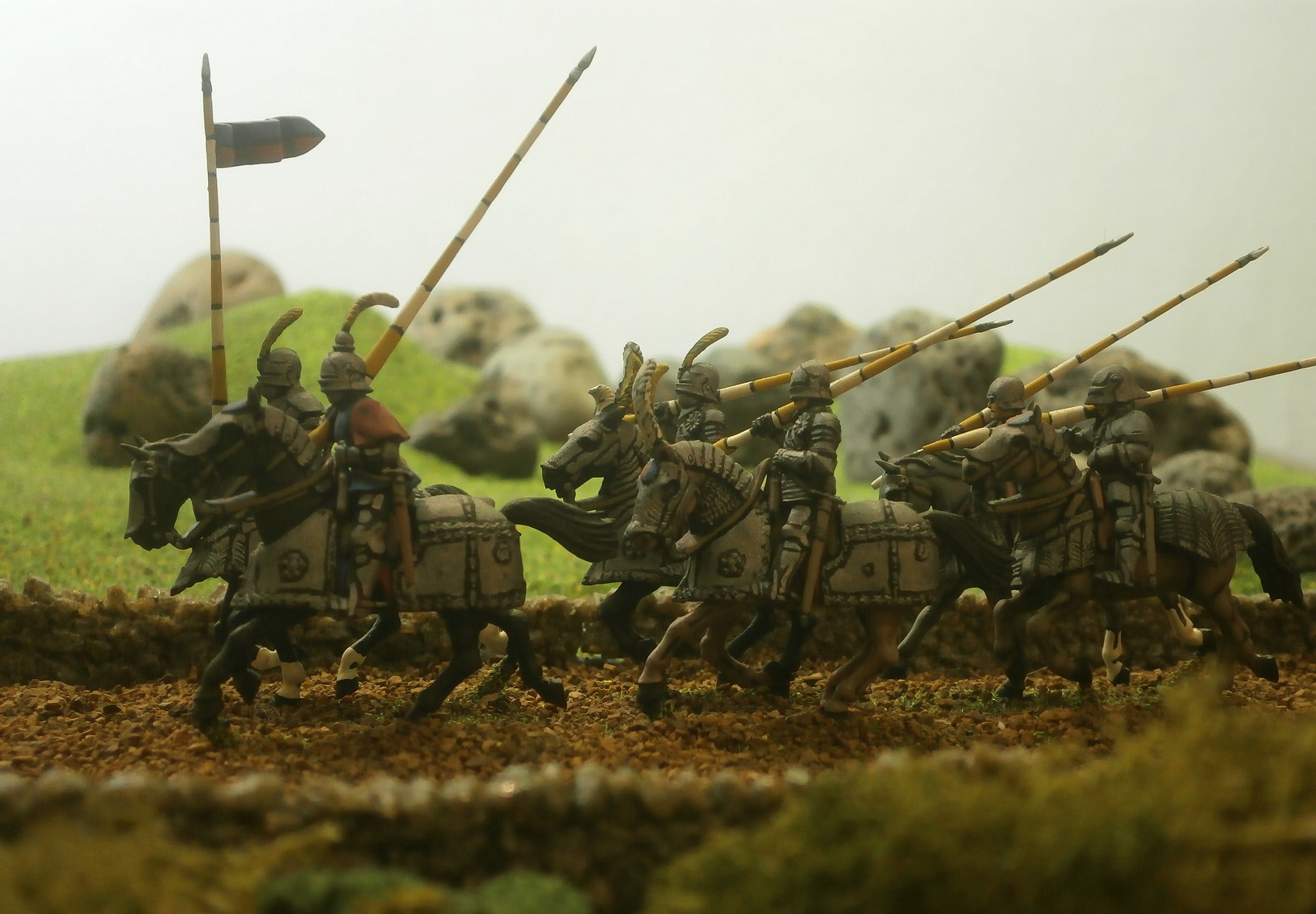
As the Compagnia made its miserable progress …
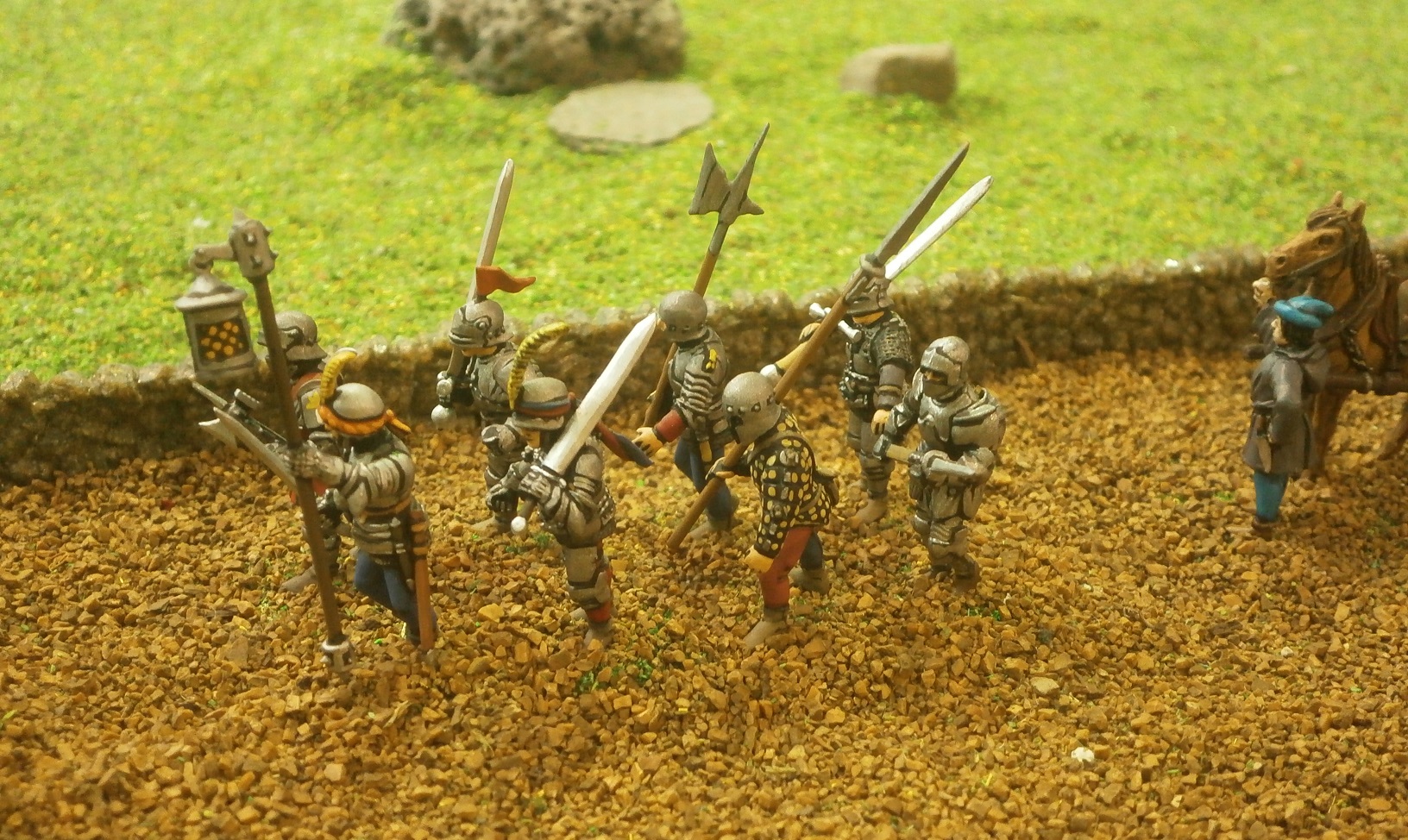
… those few who had escaped the battle at the bridge died, after which many more grew similarly sickly …

… for the river Tarano, running beside the road for long stretches, and from which they had been drawing water, proved to have been tainted by the bombard’s poison.
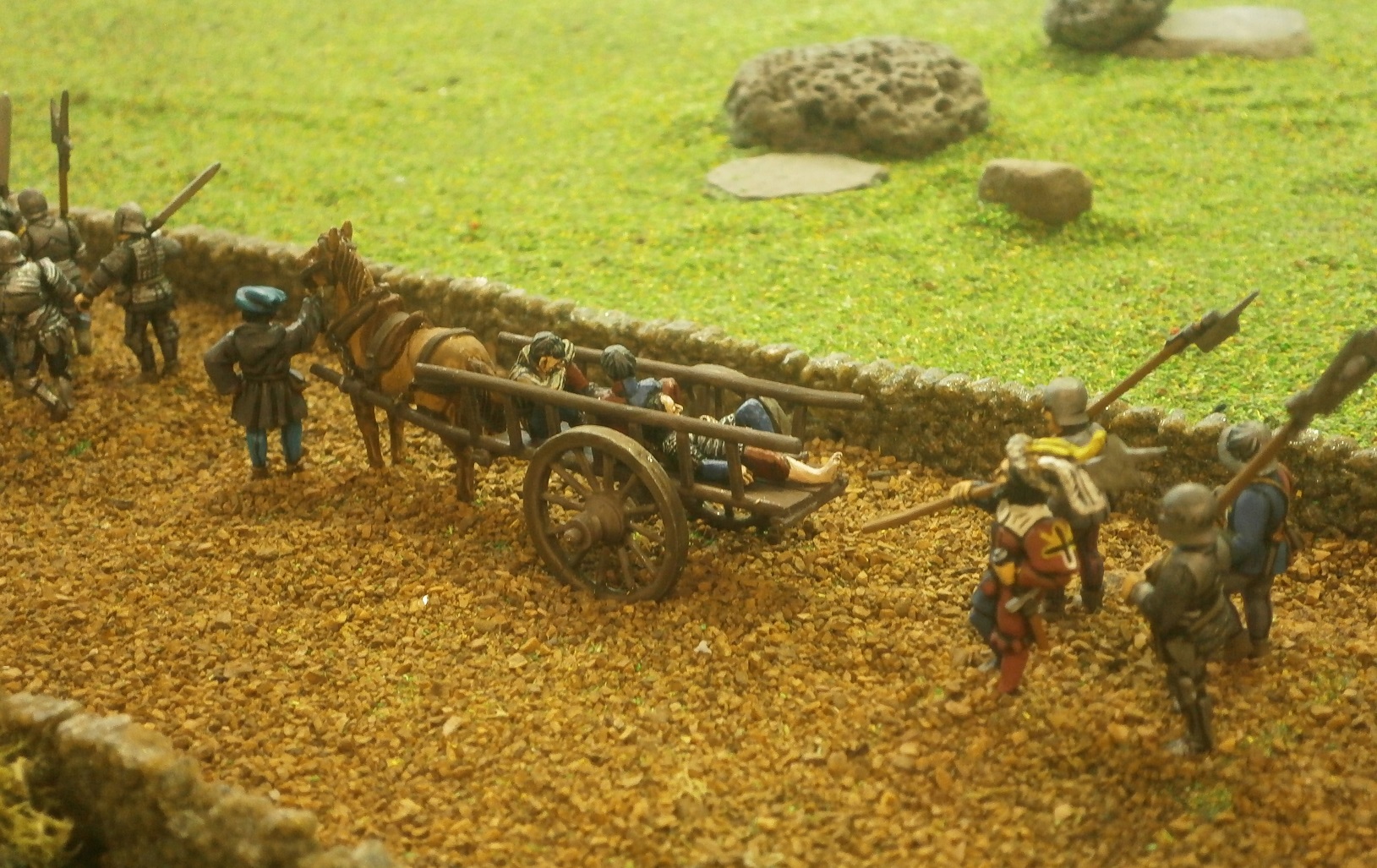
They attempted to remedy this by taking water only from the northerly streams feeding the river. They had no new contract, nor any particular destination in mind, but their urge to avoid a miserable death in Campogrotta drove them on.

Despite the absence of soldiers to defend the city, apart from the dwarfs camped some distance away at Lugo, the ratmen moved cautiously. Perhaps they were fearful of a trap? Or their own army had suffered in the explosion? Whatever the reason, several weeks passed, while all remaining in Campogrotta feared another explosion, or an assault. When the wind blew southerly, the city air tasted foul, and flesh-meat, fish and fruit rotted unnaturally fast. The populace learned to use only water from upriver, and to eat nothing from south of the river or even close to its banks. Sickness was rife, and some died. None were foolish enough to venture into the poisoned land, where fatal illness could set in within an hour, while others hid their illness until they could do so no more, some even dying suddenly in the streets.
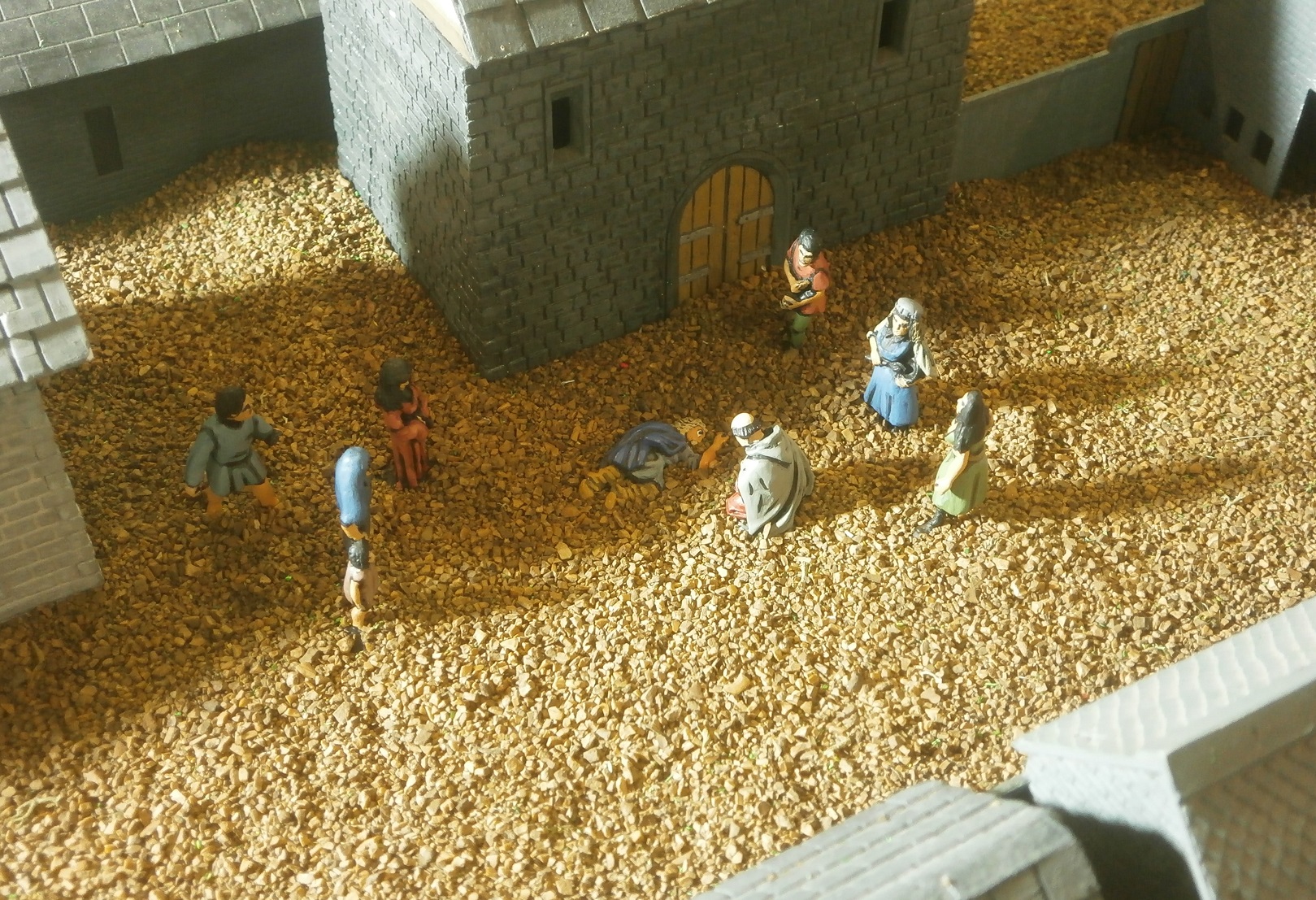
Then, half-way through the last month of summer, the attack came. Tarano Keep was suddenly captured, despite the meagre garrison blowing up part of the bridge with gunpowder.

From there, having made the bridge crossable for their many engines, the rat-men swarmed over.
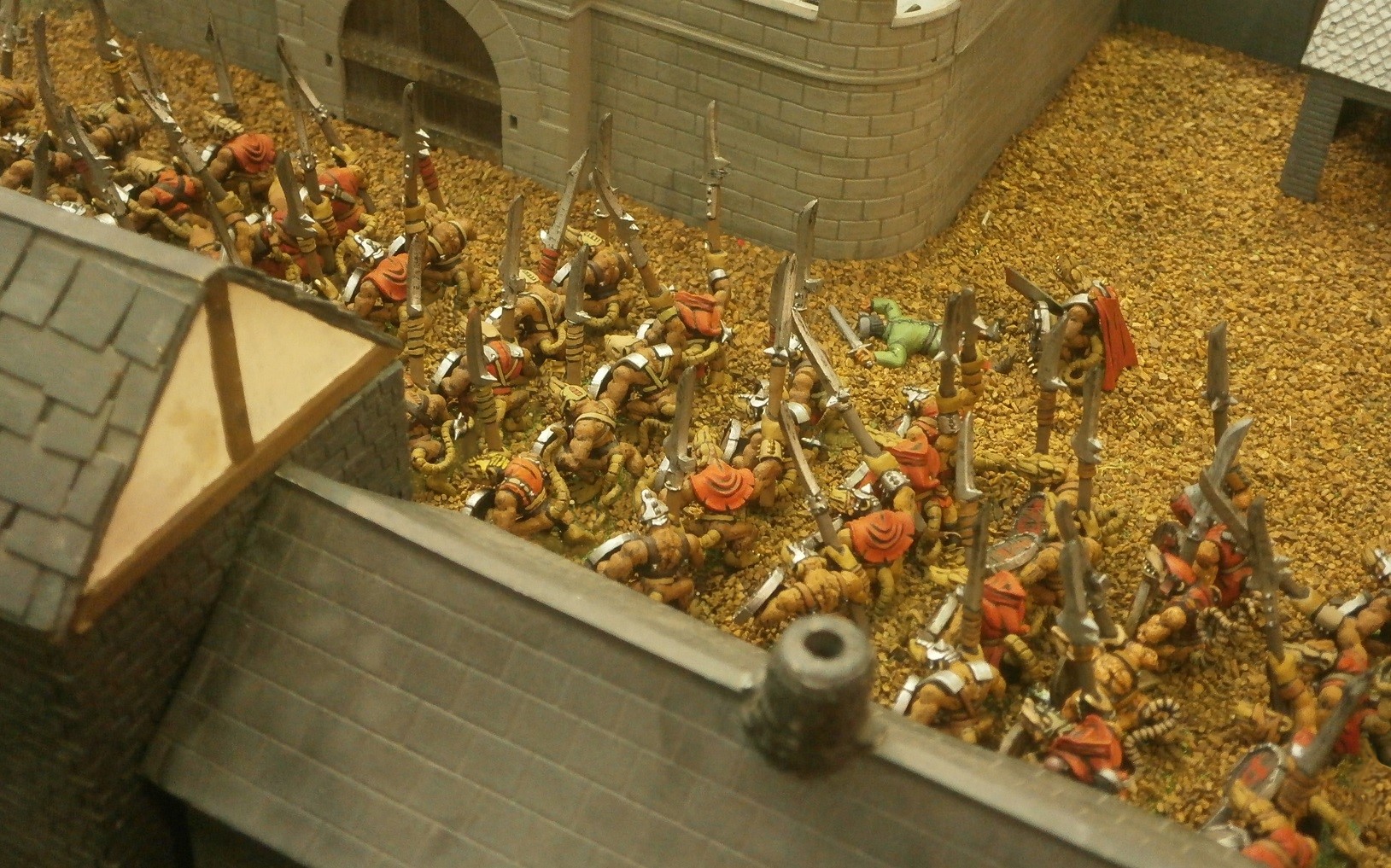
Within days the city was captured, its populace becoming prisoners. The dwarfs at Lugo did not come to the city’s aid, for they were already heading to their mountain home. No riders came from the wilderness to the north, and the Compagnia del Sole was so far away that the blood in the river-water had thinned to nought by the time it passed them by.
None knew what the dwarfen king in Karak Borgo intended, but he had until recently invested a great deal of gold in the recovery of Campogrotta and Ravola from the Bentiglovio and Boulderguts’ rule, hiring not one but two mercenary armies to assist his own warriors in the fight.
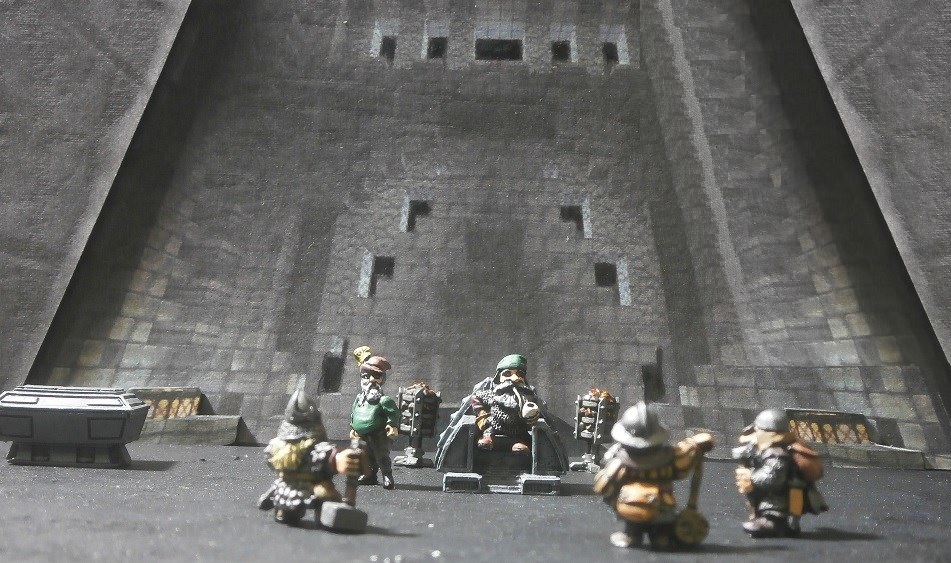
Now all his efforts appeared to have come to nought, for both realms were now lost to a new enemy; one which was likely to prove far more troubling to trade and prosperity than the ogres ever were; one that could destroy an army with the launch of but one grenado.

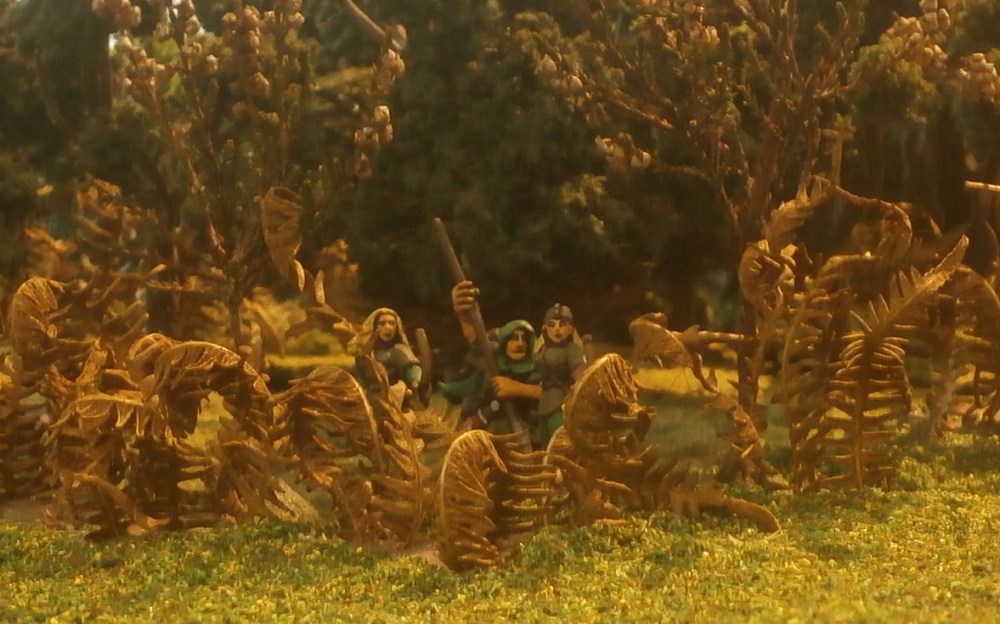
Perhaps unsurprisingly, there were signs that the sleeping, sylvan elves of Tettoverde had been awakened by the poisoning of the forest’s northern-most tip. Having long since spurned nearly all interaction with human and dwarfen realms, other than the activities of the Sharlian Riders (a mercenary company of adventurers who were rumoured to have been outcasts from the forest) it they could not ignore such a threat. And indeed, there were reported sightings of animated trees lurking at the forest’s edge …
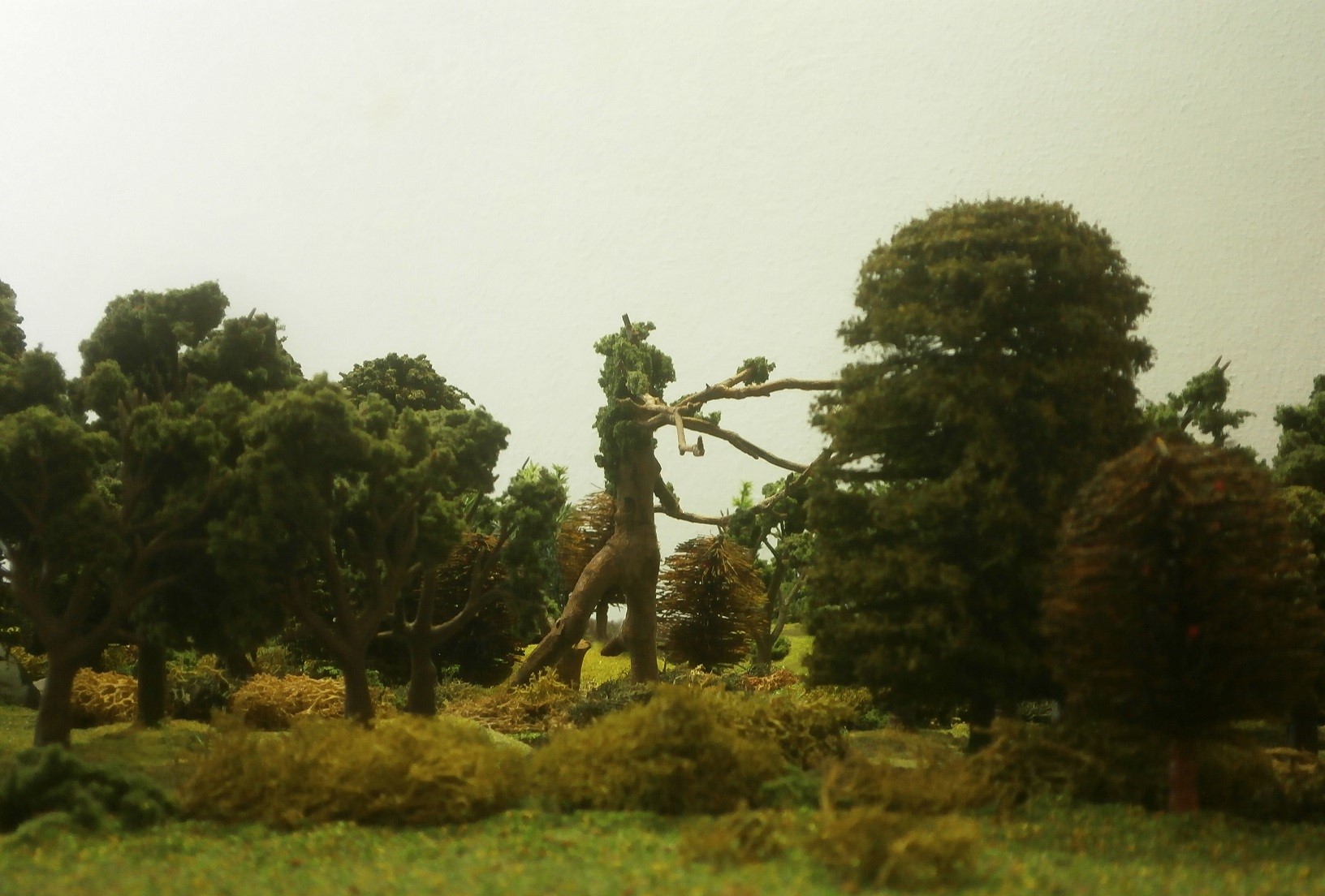
… and giant hawks bearing riders high in the sky over the forest canopy to the south-east of Campogrotta.

Such claims had, however, previously been quite commonplace, if not always believed. Only time would tell whether, as in more ancient times, the elves would send a host out from the forest’s shadow to thwart their enemies, or whether, as many thought more likely, they would simply prepare to annihilate any and all who dared to trespass upon their realm or inflict any further harm upon its denizens and trees.
…
Lord Silvano, heir to the bedridden Duke Guidobaldo Gondi, was now ruling Pavona as regent. While his father lay in his palazzio, visited only by physicians and his most trusted servants …
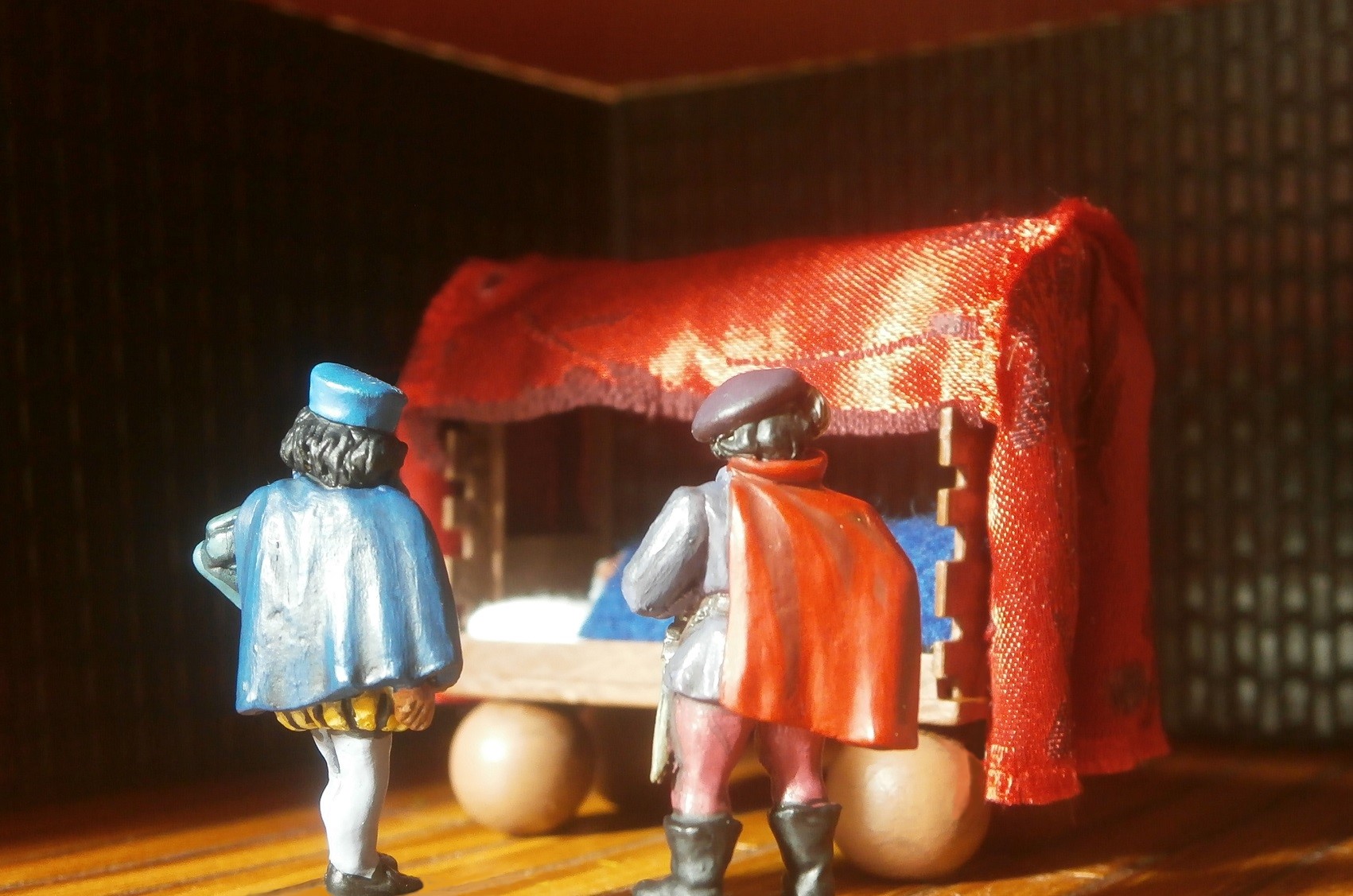
… the young lord was glad to see that the city realm had at long last begun to recover from the cruel battering it received at the ogres’ brute hands. The town of Scozzese was thriving, having extended its cultivated lands and stocks of sheep and kine, while the once fruitful lands of Casoli and Todi showed signs of natural recovery, as Pavonan gentry, traders and peasants flocked to them, there to repair, rebuild and replant. Many were keen to leave the overcrowded city, where hunger had been so rife for so long.
In the previously conquered realms of Trantio and Astiano, there were signs of a similar recovery, although both presently lay outside Pavona’s control. Lord Silvano announced that he had never yielded his authority as ‘Gonfalonieri for Life’ in Trantio, and had only appointed a substitute governor because he himself had been required to fulfil his holy and heartfelt vow to serve the arch-lector against the vampires. It was that substitute – the wizard Bellastra – who had failed to defend the city against Boulderguts’ double army. Lord Silvano declared that he took not just his vows but also his offices seriously, and so (unable to travel there himself due to his many and necessary duties as regent in Pavona) he sent a small force to ensure the safety of Trantio until he himself could return.

These soldiers were ordered not just to protect the realm against an advance by the uomini ratto, but also to encourage the city’s healing and enforce the good behaviour of the populace. Trantio, he declared, was to become a bastion from which to thwart any advance by the foe into Tilea’s heartlands.
As a consequence of the attempted assassination of their duke by the Verezzan brigand known as the Pettirosso, a new hatred of halflings festered in the streets of Pavona.

It was said that the duke should have gone much further when banishing the dwarfs several years previously – that he ought to have banished every kind of non-human, including halflings. Of course, this would not have stopped such enemies secretly infiltrating the realm, but it would have meant such assassins found none of their own kind to help or harbour them. Indeed, it was presumed exactly such had been the case, and that the villain Petirosso and his brigands had been given intelligence of the duke’s whereabouts, as well as shelter and sustenance, which was why the few halflings living within the city state were arrested, either to be imprisoned or worse. The luckiest were thrown into dungeon cells, supposedly to await questioning, but oftentimes forgotten, while any considered able-bodied or quick-witted enough to have assisted Pavona’s enemies in some way, were hunted down by lynch mobs, to be most roughly handled.

This became a cruel sport in the realm, which Lord Silvano did not rebuke in any way whatsoever. Here, perhaps, was a first glimpse that he possessed some of his father’s notorious wrath? Or maybe it was his love for his wounded father that spurred his own hatred? Many halflings were pilloried and branded, while those believed to have aided Pettirosso’s band in any way were strung up …
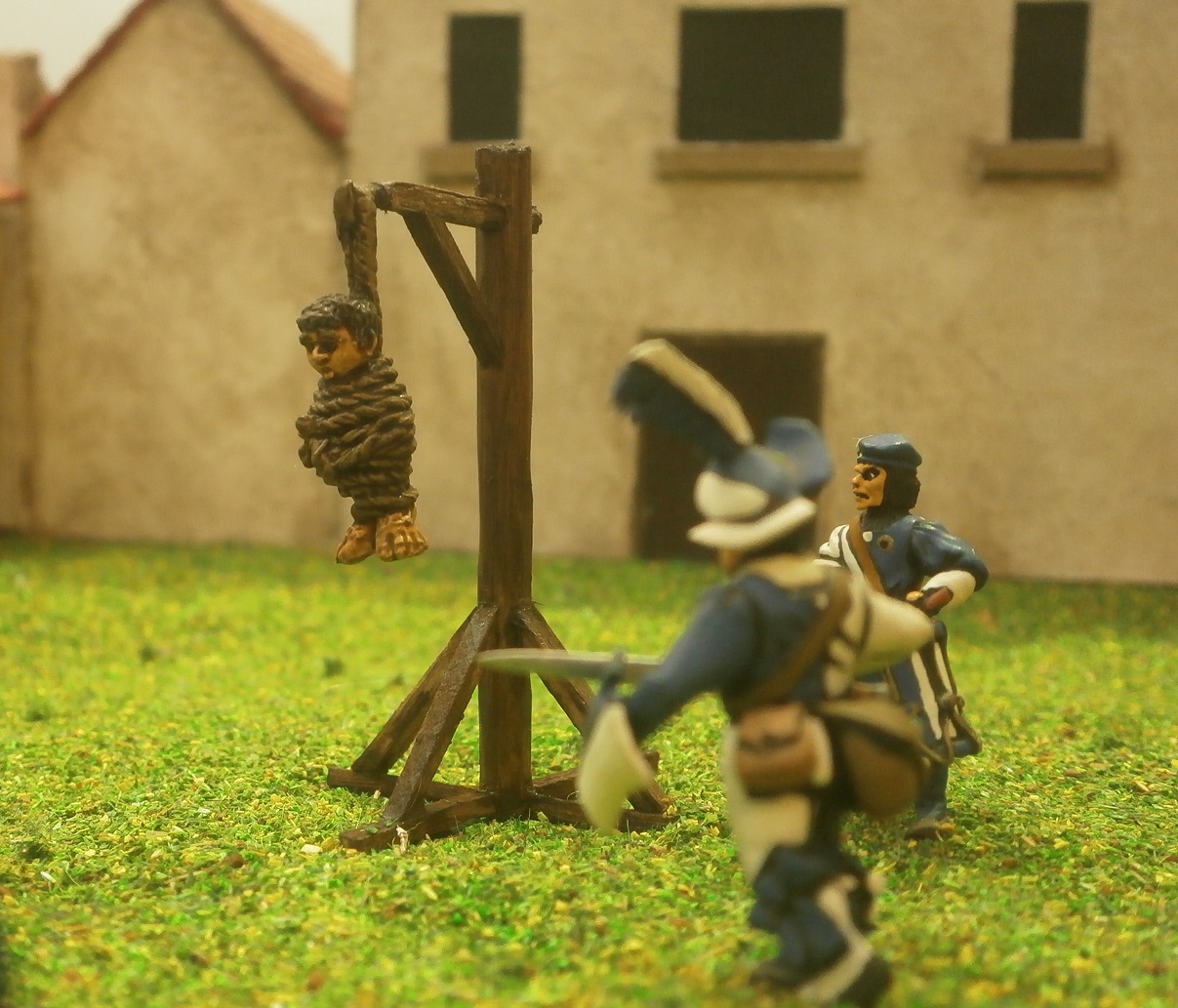
… exhibited alive so that the people could see the fate awaiting all traitors. Some such poor souls were so treated for many days, so that once the baying mob grew bored and drifted away, the more genteel Pavonans might spend a few undisturbed moments viewing them, giggling at their pathetic state and fate.
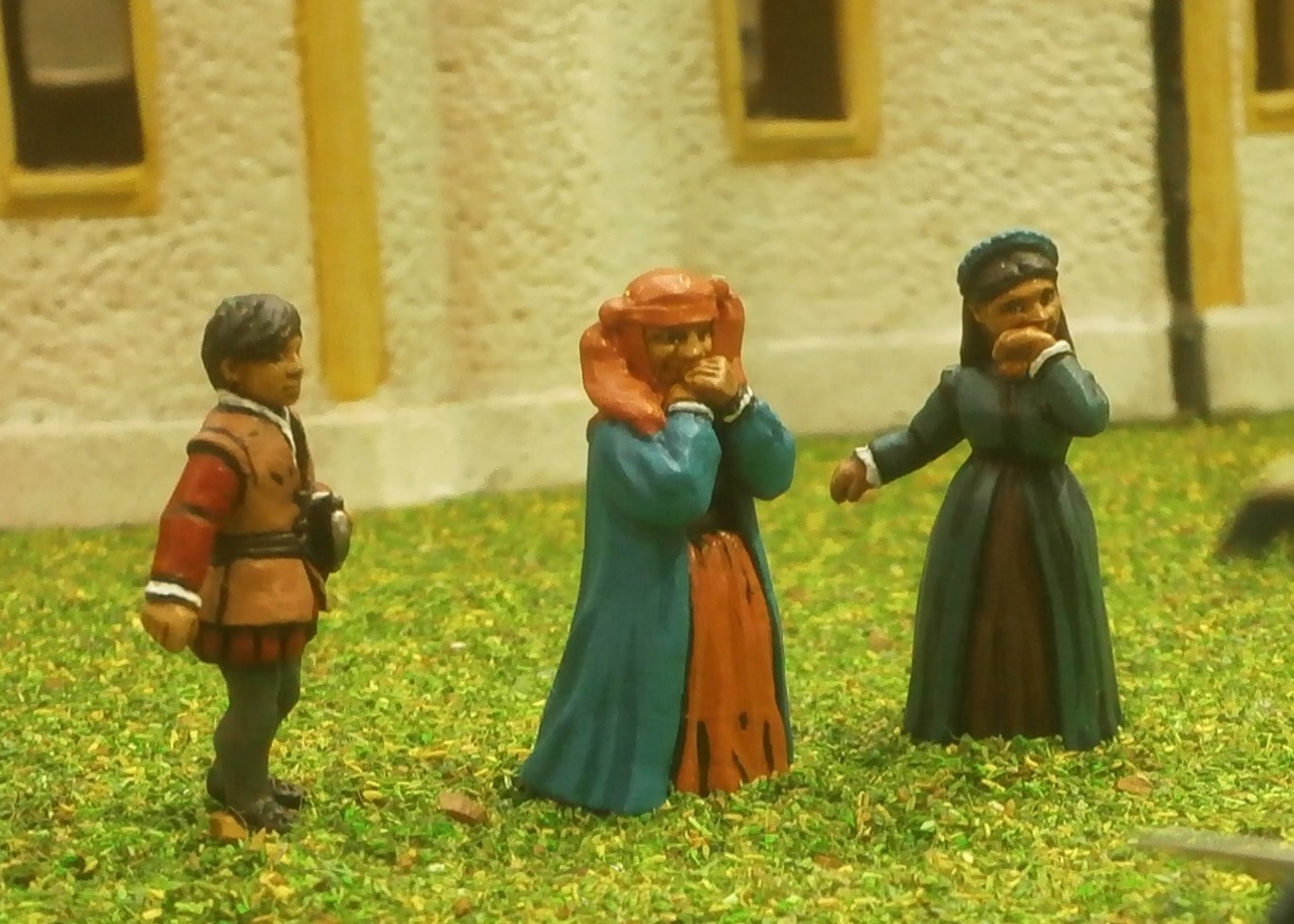
Some were alive when finally cut down, but most had died, as a consequence of the rough handling they had received from the crowd, the lack of food or drink, or a brutal combination of both.

Meanwhile, the city state of Verezzo continued to prepare for war against Pavona, now (during Lord Lucca’s nephew’s minority) being ruled in practise by the bitterly angry halfling noble, Barone Iacopo, made both Capitano del Popolo and regent.
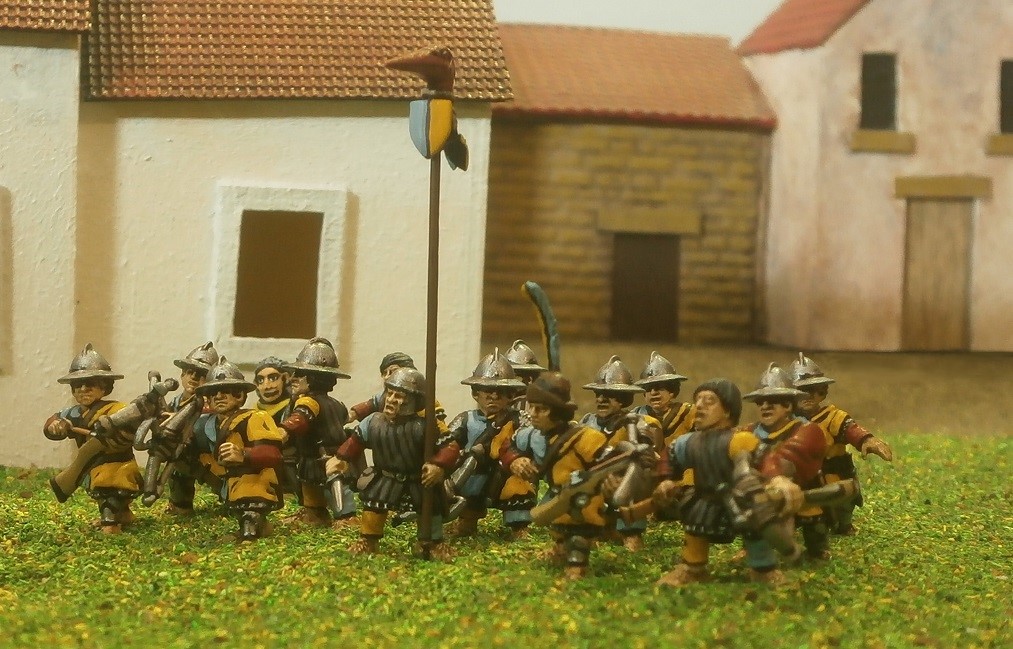
The barone bolstered the realm’s forces as best he could, mustering new pike and crossbow soldiers in the Tilean style …
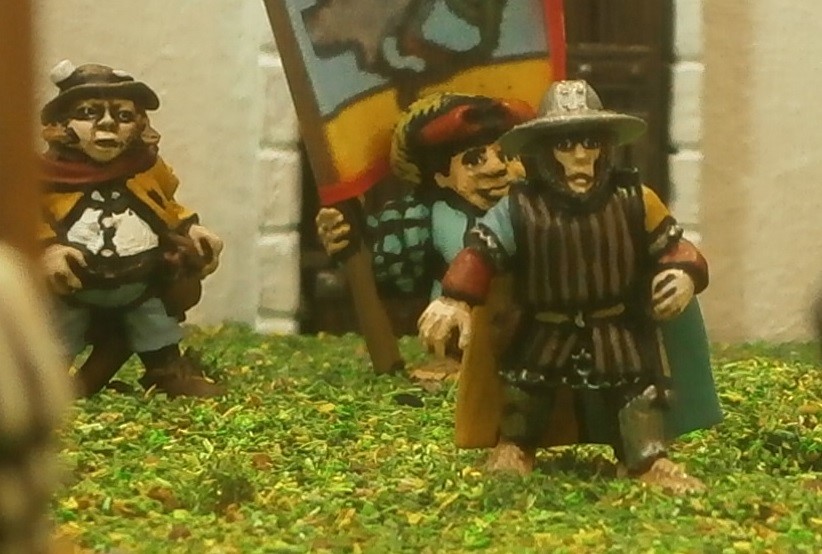
… yet it was commonly doubted that he had anywhere near sufficient force to defeat the stoutly walled city of Pavona, defended by its still not insignificant army.

The barone became further angered by the Pavonan accusation that a Verezzan agent (the Pettirosso) had attempted to assassinate Duke Guidobaldo, declaring it a lie. He announced that the duke of Pavona had most likely now added further slander to his litany of well-known and proven crimes, the worst of which was the murder of Lord Lucca Vescussi in an entirely unwarranted predatory attack on Verezzo at a time of emergency in all of Tilea. And, he said, even if the Pettirosso was responsible for the attempt on Guidobaldo’s life, then it would be a measured punishment for Lord Lucca’s assassination, and thus no bad thing. Upon later hearing of the maltreatment of halflings in Pavona, the barone became almost apoplectic with rage!
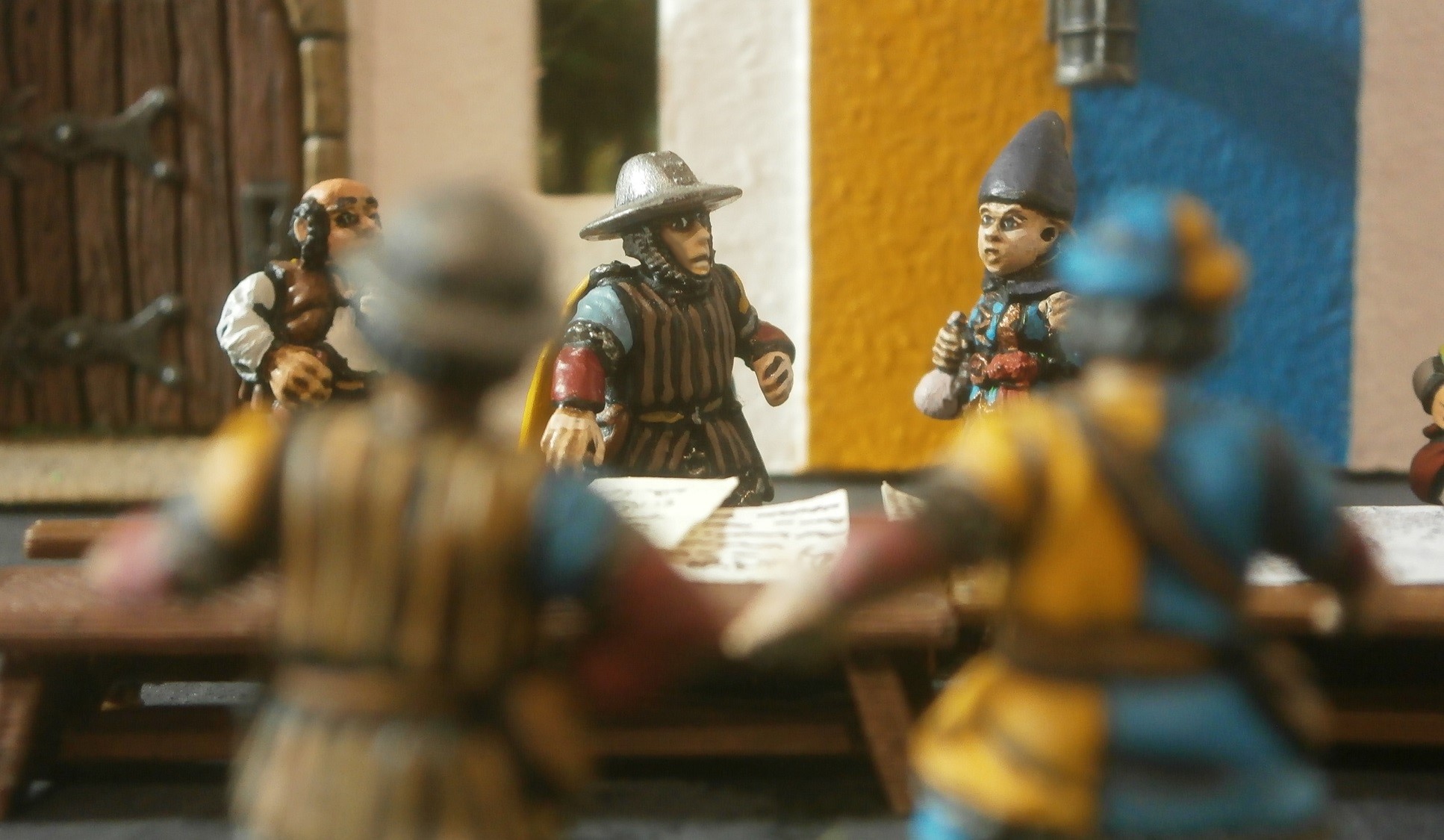
And so Iacopo suggested that considering Duke Guidobaldo’s grievous wounds, and his litany of crimes, the Pavonan ruler must urgently prepare his soul for its journey into Morr’s heavenly garden, by way of prayer and penance. Furthermore, the barone demanded …
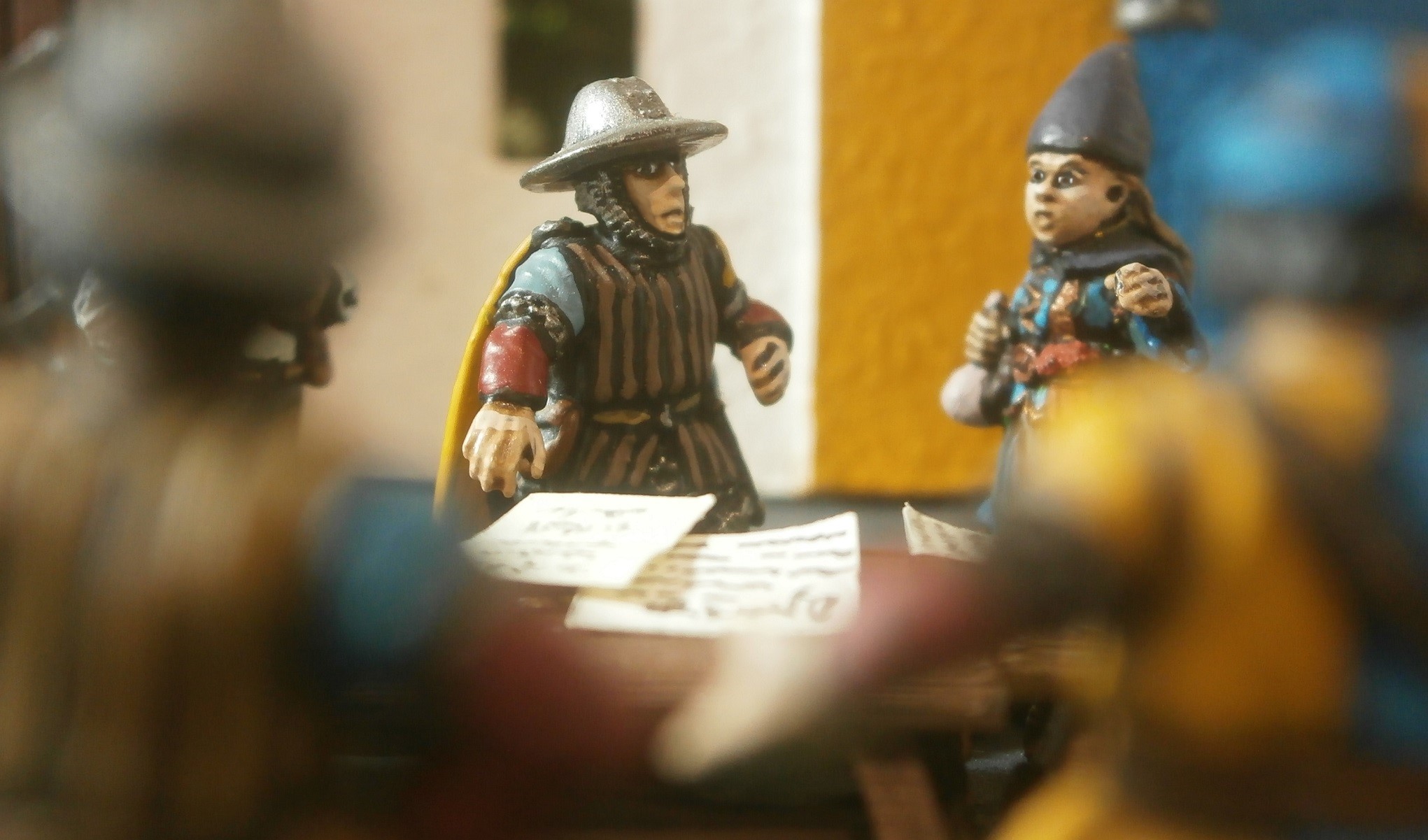
* That Duke Guidobaldo personally apologise for Lord Lucca’s cruel murder, by travelling to Verezzo to attend a public service in the Morrite Temple there.
* Or, if he was too ill to do so, then he should send his son, Lord Silvano, as his proxy, just as he sent the same son to answer to General Valckenburgh of the Army of the VMC before the walls of Pavona, after his slandering of the said general by claiming it was his forces that had killed Lord Lucca.
* Or, if Duke Guidobaldo refused to apologise and beg for the forgiveness of Morr and the good people of Verezzo, that he should allow himself to be subjected to a church led, legal inquiry, in holy Remas, concerning his actions and claims, and if found guilty of any crime, should pay whatever reparations were judged appropriate and undertake whatever penance was deemed necessary.
* Or, if he was too ill to do that, then he should send his son, Lord Silvano, to stand as his proxy in the church inquiry.
The Pavonan nobility advising Lord Silvano considered these demands outrageous, especially as they came from a petty noble ruling a city state that had committed numerous slights and slanders against Gondi family in the past. The Morrite Lector of Pavona, Mauro Capolicchio, said the halfling lord must be mad to believe he could make such demands of the Reman Church of Morr.

Besides, he added, even if the arch-lector were to allow such an inquiry, then as a part of the committee charged with the duty to discover the truth of the matter, he could prove Duke Guidobaldo had only ever served Morr and the gods first, his own realm second, and Tilea third – which was all that could ever be asked of a noble, Tilean ruler.
The young Lord Silvano, however, being of his own mind, chose to satisfy Barone Iacopo’s demands by sending a proxy (Erkhart, the refugee lector of Trantio) to answer the summons and attend any judicial procedure.

This was indeed done. Upon arrival in Verezzo, Lector Erkhart met with the Barone Iacopo, who was attended by several of his newly raised guard companies.

The lector informed the halfling lord that Duke Guidobaldo was indeed far too ill to travel, or even to leave his bed, having been so badly wounded by the assassin-brigand Pettirosso, and that his son, Lord Silvano, could not possibly leave his many duties as regent, especially as Pavona itself also lies wounded still.

With father and son so disabled and distracted, Erkhart was there to stand in place of both, to offer the duke of Pavona’s apologies for any and all assumed and proven offences. Bowing most humbly before the barone, he offered himself as Duke Guidobaldo’s substitute, to receive punishment.

Barone Iacopo was said to be lost for words, for he considered this sending of an unasked for proxy to be simply another Pavonan insult. His advisors were equally stunned, and indeed afraid to offer advice to their obviously irate master.

When the barone finally spoke, it was to curse the lector, the duke, his son and all Pavonans, and in no uncertain terms.

At that very moment, one of the lector’s two Pavonan guards brought down his halberd’s blade and struck the back of Erkhart’s head, apparently attempting to lop it off.
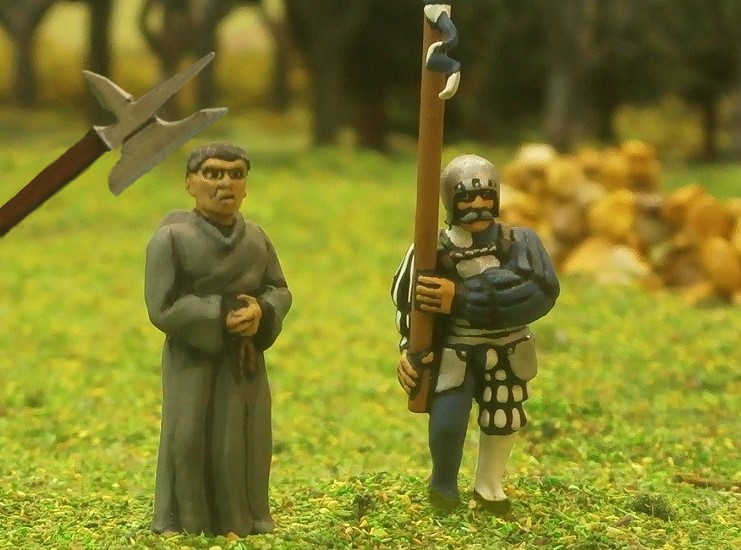
Prevented from completing his attack by the Barone’s more numerous guards, both he and the other Pavonan guard were restrained.

When questioned, the guard confessed that this act was a misunderstanding; that he thought that such a punishment was required and believed it only right and proper that a soldier of Pavona should carry out the execution!
Lector Erkhart subsequently lay unconscious under the care of a doctor of physic in Verezzo, who was doubtful he would ever recover. His attacker was imprisoned, as Barone Iacopo was not at all satisfied with the account offered. The second guard was sent back to Pavona, there to deliver the message that this response to Barone Iacopo’s justified demands was in every way entirely unacceptable.
What the Reman arch-lector, Bernado Ugolini, truly thought concerning this dispute was anyone’s guess, for his holiness did not reveal his mind when he learned of these events. He had fought beside both Duke Guidobaldo and his son in several battles, against both the vampires and the ogres, forging a strong alliance with Pavona. Yet at the same time, he had long respected Lord Lucca Vescussi of Verezzo, the two having been friends and fellow students under the same Reman tutor in their youth. During the vampire wars, Bernado, just as Calictus II before him, strove to avoid any division or conflict between the city states of Tilea, and now, with the threat presented by the rat-men, could not reasonably be expected to steer a contrary diplomatic course. Nevertheless, it was openly rumoured among the high clergy, that his holiness Bernado knew a good deal about the disagreement between Pavona and Verezzo, having a deep insight into the true nature of those concerned.
…
The South
By the end of summer, having stripped Capelli of every horse available to replace his army’s broken mounts, General Valckenburgh of the VMC and his shattered men arrived at the ruins of Mottola. Much of his foot, with the artillery, were somewhere just south of Raverno, and he had yet to hear from Luccia la Fanciulla in the far, far north.
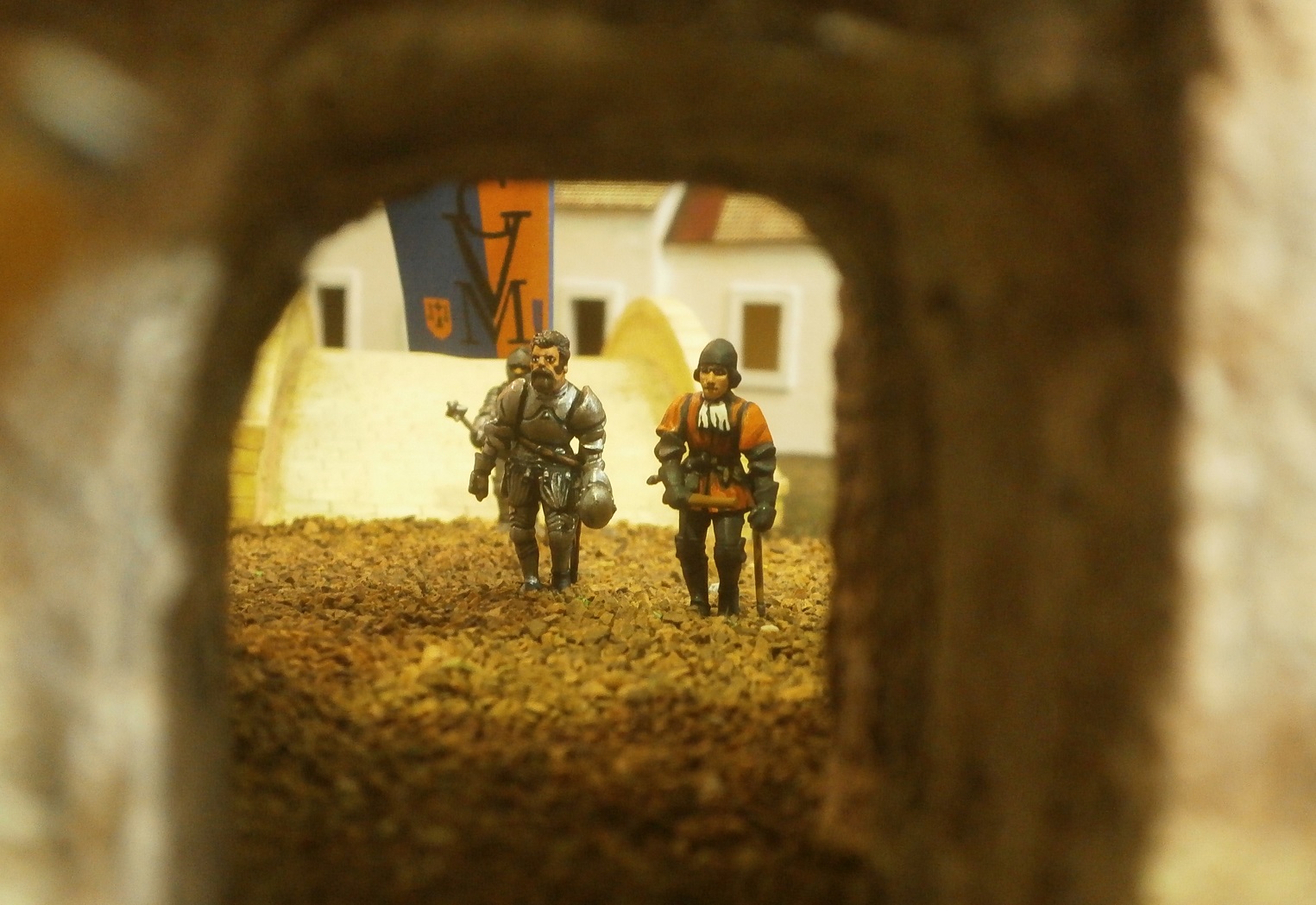
Leaving the bulk of his exhausted men at the ruins, Valckenburgh went ahead with a small party to the city of Alcente.
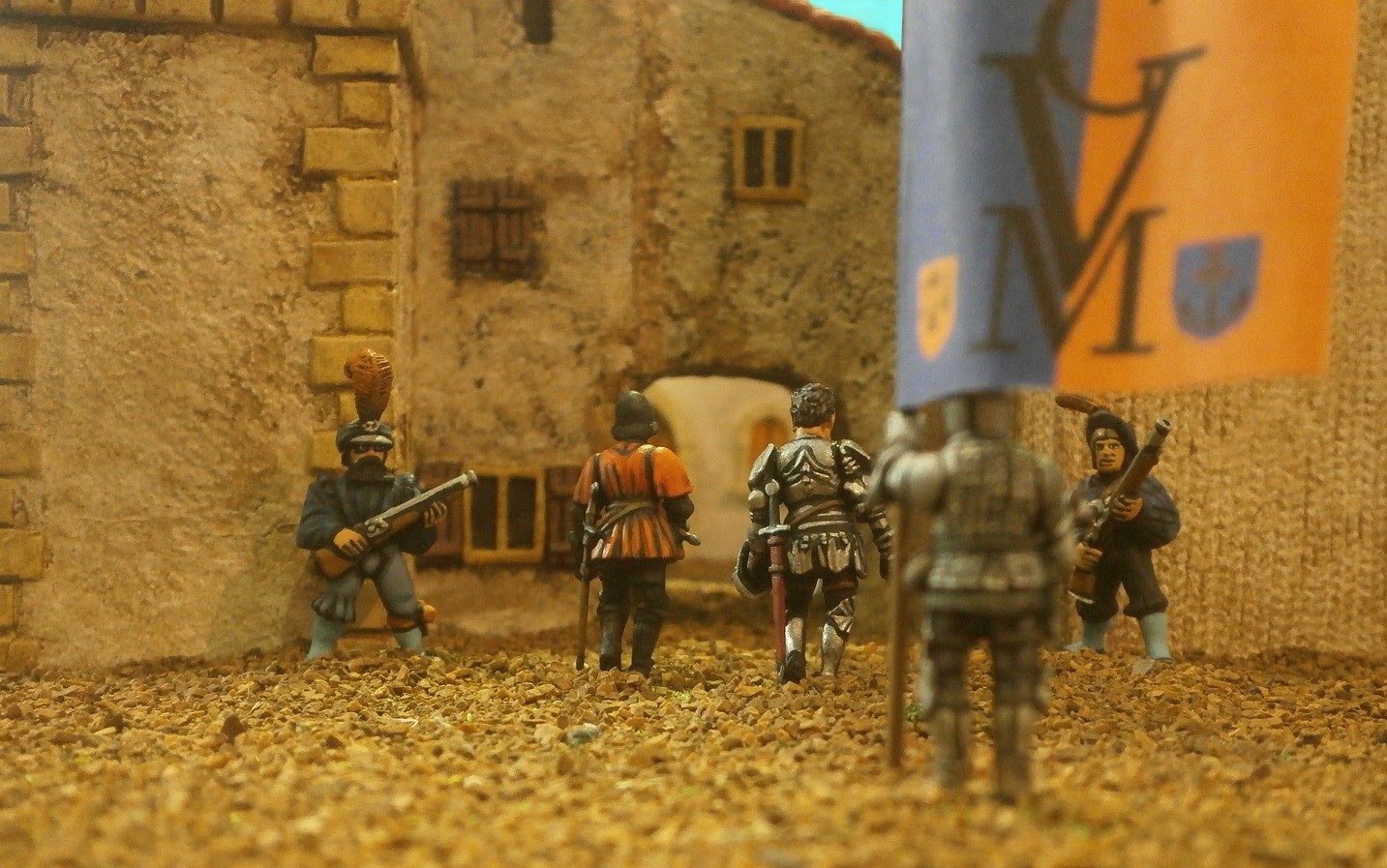
There he learned that the city’s hastily raised garrison force had not chosen to pursue the Sartosan army along the road east, as they suspected the enemy’s manoeuvre was a ruse to lure them away from the city, exactly as the Sartosans had previously (successfully) tried, leading to the losses incurred at the Battle of Sersale.
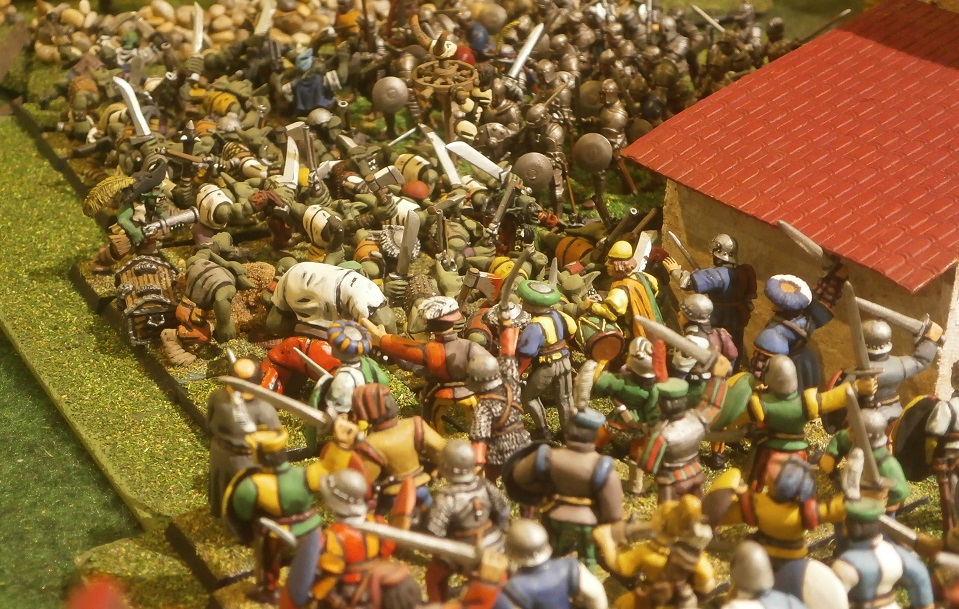
This time, however, it turned out not to be so, for it soon became clear that the pirates intended to sack the newly prosperous port-town of Pavezzano, where they could also embark upon their ships if it proved necessary. They razed the watchtower of Tursi as they passed, taking prisoners (which they later butchered) …
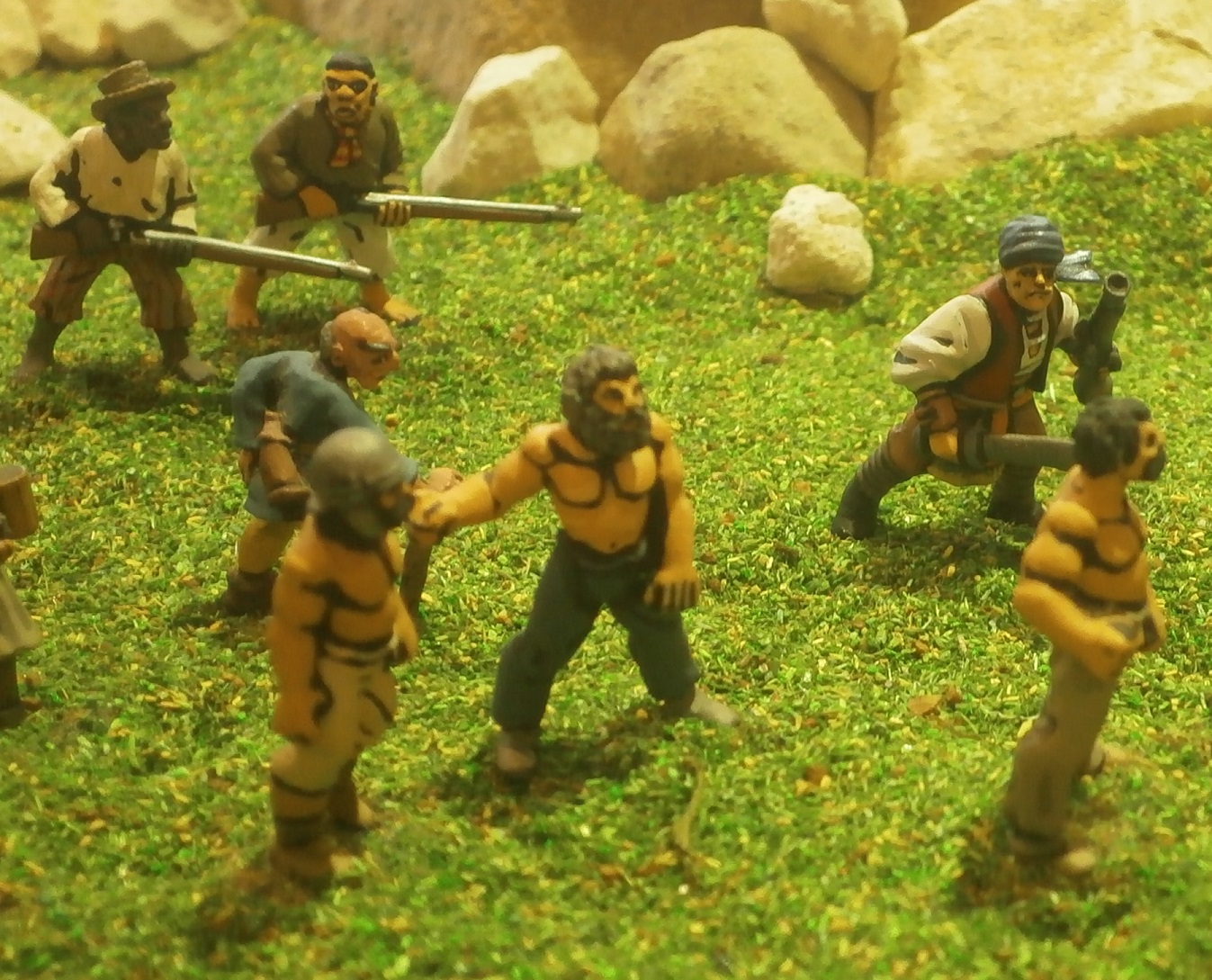
… and there was now nothing the general could do to stop them.
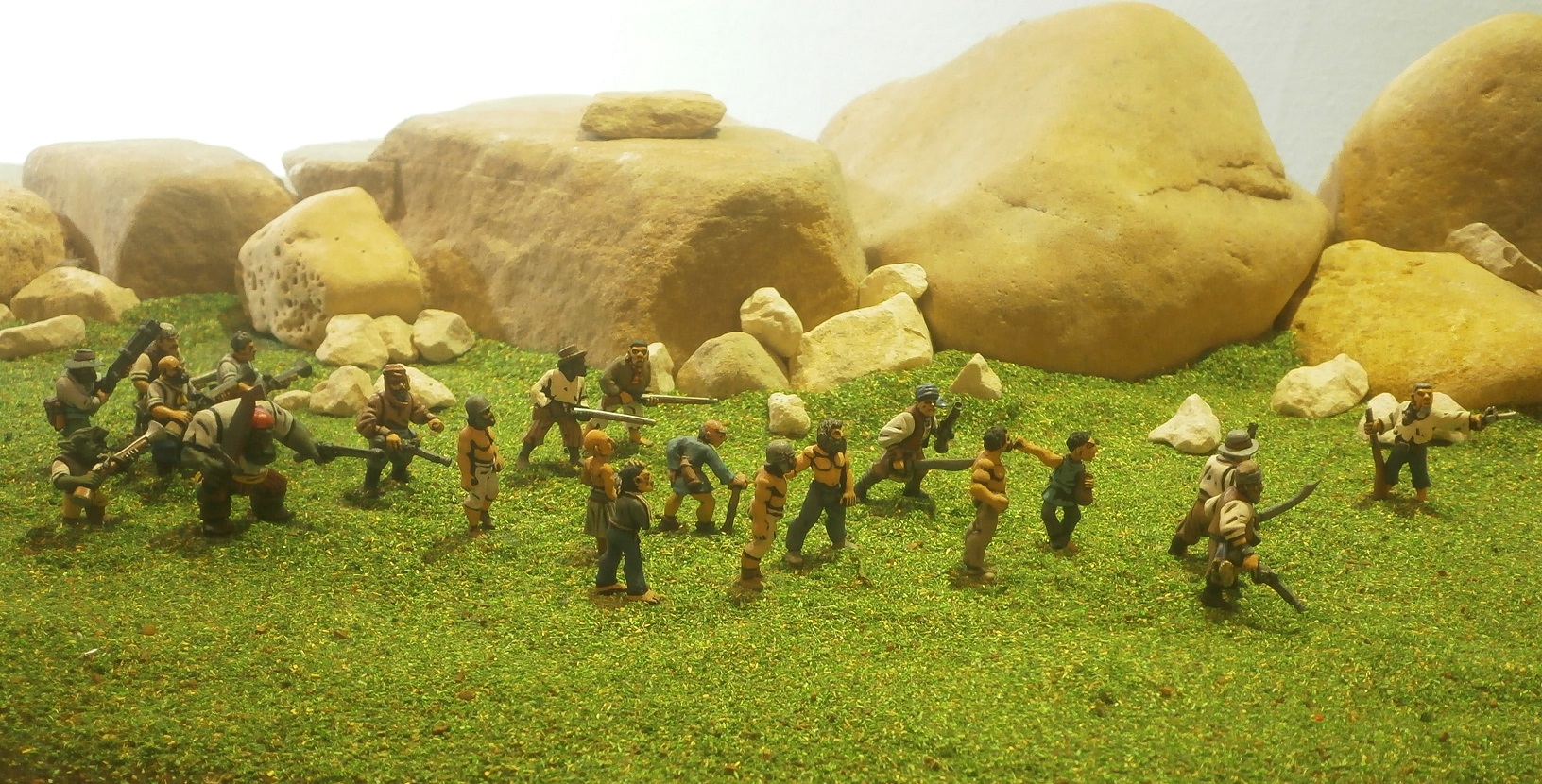
Pavezzano was indeed assaulted, while the Sartosan fleet, which had arrived offshore before the army, cannonaded the defences. There followed a cruelly comprehensive sacking.
Presumably, General Valckenburgh cursed his decision to take so much so far north. For the first time since the VMC had defeated Khurnag’s army, the native Alcentians had begun to wonder whether they really could expect prosperity and peace under VMC rule, and some began rueing the day that military governorship was granted to these foreign soldiers.

None, however, were foolish enough to voice their concerns too loudly, for the VMC’s soldiers were still numerous, with more yet to return, and the mercantile company employing them was itself backed by investors with deep pockets, who knew full well just how much they could profit from possession of such a large swathe of fruitful lands in southern Tilea, and who were no doubt willing to send whatever was required to ensure that future income.
The Sartosan fleet, carrying Admiral Volker’s battered but still intact army and a vast quantity of plunder, passed by Alcente on its way back towards Sartosa, bearing some distance south. Even after a string of victories and so many settlements looted, they remained cautious of the VMC’s ships and soldiers, probably aware that if reinforcements had arrived by land or sea, then the enemy might well have regained sufficient strength to defeat them easily in battle.
Perhaps unsurprisingly, despite the vast wealth stolen from no less than five settlements under Alcentian (and thus VMC) rule, the Sartosan’s insatiable greed was not yet satisfied.
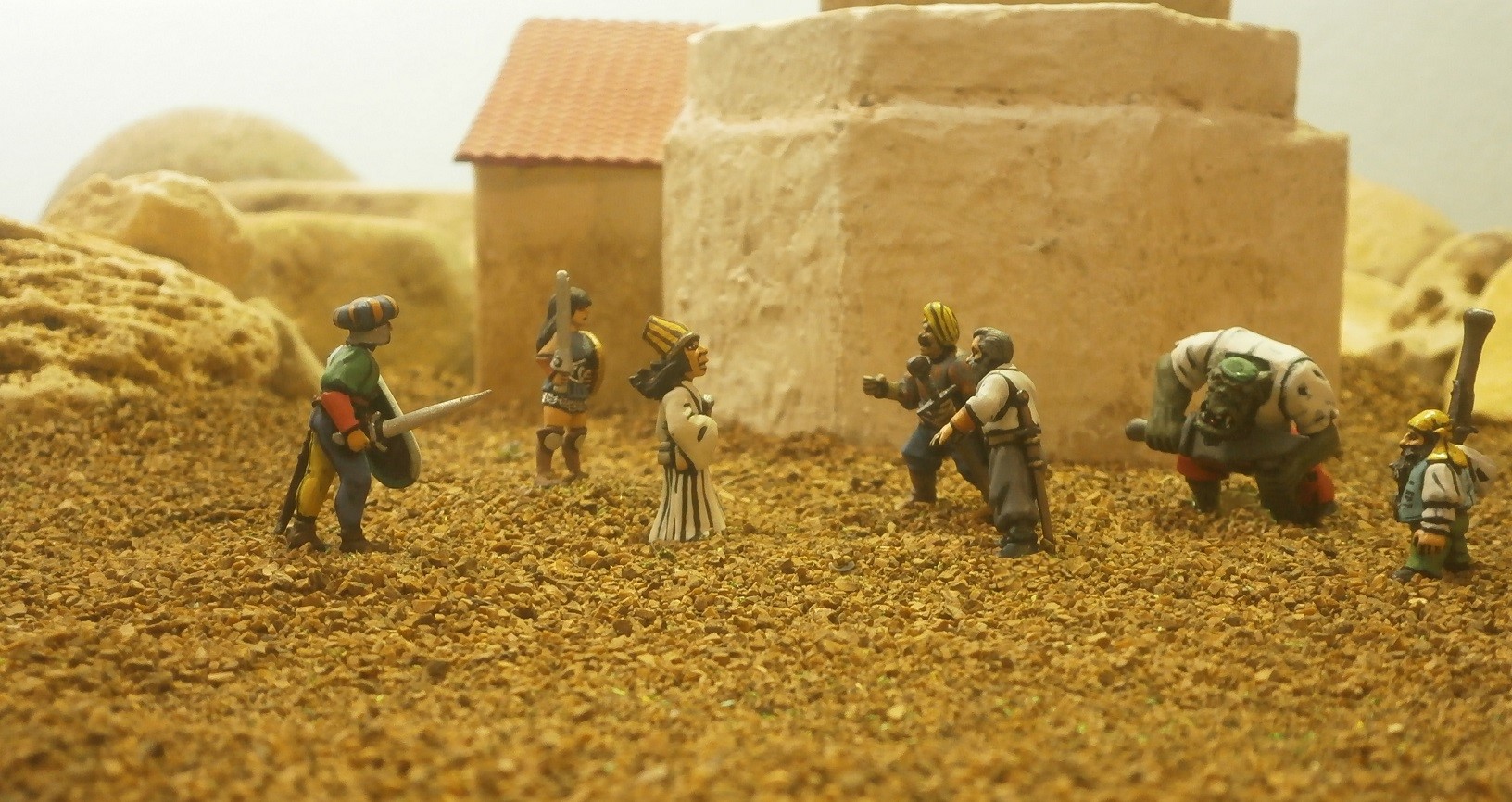
And so it was that the wizard, Duke Ercole Perotto, uncle to the hostage King Ferronso III of Luccini, became, at long last, involved in serious negotiations for his nephew’s release. He met with several of Admiral Volker’s emissaries at one of the coastal watchtowers studding the shore for several miles south of the city of Luccini.

Ferronso’s realm had begun to heal after the pirate’s incursion, and several Tilean banking families recognised that there was a profit to be made by lending Duke Ercole the sums of money required, underwritten by a share of the recovering realm’s future tax income. Of course, the Sartosans cared not a jot for these details, only for getting as much gold as they could, while ensuring they gave no hint concerning just how much Admiral Volker wanted rid of his annoyingly troublesome prisoner.

…
The Great Arcanum
Somewhere near Campogrotta, Autumn, 2404

They had been sent to meet the new engine of war, to ensure it took the prepared path upon the final stretch of its current journey, the surest and quickest way, to be brought safe and sound to the army. They had already visited its attendants’ camp, placed several hundred yards ahead of it, along the rocky valley. They had held their tongues, and none had spoken to them, for the engine’s crew and guards had been commanded to speak to no-one, nor was anyone allowed to talk with them, under the pain of death. Gradger and Farrgrin were to show the attendants the way with gestures alone!
Now, as they approached the engine itself, there was a disagreement between them, as Gradger suddenly came to a halt.
“No and never,” declared Gradger. “I shall go no closer. I saw-full the curse afflicted by the first such engine – bursting boils and bleeding sores, corpse piles heaped along its route. If this one has stopped, then whichever idiot-fool allowed it to do so should be punish-whipped. We need not draw near, for we can show them the way without being close-by. We need not even look upon it.”

Farrgrin had rarely witnessed the engineer’s mate so terrified – a fuming fury of fear! He had been nervous before, weighed with worries, as was to be expected of all servants, and he was often pensive, on occasion perilously so, but never this filled with dread. It suddenly occurred to Farrgrin that as an engineer’s mate of considerable experience, Gradger might be afraid that he was to be ordered to tend upon this new war-engine, as part of its crew. That would explain his current demeanor and behaviour.
“Calm-quiet yourself,” soothed Farrgrin. “You know and understand little. This engine is not the same as the last. Not at all. This one does not bleed-leak death.”

Gradger’s snorted laugh in response could not, thought Farrgrin, be a pleasant thing to experience inside his mask.
“I know not which, but you are mistaken or false-lying,” said Gradger. “For if what you say were so, then what use would this engine be to any and all? What use a bombard that does not kill?”
“You would do well-better if your mask did not make you deaf. I said-spoke only that it does not leak death. I assure you, this can kill-destroy just as well as the first – whole cities and armies entire.”
Gradger was shaking his head.

“How so?” he asked, “If it can be approached without danger-harm, does it not bear the same poison as the first? Tell-explain.”
“Come now, brave friend,” ” reassured Farrgrin, “and I shall show-reveal all. When you look upon it you will see. You will understand.”
“No, and never. Only a double fool would draw near-close to it by choice. I have seen its attendant-guards. Each and all carrying goggle-masks and breathing tubes. Each and all in waxed-cloth and leather robes. Just as before. Just the same. If what you claim-say is the truth, then why would they do so? Why and what for?”
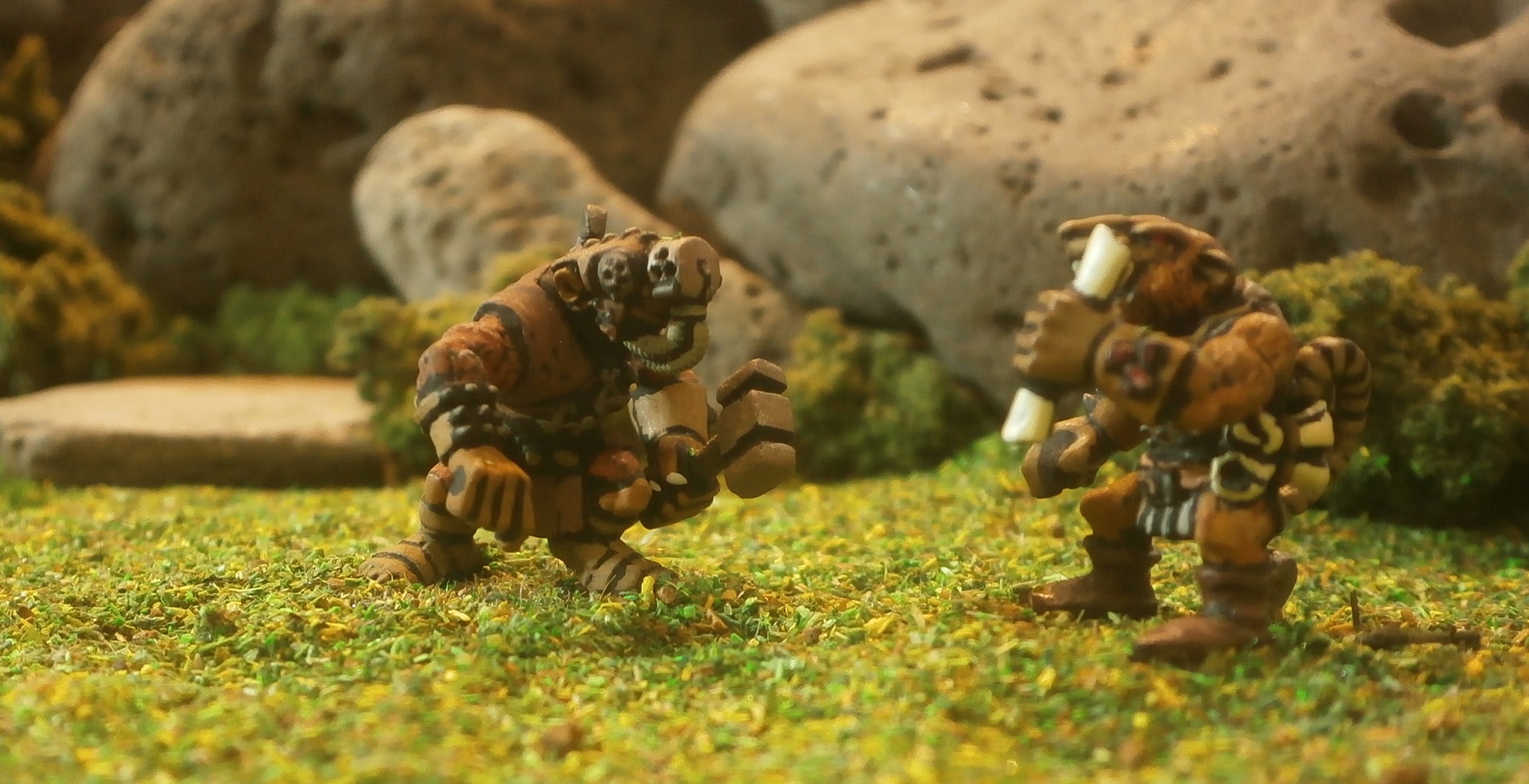
“Those are only the ones who are close to it every day, week after week. Those who merely pass by, to glance upon it, even those who guard it this night or that, occasional and rare, for only a few hours here and there, need wear no such things.”
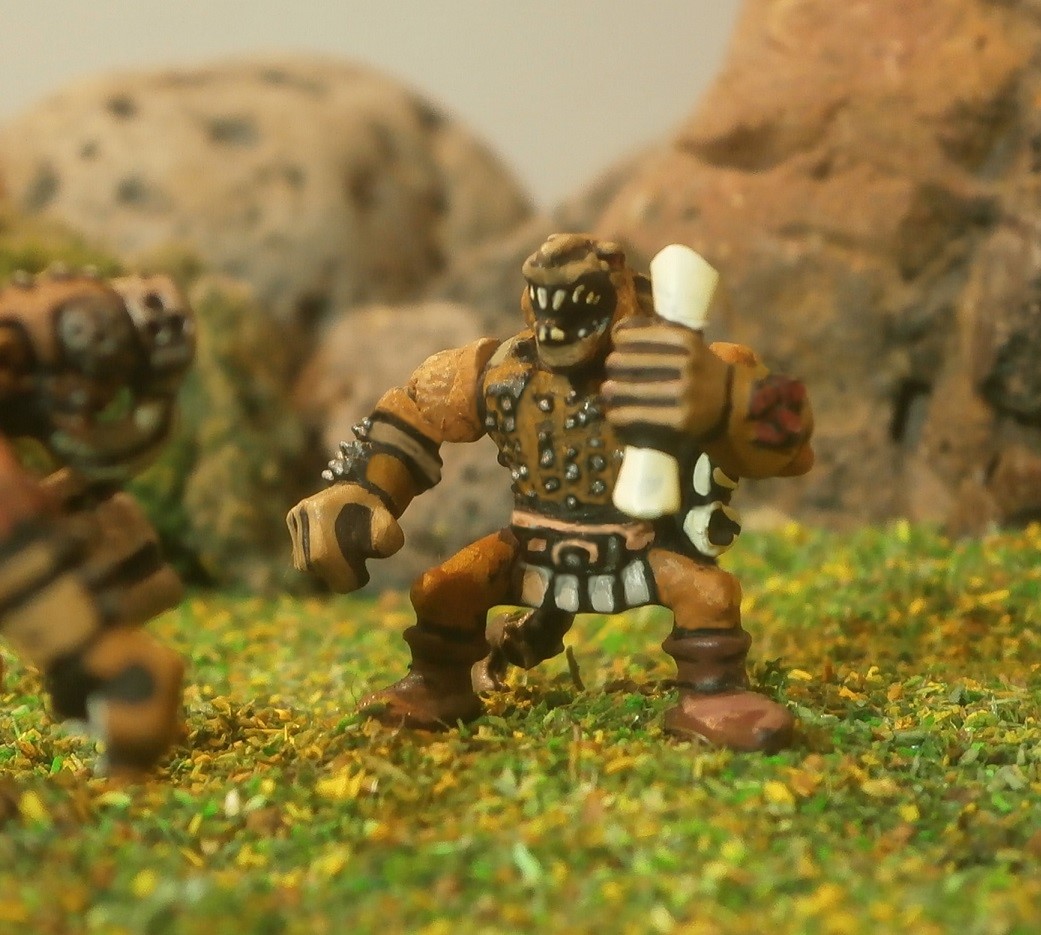
Gradger pointed a crooked, clawed finger at Farrgrin,
“How can you know for certain-sure? You do not attend it. You have never even seen it!”
“I know for I have eyes and ears, and I carry messages for many a chieftain and clawleader. I have heard orders, and read the words. Come, we shall see. I would not go myself if it were not safe, yes? You are wearing your own goggle-mask, let that reassure you.”
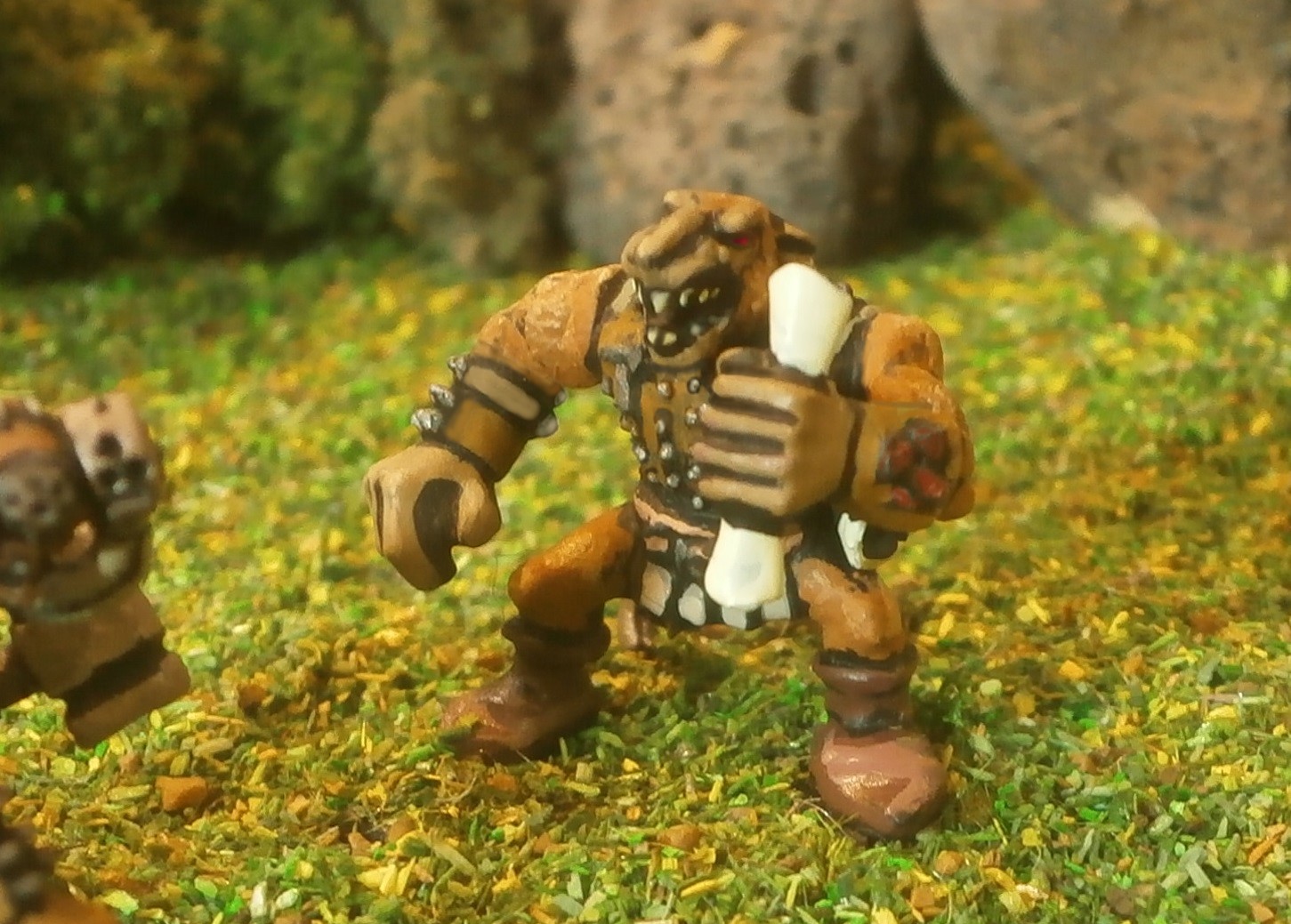
Farrgrin began to walk further down the rocky gully and Gradger reluctantly followed, the sound of hissing breath from inside the mask revealing his ongoing trepidation.
“This engine is made better, bigger,” explained Farrgrin, a note of excitement in his voice. “It is deadlier in use, yet safer to move. All will run-flee before it or die and die by the thousands. None can face such a weapon as this.”
Almost lost in the surging rush of fear, something was niggling at Gradger’s mind, something about Farrgrin knowing such secrets. When they turned into the clearing to stand before it, Gradger gulped and pulled his mask tighter about his head.

“Look-see,” said Farrgrin. “There, there it stands, and yet the green-grass about it does not wither-die. Its attendants busy themselves by its side, with ne’er a sign of sickness-pain.”
Gradger was, for a moment, speechless. What Farrgrin was saying was clearly true, but now that he saw the engine’s design, a new concern assaulted him. He knew enough about bombards that he could not believe what he was looking at. The barrels, both of them, were so huge that the carriage seemed altogether insufficiently sturdy to bear them.
“It launch-fires two grenadoes?” he asked. “Why would anyone attempt such? How will it not shiver-break upon first firing? How could it ever fire twice?”

“Yes. Yes – it throws two,” said Farrgrin, feeling glee at knowing more about the engine than his engineering friend. “And at one and the same time. That way it need not fire more than once, for once is all and everything.”
Gradger was trying to understand. “Two to make one,” he said.
“Two to open a very hell upon the foe-enemy!” declared Farrgrin, getting a little carried away. “Each grenade carries only half that which is needed, and not the same mix at all. So, no poison-leaks; no forever moving. Only when broken and mixed are they made deadly: explosively and massively. The poison is a gift only the enemy-foe will know.”
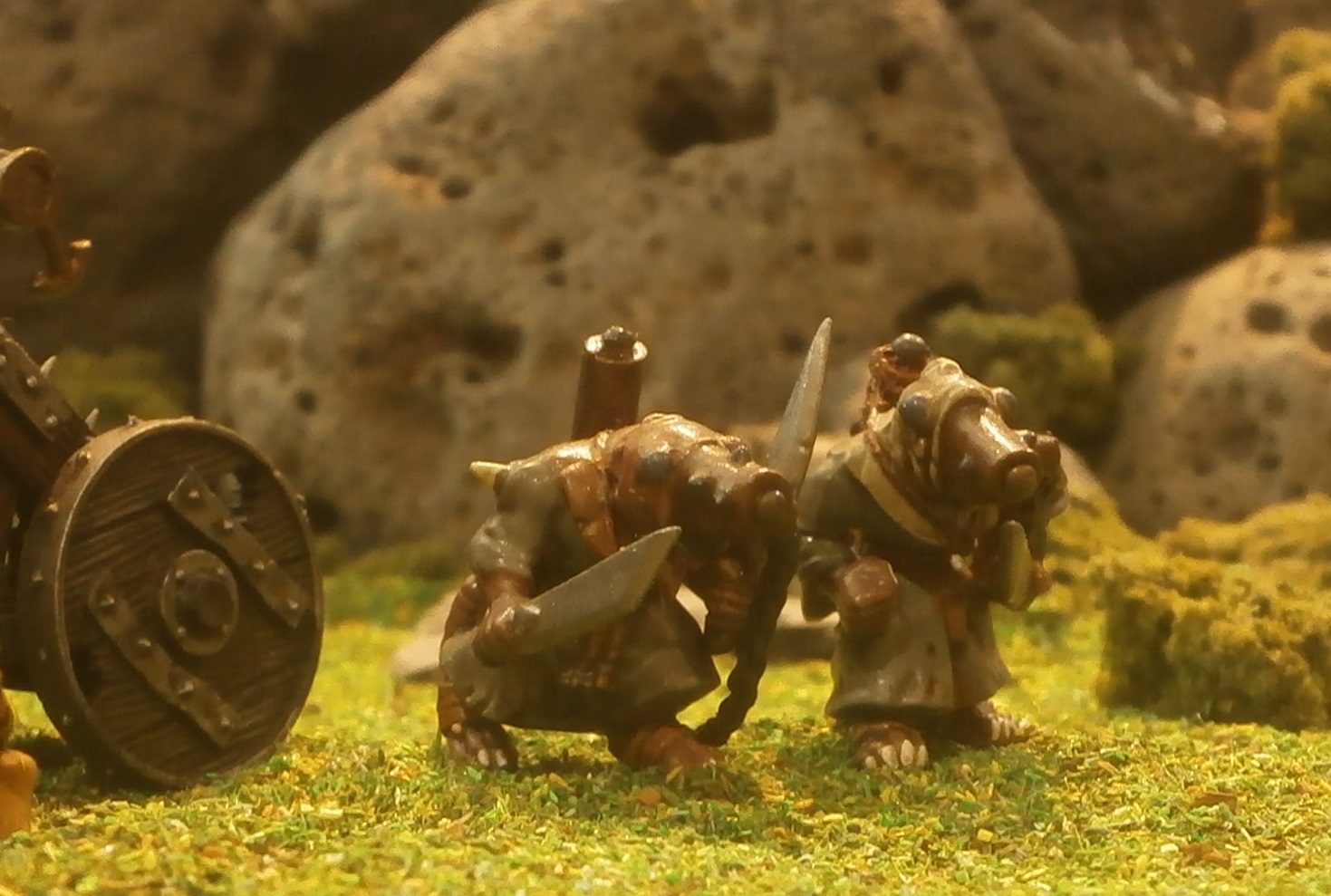
Inside his mask, Gradger’s eyes squinted as he scrutinised the engine.

“No, no,” he said quietly. “This is asking too much. Both to fire at once? To follow the same course? To travel the same distance? To break at the same moment? It cannot be done! Such would surely need too perfect-pure an alignment, in elevation, in weights, to the tiniest degree? Even the burning of the primer would have to be exactly equal. Besides, such a feeble carriage could never bear the strain-shock of a double discharge.”
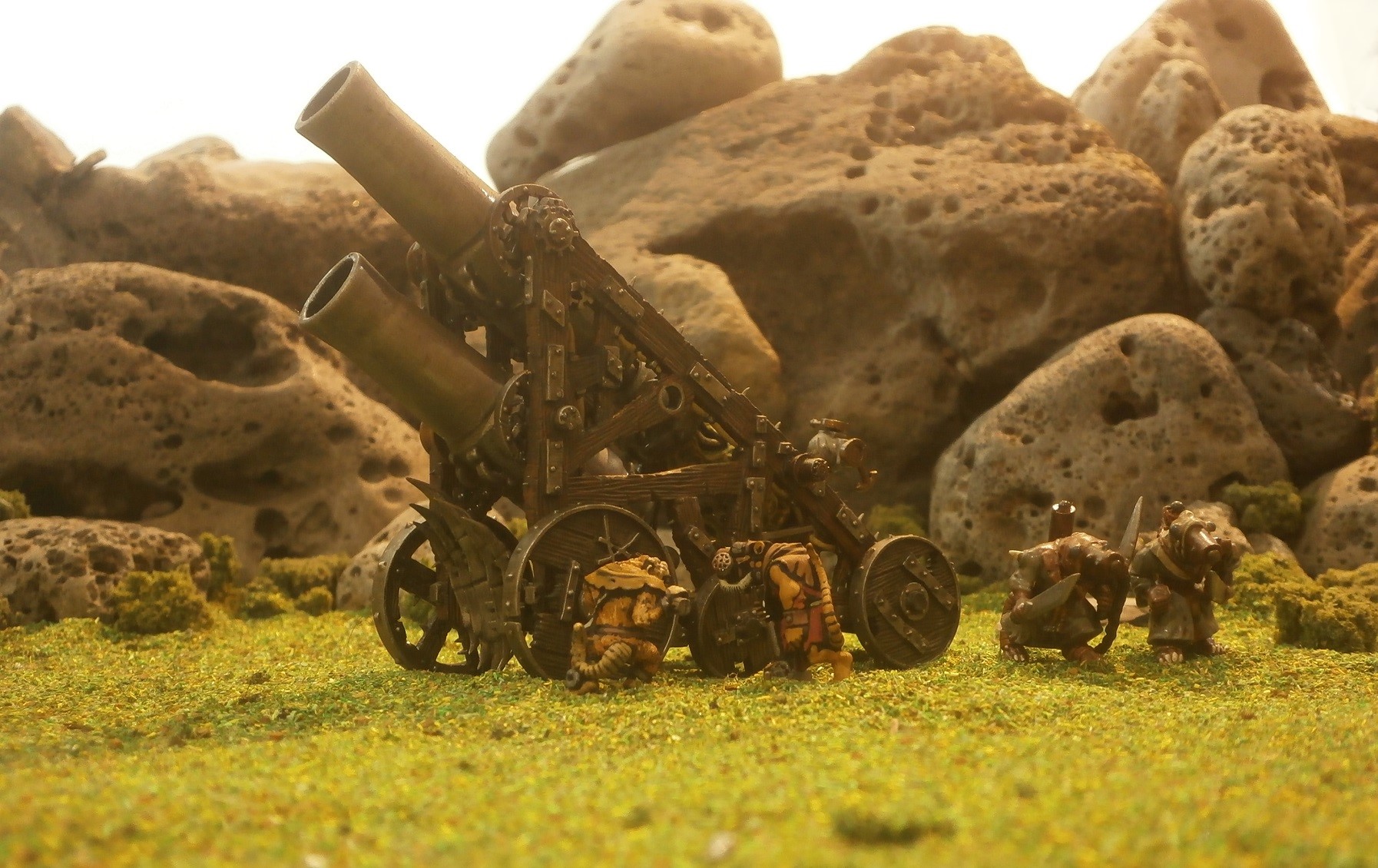
“Perfection is not required,” explained Farrgrin. “The grenadoes are made to burst big, and that which they hurl forth only need to caress the cloud made by the other to bring forth their destruction. I saw-read it. I carried the orders, the explanations. An infusion of occult virtues, they said. The incendiary sublimination of both sulfurous and mercurial sky-stone, to ferment a projected multiplication of a deathly quintessence.”
On any other occasion, Gradger would surely have immediately questioned how it was that the likes of Farrgrin was allowed to peruse such an arcanum, but just now he was still too tangled in other thoughts.
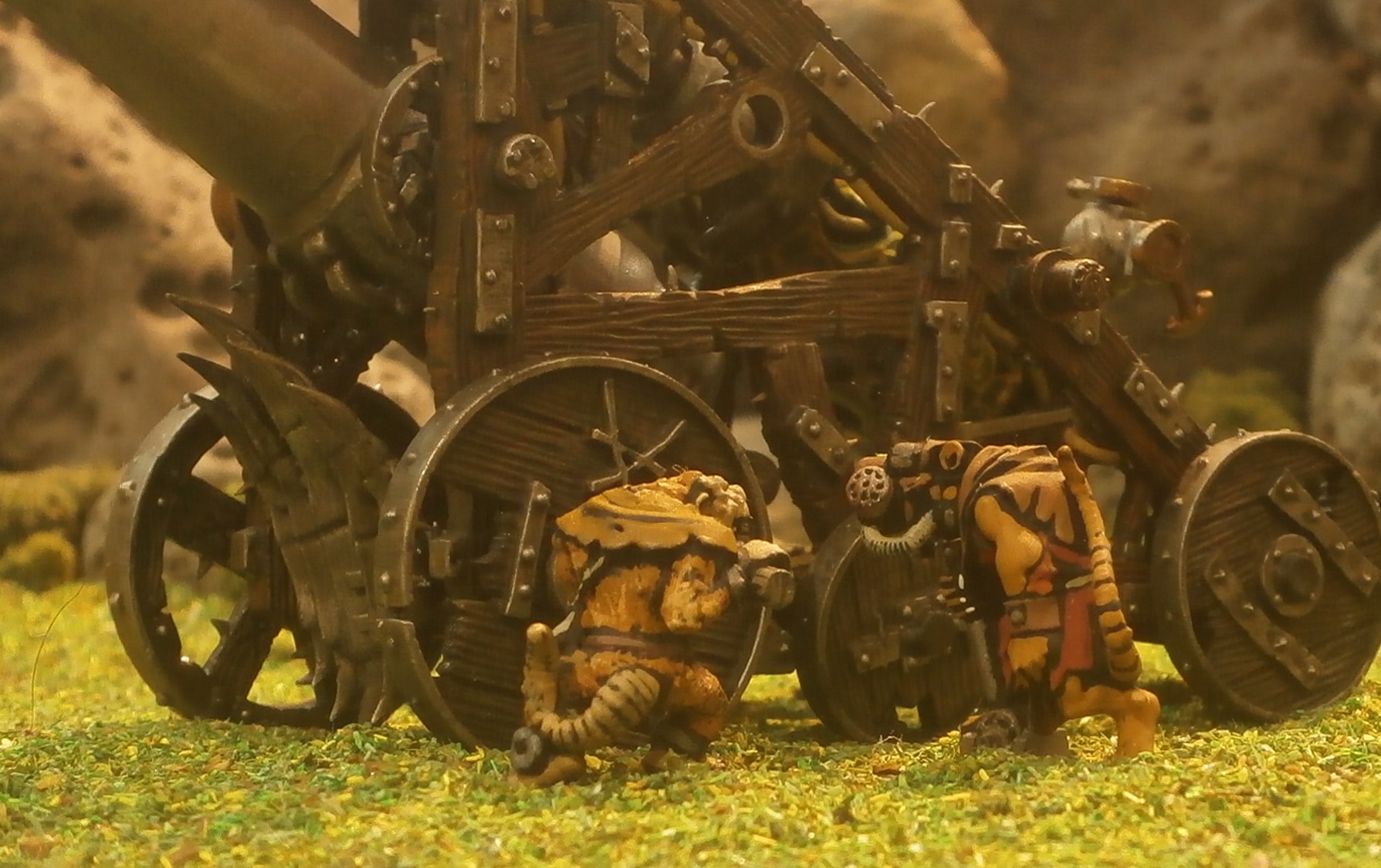
“Yes, yes, stirred together,” he said. “Even the vapours thereof, it could be done, but only by one who was prepared to die in the doing of it. For this to do it, that is too much. Too much by far. The first engine was simple: wheels, barrel and bomb. It threw an already blended death, already potent poisons, which need only shatter and burst in the right spot-place. All it had to do was fire-shoot but one grenado. The simplest of actions – and yet still it failed. Only a fool would think that by attempting twice as much, in one and the same moment and in necessarily perfect unison, then success was more certain-sure!”

“You can think it,” said Farrgrin. “Consider why the first one failed. It plague-burned all and everyone who approached. Even those who attended it were slowly poisoned, despite their protective filterings and robes. Its very own crew, in the mere moving of it, themselves suffered a slow death. How could anyone expect-hope to succeed when so pained, so afflicted?”
Gradger was not satisfied with this answer. “You might believe it, but you cannot know it. There are none alive who truly know what happened to the first, only that it burst-blasted the land through which it rolled, and not the city.”
“Yes, yes,” replied Farrrgin. “I and all know that. All within sight-view of its failure died. But Gradger, you saw those who attended it – escorts and guards. You saw them weaken-fail. You saw the corpses of those who died on the journey. You saw the ground poison-burned wheresoever it moved, the circumexpiration it scratched around Ravola. Whatever mistake-blunder its crew committed, whatever foolish fault, whatever shoddy choice-decision they made before Campogrotta, their pain-addled minds cannot have helped. This time, with this engine, there will be no such failure. Those who tend it will have clear minds, and the strength of will and body to do all and everything that must be done. “
“Maybe so,” said Gradger. “Perhaps they could practise a most perfect precision. But timber, iron and black powder are what they are, no more. Bolts, braces and brackets are only as strong as they can be. The mere moving of this engine will stress-strain every part, slowly but surely weakening the whole, which does not look strong enough to start with.”
“Hush now,” ordered Farrgrin. “Speak-say no more of this. Keep your worry-fear to yourself. Much is expected of this engine. None may ridicule-mock, none may cast doubts, not without punishment.”
Gradger fixed his eyes on Farrgrin, his voice calmer, but still very serious. “Friend Farrgrin, promise me this. If ever you carry orders commanding me to tend this engine, scratch out my name-mark. For that I will be ever in your debt-service and will pay much and more.”
“Willingly, friend Gradger, I promise and assure,” said Farrgrin. “I will, if I am given such to carry. For now, you work hard on your own engine. Be necessary-irreplaceable. That way and then you will not be commanded to tend this one.”
Gradger was not reassured, however, for a dilemma immediately occurred to him. Hard work might well mean being kept in place, tending his current engine. But it could easily mean promotion instead. And if this new bombard was the most important weapon in the army, then would not the best engineers and mates be assigned to it? And the dilemma was doubled, for shoddy work and laziness could lead to punishment, which might conceivably take the form of being assigned to this, the most dangerous of engines to its own crew. And so, depending on the commanders’ whims, either good working or lazy shirking, could both mean being forced to work this engine!
How could he possibly know what to do?
Next Installment: Part 40

 BigSmallWorlds
And thus falls Biagino. Poor lad. He never stood a chance, for all that the cost of besieging him was so high.
I do wonder what those forest folk might be up to, though!
Good to see you posting again, Padre. Keep ’em comin’!
LikeLike