Eyes and Ears, of Different Kinds.
Part One: Somewhere in Tettoverde Forest, Autumn, 2404

The spellsinger, Ascal Arconvale, could see that High Lord Veluthil was dreading the reports, for they might reveal something much worse than that which he already feared.
Was the rat-men army even greater in size than the most bloated of previous estimations? If so, the enemy might be willing to sustain the cruel losses that encroachment into the forest realm would inevitably incur, believing they could nevertheless retain sufficient strength to gain victory in a final battle. Did the rat-men possess more of their terror weapons? Merely one such engine could fatally poison the very heart of the forest and instigate its complete ruin, transforming the sylvan realm of Tettoverde into a desert. Had the enemy already begun corrupting the forest’s denizens, twisting them into servants of evil? Or were they introducing potent pestilences to moulder the trees and fatally infect the fauna.

Apart from their novel war-engine, all these things the rat-men had attempted before, in ages past. There was no wickedness they would not stoop to, no danger they would not hazard (at least, when it came to their own servants’ lives). Theirs was a twisted, cunning genius, if grasping and impatient, which lured them down cruel and destructive paths. They loved only their own lives and power, looking upon all other creatures with disdain, even disgust. To them, every thing was to be consumed or possessed, having worth only in so far as it could benefit their own selfish desires and ambitious cruelties. There was no destructive novelty so hazardous or dangerous that they would not attempt to harness it fully, going to the extreme, and what they had done near Campogrotta had proved they not only still possessed this predilection, but that they had the means to bring about truly massive harm.
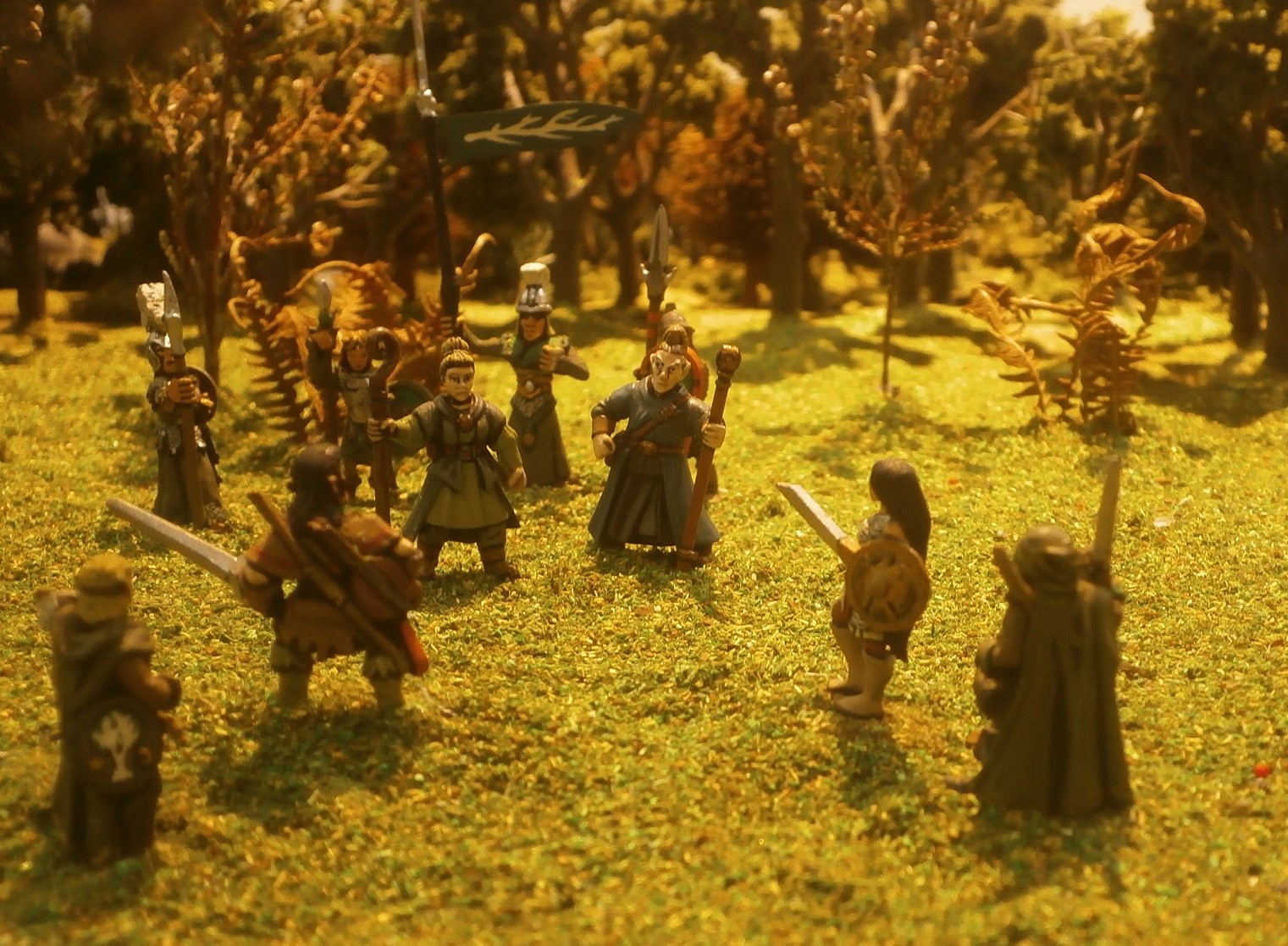
Cioran Brightmoon, commander of the Waywatchers, and Captain Hedre Eedwillow of the River Watch, had come to deliver their reports. Two weeks before, Lord Veluthil sent servants to all sides of the Campogrottan realm: on boats, on foot, on horseback and even flying upon war-hawks. He admitted to Ascal that by doing so the rat-men would surely learn that they were being watched, but he considered it far more important right now to know as much as possible concerning the enemy’s strength, disposition and plans, than to remain hidden. Upon consideration, Ascal thought it was no bad thing that the enemy knew they were being spied upon, intently and from all around, for it might make them think twice about encroaching further into the forest. Despite being thoroughly wicked and as cruel as devils, the rat-men were also craven cowards. When the forest was angered, as it indeed was after the poisoning of its north-western reaches, it took on a terrible countenance and became deadly dangerous to strangers.
After the formal greetings such an audience required, and upon Lord Veluthil’s instructions that they should both endeavour to be thorough and concise, Captain Hedre delivered her report first.
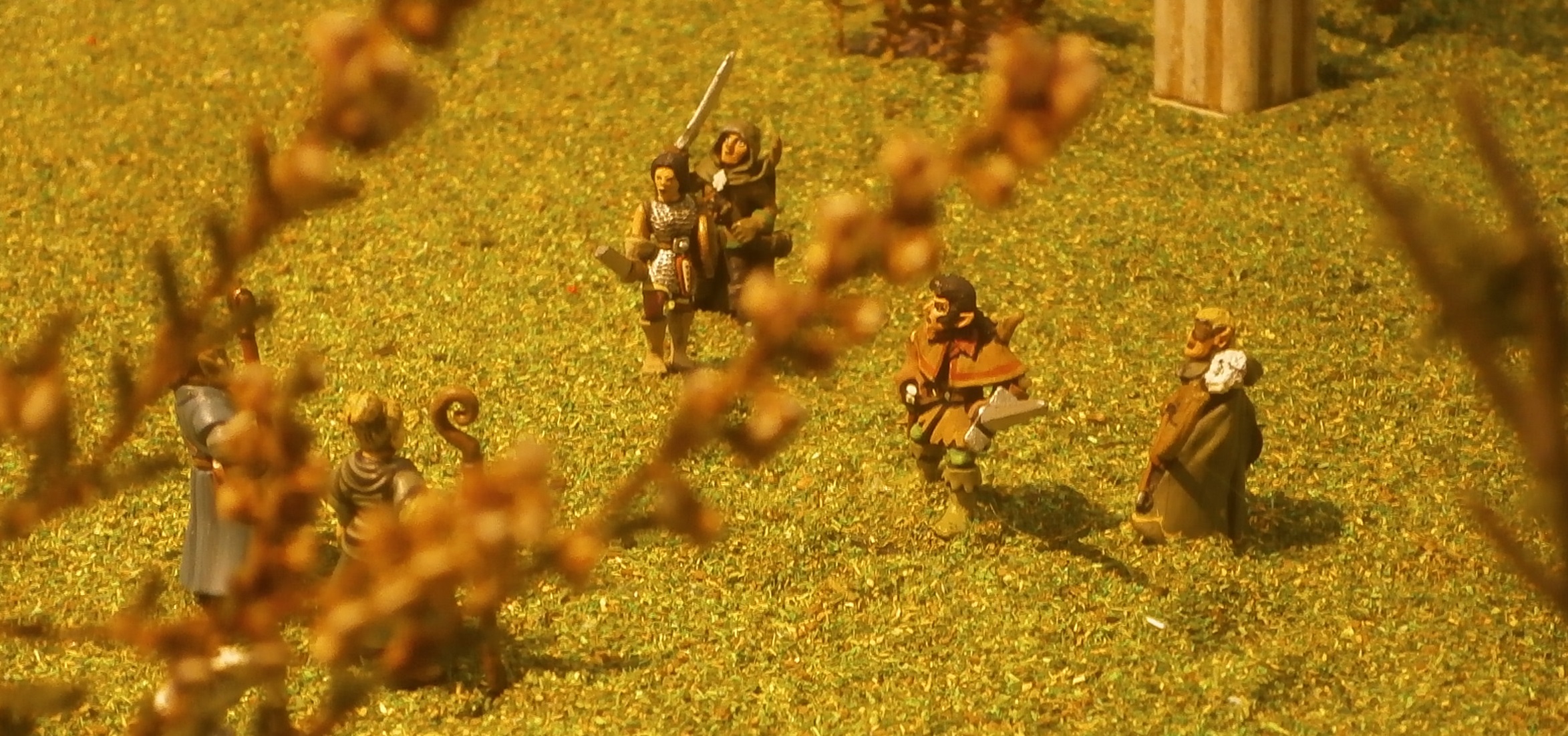
She had ventured west along the River Ancar to learn that any who may have dwelt there had long since gone, with only a handful of signs of more recent habitation, perhaps little more than campsites where travelers had stayed but one or two nights. Upon approaching the city of Campogrotta, she encountered not just the first ratmen in any real numbers, but also several engines within range of the river, one of which spat an unnatural lightning which boiled the waters it touched into an ill-coloured steam. Knowing it would be suicide to remain, she ordered her vessel rowed away.

Having nothing more to report, it was Cioran’s turn. He had more to say, for he and his waywatchers had crept much closer to the city, some few even going within the walls in the darkest hours of the night, and lingered longer.
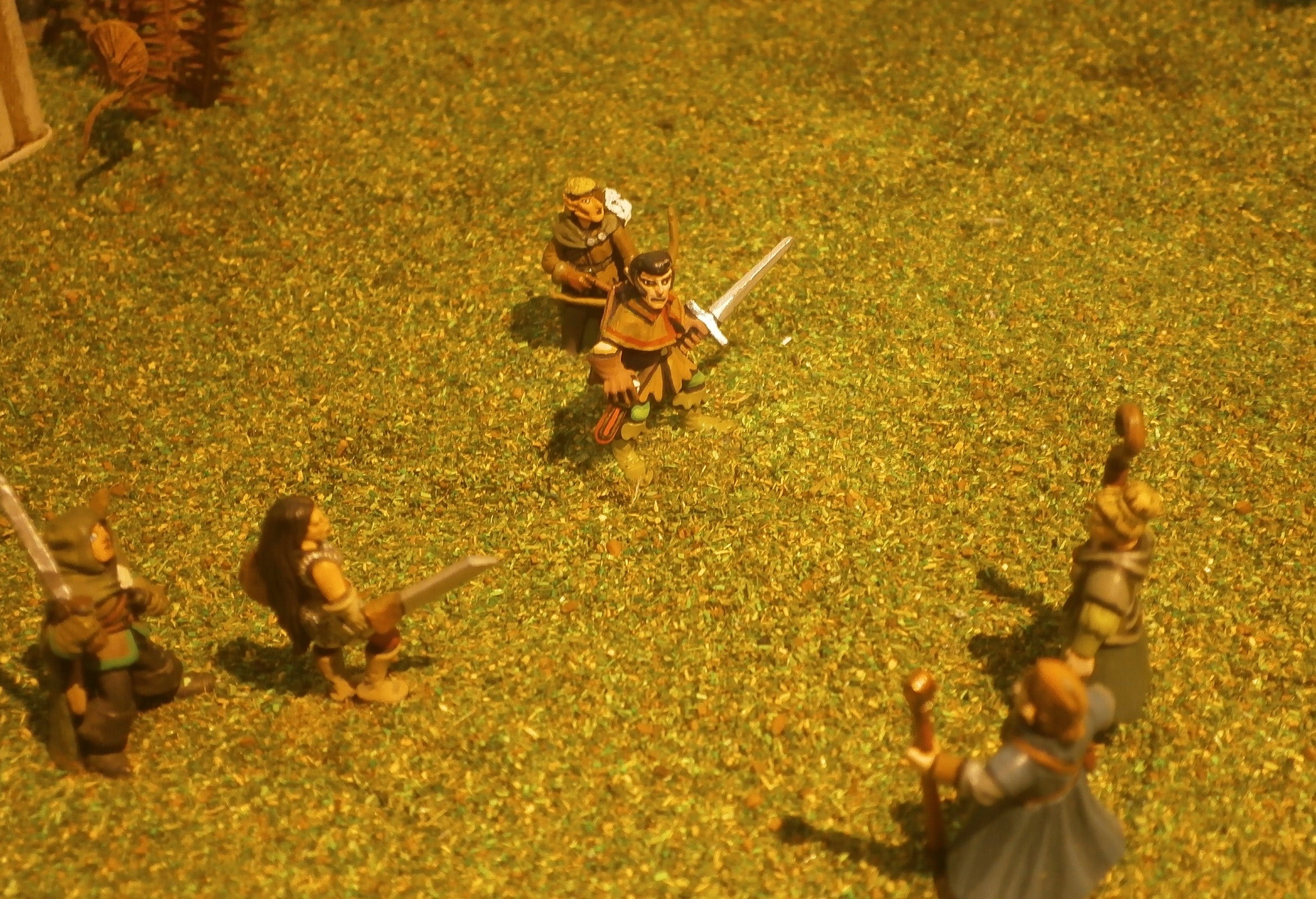
“The city swarms with them, my lord, as one might expect of their kind. Counting them is no easy task, indeed quite impossible, for they scurry about incessantly, and from a distance look much alike. But they are an army, and nearly all we spied were warriors.

They have placed guards throughout the city…

… at every portal, whether door or gate …
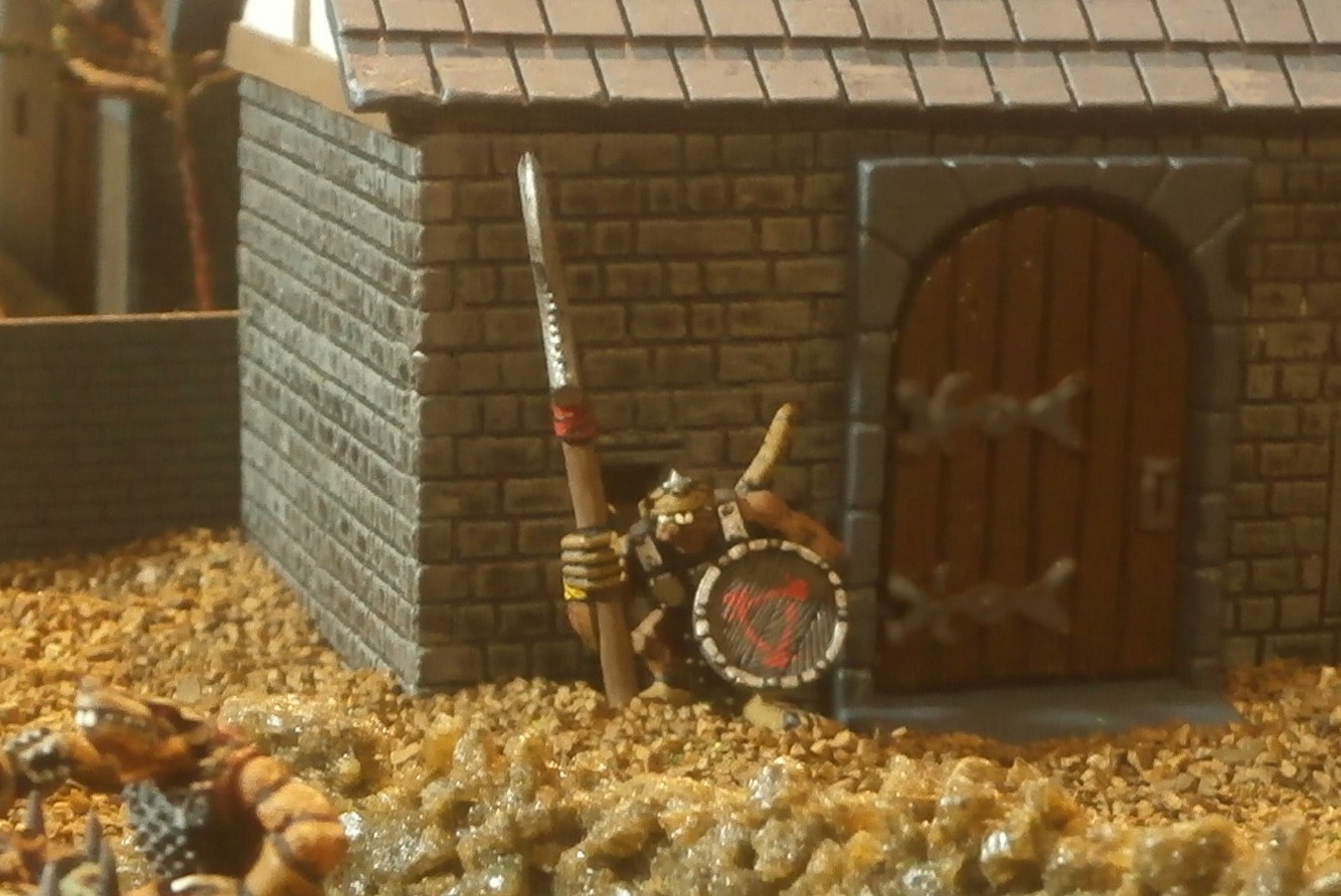
… and at every junction and bridge, with still more guarding the poor souls they have enslaved. We caught only glimpses of their war machines, for they are within the city walls …”
Lord Veluthil raised his hand to silence Cioran, asking, “Within the walls? Are you certain of this?”

“Yes, my lord. They have several large artillery pieces, kept in the city’s squares with guards and attendants a-plenty.” Glancing over at Hedre, he added, “We too saw one upon the walls close to the river.”

Although others would struggle to notice, Ascal could see a hint of relief in Veluthil’s face, and she knew why. If the machines were kept close to the ratmen, in the very heart of the city, then they could not be akin to the terror engine, for that had poisoned the very ground over which it had travelled and destroyed all life in every place it rested. If such an engine were within the city, attended by many, then many would be suffering.
And yet, Lord Veluthil was clearly not completely re-assured, for he enquired further.
“Were the enemy in any way suffering weakness or illness, or showing signs of injury?”
“Not that I could see, my lord.”
“And the engines’ attendants and guards – were they like unto the rest of the army? Garbed in the same manner? Or were they masked, and swathed in robes and leather?”

“Some, my lord, had masks, but not all and not many. Others elsewhere were also masked, even away from the engines. It seems to be a fairly common practise among their kind. There were robed warriors patrolling the roads about the city in strength, but they wore no masks.”

Cioran had always been thorough, and Ascal knew he would not be feigning knowledge he did not possess.
“Did you ascertain the enemy’s purpose?” enquired Lord Veluthil. “Are they making preparations to leave?”
“There was no sign of such preparations, my lord. But they are present in strength, and well-armed.”
“How so?”
“They most commonly carry heavy bladed polearms, somewhat akin to halberds …
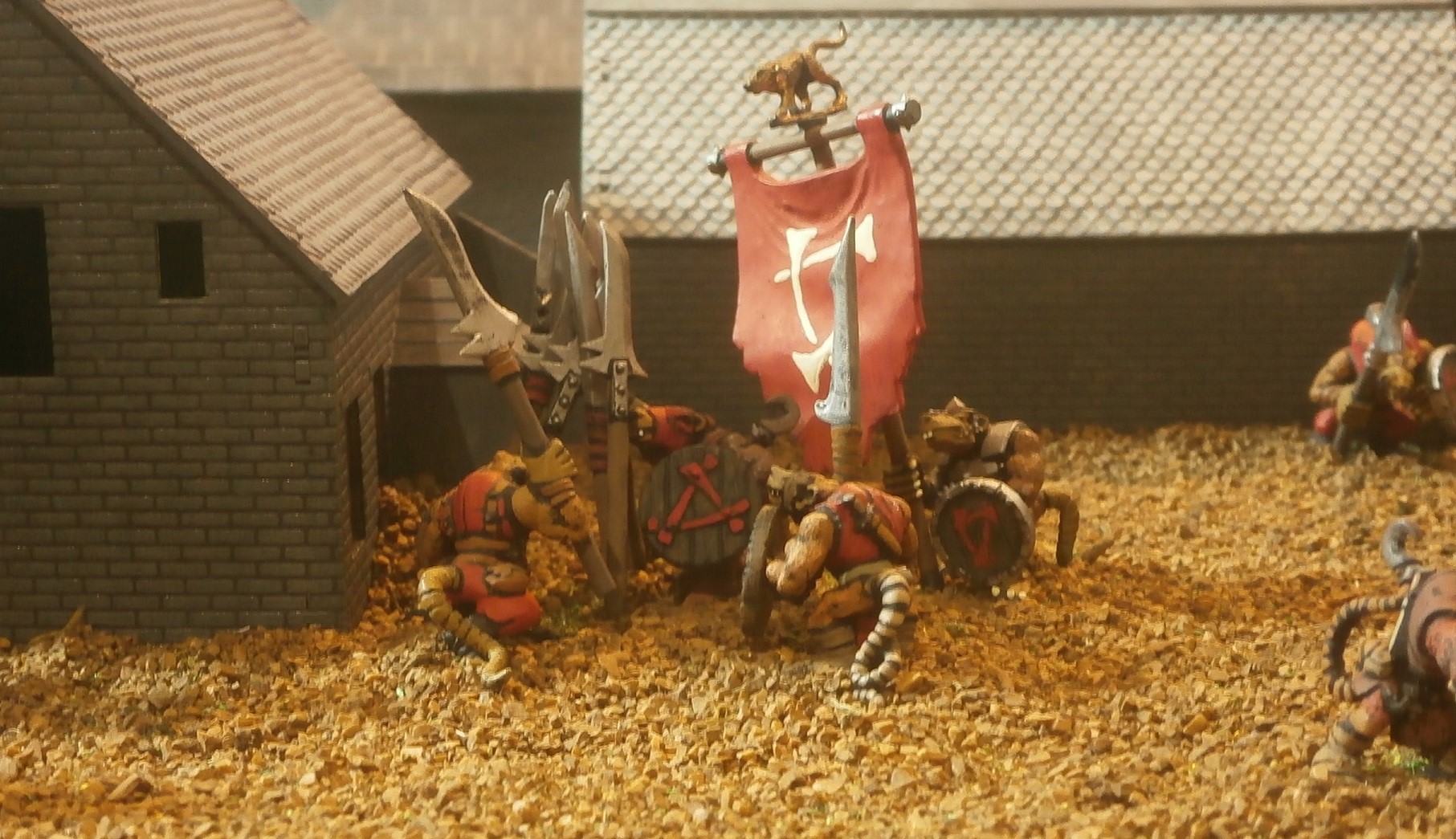
… but considering how many also carry shields, these must be employed like spears. They act as any garrison would: eating, sleeping, watching. I myself saw one cooking up some kind of pottage in a great cauldron …

… the stench of which was foul, for despite adding of herbs and berries, the fact that the fleshmeat had turned could not be concealed. I dread to think it, but I doubt it was the flesh of an animal.”

“Beyond the usual activities of garrison soldiers, they have placed strange totems about the city, bearing rags or brass icons, even cymbals, and sometimes a cluttered mess of several such things. The purpose of these I could not ascertain …

… for the ratmen do not seem to pray before them or show any form of respect. Nor do they muster by them as they might regimental standards, or use them to mark boundaries of some kind – although such could be possible, I suppose, without being obvious to any but their own kind. They have no cavalry of any sort, but they have some brutish beasts, and the city swarms with rats, some as large as cats or even bigger, flitting around frantically in packs.”

“Have they sent out any scouts?” asked Ascal. “Foraging parties? Are there any signs at all they intend to march forth at some point?”
“What few venture out do not go far,” answered Cioran. “As for supplies, they appear to have sufficient for their current needs within the city itself. My best guess, giving all that I have seen, is that they are waiting. For whom or what, there is yet no sign.”
“My lord, they suffered casualties when their weapon exploded,” said Ascal, now addressing Lord Veluthil.

“And likely lost more in the fighting before and after that event, in the taking of the city. Despite their current strength, they themselves might well consider their army too weak to pursue further conquest, especially if they intend to leave a force behind to garrison their newly acquired possession. Considering their past behaviour, their urge to swarm against their foes, it seems likely they are awaiting reinforcements.”
Lord Velthuthil nodded gravely. “And when they receive them, what will they do next?” he asked.
Ascal presumed it was a rhetorical question. If the enemy were awaiting reinforcements, that would be bad enough. But should they bring another engine capable of the horrendous destruction of the first, then the situation was dire, and the need for action urgent. Ascal held her tongue, however, for there was little she could offer by way of reassurance. Beyond simply risking everything in an attempt to attack and defeat the foe immediately, when such sacrifice might prove unsuccessful, even unnecessary (if the foe had no intention of advancing into the forest), she could think of no plan of action beyond biding time, learning more and hoping for some hopeful opportunity to present itself.
If the rat-men presently believed themselves to be weak, then considering their historic spinelessness when faced with real challenges, perhaps the elves’ best course of action was to attack as soon as possible? But fighting outside of the forest would put Lord Veluthil’s army at a great disadvantage, especially assaulting a walled city. On the other hand, waiting for the rat-men to enter the shadow of the trees might prove too late to defeat them, especially if they had more terror weapons.
Ifs and buts a-plenty, thought Ascal. Such was ever the way of war. She was glad Lord Veluthil bore the burden, while she he had only to obey.
Caught up in these rather unpleasant thoughts, Ascal had not heard Cioran’s last words – a fault she sought to rectify immediately.
“We did find the tunnel’s mouth, which they must have used to approach the city from the south,” he was saying. “Large enough for engines, and presently abandoned. It looked to have been recently made, though within a hundred yards or so beyond its mouth was what appeared to be a more ancient passageway, passing deep into the ground, in complete darkness. I considered exploring further, but already several of our number had become too sick to journey onwards – an affliction which began when we crossed the river on the salvaged vessels. The foul air within the tunnel exacerbated their illness. So we left and returned to the forest proper. I ordered the sick remain in the vale of Corcalen, there to be tended, while I came to you my lord.”
Again, Lord Veluthil nodded, and the company fell silent. At last, he spoke,
“There is much to consider, and to weigh. I will listen to what the warhawk riders have to say before I decide our next act. In the meantime, consider the matter yourselves, for I may wish for further counsel.”
…
Part Two: Somewhere in Campogrotta, Autumn, 2404

Farrgrin was not exactly happy this task had fallen to him, despite knowing that if he was now considered worthy enough to speak directly to Seer-Lord Urlak Ashoscrochor then his own status had surely improved. His only previous encounters with Lord Urlak had been while handing missives to clerks, when he had simply been in the Grey Seer’s vicinity, not expected to speak at all, and certainly not to Lord Urlak. He was more nervous now than he had been when out with the scout-spies, with the enemy both near and watching.
His heart was racing, his throat dry, his vision had blurred. He shook his head, as if to rid it of the fog. As his surroundings refocused, he realised Lord Urlak was staring right at him!
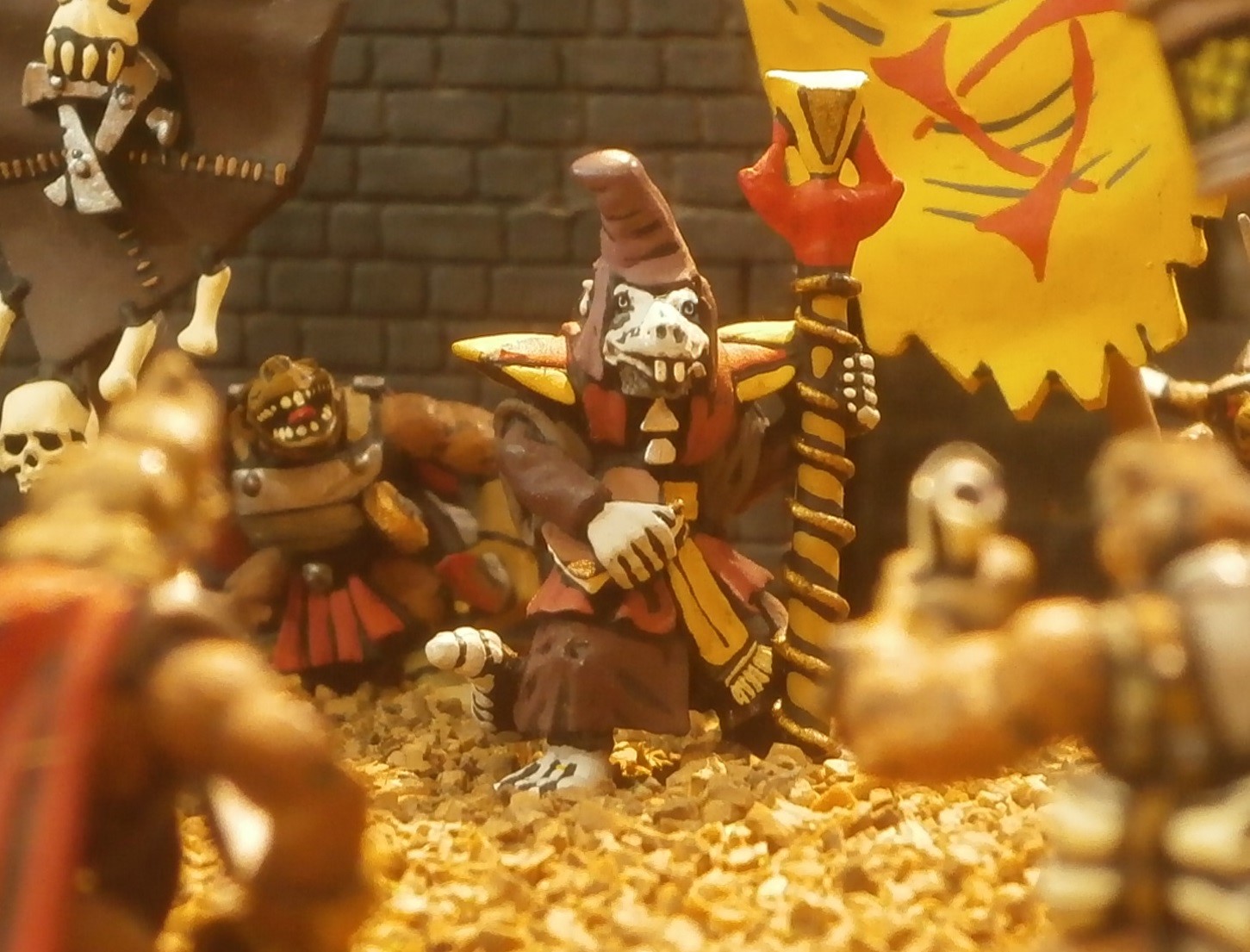
“Well, speak-explain. What have you learned?” demanded Lord Urlak.
Despite how obvious it was, it still took Farrgrin a moment to comprehend it was he himself who was being addressed.

“Elves, Lord and Master, great and noble. By … by which I mean to speak-say, not that the elves are great and noble, but you, mighty lord, great and …”
“Cease and stop your blather-babble. Answer quick and to the point. You have but one-single chance, here and now, to satisfy me, or I shall find someone who can and will, and you shall learn quick and painful what it means to disappoint me.”
Farrgrin sensed an increased malice in the yellow clad warriors of Urlak’s bodyguard regiment. They lurched almost imperceptibly forwards, their clawed hands gripping their weapons’ hilts and shafts a little tighter.

“We have seen-spied elves. Sk … skulk-hiding in the green leaves. Watching, spying.”
“And counting, no doubt. I myself know of the sky hawks, yes, for I saw-spied them with mine own eyes over the city. But you saw more. Where and what?”
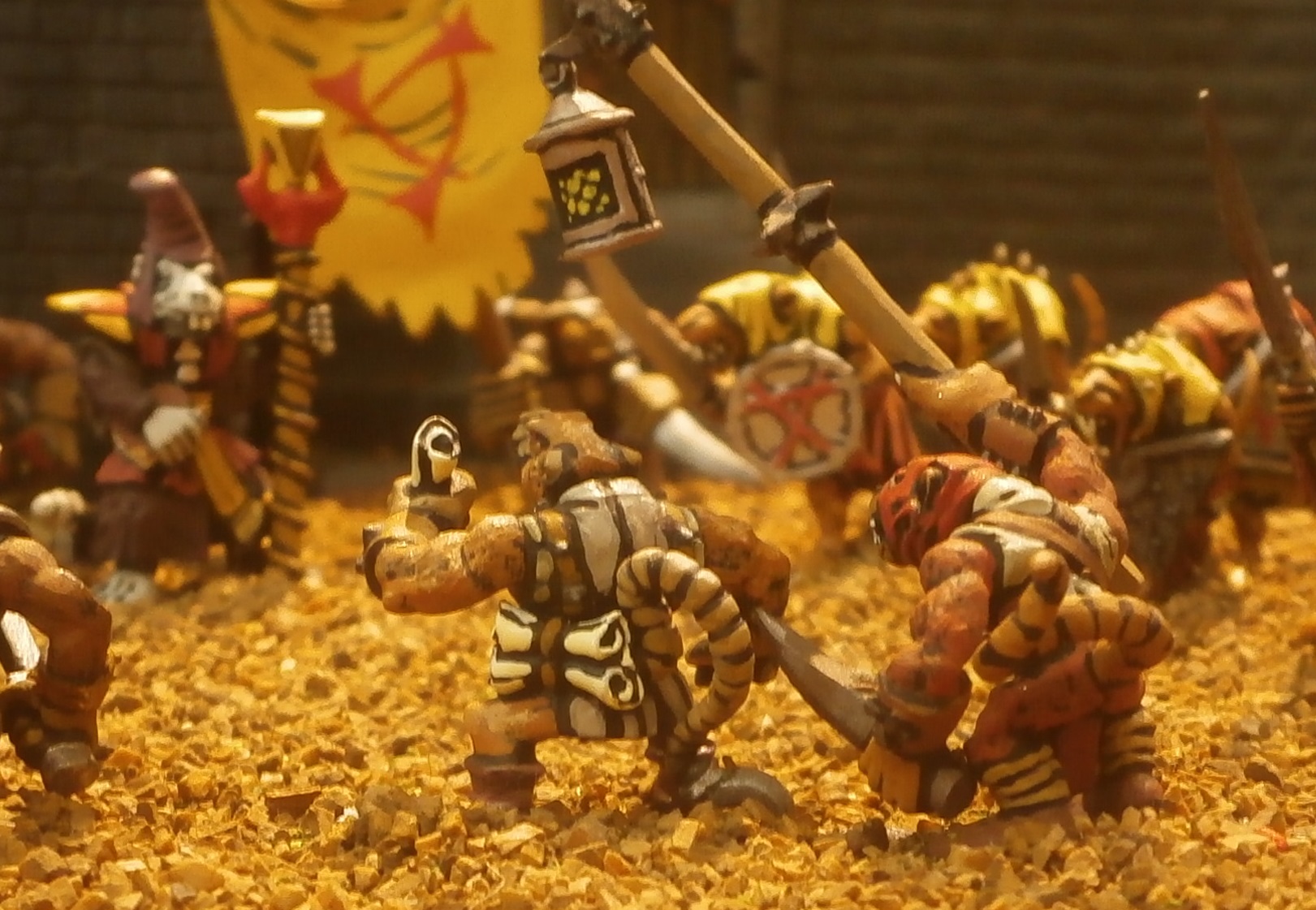
“At the edge of the green-trees, near-close to the bridge at Tarano. Not many but a few, with spears and bows and green-cloth cloaks.”
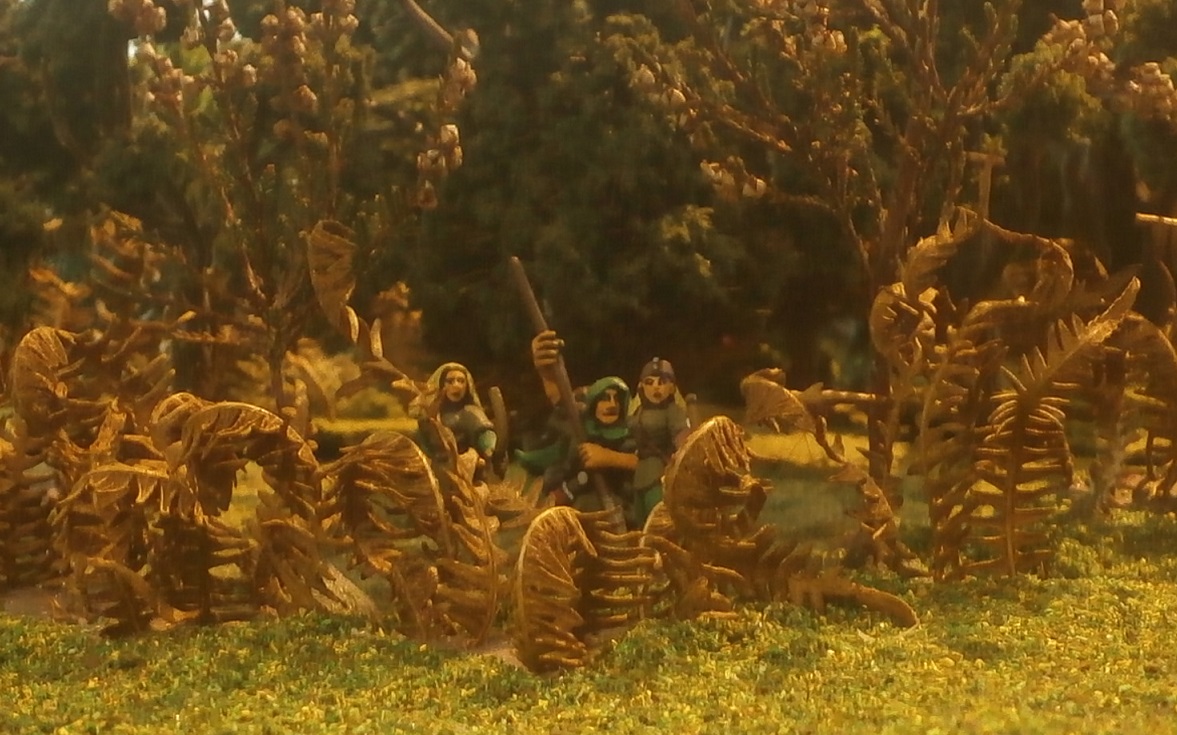
“On the far side of the river-water?” enquired Lord Urlak.
“Great and noble lord, no, no. On this-here side, where the forest-trees grow between the west-road and the river.”

“Then you were able to capture-catch them, yes? With the river behind to prevent their escape-flight.”
“We would and could, high and mighty master, if the trees had not been so thick-close, and the elf-things so slippery-quick, and had there been more than four of us. The trees there, they are no copse-grove, but many and more, for the forest itself crosses the water, then on for a width of nearly a mile and more than a league long.”
“A satisfyingly long list of excuses, I am certain sure, and all concealing your answer. You did not catch them?”
Farrgrin dreaded answering, for there was a hint of criticism and disappointment in Lord Urlak’s tone, and it did not do to upset one’s master. But as they had no elves to offer up, he could only speak truthfully.
“No, no, your high and mightiness.”
He was surprised when Lord Urlak’s next words were neither threatening nor cruel, yet a part of him knew it would have been foolish to expect such. Lord Urlak was wise and therefore had the measure of his servants. Only a fool would expect so few to catch fleet-footed elves in their own forest.
“Tell me, did they cross the river-water by the bridge?”
“No, great lord. We questioned the guard-soldiers there. Only our warriors have crossed – nothing and no-one else, neither way and for many a day.”
“Then they can cross the waters some other way,” mused the grey seer. “The forest, you said – a mile by a league? Large, and big enough to hide an army?”
“Such a thing could stand within, but I assure and promise you, your mighty highness, there was no army there.”
“Yes, yes. But if they wanted-chose, they could hide one there. Perhaps the trees ought to be burn-destroyed, so that none remain north of the river, leaving nowhere for the enemy to creep and hide.”
No-one answered, as they knew Lord Urlak was merely thinking aloud, and would only have been annoyed by someone speaking.
He turned to look at the claw leader also present.
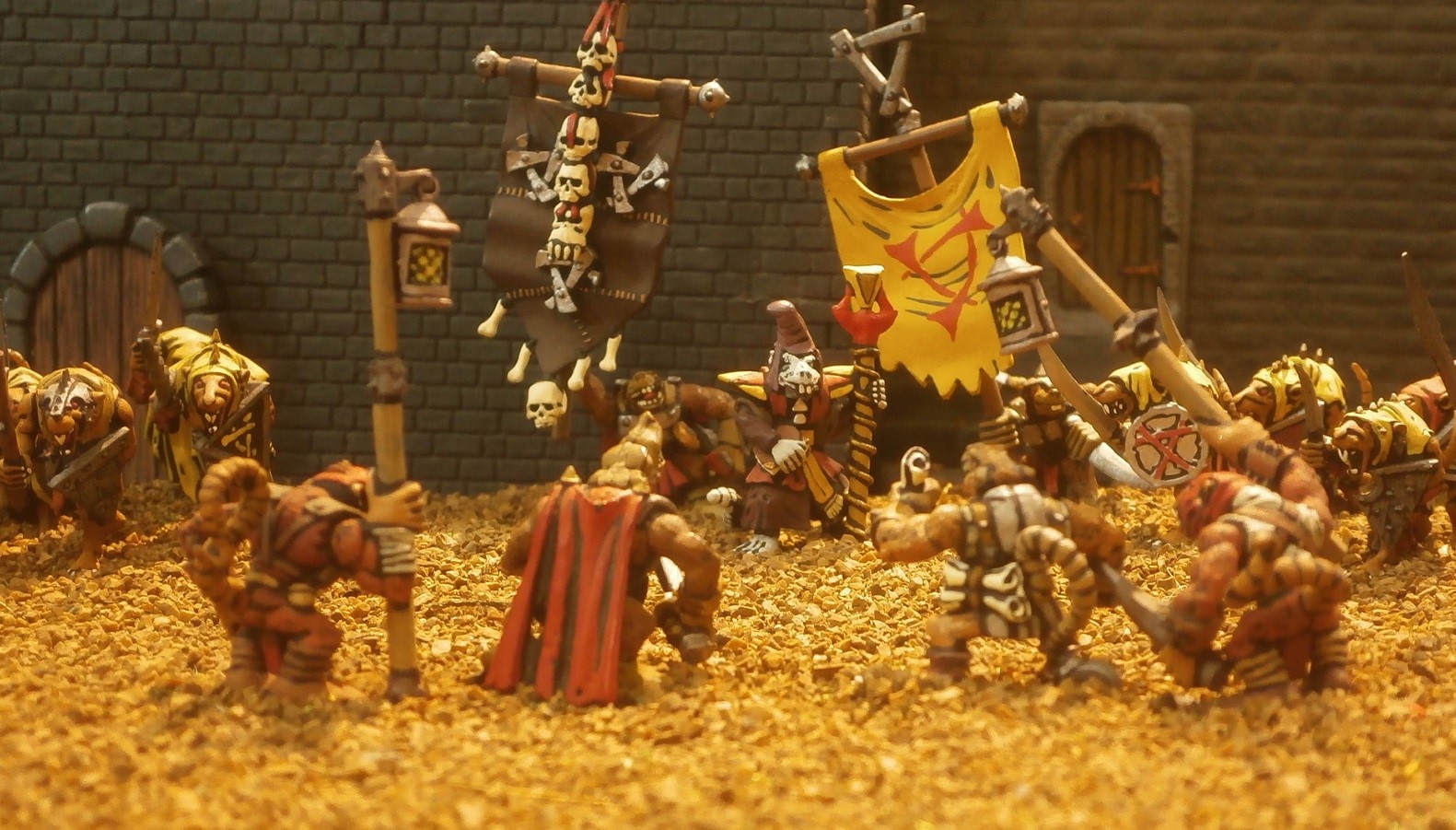
“And you, and your scouts, whither-where did you go?”
“Great lord, we crossed the bridge, south and south-east, to the very edge of the poisoned land. There we scour-searched, along each and every path, old and new, looking for signs of passage, and enemy-foes.

“And you found such?”
“We saw horse-riders, a dozen or so, who fled-escaped upon seeing us.”
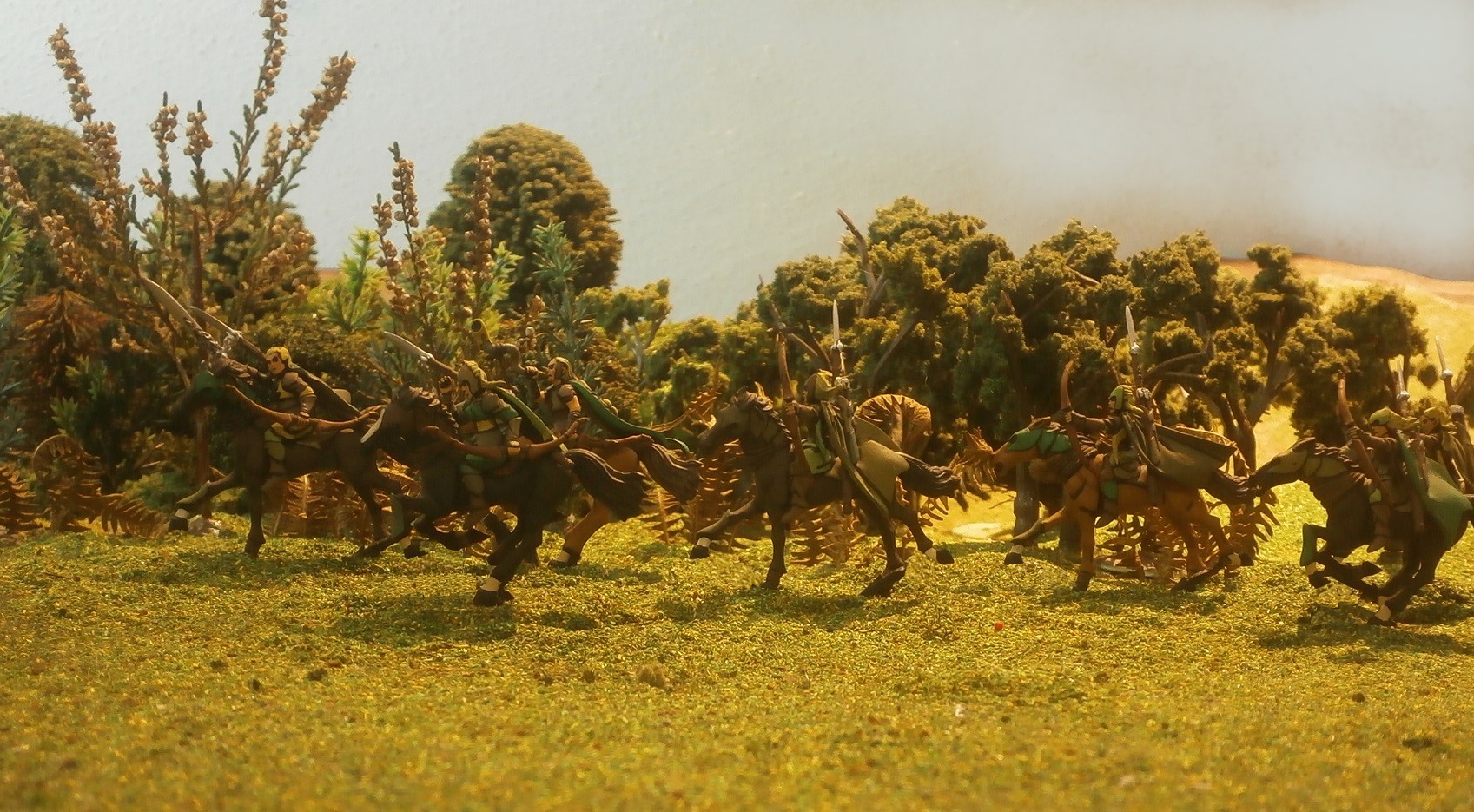
“How many were you?” enquired Lord Urlak, a hint of mockery in his tone.
“Six and me, great lord. All ready, all keen.”
“And you think and believe the riders fled because they were afeared of you? Yes?”
The claw-leader’s eyes twitched, and his tail flicked involuntarily. His lips curled in fear to reveal his teeth as he spoke.
“I would never and not claim such a thing, great and mighty mightiness, only that they rode fast and passed. Away and not towards. They loosed no arrows; threw no spears.”
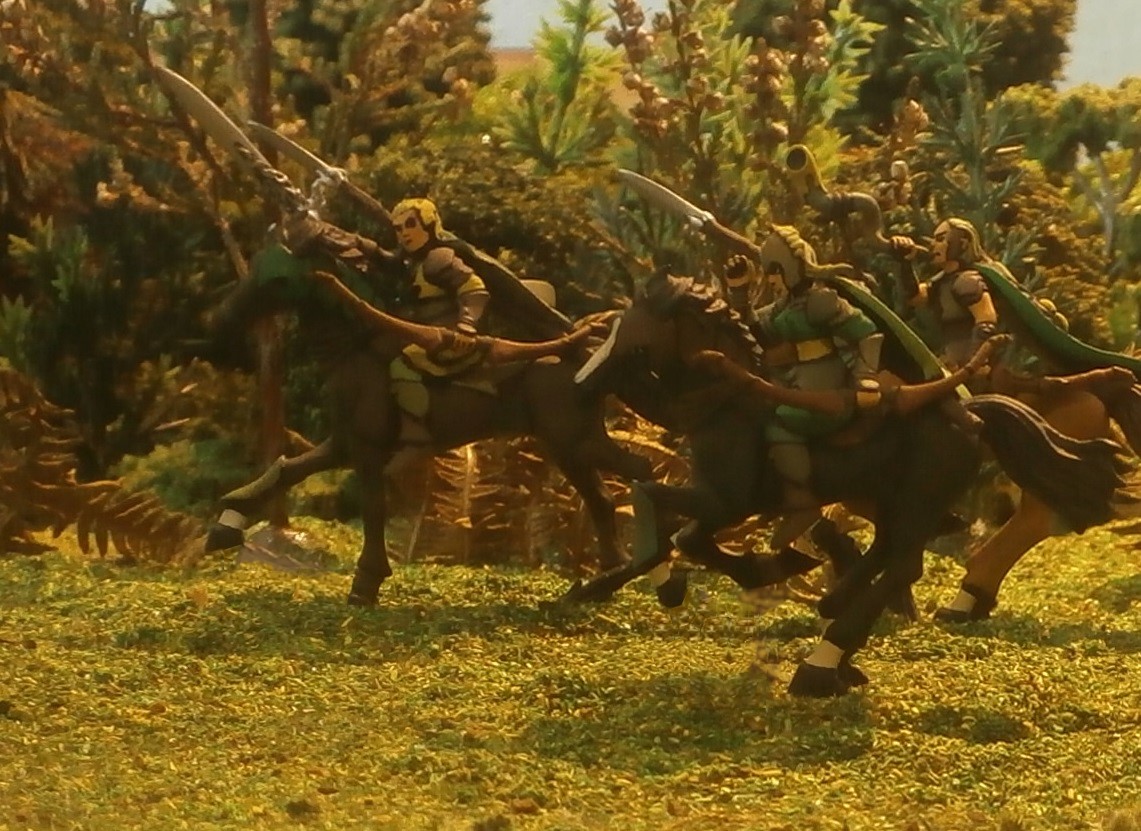
“They rode where they wanted to ride, simply spying you as they did so.”
“Yes, noble lord, yes. Too far away and too quick for us reach them.”
Lord Urlak shushed the claw-leader with a gesture of his finger.
“Riding errands, hither and thither. Carrying messages and dispatching their spies to creep and sneak. There’s an army somewhere, I am certain-sure. But will they emerge from the forest’s shadow? Have they come to assault-attack, or just to watch and wait? Either and any way, they should fear me, now they know full-well what I can do.”
But Does It Augur Well?
The Island of Sartosa, Autumn 2404
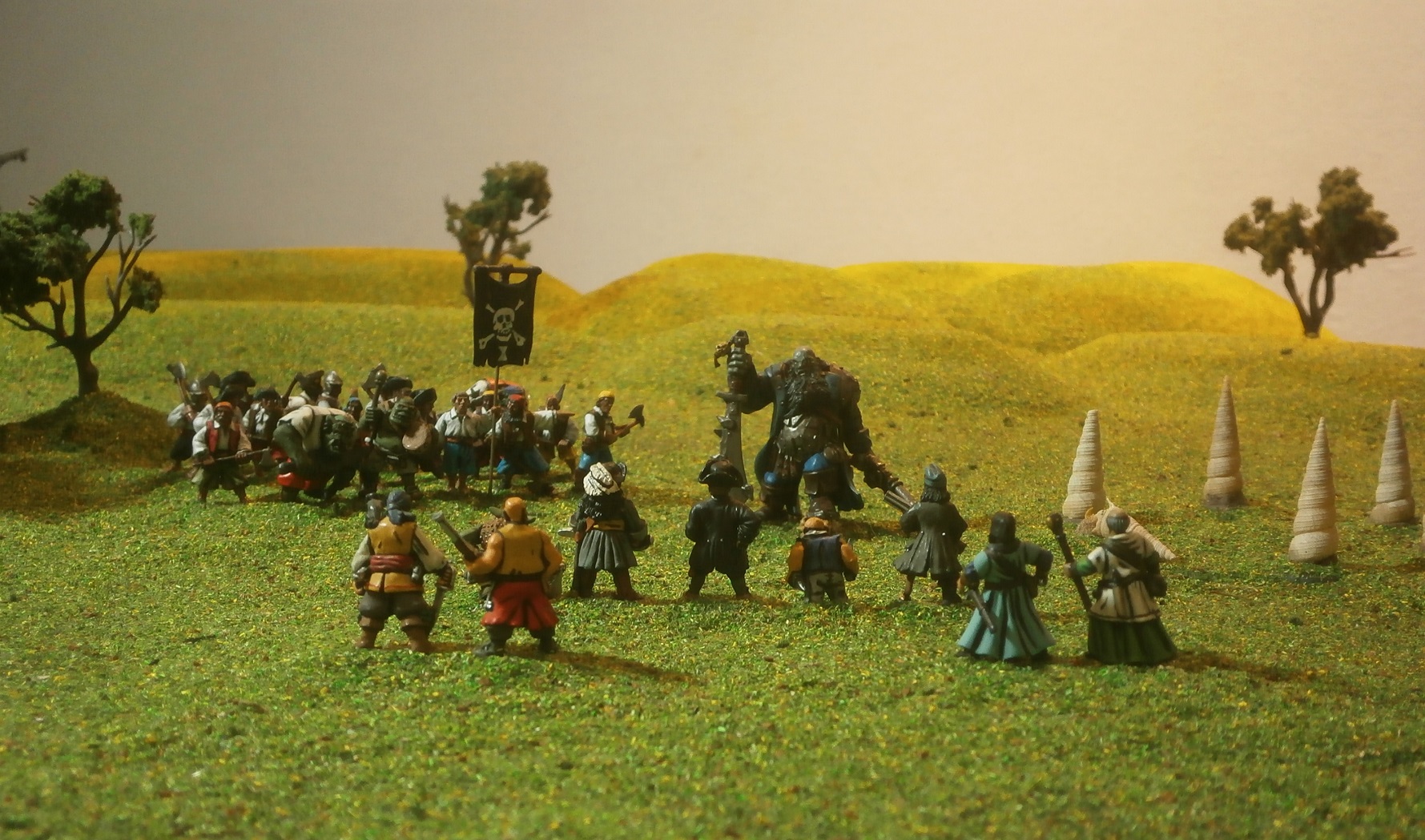
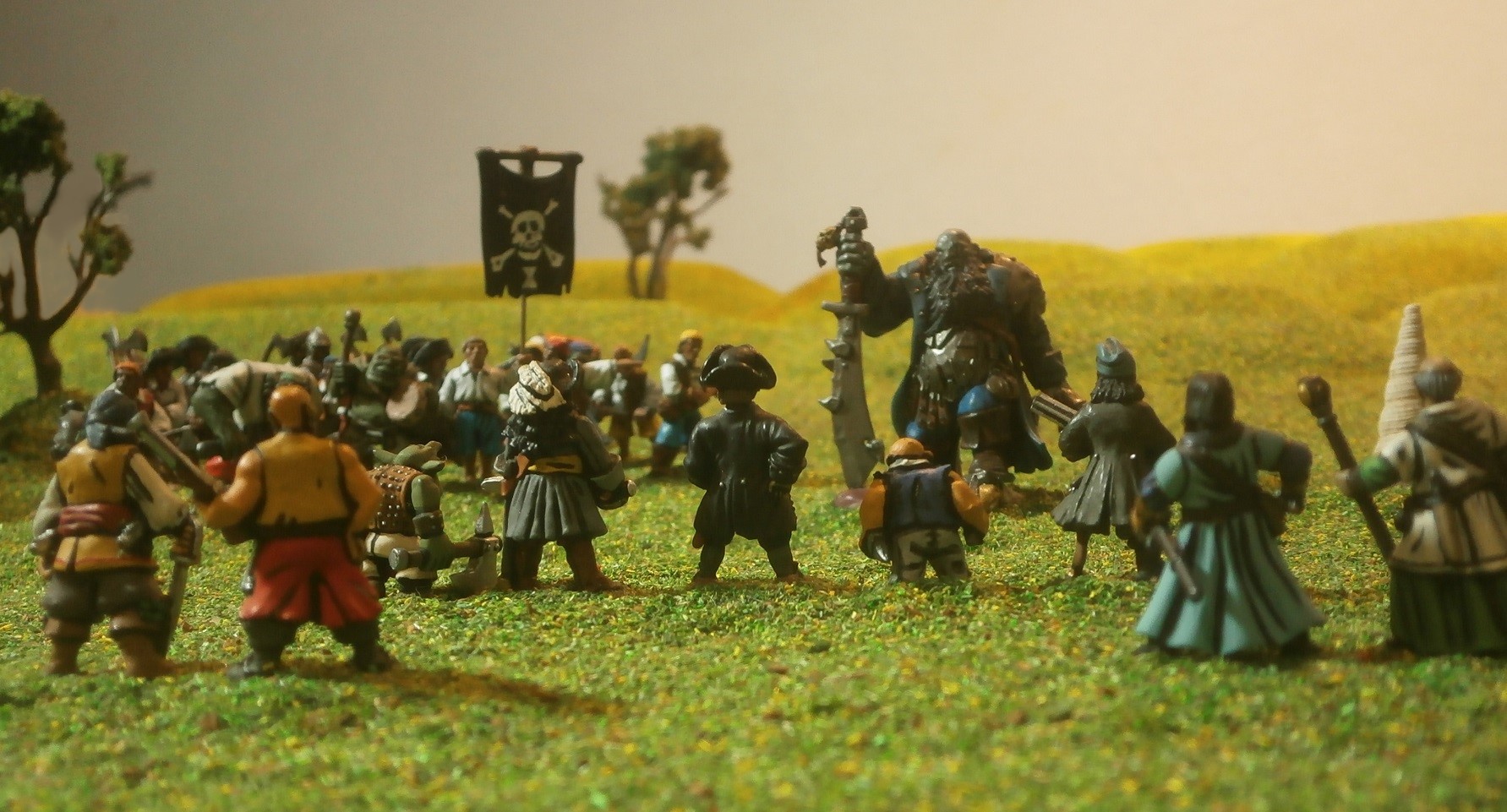
Five captains and first-mates, each from different crews, being the quorum required by the grand articles for the swearing of a new captain into the fleet, had gathered near the pledging ring, where Kroll awaited them.

The admiral, Leopold Volker, was present, of course, as well as Captain Anssem van Baas, and three first mates, being the dwarf Bald Kuzmoul of Captain Leadforge’s crew, the goblin Coboc Draald of Bagnam Farque’s crew and Geordt (more commonly known as Jambalo), the one-legged representative of Captain Garique.

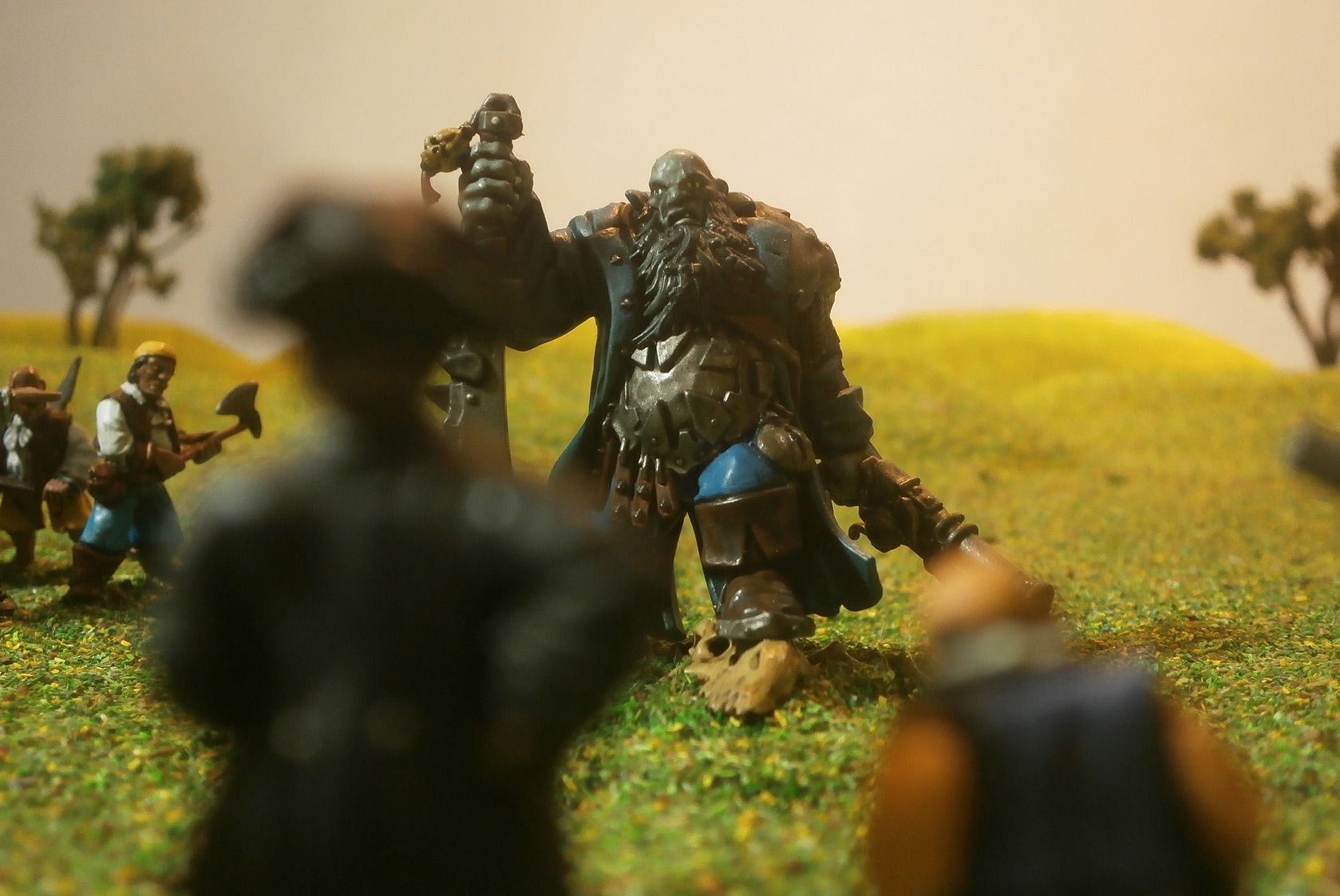
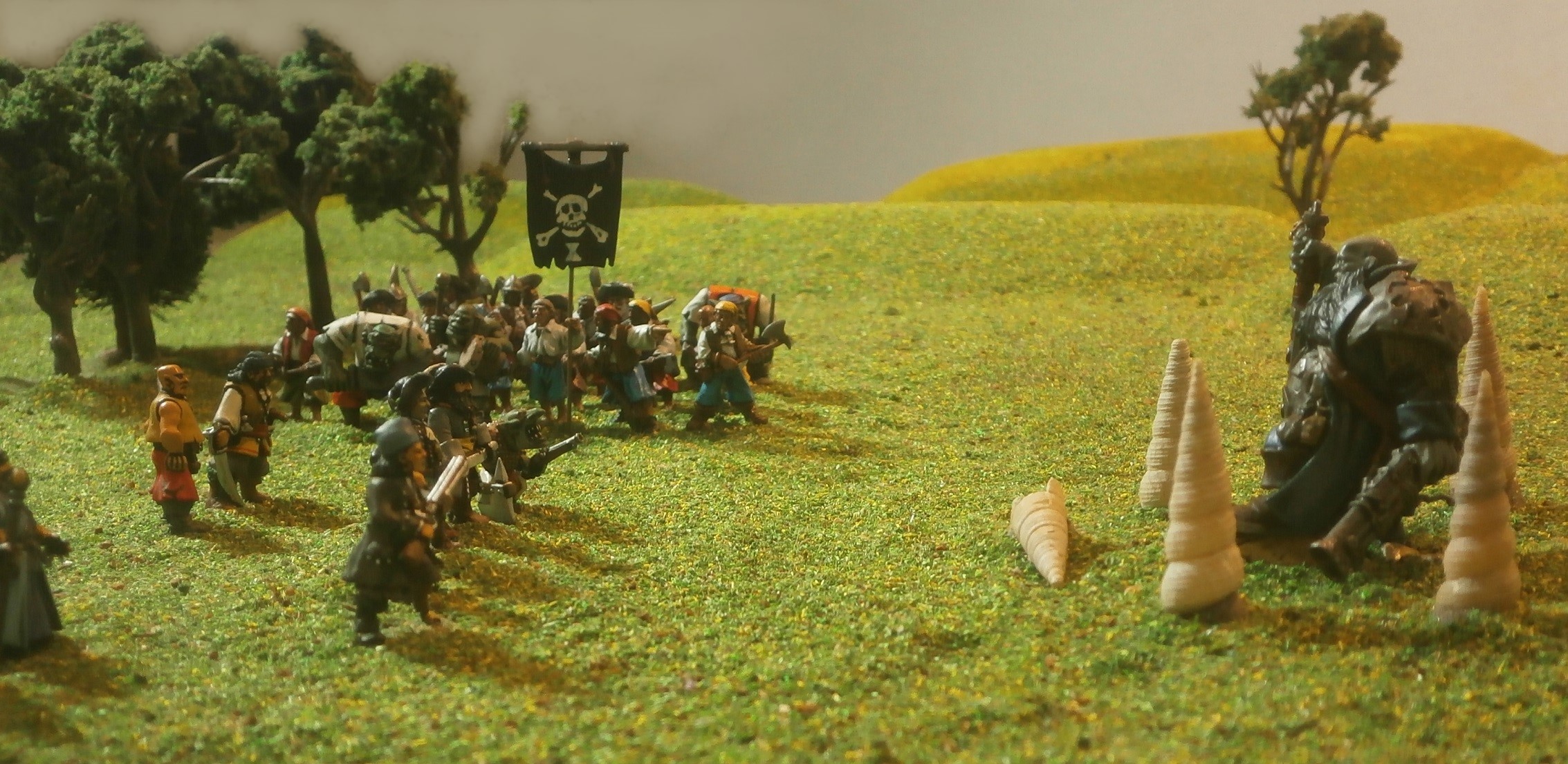
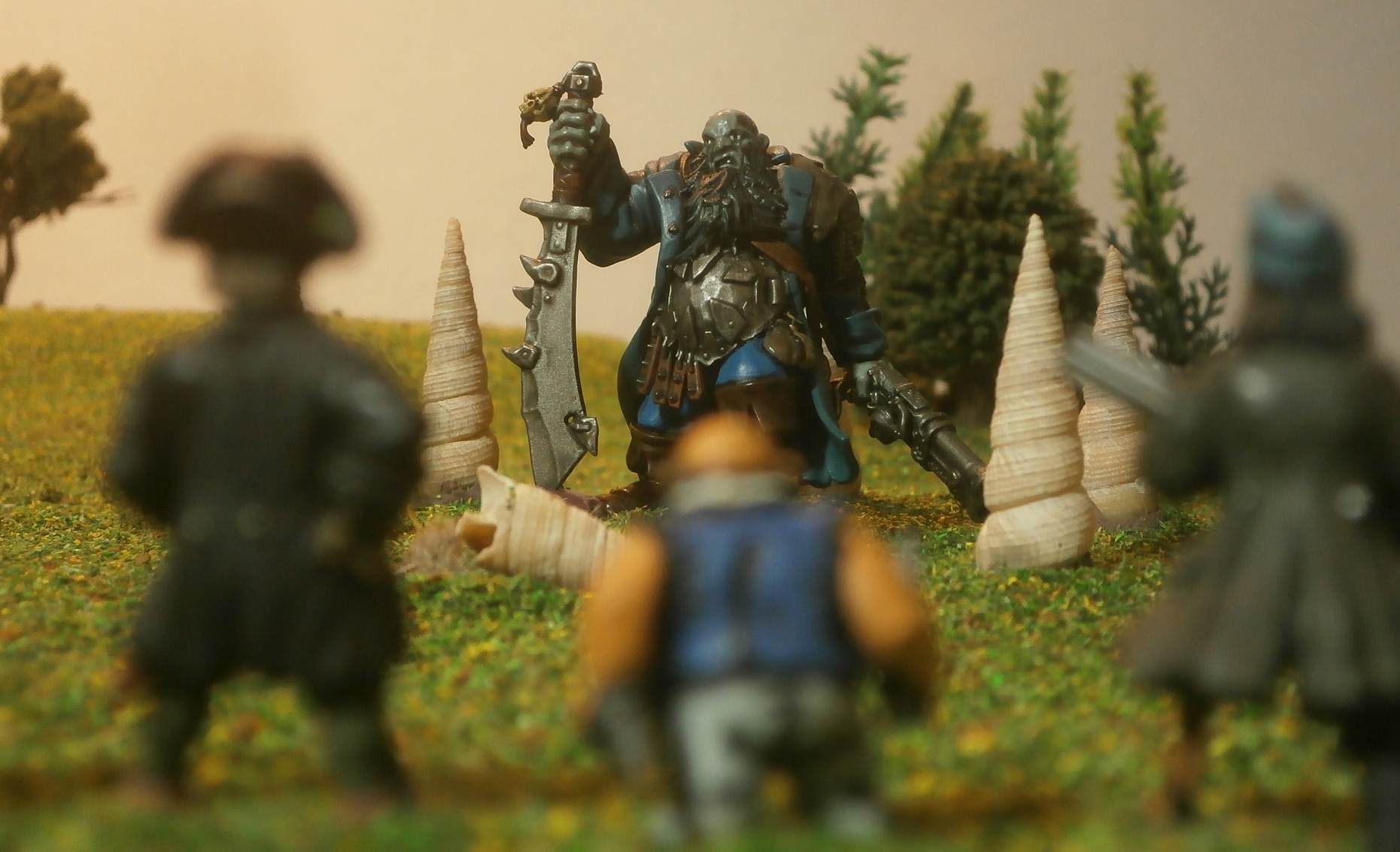
Kroll towered over them, as would any ogre, although he was tall even among his own kind.
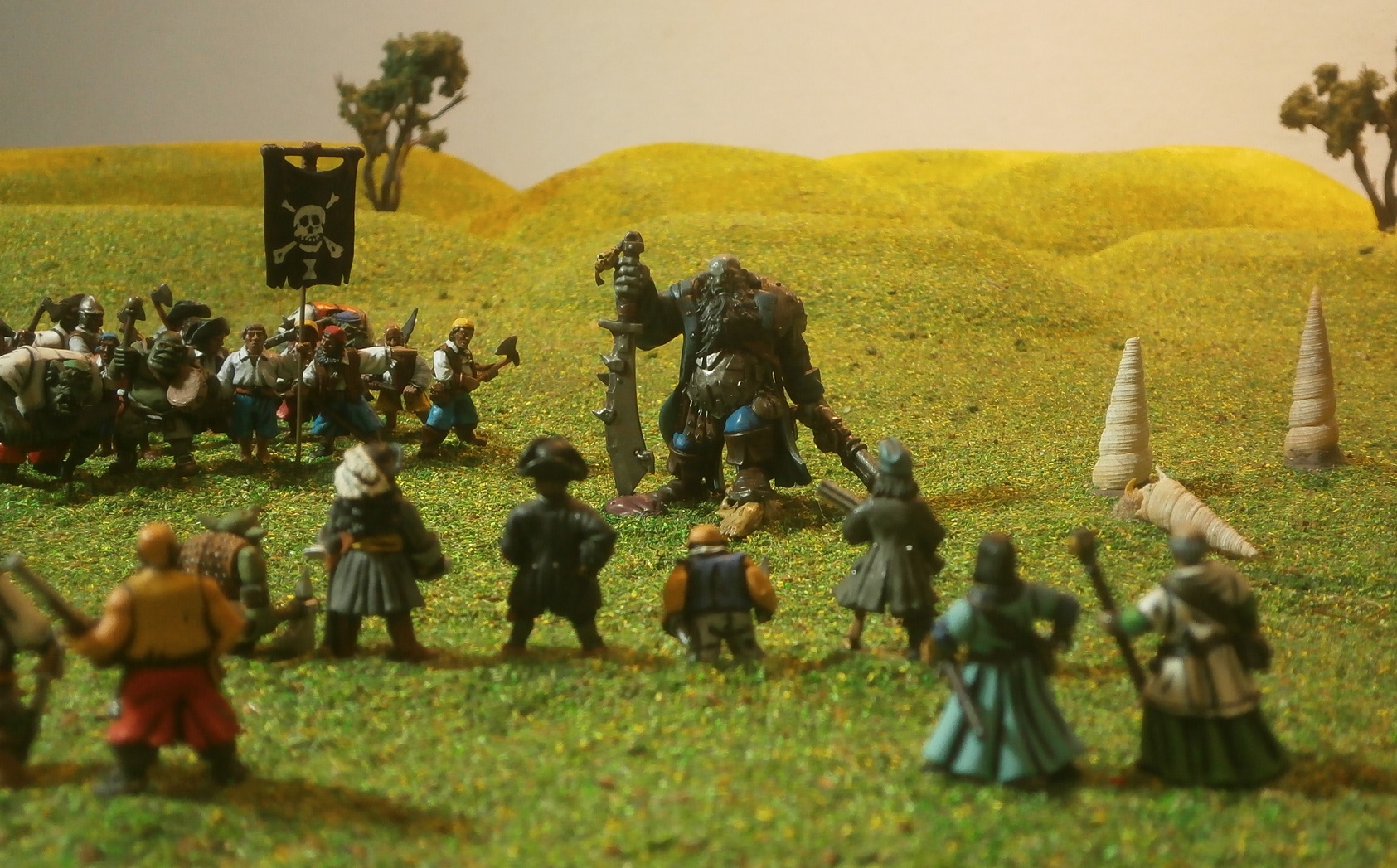
His blade alone was the length of a boarding pike, and his piece, held like a pistol, was akin in size to a swivel gun, and not one of the smaller ones. He wore an iron belly-plate, as did so many ogres, which might be supposed a hazard for a seafarer, considering how much quicker he would sink should he ever enter the water, but then his general bulk, heavy woollen coat and huge leather boots would hardly prove conducive to floating.
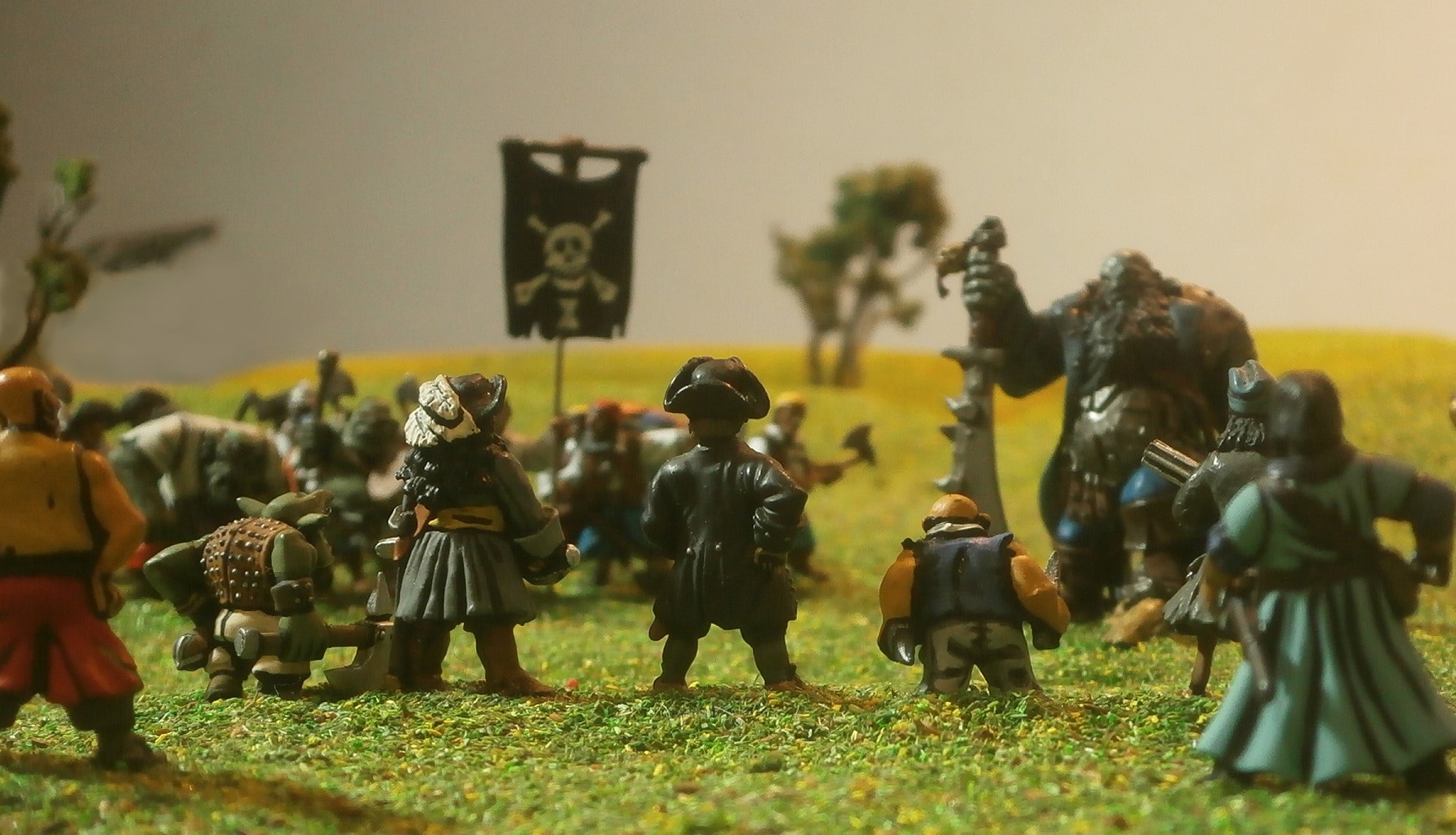
Coboc emitted a strange, guttural, squeaking sound, as if his breathing had become suddenly laboured. Most took it to mean he was afraid, what with him being a goblin. Only Bald Kuzmoul was shorter than he. In truth, the taller men next to him were nearly as nervous, just much better at concealing the fact. All except the admiral, who had seen such terrors in his days that a brute ogre was simply another encounter along the way. So it was, he was merely studying Kroll, as if to judge him, to weigh his worth, to decide what use he might be. And well the admiral might, as Kroll was here to be admitted to the fleet, and to receive a seat in the Captains’ Council. (Despite the fact there was no seat large enough to accommodate him, nor even quarters high enough to admit him, apart from those upon his own ship! But that was a concern for later.)
He was the only ogre among his crew, the rest being men and orcs, some of the latter weighing twice as much as the men, but were no taller. There were rumours that he once had ratmen in his crew, but there were none here, which allowed those who doubted such could be the case to be more convinced that it never was!
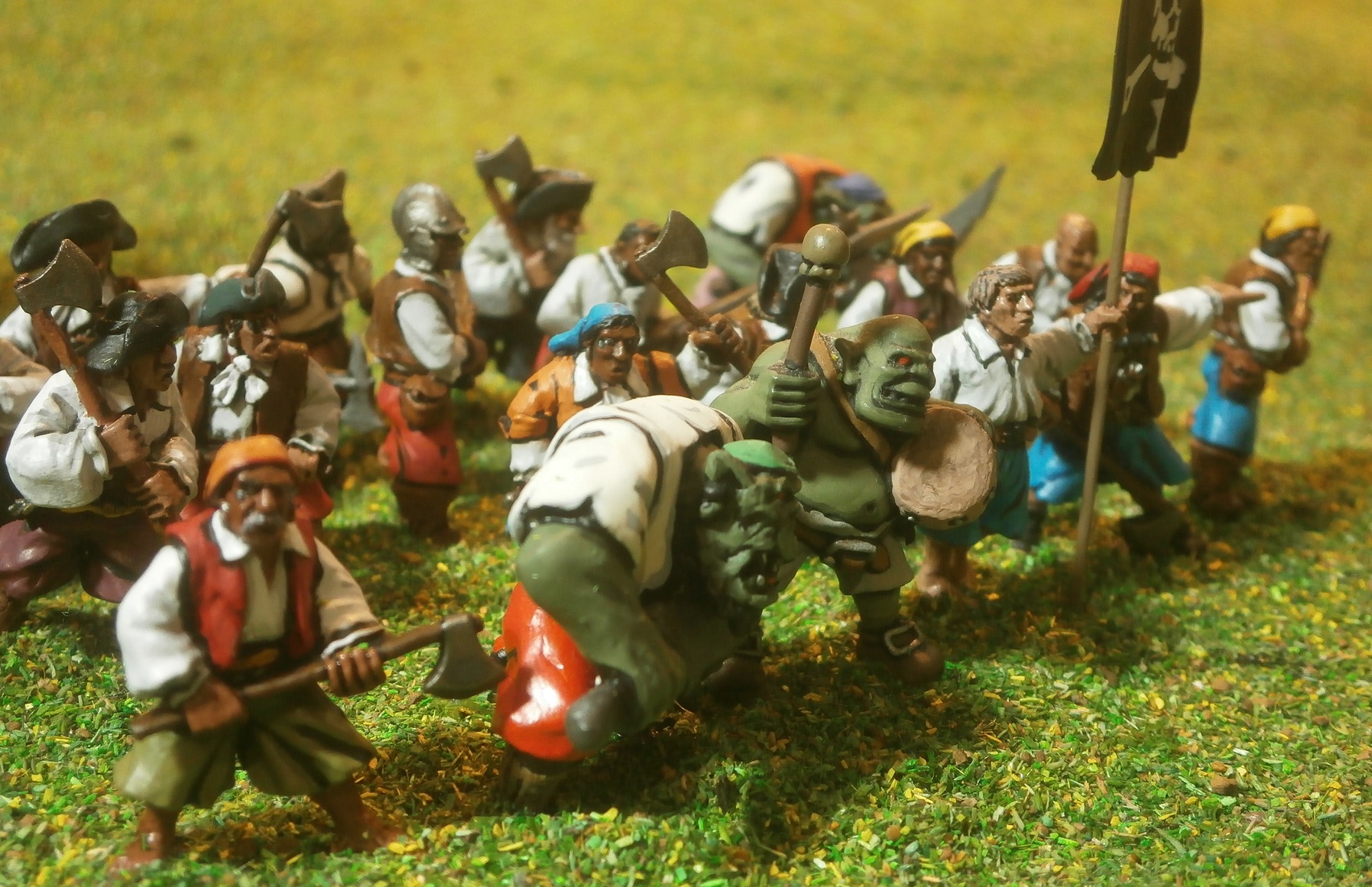
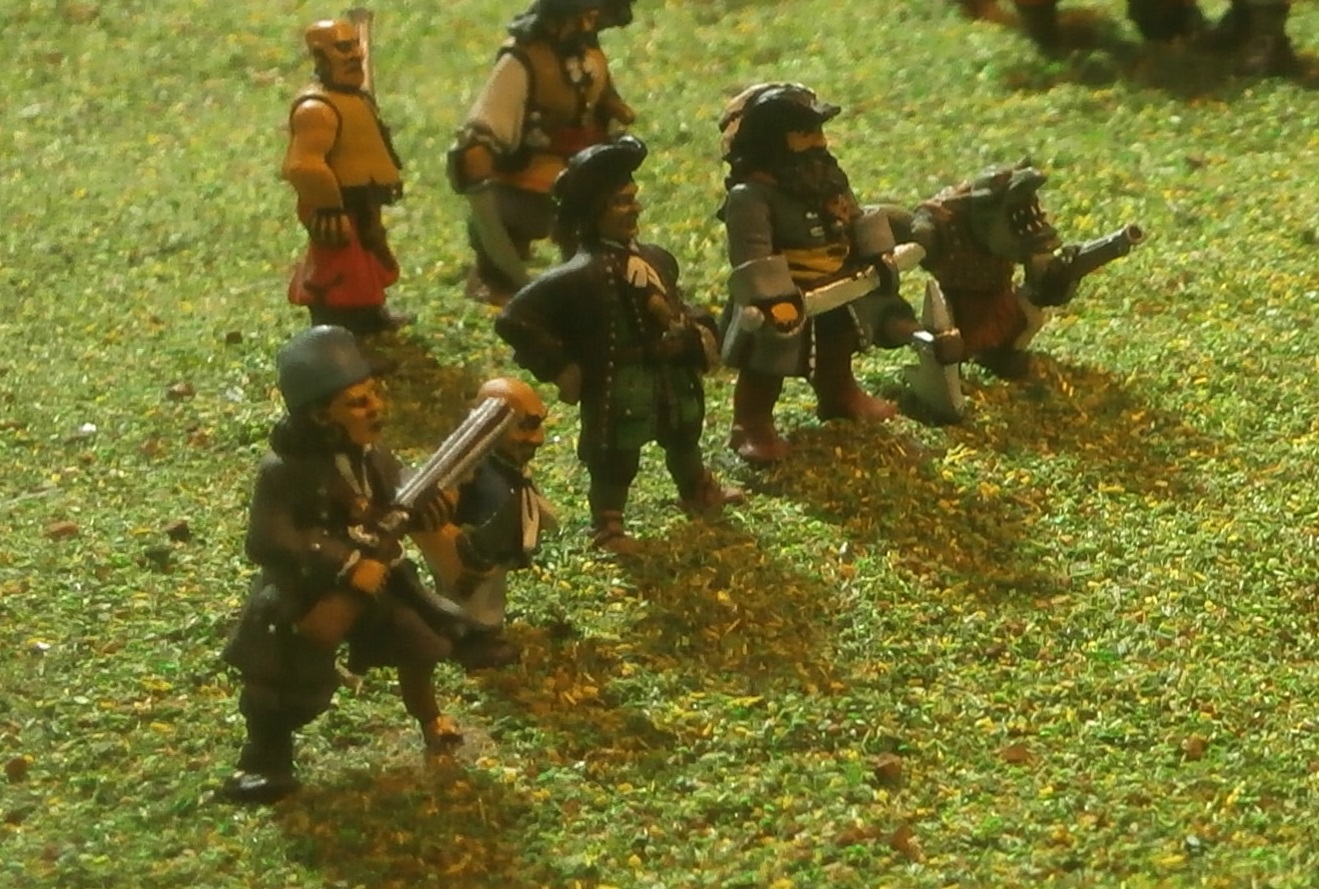
The crew were mostly armed with axes, either two-handed or boarding axes, and were famously skilled in their use, either in a fight or to expertly and quickly hack their way through bulkheads. One might wonder why they were needed when their captain could surely slice (perhaps even punch?) his way through even the toughest old oak, but he could hardly be everywhere at once could he? Besides, as he himself had declared – having adopted what he believed were the ways of a gentleman captain: such manual labour would disparage the height of an ogre in him. Why stoop to the level of a rude, mechanical seaman, when he had servants to do such work? Fighting was, of course, a suitable pursuit for a noble captain, but carpentry was not.
Kroll’s standard bore a death’s head above an hourglass, not because he and his crew were Morrites in faith (being instead worshippers of Stromfells or Ranald, according to their current needs) but because the image was intended as a statement of intent: “If you argue with us, your time will run out.”

The crew were grizzled veterans in the main, as were so many in the fleet, having served various realms, whether on fighting ships or merchant vessels, until greed, misfortune, desperation or devilry drove them to become pirates. Some had the dead-eyed stare of men who had long since abandoned any hope or compassion for others …

… while some bore the determined expression of men driven by a powerful desire for wealth, with not a care for what mayhem and misery they caused in its pursuit.
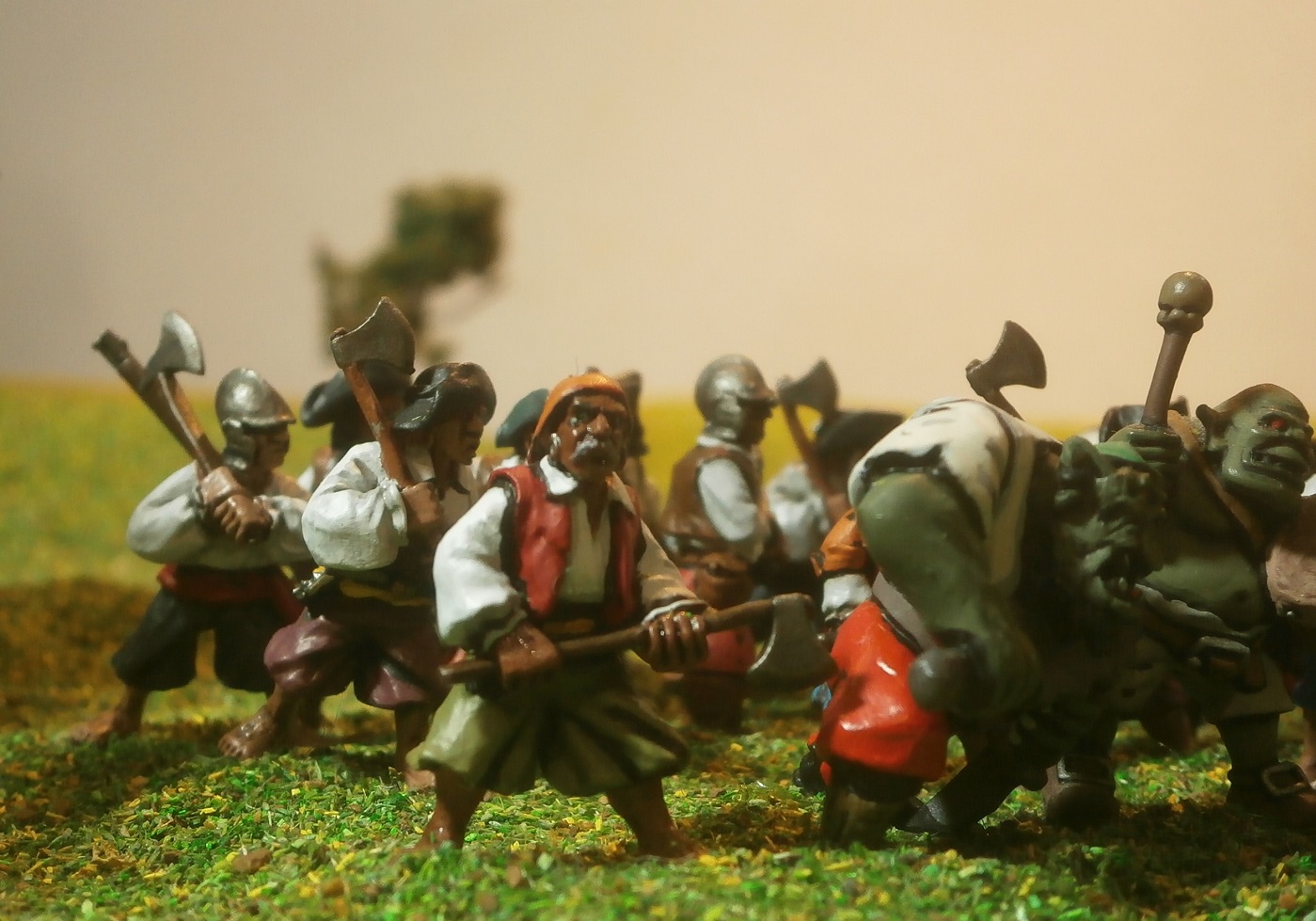
The orcs, however, were simply happy to eat when they wanted, fight when they could, and make cruel sport out of their enemies’ misfortunes. None of the crew, however, misbehaved in Kroll’s presence, for he was a hard taskmaster, and all knew that he could (and had) slice a crewmember in half at the drop of a hat if they displeased him, acting as judge and jury in such matters. But that was rare, for they always went out of their way to keep him happy, resulting in a fruitful career upon the seas so far, despite the malicious rumours of dealings with ratmen.
Until, that is, recently, when more and more ships, even merchants, were carrying guns, and ever larger contingents of professional fighters as well as sailors. The threat of the Sartosan Fleet had caused this sudden increase in armament, making piracy by individual ships that bit harder. Kroll declared that this was why he had decided to join the fleet – to be part of a force large enough to plunder entire cities. He wanted a share in such rich prizes, and knew there were several great cities yet to be looted.
Admiral Volker, as was his right, spoke first.
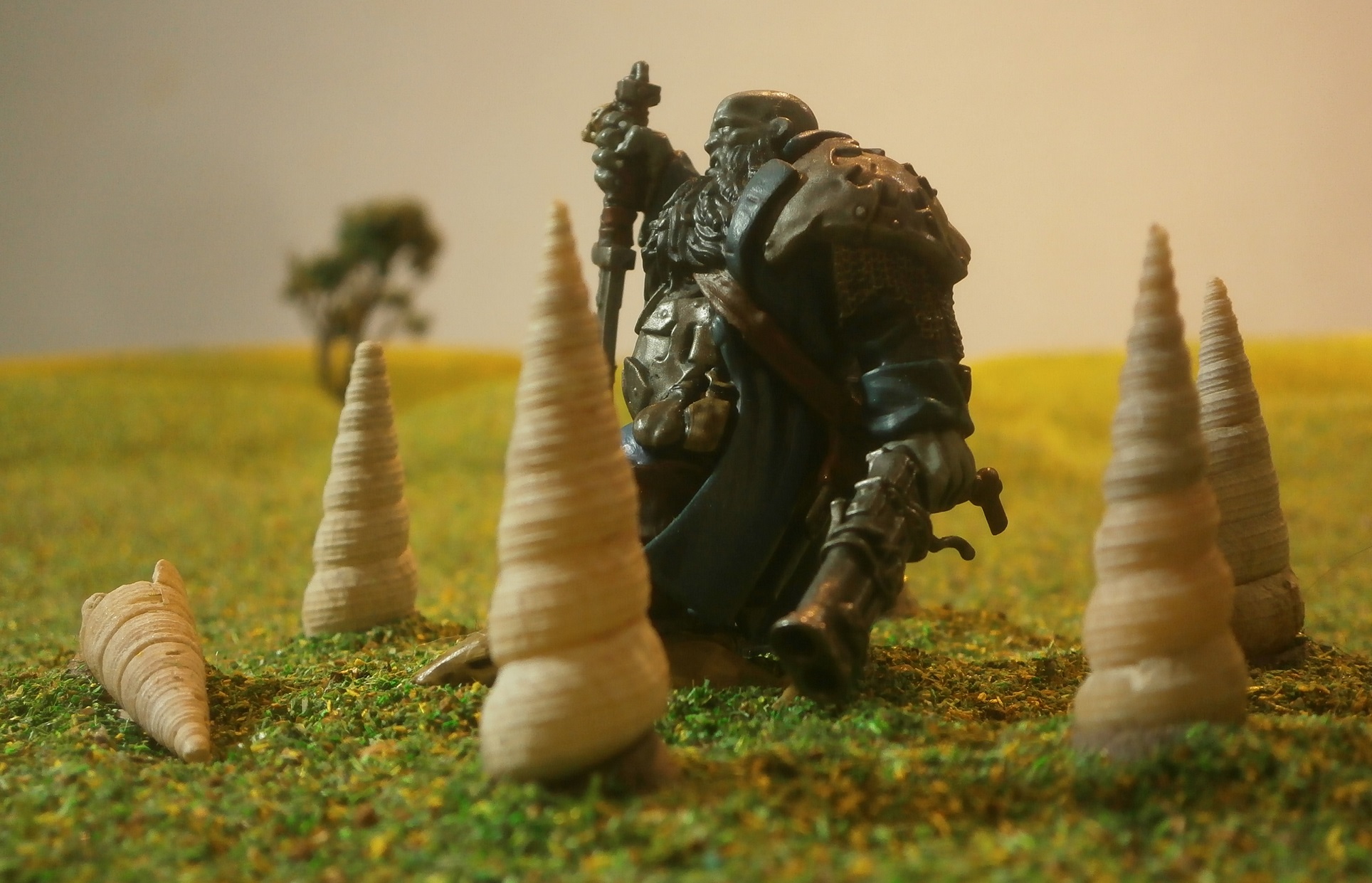
“This oath you are to take, Captain Kroll, is no petty thing. You are about to stand in the pledging ring, also named the auger circle, and not just because of the giant augurs it is fashioned from, but because any lie told within it augers ill, very ill, for him who utters it.”
Kroll grinned, revealing several teeth fashioned of gold. It was a sight somehow more disturbing than his usual scowl.

“That I need not fear, but I do expect that by holding to my oath it will auger well for me.”
“I shall do my best to ensure that,” answered the admiral. “For when my captain’s thrive, I thrive. We all thrive. You know how well our enterprises have gone. They were just the start. This is a time for pirates.”
“Then let’s not waste time on swearing, and get to sailing,” said Kroll.
The admiral nodded his agreement, then spoke to Geordt ‘Jambalo’,
“You know the words of the oath, Geordt. You shall speak them. And you, Kroll, must affirm all the clauses. Now, take your place in the ring.”
Kroll strode into the ring, stepping over a broken augur shell, then turned to look back at the gathered officers as they shuffled over to face him better.
Geordt began immediately …

“Do you swear to obey the admiral in battle?”
“Aye,” growled Kroll.
“And to be faithful to your fleet companions in all designs?”
“I will,” answered the ogre. “So they’d better be good designs.”
“And to strive to accomplish all ventures agreed to by vote of the fleet’s captains?”
“No point in starting what you don’t intend to finish. I’ll see everything through to the end.”

“Do you promise always to attend at the agreed rendezvous, responding whenever called upon?”
“If the wind and weather can be overcome, I’ll be there.”
“Will you die fighting rather than flee from an equal number of opposers, unless ordered to do so by the admiral?”
“I’ve never fled any opposer, and damn them who claim I might have done. But aye, if the admiral thinks there’s nothing to be gained from a fight, then I’ll follow his orders accordingly.”
“Will you swear never to desert your fleet companions, or leave them wounded in an enemy’s hands, if the admiral demands them back?”
“The dead can rot on the sea bottom, but aye, if the admiral wants a fellow rescued, then I’ll do what I can, for all the usual compensations.”
“Will you help your fleet companions if captured, imprisoned, sick or otherwise in need?”
“I will do as much as any pirate in this fleet, but I don’t profess any knowledge of physic.”
Geordt glanced at the admiral, who said,
“That’ll do. He is joining as a ship’s captain, not a ship’s surgeon.”

Geordt nodded, then continued,
“Now repeat after me: ‘And this oath, when I break in the least tittle’ …”
“And this oath, when I break in the least tittle …”
“… ‘may Manaan and Stromfell’s curse befall me’ …”
“may Manaan and Stromfell’s curse befall me …”
“… ‘and may the greatest scurvies, plagues and damnation seize me here and hereafter’.”
“And all those things, and worse if you like, for I shall never break my oath. Are we done?”
“We’re done, captain,” said the admiral. “Welcome to the fleet.” He turned to Kroll’s crew and asked,
“What say you?”
In answer came a confusion of ‘Ayes’ and ‘Huzzah’s’, and not a complaint amongst them.

Admiral Volker’s fleet and army had just grown that bit stronger.
Admissions and Admonishments Abound
Verezzo, in the Great Hall of the Palazzo Davandati. Autumn 2404
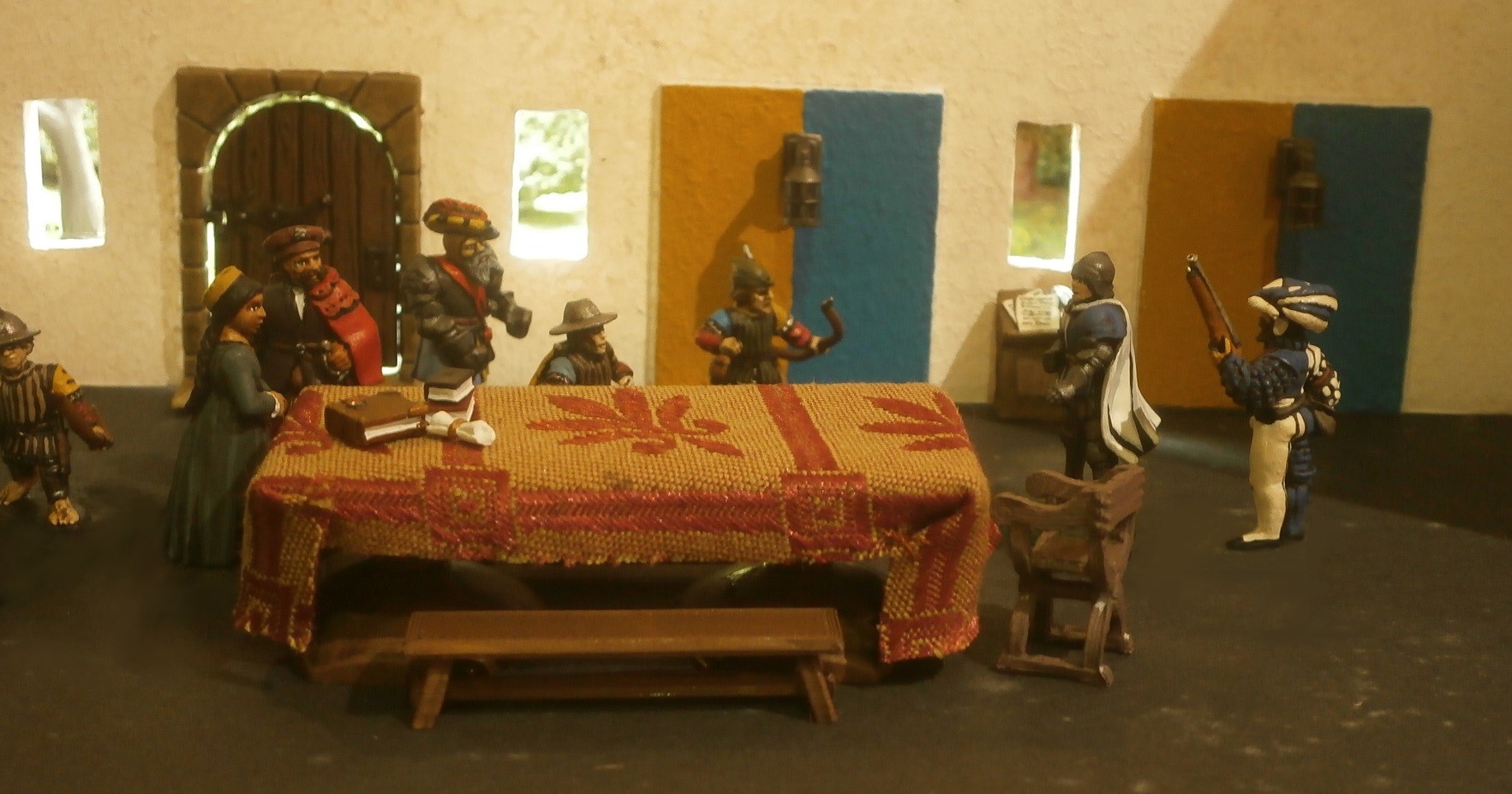
Barone Iacopo was feeling confident about the meeting with Lord Silvano Gondi of Pavona, especially as he had recently obtained firm promises of defensive military support from Verezzo’s old ally, Ridraffa. He believed the joint forces that could thus be fielded against Pavona now matched the enemy’s strength, perhaps even exceeding it. The Mayor of Ridraffa had long been (effectively) a nominee of Verezzo. Lord Lucca himself had ensured the current mayor’s position. This made the two states natural allies, and their shared suspicions of the Pavonans’ aggression now made them keen allies also. Yet Ridraffa had not directly suffered Pavonan abuses as Verezzo had, and so of the two, the Ridraffans were considerably less keen to go to war.
Still, Iacopo was glad the Mayor was present, so that Lord Silvano would recognise he was now contending with two city states. Previously, the barone had done all he could to strengthen Verezzo’s forces, but progress was slow, due to a combination of factors, including the small funds available and the limited numbers of experienced mercenaries to hire, considering most were contracted to other states. Verezzo was not the largest of city states and so even raising native militia proved difficult, for want of able youngsters to fill the ranks. Luckily, the long standing tradition of teaching the art of archery to every male halfling in the realm still held, and so that part of the state’s army was not deficient.
Mayor Rafaelle was accompanied by his wife, Lorena, which was perhaps a little unusual, for this was to be a parley between warring states, not a social meeting, where one’s spouse would be expected. Yet, he thought, her presence might lend a degree of civility to the process. The barone was familiar enough with the young Lord Silvano to know that he was less likely give vent to unrestrained anger before a noble woman, and certainly not commit an act of assassination like a Pavonan soldier had done only weeks before. Indeed, Iacopo was hoping that she might have an inhibiting influence on his own behaviour, for he harboured furious hatred towards the duke, and, by association, the duke’s obedient son. He wanted to remain in control, to play a subtle game and play it well. Lorena’s presence would hopefuly provide a check against any sudden bursts of anger.
As well as Captain Muzio Vanni, the old condottiere commander of the pike regiment, now made lieutenant general of Verezzo’s army, the famous ex-brigand, Roberto Cappuccio was also present, for it was he who had most recently been the subject of Pavonan lies. Upon his return to Verezzo, after his sojourn through the realm of Pavona with his band of archers, causing as much trouble as he could (which turned out to be quite a lot), Barone Iacopo had rewarded Cappuccio’s commitment by commissioning him as Verezzo’s scout-master general. Cappuccio had since begun wearing the livery of Verezzo, although still sported his famous green hat, and he never went anywhere without his trusty bow.
When the infamous Pettirosso came into the hall, the barone was pleased to witness momentary surprise, then discomfort, upon the young Lord Silvano’s face. To make such a fellow an officer of the state surely revealed the strength of the barone’s hatred of Pavona, and strongly hinted that he knew the truth concerning the claims of the recent assassination attempt upon Duke Guidobaldo.

The young lord was accompanied by a single guard, armed with a handgun, although he had travelled with a large company of similarly armed soldiers. Perhaps, if he had attempted to bring more guards to the meeting, then objections may have been raised. But no-one thought to complain about a single companion, as such might be considered a necessary servant to accompany a nobleman, with duties beyond acting merely as an armed escort.

“So, your father has finally deigned to send you to me, as I demanded many weeks ago?” said the barone. “I was not happy that he sent a babbling priest to me before, only for one of your own soldiers to slay him.”
“I myself wanted to come,” answered Silvano. “And my father, ill though he is, at last gave me leave to do so. As for the soldier’s actions, I know not what came over him. He clearly had the wrong idea concerning what was expected of him.”
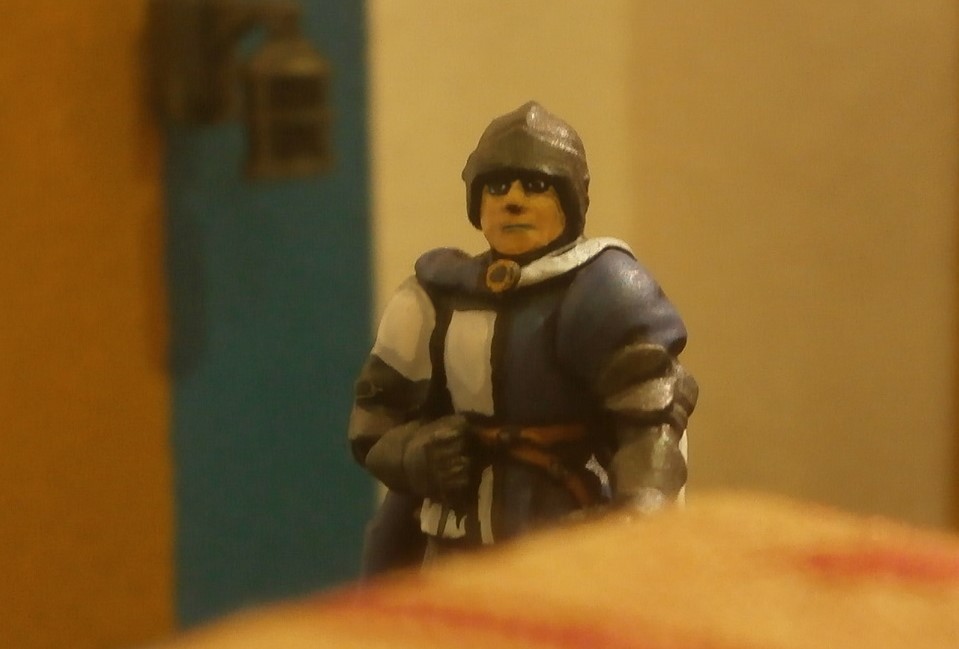
Barone Iacopo fixed his eyes upon the Pavonan lord. “Oh, I think he knew full well what was expected of him, be it nothing more than to make more of a mockery of the supposed apology.”
“I wish, barone, you would not presume such wickedness on my father’s part. Mistakes have been made, but this time the guilt was that of a foolish guard.”

“Are you here, then, to confess your father’s sins and pray publicly for forgiveness? Or are we to play more cruel games and hear yet more excuses and lies?
“Good barone,” said Silvano, “I humbly and honestly wish to forge a peace between our realms, in light of the new and deadly threats facing all of us. We cannot allow our realm’s disagreements to weaken us in such dangerous times.”
Iacopo, and several other of his attendants, laughed.
“And why should I believe you want peace, when your own father murdered our beloved Lord Lucca and plundered this, his realm even at a time when both vampires and ogres threatened all Tilea? Your father had long sought any excuse to attack Verezzo – a despicable and base yearning he finally yielded to at the most dangerous time.”
The young lord stiffened, and when he spoke his words were uttered likewise,
“I am not my father.”
Iacopo was quick to respond. “An apple does not fall far from the tree.”

“You know me, barone. We marched together and took the field beside each other in the valley of Norochia, there to face hordes of ghouls and walking corpses. And with arrows, bullets, swords, and great courage, we did prevail. You and I, and those we commanded, proved ourselves that day. You know me.”
“Aye, you were there,” countered the barone. “But not your father. He was too busy robbing our realm. Murdering our master.”
The brigand Pettirosso suddenly interrupted, “I saw him and his knights slay Lord Lucca with mine own eyes.”

“And all heard his lies afterwards,” added Iacopo. “Claiming it was the VMC’s soldiers who had disguised themselves as Portomaggiorans to do the deed.”
“And now,” spat the Pettirosso, “your father lies again, telling the world it was myself who attempted to assassinate him. I wish that it were, and that I had succeeded, for then vengeance would have been gained. But it was not I, despite my vow to do so, making his claims yet more lies.”
There was silence, though there was something about the young lord’s demeanour that gave the impression it was not due to him being stuck for words.
Iacopo broke the silence with a direct challenge,
“I ask you, in earnest, is everything your father utters false? Has he ever spoken a word of truth?”
Lord Silvano began silently, slowly, shaking his head, and this time answered with the slightest hint of anger in his voice.
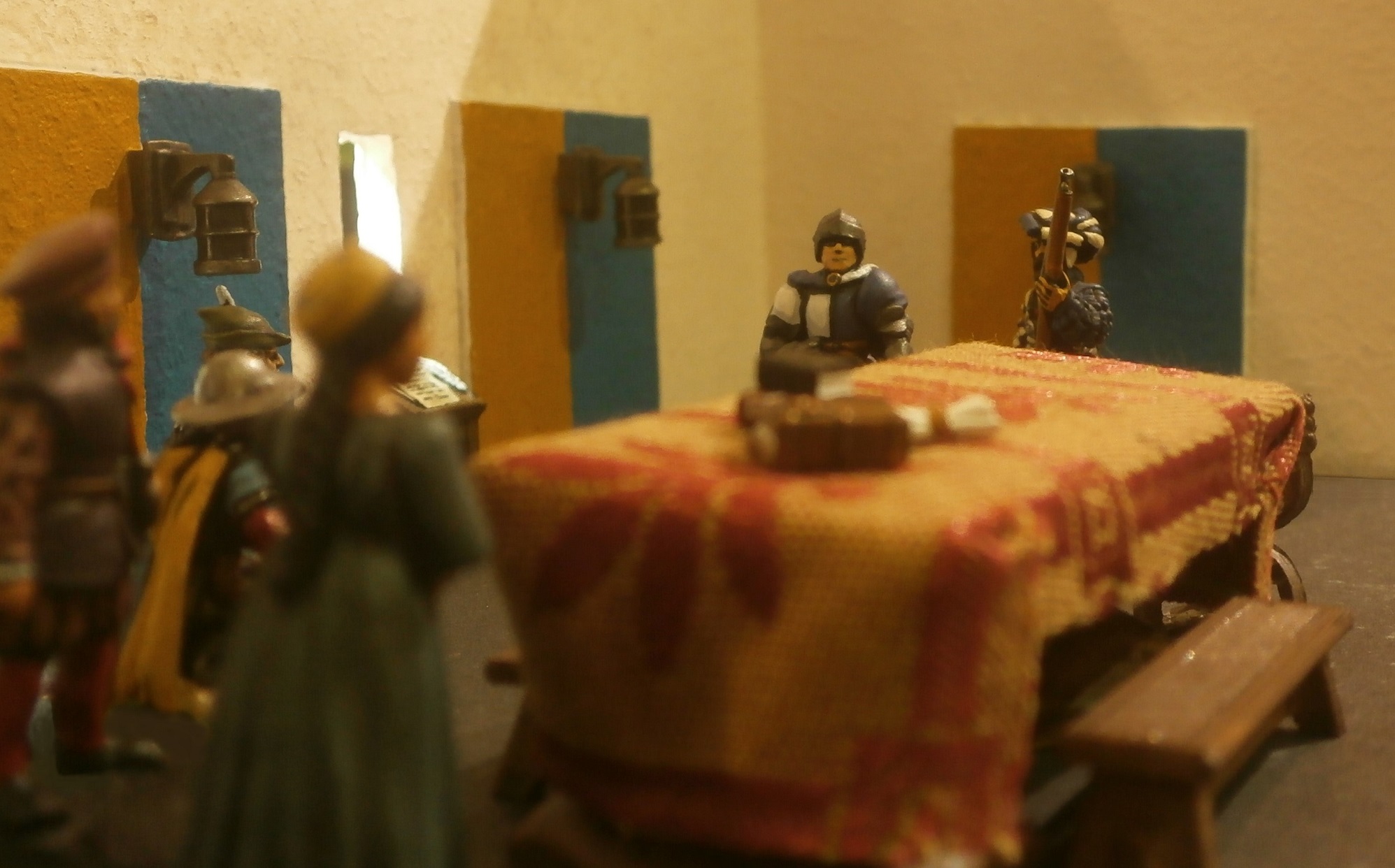
“I am not my father, but I rule now in his stead and will rule in my own right when my father enters Morr’s garden. Pavona’s present and future lie with me. I was never party to my father’s lies, nor present when they were spoken, only later learning of them. Now I look to find those willing to befriend me, not my father.”
The Pettirosso was pointing at the young lord, quite contrary to what was customarily expected when addressing a noble superior, even of another city state.
“So, you admit your father was lying?”
Silvano answered easily, “I do, as did my father to General Valckenburgh, through me, having tasked me with explaining all that was done and why.”
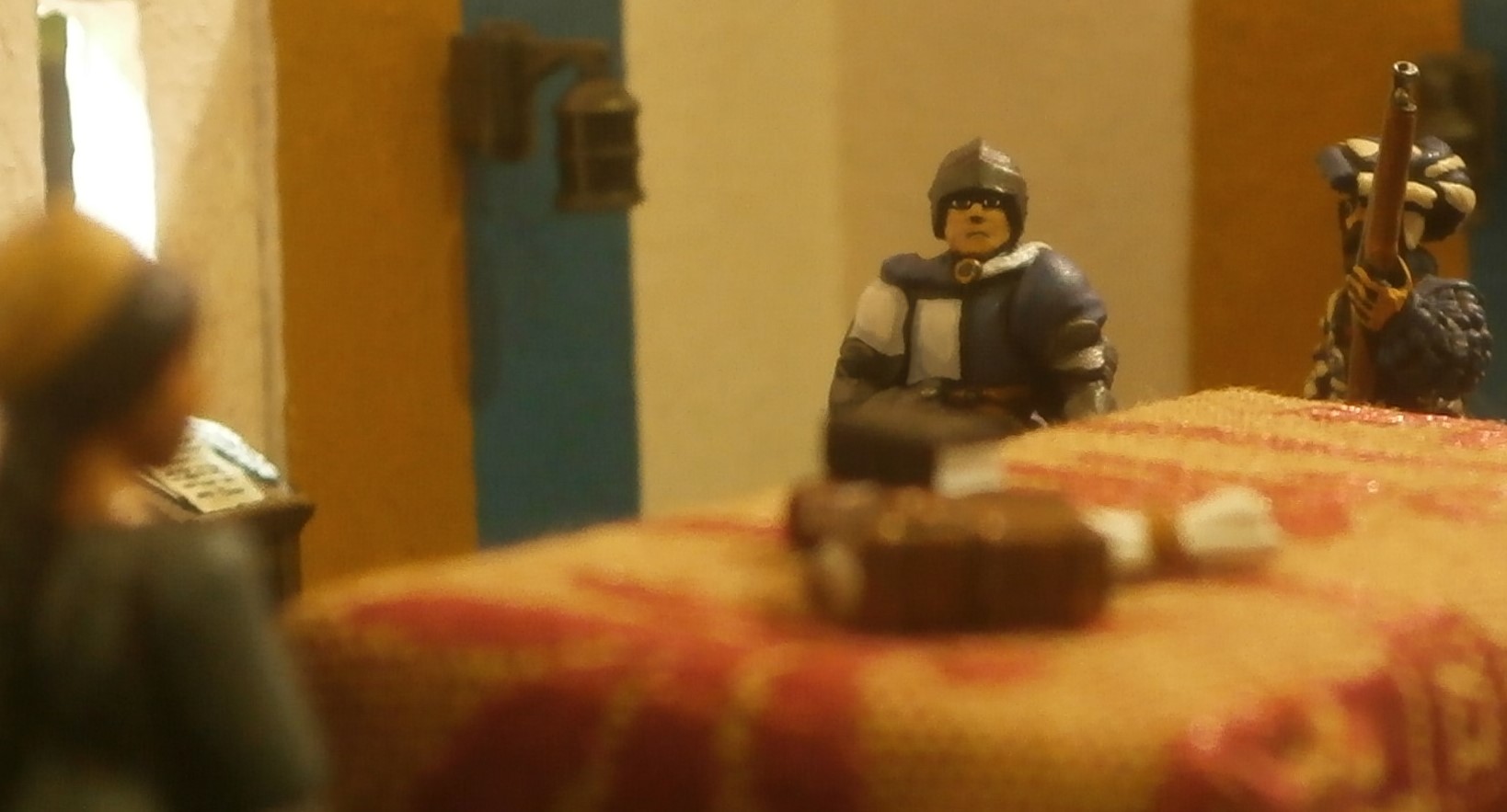
“Lord Silvano,” asked Iacopo, “you would have us believe that we can trust you? How is it that you are made so much better than your father? Or is it simply that you are a good enough liar to make it appear so.”
“Since the war against Prince Girenzo, and the death of my brother,” said Silvano, “I have always striven to do that which was right and proper, and to venture my own life in the defence of greater Tilea, not just Pavona. I have served the greater good, and holy Morr, both demanding and receiving permission to do so from my father. All I ask is that you judge me by my own merits.”
Iacopo put his hands on his hips and looked askance at Silvano.
“You did nothing more than the good Captain Vanni here and myself – serving in the alliance army under Lord Alessio, upon the orders of your lord and master. Why should we presume your good service makes you a more honest man? Even a goblin might obey his brute master’s commands, yet still lie with almost every utterance.”
The mayor of Ridraffa’s wife gave a polite cough, and all turned to look at her.
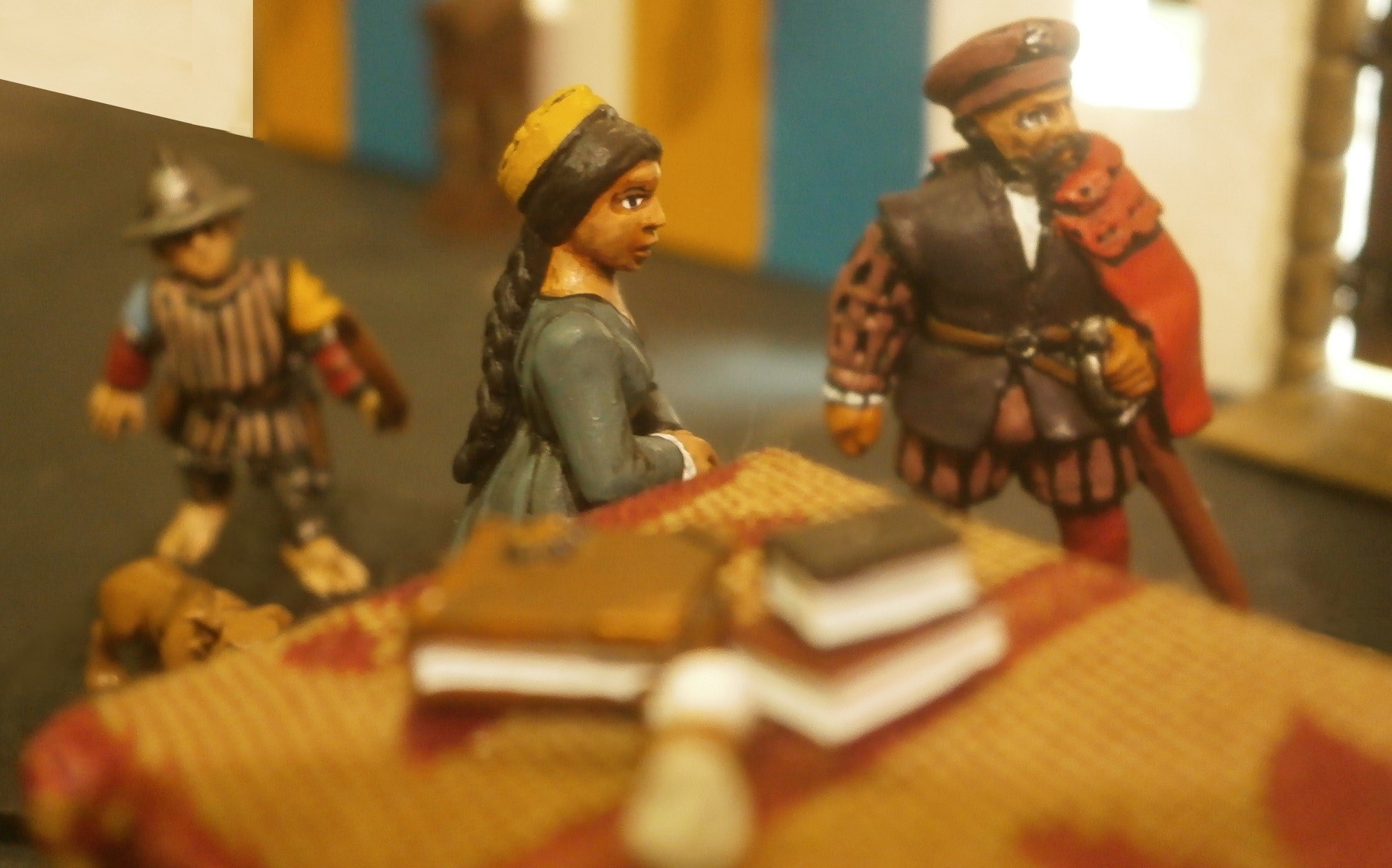
“By your leave, barone and my lord Silvano?” she asked.

Both nobles nodded.
“Norochia was not the only time the young lord fought against the vampires,” she continued. “He was at the terrible battle of Ebino, personally leading the charge against the enemy’s massed ranks. There his holiness Calictus died and the army scattered, forcing Lord Silvano to ride away. Then, having only just recovered from near fatal wounds received when bravely fighting Boulderguts’ brutes in the Battle of Via Diocleta, he marched with you, my lord, in the alliance army to fight the vampires once again. Is all this not entirely adequate proof of Lord Silvano’s earnestness to serve the common good?”
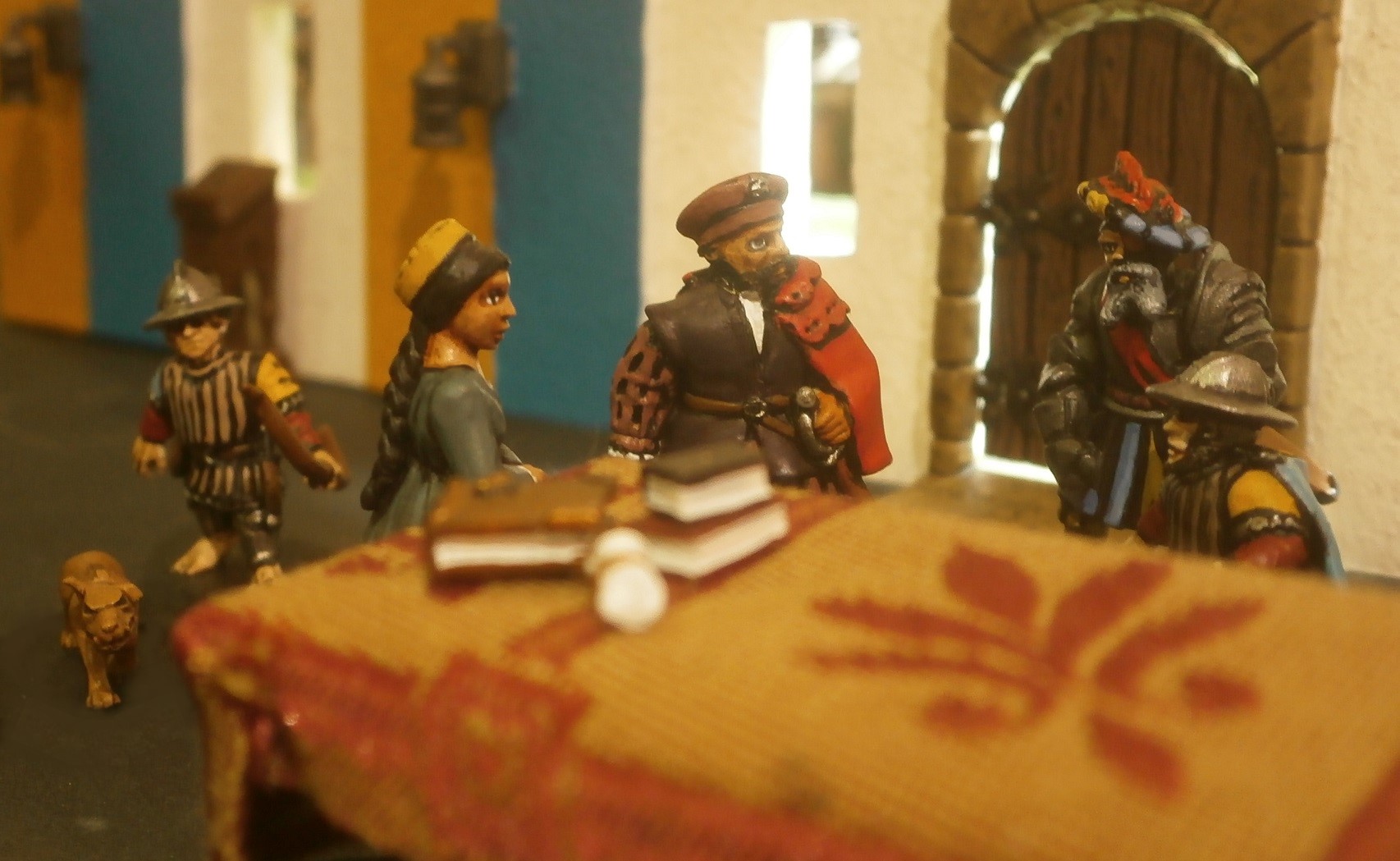
Iacopo had forgotten that the mayor’s wife had Gondi blood, being a cousin to Duke Guidobaldo. It seemed she possessed a great interest in her relations’ affairs, or perhaps just Lord Silvano’s? Such a bias would hardly help her understand the duplicitousness the Gondi’s were capable of. And yet … it was hard to argue against her. Lord Silvano had indeed proven himself a hero in battle after battle.
A thought now tickled at the edge of Iacopo’s consciousness, concerning how the duke had kept his son ever busy in the wars, or, more accurately, why the duke had done so, but the idea dissipated when Mayor Rafaelle spoke.
“My wife speaks the truth, as you do too, Barone. There is good and bad in the Gondi family, as with any family perhaps. But we should surely not allow the faults and frailties of a dying man to prevent our proper defence of our realms?”

Lord Silvano turned to speak to Iacopo, but the barone interrupted him, saying,
“Yes, we know. You are not your father.”
Next Installment: Part 41

 BigSmallWorlds
Nice work on the Skaven-speak. Urlak’s use of “sure and certain” constructions in particular steps over the wearying nature of the bit, and makes him sound quite eloquent: very apropos for a Seer.
LikeLike