An Excerpt from Bonacorso Fidelibus’s Work: The Many Wars of the Early 25th Century
Autumn 2405
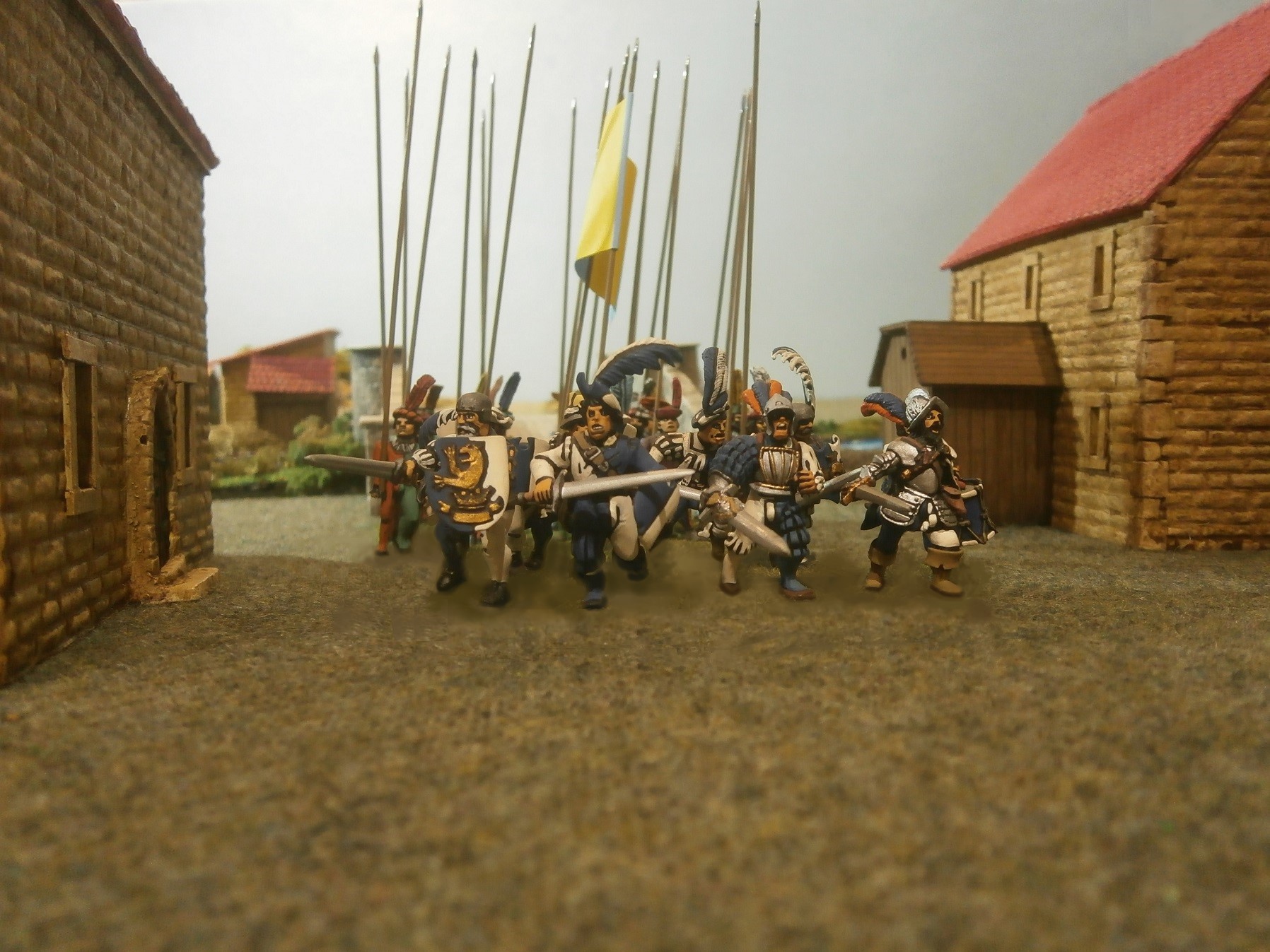
With the defeat of their home army at Casoli, the Pavonans were fearful. Their new lord, Silvano, heir to the now dead duke, was too many leagues away to save them. Besides, his army was only half the size of that of the victorious Verezzans.
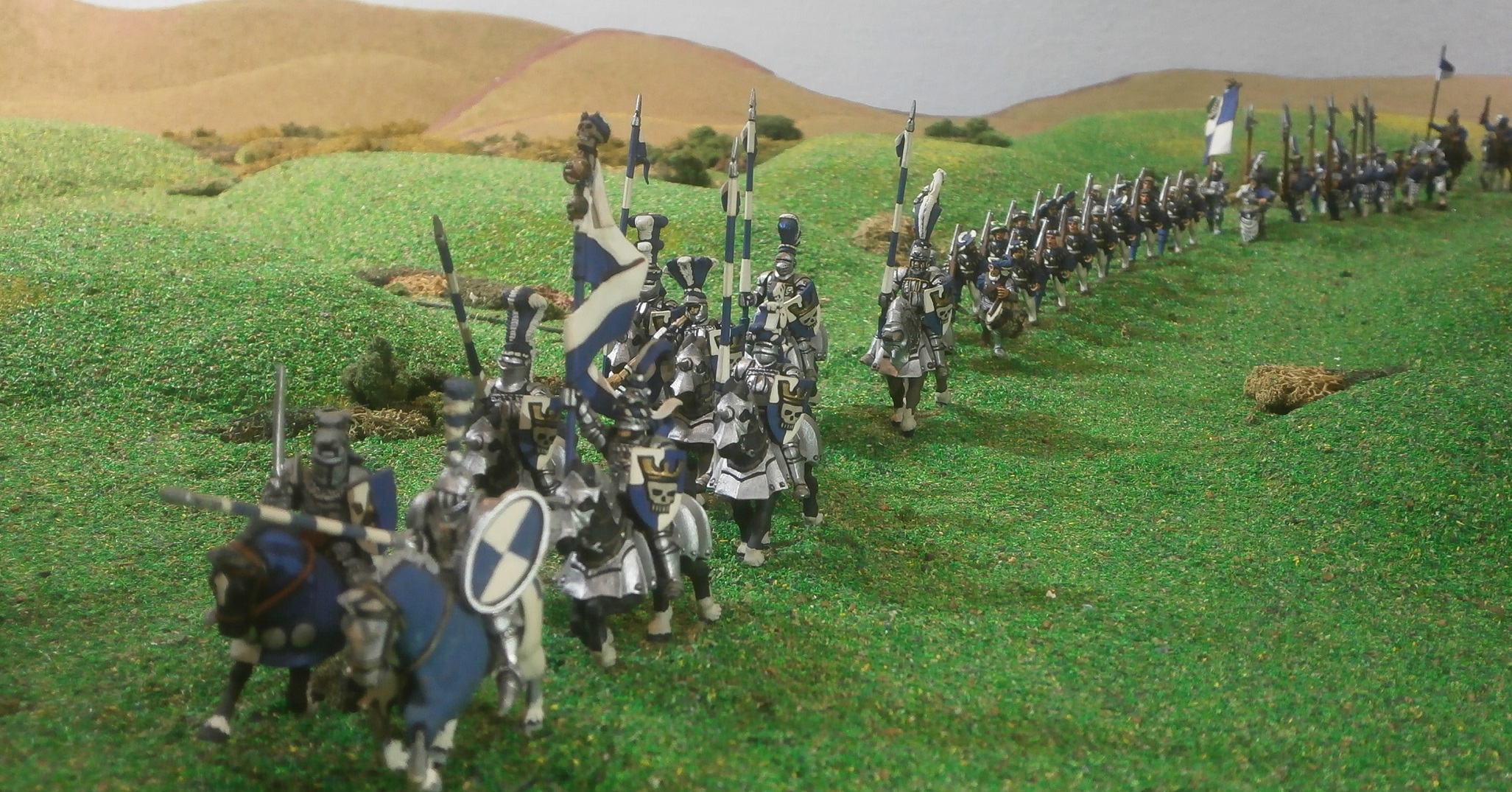
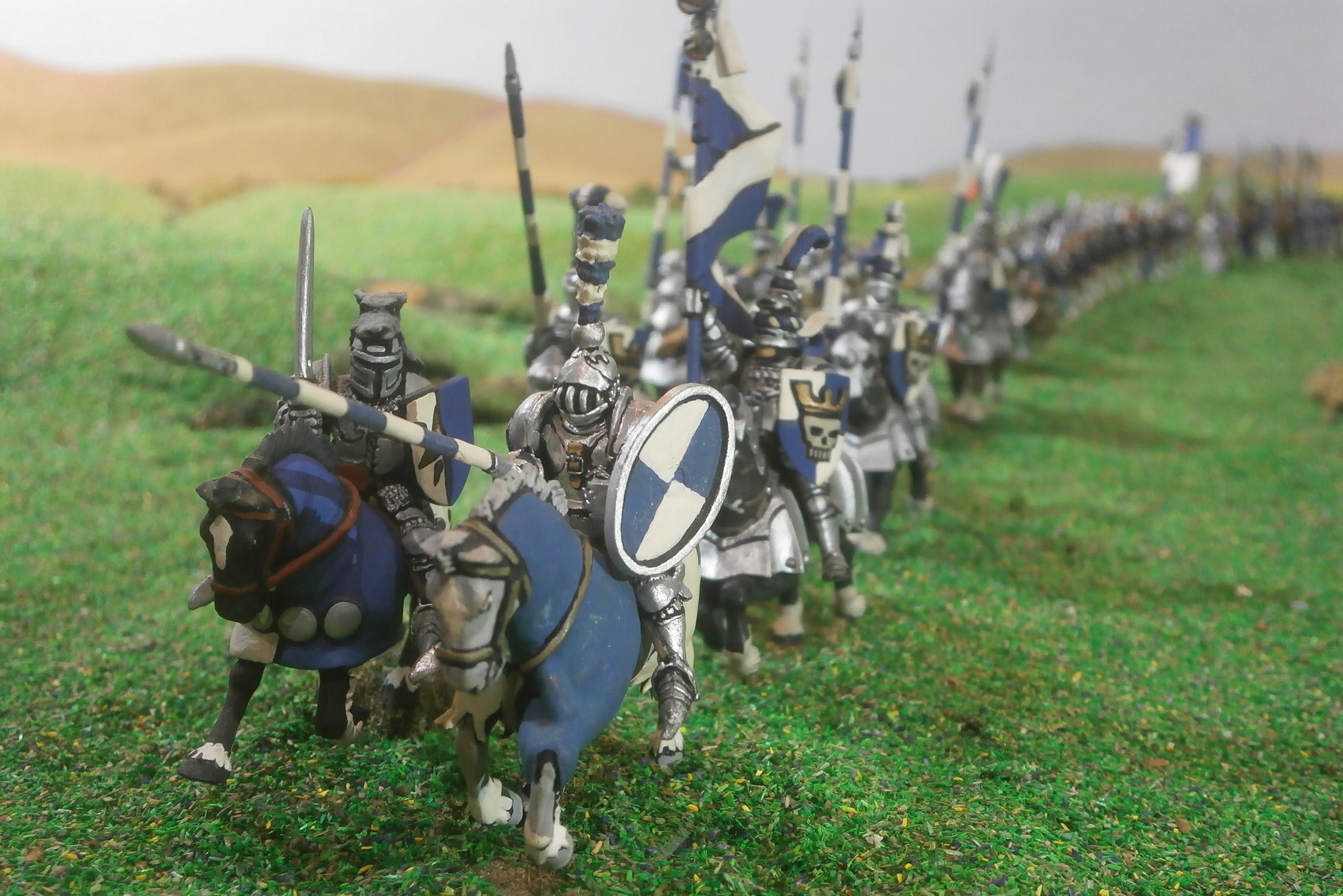
Nevertheless, he rode with his trusted adviser, the Visconte Carjaval, at the head of his army, and at the best pace his foot soldiers could manage.
Although the city of Pavona was well-walled …
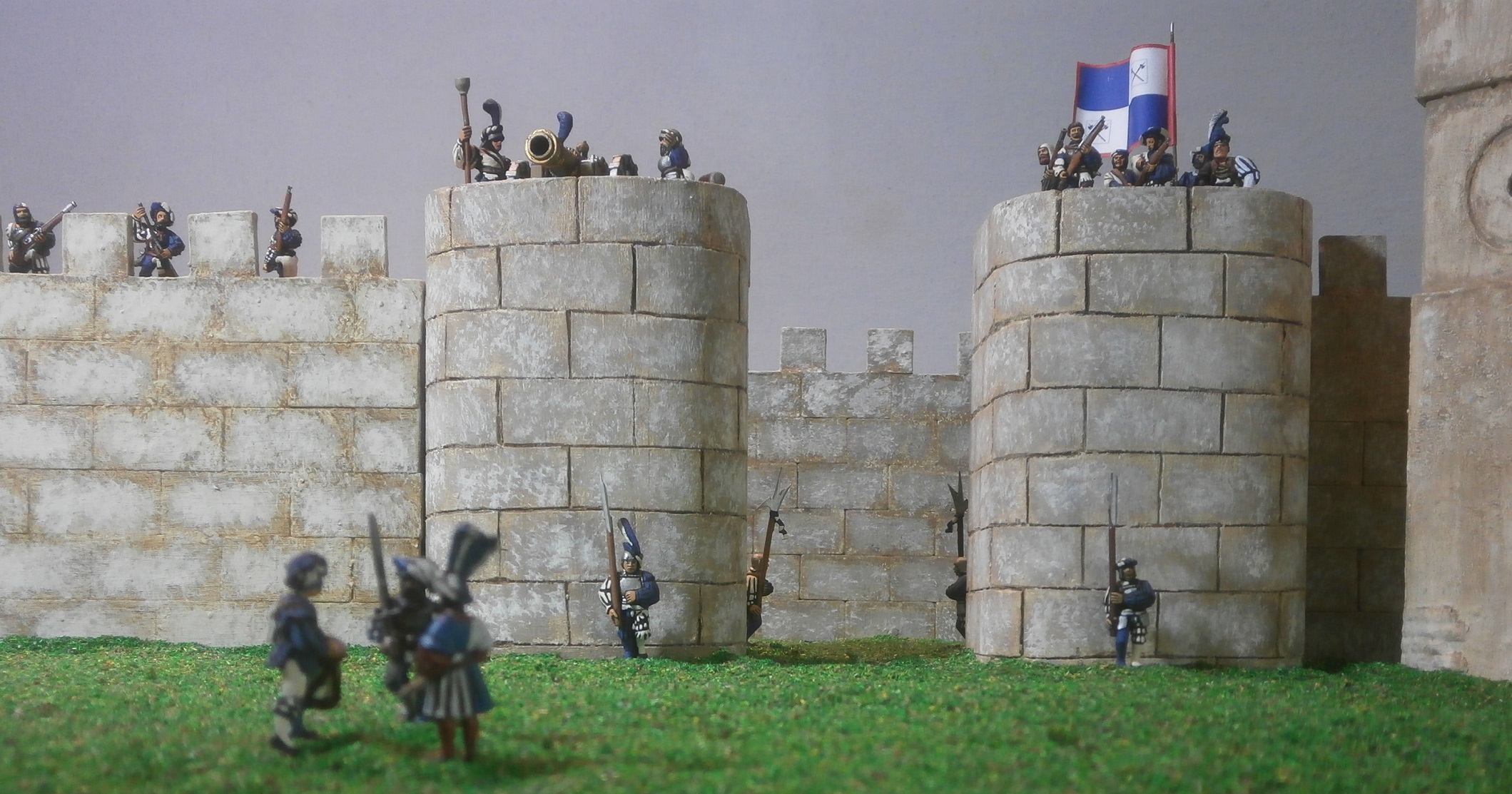
… it seemed the enemy had made plans to overcome that particular obstacle, for the reinforcements joining their army after the fight at Casoli included two great cannons and a skilled engineer to tend to them.
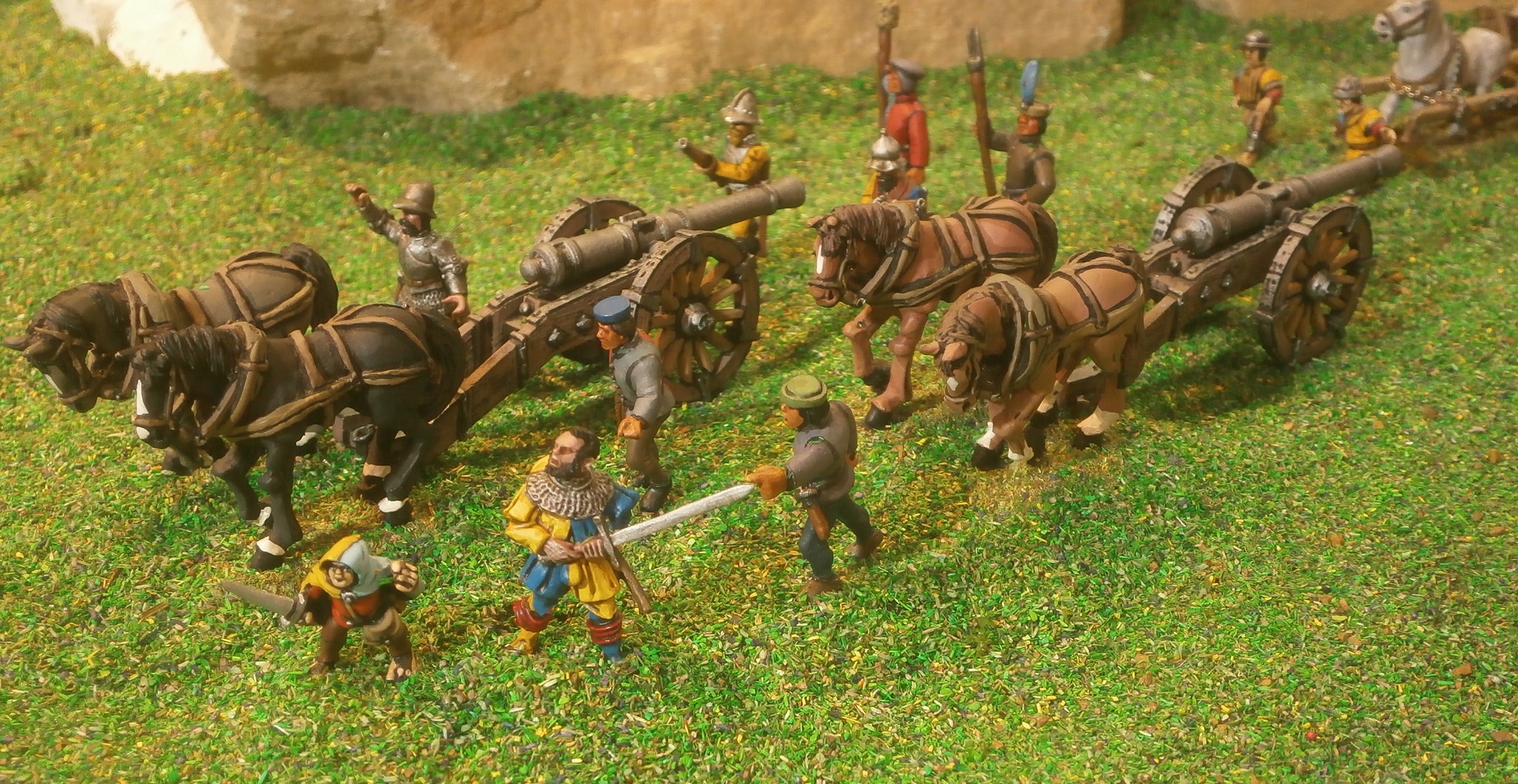
The city’s militia, despite containing a core of veteran soldiers not yet quite ready to retire from a military life, was small – clearly incapable of thwarting an army such as the one advancing upon them.
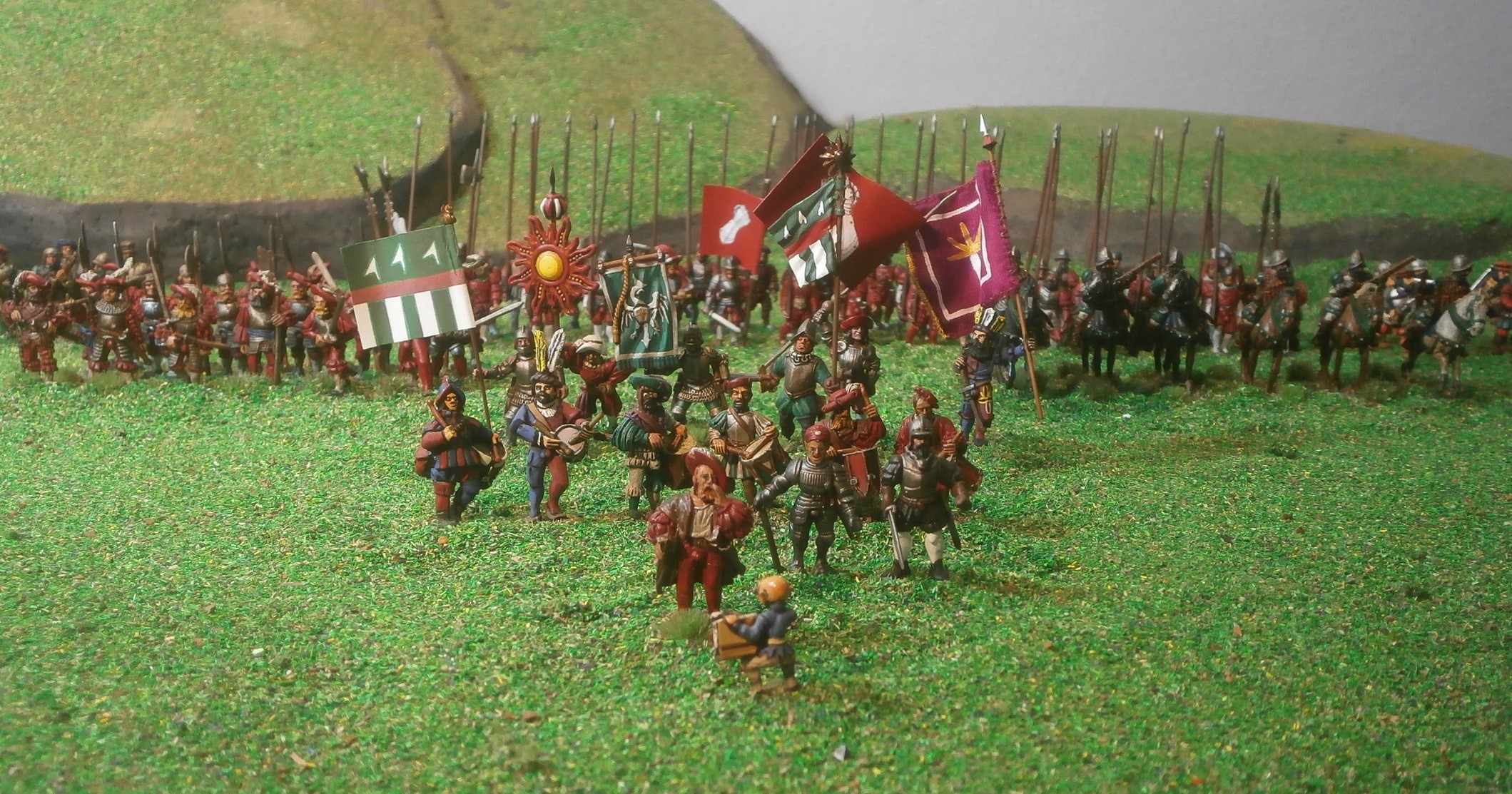
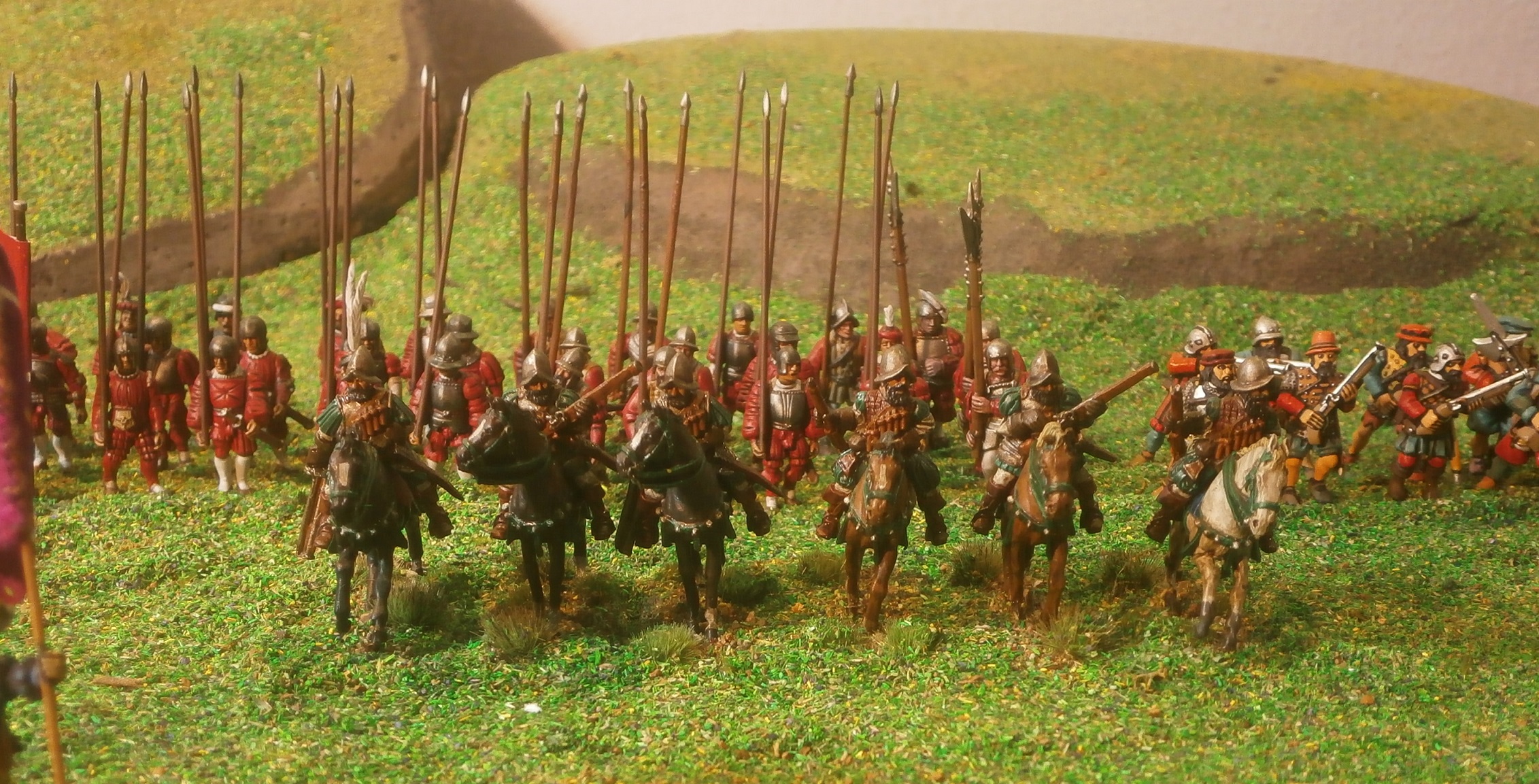
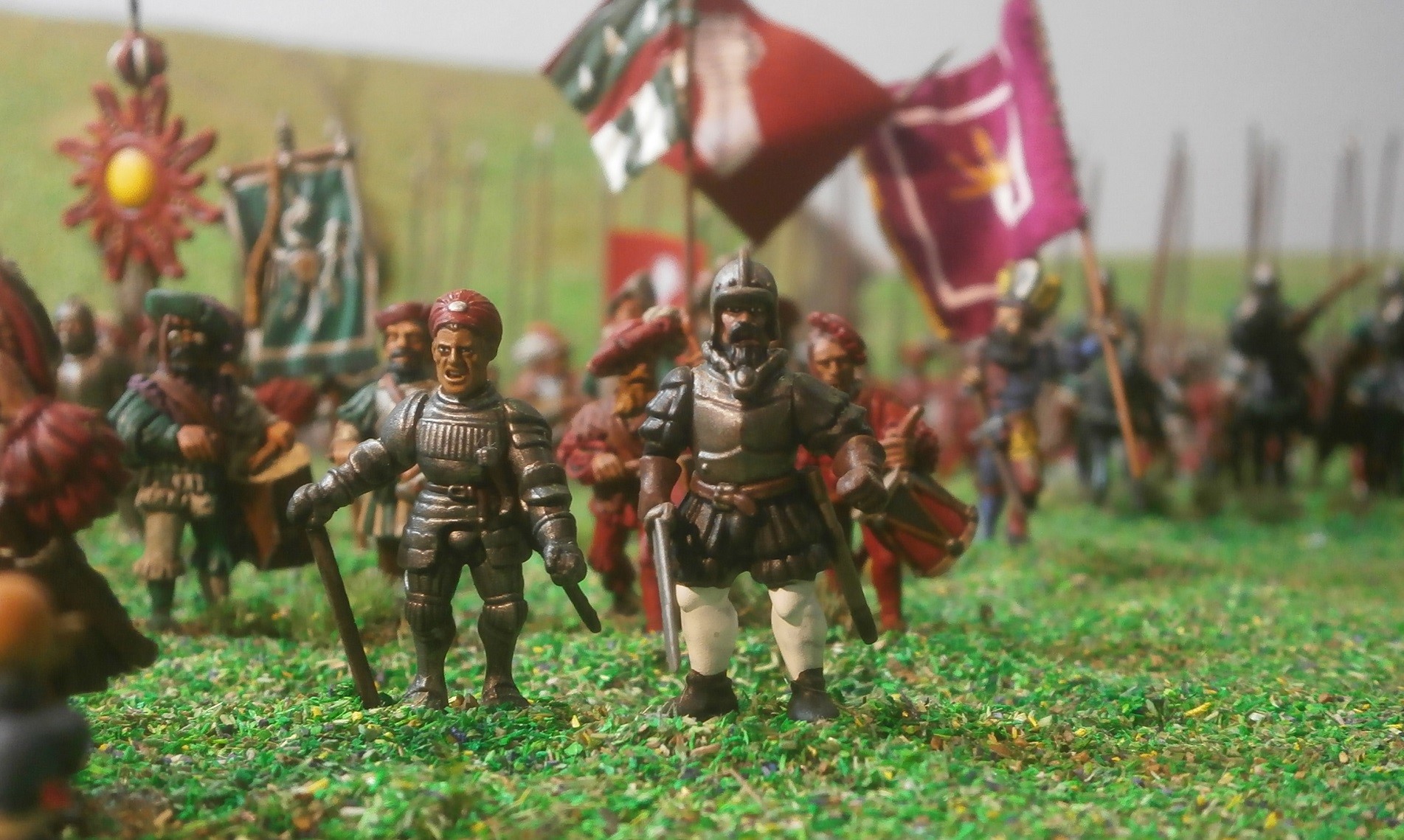
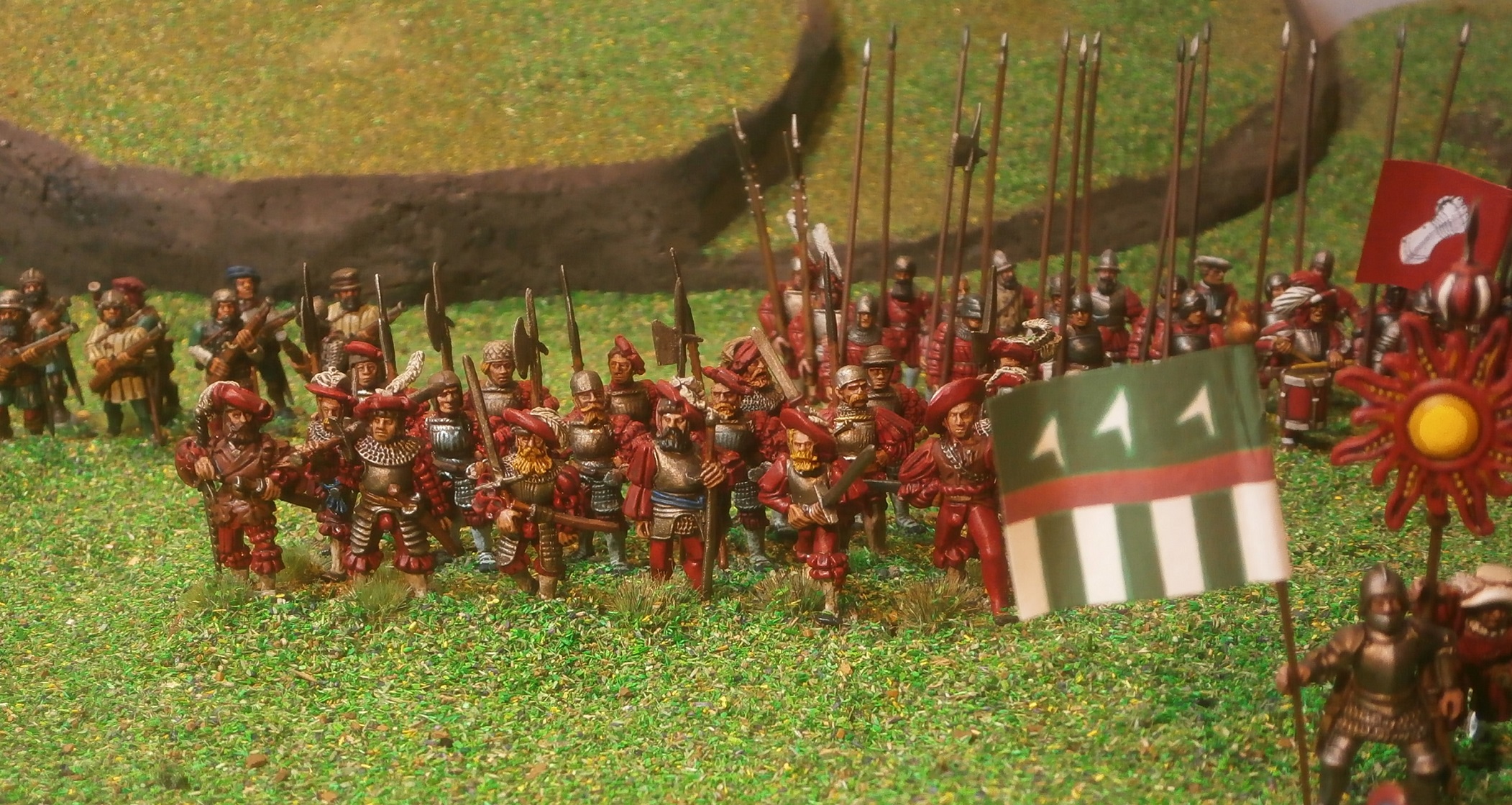
So it was, that when the noblemen of the city’s court and high council received the summons to surrender issued by Captain General Barone Iacopo, regent of Verezzo, their arguments were brief, perhaps merely sufficient to ensure it was recorded for posterity that they did not yield immediately, willingly or without at least some debate. But yield they did, before any more shots were fired in anger, and the barone’s army did not halt for even a moment as it marched right up to and into the city, there to be greeted by the sullen silence of the residents.
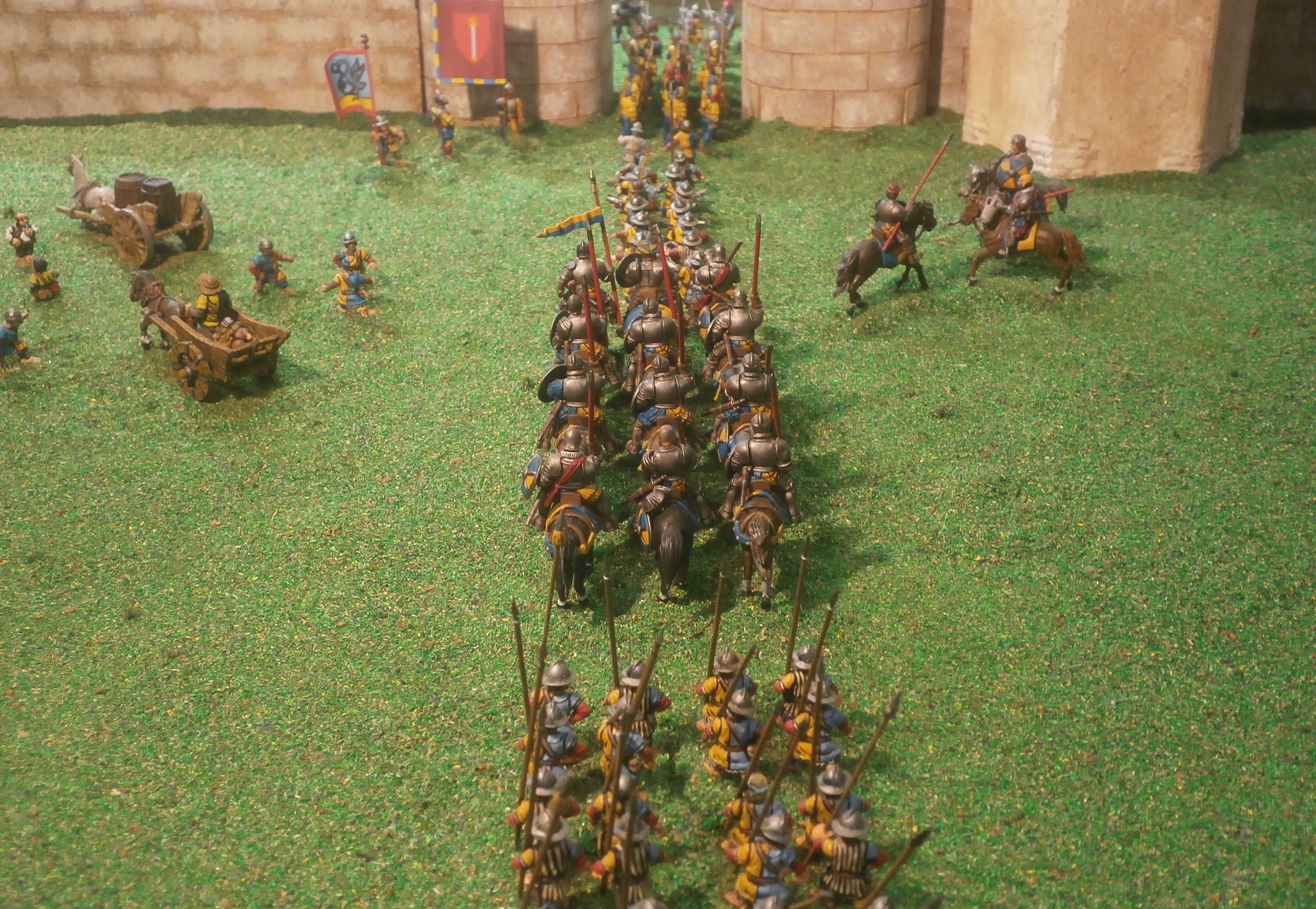
The Verezzan soldiers, both natives and mercenaries, were given strict orders to behave, under threat of punishment for any cruelties they inflicted, such as looting that went beyond the drinking of ale to celebrate, or impositions beyond the necessary requisitioning of bed and board for the duration of their stay.
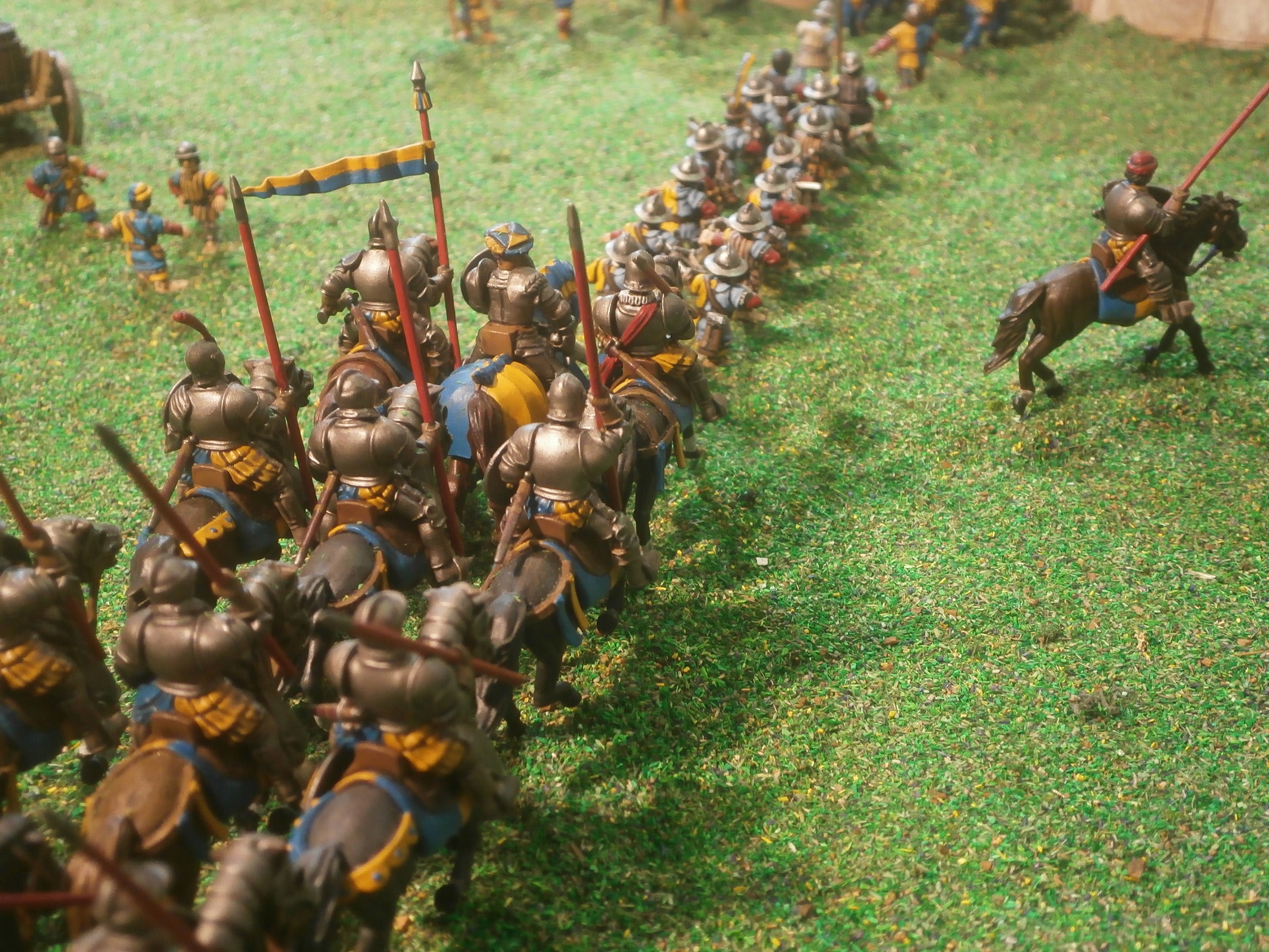
The populace felt little gratefulness for this discipline, for inevitably, enough troublesome incidents occurred to allow them to point to those few examples and claim general atrocities.
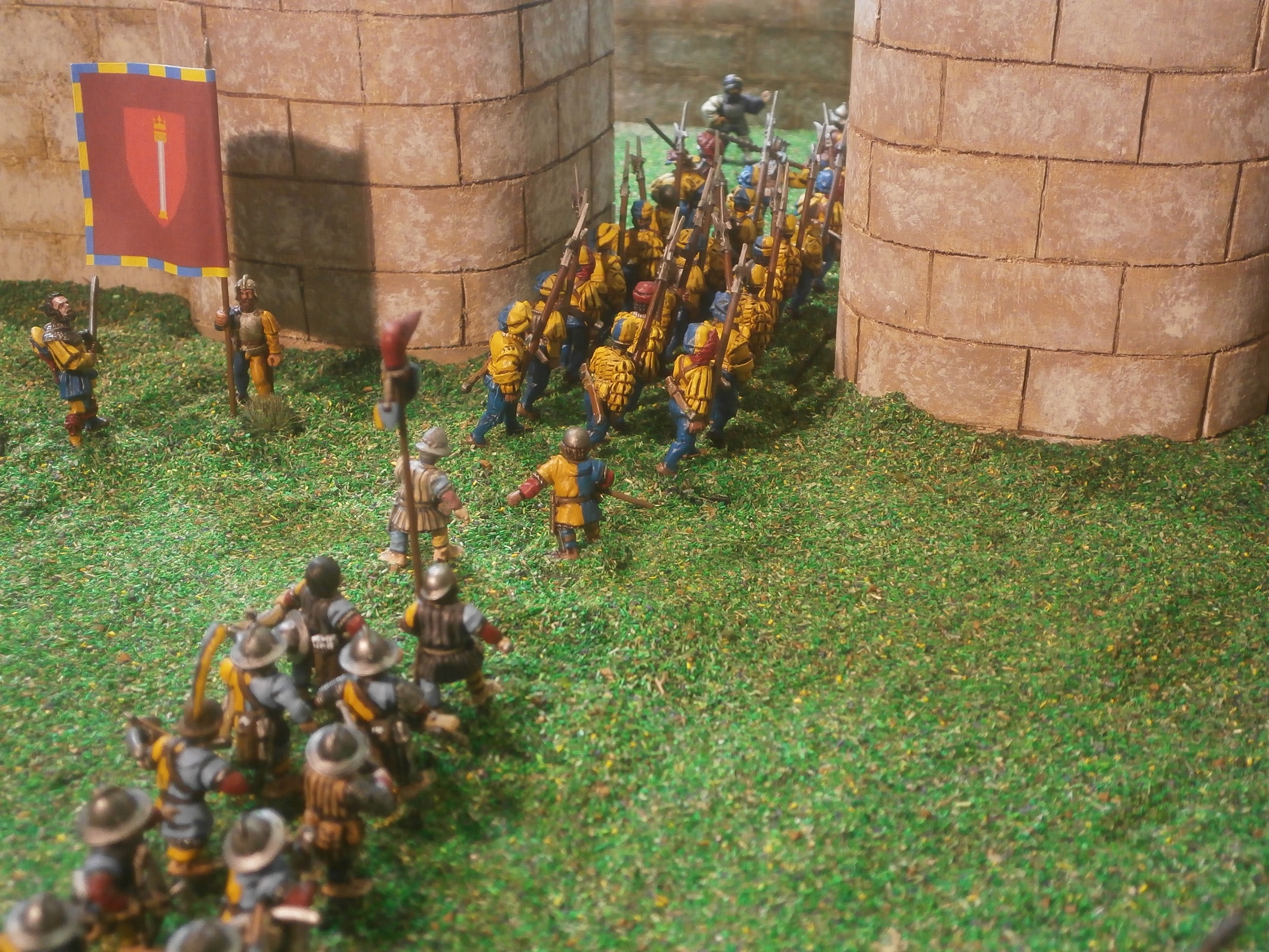
Besides, such was their bitterness at Pavona’s fate – the death of their great lord, Duke Guidobaldo, the defeat of their army and the capture of their city – that they barely noticed their unusually good fortune at being treated so gently by a conquering foe.
As the city flew new flags and standards upon its walls and towers …
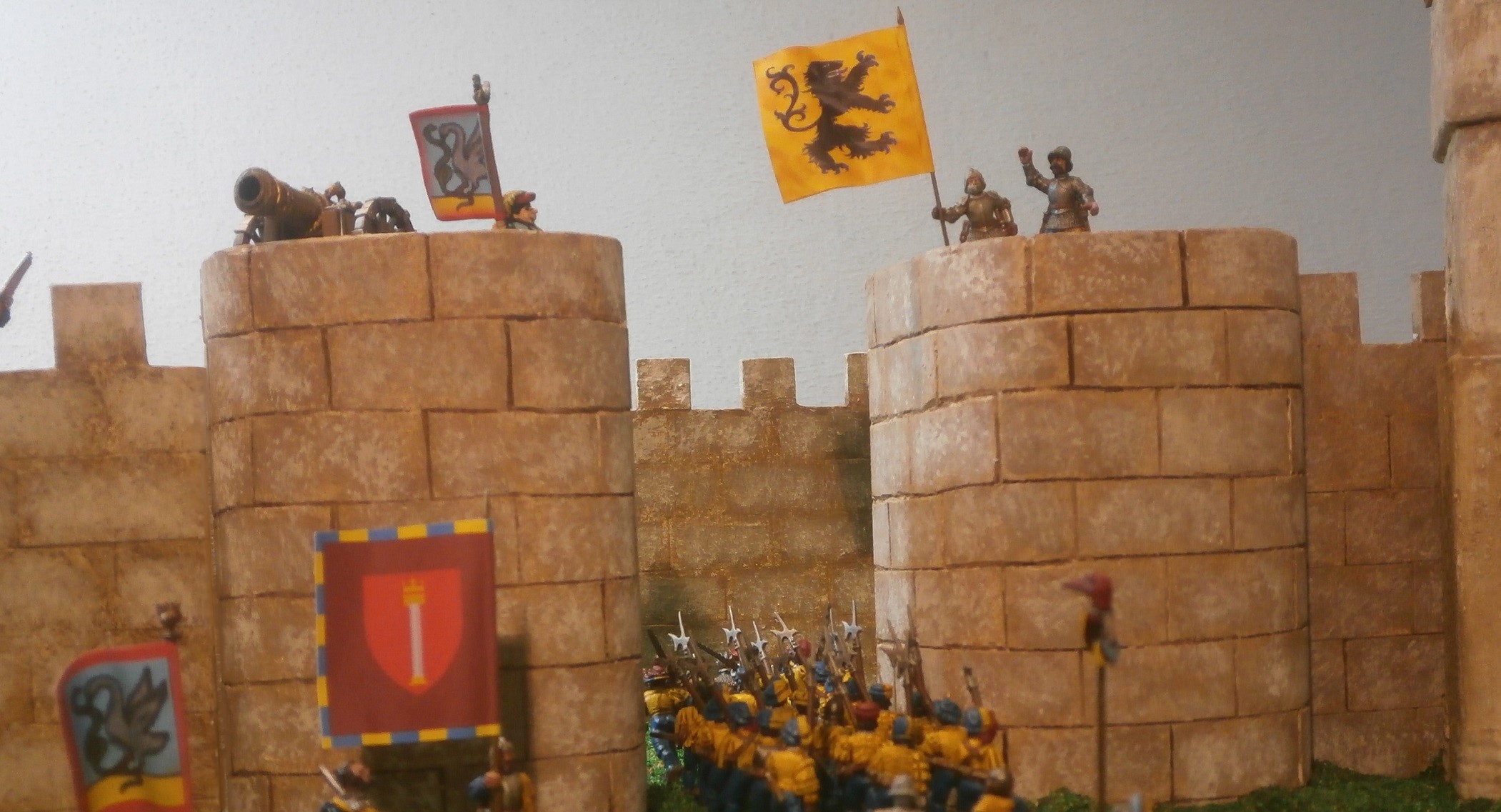
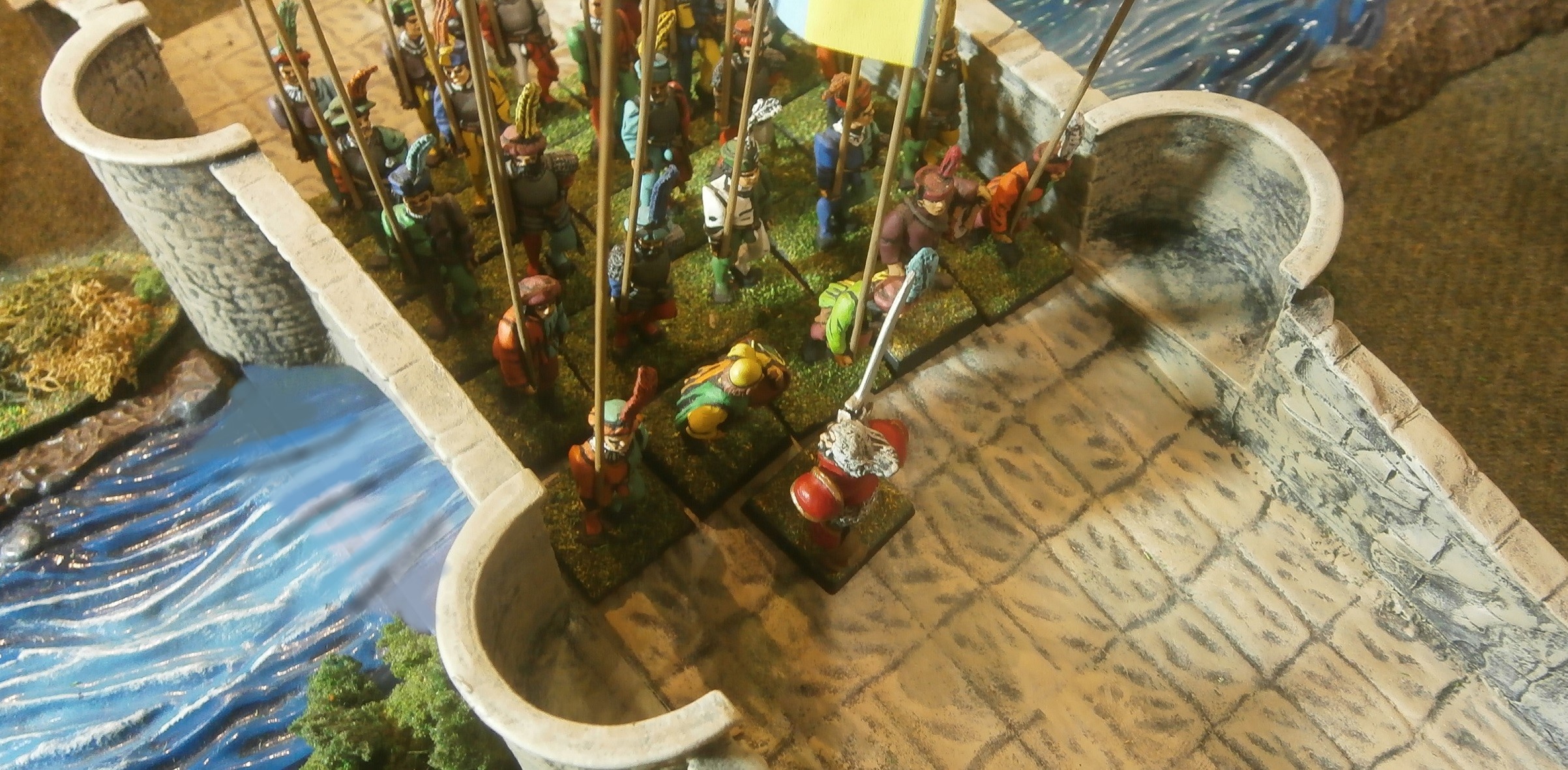
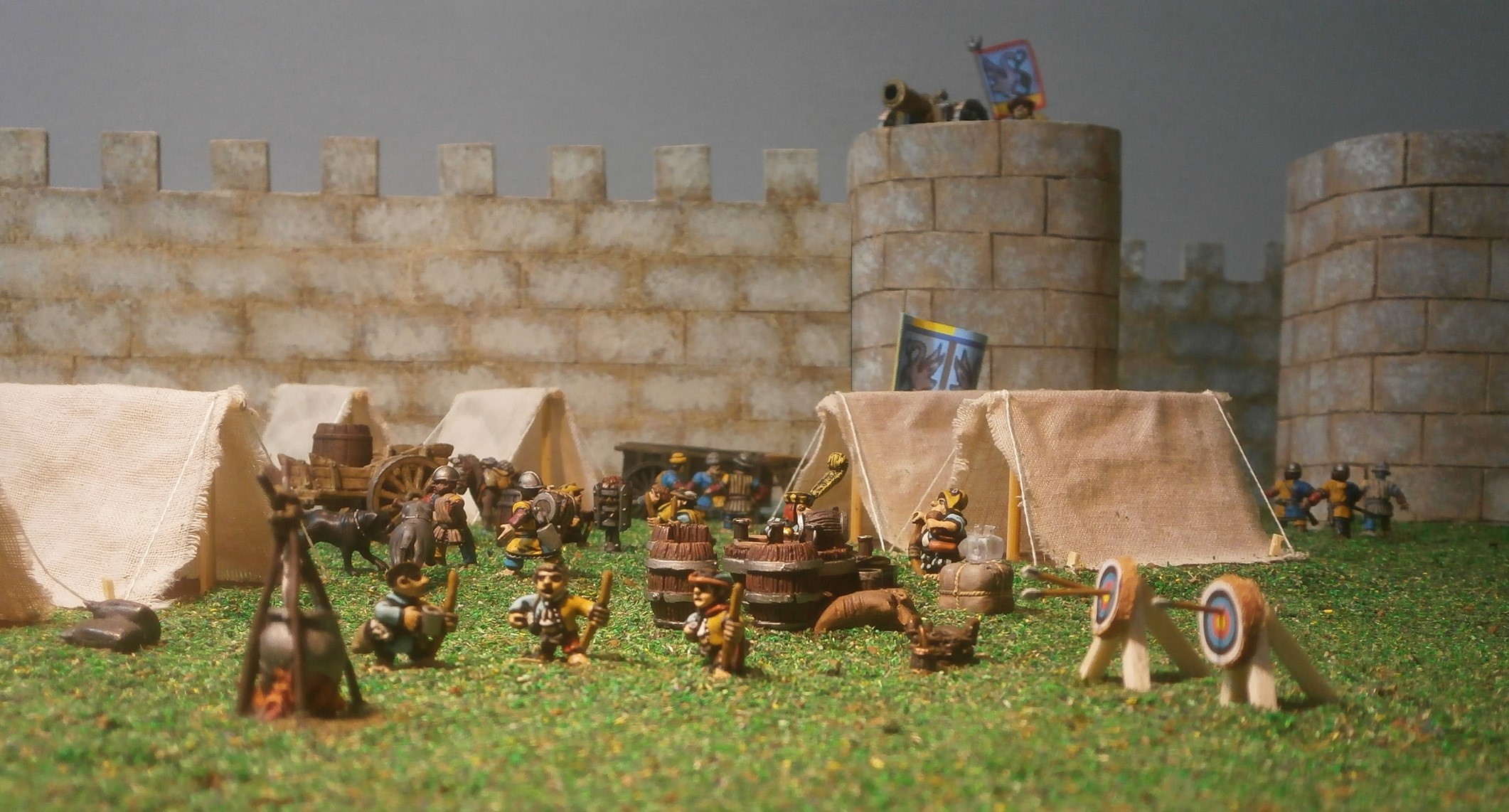
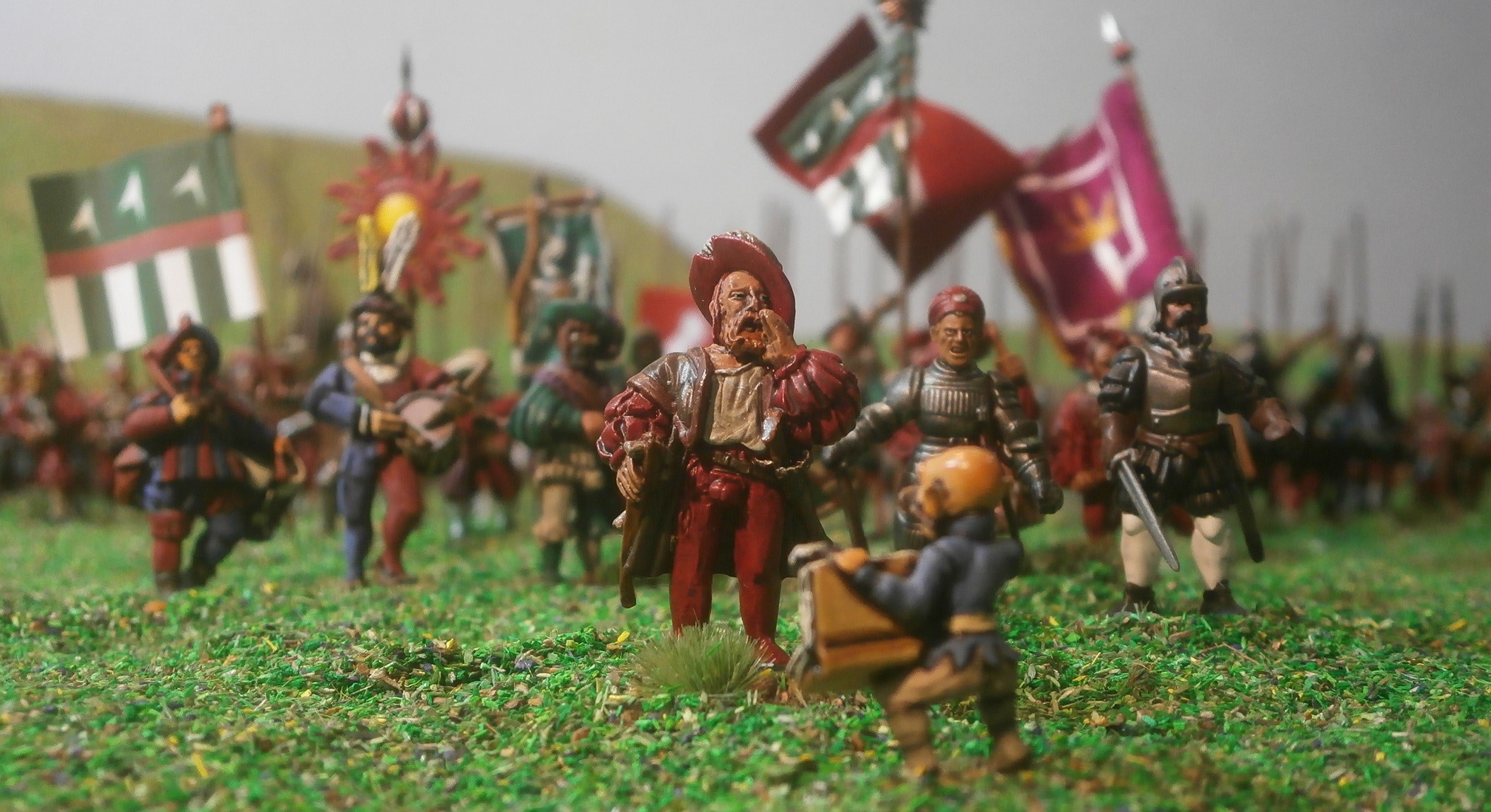
… and more of the army marched in to demand lodgings inside, several wagons and carts, nearly all under the direction of halflings, turned away before reaching the gate, to come to a halt upon the grassy expanse before the walls.
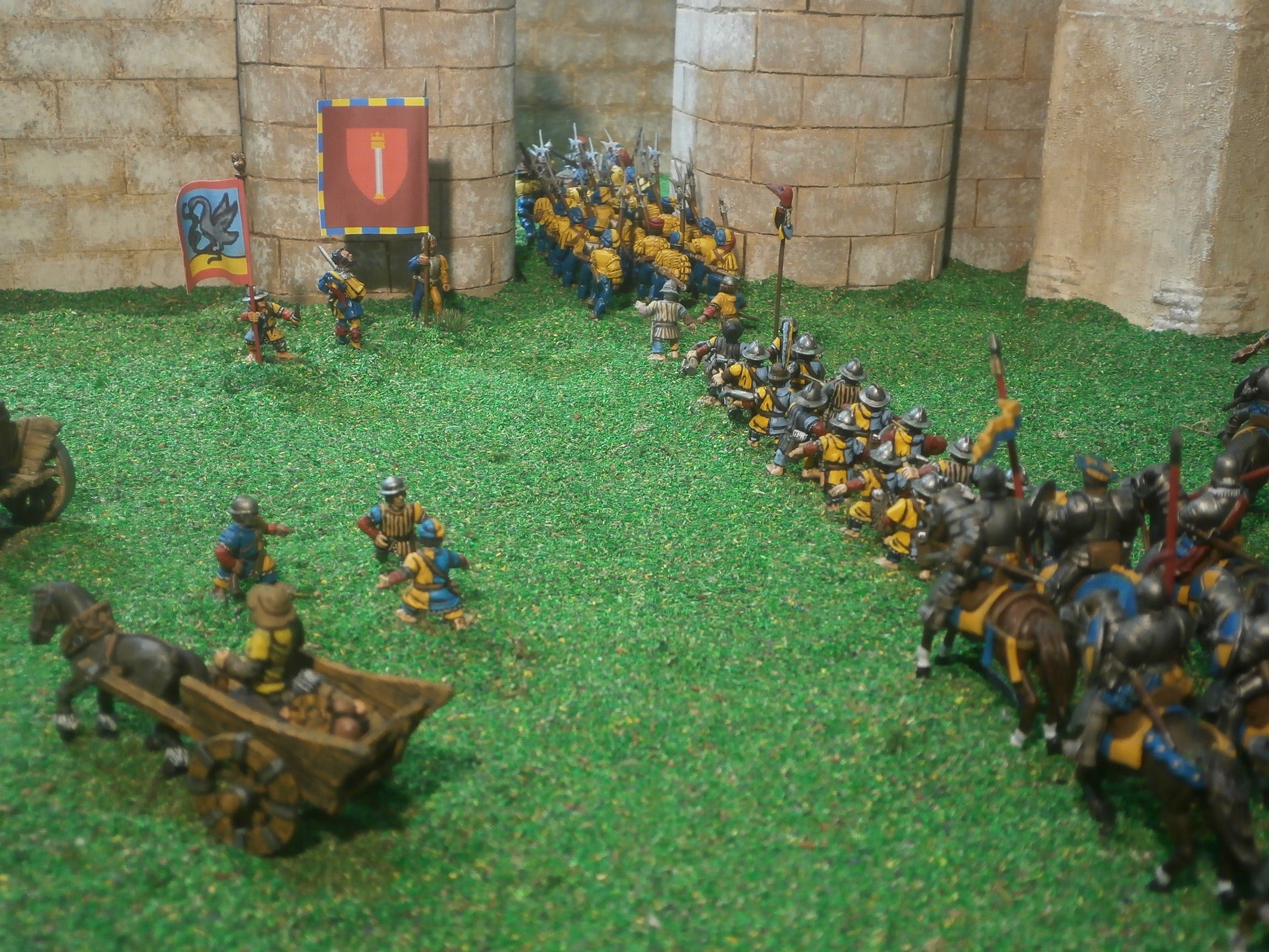
Having decided this seemed a pleasant spot, where the air was no doubt fresher than that to be found in the close streets of a human city, several companies of halflings pitched tents there and set about making fires for their cauldrons, kettles and skillets. Within hours they had created a very pleasant dwelling place for themselves, rather akin to a summer fayre, and over the next few days settled in comfortably, grateful for the unseasonably warm and dry weather.
Interlude: A Nasty Business (See part 17, Pablo, Tino and Benetto)
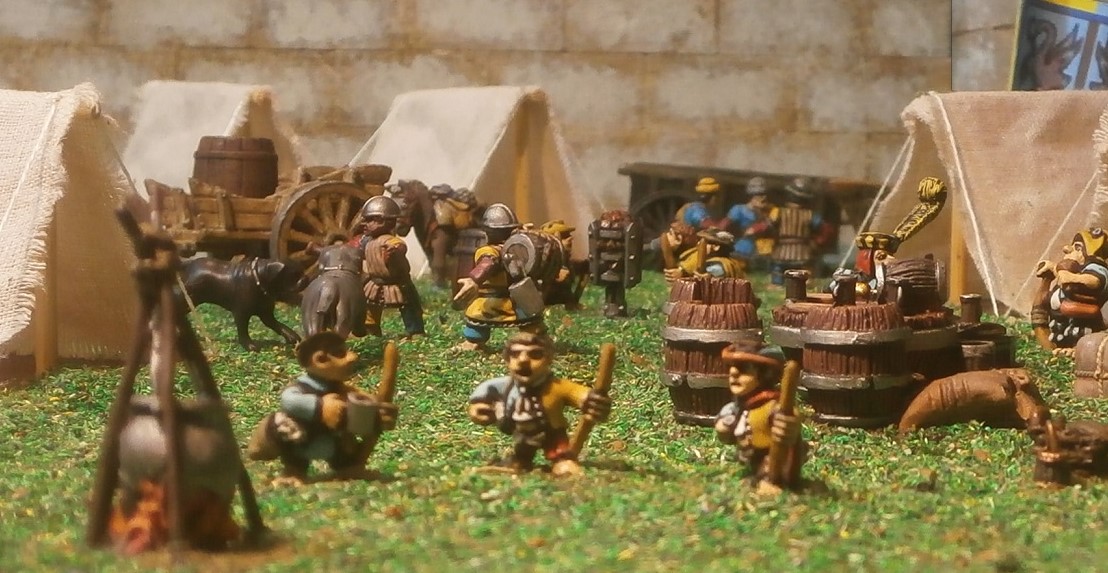
“It’s all going well, eh?” said Pablo, after taking another celebratory swig of ale. “I know the battle at the bridge was nasty, but it seems to have knocked the fight out of the Pavonans, so that’s no bad thing. I reckon they’re beaten.”
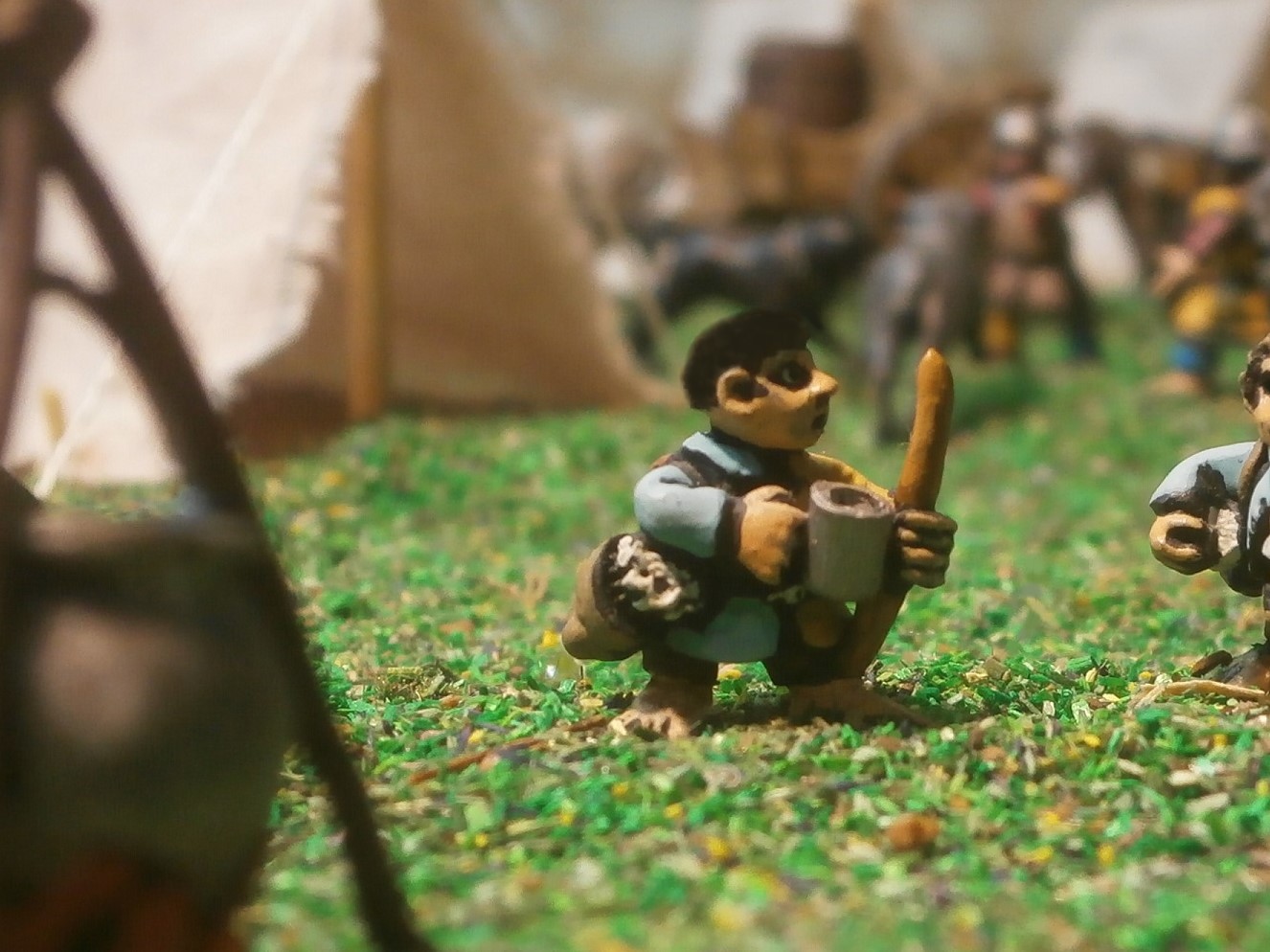
“Huh,” exclaimed Benetto, a tone of doubt in his voice. “Tell that to Taddeo. It was him who got beaten, and Pavonans who did it.”
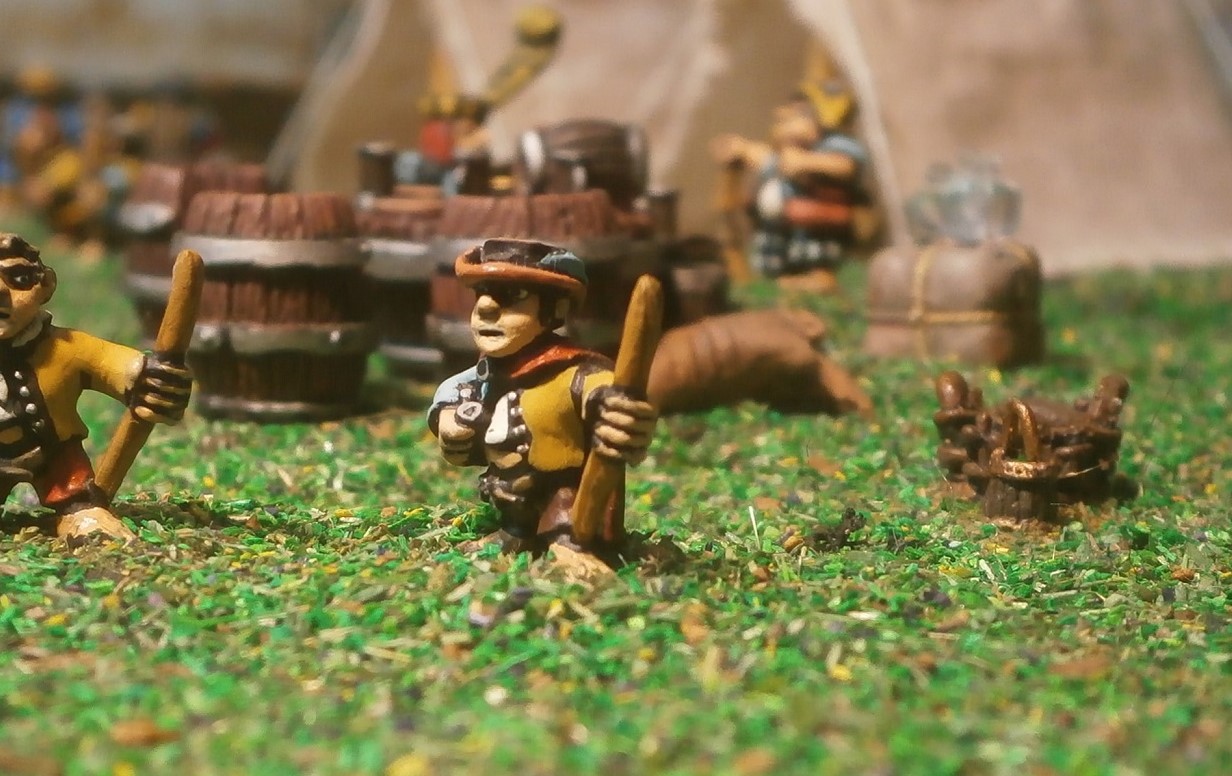
“That was Pavonan boys,” said Pablo. “Big lads yes, bigger than Taddeo, but still just boys. They can’t be expected to know any better. Besides, Taddeo shouldn’t have gone off alone. There was always going to be some nastiness, it’s unavoidable.”
“Aye,” said Tino. “And there’s always some idiots. Taddeo for wandering off and the boys for getting caught. I’ve a feeling they won’t make that mistake again.”
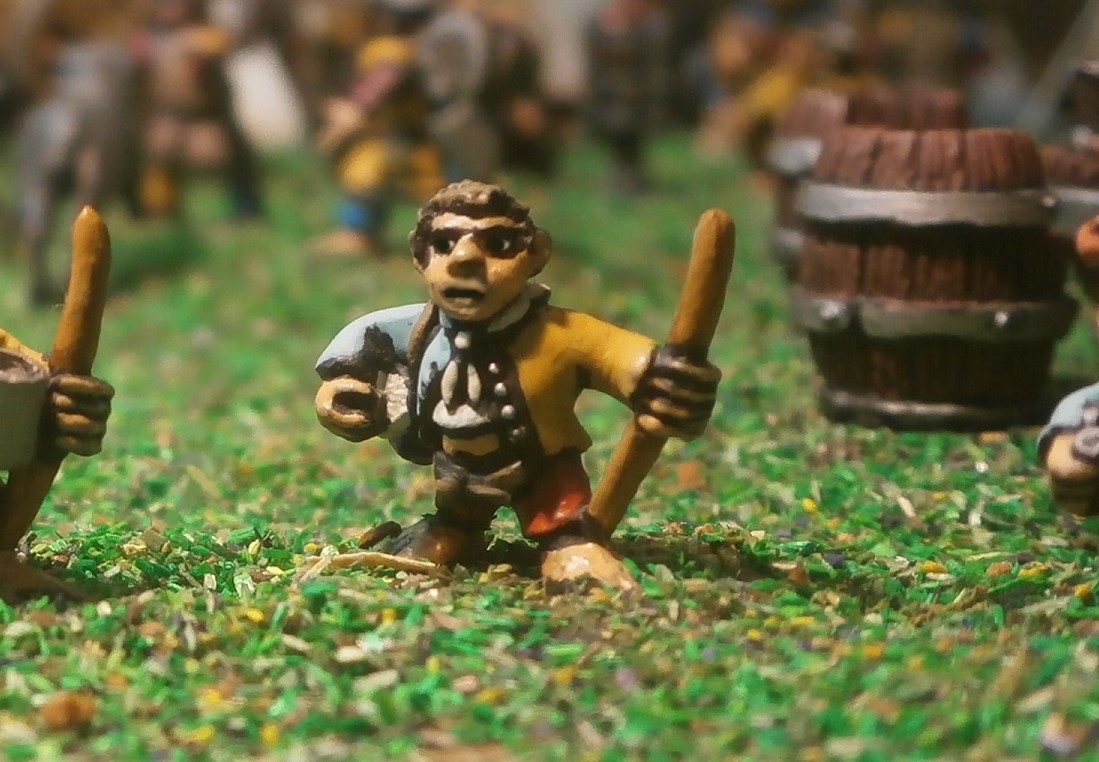
“These people don’t just batter halflings, you know? They kill them,” warned Benetto. “Killed every single one dwelling in the city after their lord was wounded by that arrow.”
Pablo laughed. “Oh, you mean the magic arrow they said mortally wounded him, yet left him fit enough to make a fighting stand, alone against an entire regiment of pikemen? …
… I reckon it did little more than leave a scratch, which the Pavonans made a great, silly fuss about.”
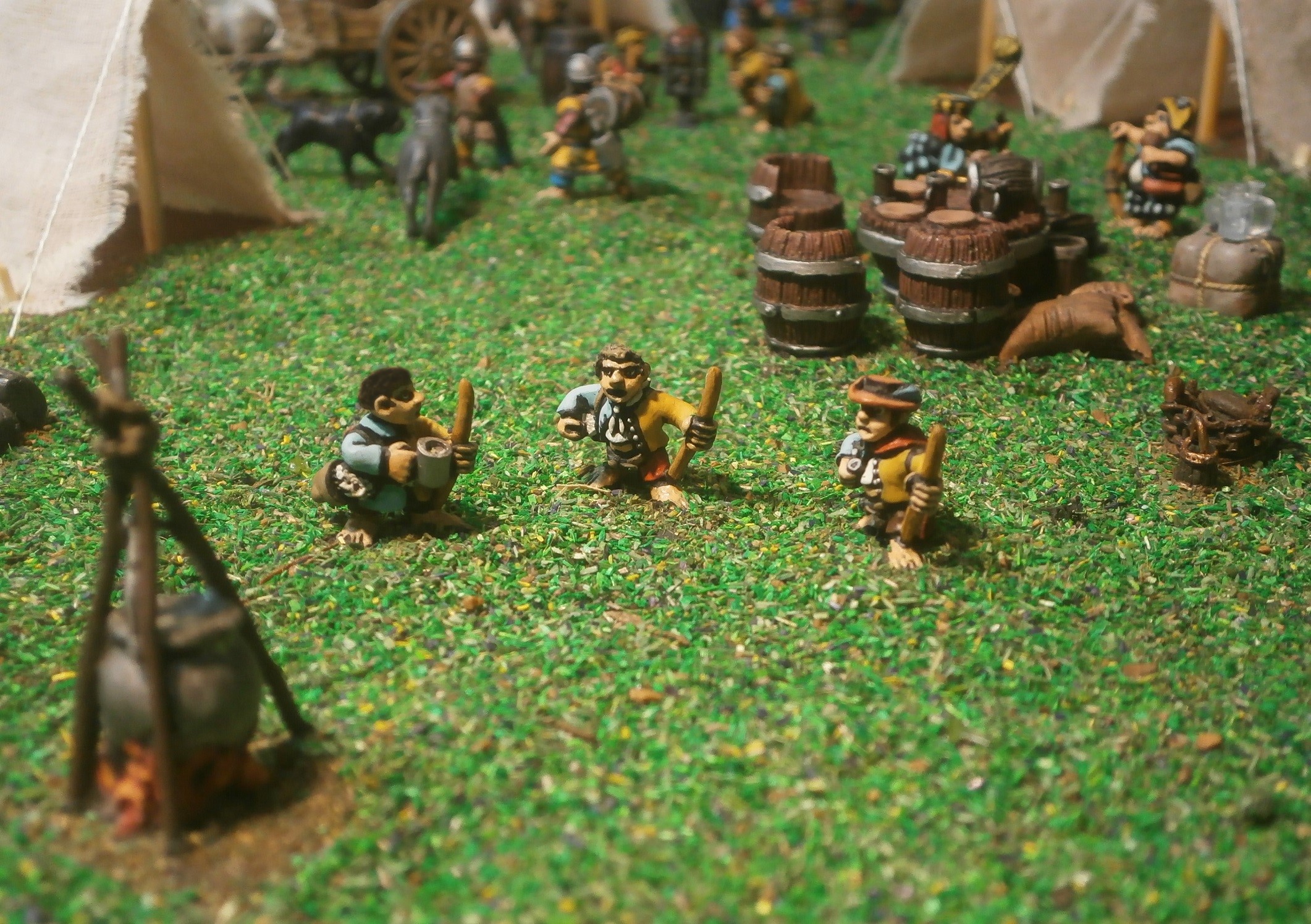
“Well, if so,” said Benetto, “it was a scratch that caused a massacre. When the Pavonans turned on the dwarves they just banished ‘em, but when they decided they didn’t like halflings, they butchered them. Worse than that, they were tortured publicly, cruelly strung up so that crowds could mock and jeer, delighting in their suffering!”

Pablo’s brow furrowed. “I’ve been thinking on that. Why has the barone warned us all against seeking revenge? Threatening punishments if we even as much as loot? If anyone deserves such treatment, it’s the Pavonans. And if anyone deserves a reward for good service, it’s us.”
“Oh, the barone has plans, like all nobles,” suggested Benetto. “There’s still Silvano to beat, see? And I’d hazard a guess he’ll be more easily beaten if the realm of Pavona is all quiet and peaceful.”
On hearing this, Tino’s eyes widened.
“If the barone wants peace and quiet from the Pavonans then he’s gone about it all wrong,” he declared. “We should be cowing them into submission, beating the contrariness out of them, making sure that they’re in no fit state to rise up in revolt, working their harms against us and distracting us from the task in hand. We could end up with the enemy’s army in front of us, and these back-stabbing villains behind us.”
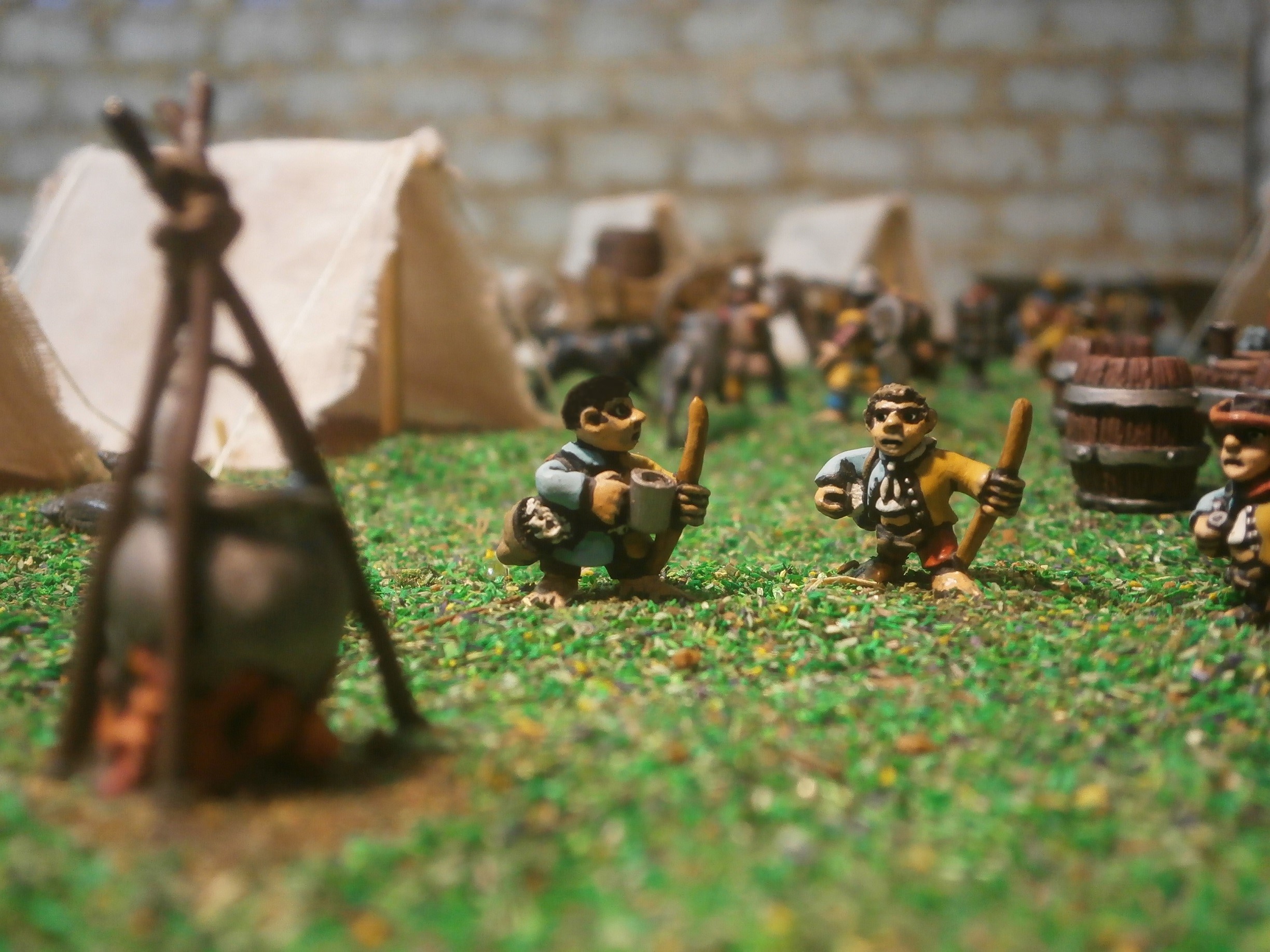
“You know, Tino,” said Pablo, “You’ve a real knack for ruining a celebration.”
“Ignore him, Tino,” said Benetto. “If you think the barone’s made a mistake, then tell me, why do you think so?”
Tino gave a grim smile. “Ah, now, there’s the question, eh? Maybe it’s not just that he doesn’t think the Pavonans are dangerous, but that the men around him don’t think the evils done in Pavona were that important. Maybe those men have convinced the barone that because Guidobaldo, the culprit who ordered the horrors, is dead, then there’s no need for further punishment?”
Pablo snorted with laughter. “So, they sidle up to the barone and say: ‘A few Pavonan halflings died! So what? Guidobaldo’s been punished now. That’ll suffice.’”
“It doesn’t suffice,” declared Benetto.
“I’m not saying it does,” said Tino. “I’m just saying what might be in the minds of men.”
Pablo took another swig from his pot, finishing off the contents.
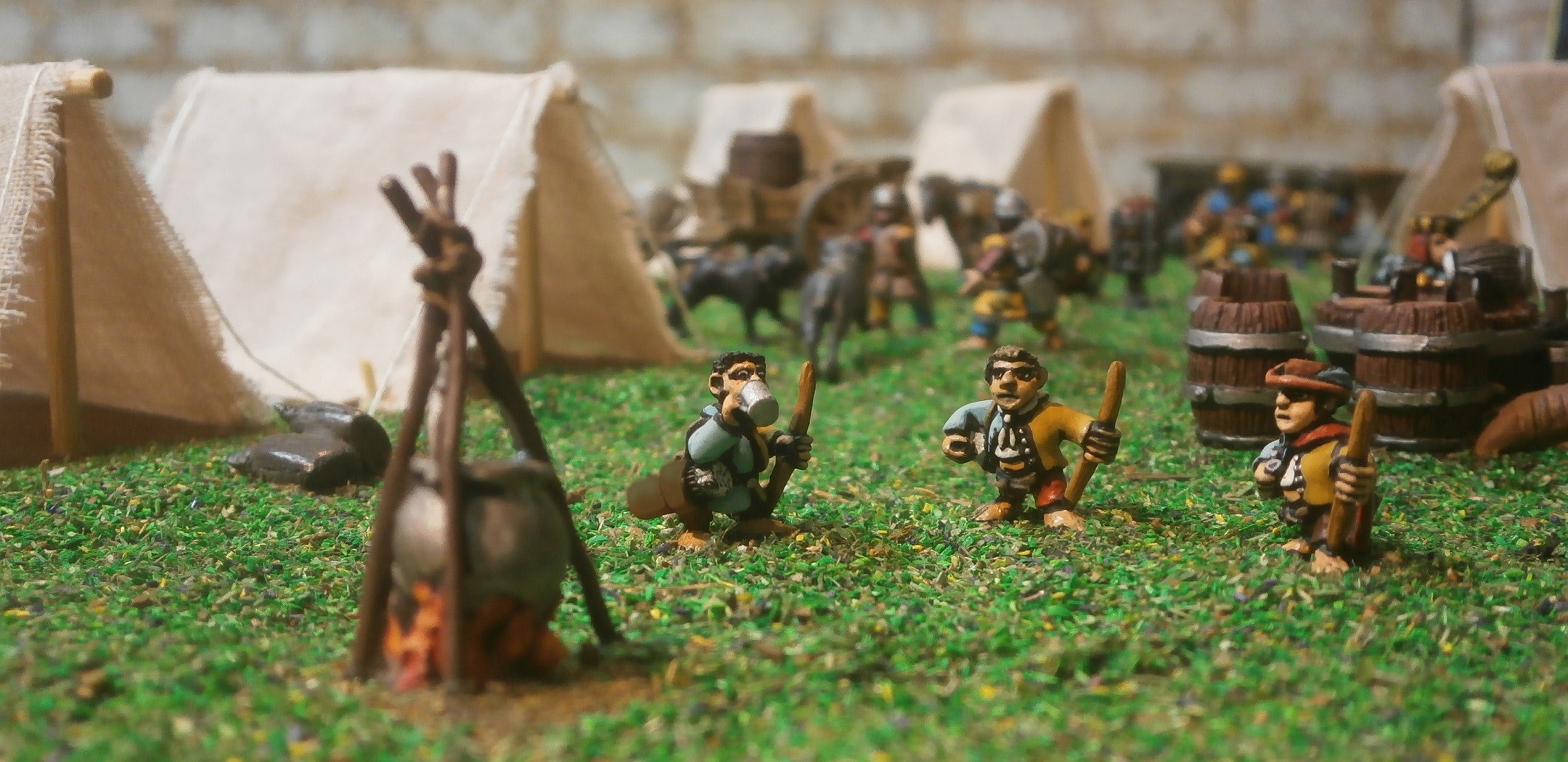
He wiped his mouth with the back of his hand, clutching the empty pot upturned as he did so, then burped.
“Beg pardon,” he said, with a silly look upon his face.
“If the barone has a plan,” said Benetto, “then I reckon that another part of it is to make a realm for himself here, so that when the young Vescussi is of age and the barone’s no longer needed as regent, he’ll still have somewhere to rule in his own right. Why burn the bed you intend to sleep in? Maybe he wants Pavona to stay rich and prosperous so that he can prosper as its ruler?”
“Hush now, fool,” said Tino. “That’s slander. Whatever added bonuses might be coming the barone’s way are by the by. He simply, and for the best, thinks to guarantee Verezzo’s safety from Pavona by keeping it controlled. And how better to do so than to rule it directly? The Pavonans can’t go to war against us while we have them firmly leashed.”
Bonacorso Fidelibus’s Work: The Many Wars of the Early 25th Century, continued …
Lord Silvano, having failed to reach his father before the fateful battle, occupied Trantio, where he still claimed to be ‘Gonfalonieri for life’. There, while his army rested fitfully (for many were thinking of their families and friends at home), he pondered his next moves.
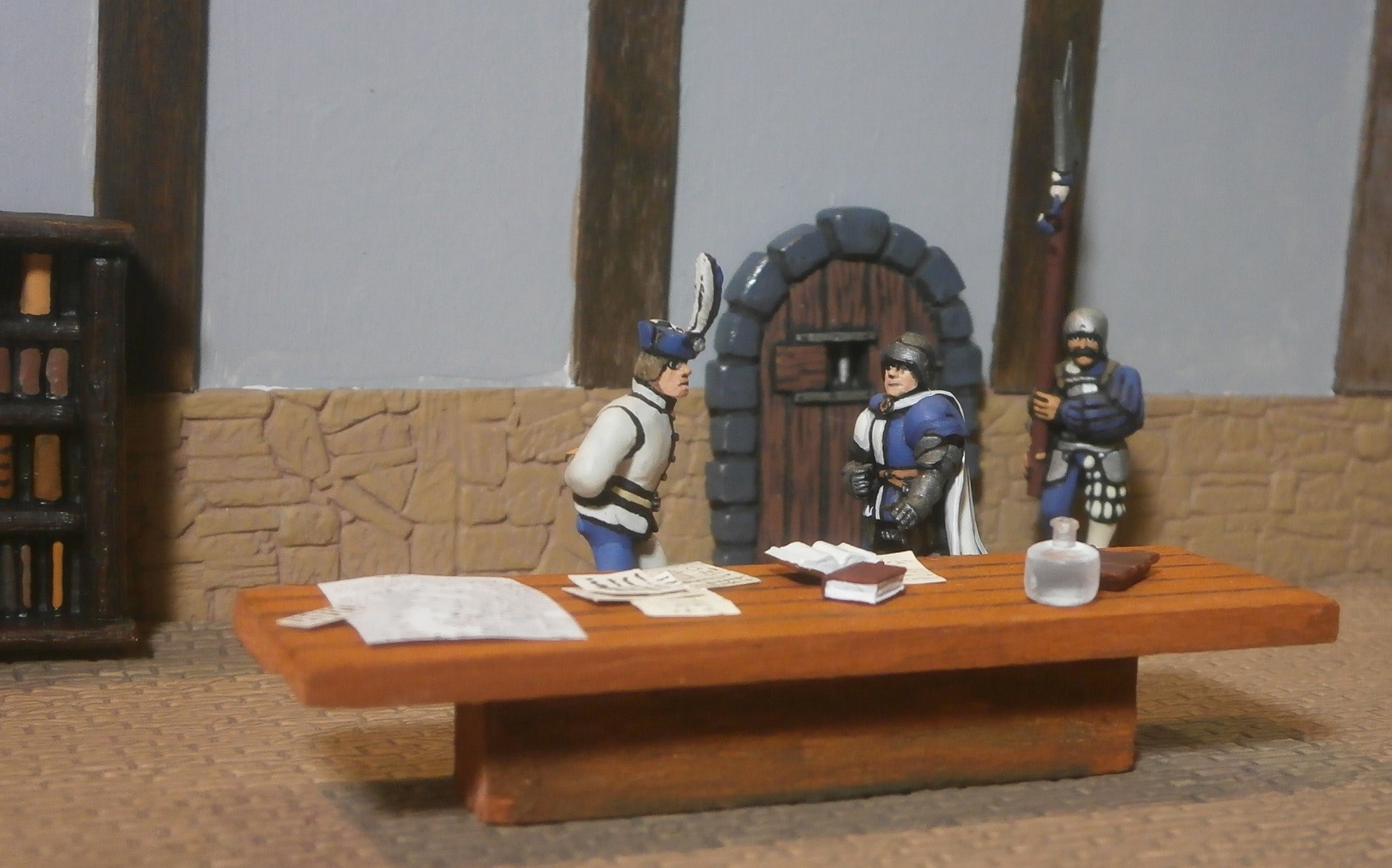
Perhaps he wondered what the Reman arch-lector would make of events? With news, however, of the Reman defeat against the ratmen in the north, it was likely that his holiness had other concerns on his mind. Perhaps Silvano could negotiate his return to rule Pavona? After all, his last words to the Barone Iacopo had been to reassure him that he was not his father.
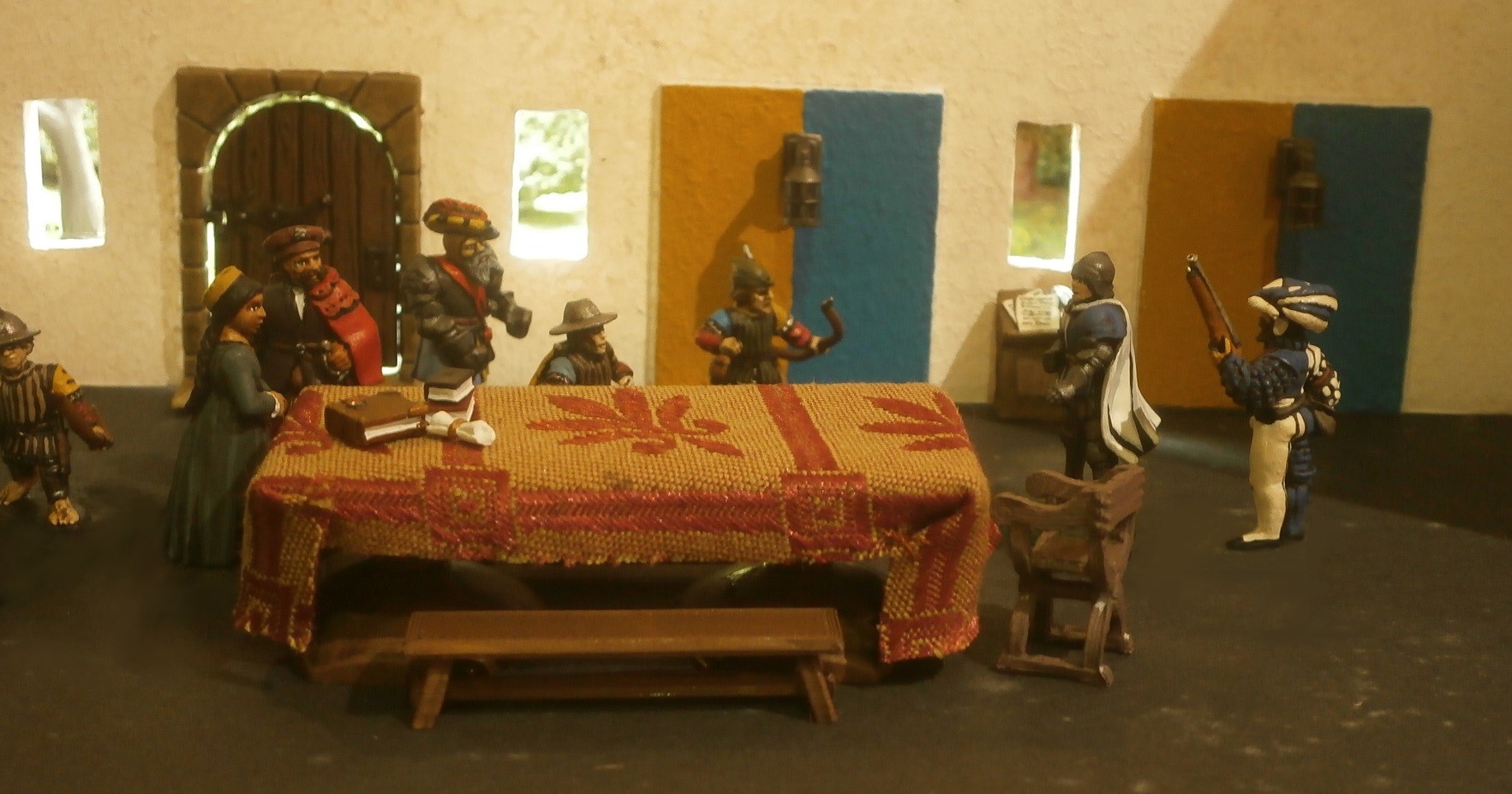
Yet, that last course, even if the enemy agreed (which was unlikely) was fraught with danger, for what would the people of Pavona make of their lord bowing and scraping to a Verezzan noble, and a halfling at that?
Perhaps he regretted allowing the Verezzan Captain Muzio Vanni to slip from his grasp, as well as Galleoti de Medizi, pretender to the throne of Trantio. It surely surprised Silvano to learn that the latter had not occupied Trantio and declared his ‘rightful’ rule, but instead ridden by, heading south. Furthermore, Galleoti and Captain Vanni travelled together, no doubt heading to Pavona there to swell the ranks of the Verezzan army. Silvano thus learned two things. First, that Galleoti was no proud and impetuous fool – for if he had stayed at Trantio, Silvano’s army would easily have defeated him. Second, that his enemies were allied against him and that the challenge he faced was not just clad in the yellow and blue of Verezzo.
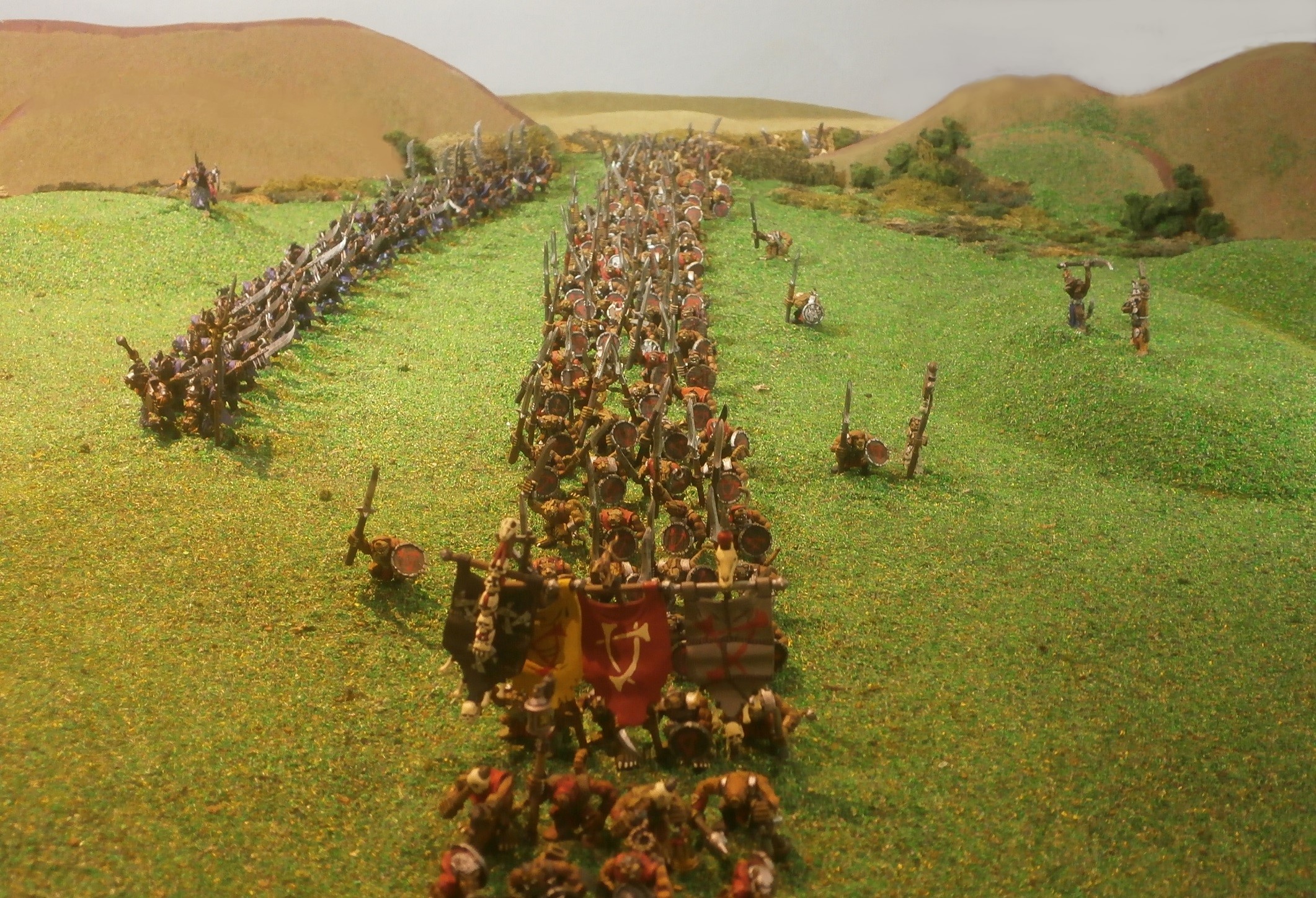
With the Reman expeditionary force wiped out and Lord Veluthil’s elves in flight, Seer Lord Cralk’s huge army seemed uninterested in pursuing them, instead making its way south along the road to the famous bridge at Pontremela, where it crossed the swollen Tarano River and thus penetrated central Tilea. Thus the elves escaped.
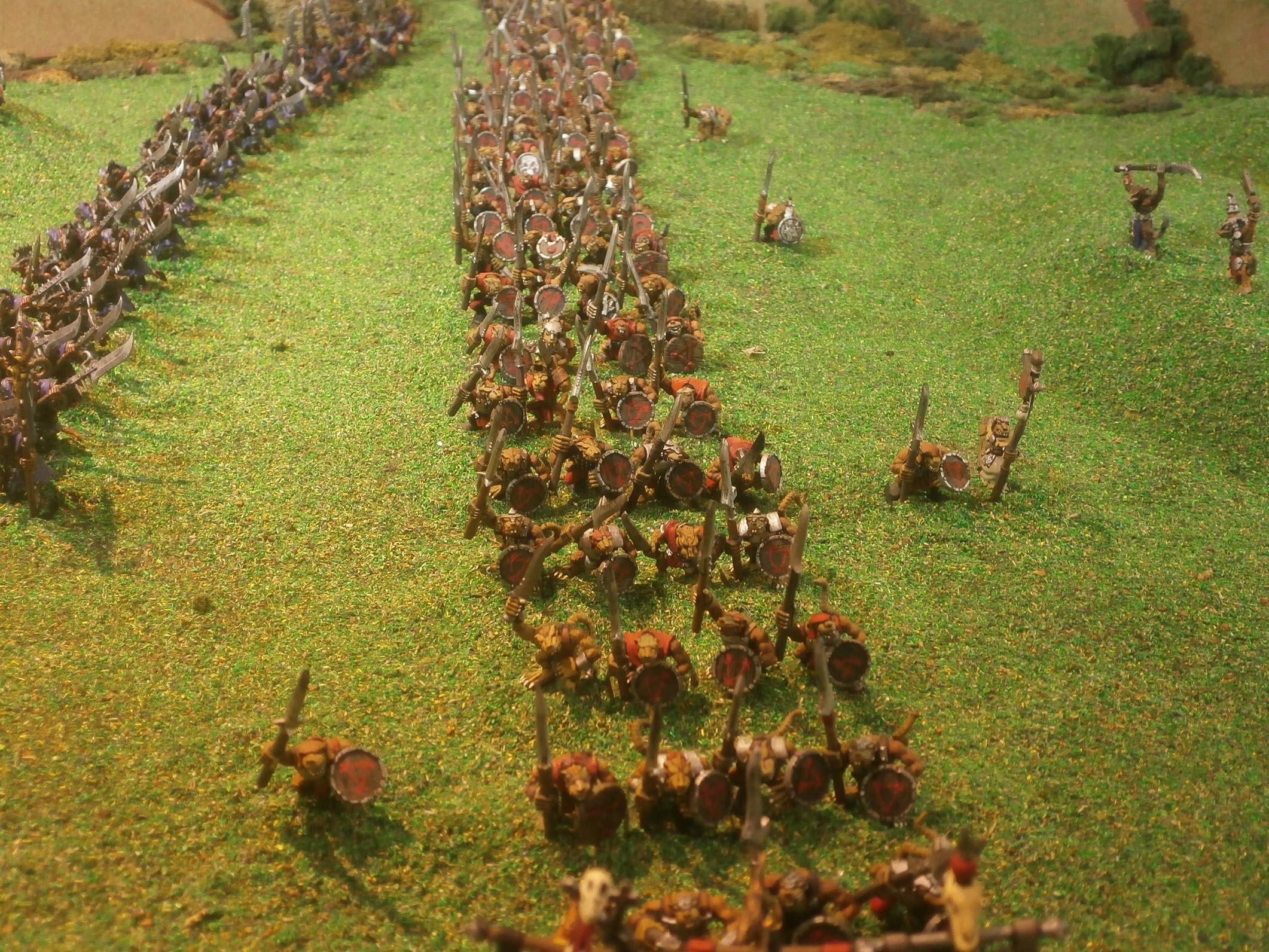
None yet knew the ratmen’s goals, neither their target nor their reasons for war, but it was now clear that the elves had merely been an annoyance encountered during their journey south.
But there were those who had been seriously pondering the ratmen’s motives. In Remas, the maestro Angelo da Leoni had spent several months studying the arcane engine captured after the battle at Palomtrina, after first repairing the damage caused to it during the fight.
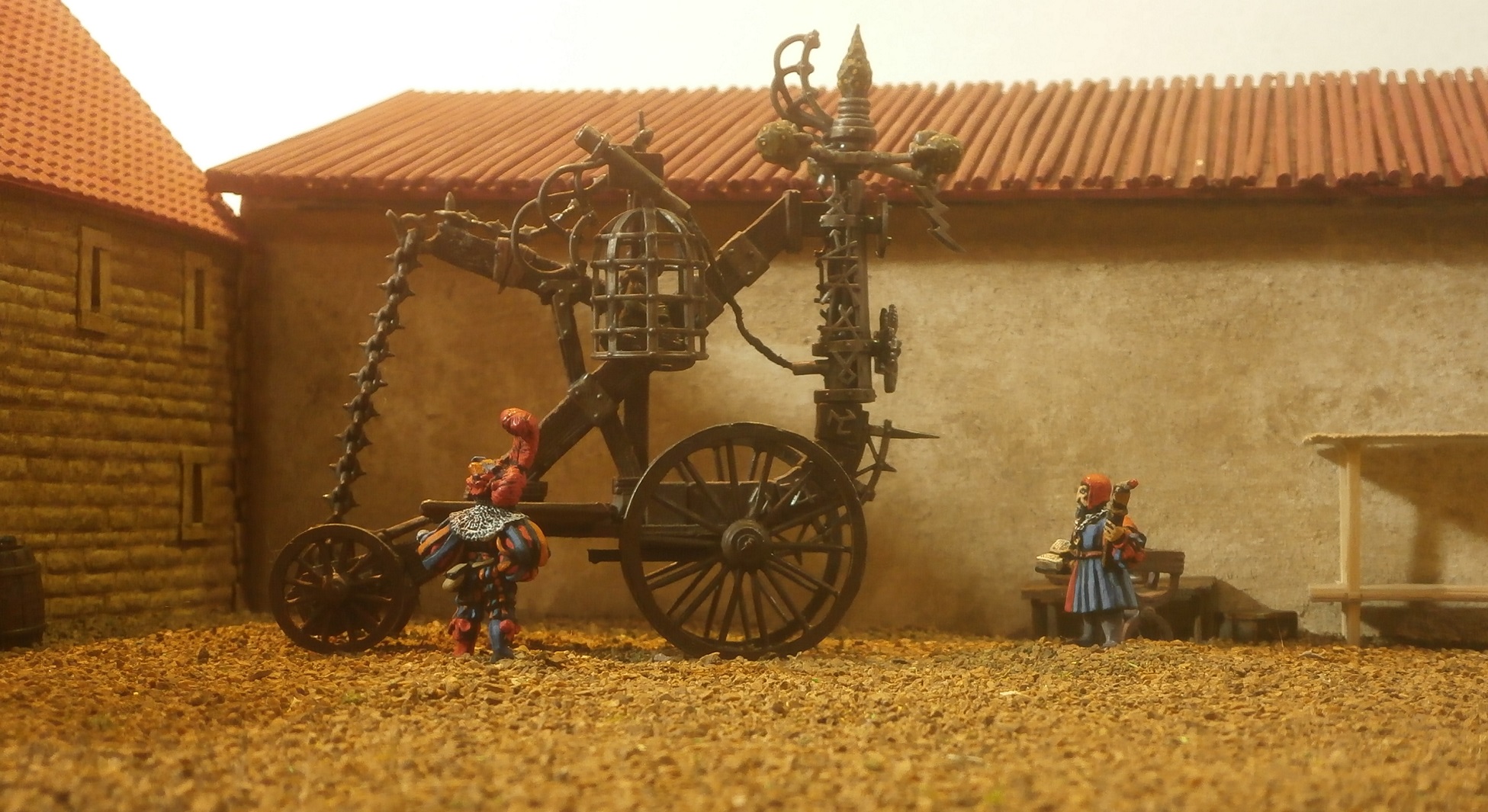
Hoping to glean something of its purpose – and thus the enemy’s intentions – he re-animated it as cautiously as possible. It was slow work, for he was keen to avoid some horror being unleashed. Then, once he had mastered its activation, he moved it, always guarded, many leagues around the realm of Remas, from place to place …
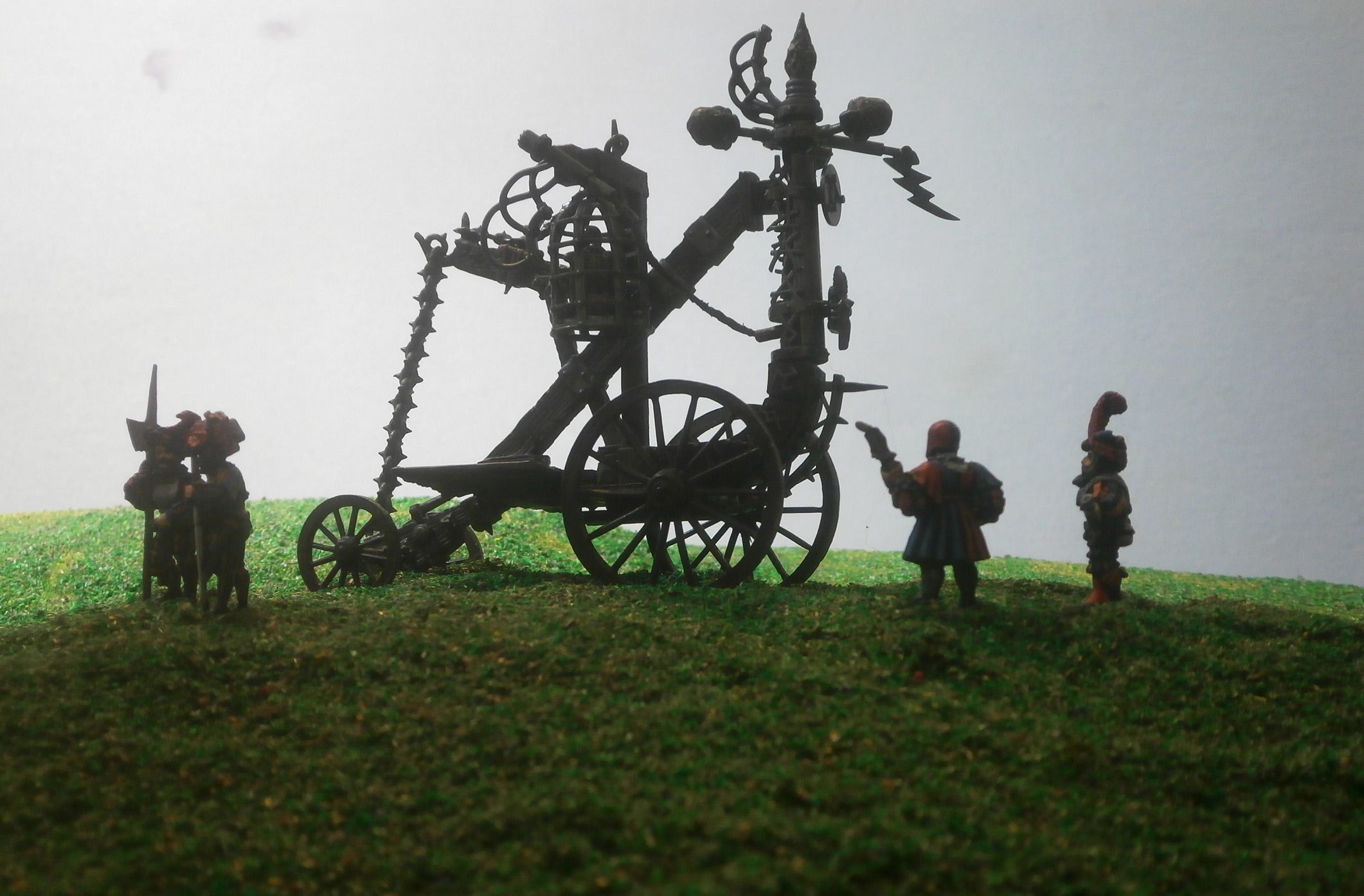
… stopping a day or so in each to study its strange twitching and spinning. Finally, he declared he knew its purpose. It was no weapon, but more akin to a compass. Not in a simple way, in that it pointed north, or indeed in any one particular direction, but that its motions could be collated then interpreted to indicate an exact point in space, revealing both its direction and its distance from the engine.
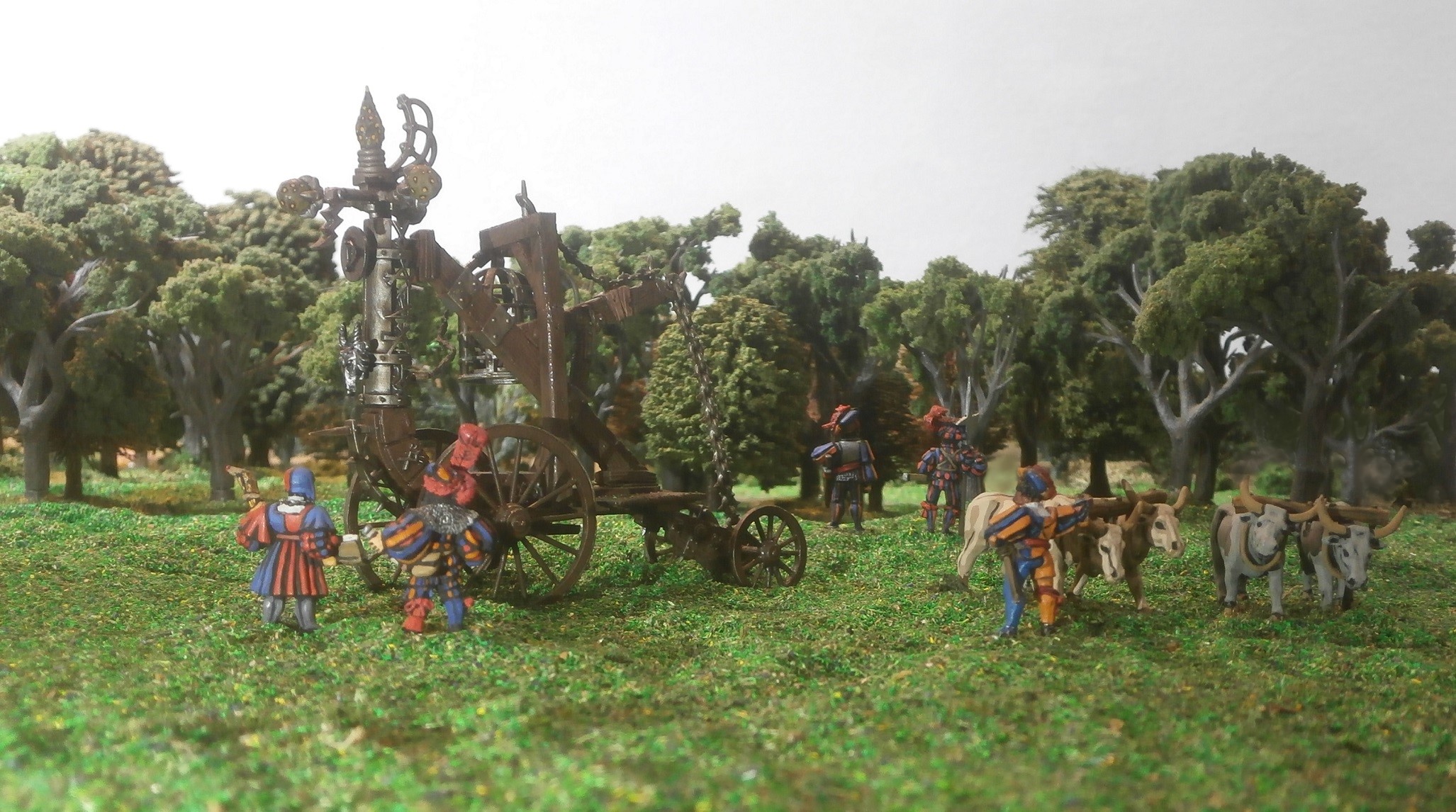
That point, somewhere in the north, kept changing, moving in southwards, at the speed of a fairly nimble, marching army. Upon revealing this to the arch-lector, his holiness instructed the maestro to confer with Remas’s officers and clerks.
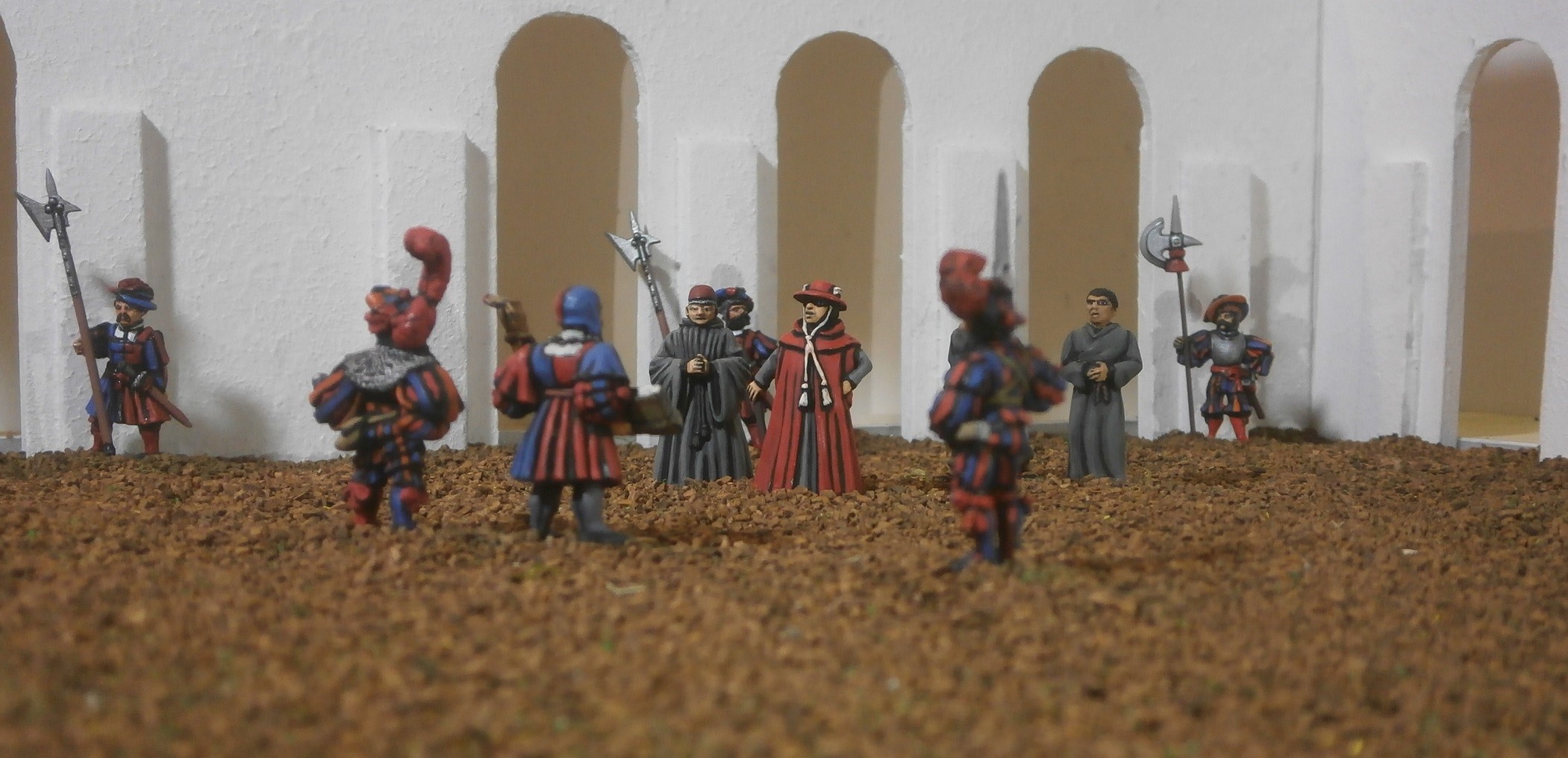
He and they studied past reports from the army’s scouts and the like, comparing them chronologically to the various points plotted upon the maestro’s maps, and it became quickly obvious that the mysterious engine’s motions had been revealing the current and exact whereabouts of Cralk’s ratmen army. Armed with this knowledge, the maestro pondered the matter further, postulated some theories, then devised several experiments to determine which was most likely. Two days later, he returned to his holiness’s palazzio …
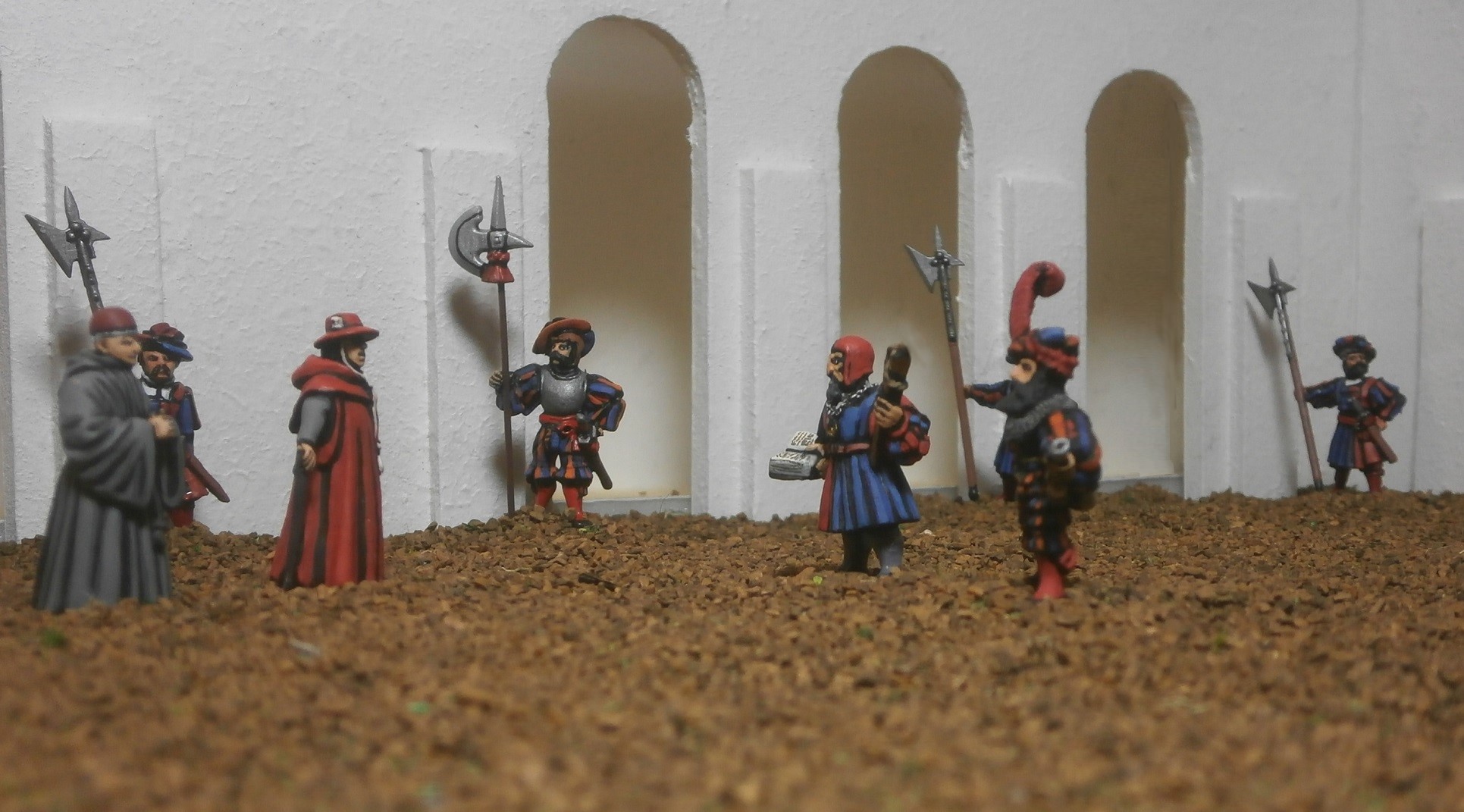
… to declare that the engine was not pointing at the army, nor at anyone within it, but rather at some thing being carried by the army, almost certainly a shard of sky stone, so pure as to contain an unprecedented intensity of etheric energy which, if unleashed, would surely pour forth magics of earth-shattering, sky-rending, doom-dealing strength.
So, it seemed the uomini ratto were yet again attempting to employ some kind of terror weapon. Would their insanely hazardous attempts to bring ruin on all but themselves ever cease?
In the far south, Vizconde Gismondo Giacometti had led his composite army upon a great raid, capturing and razing first the town of Capelli (where he had once been governor), and then the villages and villas of Motolla, neighbouring the city of Alcente itself.
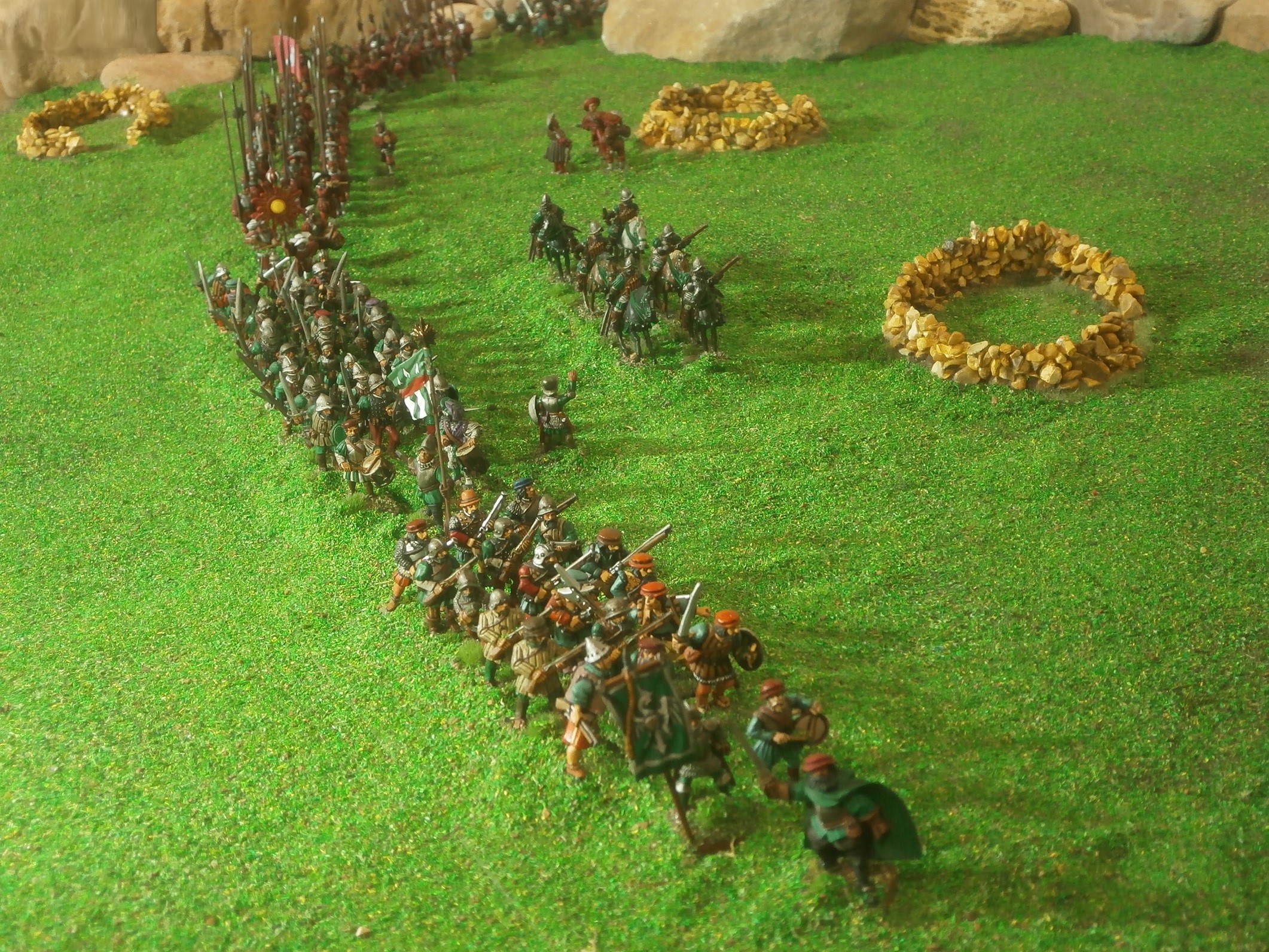
He commanded his army with an iron will, so that all that was taken was weighed, valued and accounted, down to the smallest copper penny. Yet his soldiers, almost all mercenaries, begrudged these constraints not one jot, for in the balance they were happy.
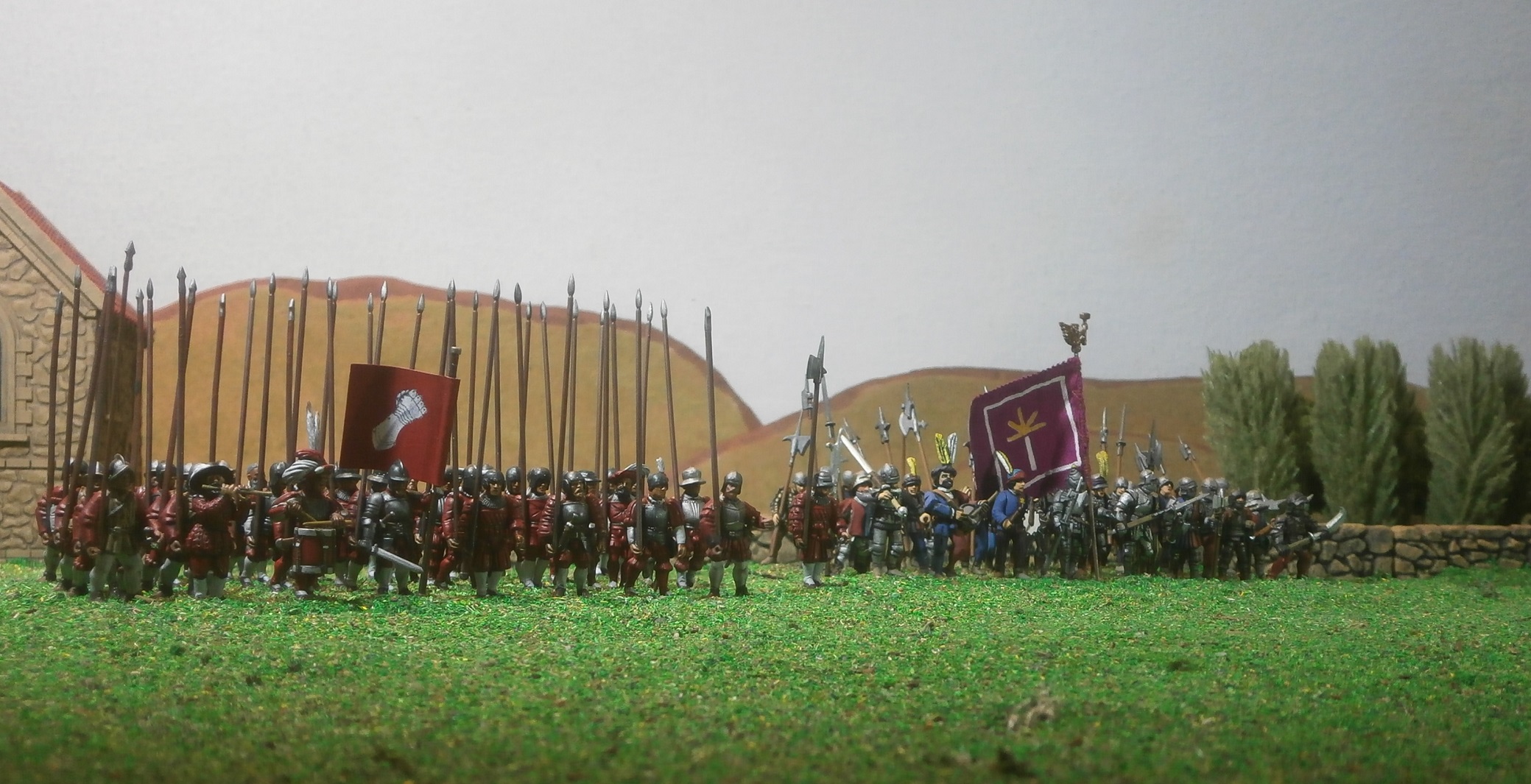
They had not had to face the foe in battle. They were paid promptly, well fed and not overly burdened by forced marches. The whole enterprise seemed to them like a merry, almost leisurely jaunt. The enemy, the army of the VMC, much of which was known to be within the city of Alcente, refused to leave its walls. Soon it was reported that they were cowering in fear, for this time they were not facing an army of ill-disciplined goblins and orcs, but rather the veteran companies of the Sun …
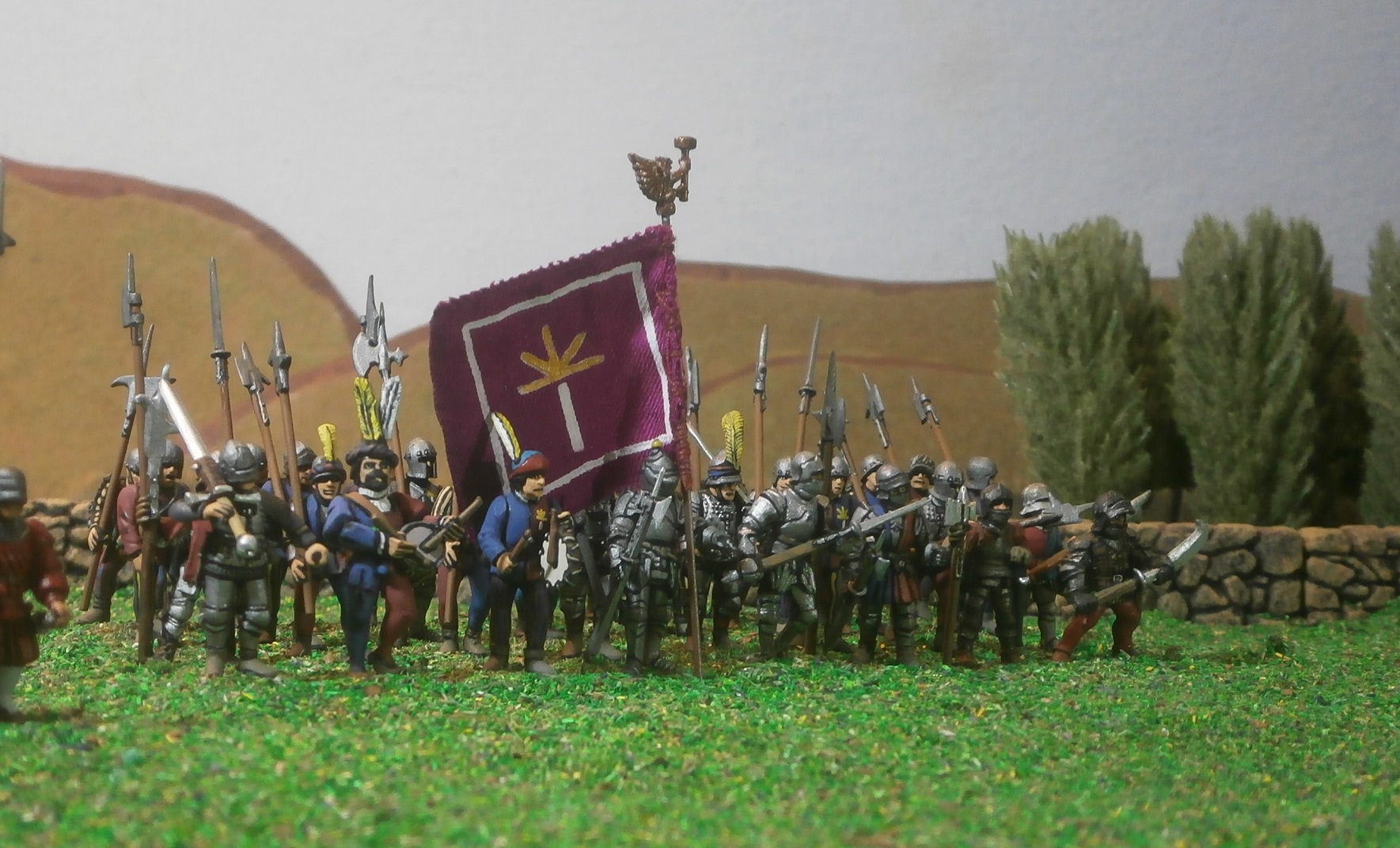
… and the Gauntlet …
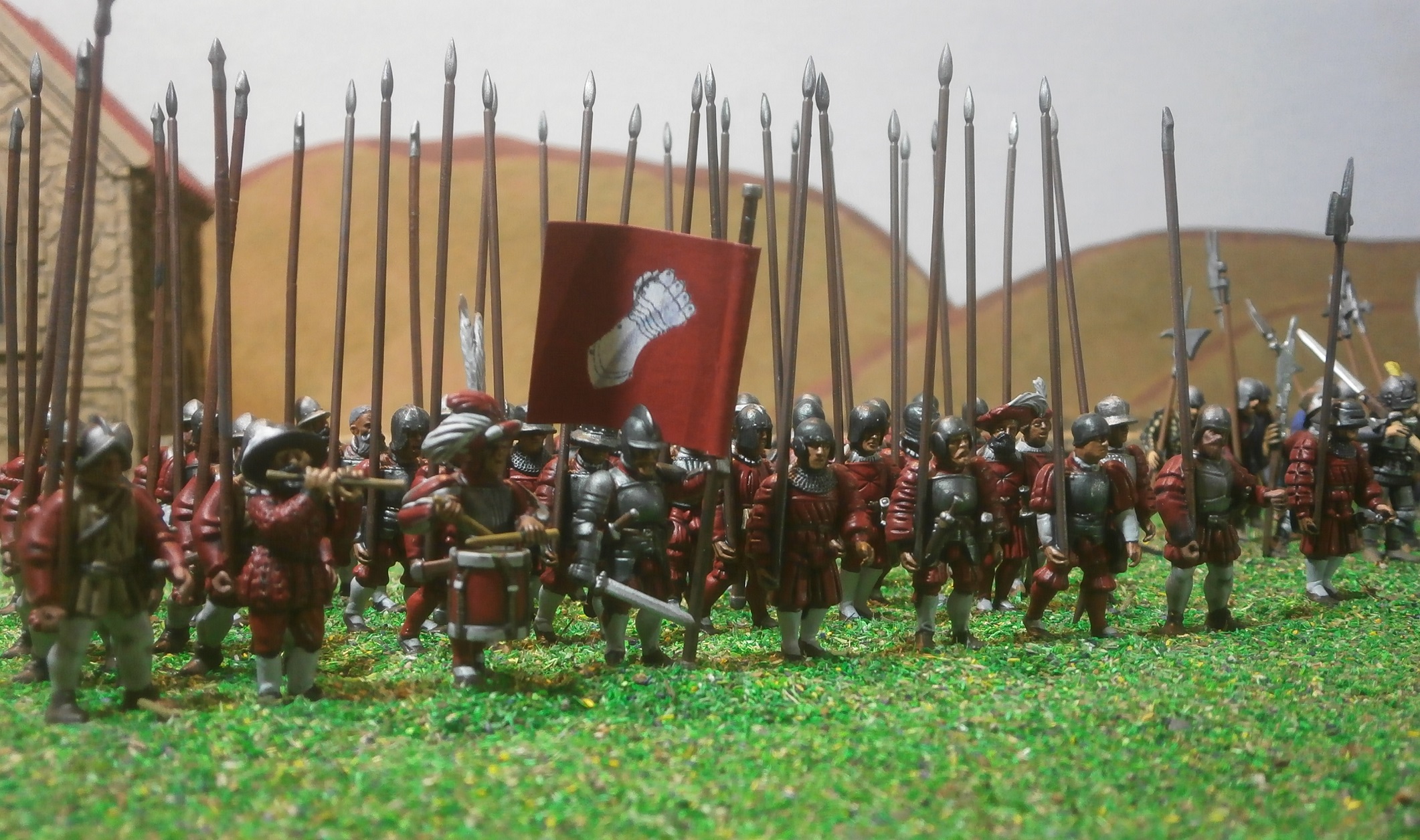
… and a general of proven experience and wide renown. Some, however, suggested instead that the VMC’s passivity was due to merely mercenary motives. What reason had they to care for the suffering of Tilean peasants? They had no doubt reckoned up the potential costs, accounting for this loss and that expense, and concluded that the best financial course was to keep their army intact and untroubled, while the western part of Alcente bore the burden of war and its assets were crossed out in their ledgers.
The vizconde did not, however, lay siege to the city – perhaps aware that such a move could force the enemy’s hand and mean that he faced a foe of almost equal strength, which had the city walls in its favour. Instead, his army marched upon the town of Mintopua, in the western most part of the realm, which happened to be a upon a not too circuitous route back to Luccini. There he delivered the following summons for its surrender, doing so both by sending a written missive and, as military tradition demanded, having the summons read aloud at the head of his army within earshot of at least some Mintopuans …
This from Gismondo, Vizconde Giacometti, noble General of the army of Luccini, to Signore Virone Libonati of Mintopua …
I am approaching your town with an army of considerable size and strength, indeed so mighty that while I seized Capelli and razed Motolla, the army of the VMC cowered within Alcente’s walls, too afraid to march out and face me in battle. I now intend to seize Mintopua and herein offer generous terms of surrender to you, if (and only if) you choose to act promptly, thereby saving many lives and much trouble. If you refuse this offer, great ruin will be inflicted upon you and yours, at no great loss to me and mine, as I will order the destruction of your militia and the razing of the whole town and the land thereabout.
If you accept these terms of honourable surrender, your garrison and any mercenaries in the employ of the VMC will be permitted to march out with colours flying, armed and accompanied by their families; the former to retire to their own homes and estates, the latter to march out in no less than 12 days and at no less than 8 miles a day to the city of Alcente and their paymasters. And, to ensure that I order my army to refrain from looting your town, and to prevent them inflicting harm of any kind upon those dwelling within, you must pay the reasonable sum of no less than 24,000 ducats.
Furthermore, I would have you know that all I do and have already done is a legitimate and necessary response to the VMC’s many crimes, not least the attempted assassination of my beloved cousin King Ferronso and including their illegal seizure and continued rule over several many Tilean towns and cities, outside the agreed terms of all contracts with the noble rulers of Alcente.
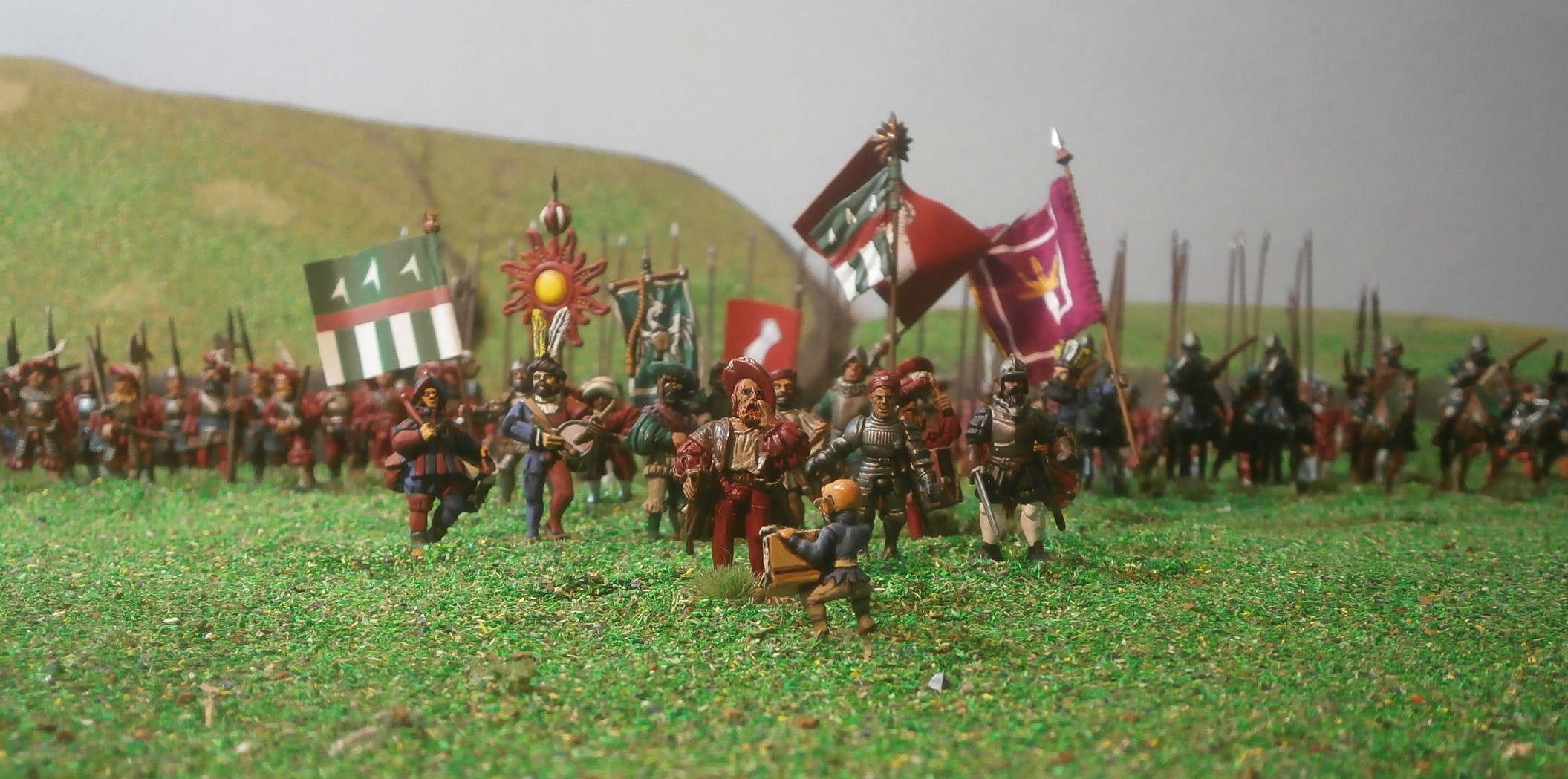
That all the lawful gods surely pour their blessings upon my actions is evident from my army’s successes to this date, so it would be dangerous folly for you to in any way oppose me. I expect your answer within a week, otherwise I shall give free rein to my officers and soldiers to take whatsoever they wish, by whatever means they choose, and in light of their righteous anger over the vile attempt on the king of Luccini’s life, such freedom would cause severe pain and great ruin to Mintopua.

 BigSmallWorlds
Wheels within wheels. Padre, your campaign is a marvel. I had quite forgotten the depth of the history and the machinations of your players and NPCs alike. The way you bring it back, and the way your players respond to it is a wonder. Bravo to all concerned!
LikeLike