Lord Cralk felt conflicted, for his annoyance at the arrival of a huge enemy army rubbed up against the joy of knowing his master was close. Along with his master would come his reward, but what use was that if he were not alive to enjoy it? The enemy was so vast that it surely outnumbered his own army, which would not do and had never done. Worse still, nearly half his army consisted of slave-soldiers – a weakness he doubted the enemy shared.
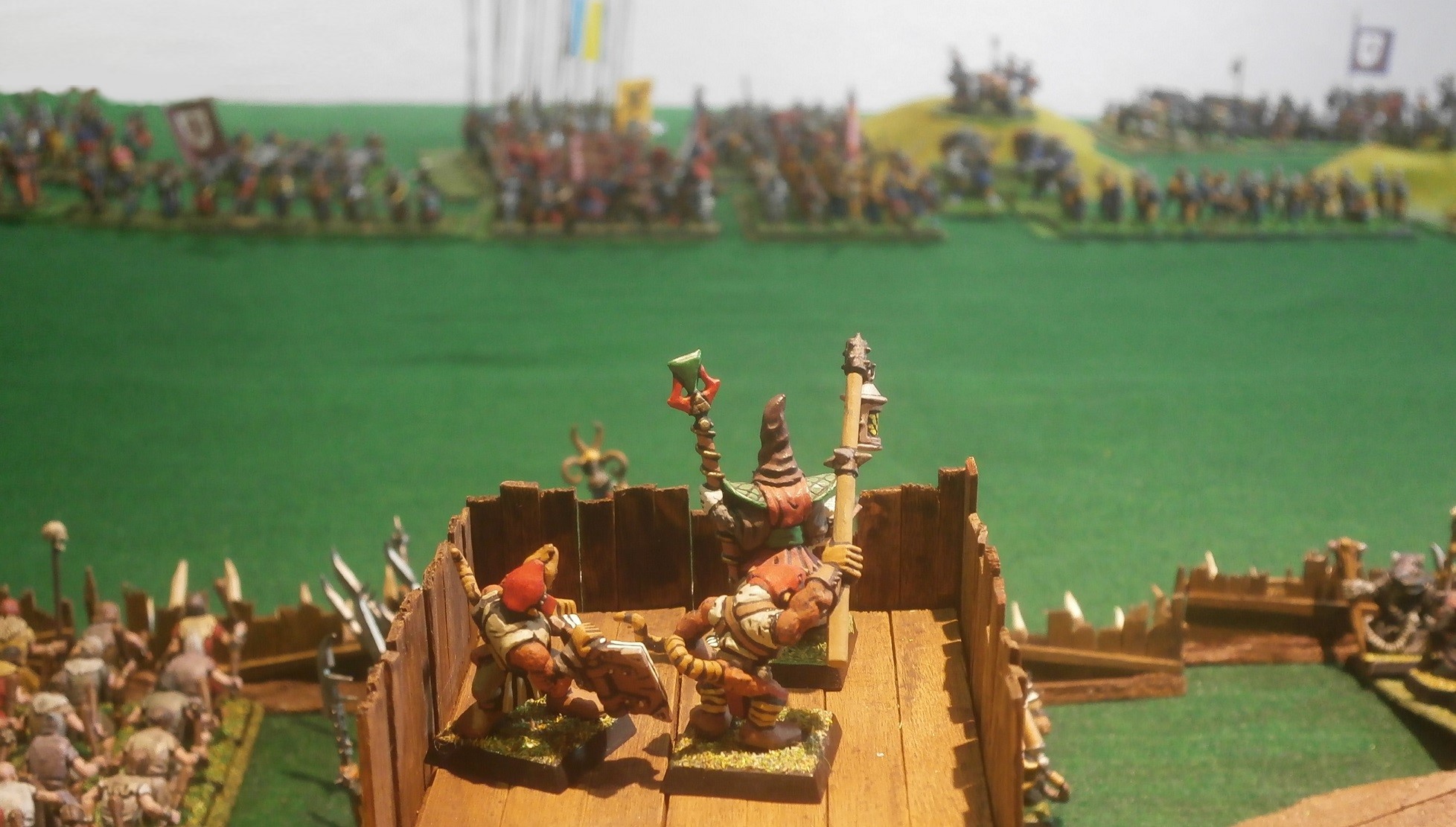
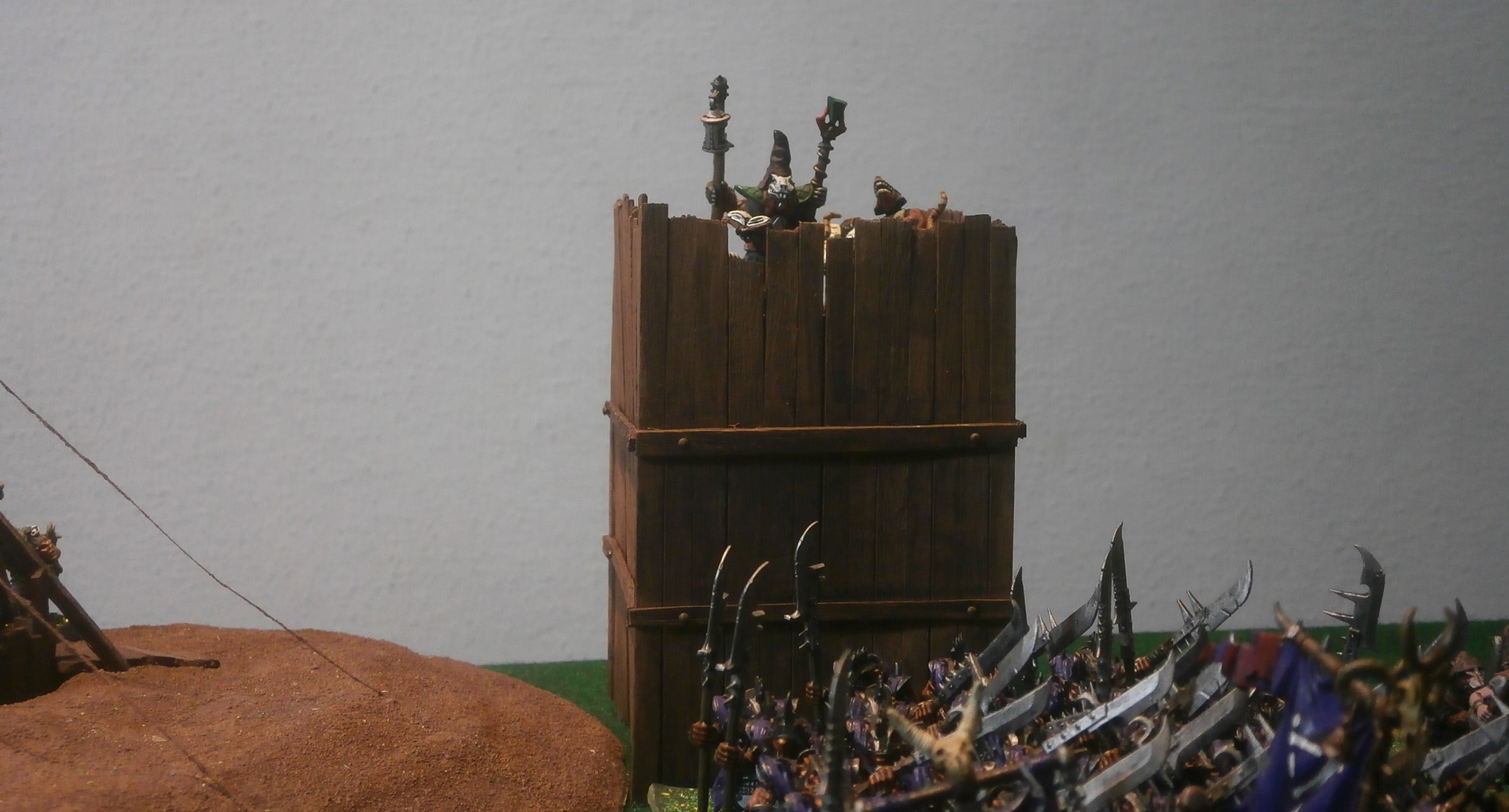
Still, he took some solace from the fact that his army was behind palisaded fences and towers, some more from the fact that his reinforcements were reported to be only hours away, and much more from his master’s proximity. Indeed, Lord Ashmedak was so close now that Cralk could hear his voice even while awake, although the words remained riddlesome, and their untangling released magical sparks that burned the corners of his mind.
It would be better if his master was already here, right now, to strike terror into the foe, but soon would have to do, for this was all that was possible. One piercingly painful unpicking of his master’s words had revealed that he could speed the arrival by using the spell Crack’s Call – casting it into the shaft to further loosen the rocks and rubble and so ease Ashmedak’s passage up and into the sunlit world. Cralk had cursed when he realised this, for it was not a spell he knew well, nor one he could easily prepare.
(Game Note: In each of the skaven player’s turns there was a 5+ chance that Cralk’s master would appear from the shaft. I had ruled the player would gain a cumulative DM of +1 to the next roll each time Crack’s Call was cast into the mine-shaft. One success would mean a 4+ chance next turn, and another success would mean 3+ the turn after that. I also ruled that if the level 4 grey seer did not roll the spell naturally (which he did not) then he could sacrifice 2 of his other spells to gain it instead, having a total of 3 spells instead of 4. This is what was done, and thus Cralk’s difficulty in the story. BTW, the other players had no knowledge, beyond what, if anything, they had gleaned from the previous stories, of what exactly was coming.)
At least his army and the fortifications were ready. Neither was particularly fancy (unlike the enemy with its panache feathers and bright, fluttering standards) but both were replete with sharp edges – the pointed stakes lining the defences and the whetted swords and halberd blades wielded by his warriors. Not to mention many a whip and hopefully a storm of stinging bullets.
His defences were weakest on the right, for there he had not placed his rank and file but rather his more specialised warriors, being globadiers and censor bearers. They were few in number, but protected by the palisade against enemy missiles, and, should it prove necessary, might be further protected by the magical winds summoned by the storm banner.
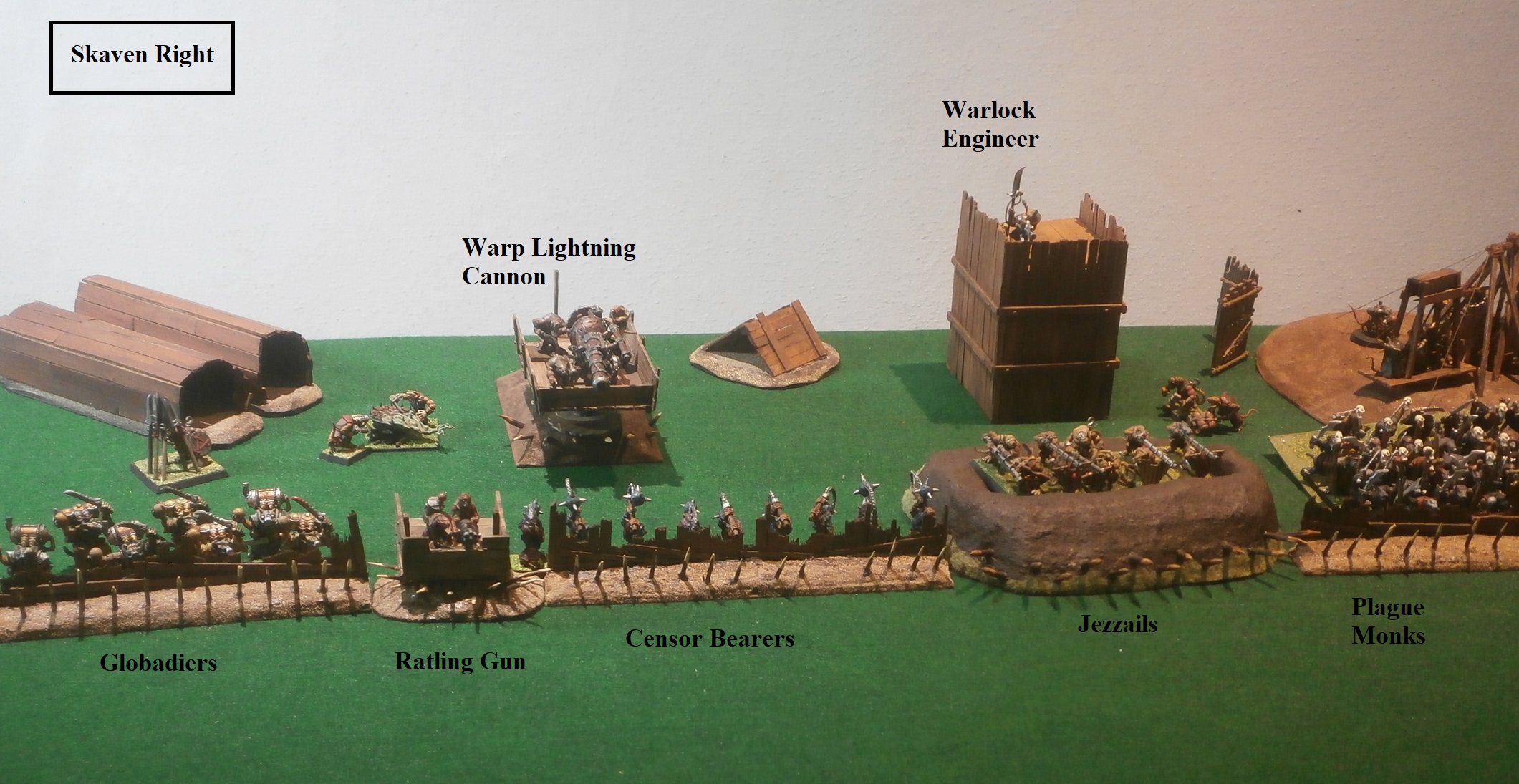
Better still, there was a ratling gun team …
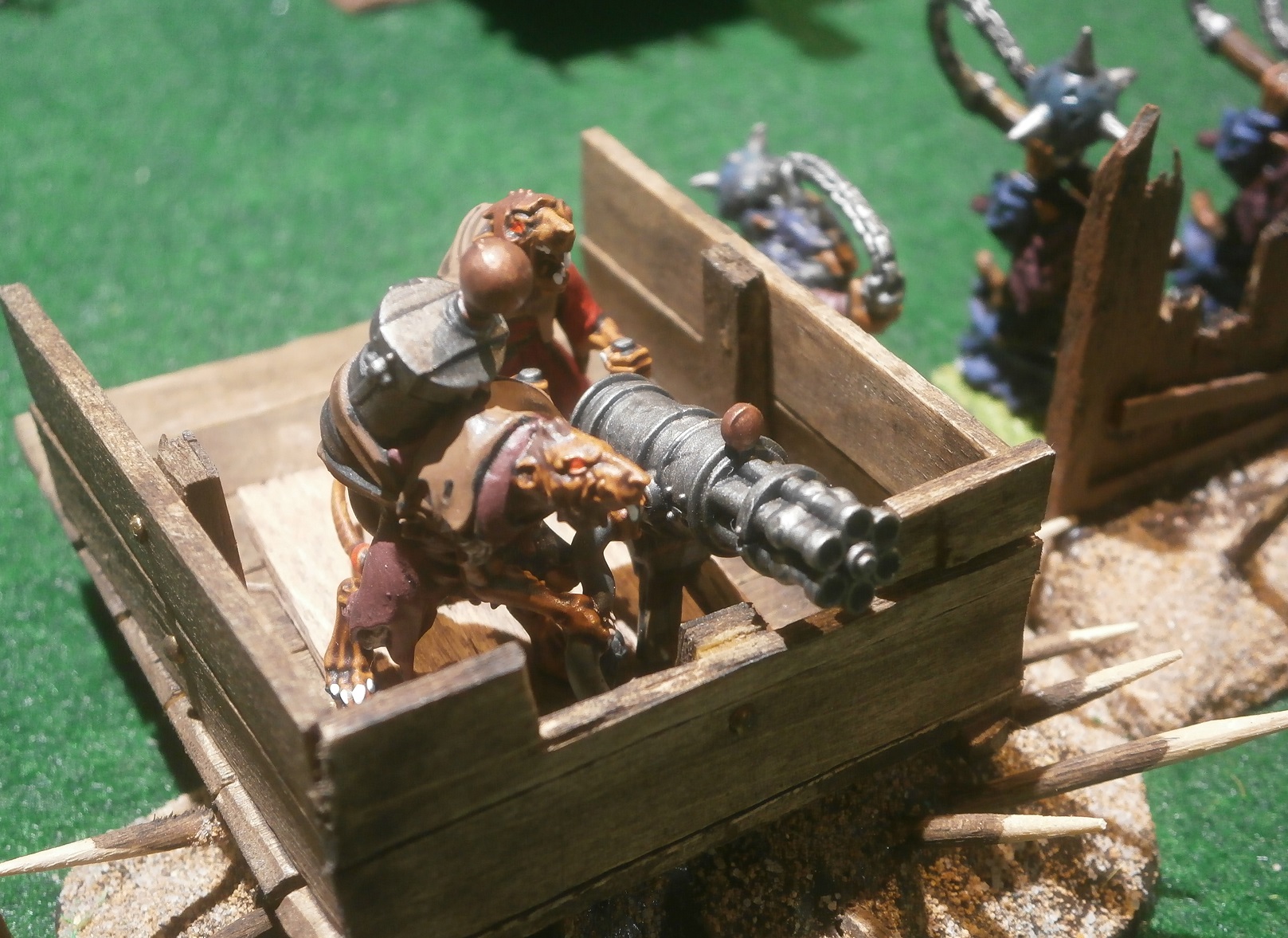
… a warplightning cannon …
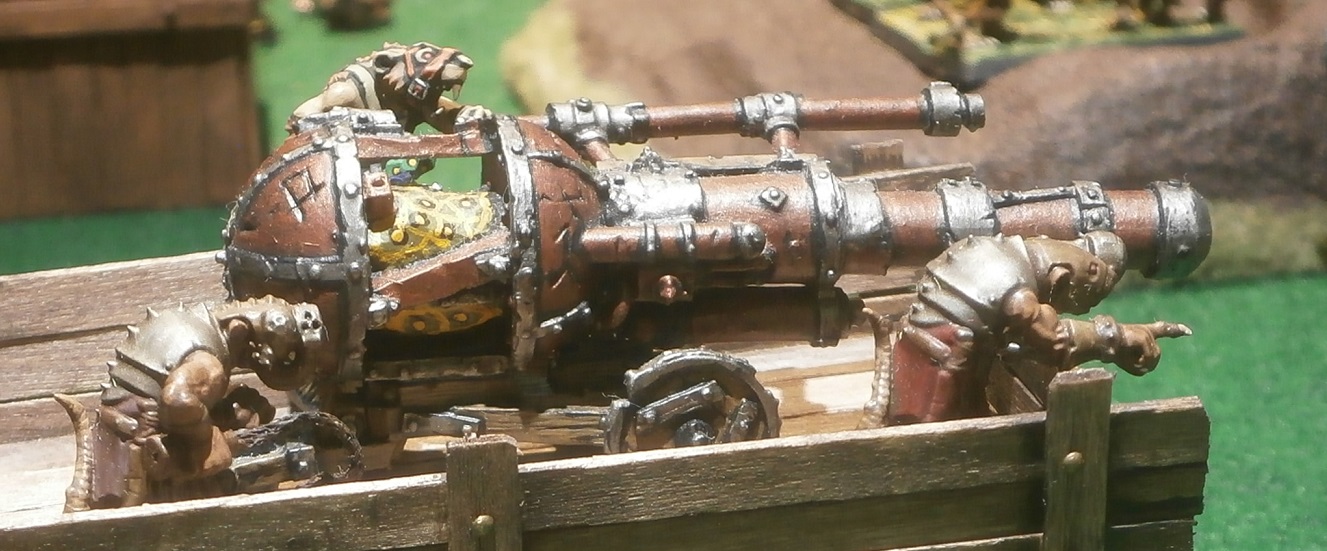
… and several jezzailers …
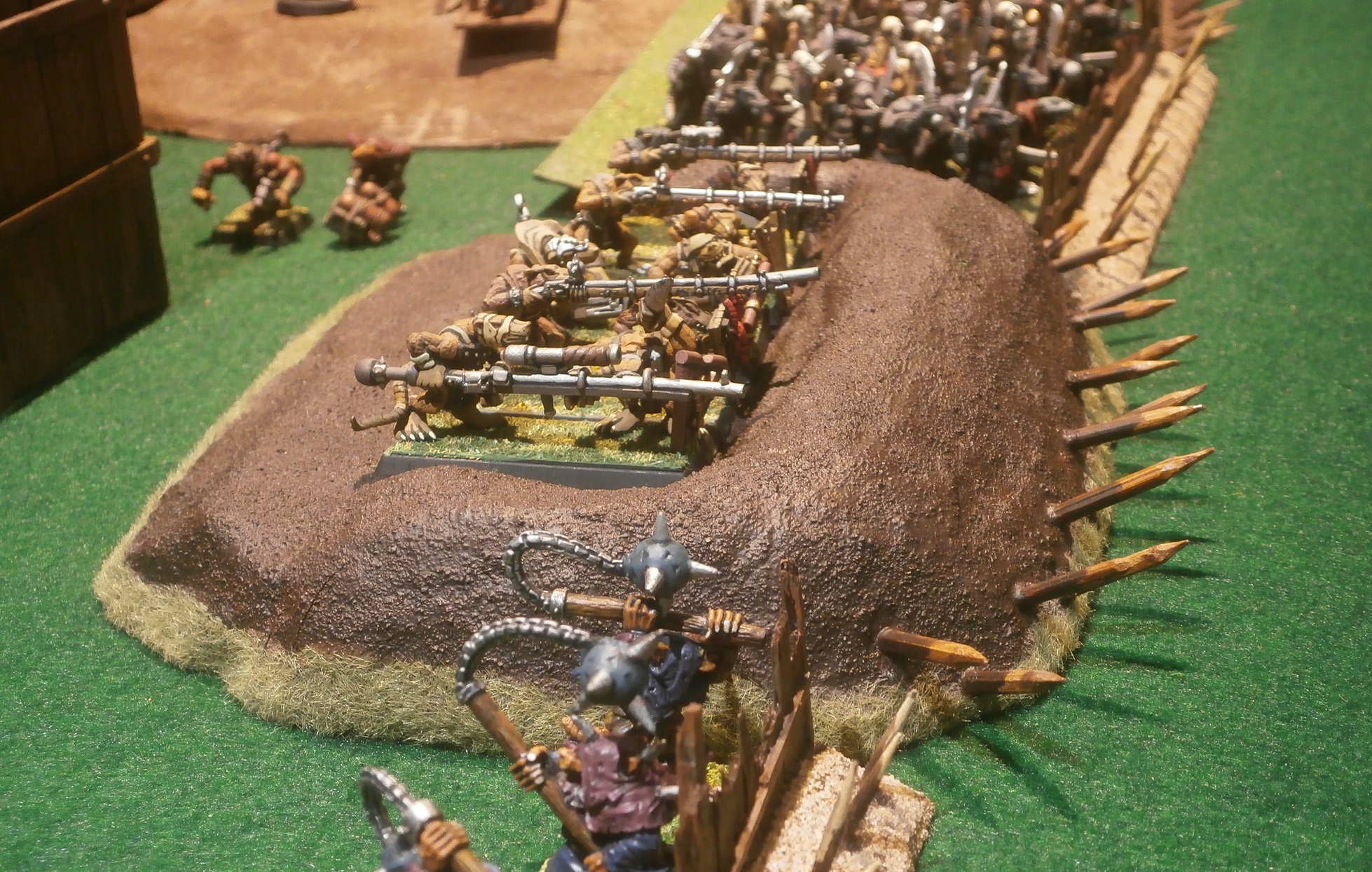
… all well ensconced, while his engineer watched over them from atop a tower.
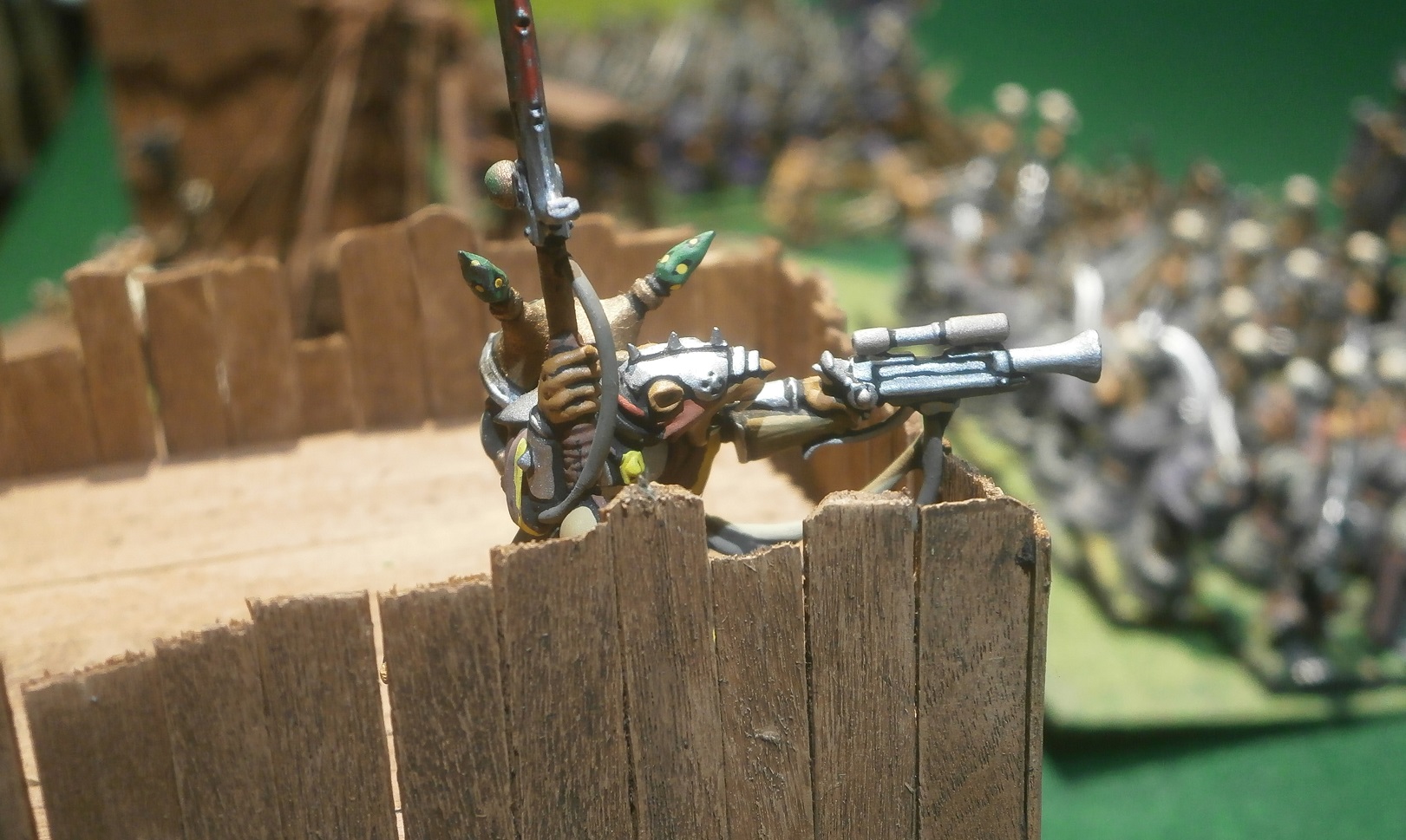
Whatever came from that direction, let it be slowed by sky-stone bullets, lightning bolts and poisonous vapours. Besides, he was not concerned that the right was weak in numbers, for he had sent orders that when his reinforcements arrived, they should aim for that flank and so surprise whatever enemy attempted to advance there.
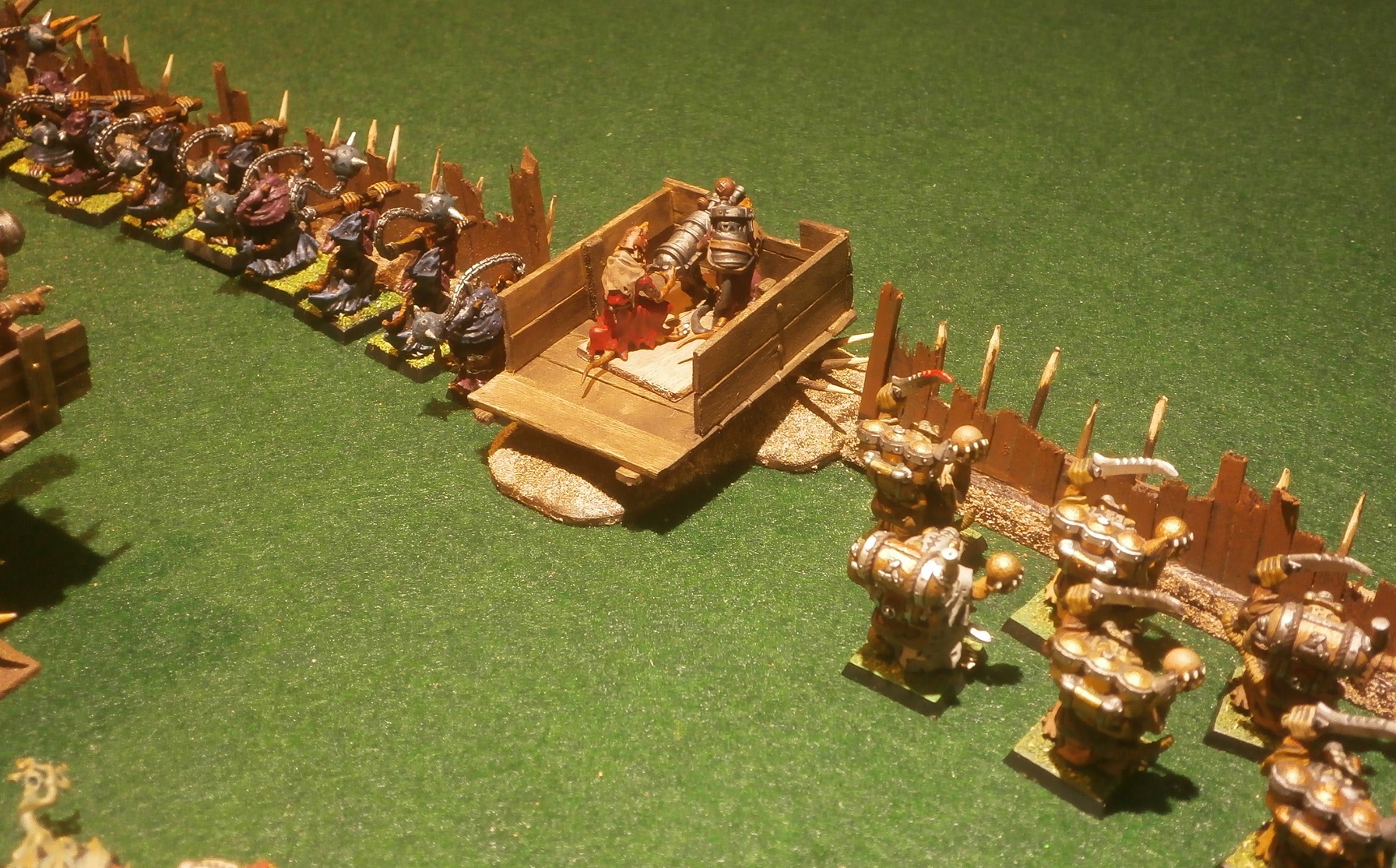
(Game note: The reinforcements would arrive (from the neighbouring campaign hex) according to our campaign house rules, something akin to the ambush rules but not quite. I did, however, get the player to tell me which table edge his reinforcements should aim for – left, right or his own table edge, effectively entering through the camp.This was because his order had to go out before he had seen the enemy’s deployment.)
The centre of his line, providing his own immediate defence, was stronger, containing both regiments of his best fighters – just as any self-respecting and cunningly sensible grey seer would want.
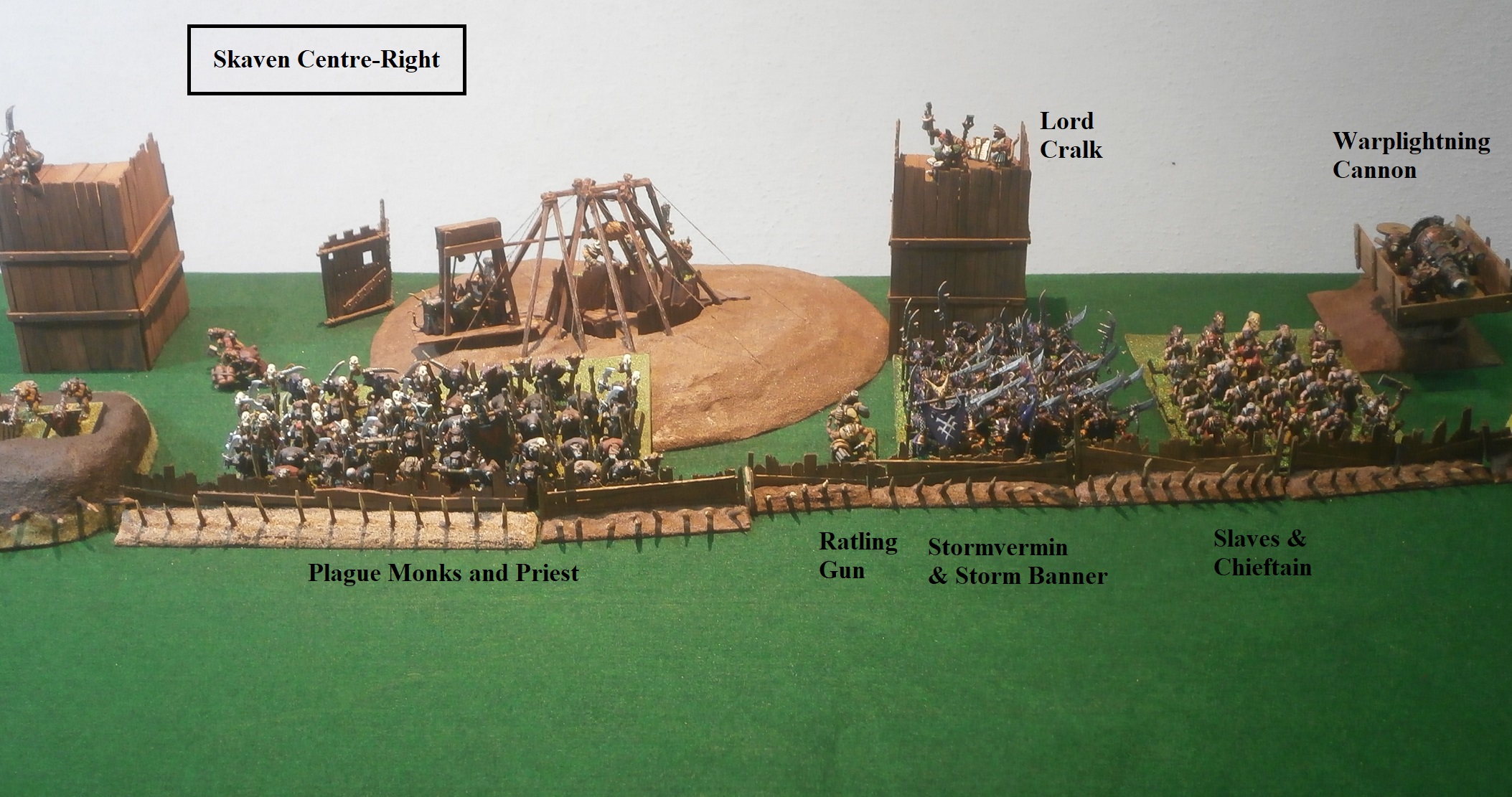
Cralk had ordered his purple-clad stormvermin to his fore, beneath the tower.
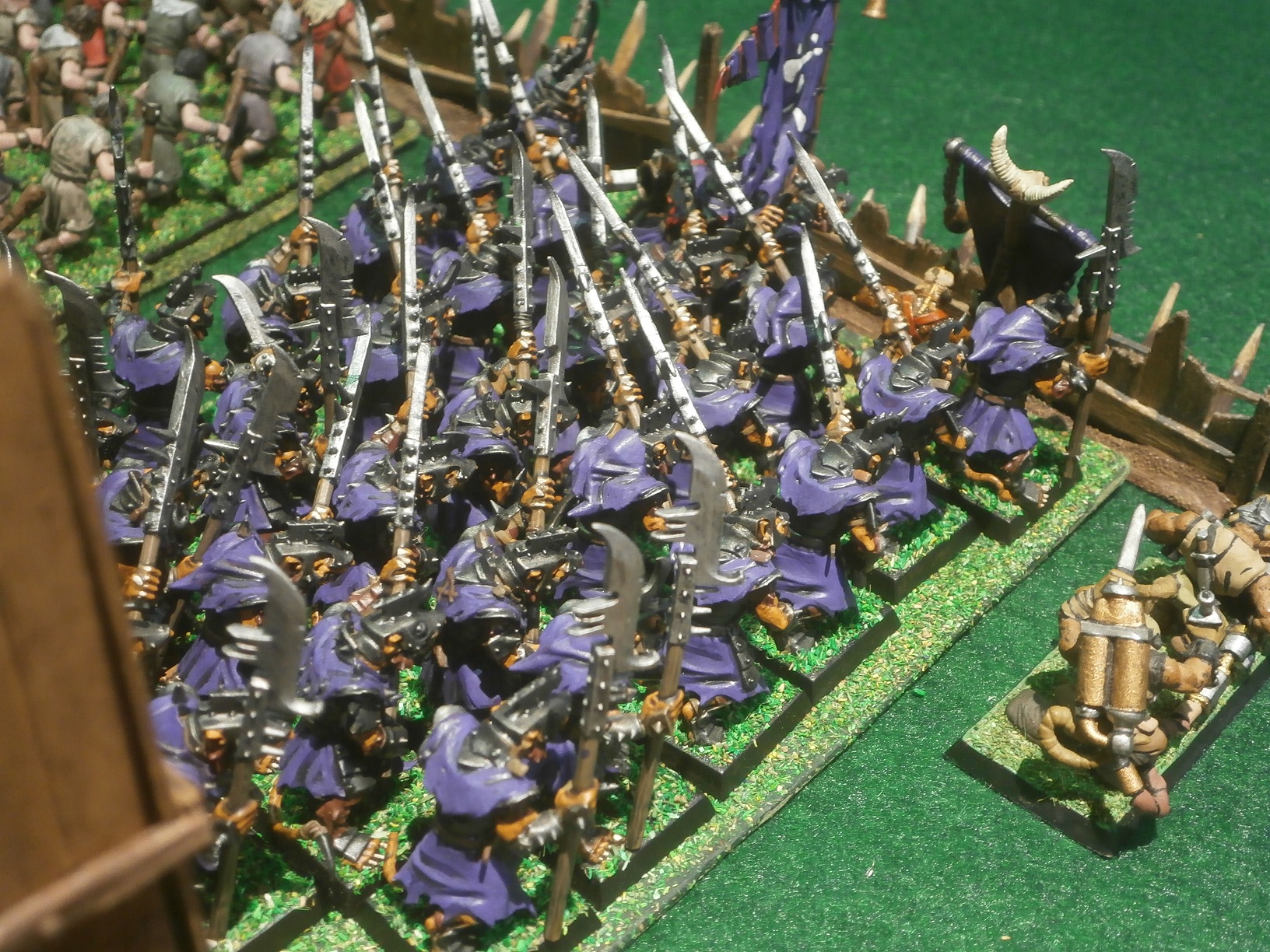
Any foe who wanted to reach him would have to fight their way through these, and suffer the bloodying effects of their heavy bladed halberds. The bearer of the storm banner, which had proved vital to Cralk’s previous victories, was with them, for who better to guard one of his best assets?
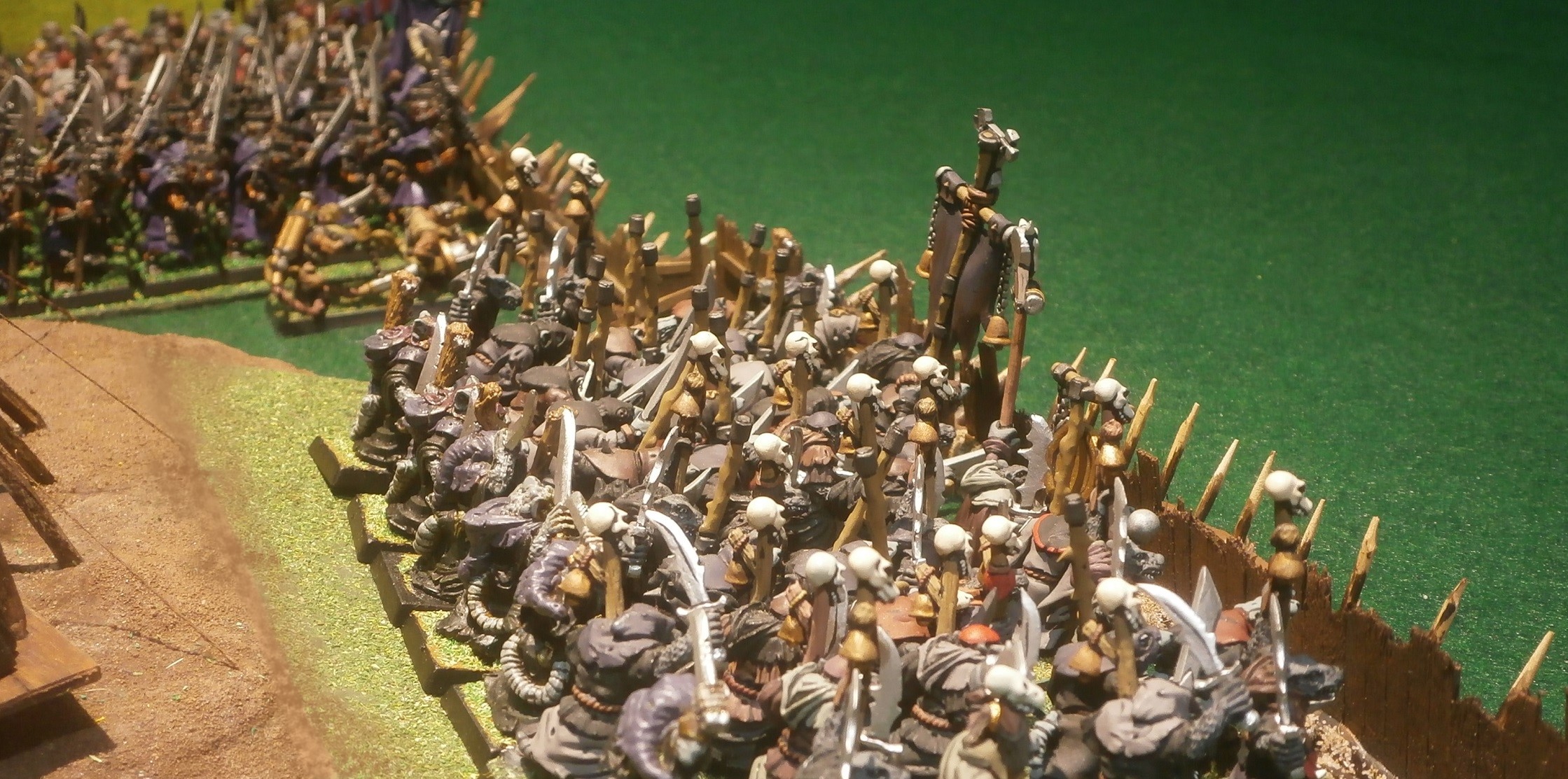
The great mob of plague monks, commanded by their priest, was out to the right of the stormvermin, all the better to guard that flank should the reinforcements be delayed.
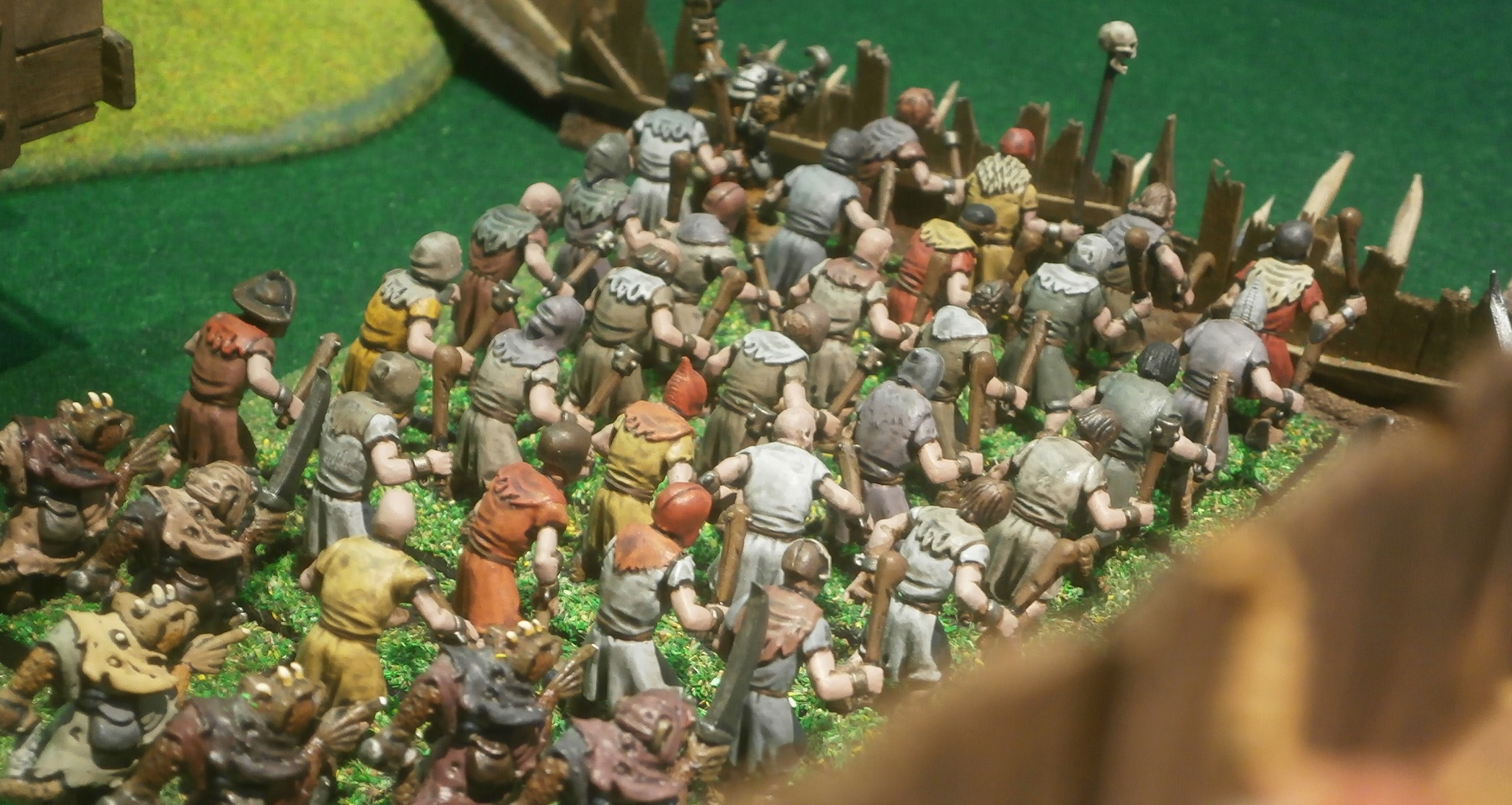
Upon the other flank of the stormvermin was amassed the surviving manslaves, those who had been captured from the miserable settlements Cralk’s army has passed through. Scorcio had also provided the timbers for the defensive works, and in truth, Cralk knew that the latter would prove more useful in battle. But still, if well whipped and sternly commanded, these half-crazed, malformed man-wrecks could prove very difficult to beat in battle, at least not quickly.
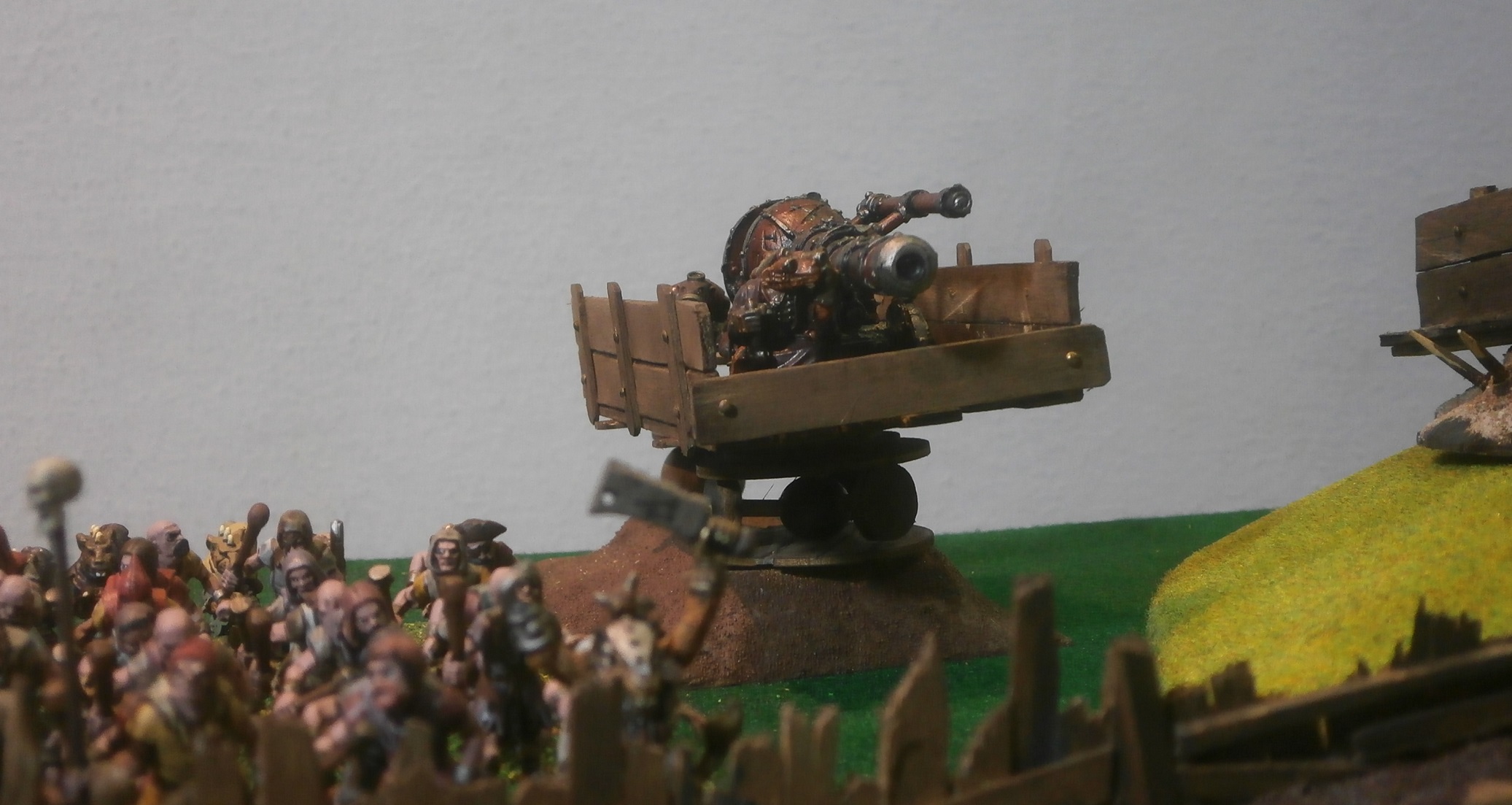
With a ratling gun team by the stormvermin’s flank, and a warp lightning cannon mounted upon the rise behind and to the left of them, Cralk hoped that any foes coming at them would be more than tickled by static and deafened by shots, but rather suffer a brutal battering, before staggering before the stakes and blades to be finished off.
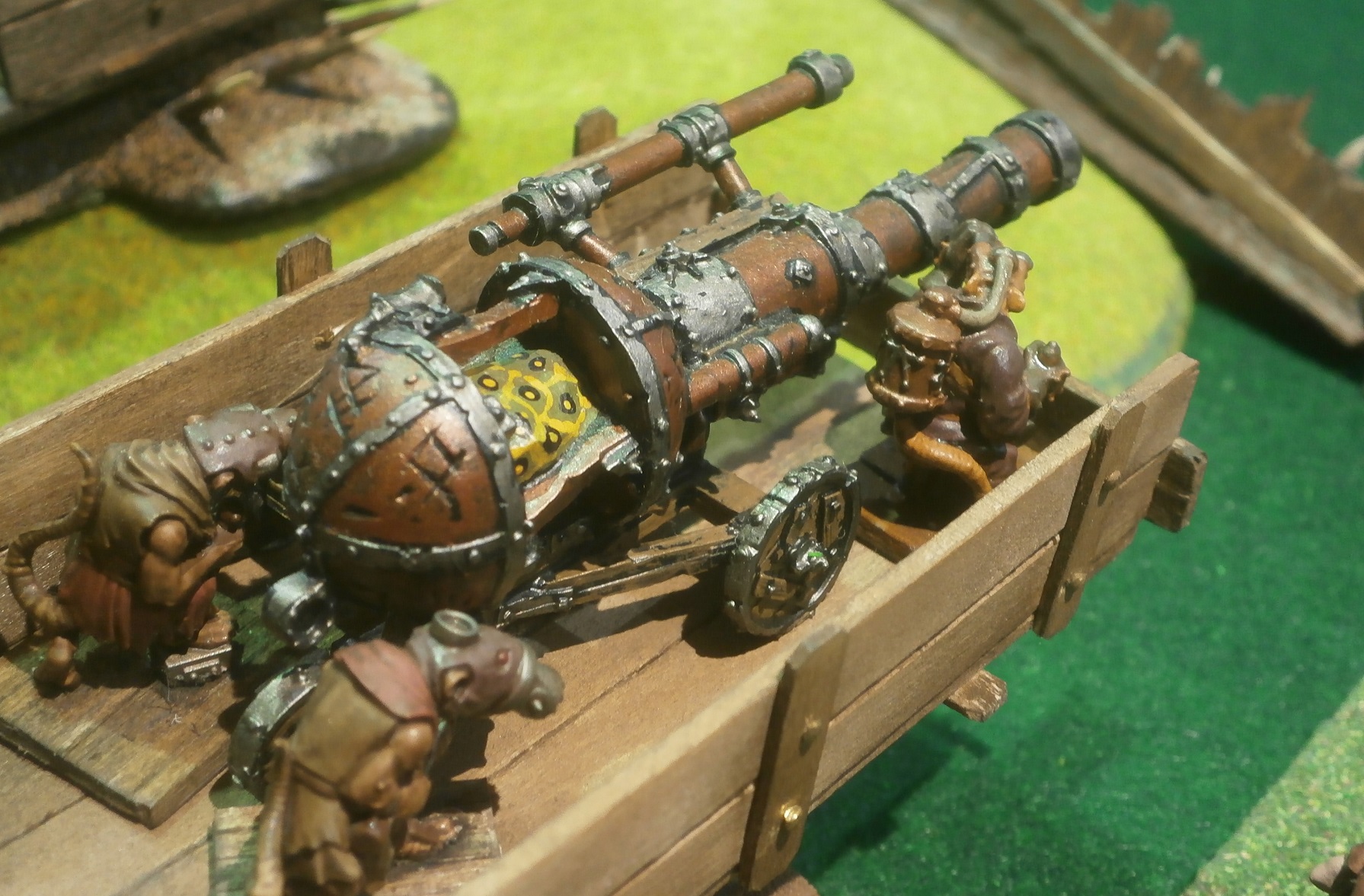
Cralk had been disappointed by his supposedly deadly weapons in the past, but at the least, they did looking terrifying, their steaming muzzles ready to vomit fulgurating fire, and even if all they did was dishearten the enemy, causing him to falter in the approach, that alone could prove useful.
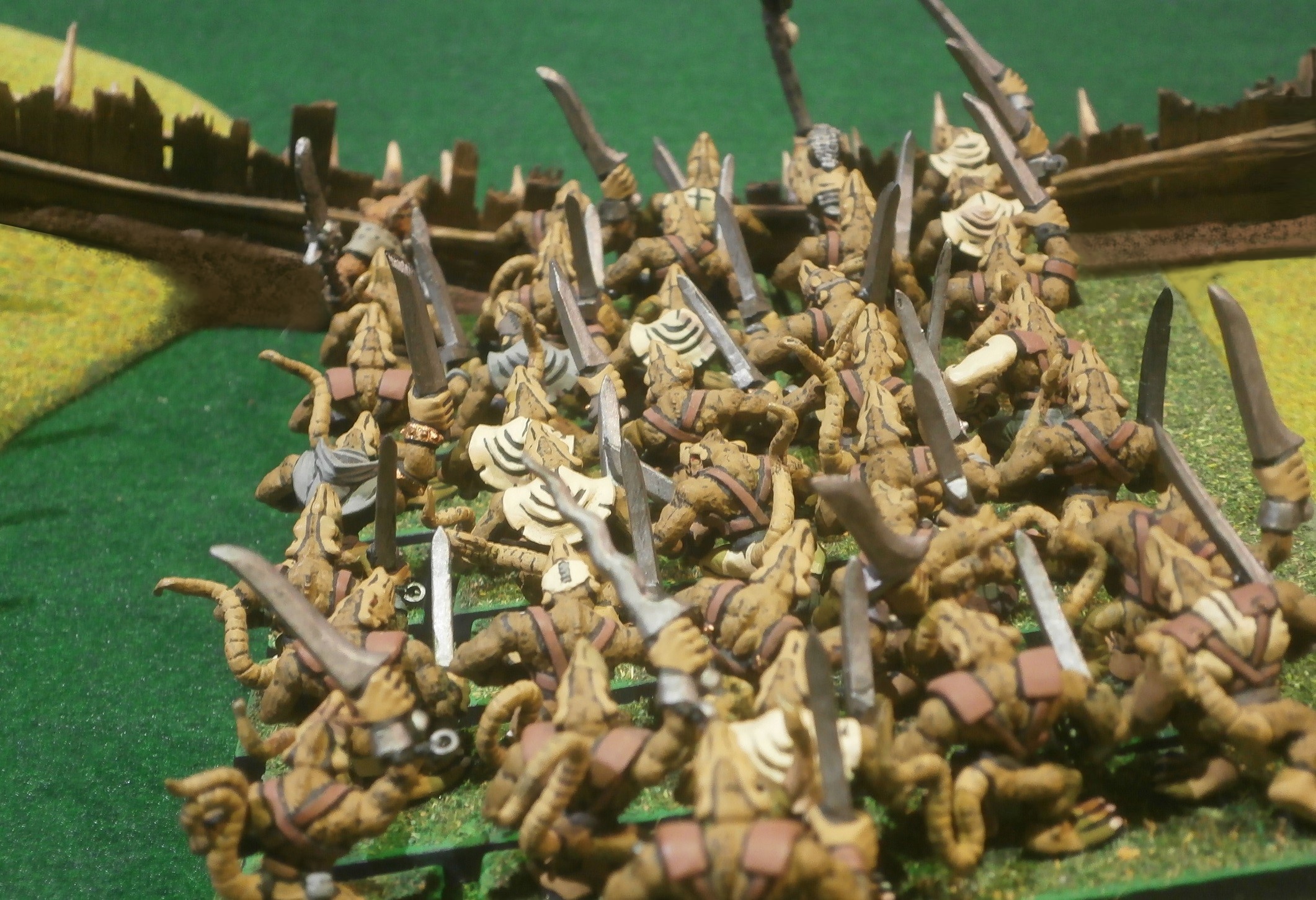
Further out to the left there were more slave soldiers, being verminous slaves made up both of those from defeated clans and those who had displeased their masters in some way.
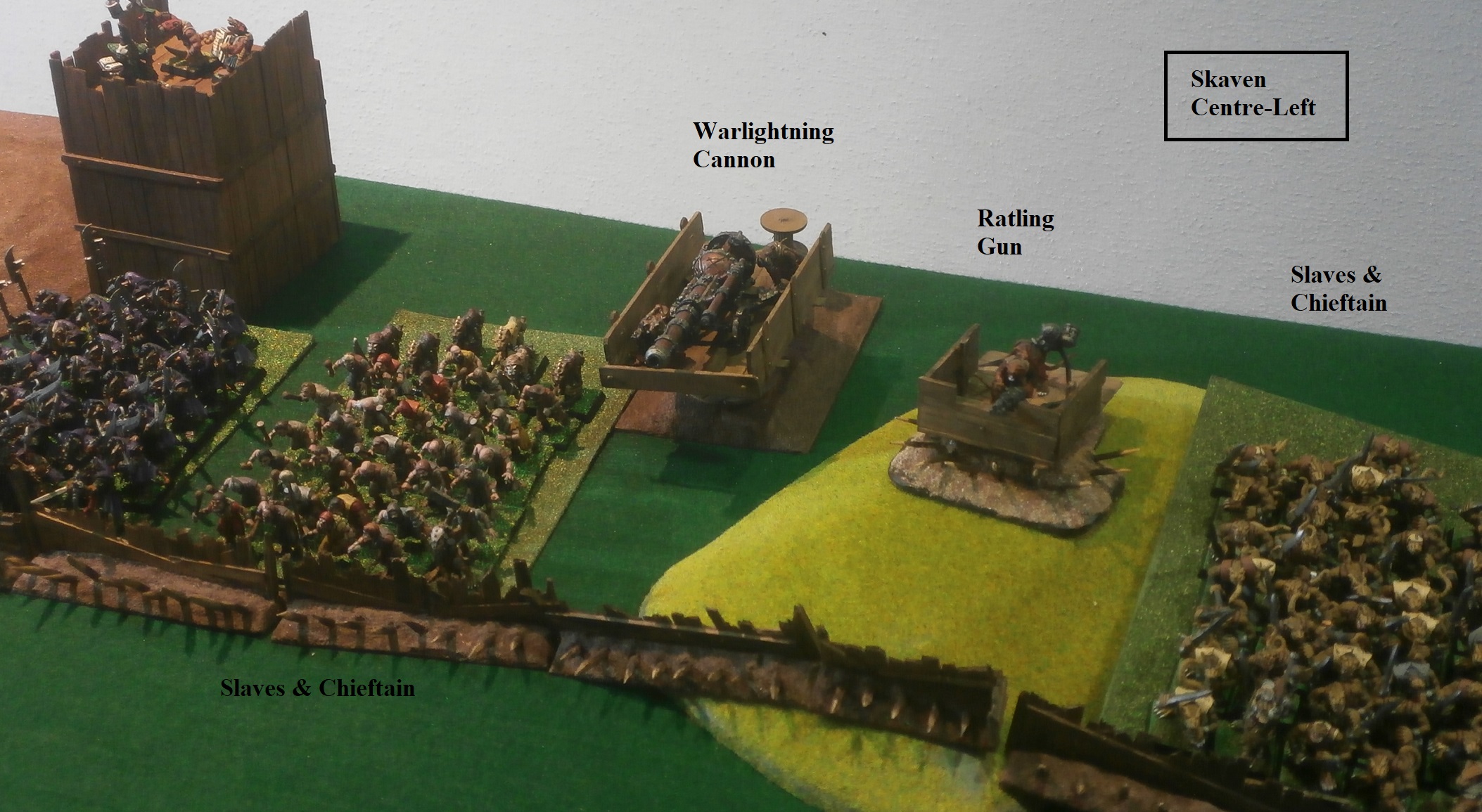
A chieftain commanded them, to ensure their effectiveness in battle, for without such stiffening guidance the would prove almost worthless as fighters.
Between them and the lightning cannon was another ratling gun tower.
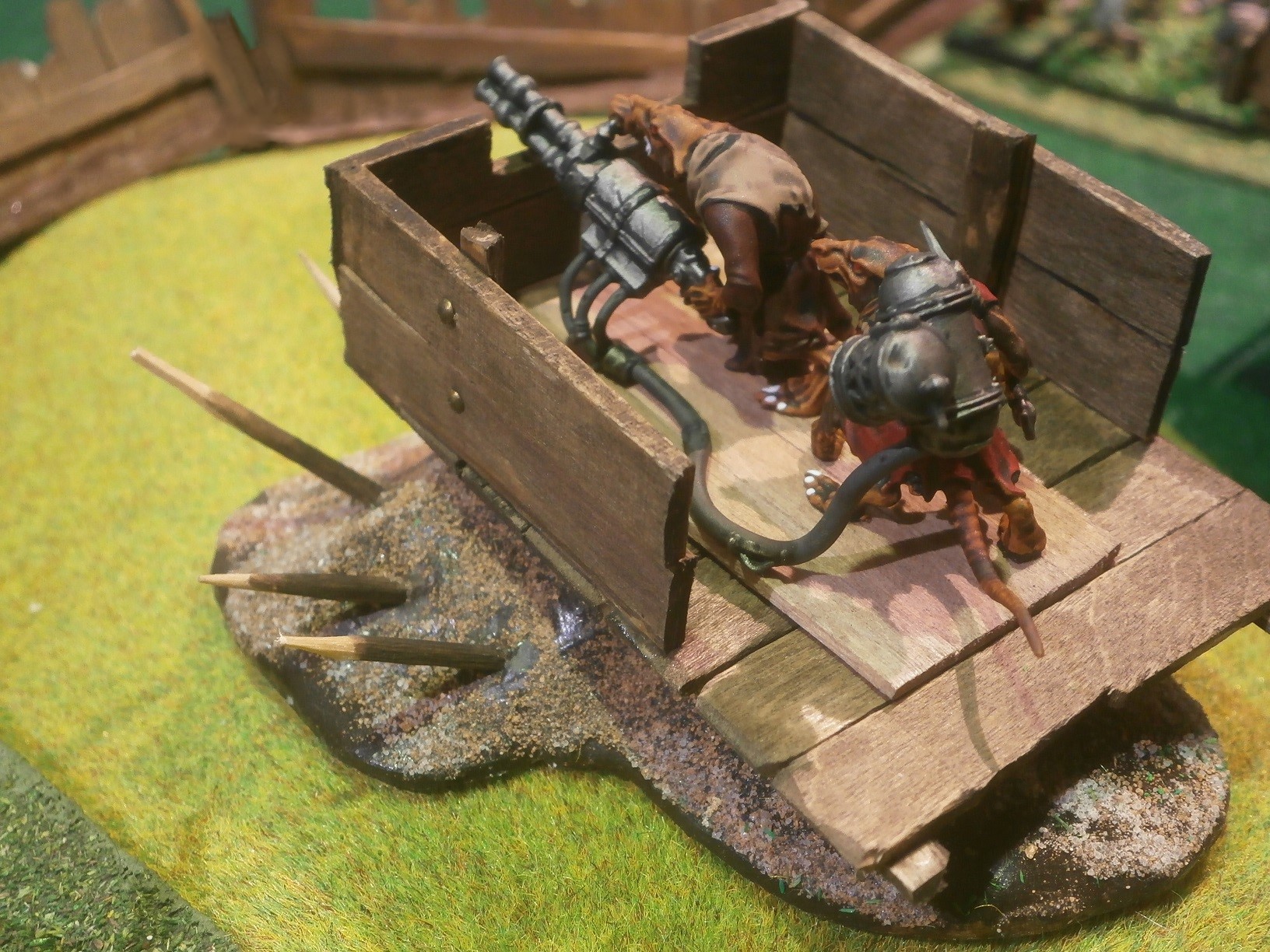
Cralk had lost several such guns during his running fight southwards, but the engineer, a Clan Skryre adept, had proved sufficiently skilled to fashion several more from that which he found in the baggage trayne, the looted settlements and what parts could be salvaged from already wrecked guns. Several slaves had died in the testing of the newly made weapons, but that was par for the course and had been accounted for.
Upon the far left was a great massing of warriors, to make that part of the defences appear the most challenging of all.
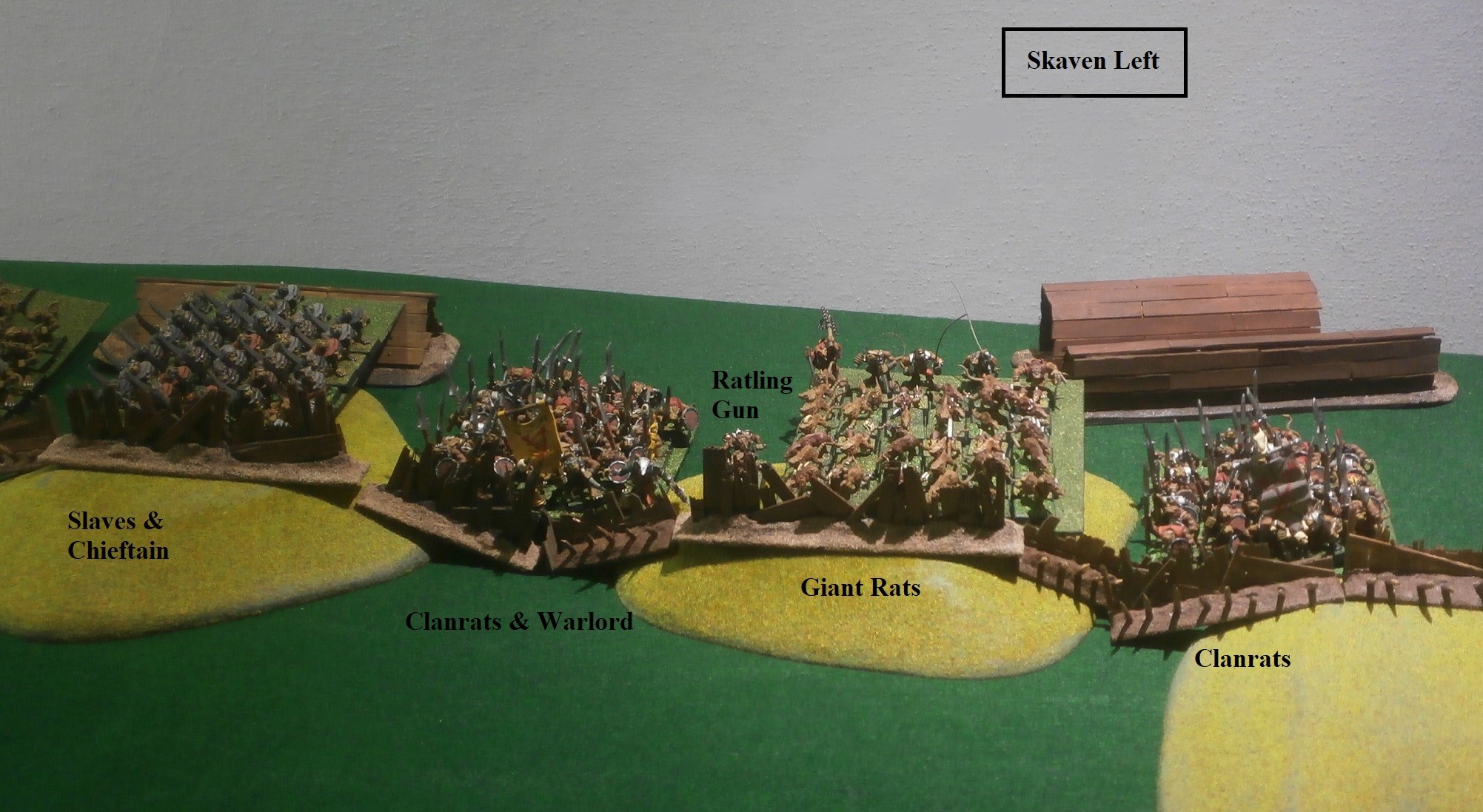
Indeed, Cralk had held several regiments back so that he could adapt his deployment according to the intelligence he gained concerning the enemy’s line of battle as they drew closer.
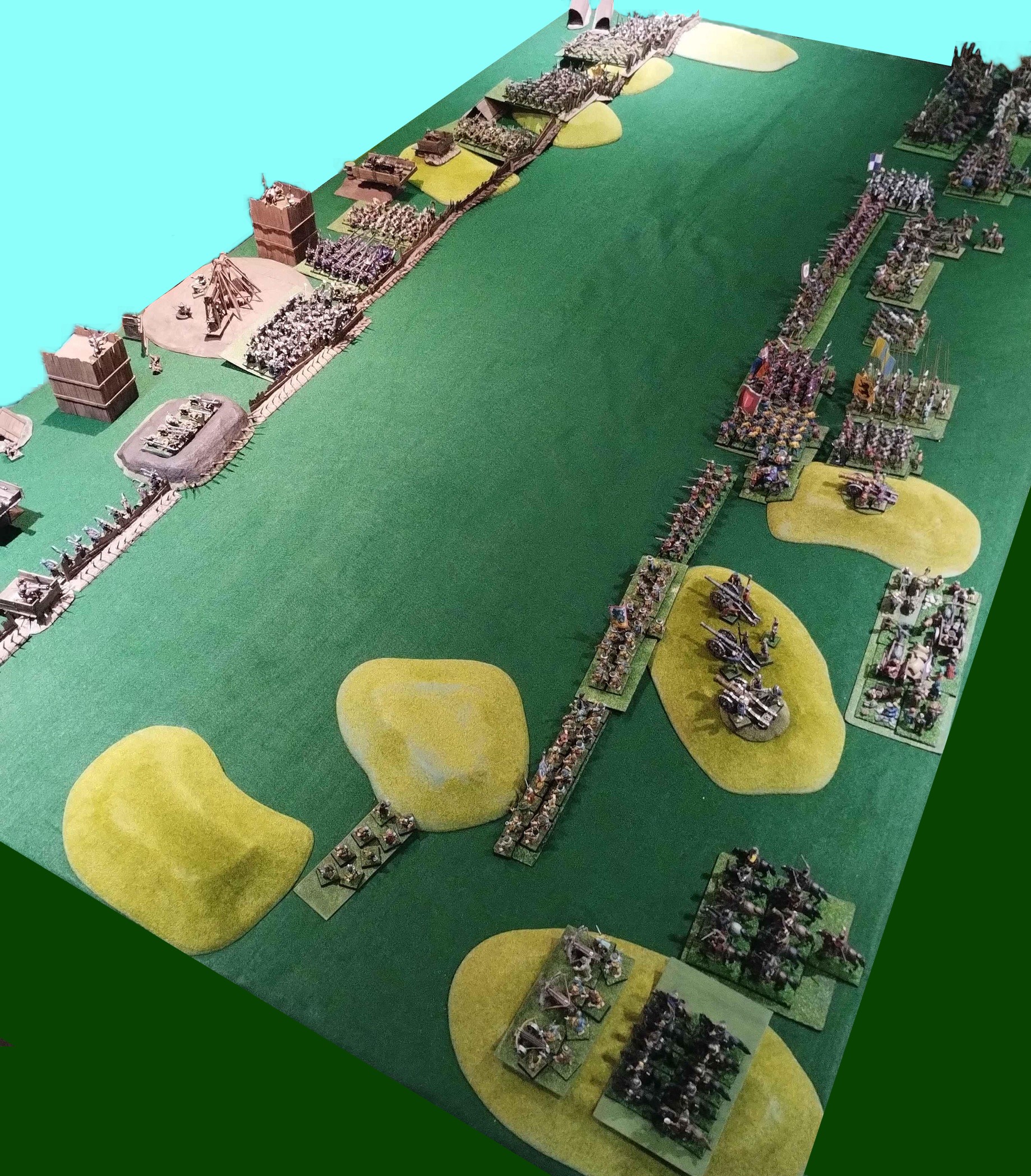
(Game Note: As GM, I ruled that the skaven had to deploy fully, before any of the Tilean units deployed. This seemed fair with static defences – the enemy having the maneouverability, the rats being behind fixed defences. But, I knew there should be some scope for the skaven to adapt their line as the enemy drew near, according to what they could see. Thus I allowed Jamie – Lord Cralk – to make D3 adjustments, being either unit or character swaps, or just shifting a unit’s position. He rolled 5 and so was allowed 3 changes, swapping some clanrats and slaves over, moving a clanrat regeiment and its attached weapons team to face the elves, and adjusting the censor bearers to cover a longer stretch of defences. These pictures show some moment in between the original deployment and the final position, because the ratling gun team is not in its final position – I think we had initially attached it to the wrong one of the two differently sized but both red-clad clan-rat regiments, then corrected it before turn one!)
Yet more slaves, led by another chieftain (who took great pleasure in his cruel command), had mounted a little rise which the wall coursed up and over.
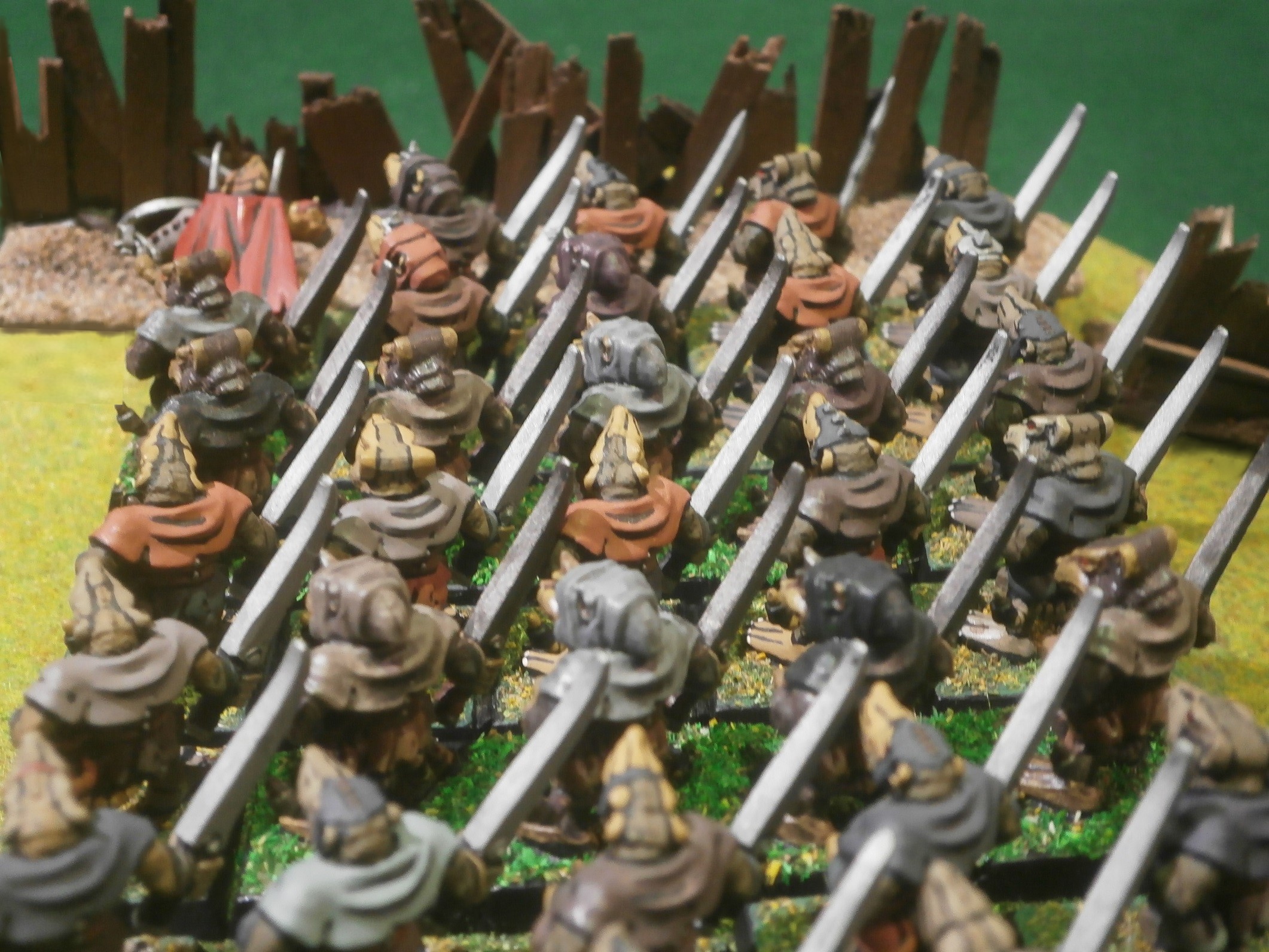
While further out were the two clanrat regiments, who had proven capable enough in previous battles, both having received casualties yet neither having fled the fight.
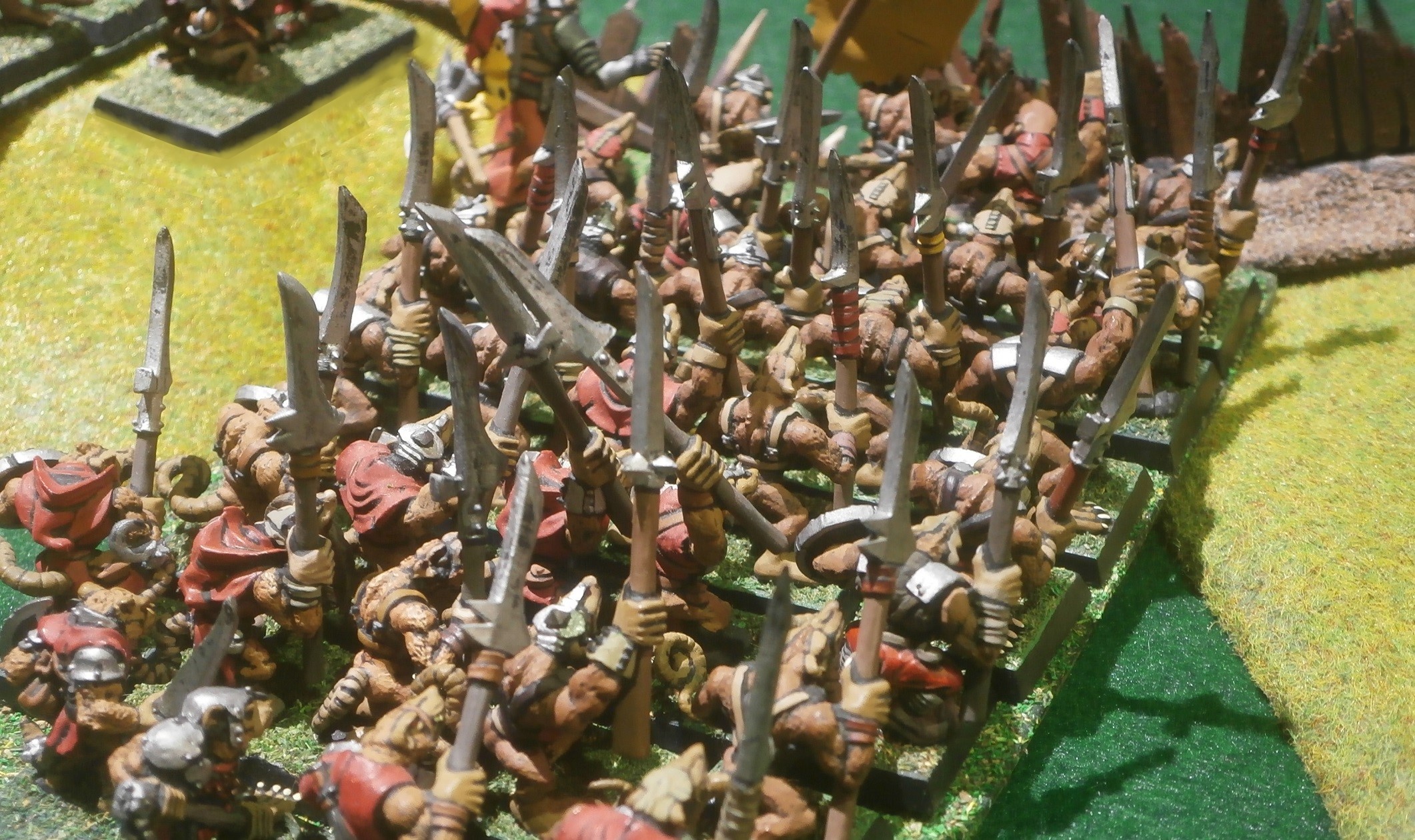
One was commanded by Warlord Folgatch, a proven warrior, who had sworn that he would let none pass whatever part of the wall he personally commanded.
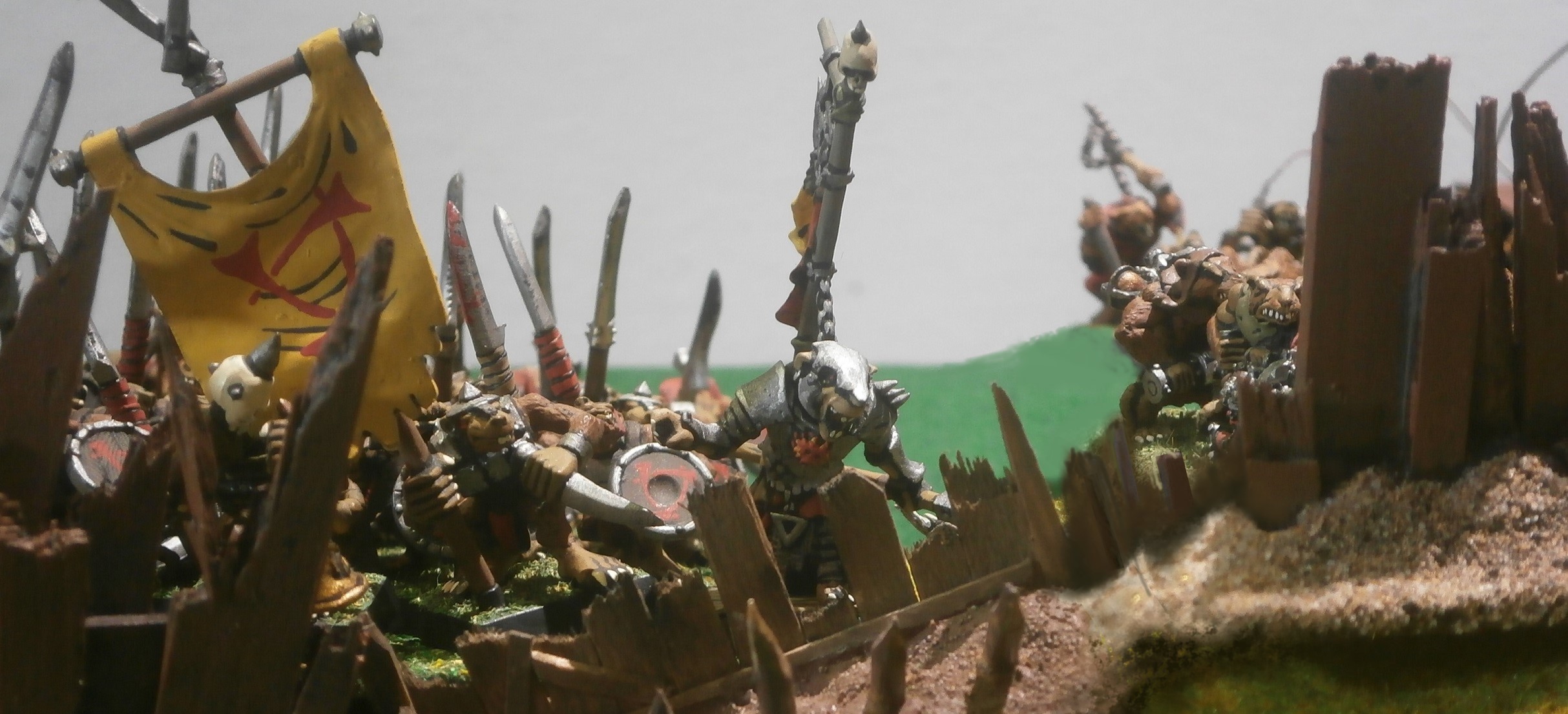
The other was left to its own devices, commanded by a mere clawleader whose name Cralk did not know, nor cared to know, but they had their own ratling gun to lend an added sting to their tail.
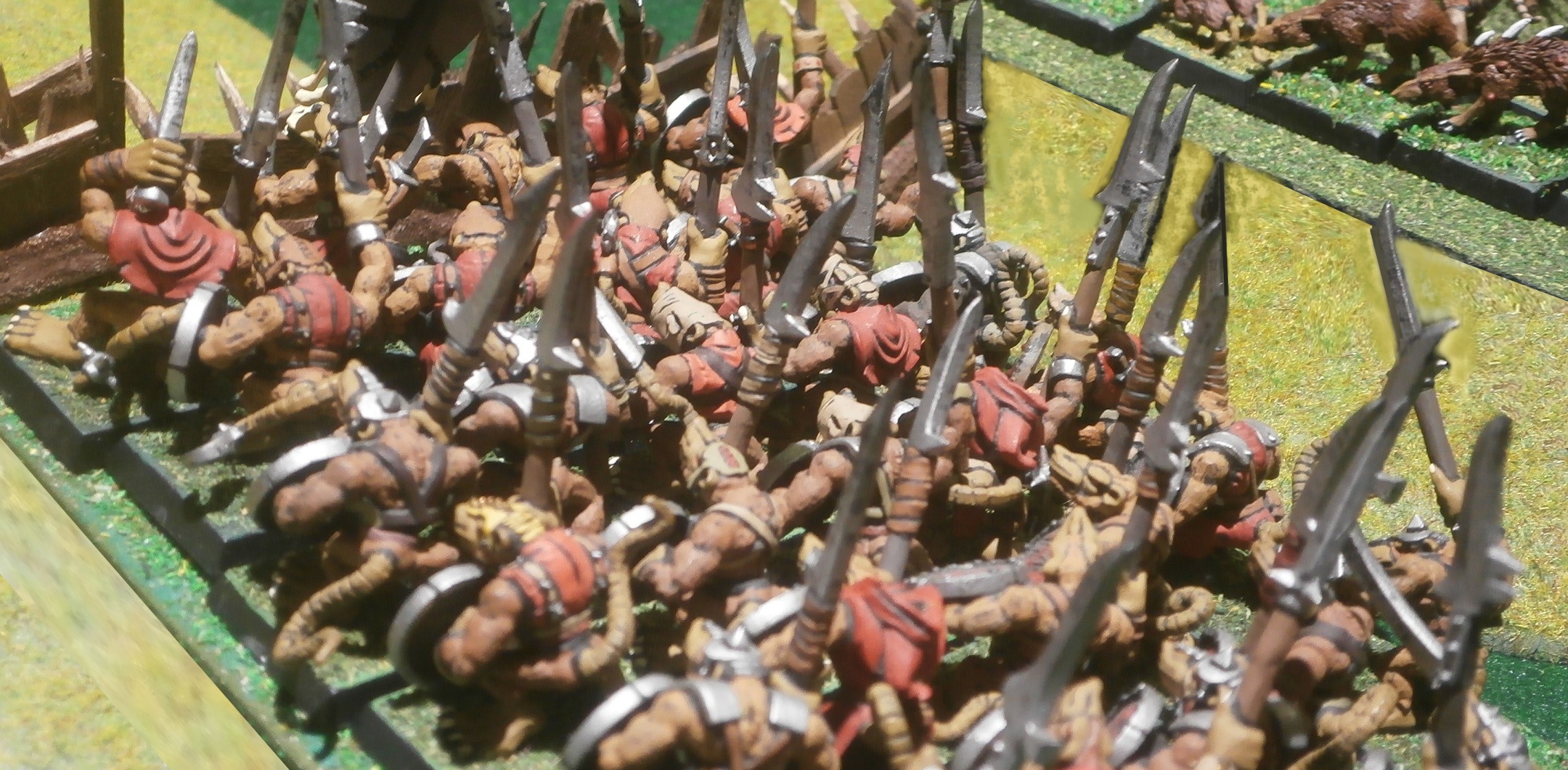
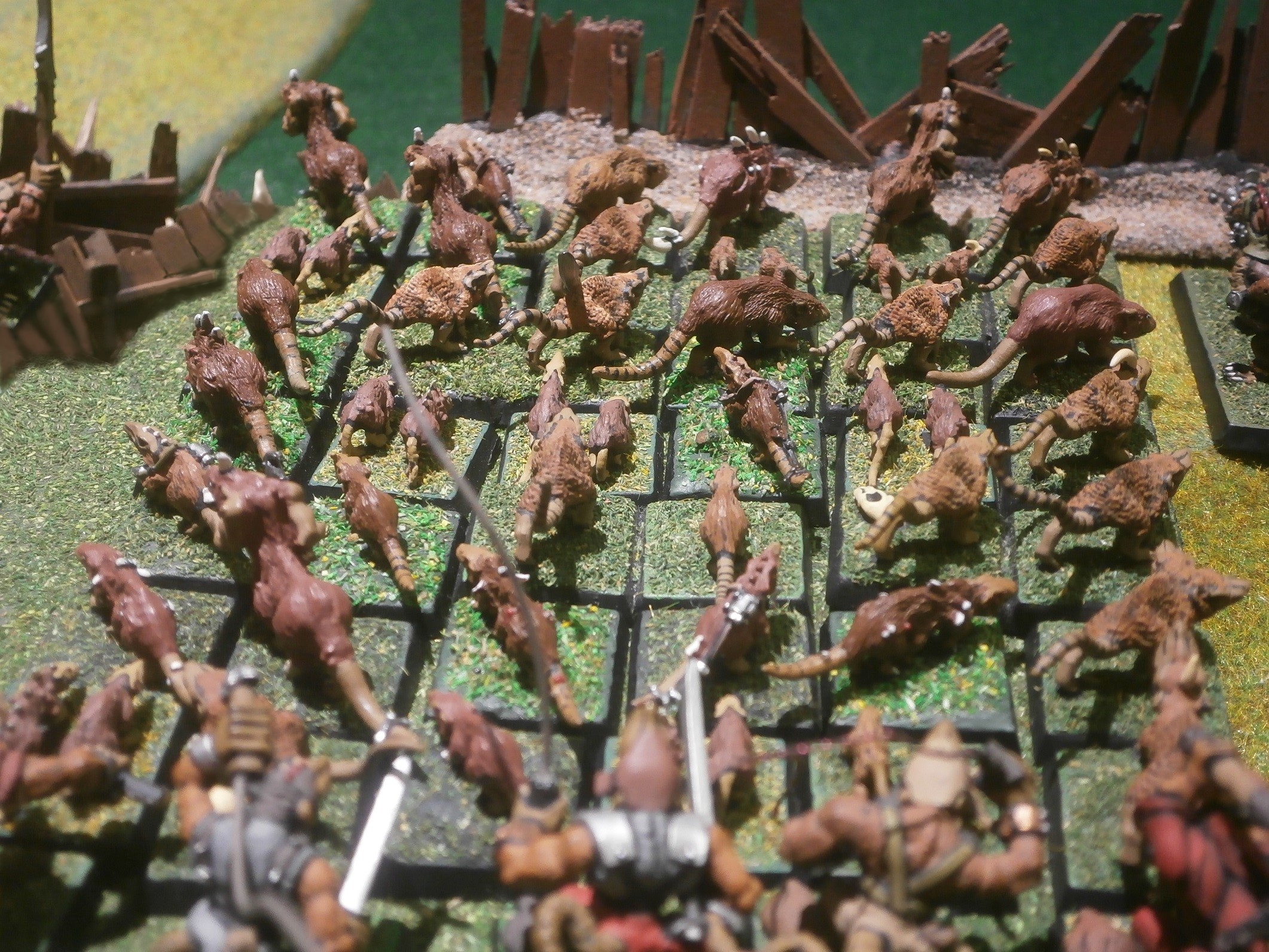
Between them swarmed a great mass of giant rats, of less worth than proper warriors but their sheer number could count for something in battle.
This is how Cralk’s half-slave army was to meet the oncoming foe.
…
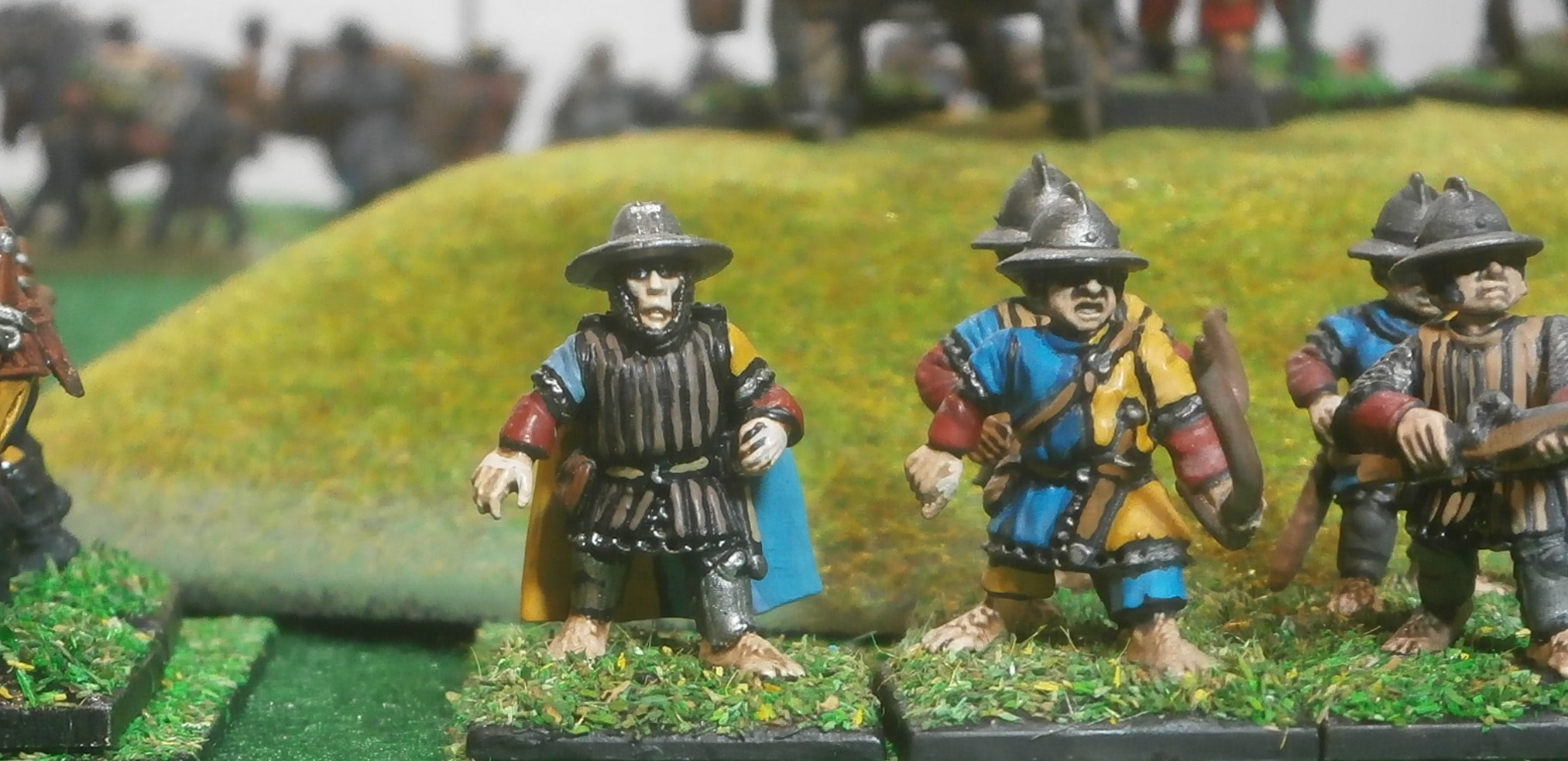
Captain General Barone Iacopo Brunetti had a lot on his mind, far more than the fact that he was about to give battle against a most dangerous foe, who had been victorious in their last two encounters, slaughtering nearly every man and dwarf who tried to stand against them (if not the fleet-footed elves). It was also the nature of the grand alliance army supposedly under his command, which contained his own Verezzans, his friend Prince Galeotti’s Trantians, Marchese Mino’s earnest Remans, a regiment of grizzled Pavonans under the command of the infamous Visconte Carjaval and the Tettoverdian elves (as mistrusted as they were mysterious).
All but the elves had voiced acceptance of his command on the field, and allowed him to direct their deployment, although the Pavonans did not array themselves exactly where he had ordered. The elven High Lord Veluthil Sarenmire had simply promised to cooperate, fully, and to fight well and hard, but had not given leave to the halfling general to issue anything more than requests and suggestions. Amenably enough, however, Veluthil’s army did form up on the army’s right flank as requested.
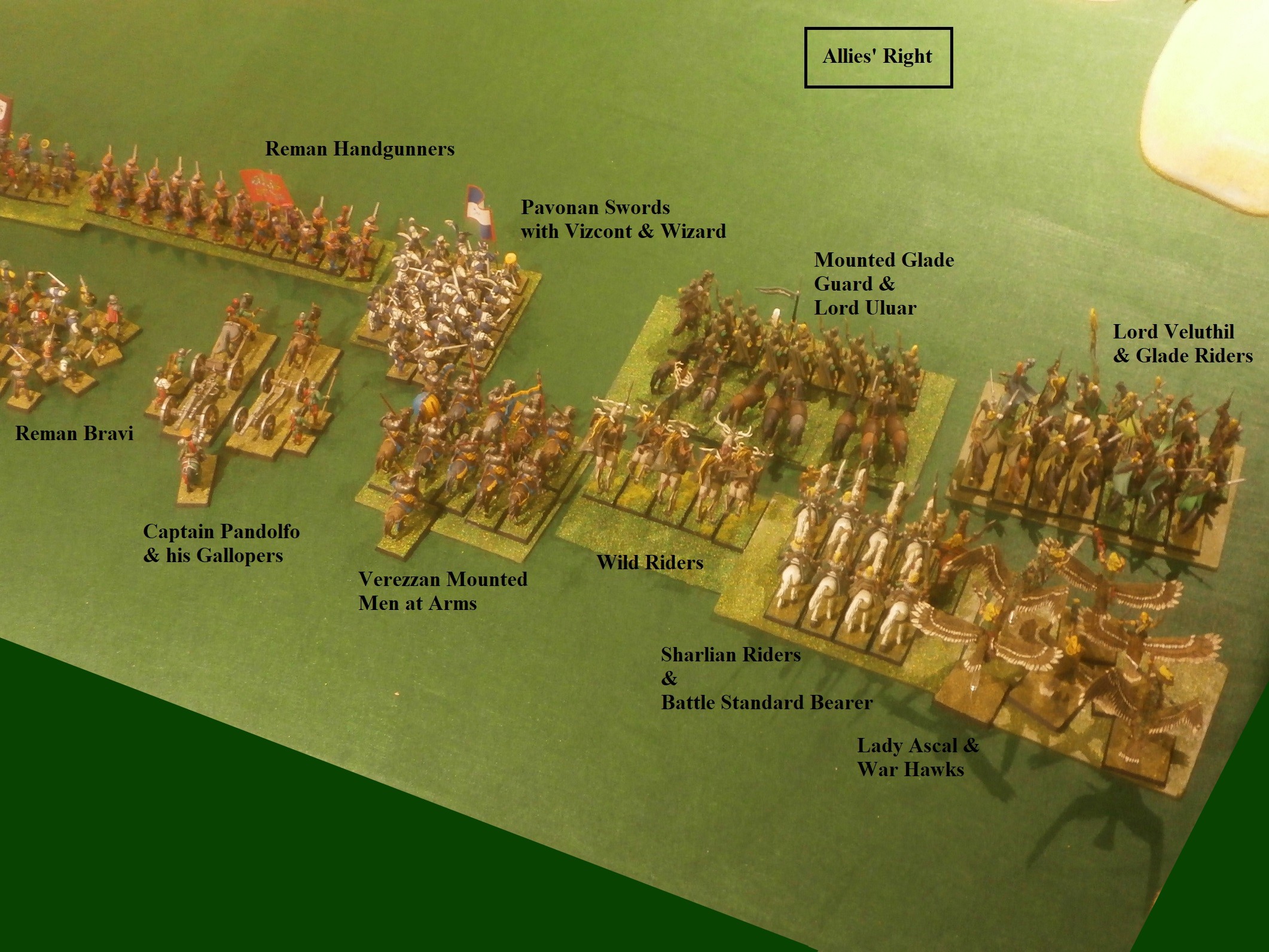
Veluthil personally commanded his glade riders, leading them upon the very flank of the army. Iacopo had met him prior to the battle for only a short time, and had exchanged just sufficient words to establish the elf’s attitude regarding his rank of captain general.
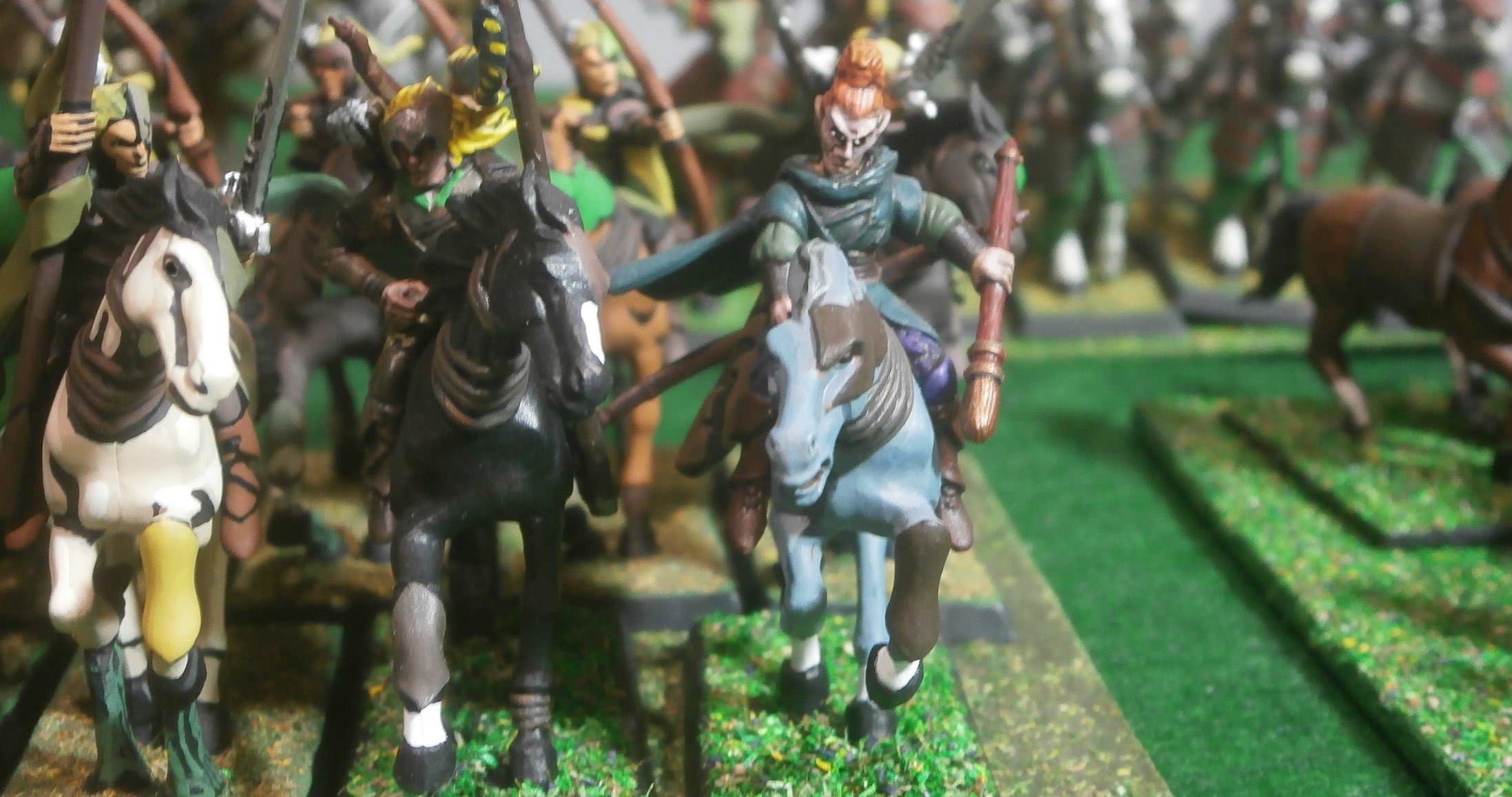
Iacopo had expected him to be a shifty sort of fellow, what with the reports concerning his hasty exit from the previous battles, leaving his erstwhile comrades to die, yet found him to be a stern eyed, coolly indifferent fellow, which should have come as no surprise considering the stories he had heard of the sylvan elves in his youth. Indeed, it had occurred to Iacopo that the widely held notion that the elves had fled twice out of cowardice was likely mistaken, and that rather they had perhaps retreated out of a cold-hearted assessment that the battle could not be won, and it were best to conserve their own force even if this meant sacrificing their allies to a man (and dwarf).
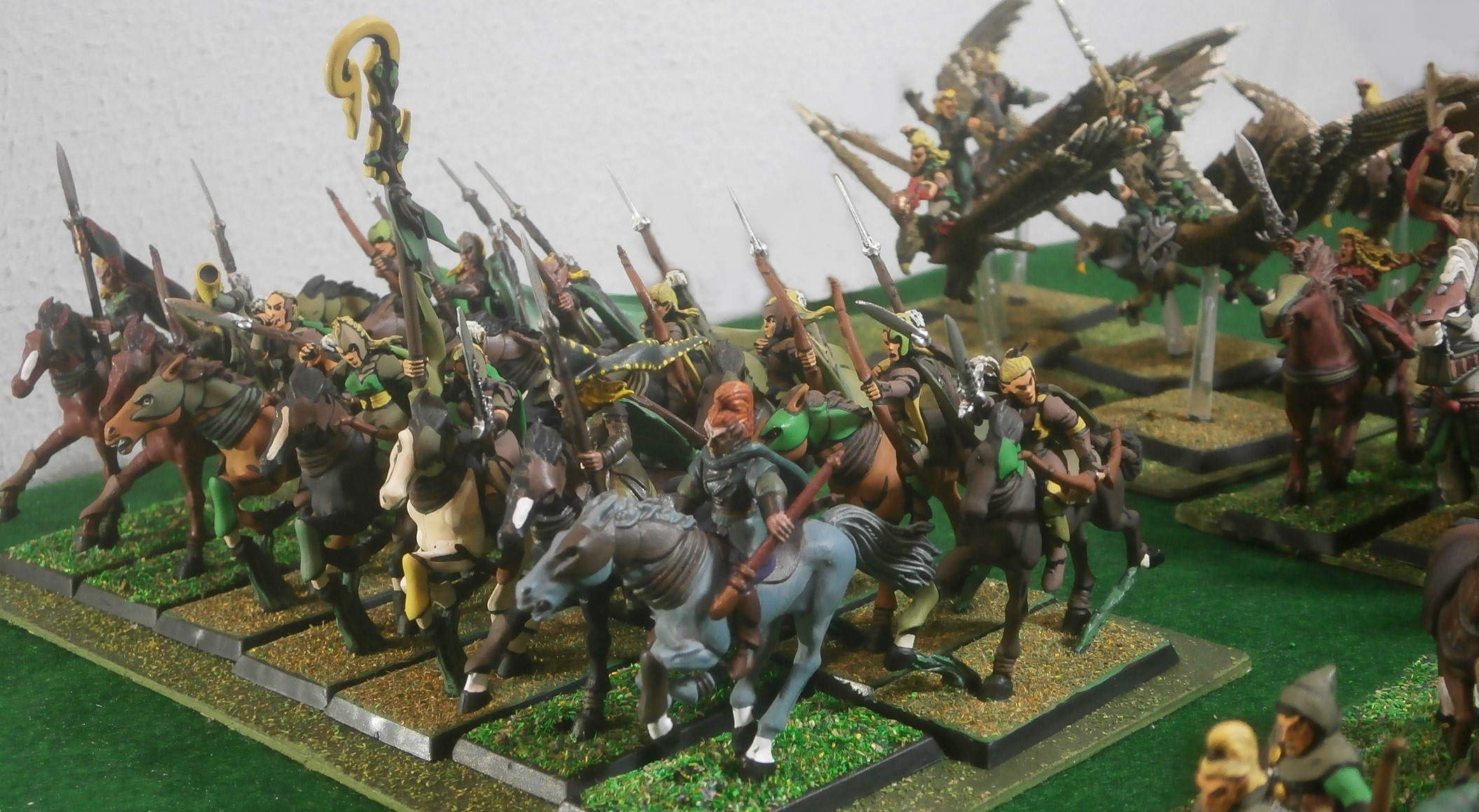
It also occurred to him that as this time the elves had come wholly mounted (even those who were to fight on foot had riding horses for the journey) then such an exit might well be very much on their mind. Was this the real reason why they were all ahorse? Still, even if the halfling barone was an amateur when it came to judging the earnestness of elves, Veluthil did give the distinct impression that he was here for revenge, and fully meant to have it, even if at great cost. He had gone so far to explain that the mounted nature of his Winter Hunt was entirely due to his intent to travel fast enough to reach the enemy as soon as possible, knowing – and this is exactly how the elven lord had put it to Iacopo – that: “Time is of the essence”.
Behind Veluthil and his mounted archers came the elven enchantress Ascal Arconvale, leading the warhawk riders. Twice before they had been thoroughly thwarted by the ratmen’s magical stormwinds, and their position now revealed their suspicion that they might again be grounded, for why else arrive behind the horsemen?
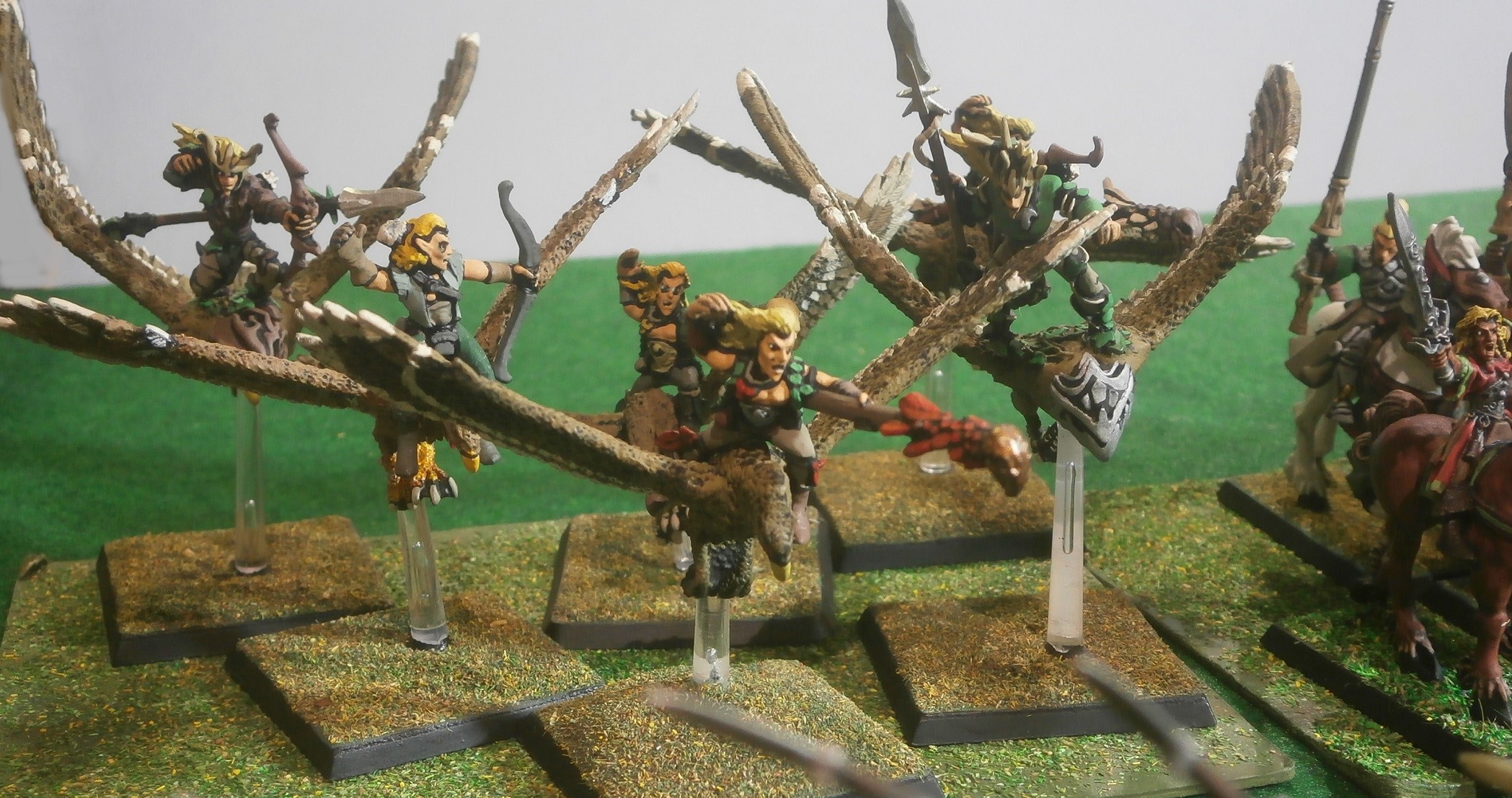
(Game Note: Some GM permitted rules-bending had been allowed – at a cost in supply points – in the elven army’s composition, beyond simply adding such unusual house-ruled elements like the Sharlian Riders. Ascal, for example, was allowed to ride a hawk, despite not being an option, provided the player paid the points cost of the displaced rider. And at double the usual cost, the warhawks were allowed some magical arrows that are not officially listed as options for them. Also, as you will see below, some Glade Guard were allowed to have travelling horses, which meant they could move around the field of battle, then deploy to fire in a manner akin to the already allowed galloper guns. Surely elves could dismount and shoot quicker than a gun crew could unlimber and fire?)
Beside the high lord’s company there was a regiment of glade guard archers, able to keep up with the rest of their force because of their riding horses (as good, if not better, than even the best horses employed by men). They were not skilled, like the rest, at shooting or fighting from horseback, but rather on foot, and so as they deployed, several of the company gathered the reins of a bunch of horses each and stood behind the rest as the lines were formed.
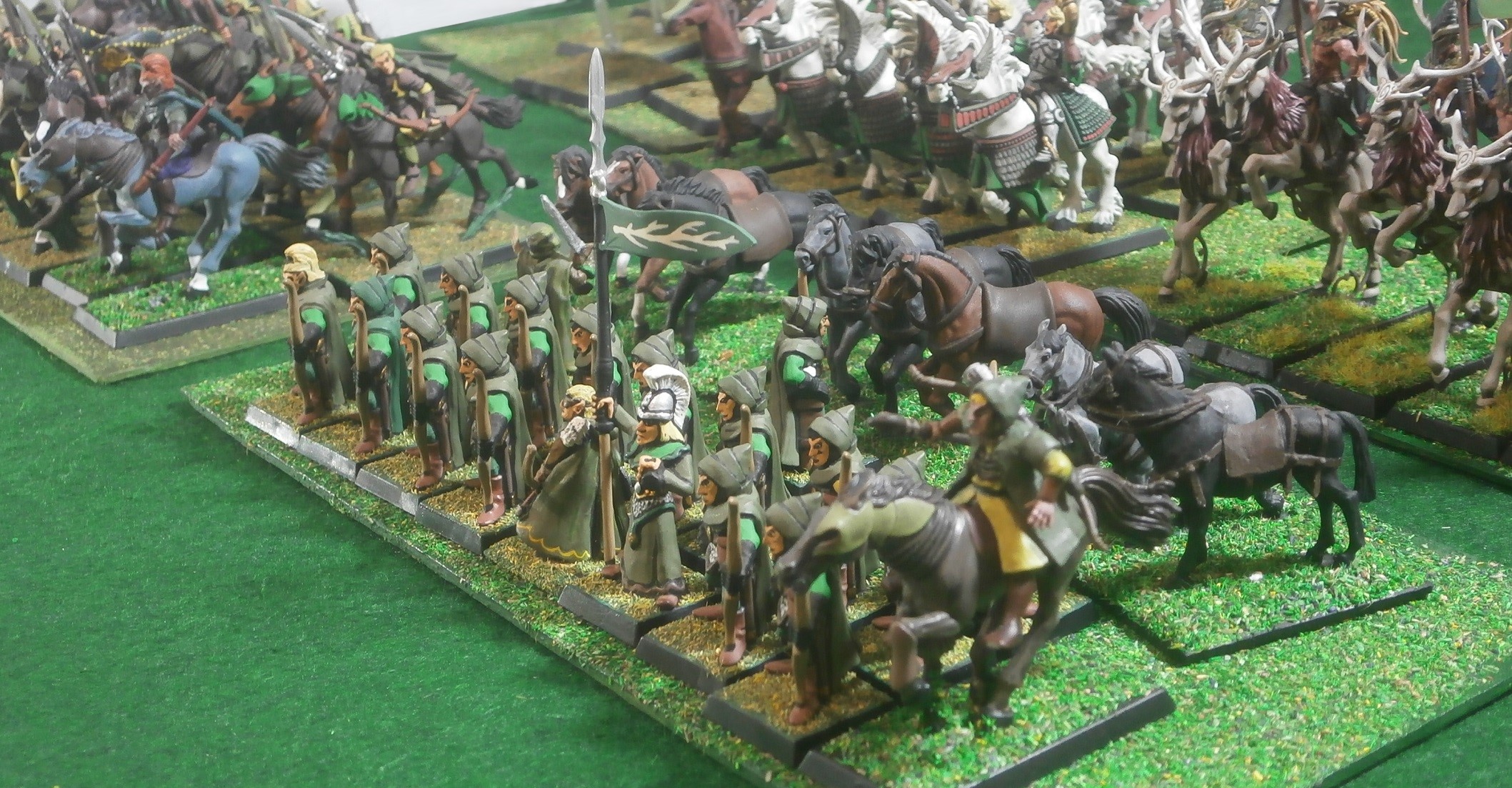
The wizardly ambassador Lord Uluar Greenstone rode with the archers, although he was so skilled he need not dismount to shoot and so remained in the saddle while they busied themselves with ordering their ranks and files.
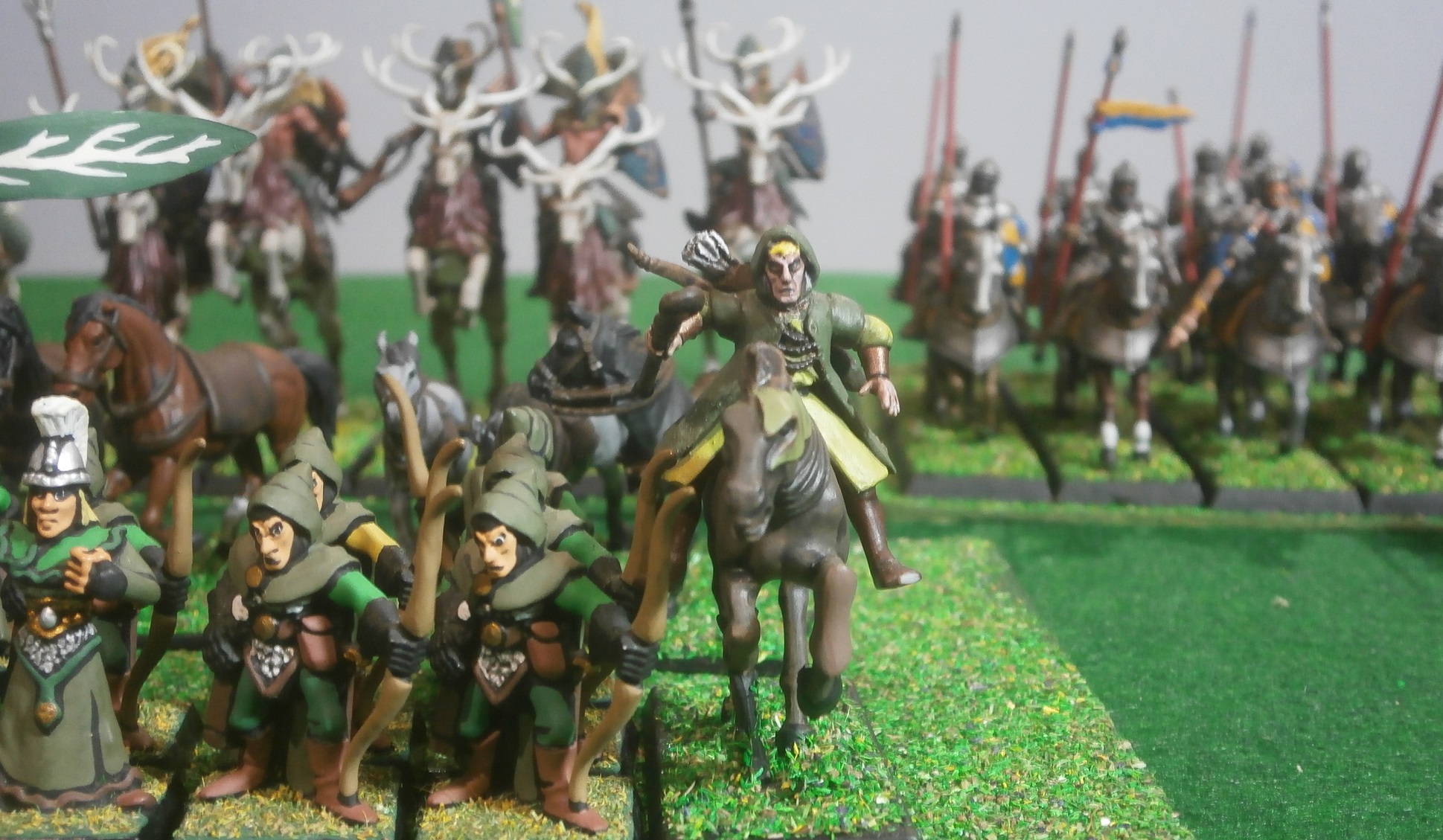
He, like his master Veluthil, was watching the enemy intently. If the rats intended to take whatever it was they were digging for away from this place, then they would find it was them who were being pursued this time, and not the other way around. Whatever they were seeking, it could surely only slow them down, and as every elven warrior and mage was mounted on horses swifter than any that men possessed, then even the rats’ nimbly scuttlesome legs could not save them. Perhaps the real Winter Hunt would begin just as this battle was ending?
Behind Greenstone rode the Wild Riders, their white stags bucking and leaping in anticipation of what was to come.
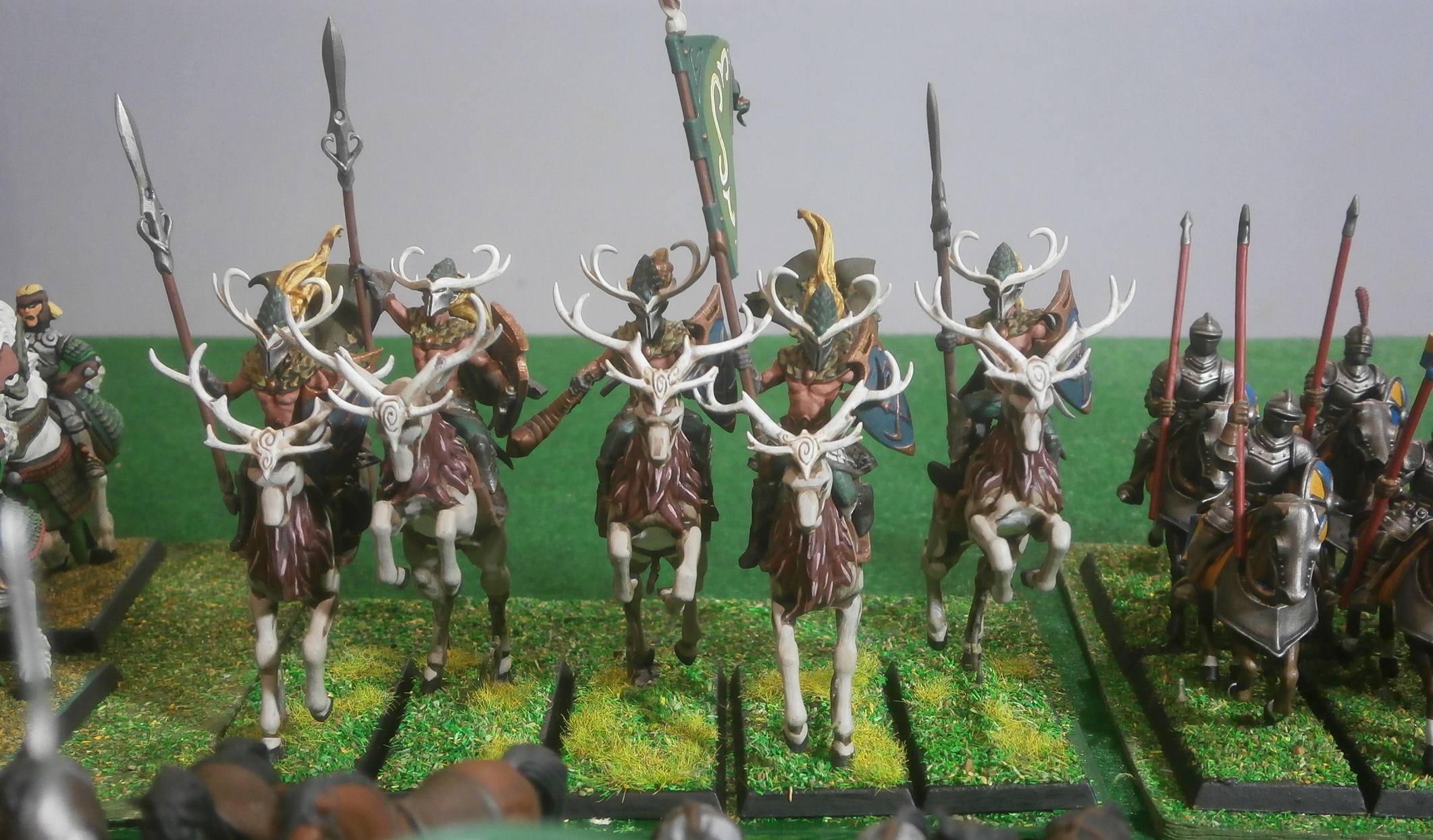
They had been too late to save the day in the last battle, slowed as they were by the need to travel with the rest of the reinforcements, but this time they intended to bloody their spear tips and hooves in the slaughter of many foes. Veluthil had recognised this almost manic keenness, which may well have been why he commanded them to array themselves in the second line, that they might be delayed just long enough to work out where best to strike, rather than simply strike at whomsoever first came within reach?
Also in the second line rode the Sharlian Riders, a newly raised regiment built around some surviving former mercenaries who had busied themselves in the wars and affairs of men out of some strange curiosity for the wider world, and who rode heavier horses than the rest of the elven force, and not a one of whom carried a bow, instead intending to fight up close with their lances, as did the mounted men at arms of the human Tilean realms.
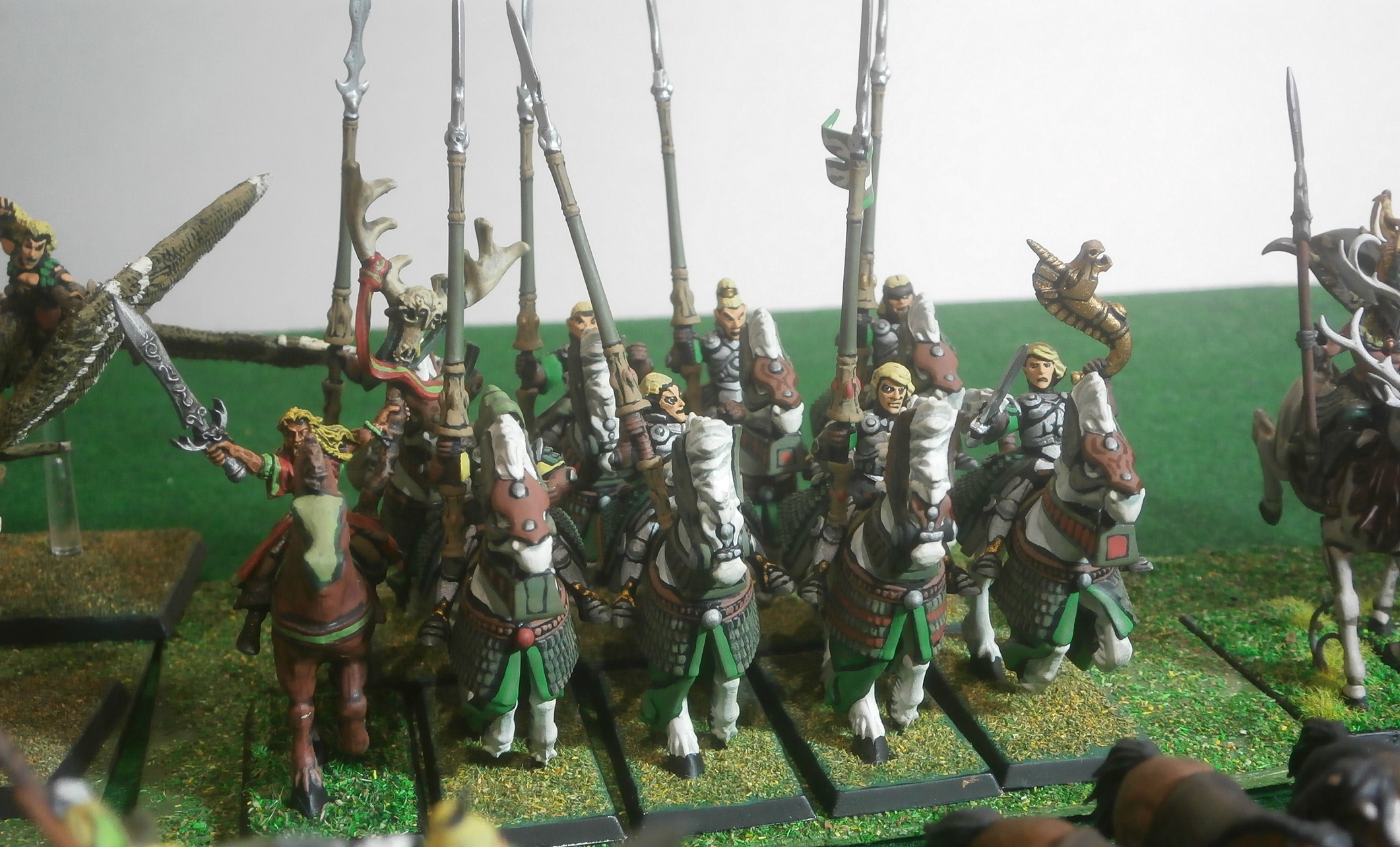
Their methods being contrary to the traditional, elven ways, nevertheless they must have been respected by Veluthil, for he had commanded Captain Syndra Mossmantle, the army standard bearer, to ride with them. She bore the stag-horned banner and was armed with the magical Sword of the Hunt, enchanted with a blessing to make those she rode with fight far more fiercely.
(Game note: The sword is a helm of the hunt in the shape of a sword rather than a helm, because the model has no bleemin’ helmet!)
Also to the right of the centre rode the Verezzan men at arms, commanded by Lord Galvestro Vescussi’s right hand man, Captain Puccio d’Este, recently returned with his master from the Border Princes, where the two of them had been mercenaries.
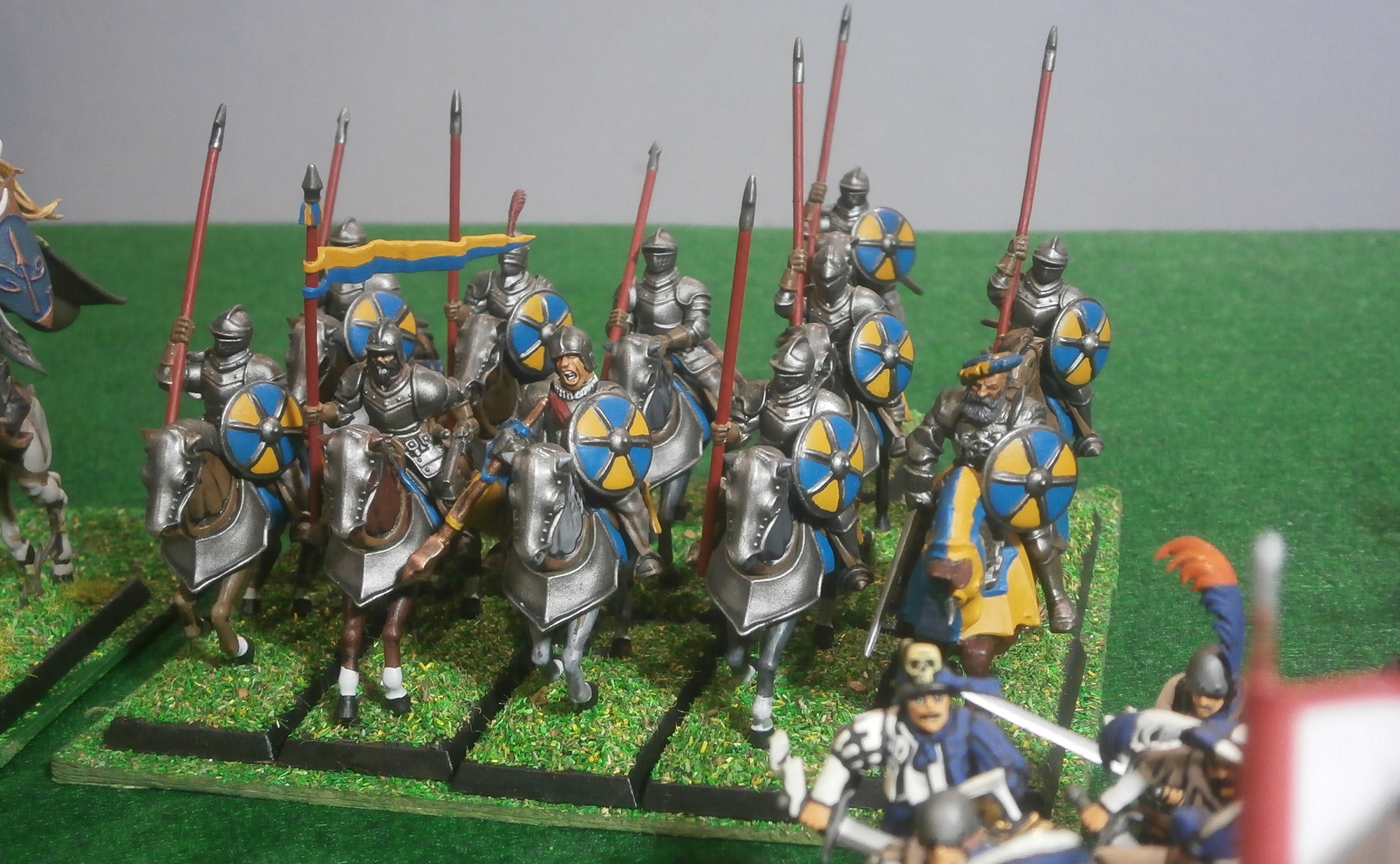
Near them marched almost all that the Pavonan Lord Silvano had sent to join the alliance, being a regiment of swordsmen led by the dismounted Visconte Carjaval and an apparently powerful wizard.
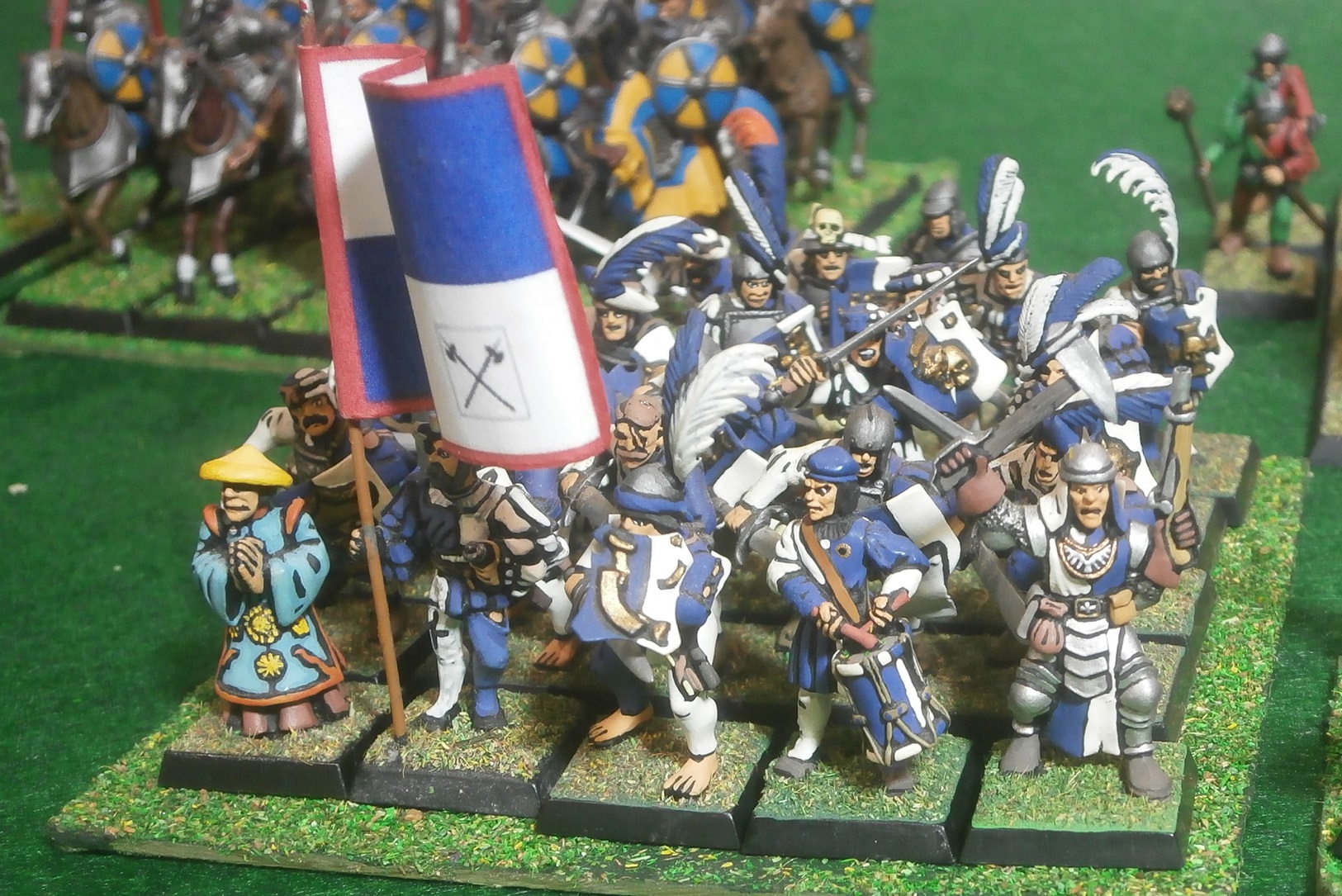
Iacopo had recognised the wizard’s yellow hat, of a peculiarly Cathayan style. He had seen it before, at the battle for the bridge at Casoli, where its owner had fled from one of the houses to escape after the duke’s defeat. He had presumed such a man would go into hiding or escape to some distant realm but no, it seemed he had instead sought out the duke’s son and entered into his service. A wizard with a taste for battle! Iacopo could only hope both that this wizard and the visconte would apply themselves wholly to defeating the rats, and not in any way look to bring harm on the baron’s army, who they had only recently been at war with.
Iacopo presumed that Carjaval was repressing a pent up hatred, mainly because the barone himself was doing exactly that. He truly hated the Pavonans, and had wondered whether he should simply order them to leave, as their loss would be no big thing to such a large force (contributing only one regiment and a single cannon) but he had not done so. Firstly, because he was loathe to lose whatever harmful magics their wizard could conjure in battle. Secondly because if he did send them away they might then rejoin with whatever force Duke Silvano had kept back with him and wreak who knows what kind of havoc who knows where. And thirdly, because he wanted to be fully compliant with the terms of the new peace treaty, so that should war break out again he could, as ever, honestly point to the Pavonans as the sole malefactors, and have the lawful gods on his side should he then need to punish them again!
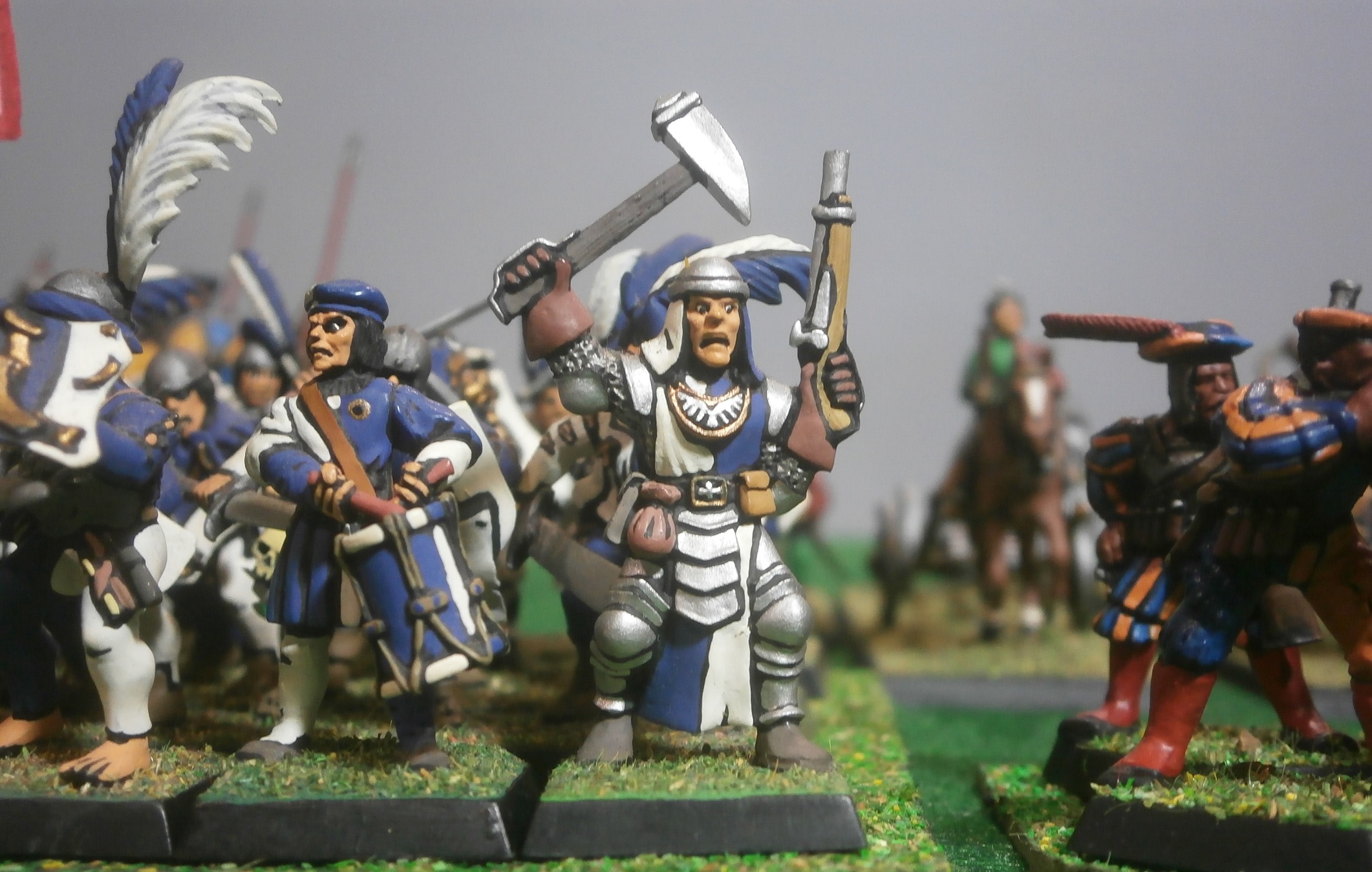
His decision, so far, seemed sound, for the Pavonans had marched promptly with the rest of the army, and had now joined the line of battle, if not exactly where he had intended them to.
“Let us see,” he thought, “what they do next?” Hopefully their famous pride would spur them on to show themselves to be willing warriors, especially when witnessed by their old ally the Remans, as well their old enemies the Trantians and Verezzans.
Captain Pandolfo’s guns, once more a brace of pieces (the damaged gun having been replaced using Verezzan gold) …
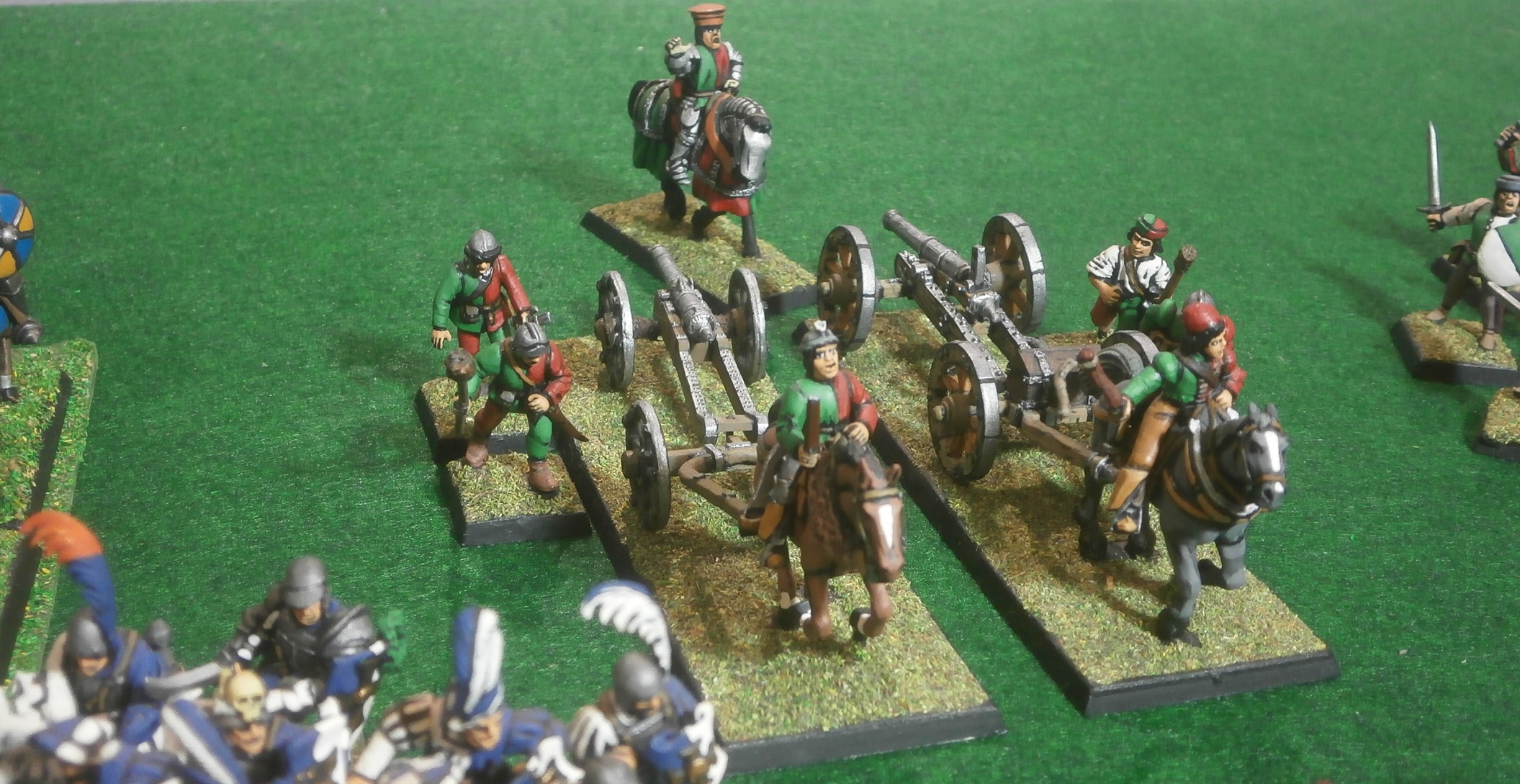
… trundled behind the Reman handgunners.
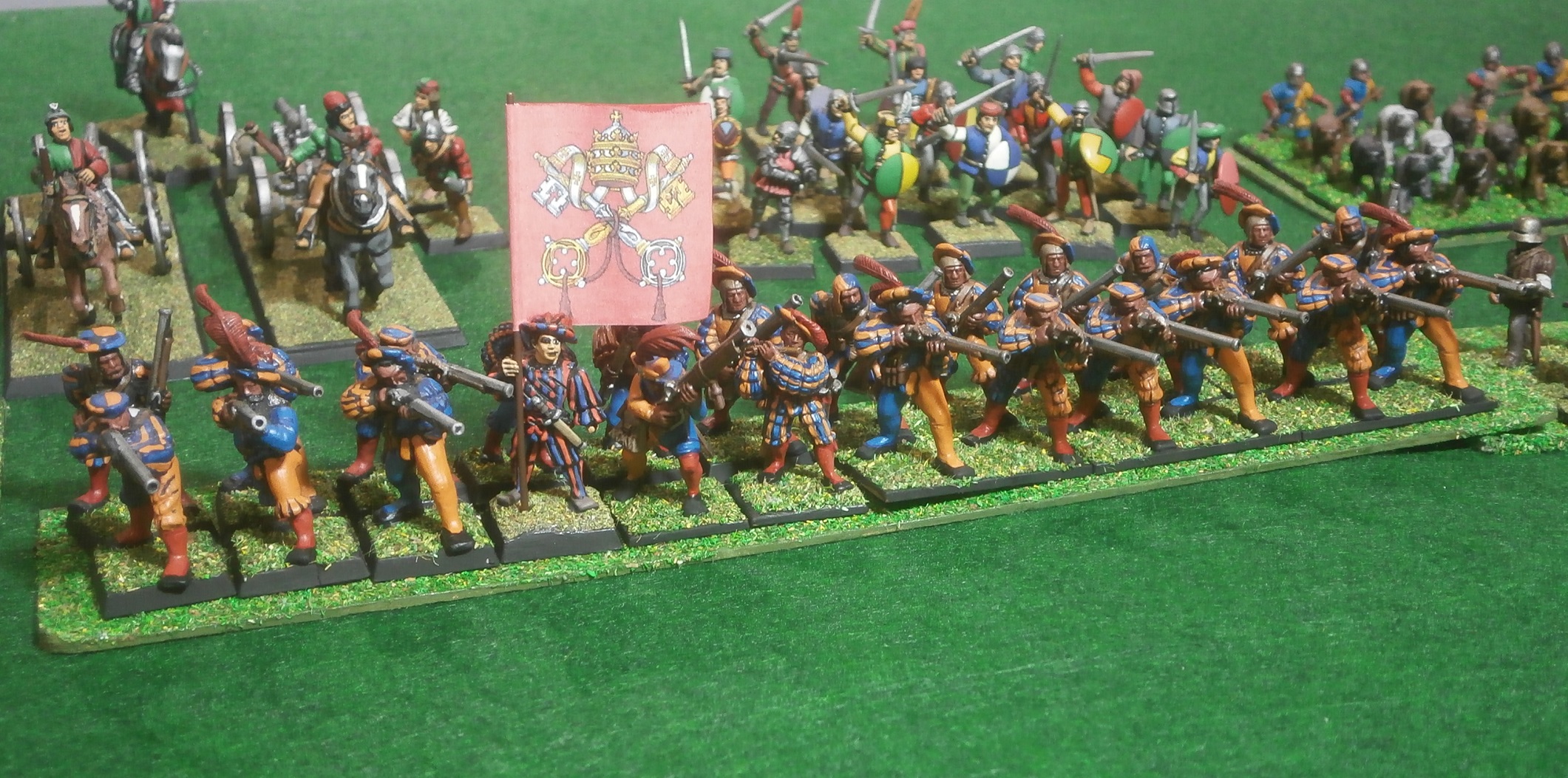
While the Reman bravi swordsmen hopped about in the rear, looking out for their chance to slip through the line and attack some (hopefully) unsuspecting foe.
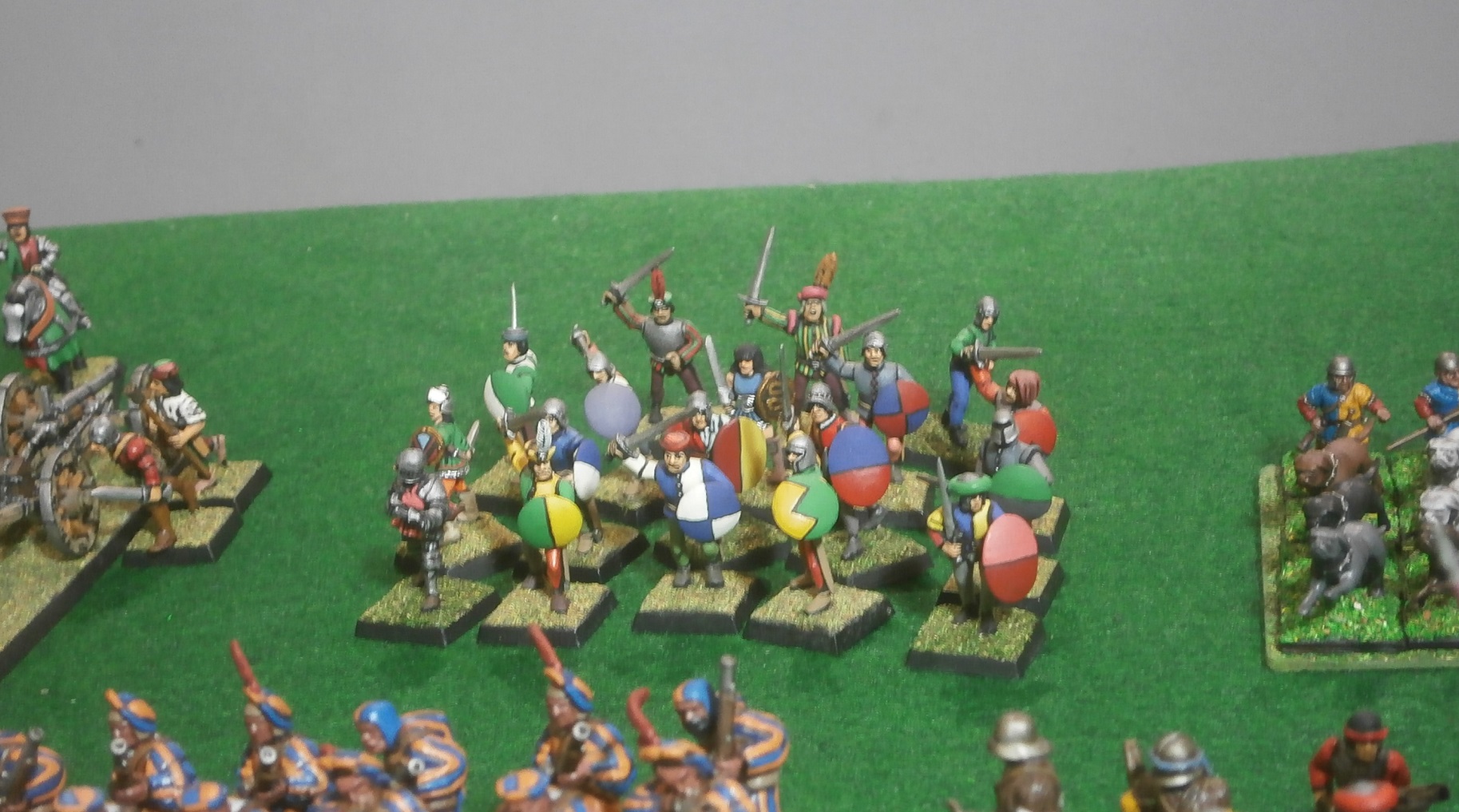
Prince Galeotti’s crossbowmen, now flying the flag of the city state of Trantio …
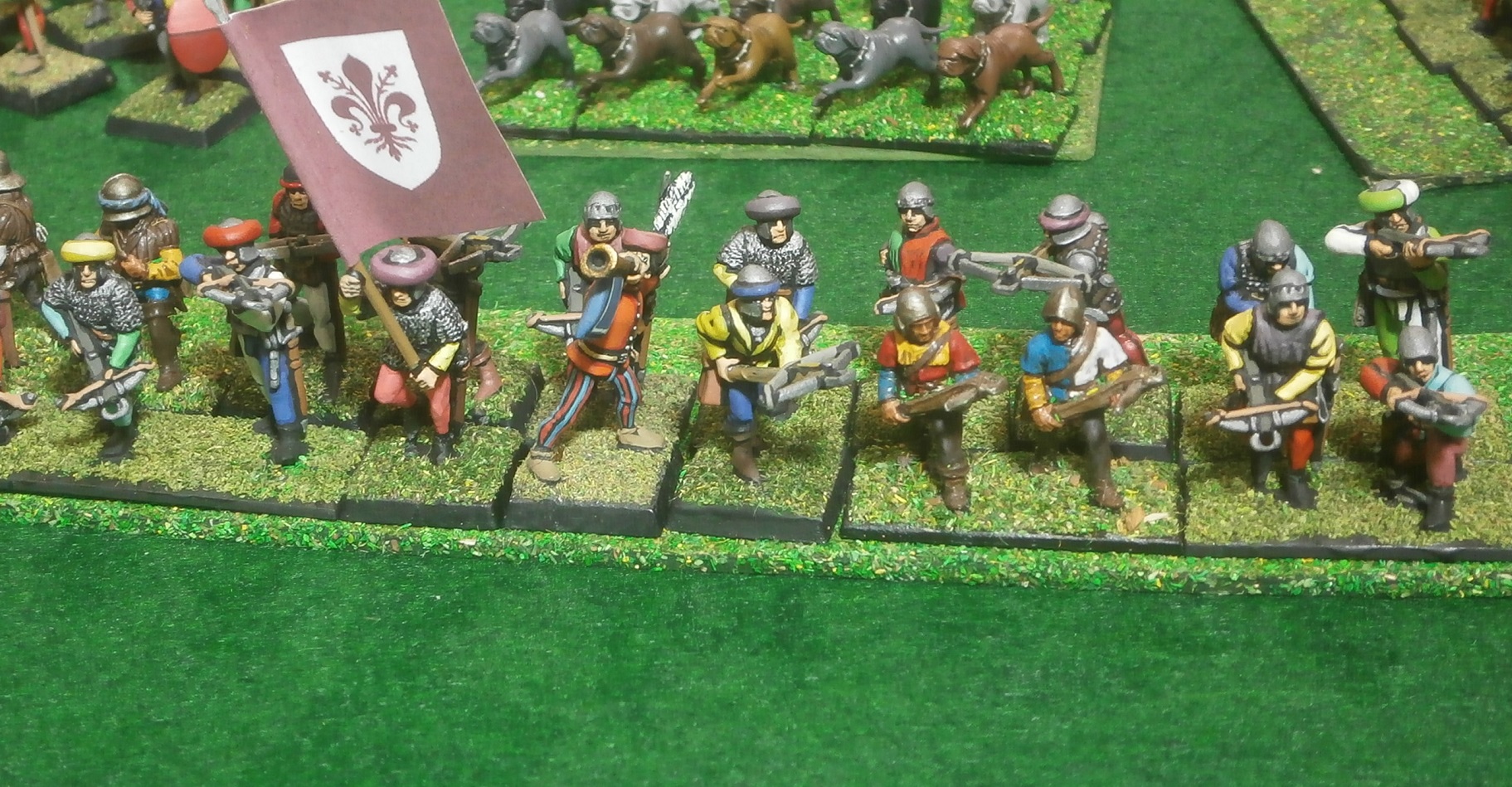
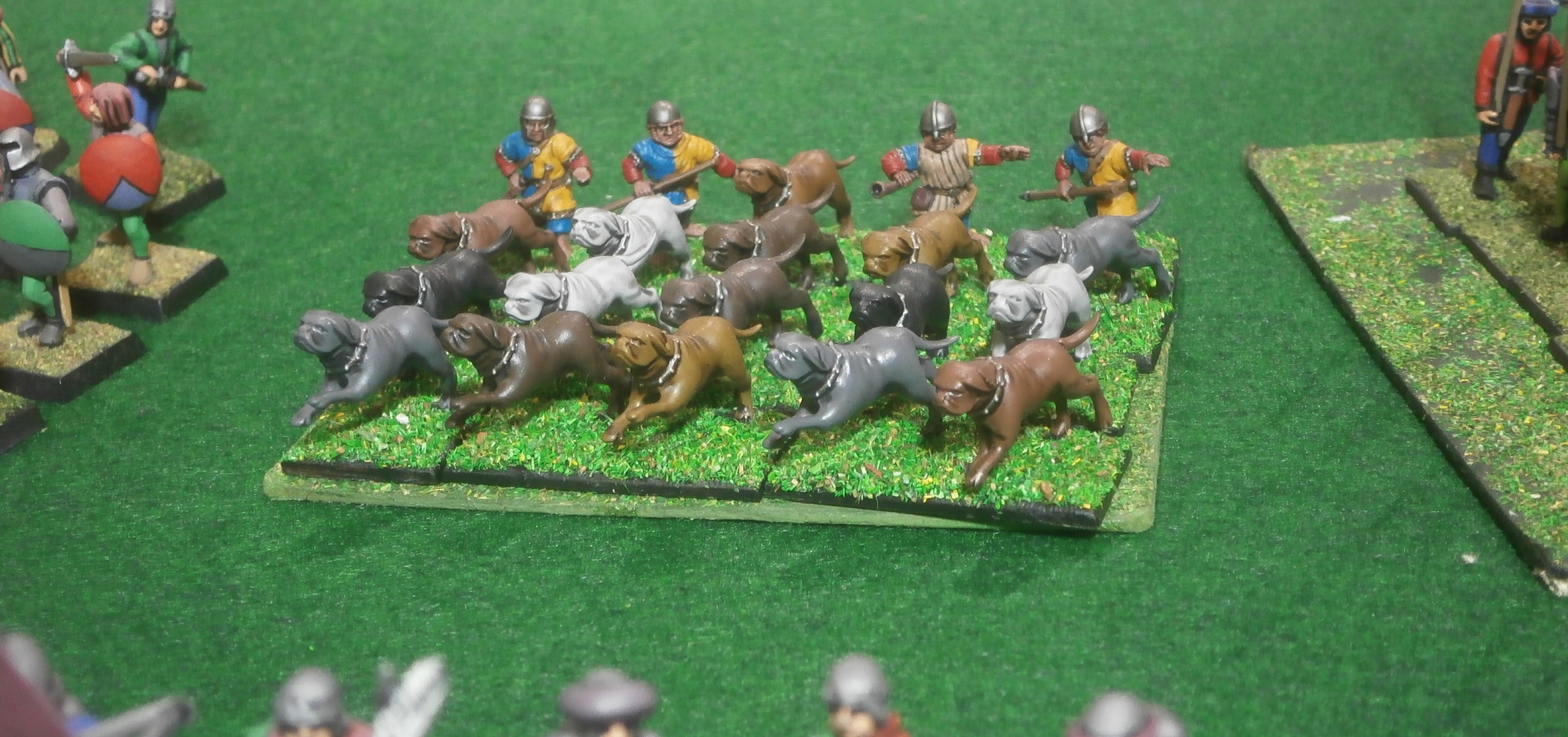
… spanned their weapons in readiness, while the Verezzan Masters of the Hounds restrained their wards a little way behind, wondering to themselves how such as they and their snapping mutts might possibly be of any real help to such a massive army as this!
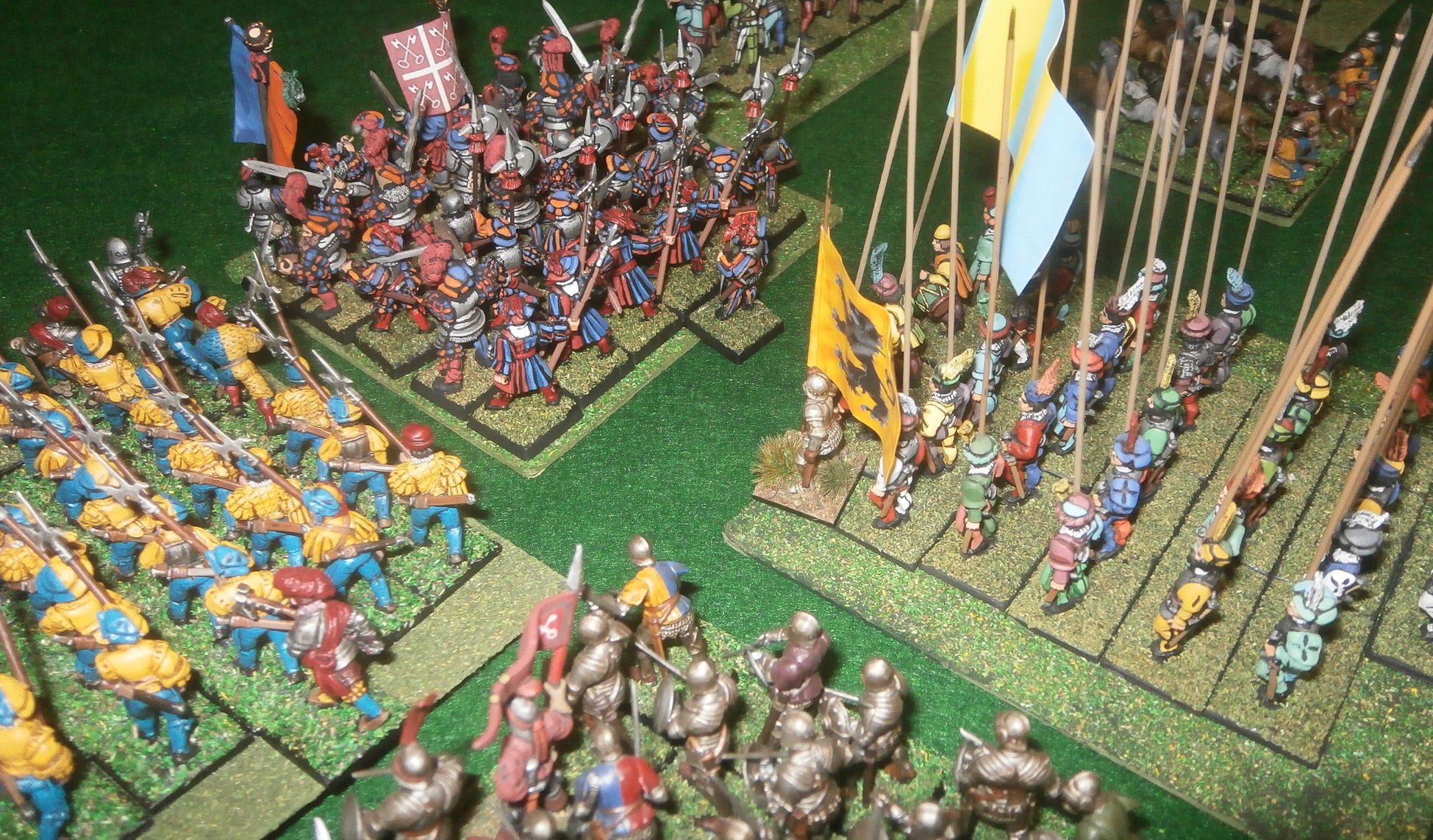
In the battle-line’s centre was the great mass of fighting troops, in the form of four large regiments of pikemen, halberdiers and skilled swordsmen, as well as a flanking company of Verezzan ogres.
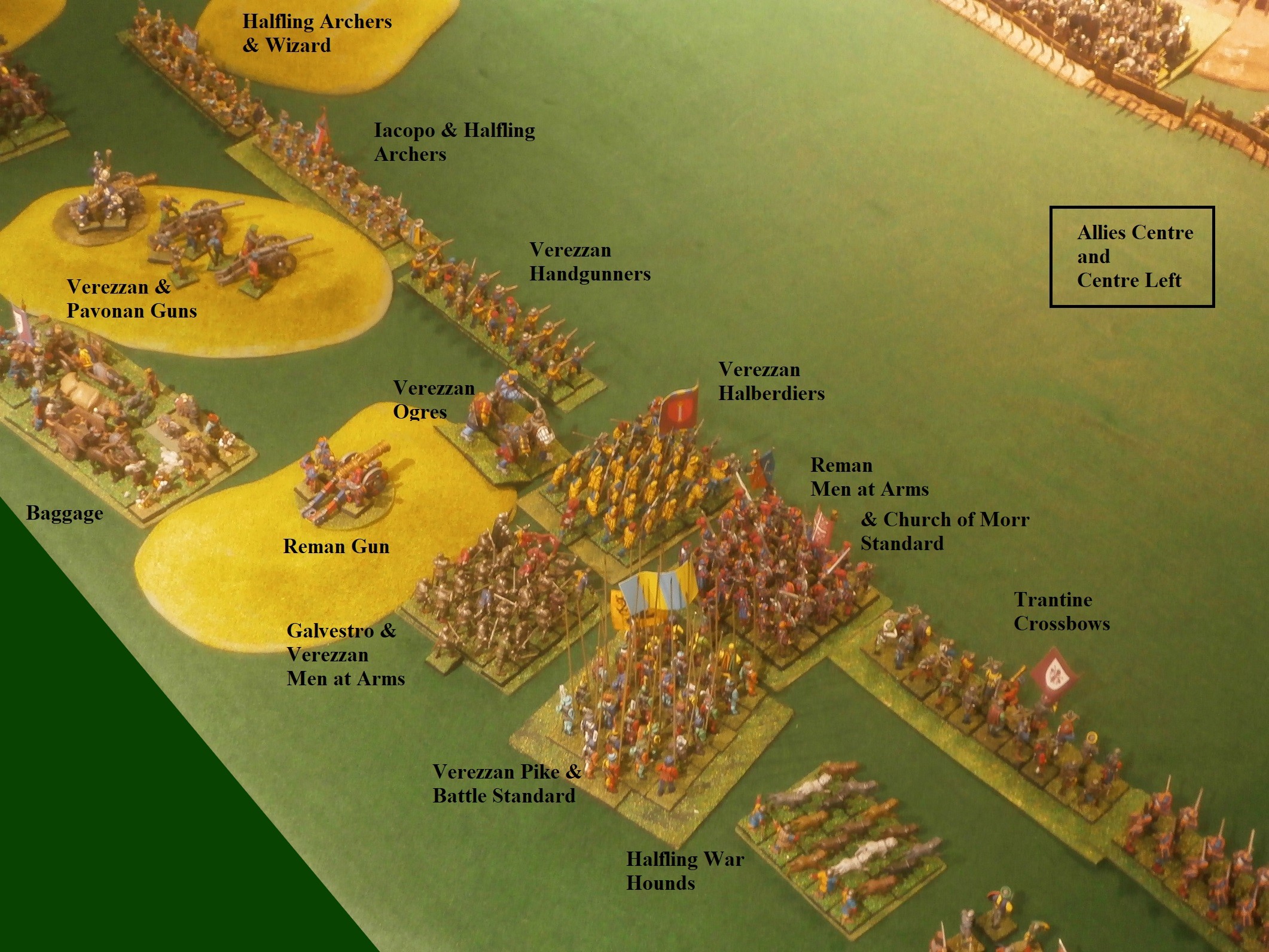
The Remans were captained by Marchese Mino Accottato, who was being considered for the role of captain general of Remas.
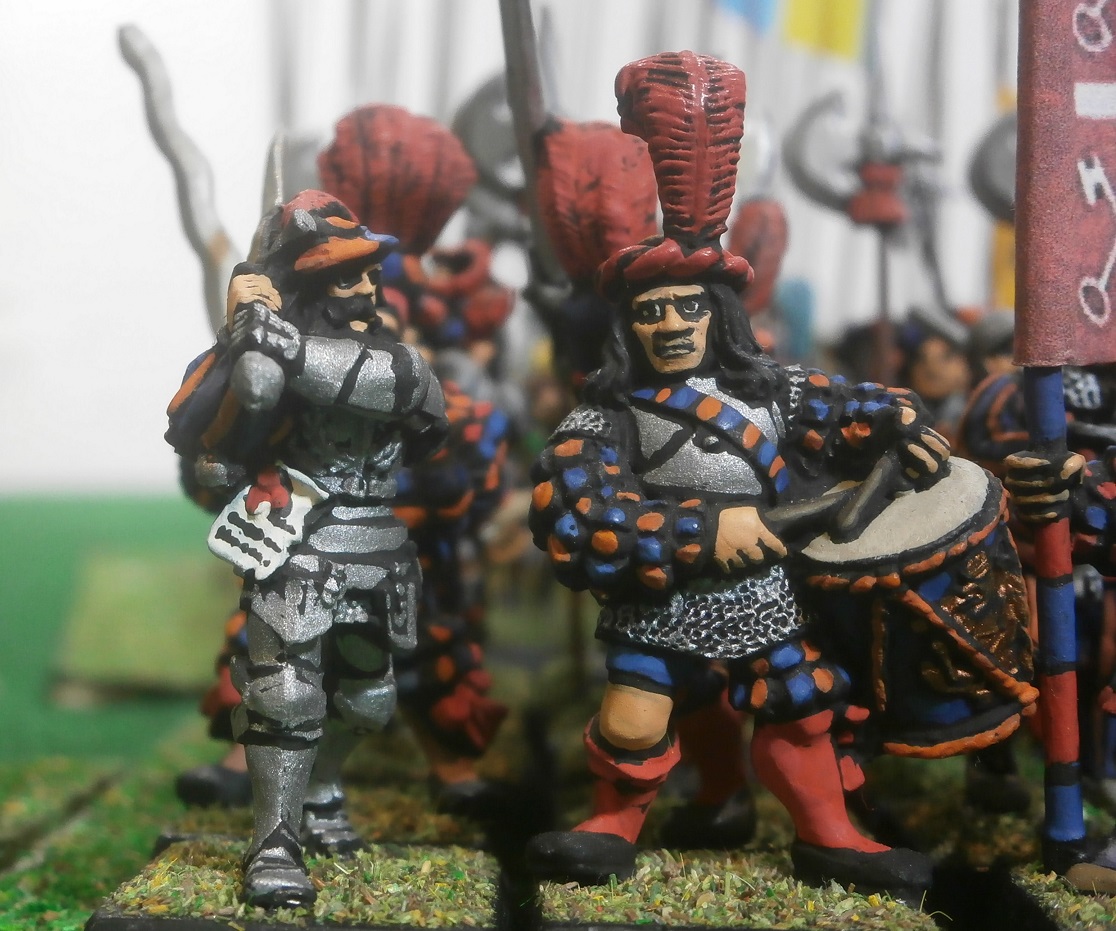
He had considerable experience in war, having been a condottiere in Tilea, Estalia and the Border Princes, but had now dedicated the rest of his days to the service of Holy Morr’s favoured city. With him marched a colourful regiment of men at arms, bearing greatswords and halberds.
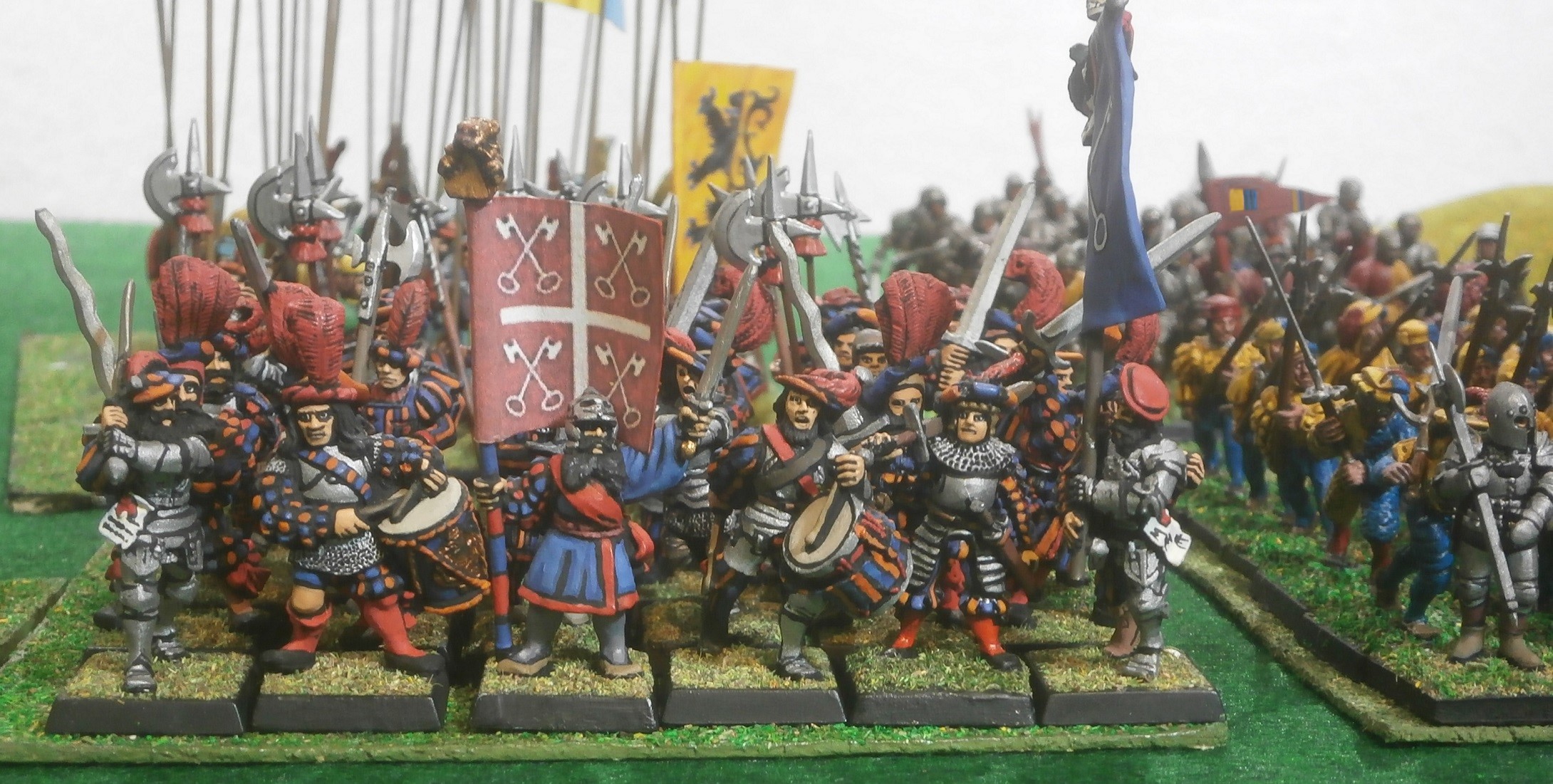
Captain Bonaguida Calbi bore the army standard in their front rank, the Battle Flag of Holy Morr, which inspired not just the Remans but all those who bowed to Morr, which was every Tilean upon the field, as very few would be foolish enough to spurn worship of the god of the afterlife!
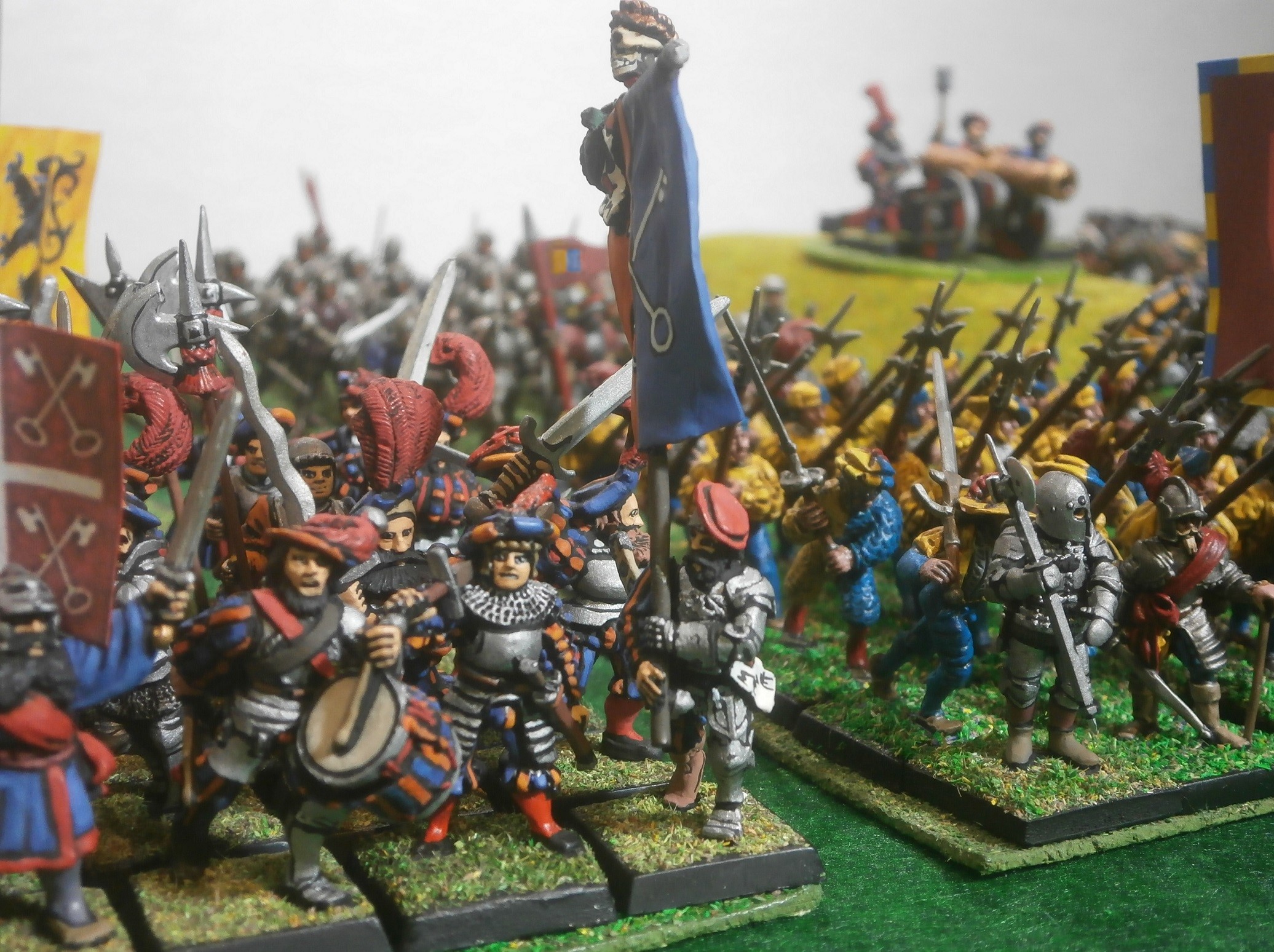
Beside them came Verezzo’s halberdiers, who had arrived too late to fight at Casoli and had been champing at the bit to show their worth in battle since then. They carried the emblem of the Verezzo City guard, for nearly all came from that place, and were led by the long serving Captain Muzio Vanni, who had been about the busiest soldier in Tilea over the last few years. Iacopo loved him as a brother and trusted him implicitly. Who better to command the leading regiment at the very heart of the line?
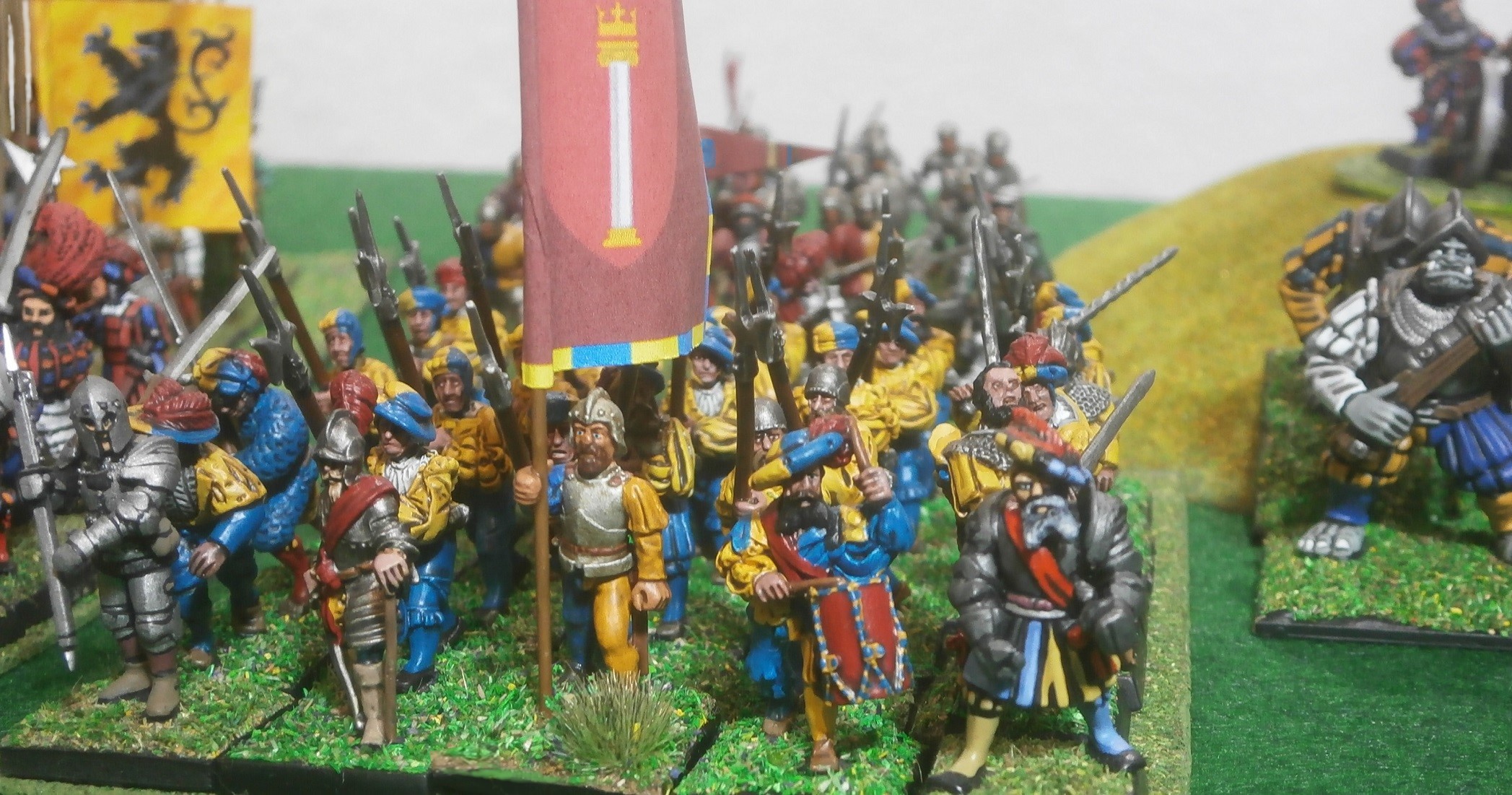
Behind the halberdiers came the newcomers to the Verezzan army, a regiment of veteran men at arms, well armoured, with their beloved leader, no less than the late Lord Lucca Vescussi’s brother, Lord Galvestro.
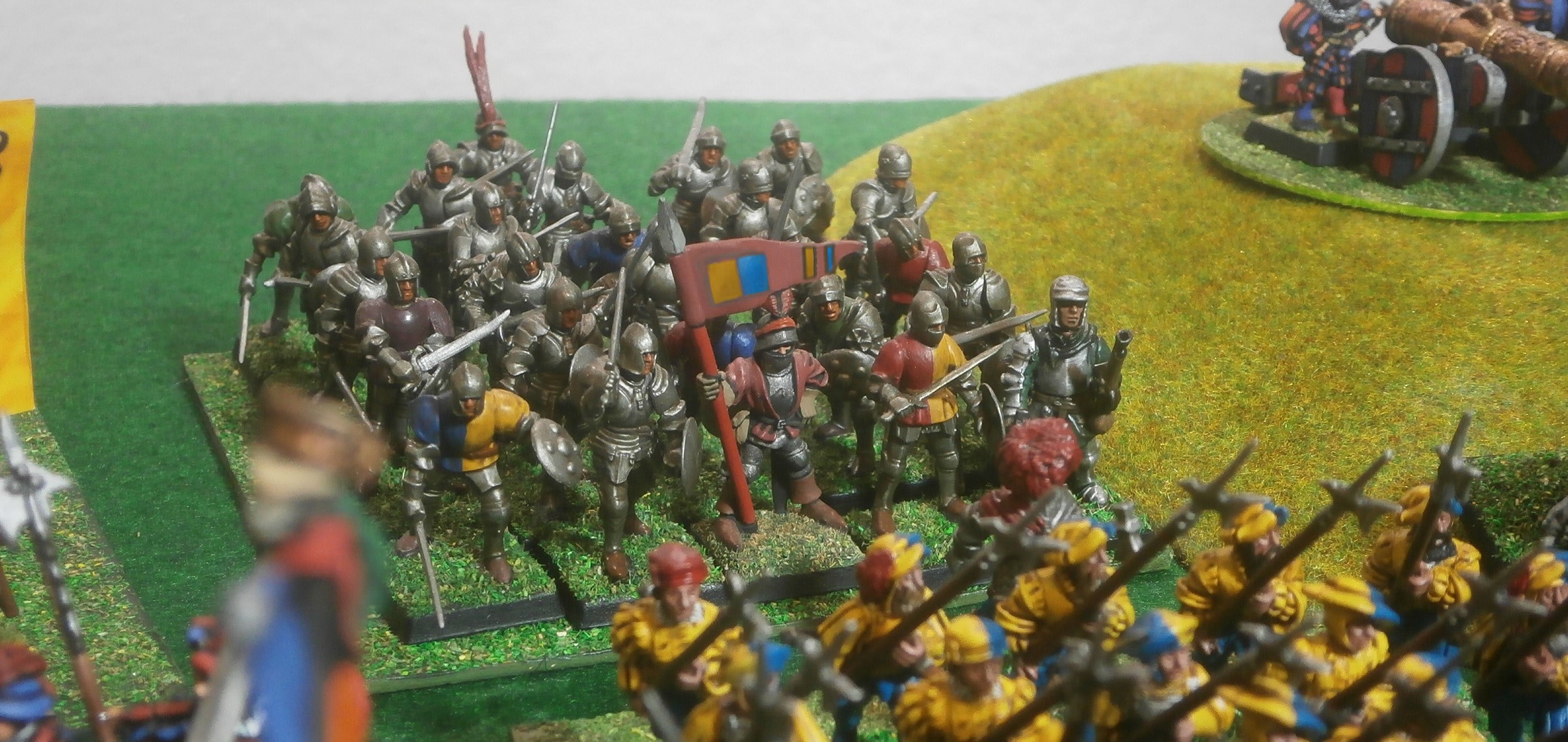
Galvestro, an honourable man like his much older brother, had seen out his contract in the Border Princes, then returned home to lend assistance to Verezzo in its time of need. He had sworn to protect his infant nephew, heir the the throne, and to fight for the defence of Verezzo against all threats. Barone Iacopo had been surprised that the nobleman had not demanded that he command the city-state’s army, nor even hint that that should be so, but rather he had earnestly thanked the halfling lord for his duty to the late Lord Lucca and to the realm. Besides, thought Iacopo, he was not just the sworn regent, as per Lord Lucca’s wishes, but also Capitano del Popolo, and so the people were behind him. Well, at least for now. He would see how everyone felt after this battle was fought!
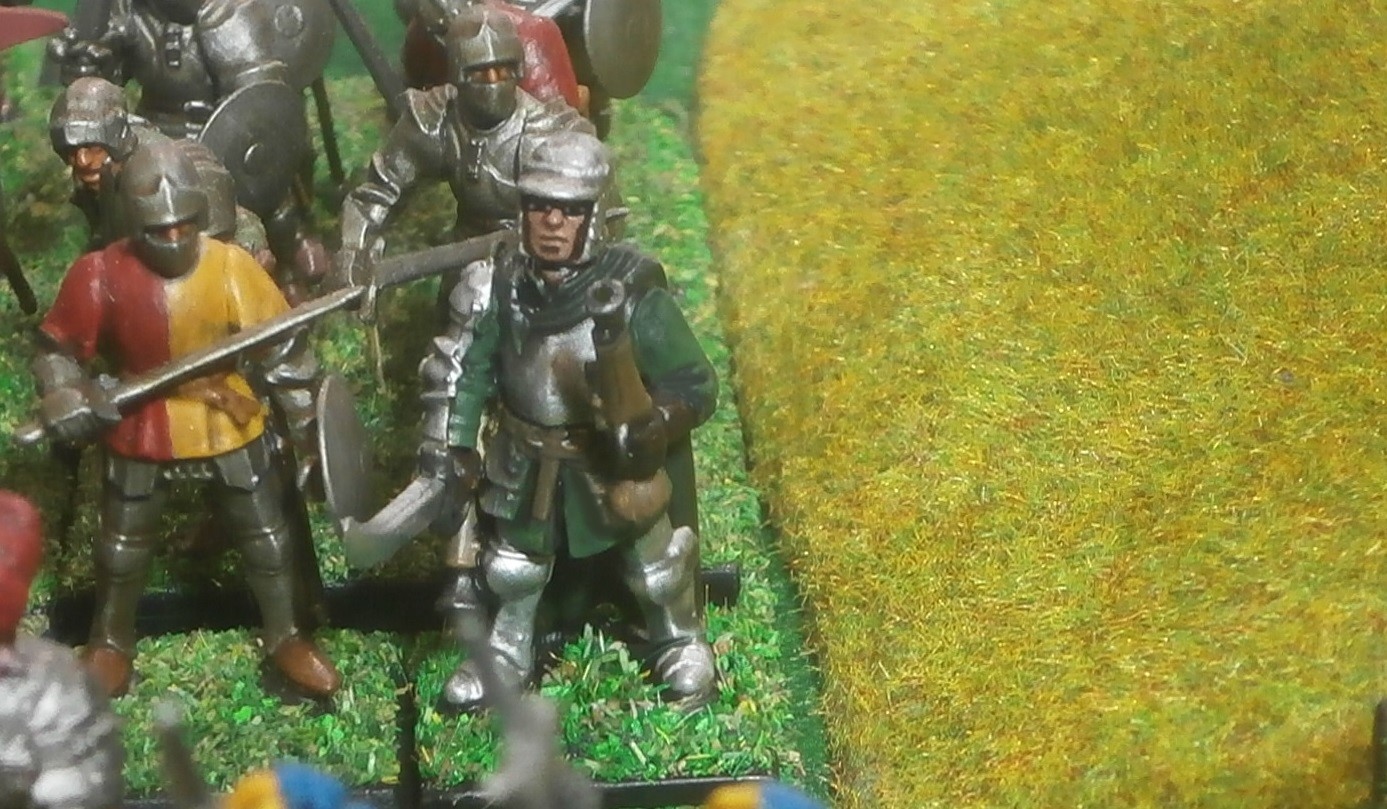
Galvestro had, as commanded by Iacopo, left some of his force in the realm of Pavona to ensure a peaceful hand over of power and no breaking of the terms, and to keep an eye on Silvano and his soldiers to ensure they did not in any way trouble Verezzo, as Duke Guidobaldo had done. They were to leave as soon as they were satisfied all was at it should be. Captain Galvestro, however, had demanded that he and his personal bodyguard serve in the alliance army, for he desired greatly to do what he could to defeat the rats and put a stop to their dastardly schemes.
Behind the Reman regiment marched the Verezzan pikemen, who had fought a hard fight upon the bridge at Casoli, where they had finally felled Duke Guidobaldo and become the first to cross into Pavona proper! Perhaps Barone Iacopo thought to give them a lesser role in this battle, for they had already done, and suffered, so much? But this was unlikely, for they marched besides Galvestro and he certainly intended to get to grips with the verminous foe.
On the slope below the Reman cannon stood the newly recruited brutes from Verezzo …
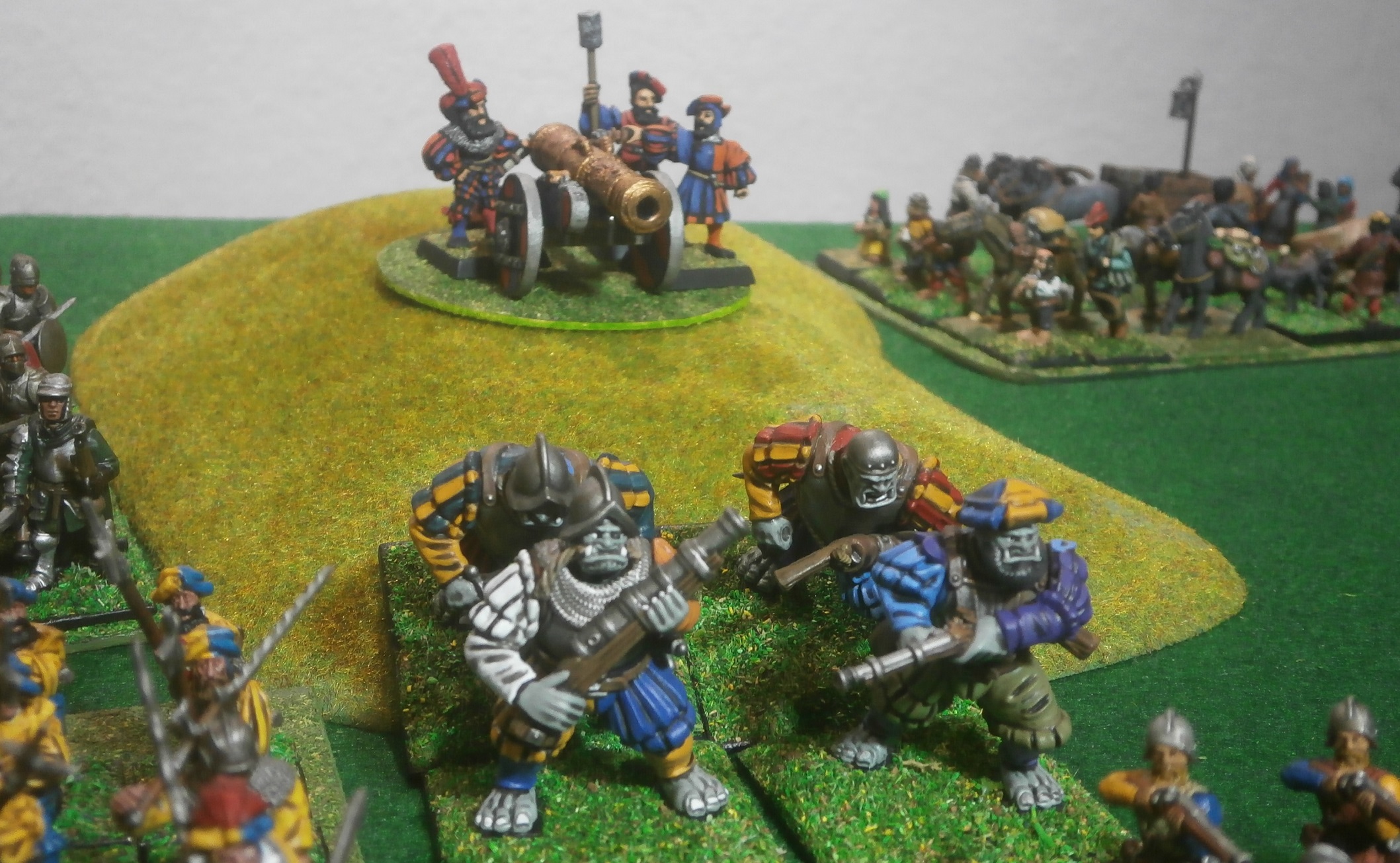
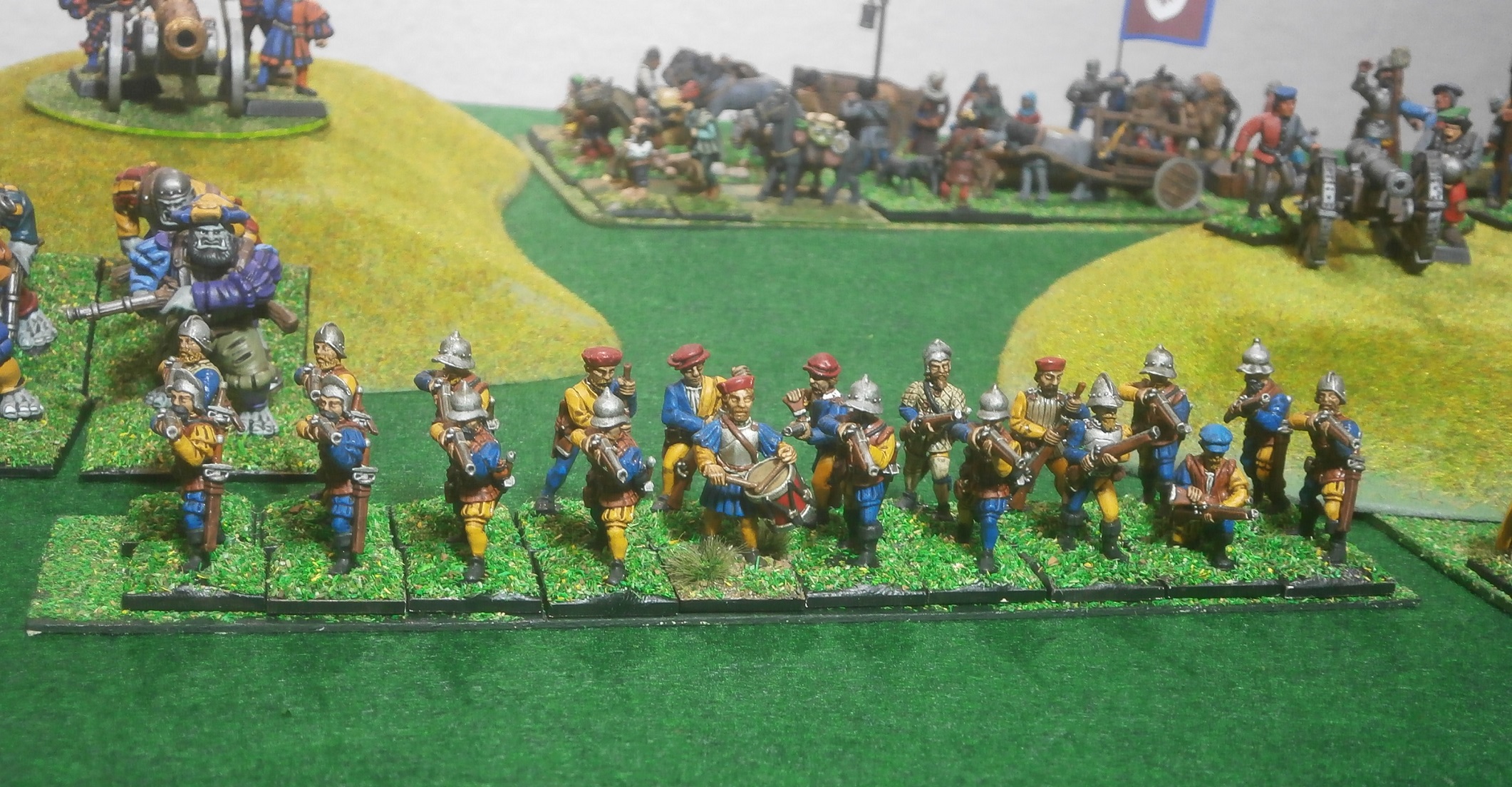
.. and to their fore were arrayed the Verezzan handgunners.
Barone Iacopo, as ever, stood with his archers, at the bottom of the next slope …
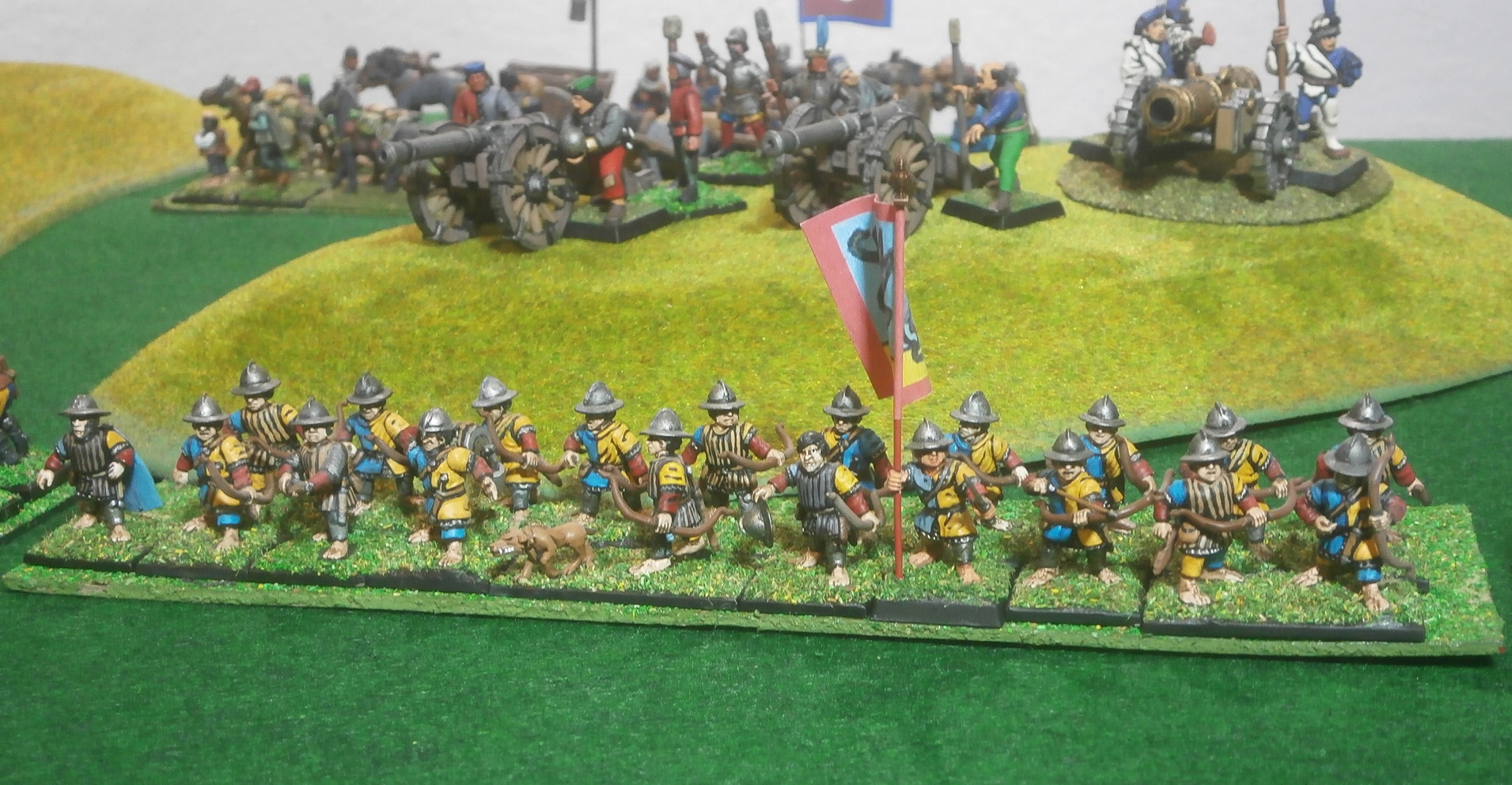
… atop which was a battery of three guns (two verezzan, one Pavonan and the barone’s engineer to tend them) able to fire over his head!
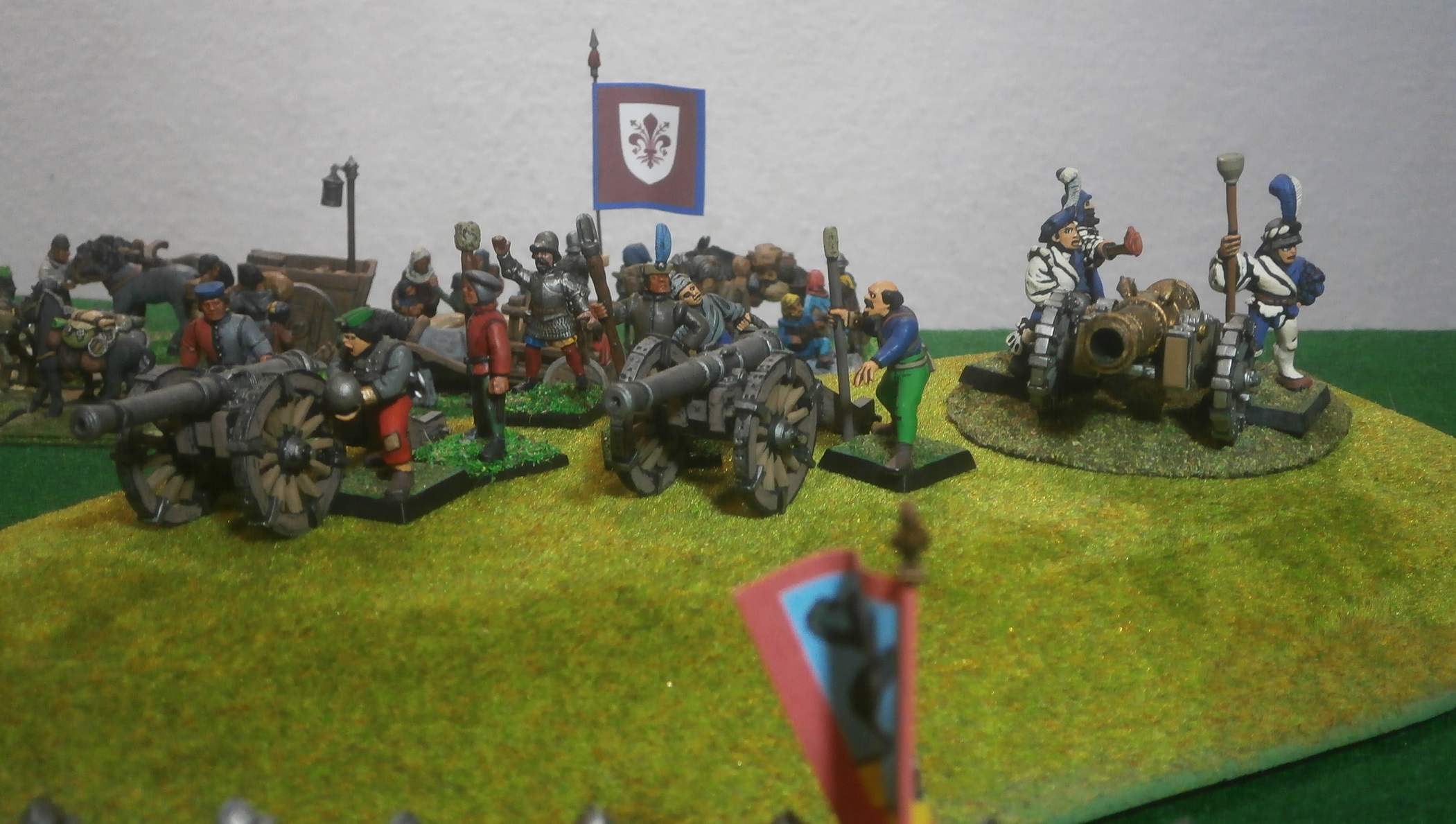
To the barone’s left were the other regiment of Verezzan halfling archers, some of whom had previously been crossbowmen in the regiment that was very badly mauled at Casoli, but were now happy to wield bows, which they had practised with many a day in their youth.
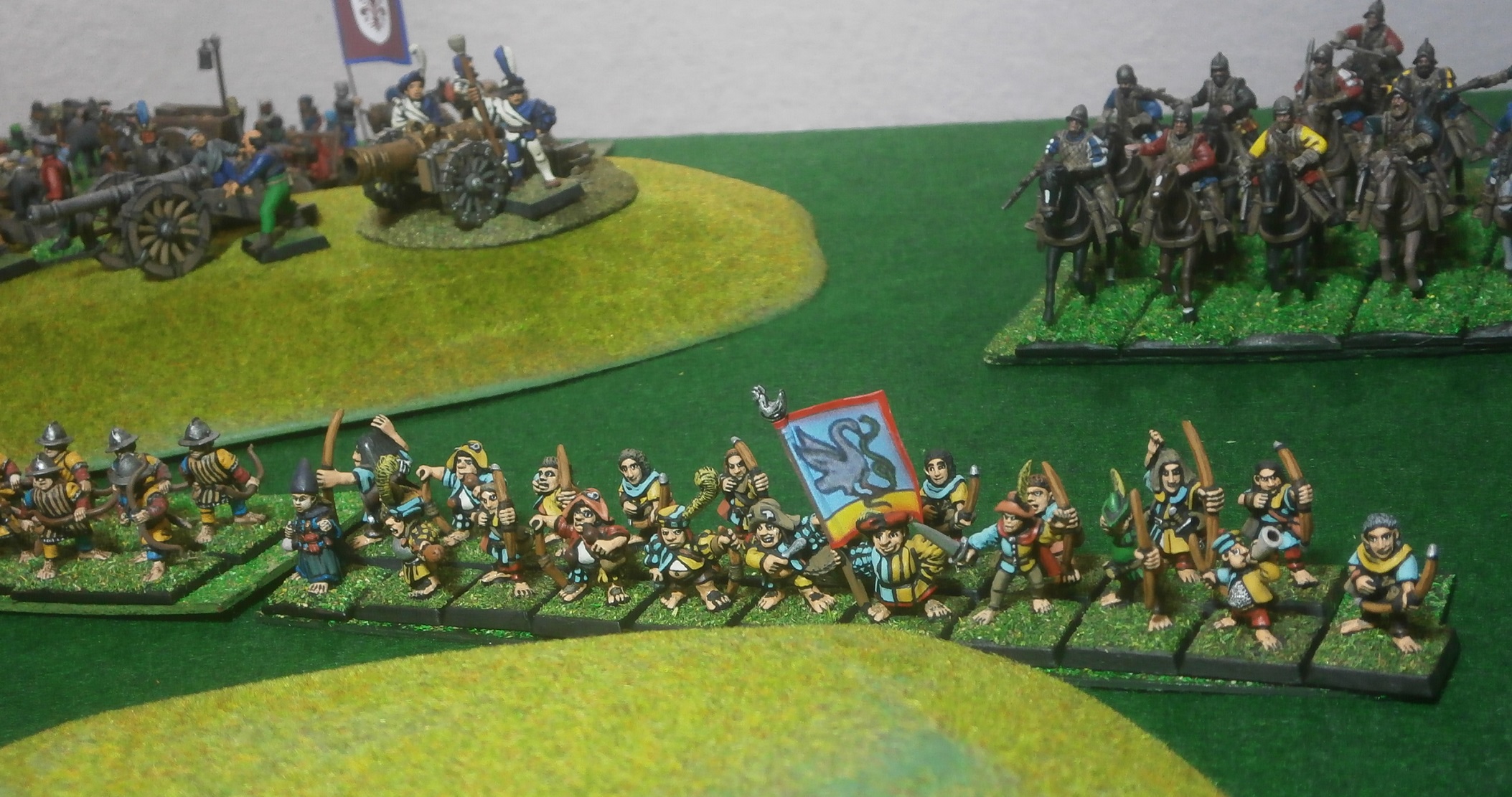
The Pettirosso and his brigands,much reduced in number themselves after Casoli, flanked these two halfling regiments, These were the best archers by far upon the entire field, even including the elves.
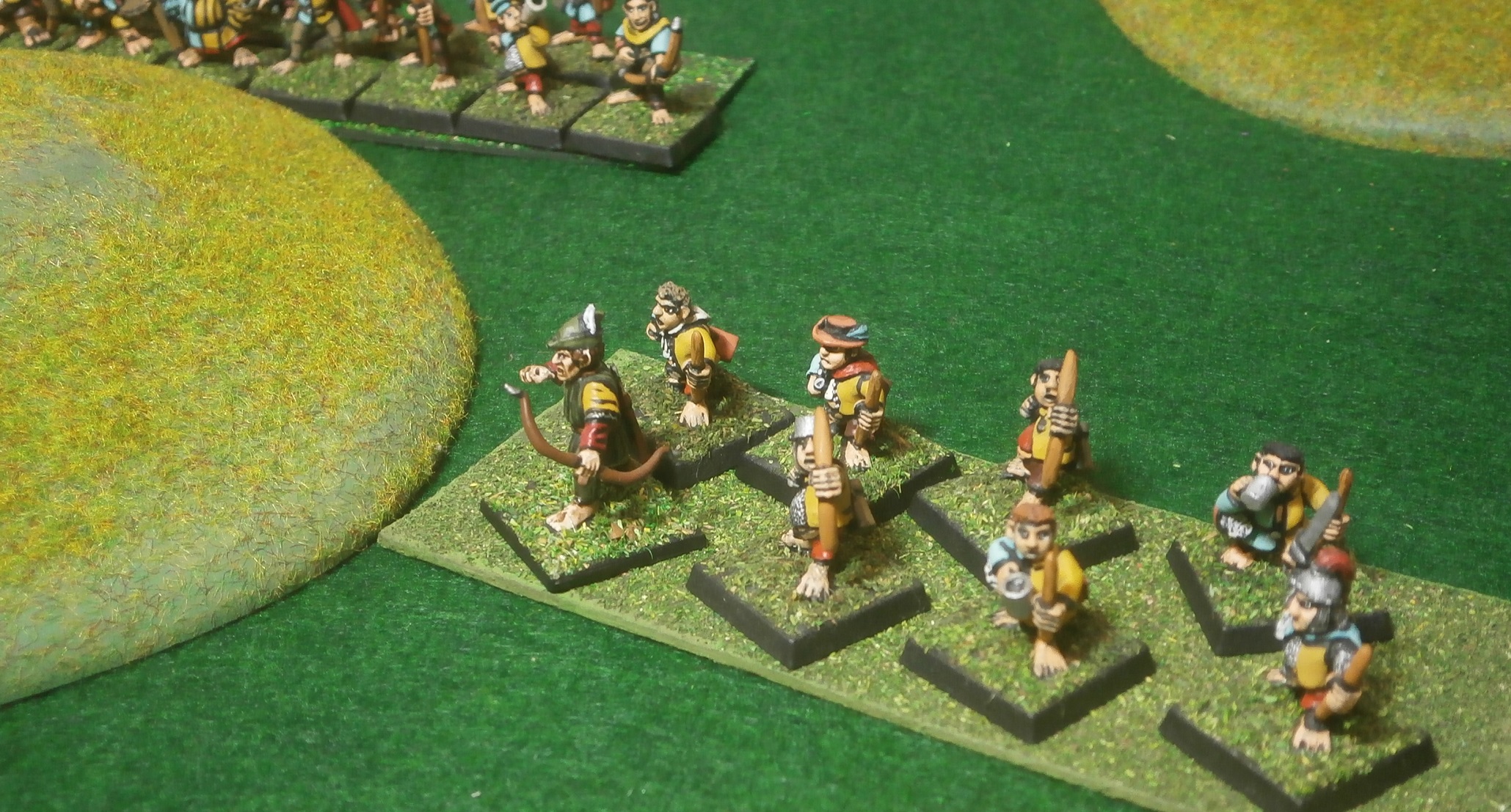
The Pettirosso, Roberto Cappuccio, seemed to feel even more hatred for the Pavonans than Iacopo, and indeed had spent much of the last two years attempting to gain revenge upon them for their many crimes and defamations. Perhaps this was why the barone had ordered him out onto the flank? Although as that flank was to consists only of light troops, then perhaps it was also because the brigands deadly arrows would add an extra sting to what that flank could do?
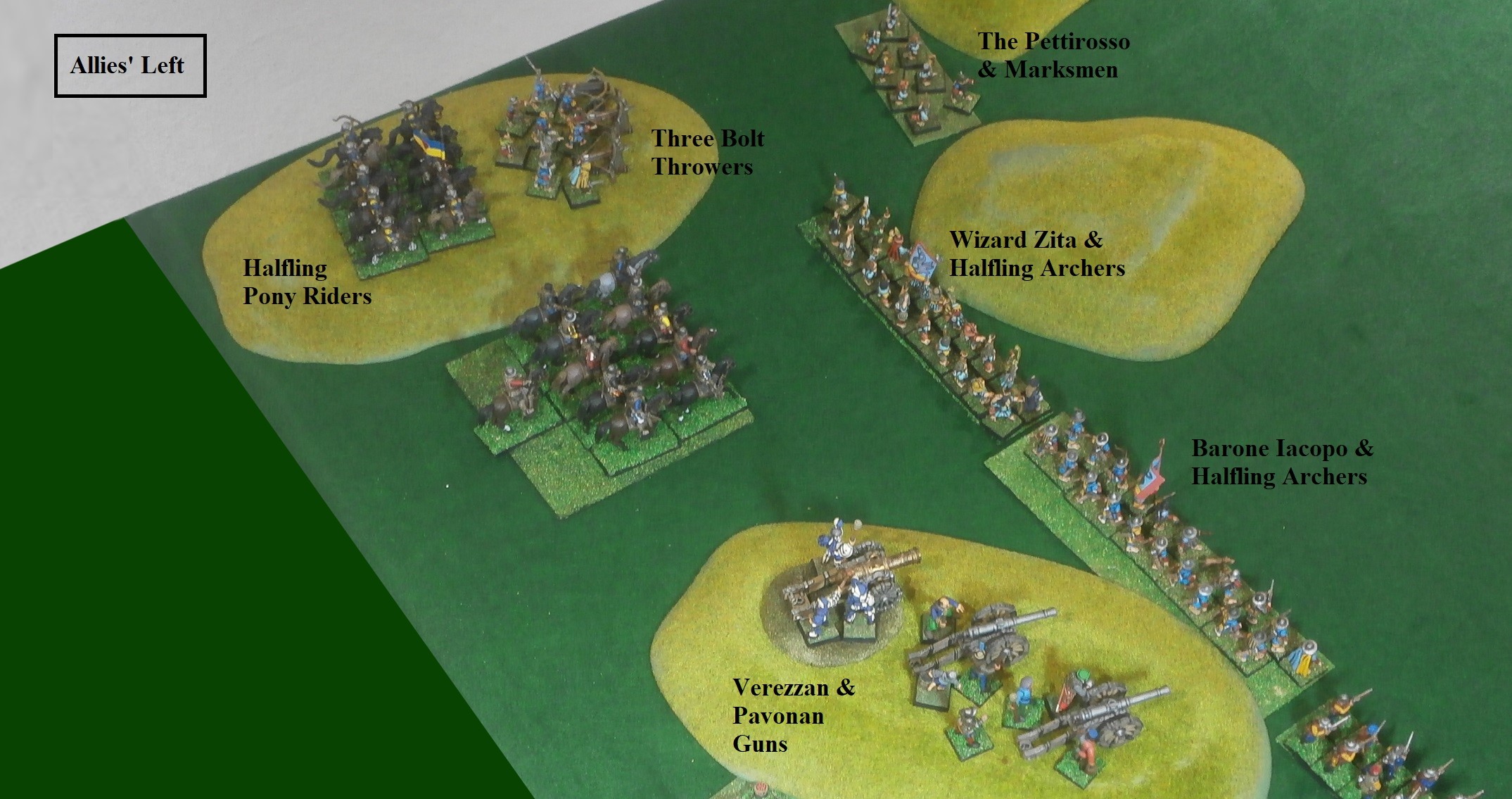
The rest of the far left consisted of a battery of halfling bolt throwers …
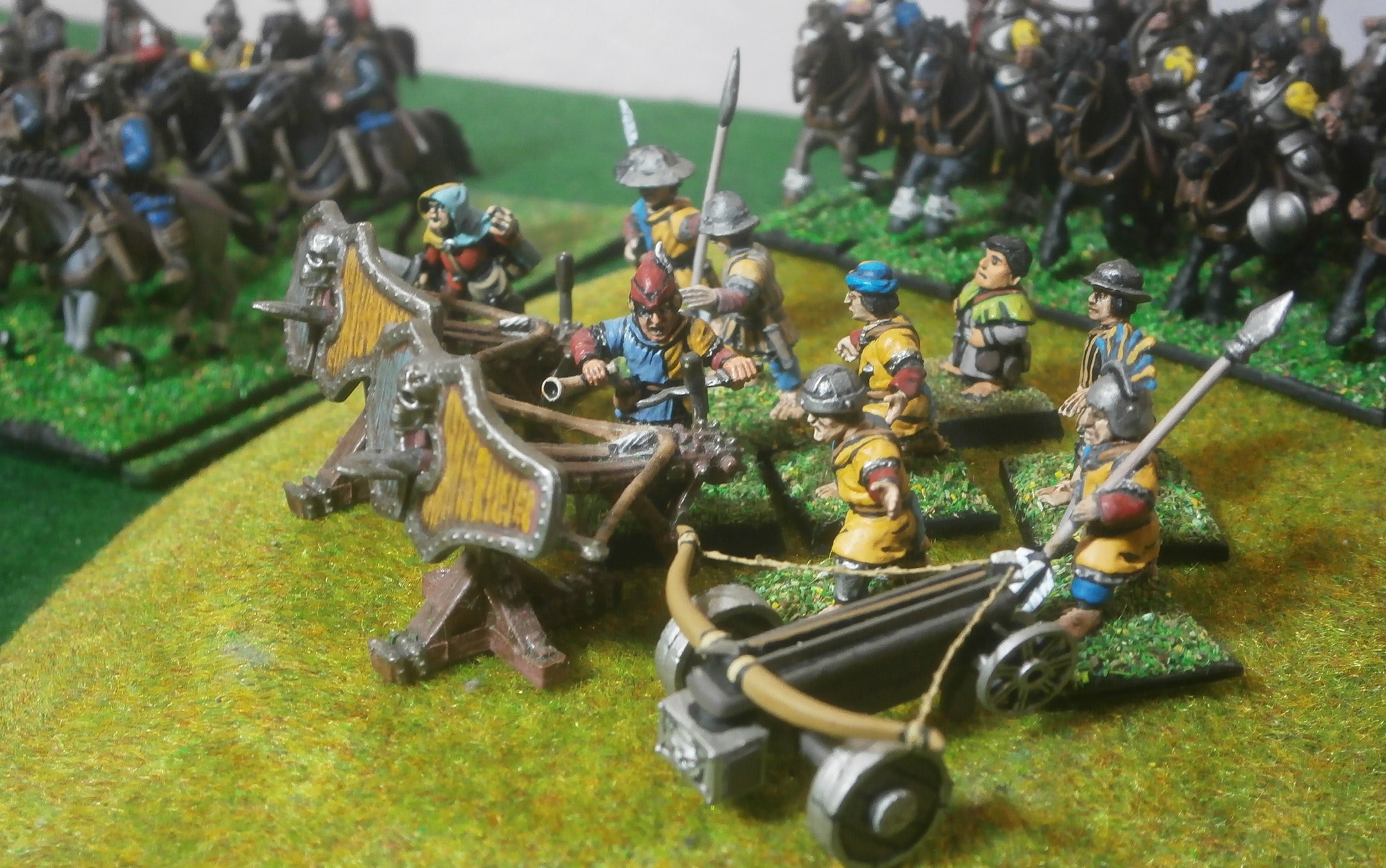
… behind which Sergeant Marco’s pony riders waited for an opportunity to slip around or through somewhere unexpected and loose a little volley. Recently, they had been incredibly busy as outriders and scouts for the army, as well as carrying message and orders about on an hourly basis. A big army such as this needed its own postal service!
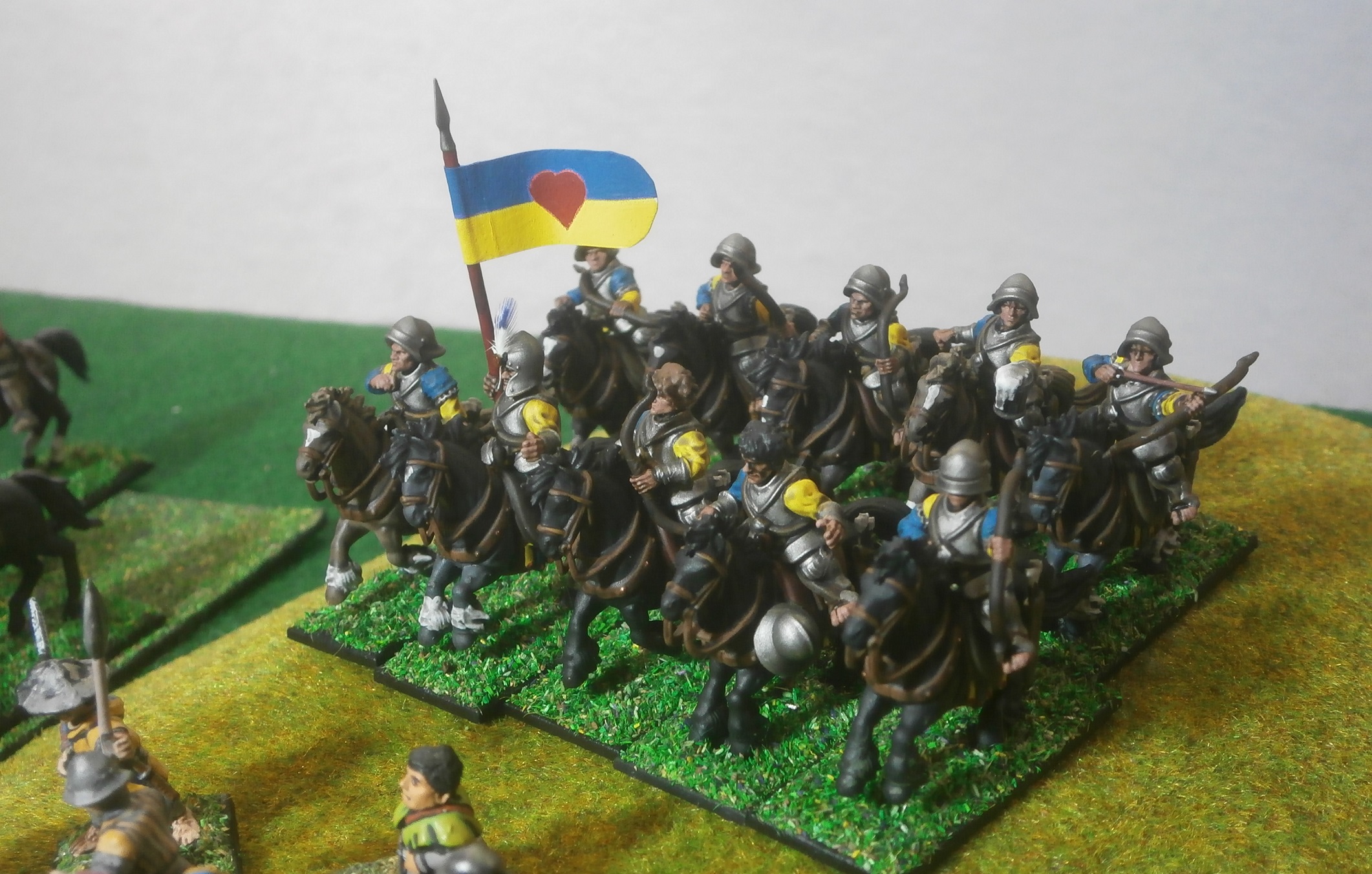
(Game note: The pony riders are a campaign addition to the Tilean list as written. Halflings were already on it, but it was simply a matter of coming up with pony stats (M7 for example) and paying a bit extra to make them into light – very light – cavalry.)
Behind the Pettirosso rode Prince Galeotti de Medizi, who had begun using the title of prince since the treaty had been agreed, despite yet having actually taken possession of his inherited realm. He wore a yellow sleeved doublet, the better for his own men to make him out in the confusion of battle, and was armed and armoured as his men, the better to keep up with them and not to slow them down.
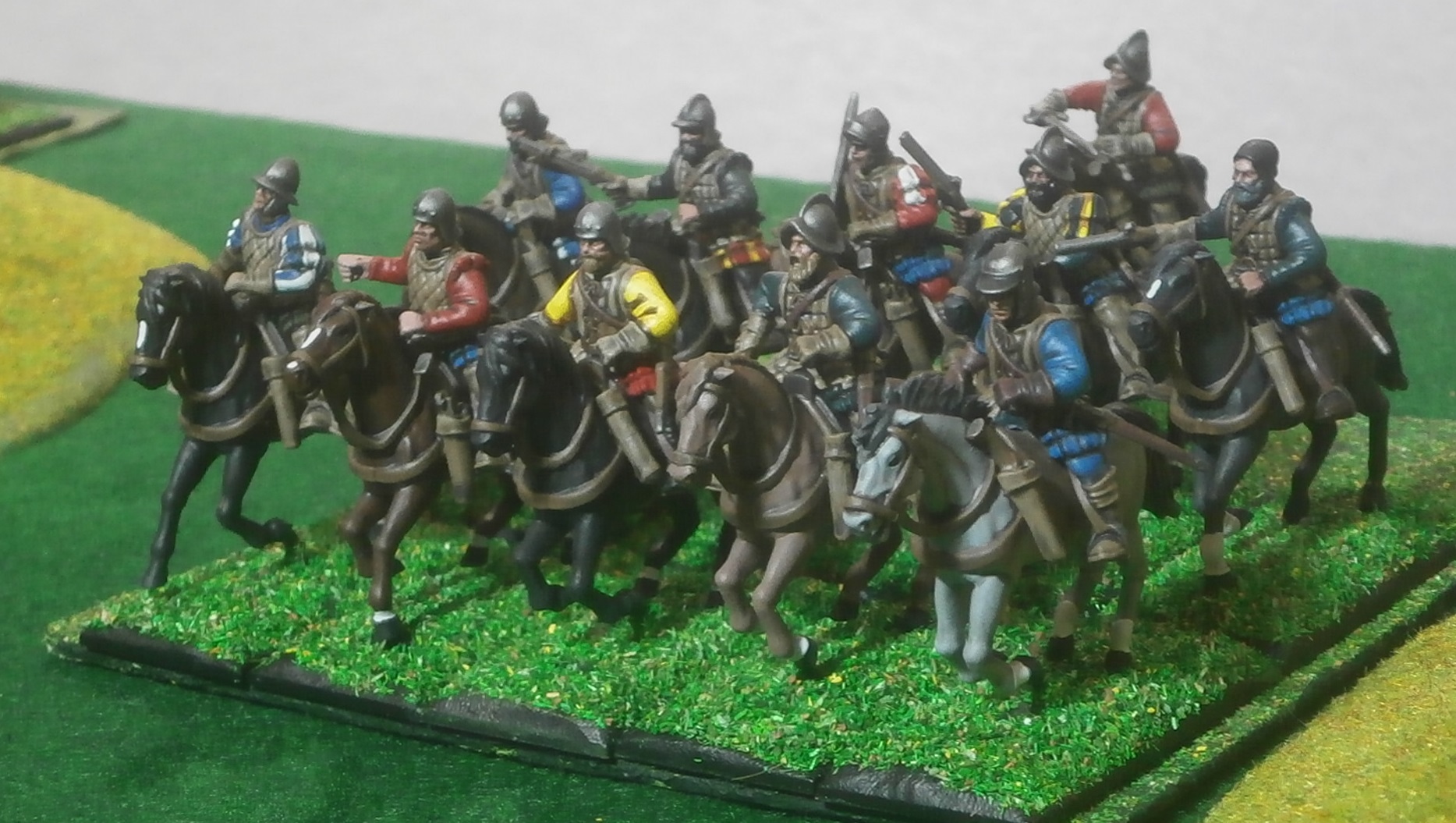
His pistoliers, only days before the treaty was agreed, had had a bloody brush with some scouts commanded by Carjaval, which was perhaps why the barone had ordered them to deploy on the opposite flank. Still, the prince had proven he was ready to fight, and to have something more than halflings out on this flank was an unspoken reassurance to the army.
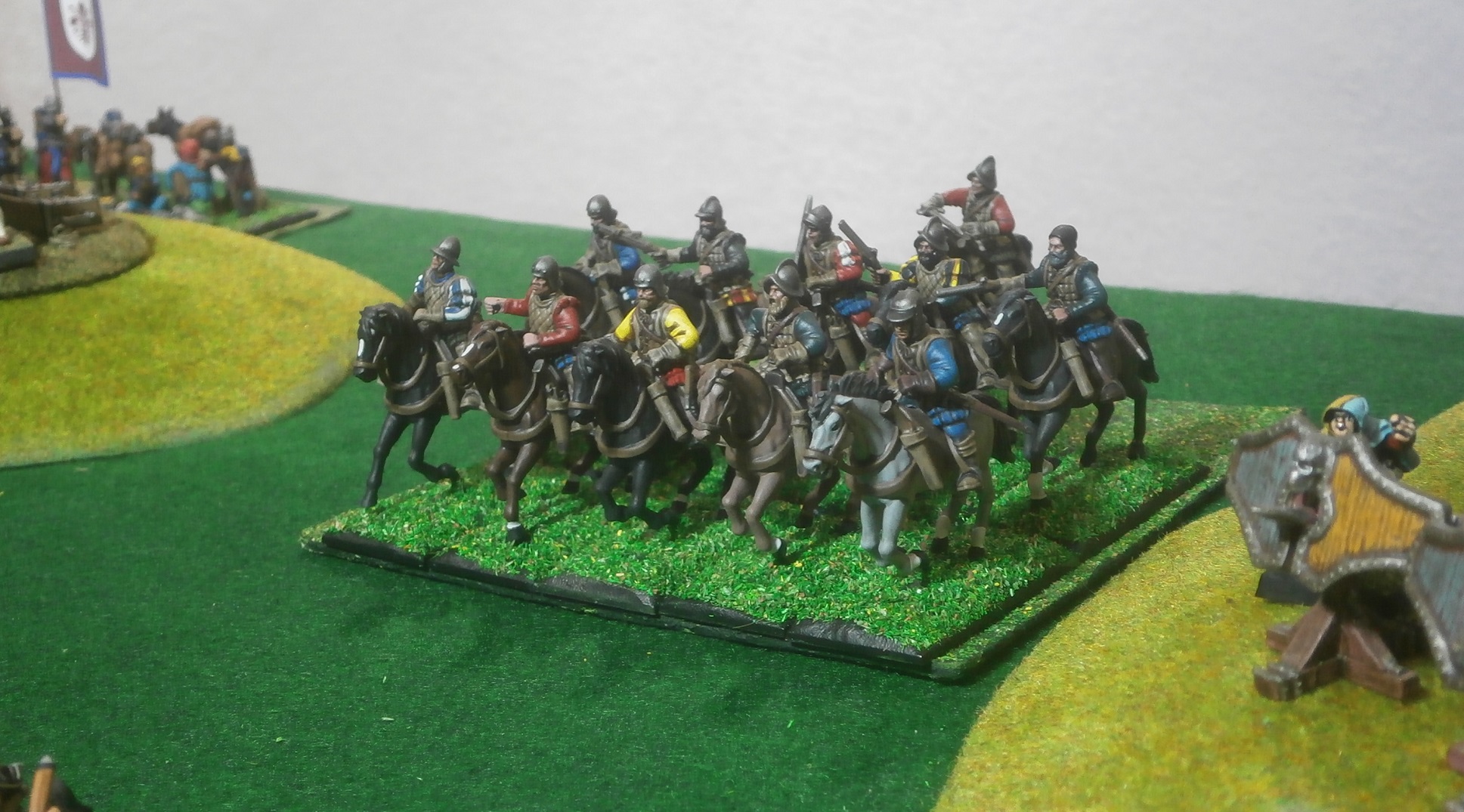
And so it was that the grand alliance army deployed, with all the haste they could muster, in readiness to begin their assault upon the jagged timber defences.
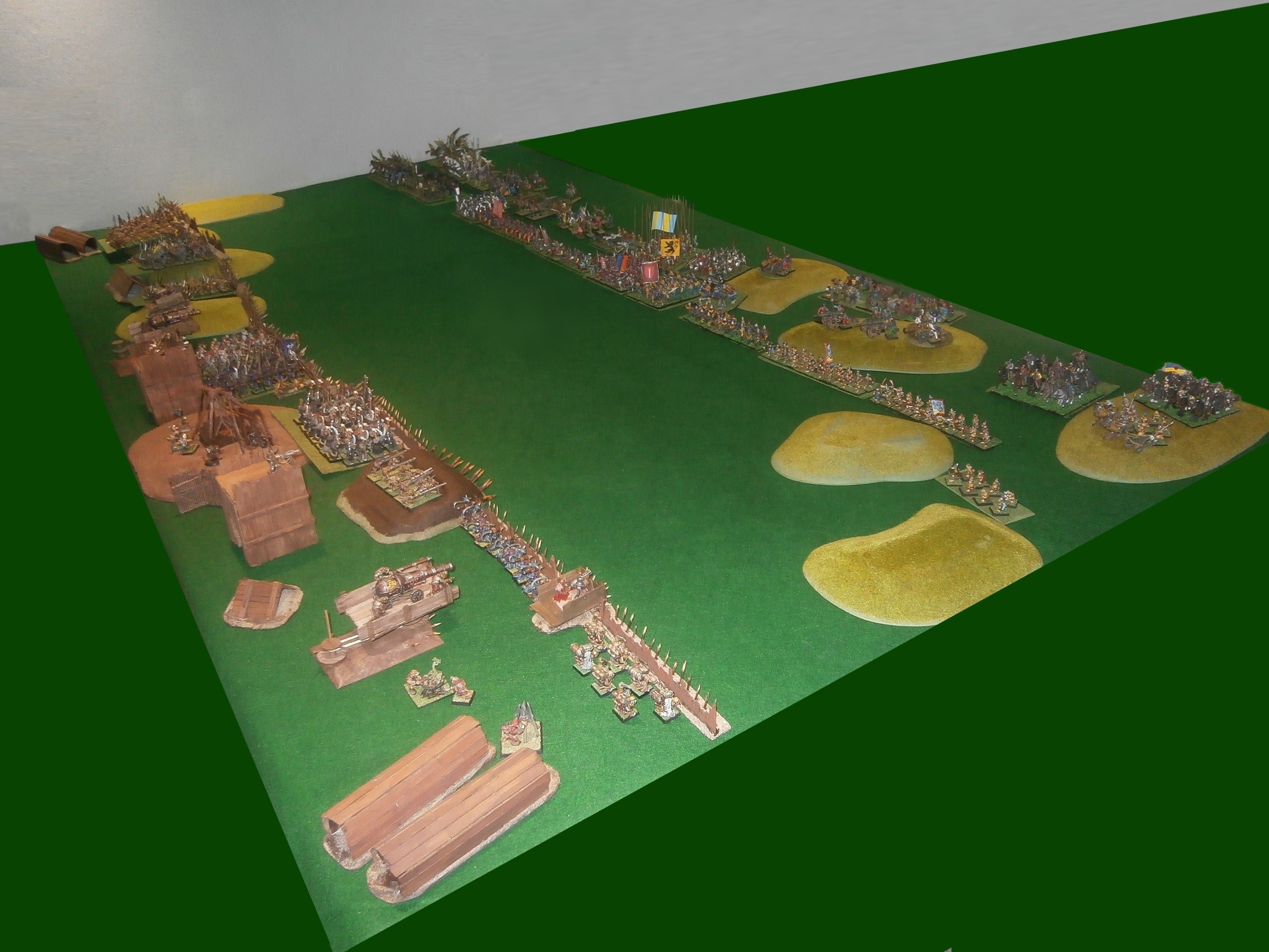
“Time is of the essence,” the elven high lord had said. Iacopo knew exactly what he meant.
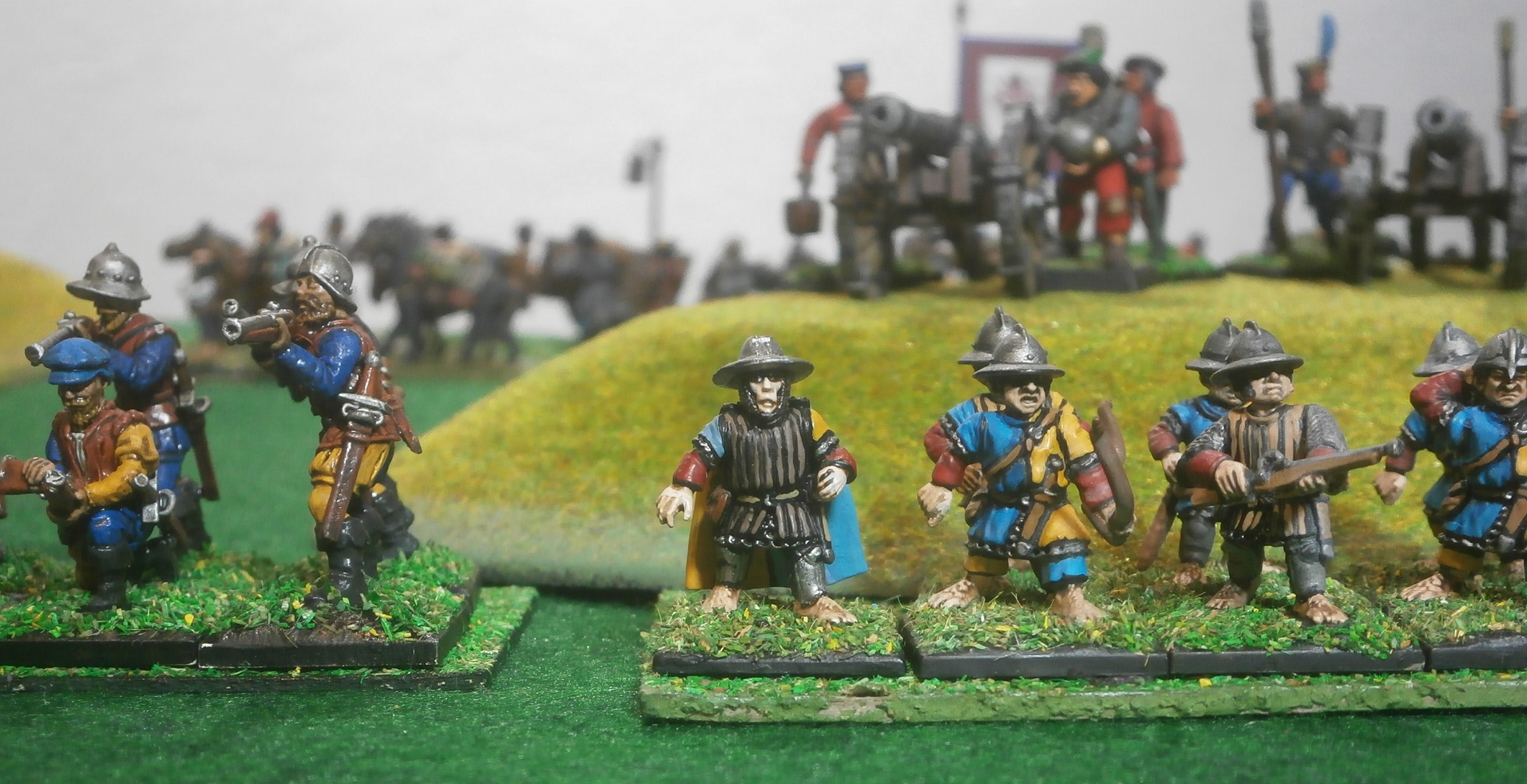
The enemy had come so far south with particular intent, and had been, it was now obvious, making for this very spot, to dig their mineshaft, construct all the defences about it, and man those defences with an army. What they were mining for was anyone’s guess, but it could only be a bad thing. Every captain in the alliance, including those reluctant to accept full subservience to him, were agreed on one thing – whatever it was the enemy was trying to do, or to obtain, they must be stopped before they succeeded. The memory of the doom bombard was on everyone’s mind.


This is shaping up to be a truly epic battle, even by your standards. Bravo, Padre!
LikeLike
Even I don’t know the outcome… We still have half the battle to fight! 😜
LikeLike
. . . And good luck to your players. My hat is off to all of you. I hope everyone has a galoppingly good time.
LikeLike